
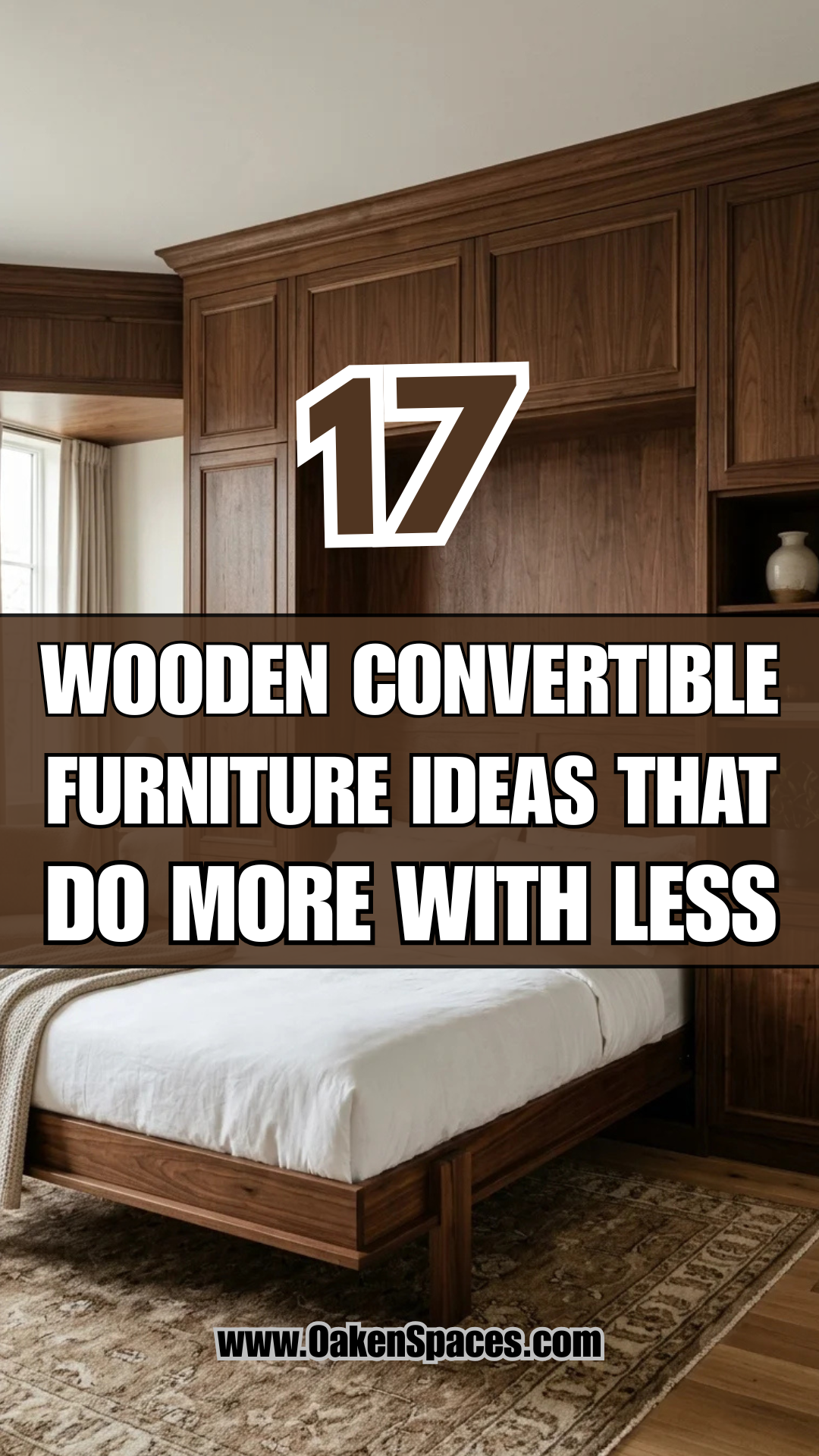
In an era where urban living spaces are shrinking and the “less is more” philosophy is taking over interior design, convertible furniture has transitioned from a niche luxury to a household necessity. Wood, with its timeless durability and organic warmth, remains the premier material for these transformative pieces. Wooden convertible furniture isn’t just about saving square footage; it’s about clever engineering, aesthetic versatility, and sustainable living.
Whether you are living in a studio apartment or simply want to maximize the utility of your guest room, these 17 wooden convertible furniture ideas offer ingenious solutions to modern living challenges.
1. Murphy Bed
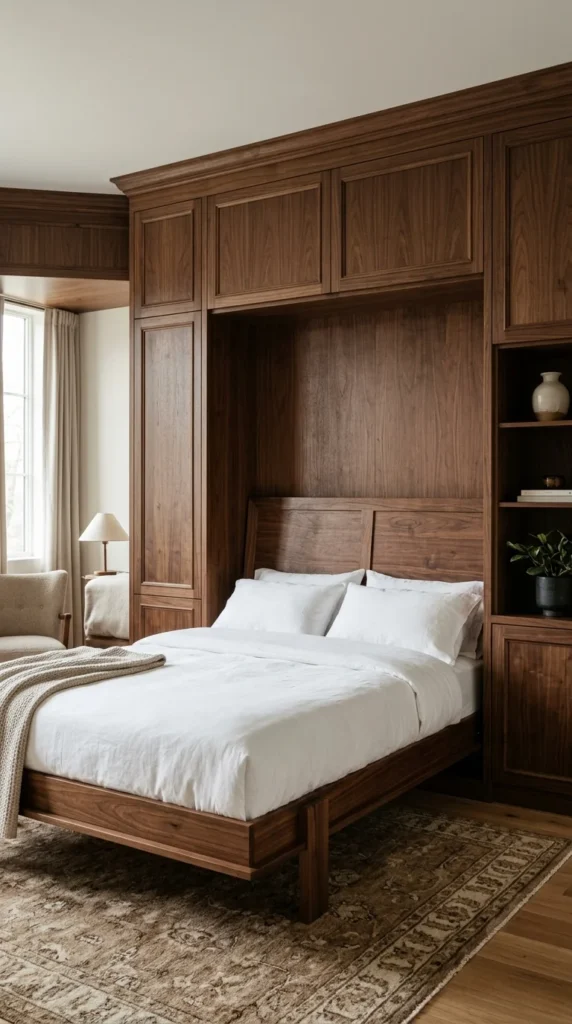
The Murphy bed is the undisputed king of space-saving furniture. Modern iterations have moved far beyond the clunky metal frames of the past. Today’s wooden Murphy beds are masterpieces of cabinetry. When closed, they appear as elegant wall paneling or a sophisticated wardrobe. When night falls, a smooth hydraulic mechanism lowers a full-sized bed into place. This allows a single room to function as a high-end home office during the day and a cozy bedroom by night, without sacrificing the comfort of a real mattress.
2. Expanding Table
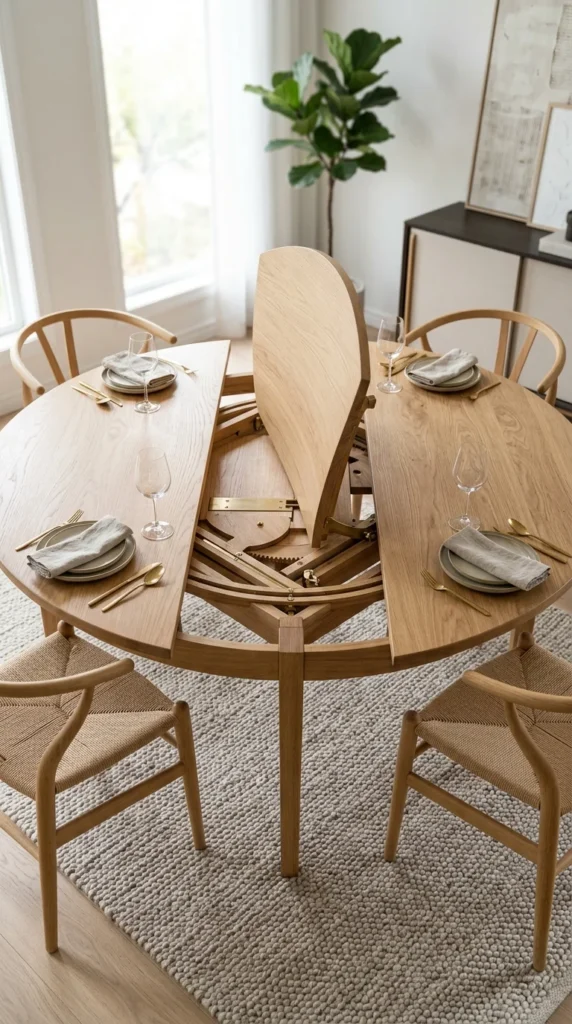
The wooden expanding dining table is a marvel of traditional joinery combined with modern hardware. For daily use, a compact round or square table keeps the dining area feeling airy and open. However, when hosting guests, these tables utilize hidden leaves—stored either inside the table or separately—to double their surface area. Look for “butterfly” leaves that fold out from the center, ensuring you never have to find a closet to store extra table parts.
3. Lift-Top Coffee Table
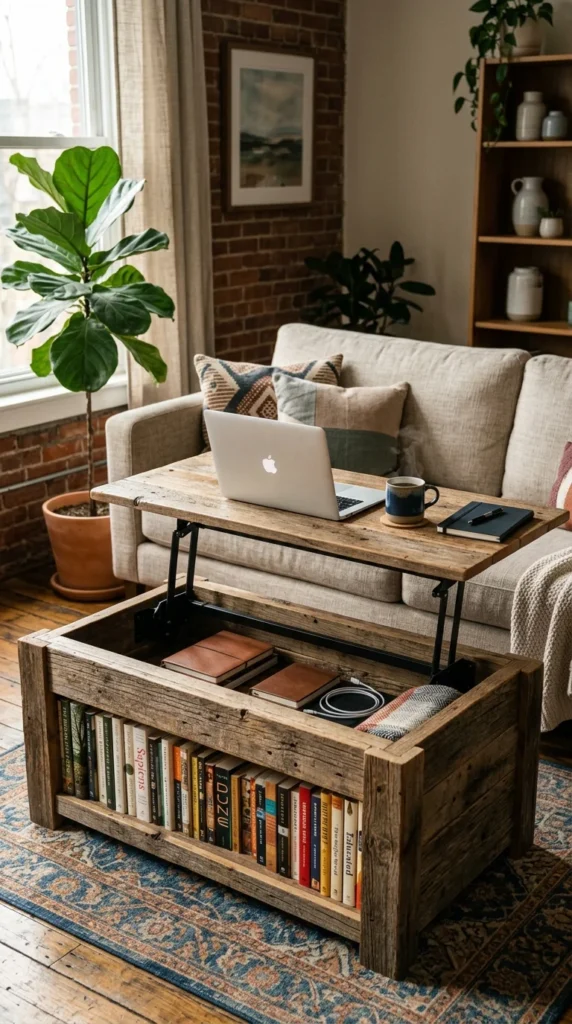
The lift-top coffee table is the ultimate “work from home” hack. While it looks like a standard, stylish wooden center table, the top panel lifts on a mechanical hinge to reach the perfect height for a laptop or a casual dinner in front of the TV. The hollow space revealed underneath provides a “secret” compartment to hide remote controls, magazines, and chargers, keeping your living room clutter-free.
4. Sofa Bed
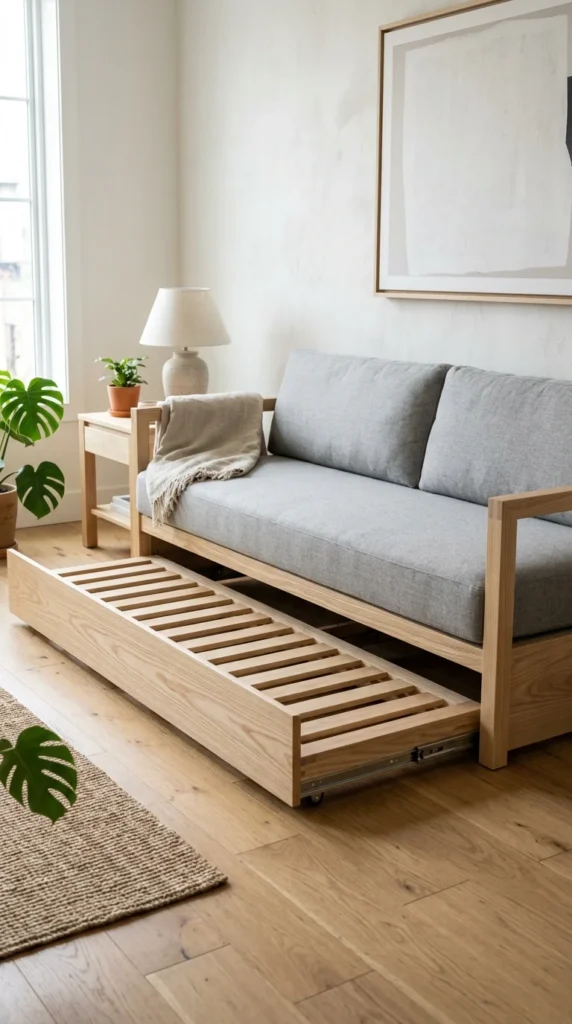
Forget the uncomfortable metal coils of old pull-out couches. Modern wooden-frame sofa beds prioritize both form and function. Many designs use a “slide-out” wooden slat system that provides firm support and longevity. The exposed wooden arms and legs give the piece a mid-century modern flair, making it a beautiful focal point that happens to provide a great night’s sleep for visitors.
5. Desk-to-Bed
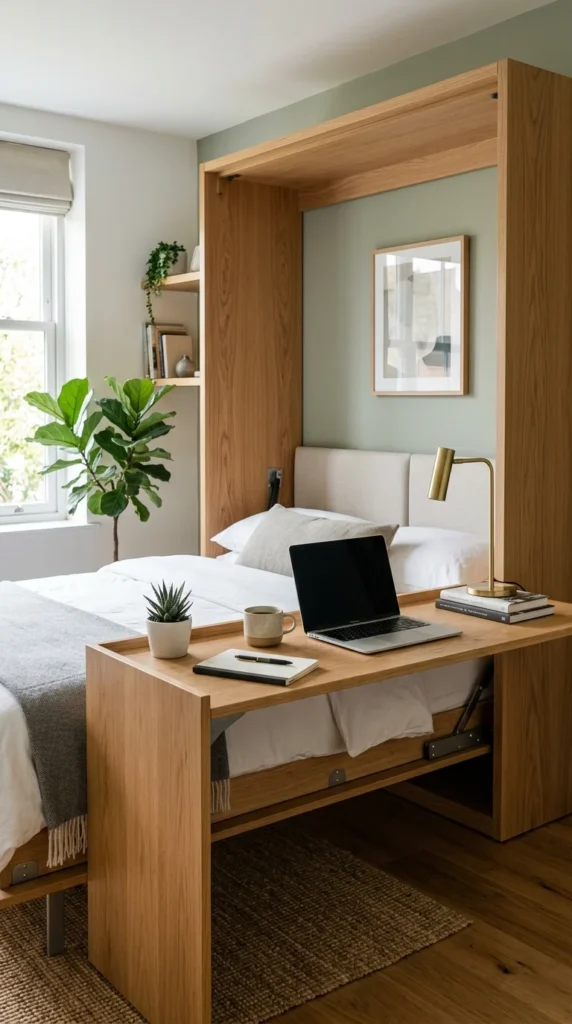
One of the most impressive feats of furniture engineering is the desk-to-bed unit. Using a parallel motion mechanism, the wooden desk surface remains perfectly level as the bed lowers from the wall. This means you don’t even have to clear your computer or coffee mug off the desk to go to sleep. It is the gold standard for dedicated student rooms or micro-apartments.
6. Wall Desk
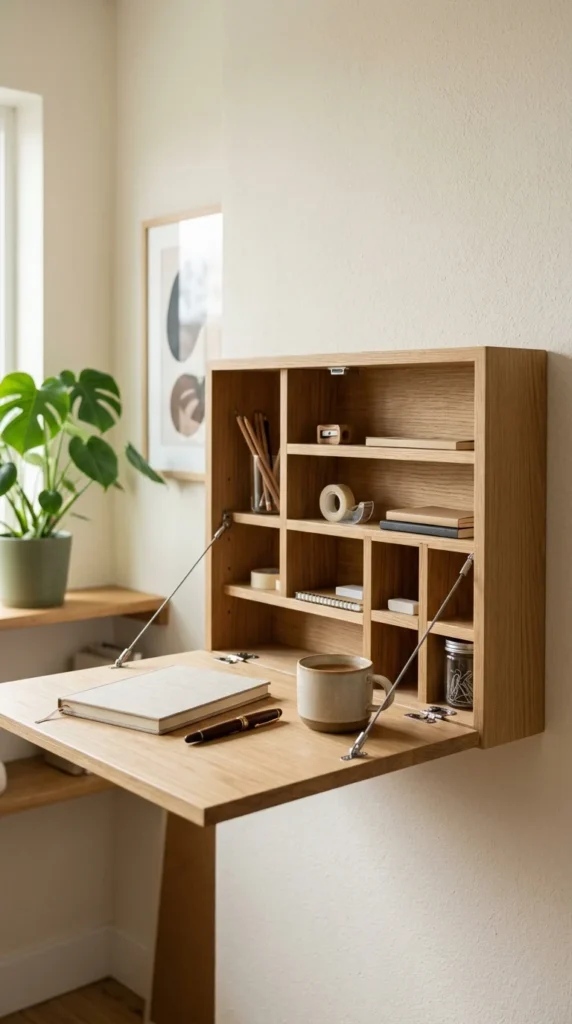
The folding wall desk (or “secretary desk”) is a vertical solution for those who lack floor space. When closed, it occupies mere inches of depth against the wall, often looking like a piece of minimalist art or a shallow cabinet. When opened, it provides a stable workstation. Crafted from hardwoods like birch or maple, these units are surprisingly sturdy and can easily support the weight of a desktop monitor or heavy books.
7. Modular Shelving
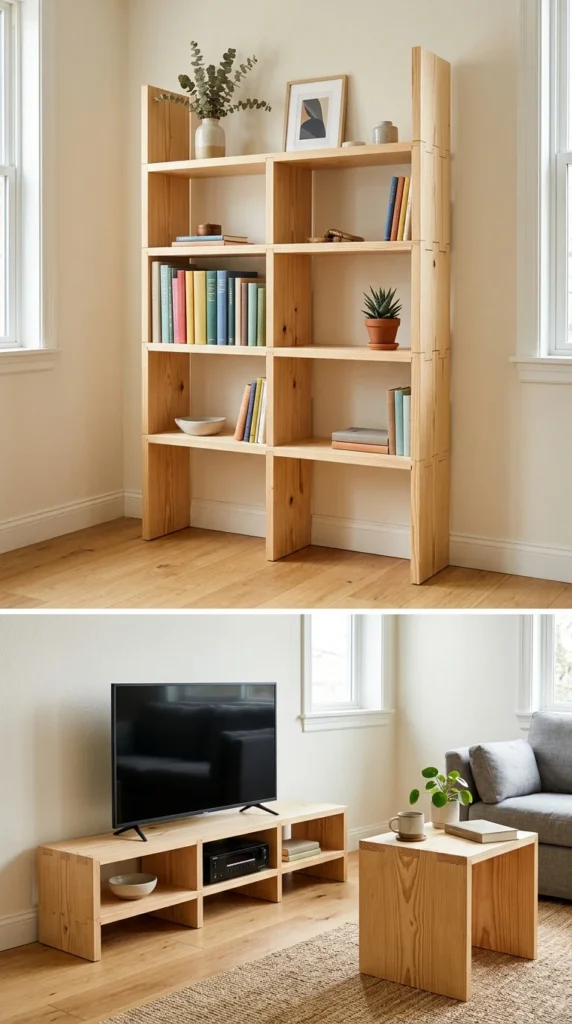
Modular wooden shelving units offer endless configurations. These systems usually consist of individual wooden boxes or “L” shapes that can be stacked, rotated, and locked together. You can start with a room divider and, as your needs change, reconfigure the same pieces into a media console, a staircase-style shelf, or even individual seating stools. This adaptability makes wooden modular units a lifetime investment.
8. Staircase Storage
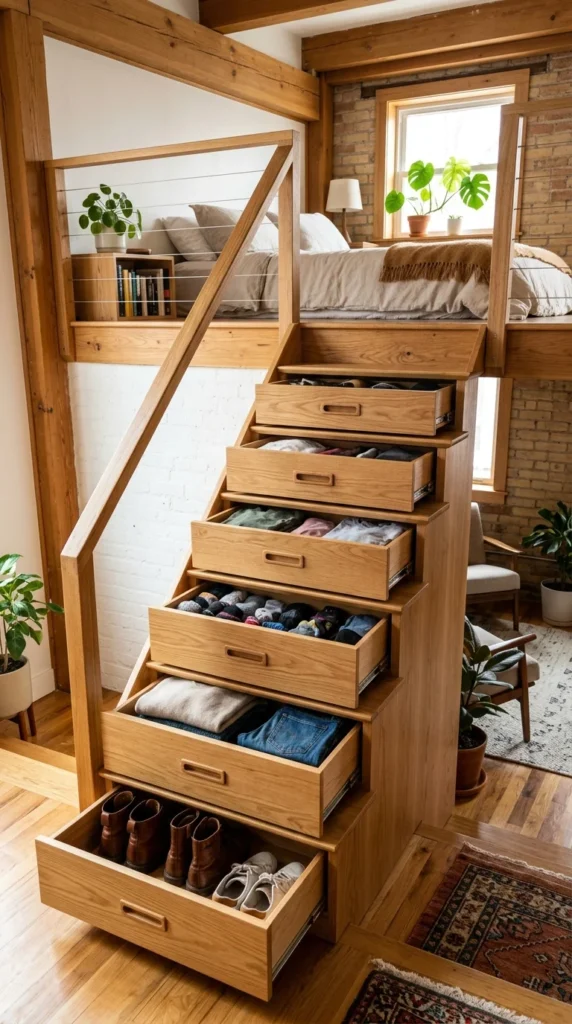
In tiny homes and lofted apartments, the space beneath the stairs is often wasted. Wooden staircase storage transforms every step into a functional drawer or cabinet. This “Tansu” style approach (inspired by Japanese cabinetry) is not only incredibly efficient but also adds a unique architectural element to the home. It’s the perfect place to store out-of-season clothing or bulky household items.
9. Mirror Table
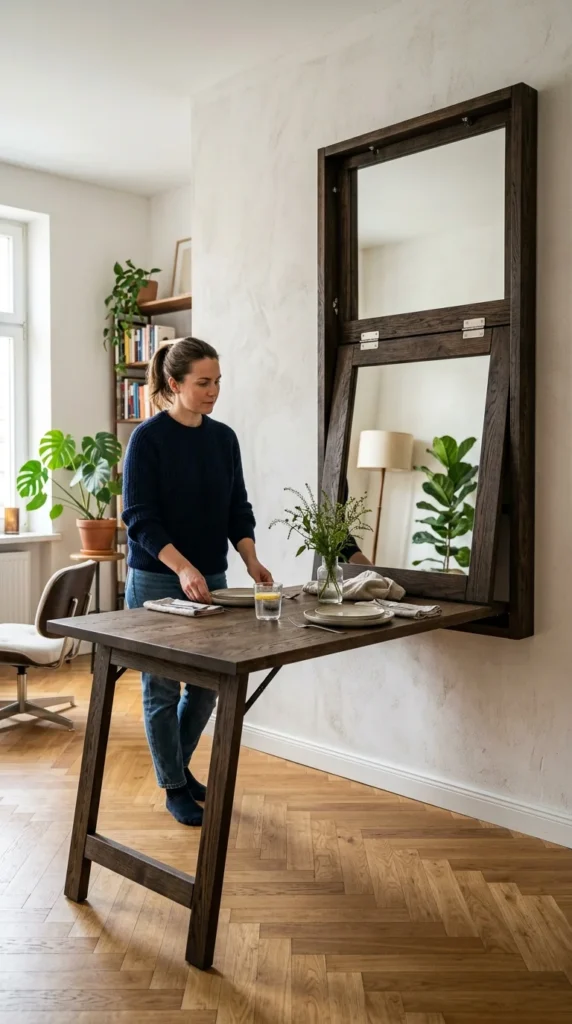
The mirror-to-table is a magician’s trick for the dining room. During the day, a large, floor-length mirror leans against or mounts to the wall, reflecting light and making the room feel twice as big. When it’s time for dinner, the mirror pivots down, and hidden legs deploy to create a sturdy dining surface. The “mirror” side becomes the underside of the table, while the “back” of the mirror is a finished wooden tabletop.
10. Tray Ottoman
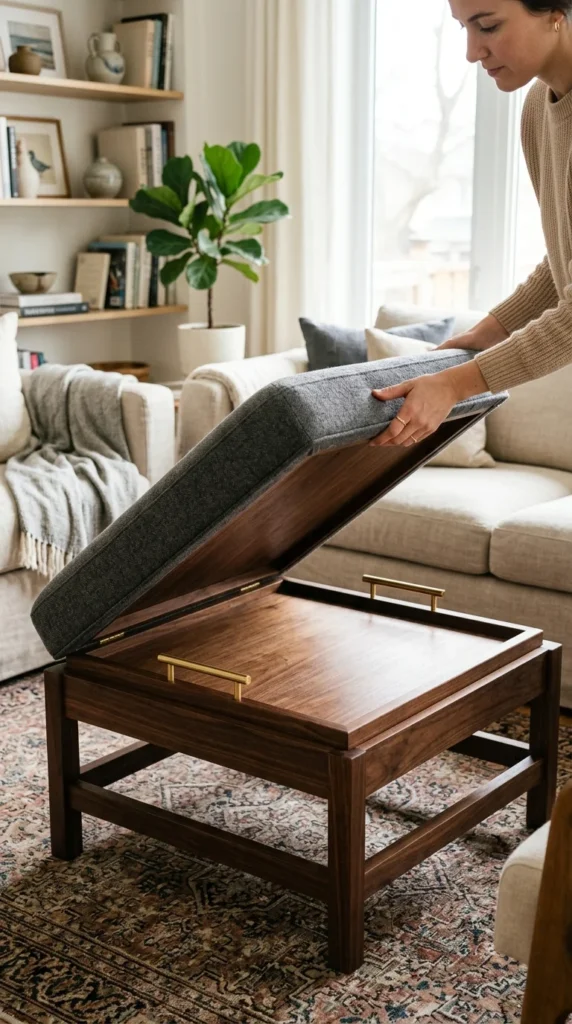
A wooden tray ottoman serves three purposes: a footrest, extra seating, and a coffee table. The secret lies in the removable top. One side is upholstered for comfort, while the other side is a solid wood tray. If you’re hosting a party, simply flip the cushions to create a stable surface for drinks and appetizers.
11. Bench Table
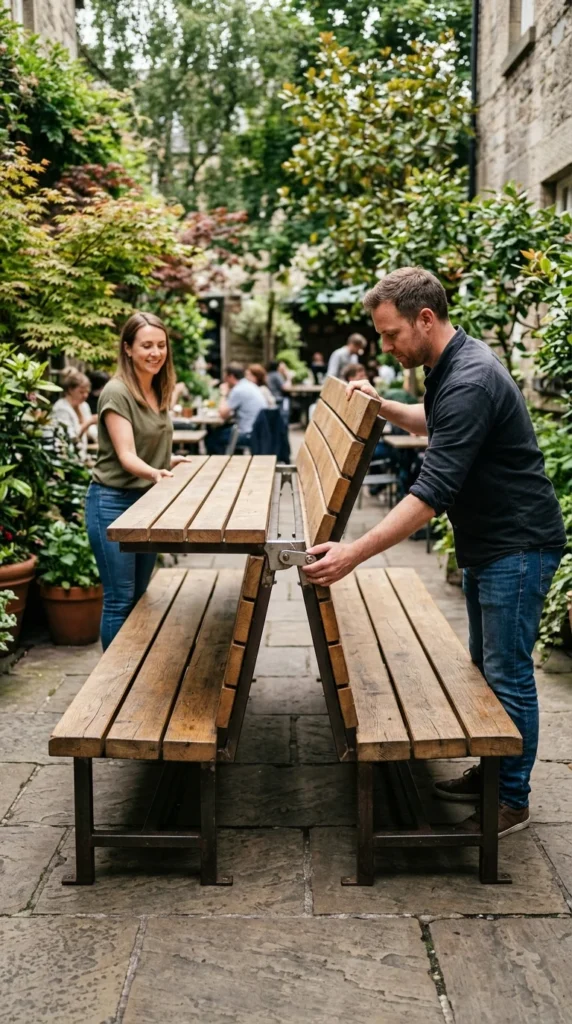
Commonly used in outdoor settings but increasingly popular in “industrial-chic” interiors, the bench-to-table is a masterpiece of pivoting geometry. These units usually consist of two benches. By flipping the backrests upward, they meet in the middle to form a wide tabletop. It’s the perfect solution for a flexible patio or a narrow sunroom.
12. Nesting Tables
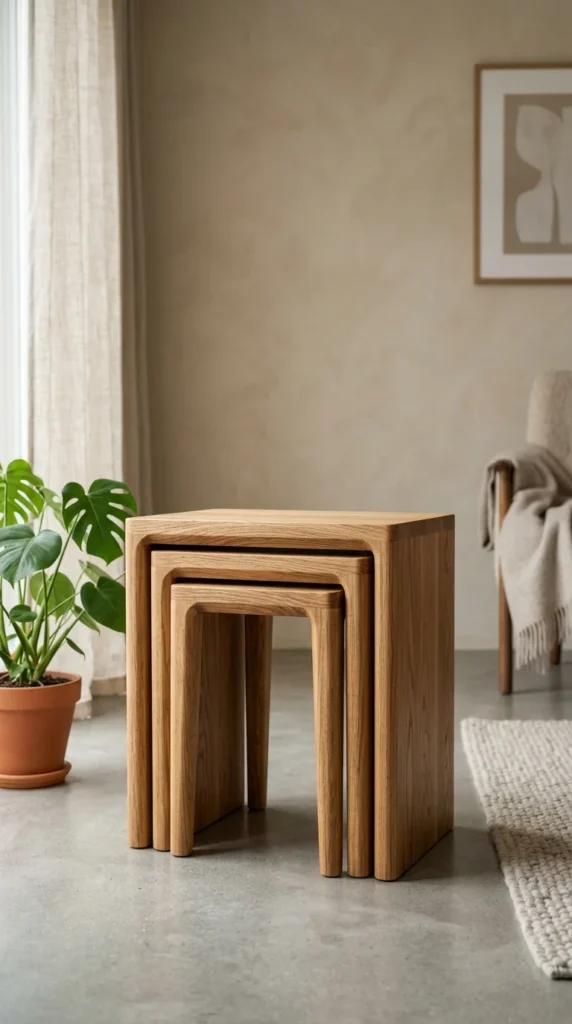
Nesting tables are the classic space-savers. Usually sold in sets of three, these wooden tables slide underneath one another to occupy the footprint of just one table. When guests arrive, they can be spread throughout the room to provide everyone with a place for their drink. Solid wood versions with tapered legs offer a timeless look that fits any decor style from traditional to modern.
13. Convertible Crib
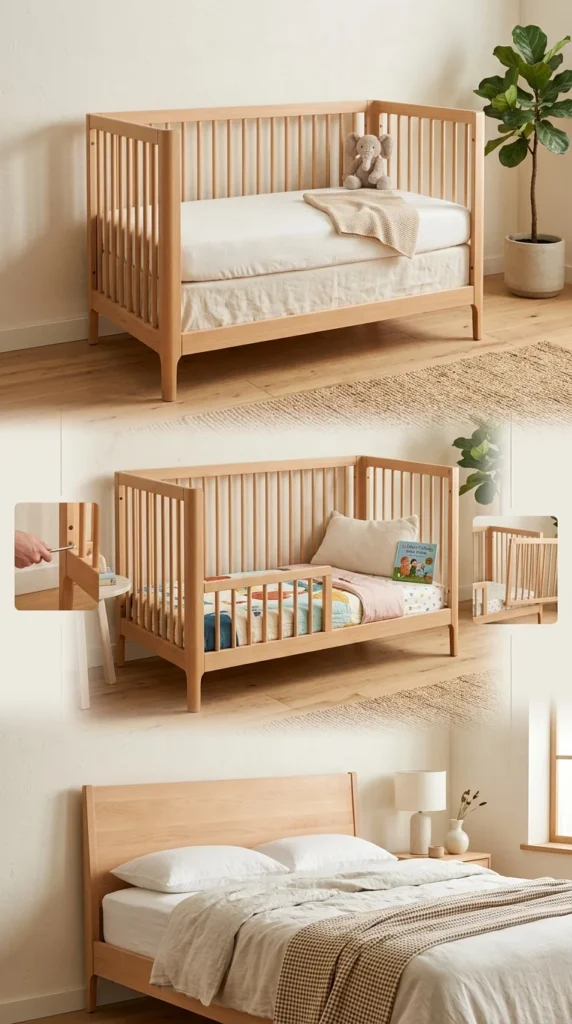
For parents, wooden convertible cribs are a lesson in longevity. Instead of buying new furniture every few years, these “4-in-1” systems grow with the child. They start as a crib, convert to a toddler bed with a safety rail, transition to a daybed, and eventually become the headboard and footboard for a full-sized bed. High-quality wood ensures the piece survives a decade or more of use.
14. Library Chair
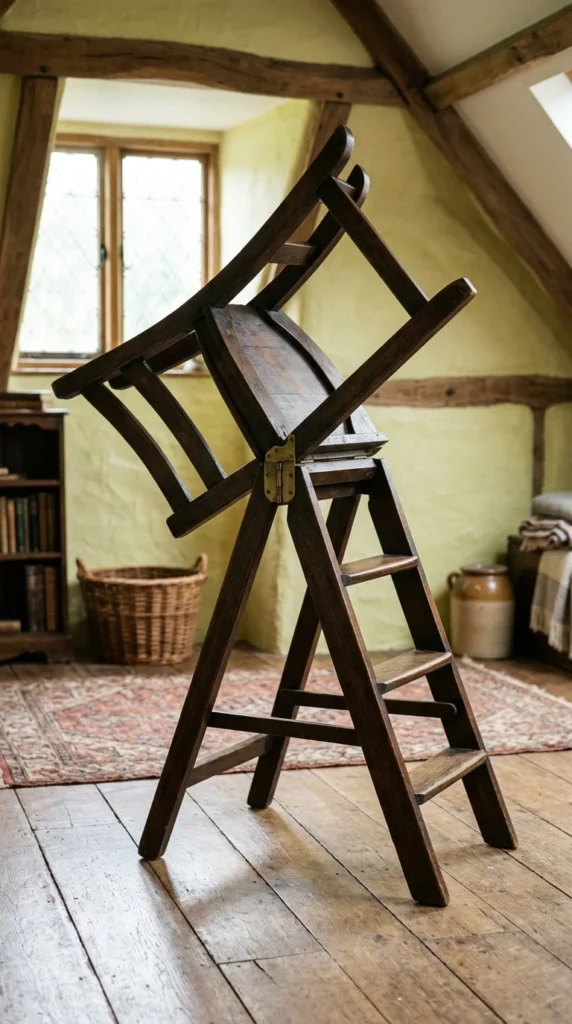
The library chair (or “step chair”) is a piece of furniture history. Famously associated with Benjamin Franklin, this chair features a hinge in the middle. When flipped, the back of the chair becomes the steps of a ladder. It’s an essential piece for homes with high shelving or kitchen cabinets, eliminating the need to store a separate, unsightly aluminum ladder.
15. Trunk Table
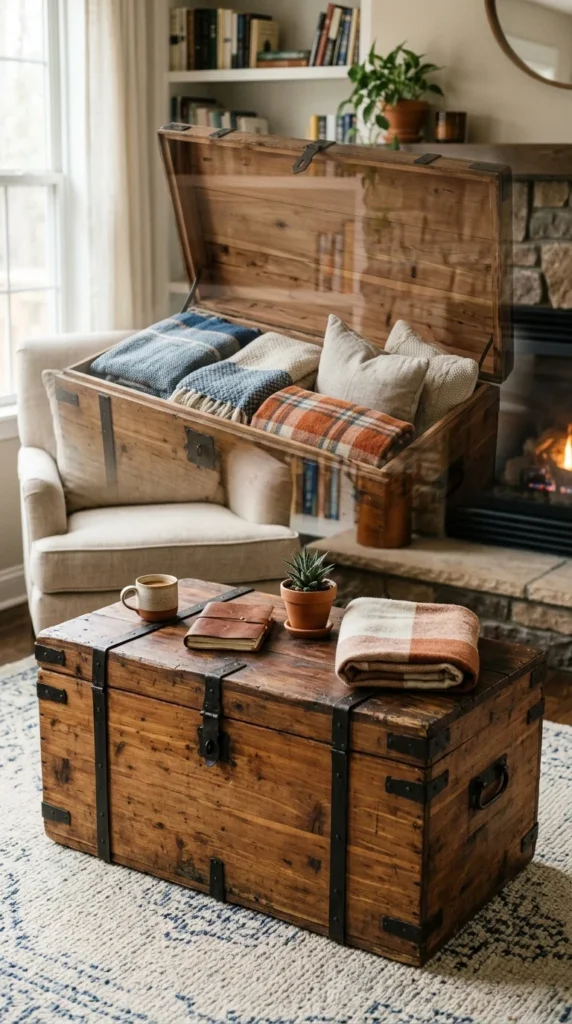
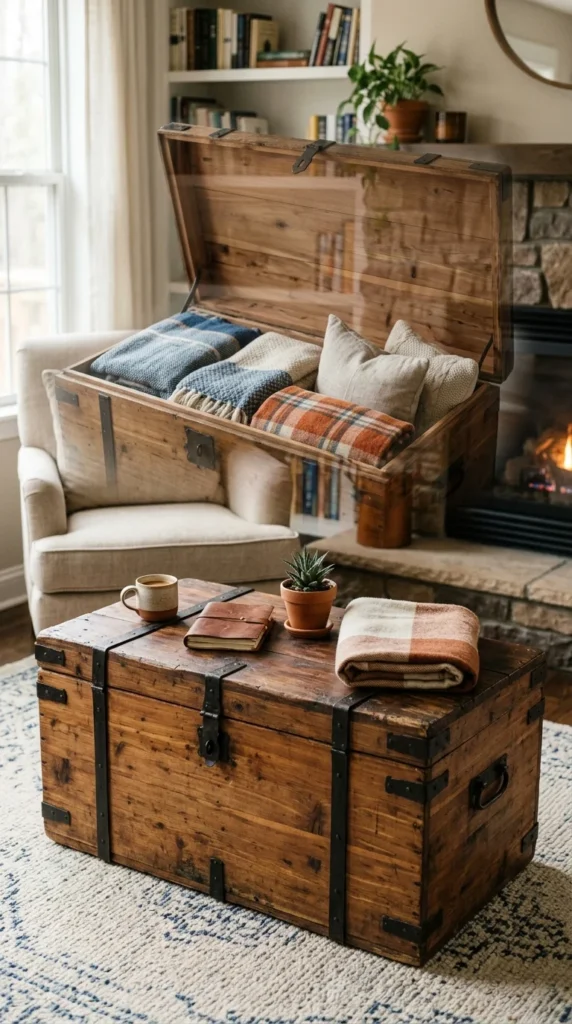
Wooden trunks have been used for centuries, but they remain one of the best ways to “do more with less.” A flat-topped wooden trunk serves as a rugged, character-filled coffee table while providing massive internal volume for storage. Whether you’re storing heirloom quilts, board games, or emergency supplies, the trunk keeps them accessible but completely out of sight.
16. Rotating Room Divider
The rotating wooden room divider is a high-end architectural solution for open-plan spaces. Usually built as a series of vertical wooden slats or a solid cabinet on a pivot, it can be turned 180 degrees. This allows a television or a collection of books to be shared between two “rooms”—for example, the living area and the bedroom—without needing two separate devices or storage units.
17. Folding Wall Art
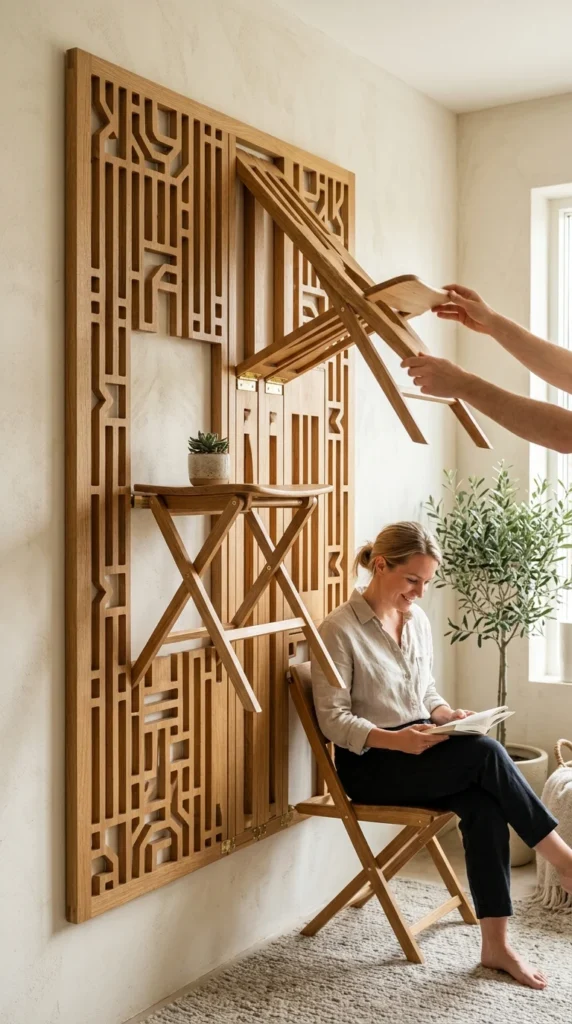
One of the most creative uses of wood in convertible design is the “chair as art.” These are wall-mounted wooden panels where the components of a chair are precision-cut into the wood. When the chairs are not needed, they hang flat against the wall, creating a textured, geometric wooden installation. When you have extra guests, you simply pull the “slats” off the wall and fold them into functional, sturdy seats.
Why Wood is the Best Choice for Multi-Functional Furniture
While plastic and metal can be used for convertible furniture, wood offers several distinct advantages that make it the superior choice:
- Structural Integrity: Convertible furniture has moving parts that put stress on the frame. High-quality hardwoods like oak, walnut, and maple have the tensile strength to handle repeated transitions without warping or breaking.
- Repairability: Unlike plastic, which is often ruined if it cracks, wood can be sanded, glued, and refinished. This ensures your convertible pieces can last for generations.
- Aesthetic Warmth: Multi-functional furniture can sometimes look clinical or overly mechanical. The natural grain and texture of wood soften the “gadget” feel of these pieces, making a room feel like a home rather than a transformer’s showroom.
- Sustainability: When sourced responsibly, wood is a renewable resource. Investing in one high-quality wooden piece that does the job of three separate items reduces consumption and waste.
By choosing wooden convertible furniture, you aren’t just saving space; you are investing in clever craftsmanship that honors the philosophy of living well with less. Each piece tells a story of transformation, proving that with the right design, even the smallest home can feel expansive.