
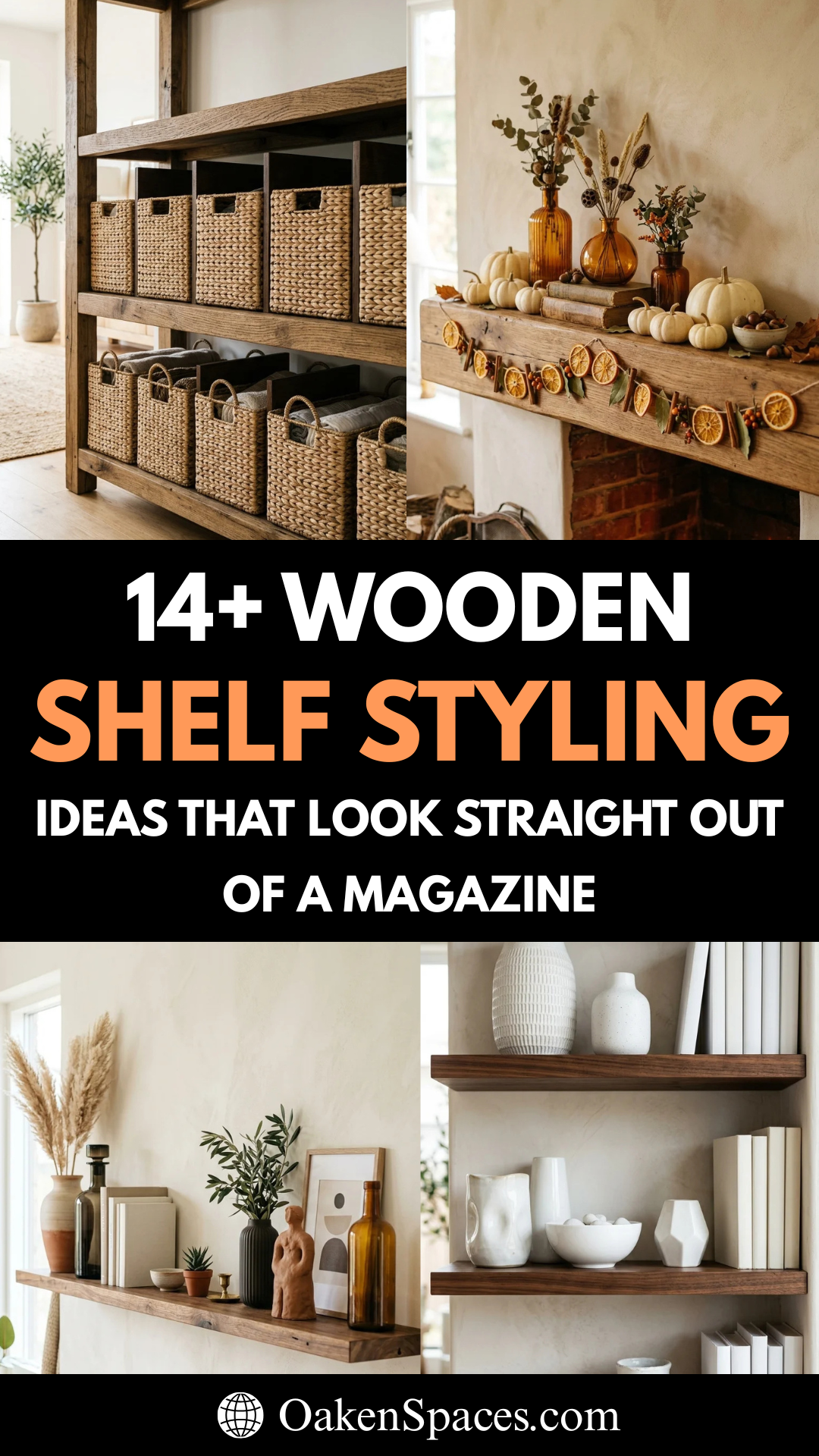
Wooden shelves are the backbone of interior design. They offer a warm, organic foundation that can anchor a room’s aesthetic, whether you lean toward mid-century modern, rustic farmhouse, or sleek minimalism. However, there is a fine line between a shelf that looks cluttered and one that looks like it belongs in the pages of an architectural digest. Mastering the art of “shelfie” styling is about balance, texture, and storytelling.
If you’ve been staring at your blank wooden planks wondering where to start, you aren’t alone. Transforming a functional storage unit into a curated masterpiece requires a bit of strategy. Here are 14 magazine-worthy wooden shelf styling ideas to elevate your home.
1. Monochrome Palettes
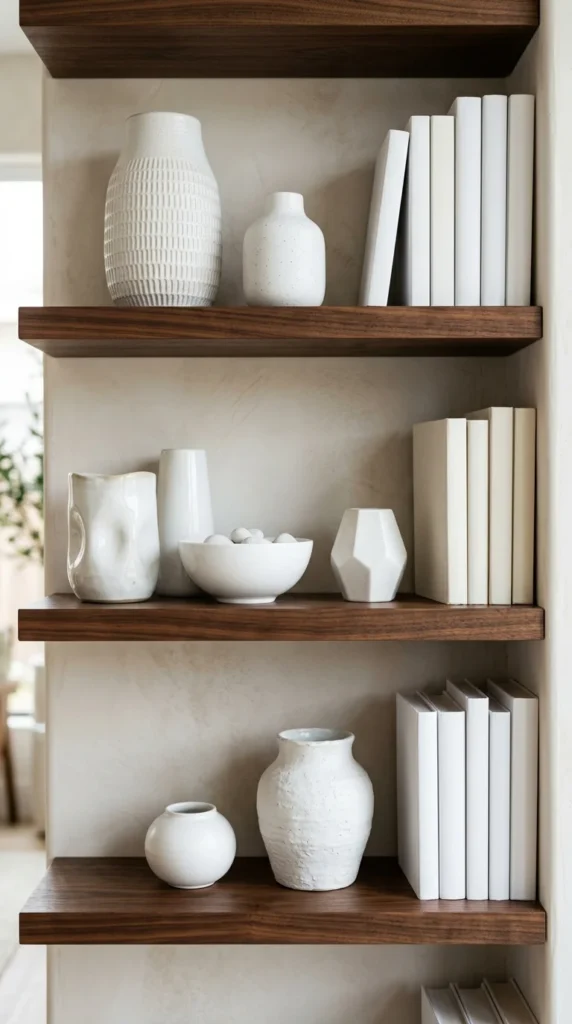
One of the easiest ways to achieve a high-end, cohesive look is to stick to a monochromatic color scheme for your decor. By choosing items in varying shades of a single color—such as creams, whites, or earthy terracottas—you allow the natural beauty and grain of the wooden shelf to take center stage. This approach reduces visual noise and creates a sense of intentionality. Look for different finishes, such as matte, glossy, and pitted surfaces, to ensure the monochrome look feels dynamic rather than flat.
2. Greenery Accents
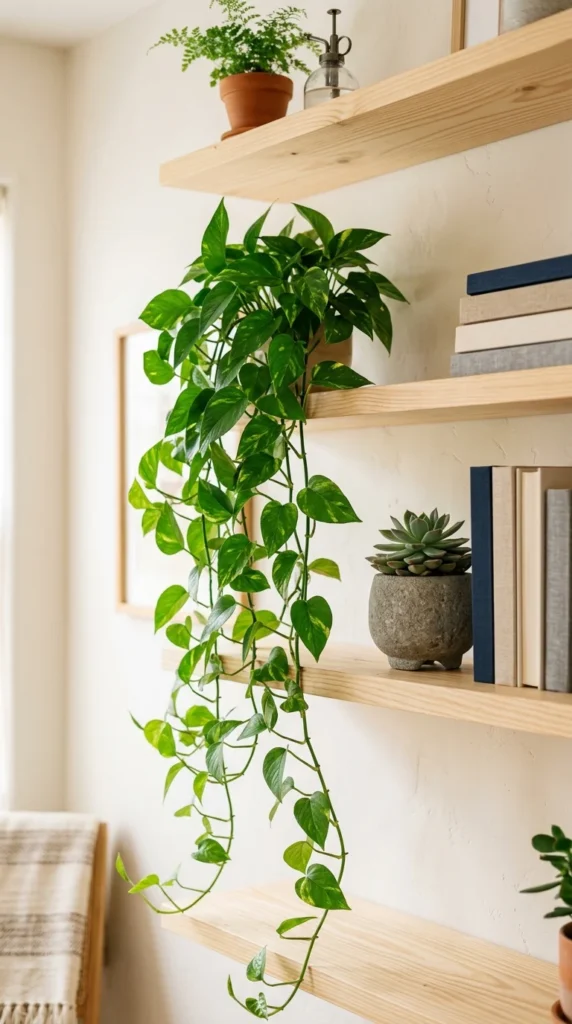
Nothing breathes life into a wooden shelf quite like living plants. The organic textures of leaves—whether they are broad and waxy or delicate and feathery—complement the natural origins of wood perfectly. For a magazine-style look, use “trailers” like String of Pearls or English Ivy on higher shelves to create vertical movement. Mix these with “upright” plants like Snake Plants or small Ferns to fill the mid-level space. If your shelves are in a low-light area, high-quality silk plants can offer the same aesthetic benefit without the maintenance.
3. Stacked Books
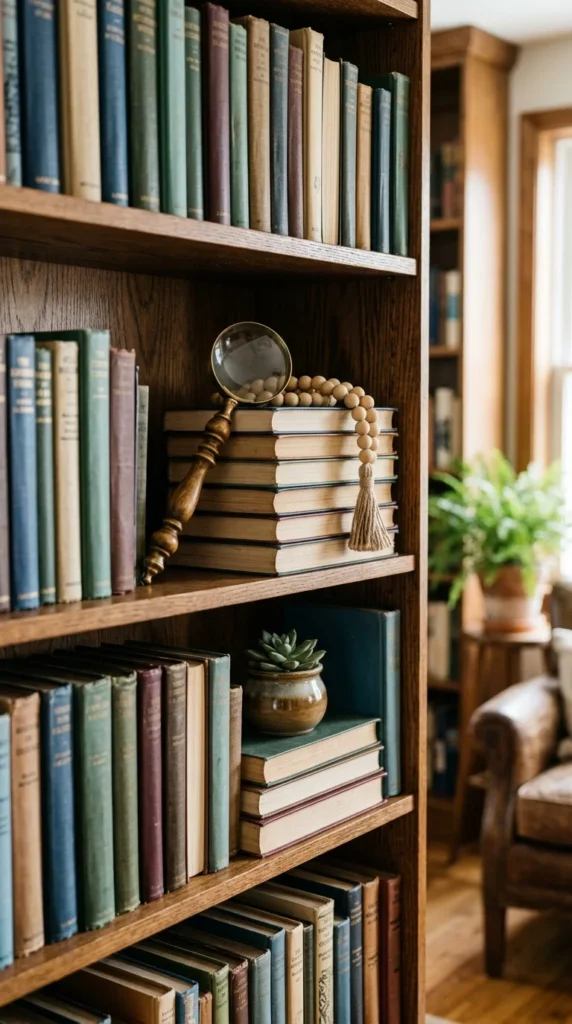
Books are the soul of a shelf, but the way you arrange them determines the vibe. Instead of lining them all up vertically like a library, try mixing in horizontal stacks. This creates a rhythmic “staircase” effect that is much more pleasing to the eye. Use the horizontal stacks as pedestals for smaller trinkets, like a small candle or a vintage compass. To keep the look clean, you can even turn the spines inward for a “parchment” look, or group books by the color of their spines for a rainbow effect.
4. Vintage Finds
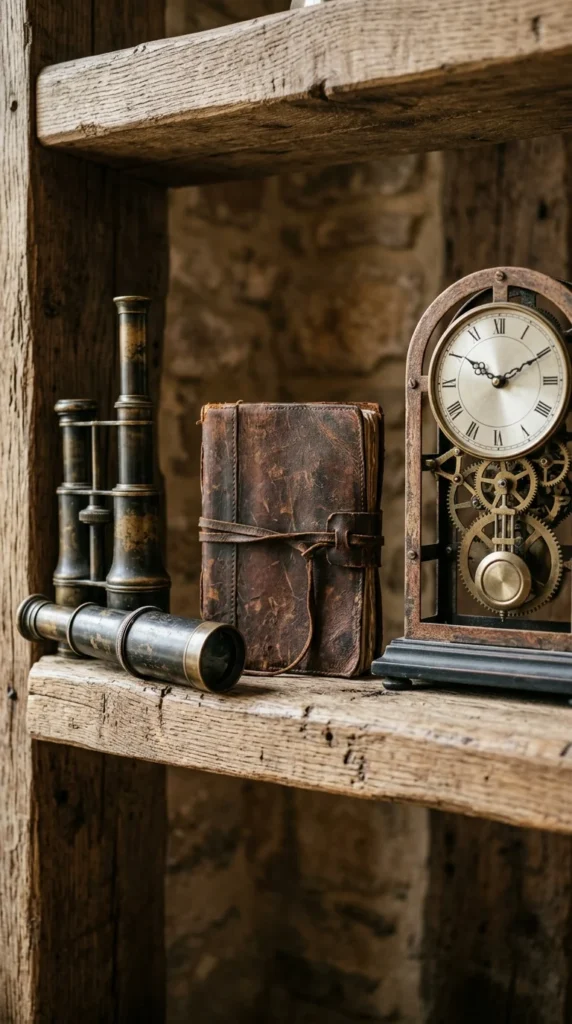
Every shelf needs a conversation piece. Incorporating vintage or antique items adds a layer of history and “soul” that new items simply can’t provide. Look for objects with patina—think tarnished brass, weathered wood, or oxidized copper. An old camera, a set of antique scales, or even a collection of vintage glass bottles can serve as a focal point. These items break up the uniformity of modern decor and make the space feel curated over time rather than bought all at once.
5. Textural Pottery
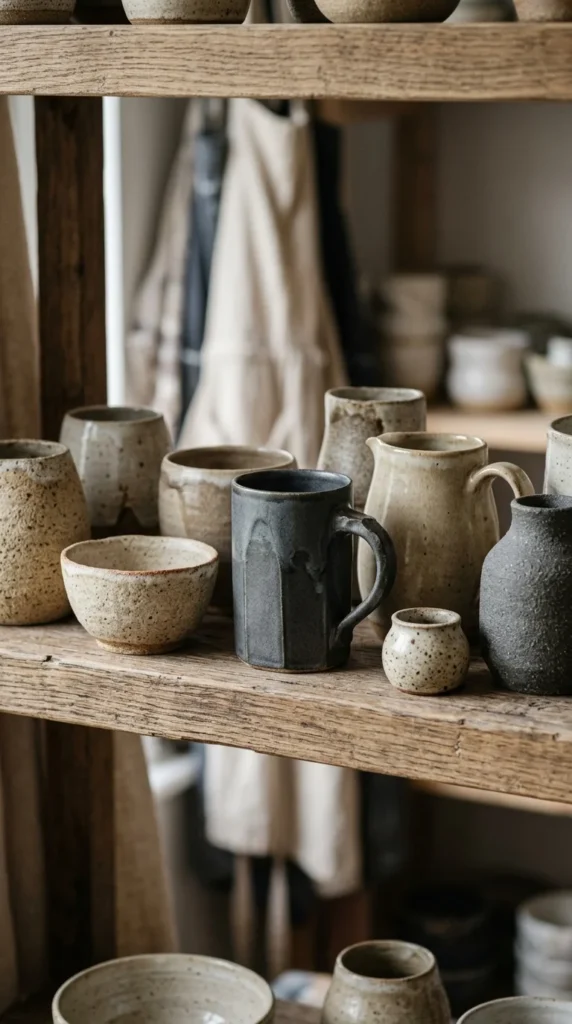
Texture is the secret ingredient in professional interior styling. On a wooden shelf, which is inherently smooth or slightly grained, adding tactile elements like stoneware or clay pottery creates a beautiful sensory contrast. Choose pieces that look handmade; slight imperfections in the shape or glaze add to the “wabi-sabi” charm. Grouping a tall, thin vase with a short, squat bowl creates a pleasing silhouette that mimics the varied heights found in nature.
6. Layered Art
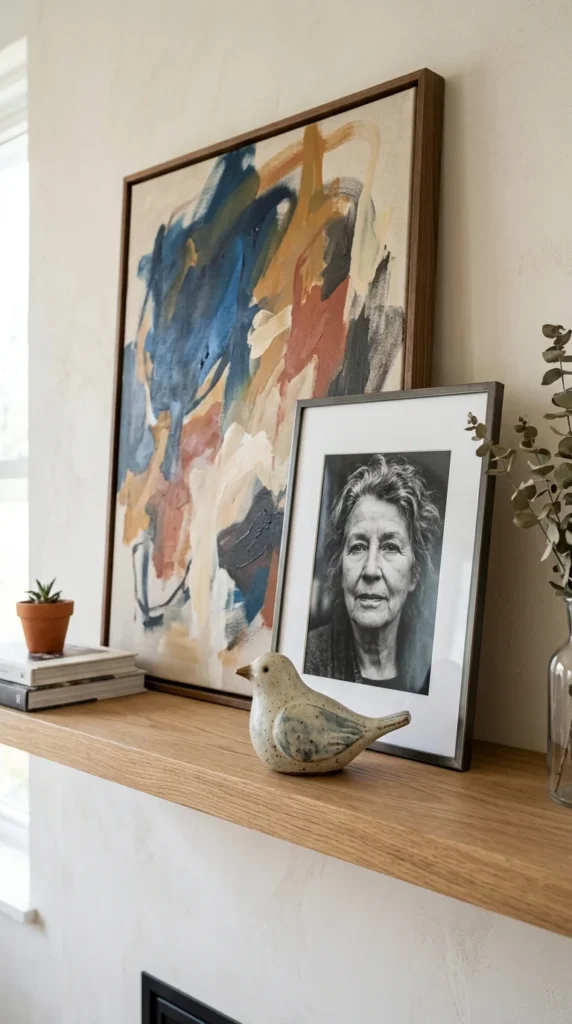
Don’t limit your artwork to the walls. Leaning framed prints or paintings on your shelves adds depth and a “relaxed-yet-refined” feel. The key to this technique is layering: place a larger frame in the back and a smaller one slightly overlapping it in the front. This creates a three-dimensional effect that draws the eye inward. Choose frames that either match the wood of the shelf for a seamless look or contrast with it (like black metal frames on light oak) for a modern edge.
7. Woven Baskets
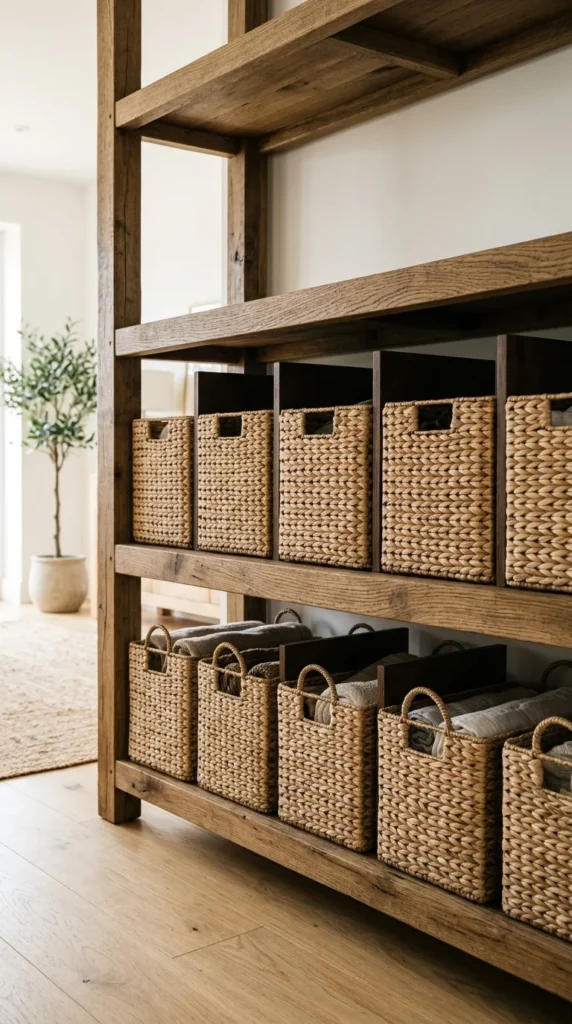
Baskets are the ultimate styling hack because they are as functional as they are beautiful. On lower wooden shelves, large woven baskets made of seagrass, jute, or wicker can hide unsightly items like electronics, toys, or extra blankets. Visually, they ground the shelving unit, providing a heavy “base” that makes the overall structure feel stable. The golden tones of natural fibers pair exquisitely with almost any wood stain.
8. Glass Containers
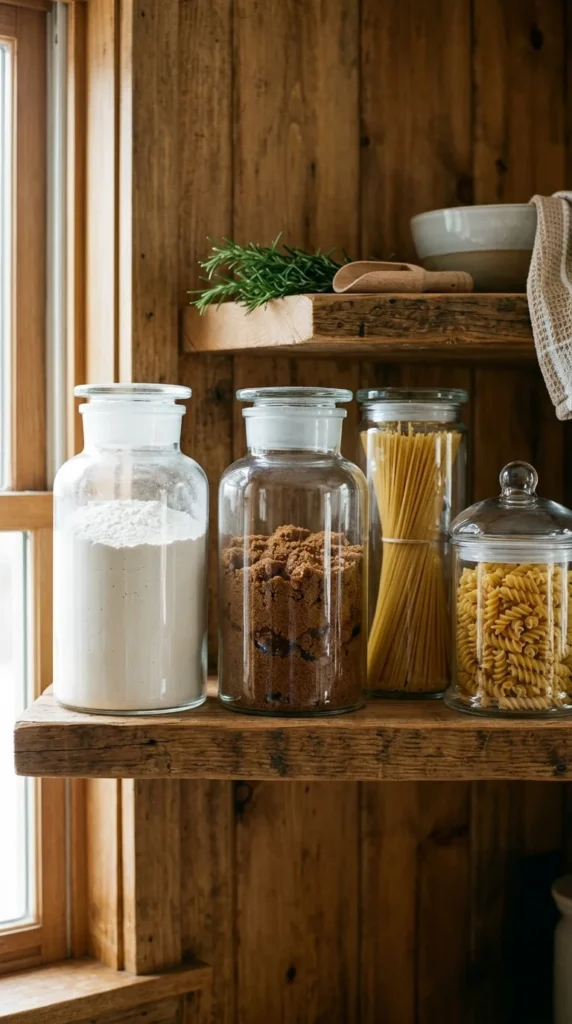
In kitchens or bathrooms, wooden shelves often hold functional items. Using clear glass containers transforms these everyday essentials into decor. The transparency of the glass keeps the shelves feeling airy and light, preventing the wood from feeling too “heavy” in a small space. Whether you’re filling them with bath salts, dried lentils, or decorative marbles, glass adds a touch of sparkle and reflection that brightens the entire display.
9. Metallic Touches
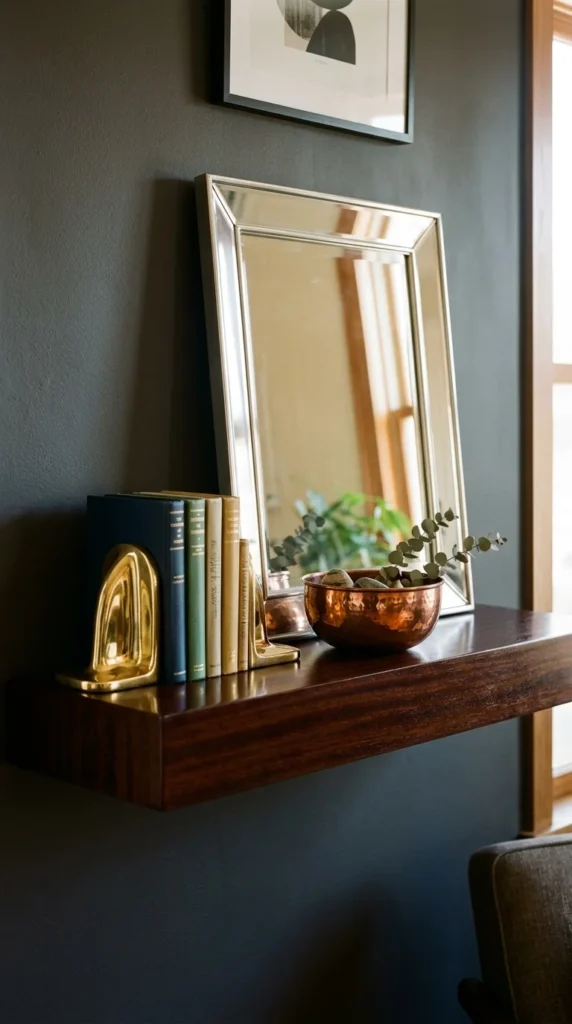
To give your wooden shelves a “straight out of a magazine” luxury feel, incorporate metallic accents. Gold, brass, copper, and silver provide a high-contrast shimmer against the matte finish of the wood. You don’t need much—just a pair of brass bookends, a small metallic tray, or even a gold-wick candle can elevate the entire look. Mixing metals is also a popular trend; just ensure they share a similar undertone (like warm brass and copper) for a harmonious result.
10. Odd Groupings
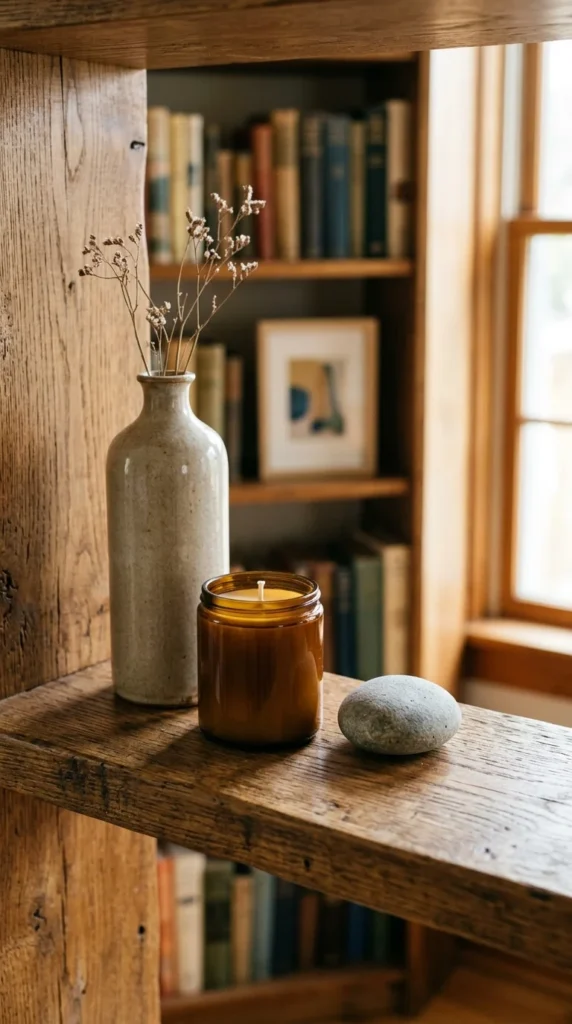
Interior designers live by the “Rule of Three.” Items grouped in odd numbers—especially threes—are naturally more appealing to the human eye. When styling your wooden shelf, try to create small vignettes of three items. Vary the heights (tall, medium, and short) and the shapes (square, cylindrical, and organic) within each group. This creates a visual “triangle” that guides the eye through the display without it feeling cluttered or symmetrical.
11. Negative Space
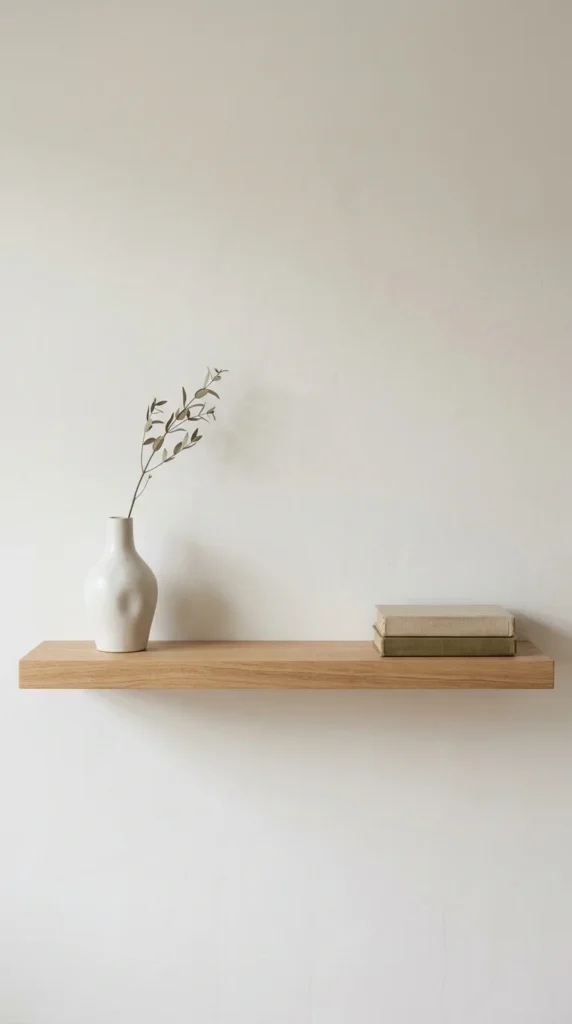
One of the biggest mistakes in shelf styling is overfilling. To achieve a high-end look, you must embrace “negative space”—the empty areas between objects. Negative space allows the eye to rest and makes the items you do choose to display feel more important and curated. If every inch of the wood is covered, the shelf looks like storage; if you leave gaps, it looks like a gallery.
12. Seasonal Decor
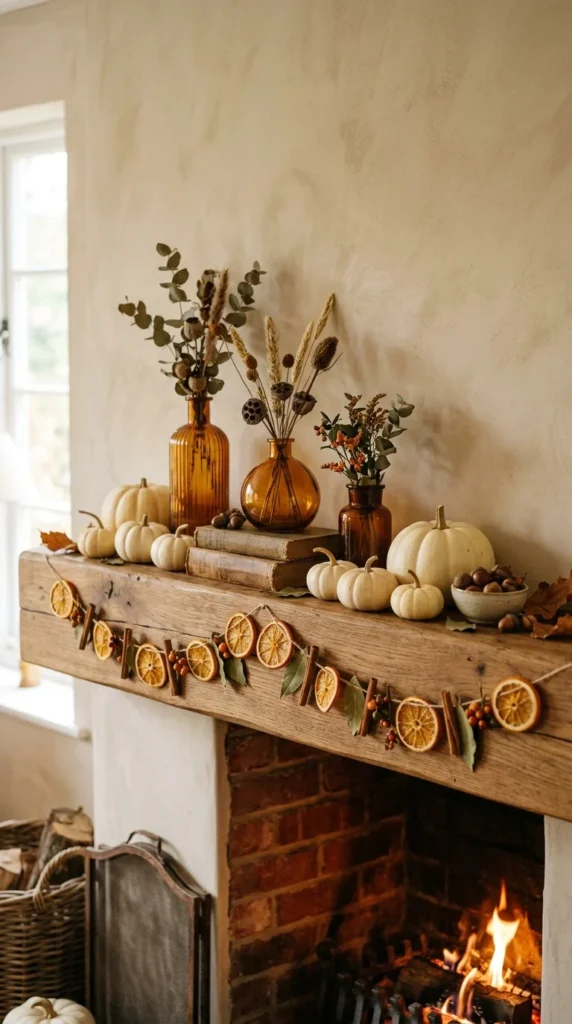
Wooden shelves are the perfect canvas for celebrating the seasons. Because wood is a natural material, it responds beautifully to seasonal elements. In the fall, add dried wheat or mini pumpkins; in the winter, try evergreen sprigs and white candles; in spring, fresh eucalyptus or pastel ceramics. By swapping out just two or three items every few months, you keep your home feeling fresh and in tune with the world outside.
13. Linear Sizing
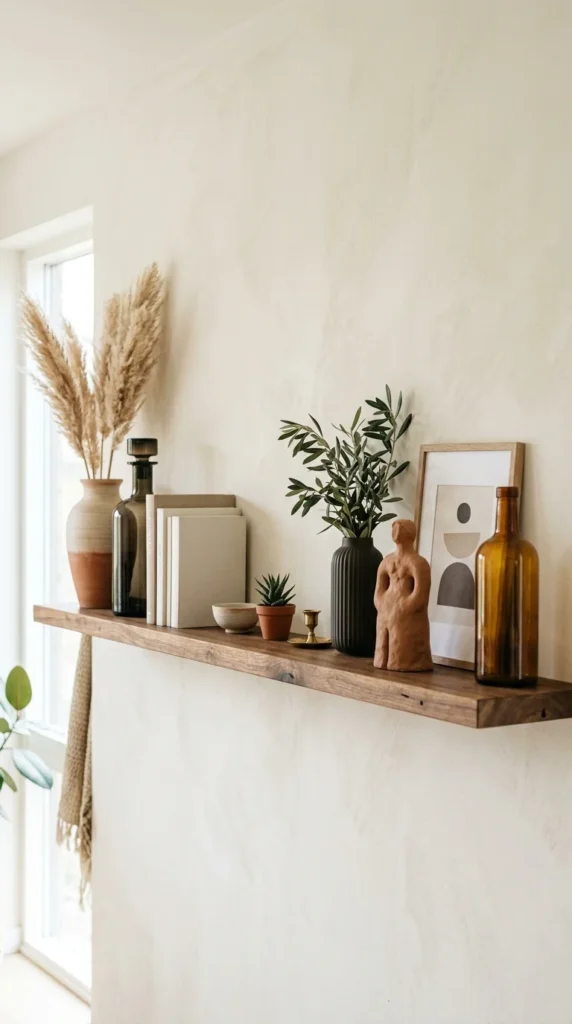
To create a sense of movement across a long wooden shelf, pay attention to the “skyline” of your objects. Avoid having everything at the same height, which can look boring. Instead, aim for a rhythmic flow. You can create a “V” shape with taller items on the ends and shorter items in the middle, or a “wave” that rises and falls across the length of the shelf. This keeps the viewer’s eye moving and makes the arrangement feel more dynamic.
14. Vertical Depth
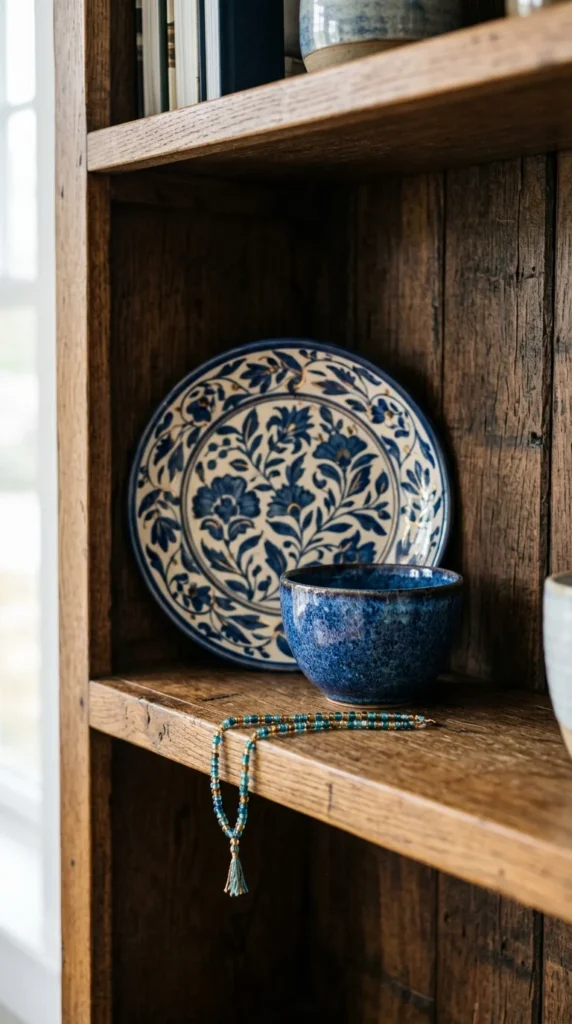
Maximize the depth of your wooden shelves by thinking in layers from front to back, not just left to right. Place larger, flatter items like trays, plates, or artwork against the back wall. Then, place medium-sized items in the middle ground, and finish with small “fillers” or textures in the very front. This layering technique creates a professional, three-dimensional look that makes the shelves appear deeper and more interesting to explore.