
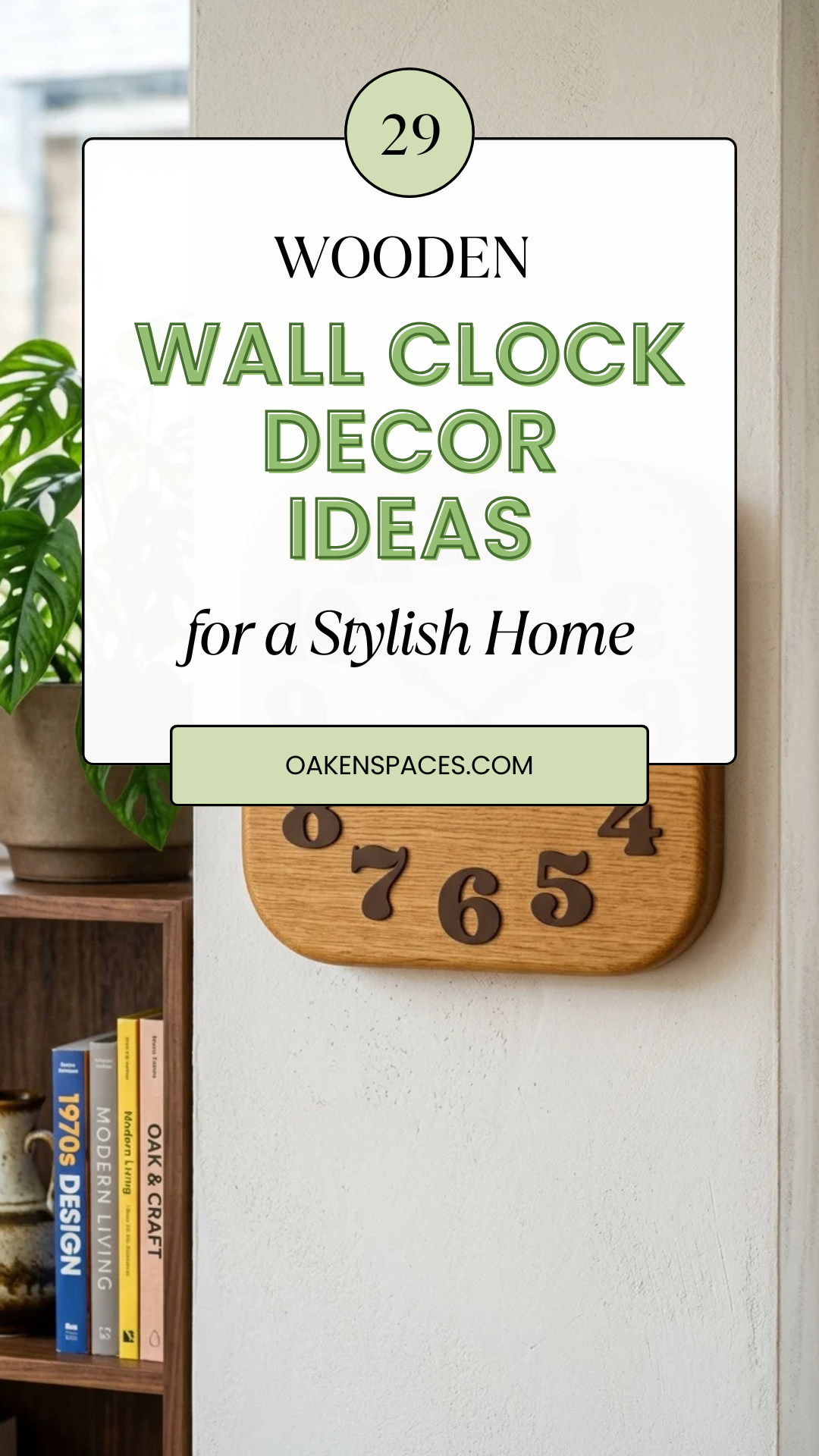
Timekeeping is an essential part of daily life, but it doesn’t have to be purely functional. In the world of interior design, the wooden wall clock has emerged as a powerhouse of style, blending the organic warmth of nature with the precision of mechanics. Whether you are aiming for a cozy farmhouse vibe, a sleek minimalist aesthetic, or a bold mid-century statement, wood is the most versatile medium to work with
Here are 29 wooden wall clock decor ideas to transform your walls into a gallery of timeless style.
1. Rustic Barnwood
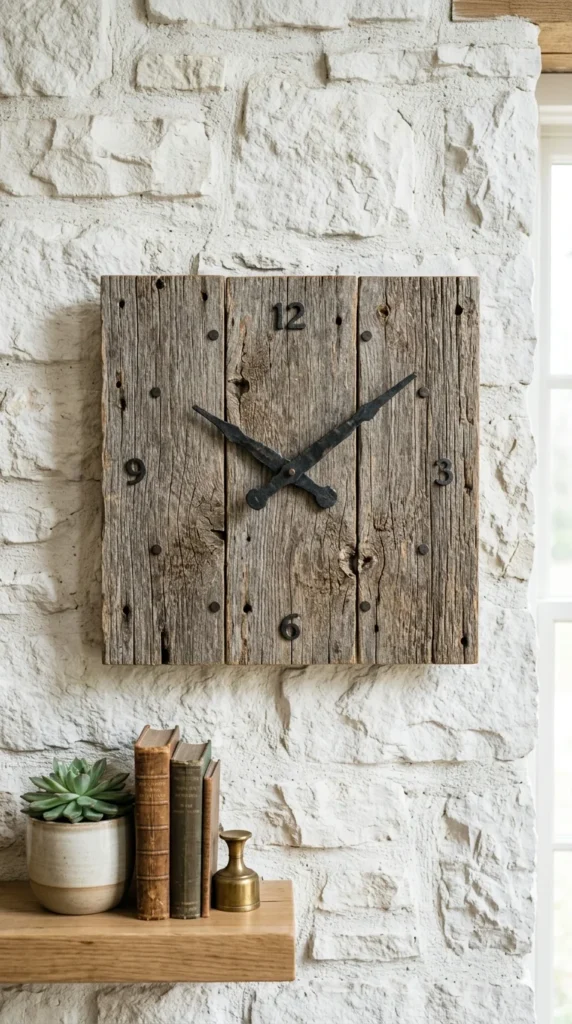
Rustic barnwood clocks bring a sense of history and rugged charm to a room. Utilizing reclaimed wood often means every piece has a unique grain and story. This style works best in kitchens or entryways where you want to establish a grounded, “lived-in” atmosphere.
2. Minimalist Scandi
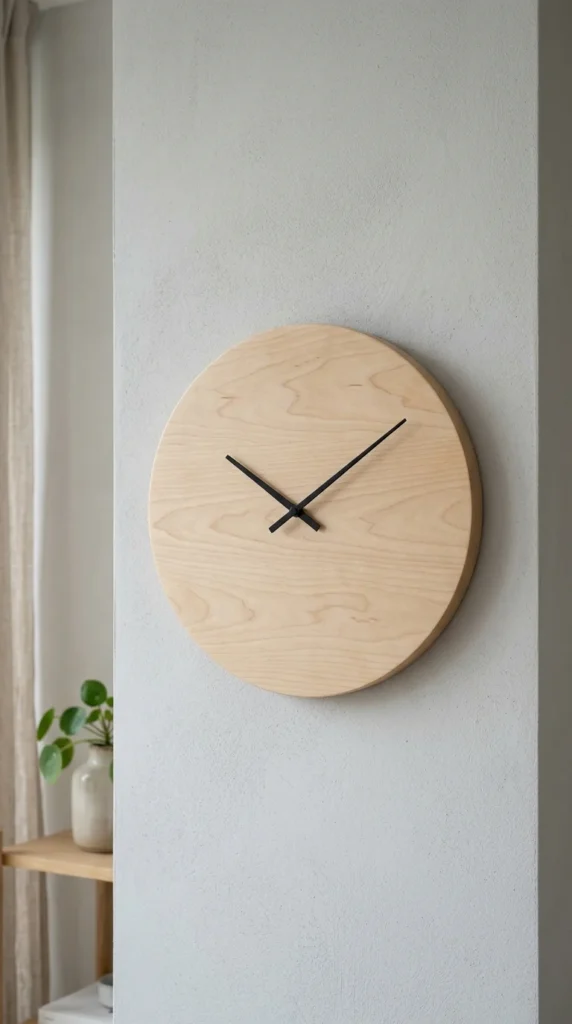
The Scandinavian approach focuses on “less is more.” A minimalist wooden clock often omits numbers entirely, letting the natural beauty of the wood grain take center stage. These are ideal for offices or bedrooms where a calm, clutter-free environment is a priority.
3. Mid-Century Sunburst
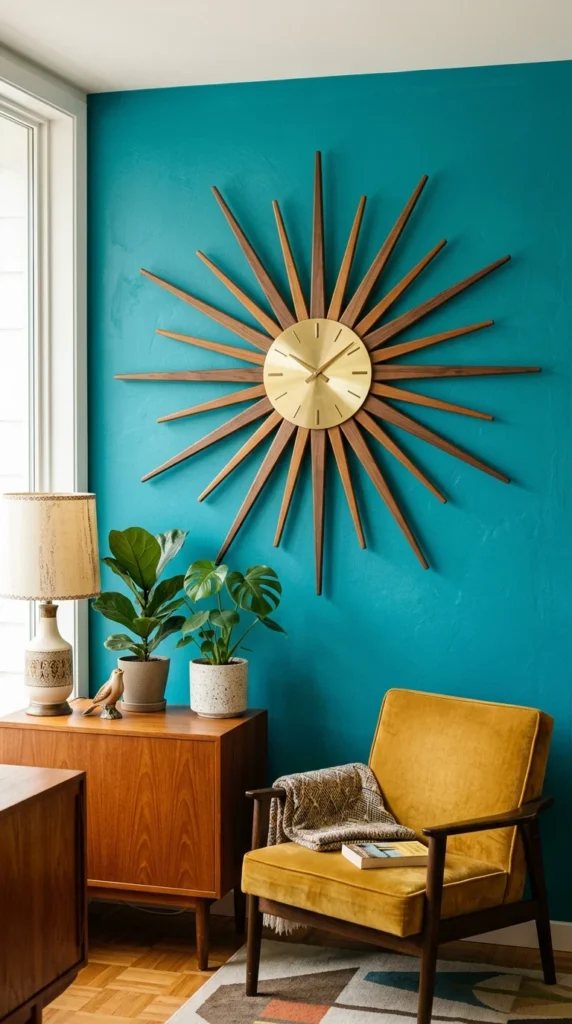
The sunburst or “starburst” design is an icon of the 1950s and 60s. When crafted in rich woods like teak or walnut, it adds a dynamic sense of movement to your wall. It serves as an architectural focal point in a dining room or above a fireplace.
4. Live Edge
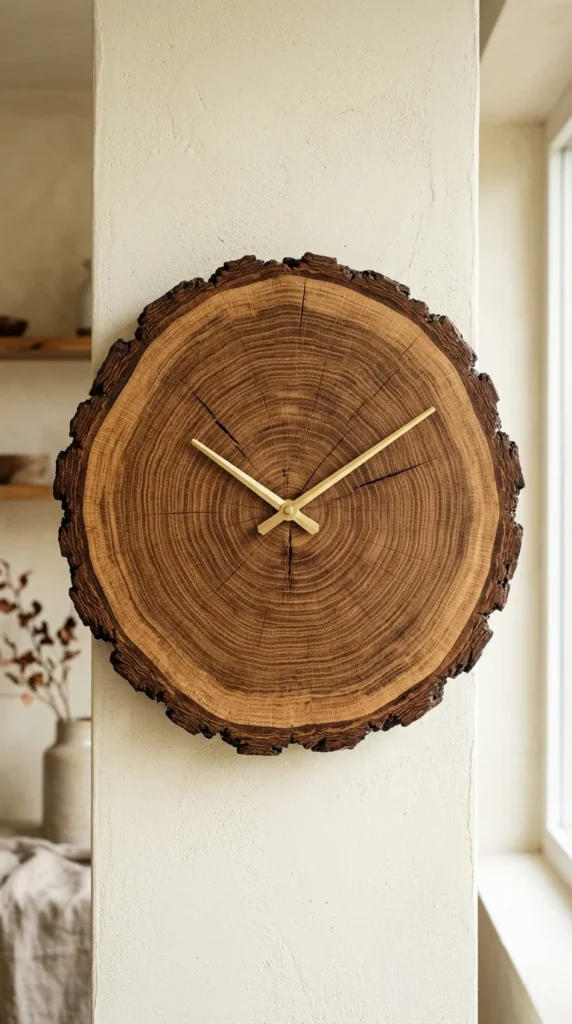
Live edge clocks preserve the natural silhouette of the tree. Each piece is entirely unique, showcasing the organic curves and imperfections of the timber. These clocks act as functional pieces of art that bring the outdoors inside.
5. Geometric Hexagon
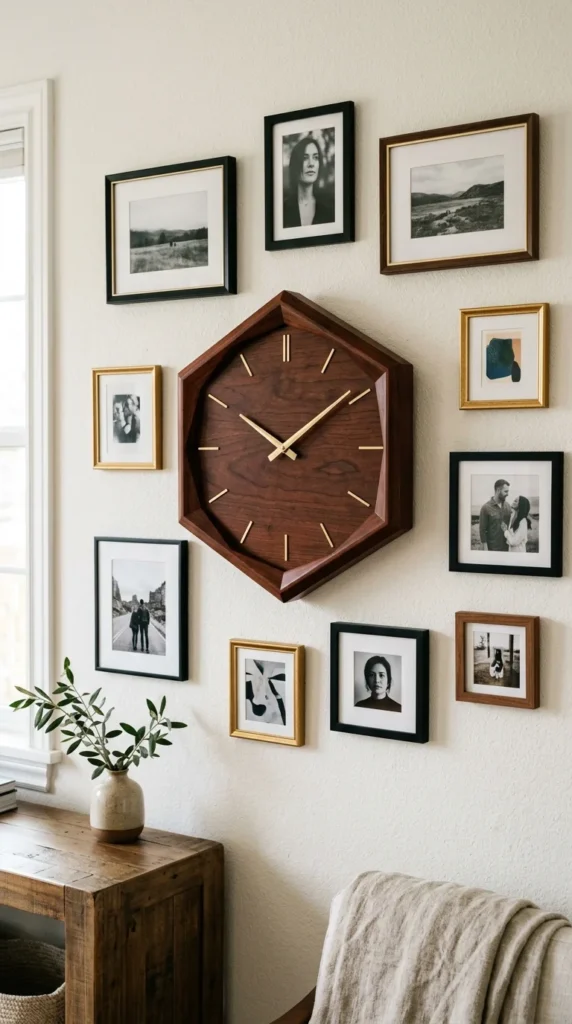
Geometric shapes offer a modern twist on traditional wood. A hexagonal clock adds visual interest through its sharp lines and can be grouped with other geometric decor to create a cohesive, contemporary look.
6. Oversized Farmhouse
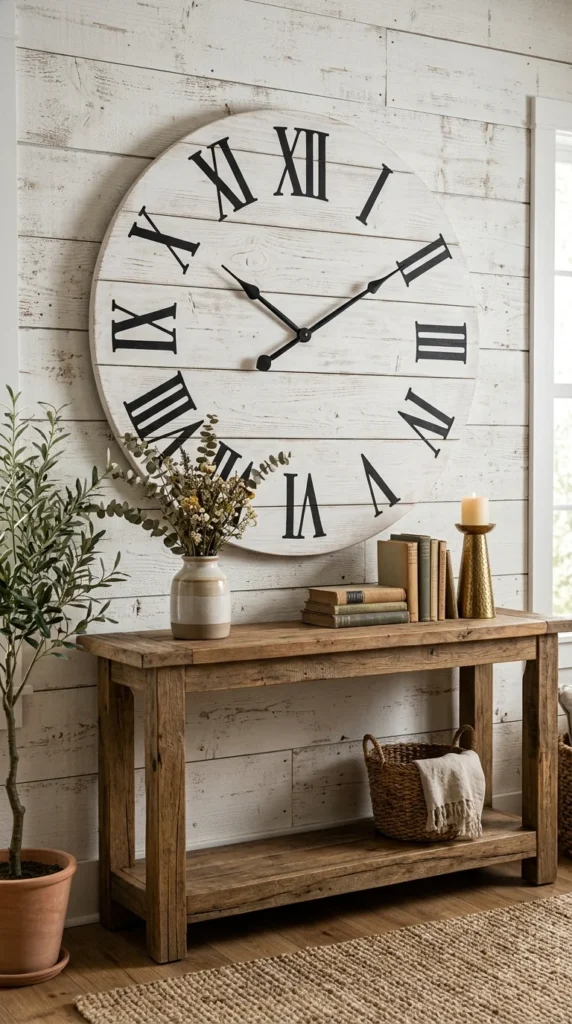
If you have a large, empty wall, an oversized farmhouse clock is the perfect solution. The white-washed or distressed finish creates a soft, airy feel, while the sheer scale of the piece makes a grand statement.
7. Laser-Cut Floral
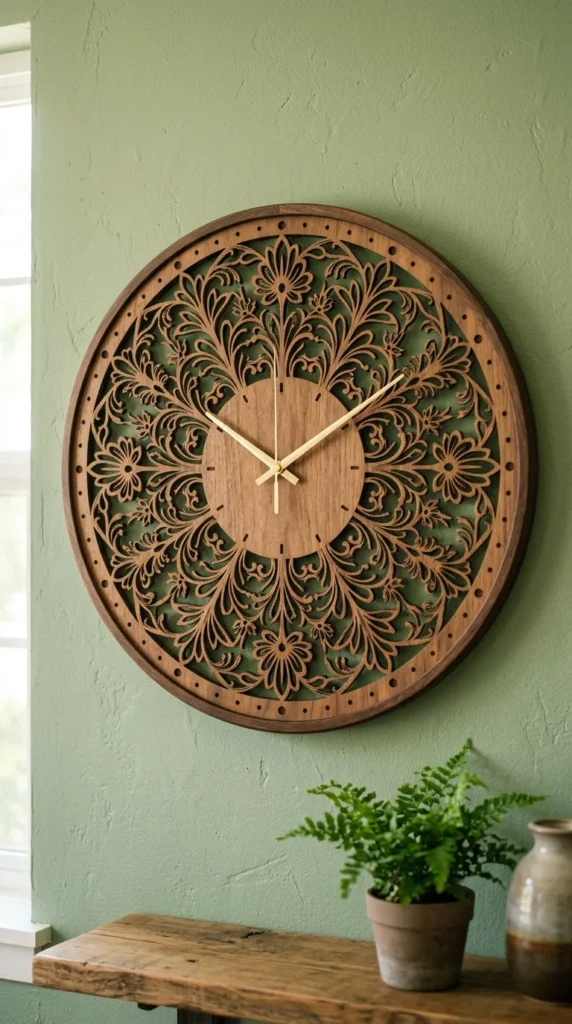
Technology meets craftsmanship in laser-cut designs. These clocks feature delicate, intricate patterns—from botanicals to mandalas—that add a layer of texture and shadow to your wall decor.
8. Industrial Gear
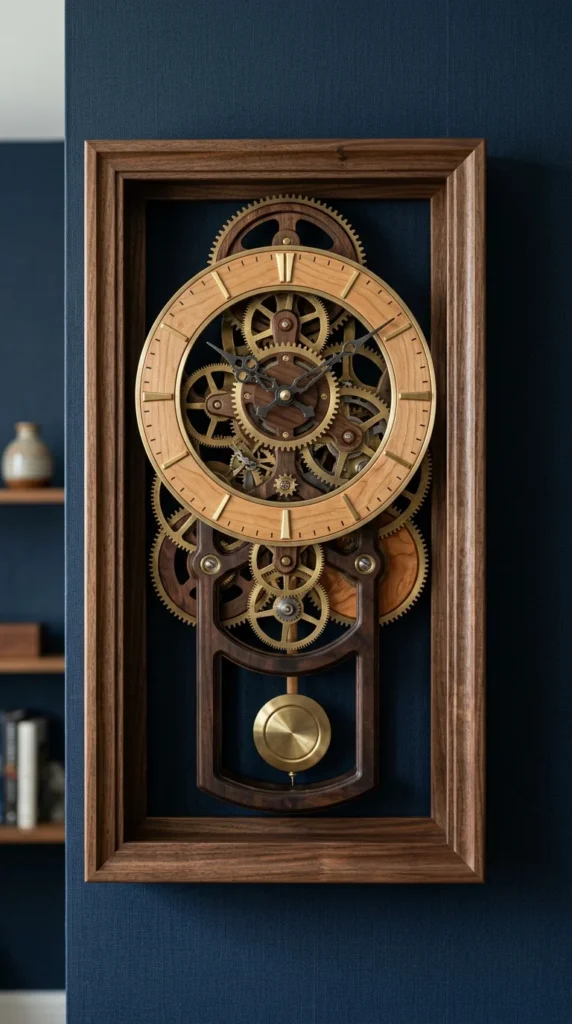
For a look that is both vintage and mechanical, industrial gear clocks are a top choice. The combination of warm wood and “cold” metallic accents or gear shapes creates a steampunk-inspired aesthetic that fits perfectly in a loft or study.
9. Driftwood Art
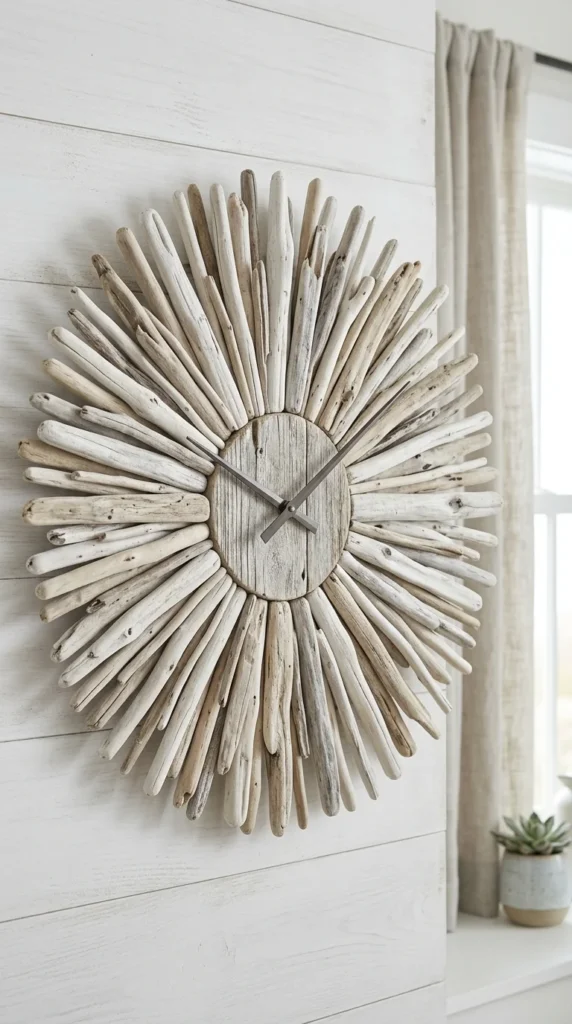
Driftwood clocks are the ultimate accessory for coastal homes. The salt-worn, sun-bleached appearance of the wood offers a soft palette of grays and creams, making the space feel breezy and relaxed.
10. Vertical Plank
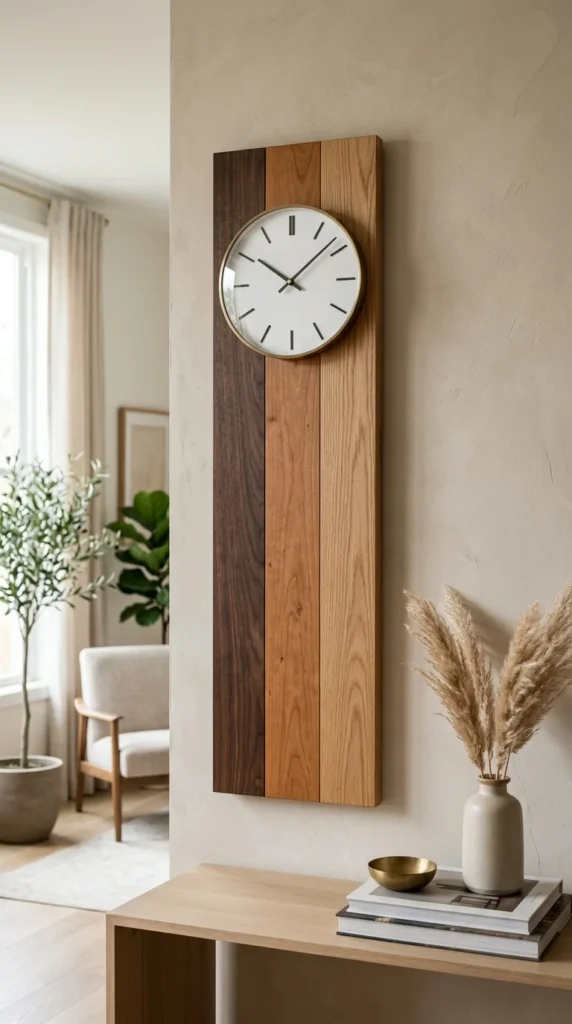
Break away from the traditional circle. A vertical plank clock draws the eye upward, making it an excellent choice for narrow walls or spaces between doors. It functions as both a timepiece and a vertical sculpture.
11. Cuckoo Revival
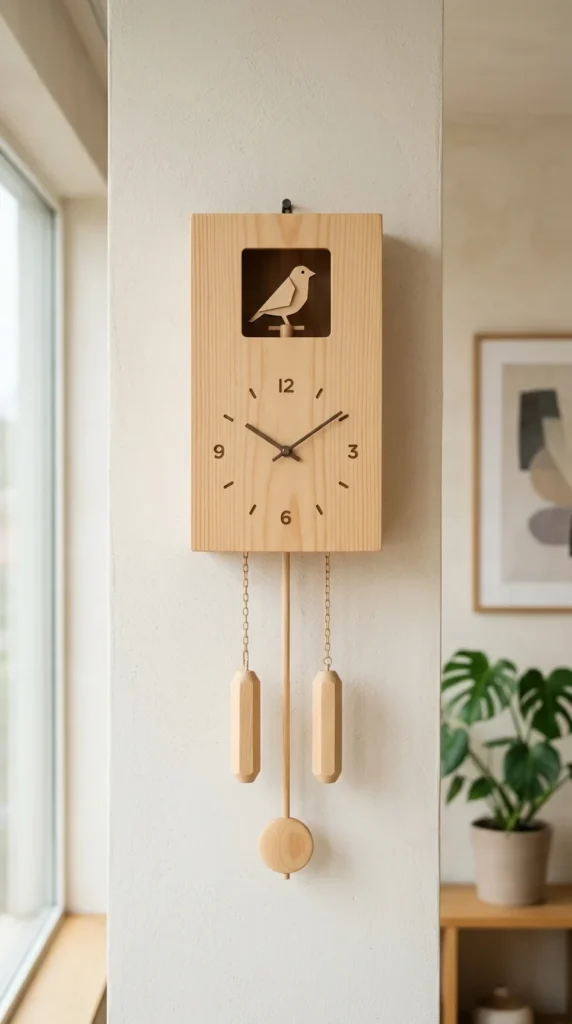
The classic cuckoo clock has received a modern makeover. Today’s versions often feature sleek, unadorned wood and bright pops of color, maintaining the whimsy of the traditional design without the visual clutter.
12. Epoxy Resin
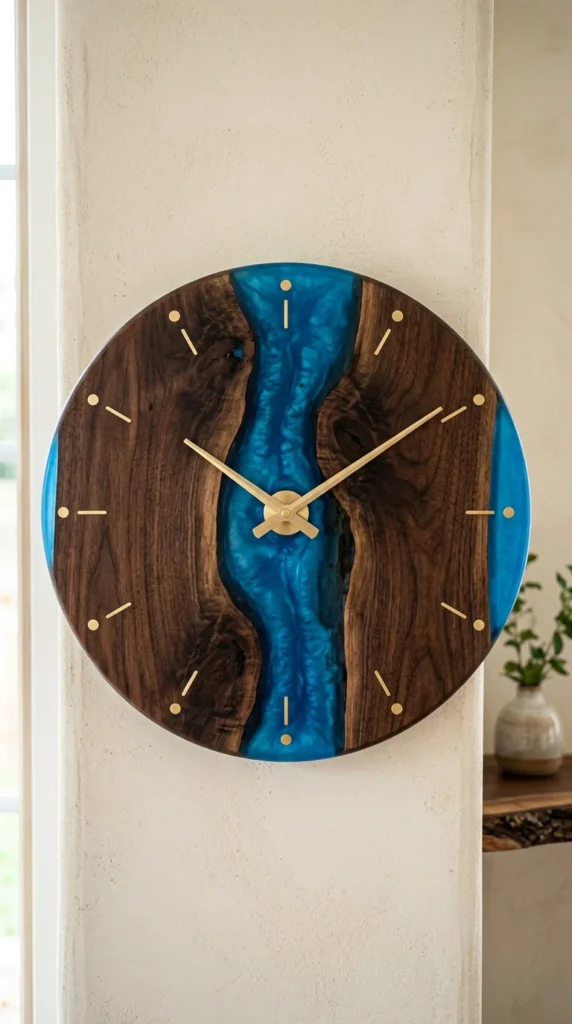
Epoxy resin clocks are trending for their “river” effect. By combining wood slabs with colorful, translucent resin, these clocks become vibrant centerpieces that capture the light and mimic natural landscapes.
13. Shiplap Style
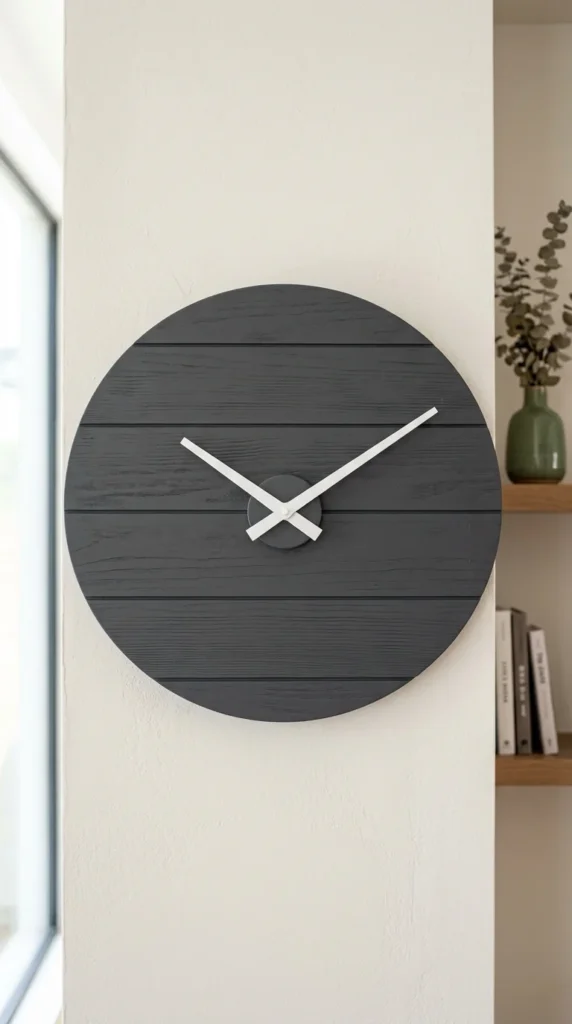
Shiplap isn’t just for walls. A shiplap-style clock brings that iconic coastal-farmhouse texture to your decor. It’s a subtle way to add horizontal lines to a room, which can help make a space feel wider.
14. Pendulum Classic
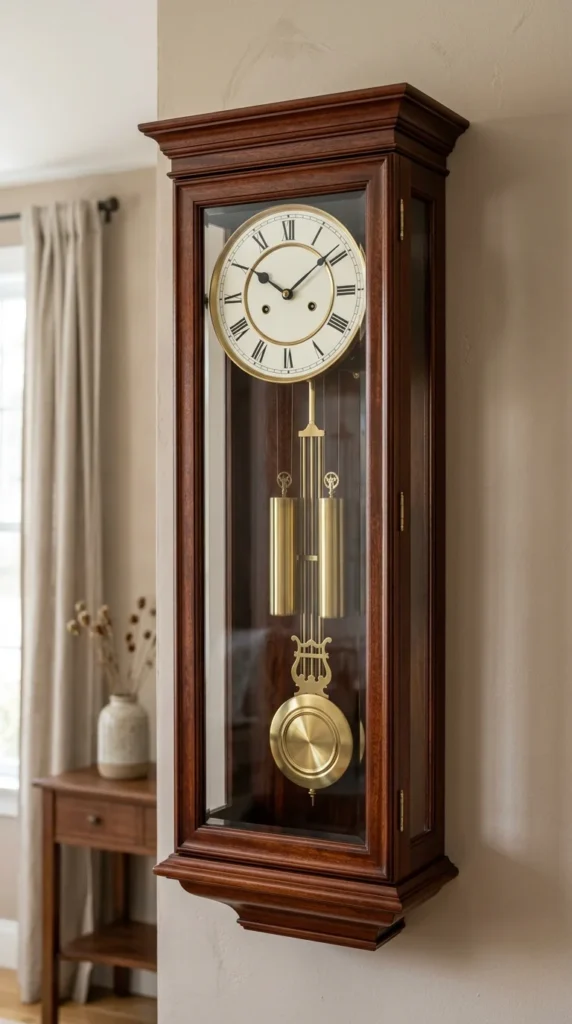
There is something deeply rhythmic and comforting about a pendulum. Modern wooden pendulum clocks offer a streamlined silhouette while retaining the classic mechanical motion that adds “life” to a quiet room.
15. Dark Ebony
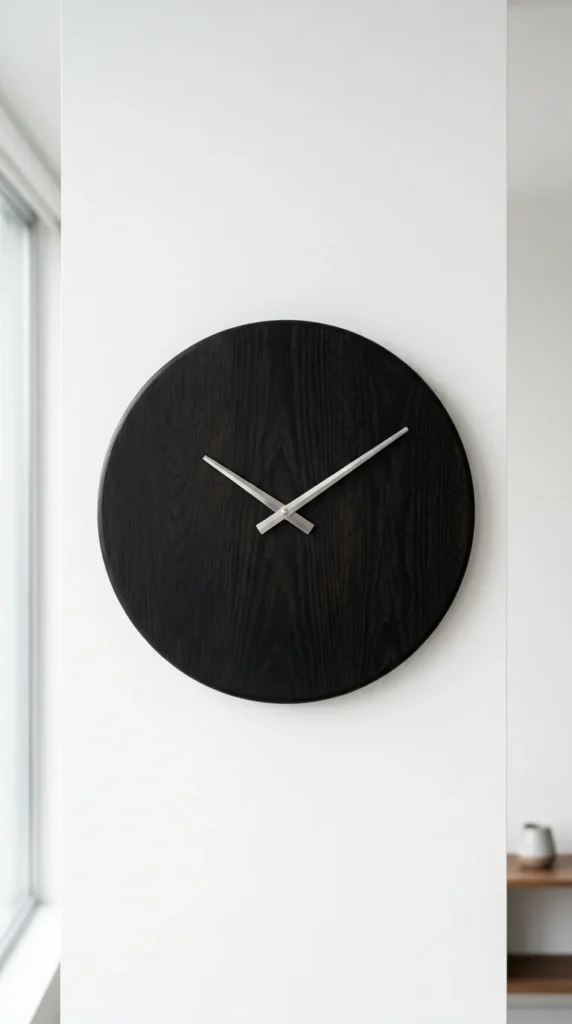
For a sophisticated and bold look, choose a clock in an ebony or black finish. The dark wood provides a striking contrast against light-colored walls and pairs beautifully with metallic accents like silver or chrome.
16. Slat Design
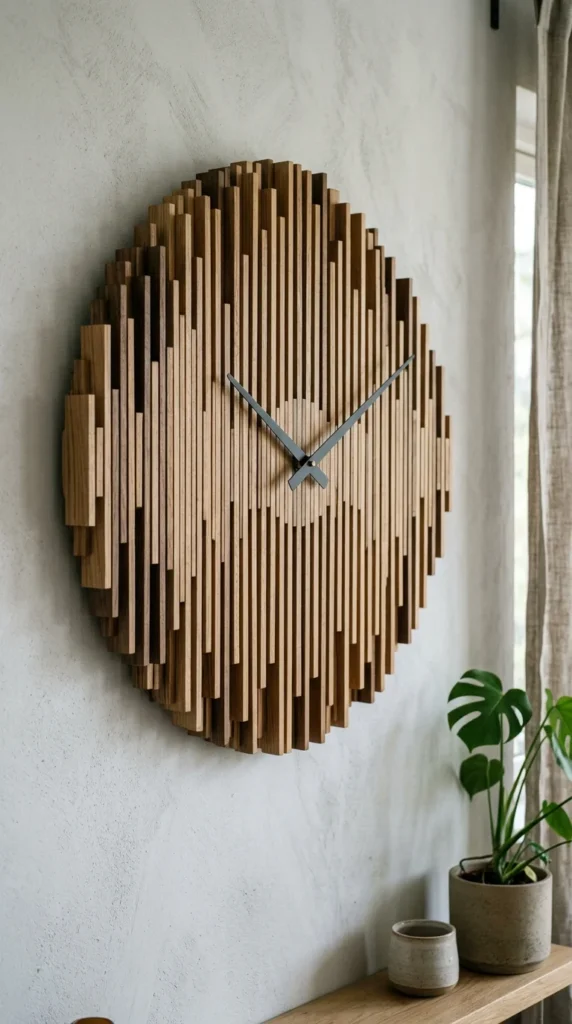
Slat clocks use repetition to create a sense of rhythm. The gaps between the wooden slats create interesting shadows, giving the clock a three-dimensional quality that changes as the light in the room shifts throughout the day.
17. Painted Accents
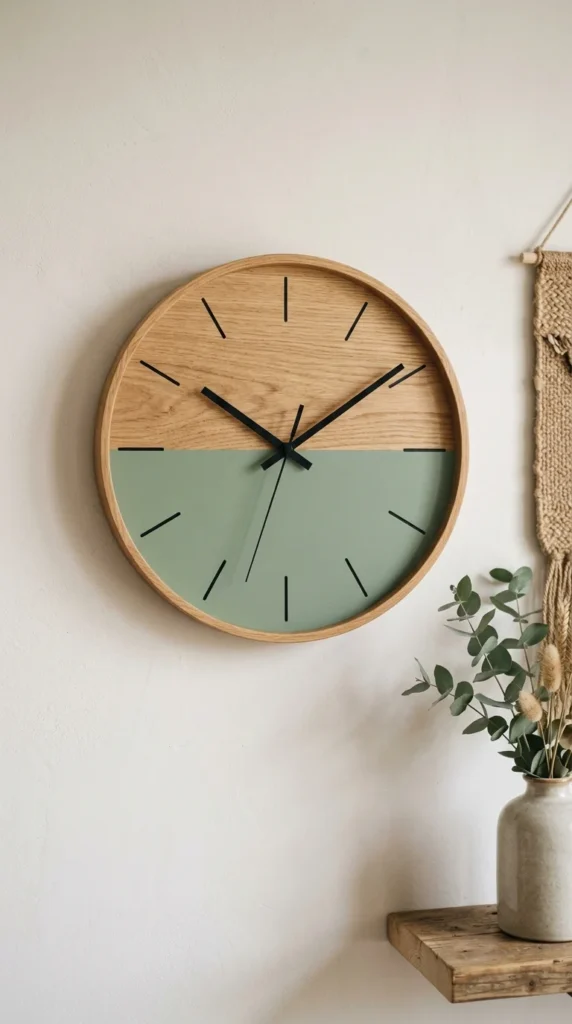
A “dipped” or partially painted wooden clock allows you to introduce a pop of color into your room without overwhelming it. This DIY-inspired look is playful and helps tie the clock into your existing color scheme.
18. Bamboo Eco
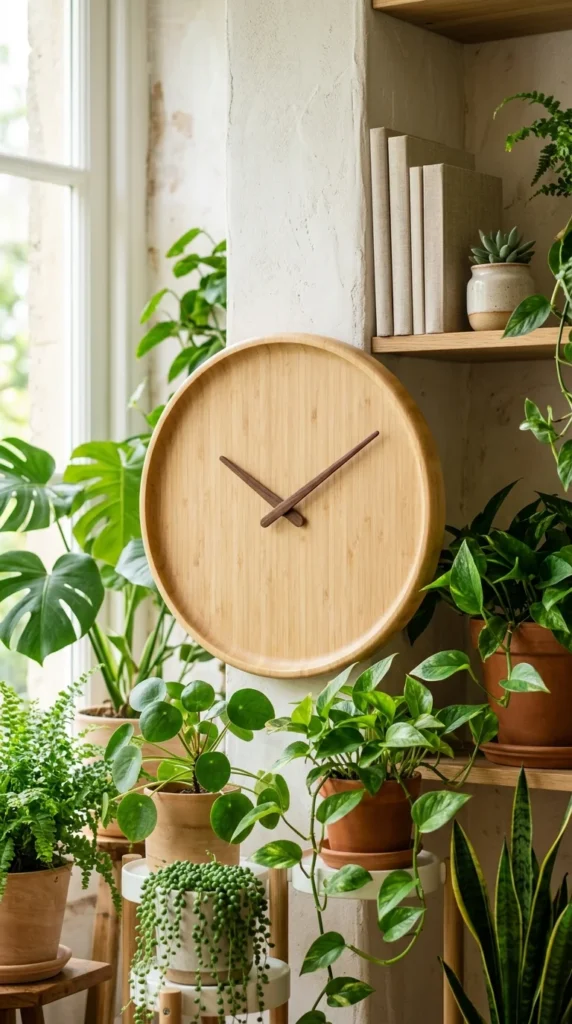
Bamboo is a sustainable and eco-friendly choice that offers a very fine, straight grain. Its light yellow-to-tan hue is perfect for a Zen-inspired or eco-conscious home, bringing a sense of lightness and purity.
19. Retro Square
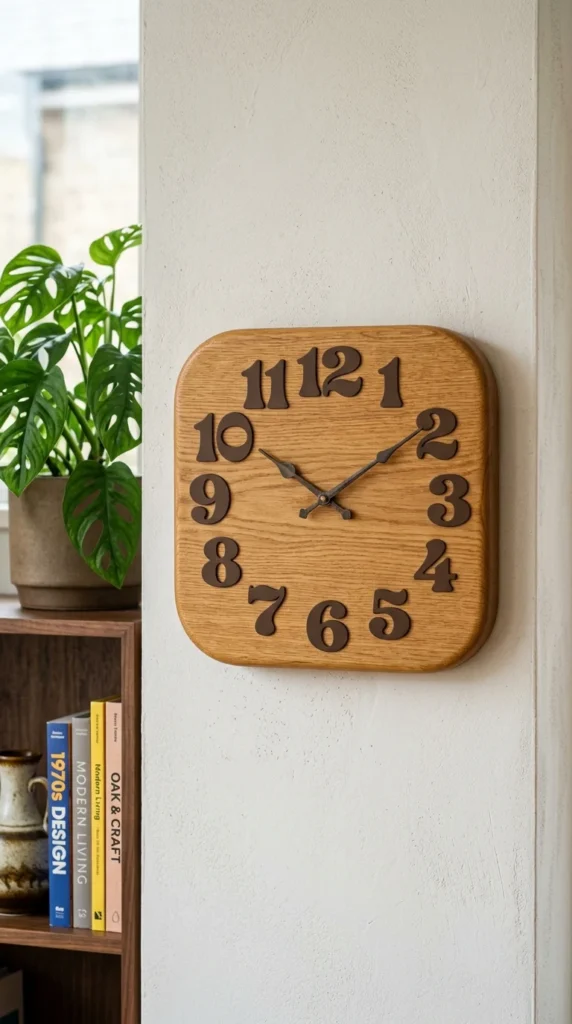
While circles are standard, square clocks offer a retro-modern appeal. Rounded corners soften the look, making it feel friendly and nostalgic. It’s a great way to break up a wall full of circular frames.
20. Distressed Chic
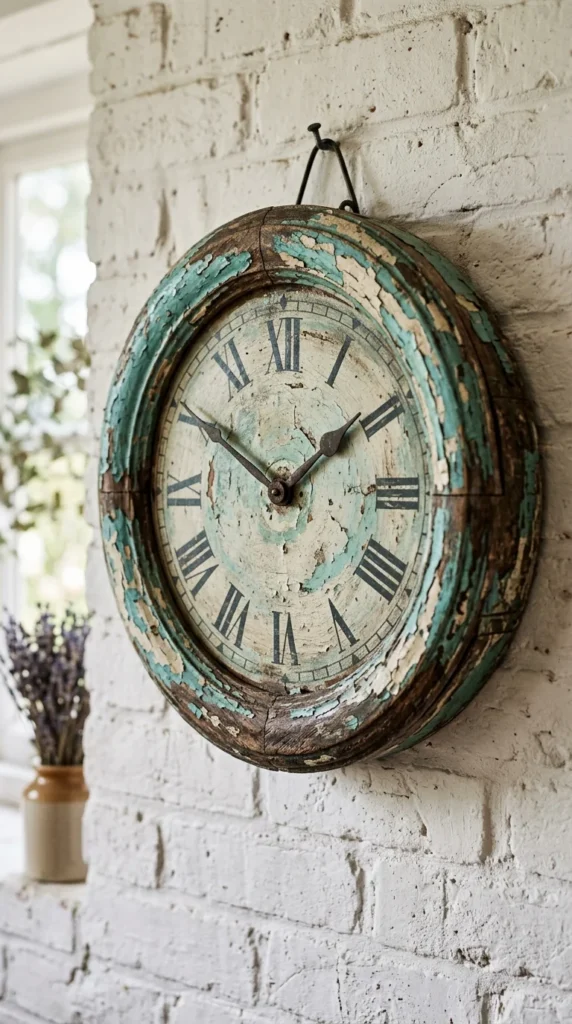
Distressed wood clocks are perfect for adding character and a “shabby chic” vibe. The weathered paint and exposed wood suggest a piece that has been loved for generations, adding instant soul to a new home.
21. Marble Fusion
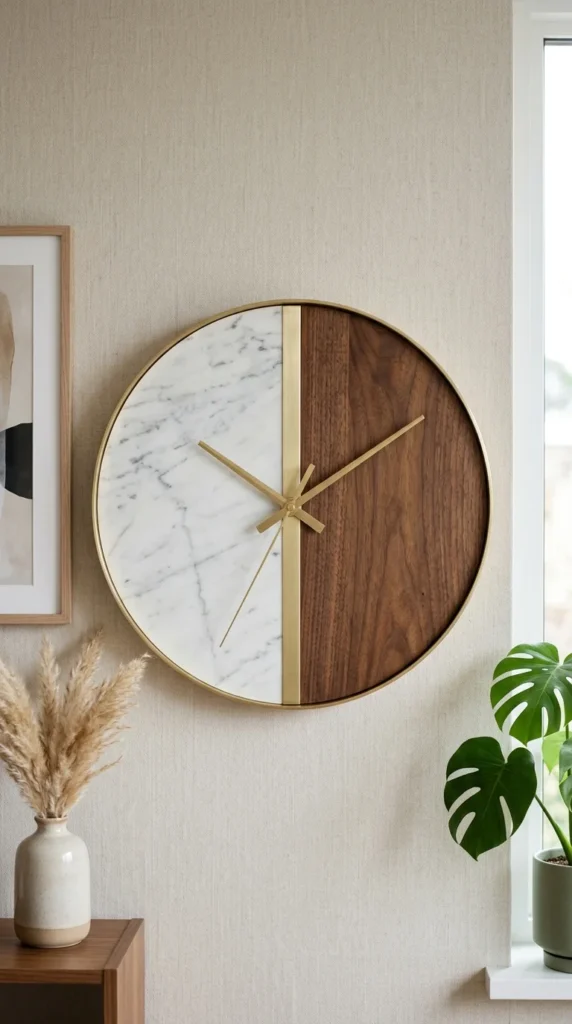
The combination of stone and wood is the height of luxury. A marble and wood fusion clock offers a balance between the “cold” elegance of stone and the “warm” texture of timber, making it a sophisticated choice for a formal living room.
22. Tree Ring Print
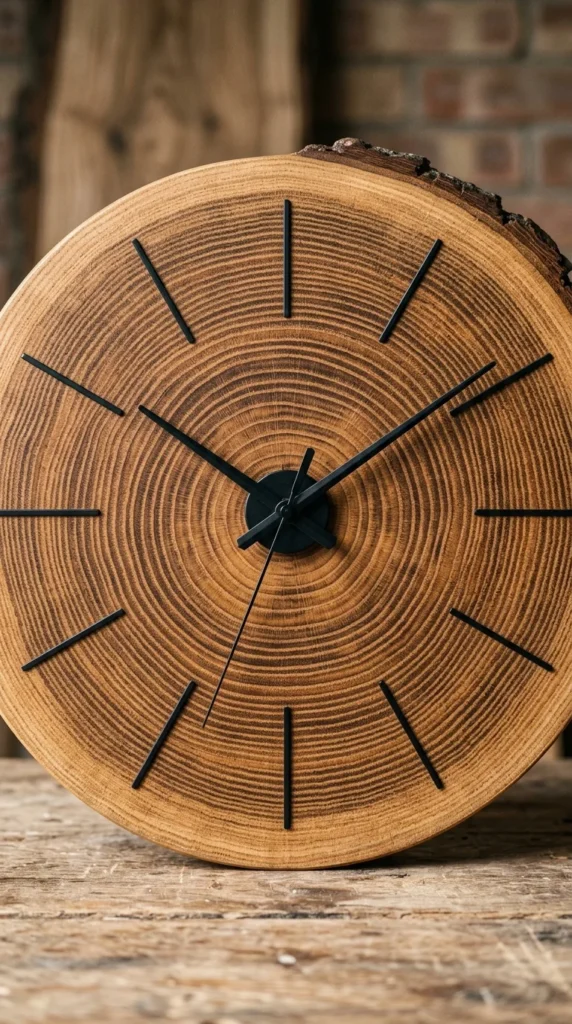
Instead of just using wood, some clocks celebrate the history of the tree by highlighting its rings. These designs focus on the intricate, circular patterns that represent time itself in nature, making them highly symbolic pieces.
23. Floating Numbers
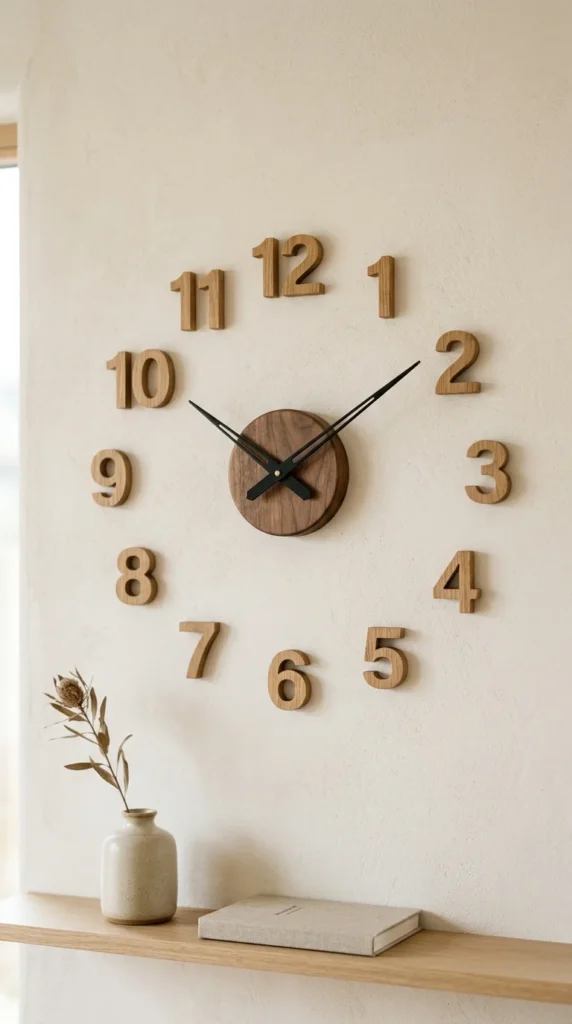
Floating clocks use the wall itself as the “face.” By mounting a wooden center mechanism and placing wooden numbers around it, you create a large-scale installation that feels light and airy.
24. Herringbone Pattern
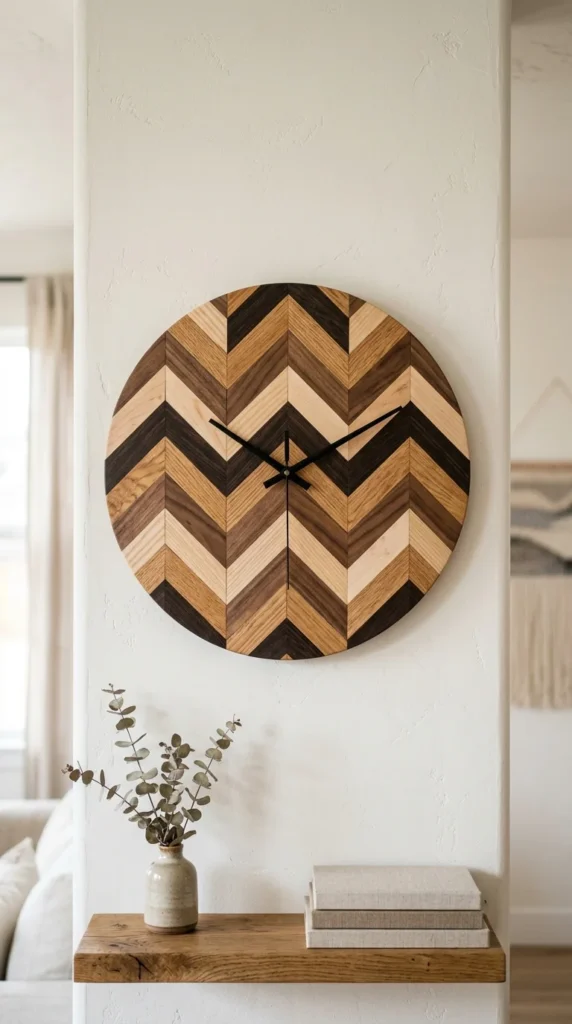
The herringbone pattern adds a sophisticated, architectural touch. By using different stains—like oak, walnut, and maple—you create a mosaic effect that draws the eye and showcases fine craftsmanship.
25. Bohemian Macrame
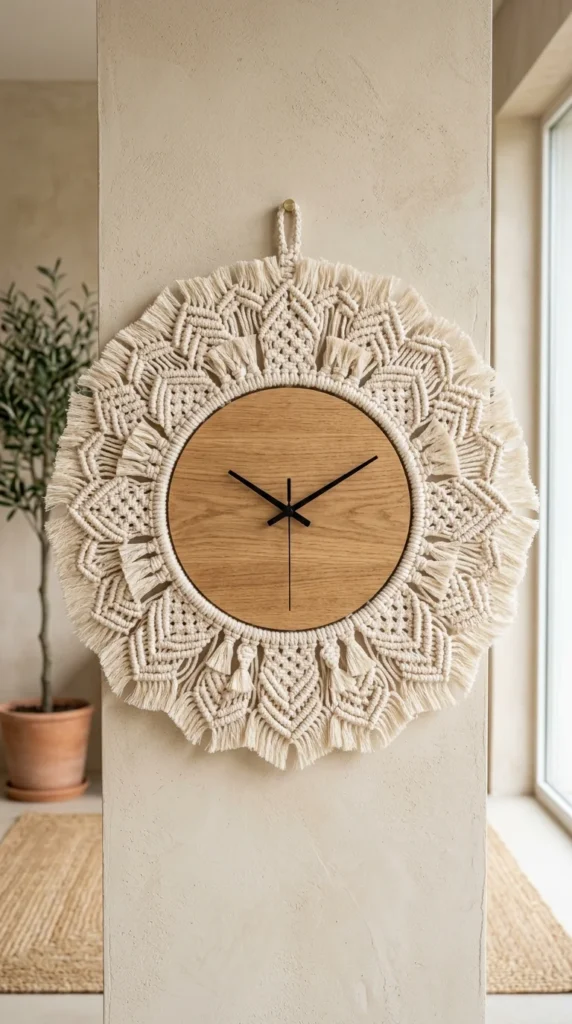
For those who love the Boho-chic style, a clock that incorporates textile art is a must. The wooden face provides a solid center for a flowing macrame fringe, blending hard and soft elements beautifully.
26. Plywood Layers
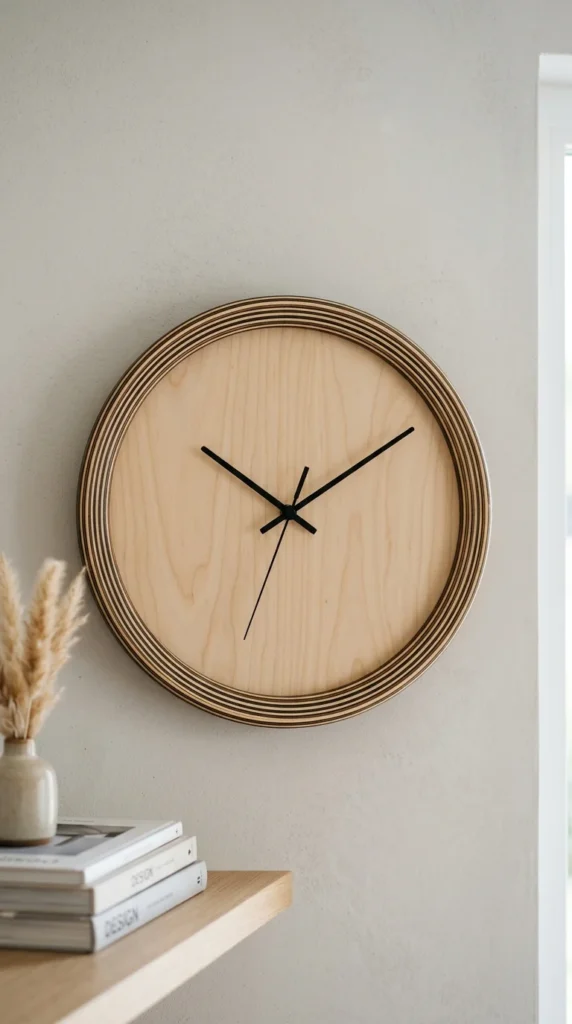
Plywood is often hidden, but in modern design, its layers are celebrated. A clock that showcases the striped “stack” of plywood layers offers a raw, industrial, and honest aesthetic that works well in creative studios.
27. Engraved World Map
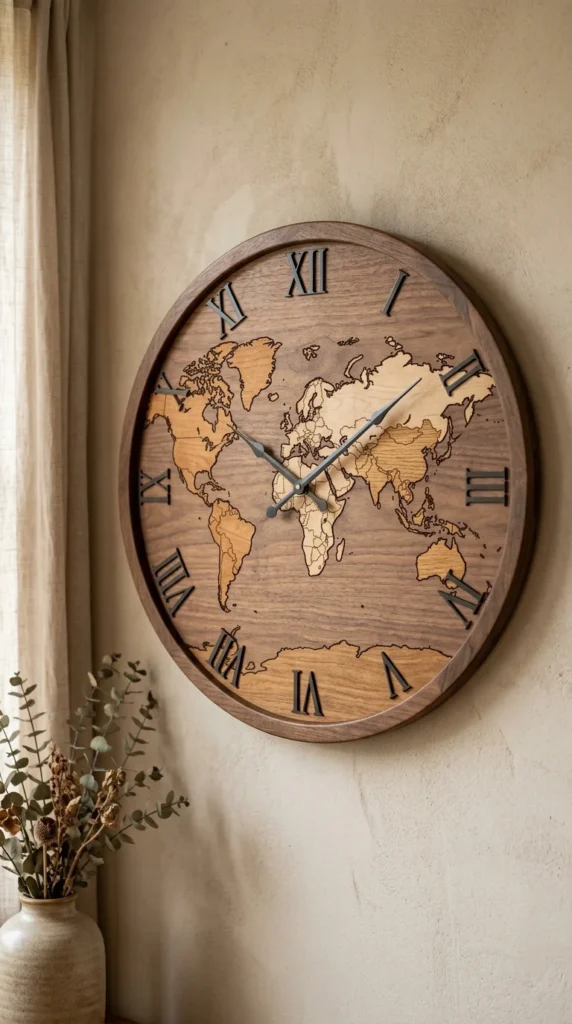
For the traveler, an engraved map clock is a constant reminder of the world beyond. The wood’s texture adds a vintage, “explorer” feel to the map, making it a great conversation starter in a library or den.
28. Inlaid Metal
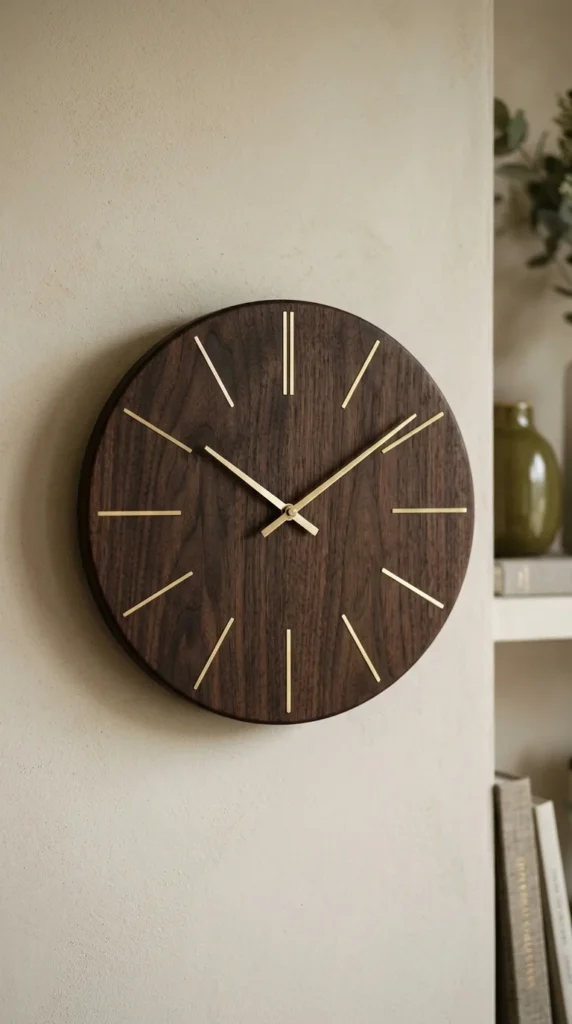
Inlay work is a sign of high-end craftsmanship. Thin strips of brass, copper, or silver embedded into the wood create a sleek, polished look that catches the light beautifully and adds a touch of glamour.
29. Abstract Asymmetrical
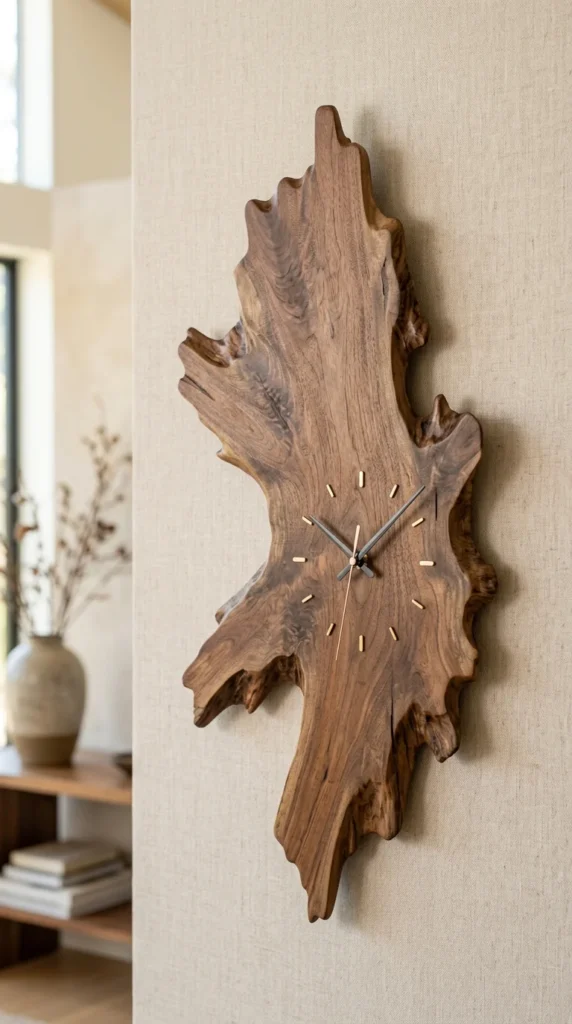
Why stick to a circle or square? Abstract, asymmetrical wooden clocks act as sculptural pieces. These are perfect for those who want their home decor to be daring, unique, and a little bit unpredictable.
How to Style Your Wooden Wall Clock
- Consider the Contrast: If your wall is dark, go with a light wood like maple or ash. For white or light-colored walls, walnut or ebony provide a stunning pop.
- Scale Matters: A small clock on a massive wall can look lost. Measure your space and ensure the clock is at least 1/3 the width of the furniture piece it hangs above.
- Lighting is Key: Place your clock where it can catch natural light to highlight the wood grain, but avoid spots with heavy glare that might make it hard to read the time.
- Coordinate Stains: While you don’t need to match your clock exactly to your flooring or coffee table, staying within the same “temperature” (warm vs. cool tones) helps create a cohesive look.