
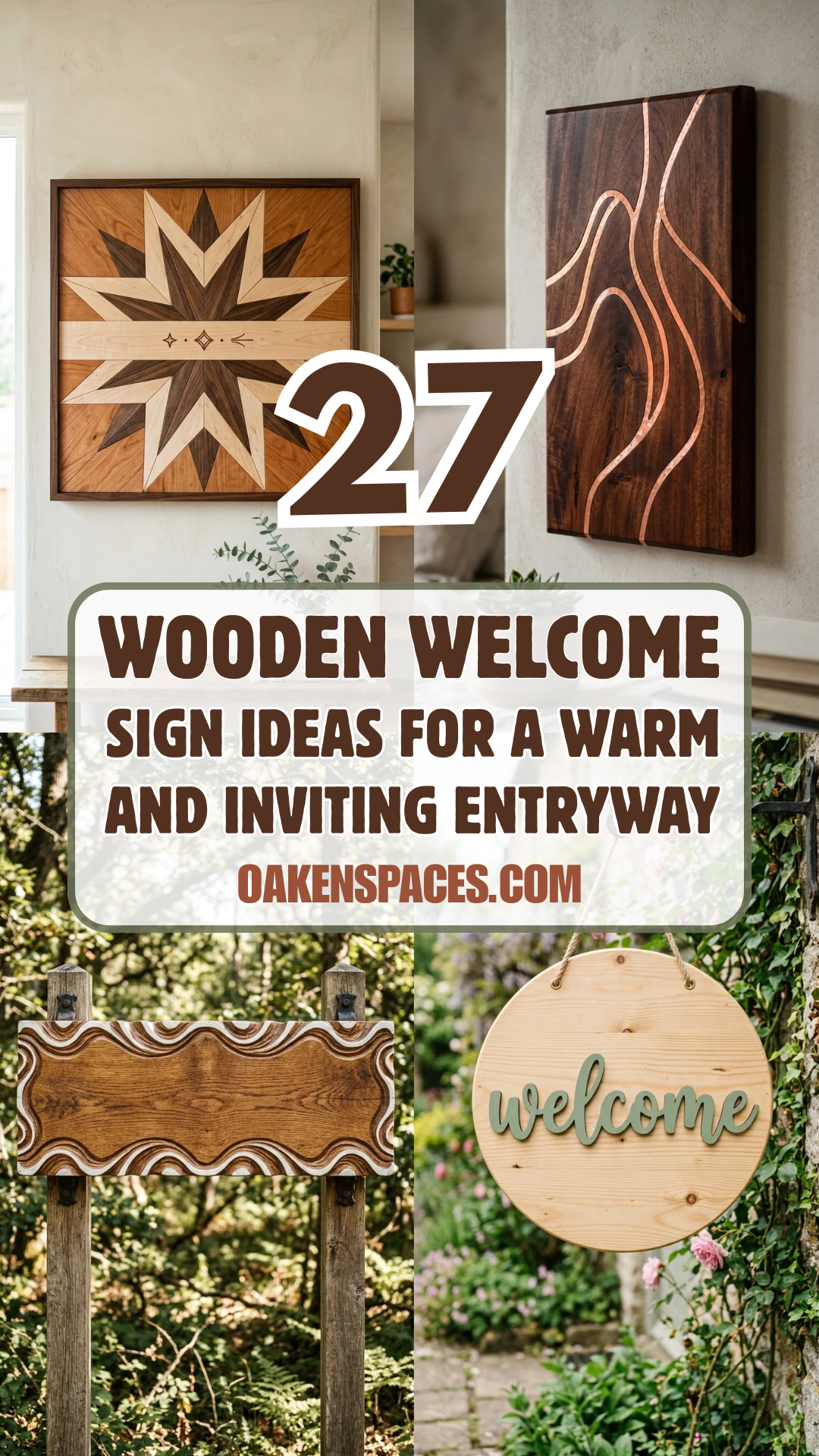
The entryway is the handshake of your home. It’s the first thing guests see and the last thing you encounter when you leave for the day. While paint colors and lighting play their parts, nothing adds instant character quite like a wooden welcome sign. Wood brings an organic, grounding element to a porch or foyer, bridging the gap between the natural world and your interior sanctuary. Whether you lean toward the rugged charm of a farmhouse or the sleek lines of modern architecture, there is a timber-based design waiting to transform your threshold.
1. Vertical Porch
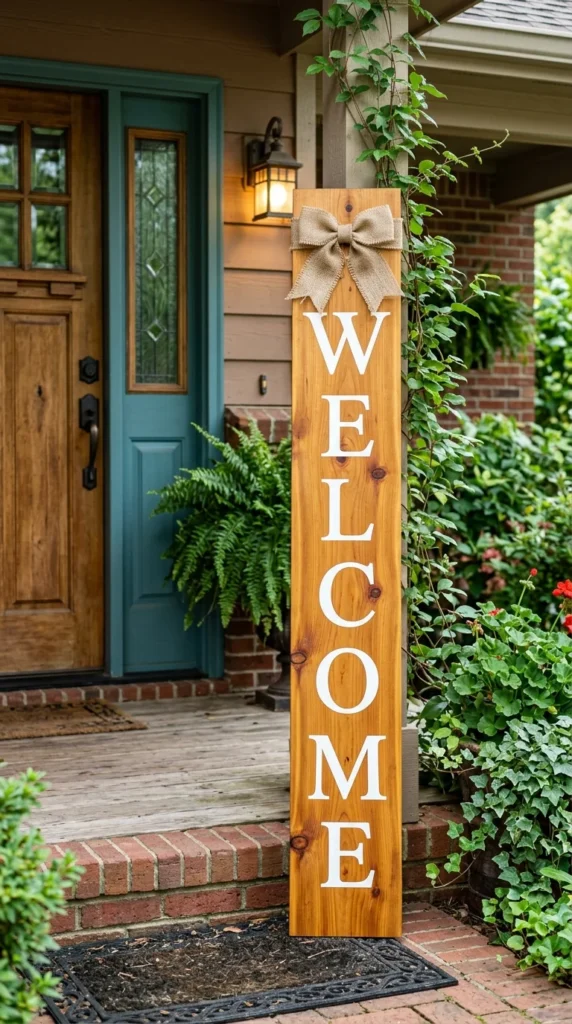
The vertical porch leaner is a classic for a reason. Its height draws the eye upward, making even small entryways feel more grand. Typically standing between four and six feet tall, these signs are perfect for flanking a front door. Using a heavy wood like oak or pressure-treated pine ensures they stay upright during a breeze. To keep it modern, choose a sans-serif font; for a traditional look, opt for a weathered whitewash finish with serif lettering.
2. Round Wreath
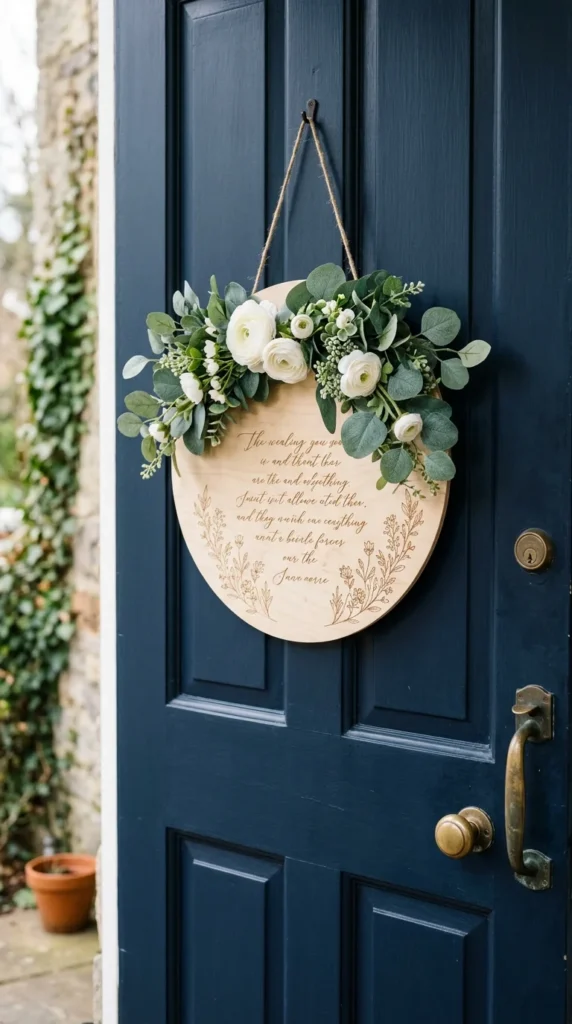
Circular signs offer a soft contrast to the many hard angles and squares found in home construction. A round wooden sign can serve as a modern alternative to a traditional floral wreath. By combining a stained wood base with a “half-moon” of greenery or dried florals, you create a multi-dimensional piece that feels lush and intentional. These are particularly effective when hung directly on the door at eye level.
3. Reclaimed Shiplap
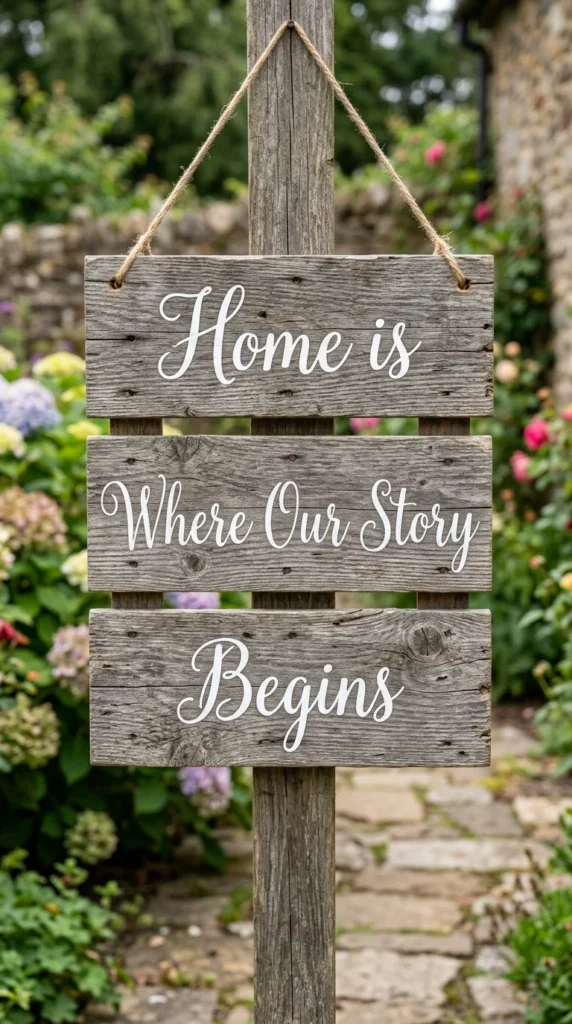
There is a story in every piece of reclaimed wood. Using old barn wood or fence pickets adds an immediate sense of history to your entryway. The “shiplap” look—horizontal slats with small gaps between them—is a staple of the farmhouse aesthetic. Leave the wood in its natural, weathered state to highlight the grays and silvers that come with age, and use a crisp white paint for the lettering to ensure readability against the busy grain.
4. Minimalist Slats
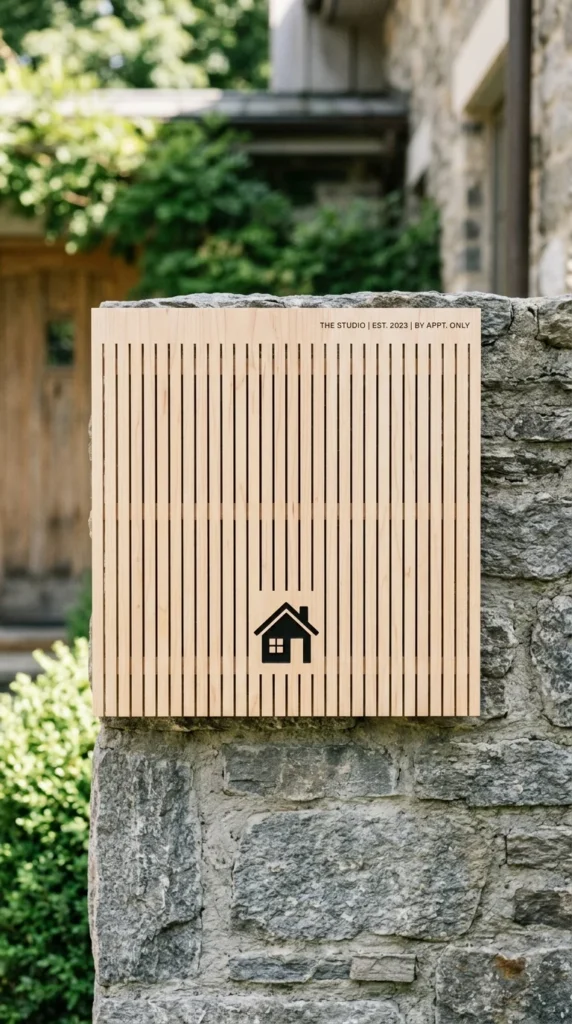
For homes with a contemporary or Scandinavian influence, less is often more. A minimalist slat sign focuses on the quality of the timber and the precision of the construction. Using light woods like maple, birch, or white oak provides a clean, airy feel. Instead of large, bold text, try small, centered typography or even just a simple symbol that represents “home.”
5. Chalkboard Finish
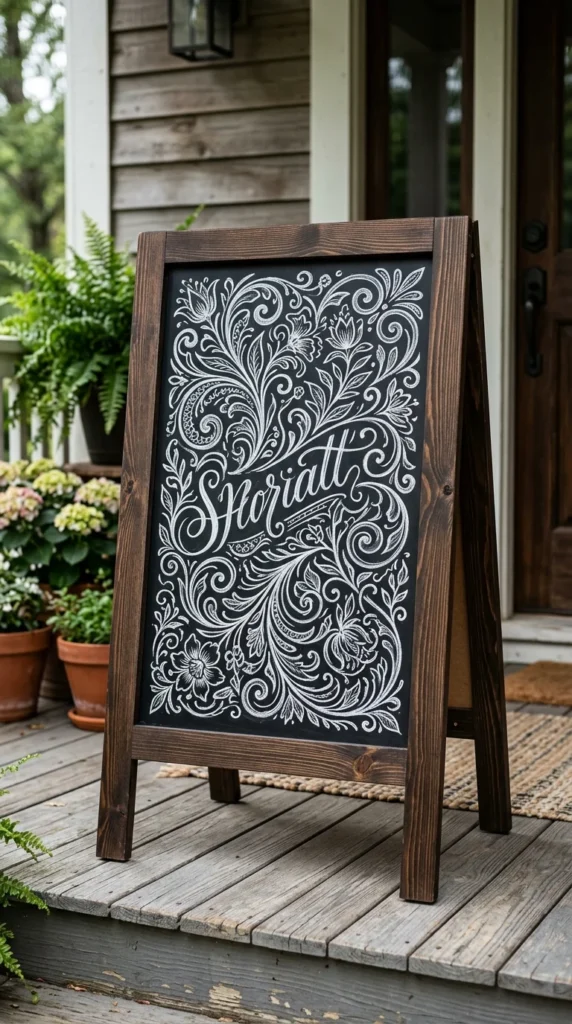
Functionality meets style with a chalkboard-inlaid wooden sign. By framing a piece of chalkboard-painted plywood with sturdy timber, you create a versatile greeting that can change with your mood or the occasion. You can write a traditional greeting one day and a “Happy Birthday” or “Gone to the Beach” message the next. It’s an interactive element that makes your home feel lived-in and lively.
6. Wrought Iron
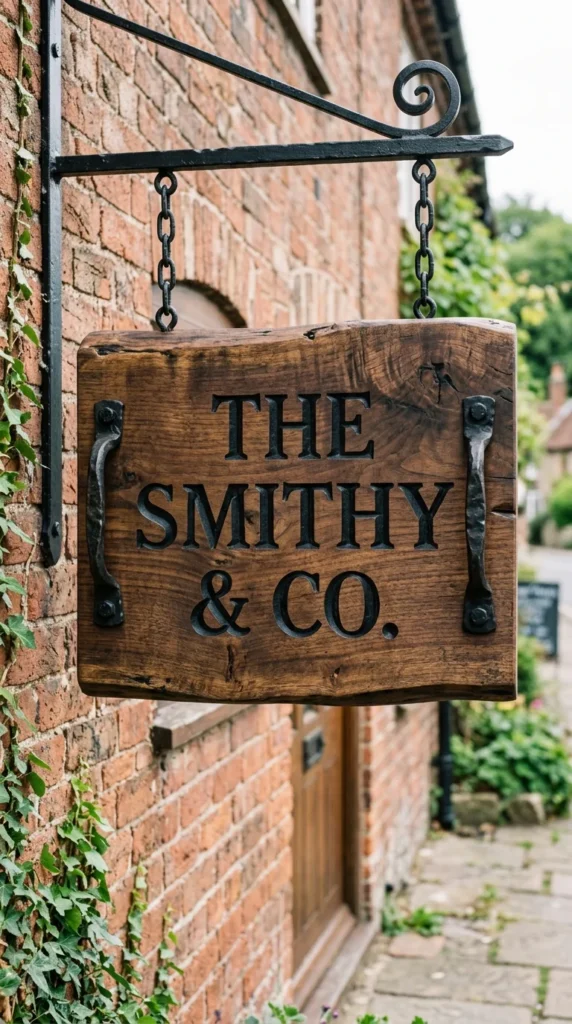
Combining wood with metal creates an industrial-chic vibe that feels both sturdy and sophisticated. Incorporating wrought iron—whether through the hanging hardware, decorative corner brackets, or even raised metal lettering—adds a weightiness to the design. This style works exceptionally well for mountain cabins or urban lofts where a mix of raw materials is celebrated.
7. Planter Base
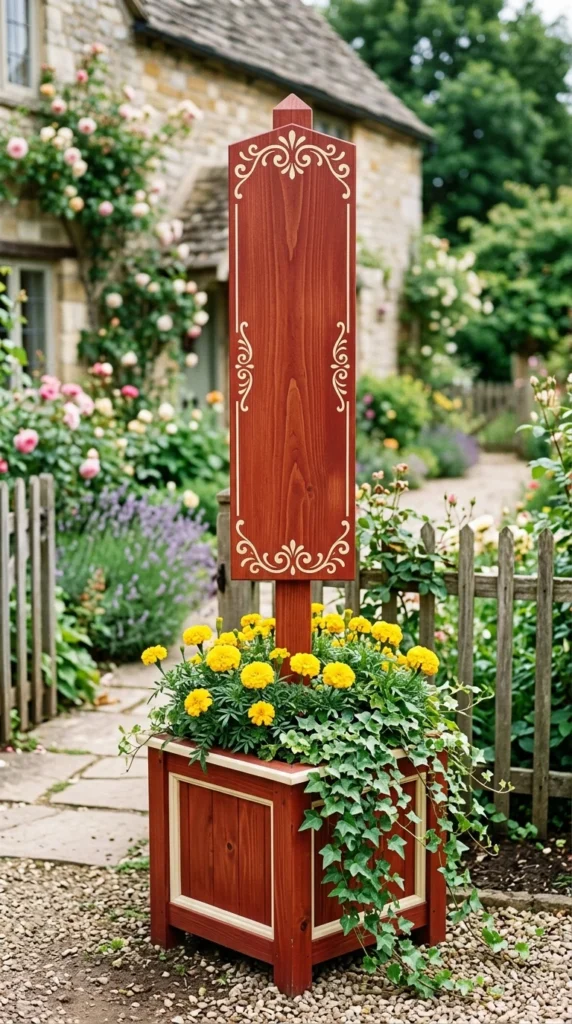
Why choose between a sign and a plant when you can have both? A “planter sign” features a tall vertical board with a built-in box at the base. This provides a heavy foundation that prevents the sign from tipping over in high winds. Filling the box with seasonal flowers, like pansies in the spring or mums in the autumn, allows the sign to evolve throughout the year, keeping your entryway fresh and colorful.
8. Window Frame
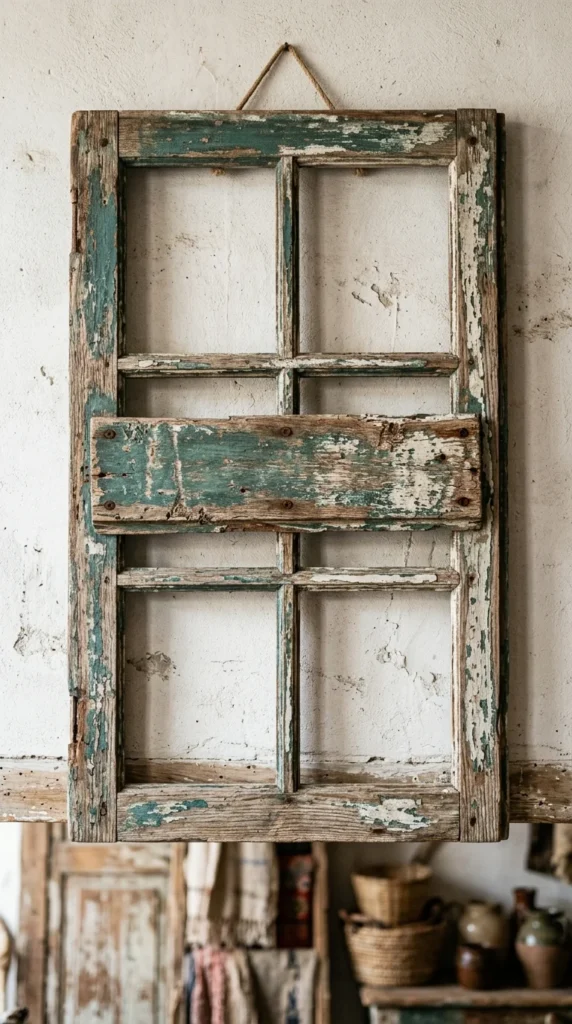
Repurposing architectural salvage is a brilliant way to create a focal point. An old wooden window frame can be converted into a “welcome” display by mounting wooden letters across the panes or hanging a small wooden shingle from the center. The “empty” space within the frame allows the color of your house to peek through, helping the sign integrate seamlessly with its surroundings.
9. Driftwood Texture
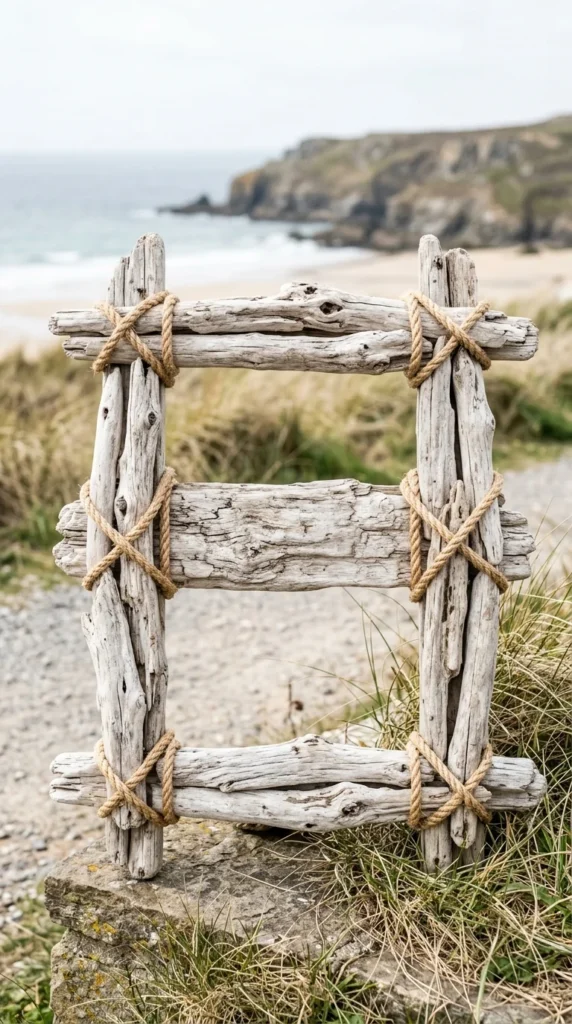
If you live near the coast (or just wish you did), a driftwood sign is the ultimate greeting. The organic, twisted shapes of wood found on the beach require very little embellishment. Simply cleaning the wood and adding a light wash of blue or white paint creates a breezy, relaxed atmosphere. The texture of the wood itself is the star of the show here.
10. Dark Walnut
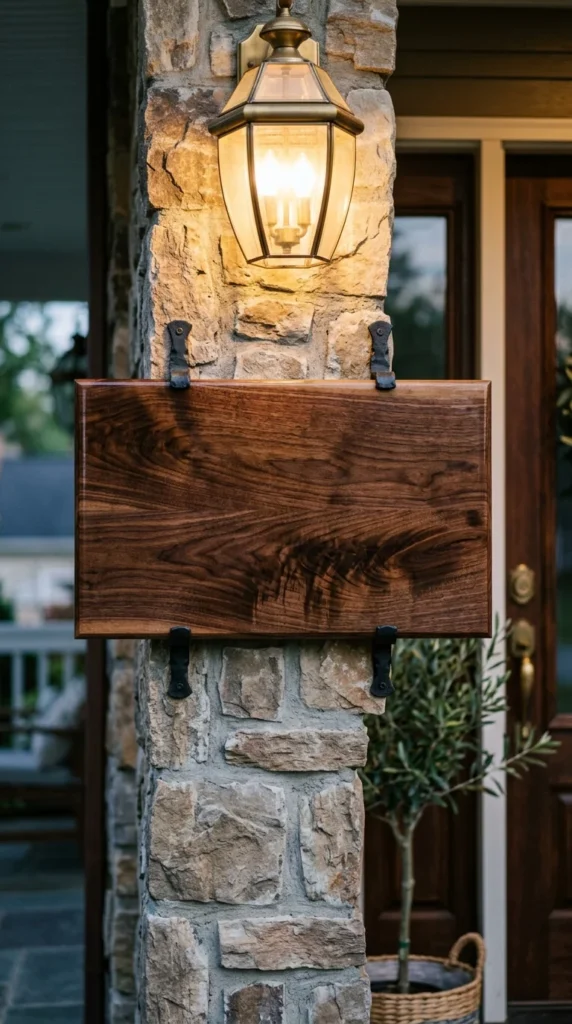
For a look that screams “custom-built,” dark walnut is the gold standard. Its naturally deep chocolate tones provide a luxurious backdrop for metallic accents. Pair a walnut board with gold or brass lettering for an elegant, high-end entryway. This style is particularly effective in well-lit foyers where the luster of the wood and the shimmer of the metal can be fully appreciated.
11. Intricate Laser-Cut
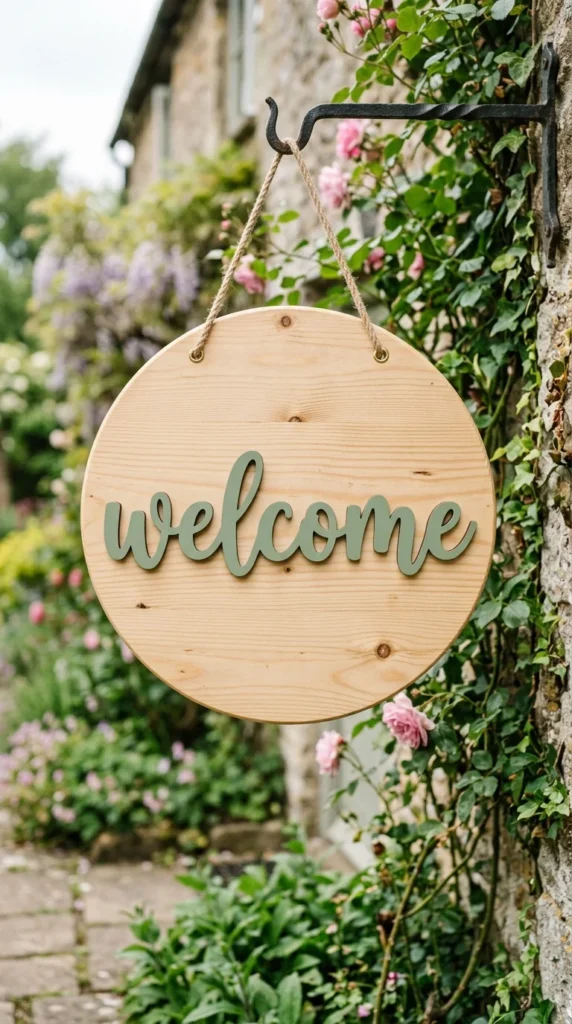
Laser-cut signs offer a precision that hand-painting can’t match. By layering laser-cut wooden letters or intricate silhouettes (like mountain ranges or city skylines) onto a wooden base, you create a 3D effect that adds depth and shadow. This technique allows for incredibly delicate fonts and complex patterns that make the sign look like a piece of professional gallery art.
12. Painted Blooms
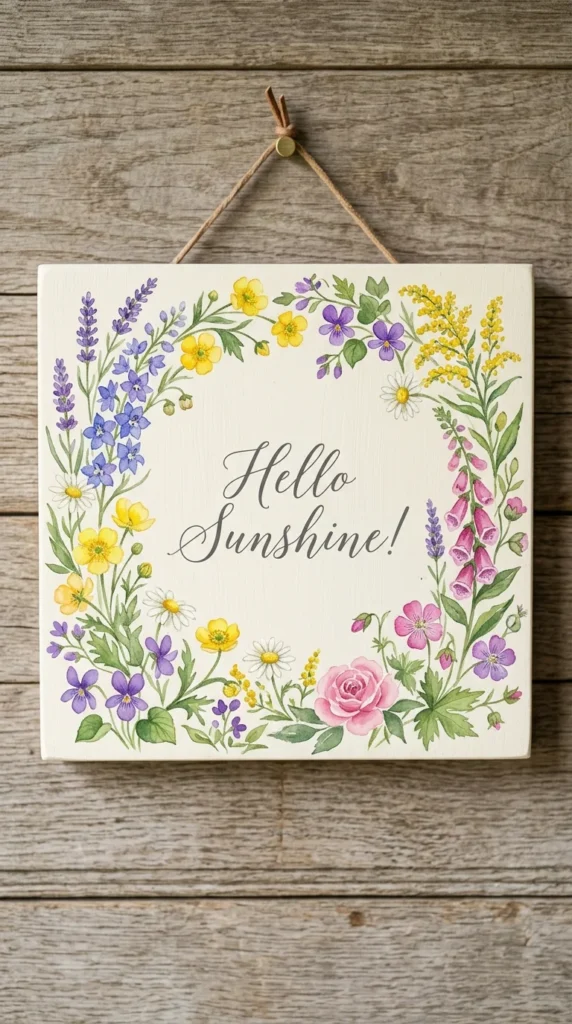
Adding a floral motif can soften the ruggedness of wood. Instead of a solid stain, consider painting the background a soft neutral and adding hand-painted botanical illustrations around the perimeter. This feminine touch is perfect for cottages or homes with lush gardens. It transforms a simple sign into a piece of folk art.
13. Scalloped Detail
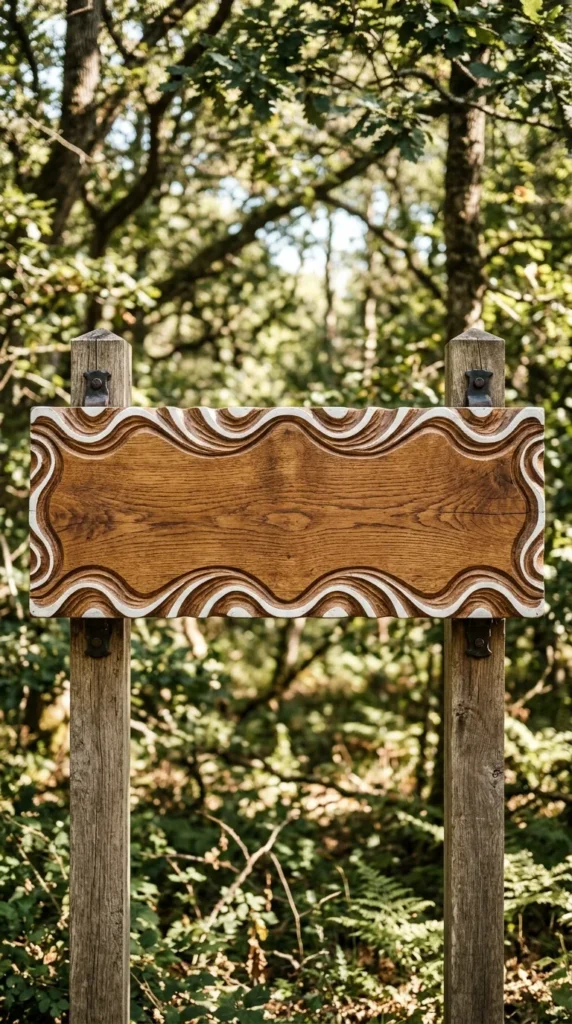
Movement can be introduced to a static wooden sign through the use of shaped edges. Scalloped or “live-looking” wavy edges break up the rigidity of a standard plank. This small detail adds a whimsical, vintage feel, reminiscent of old-fashioned candy shops or garden gates. It’s an easy way to make a simple DIY project look much more expensive and custom.
14. Galvanized Metal
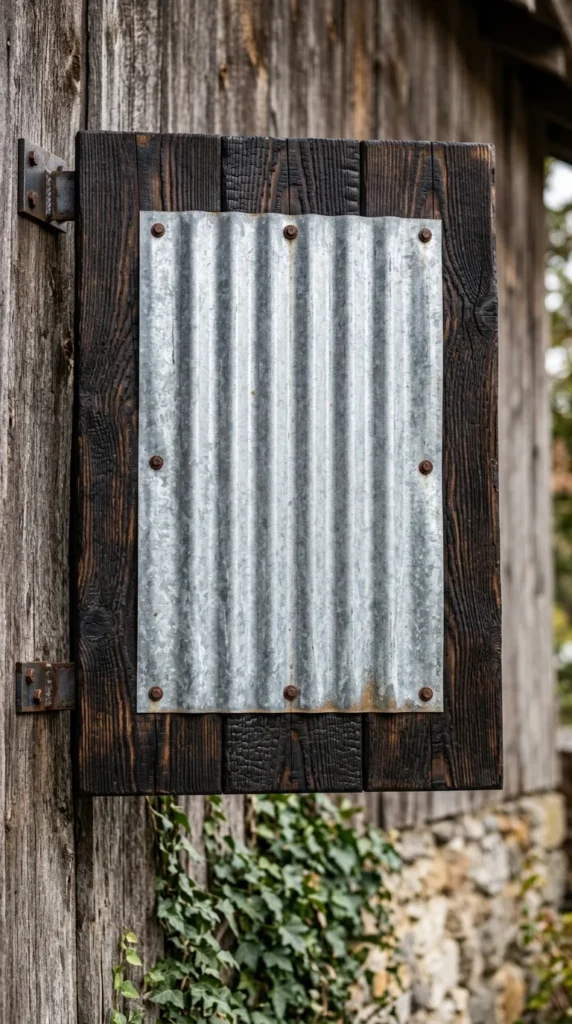
The juxtaposition of dark, charred wood and shiny galvanized metal is the hallmark of the modern industrial farmhouse. The metal reflects light, ensuring the sign is visible even in low-light conditions, while the wood provides a warm, organic frame. This combination is incredibly durable and holds up well against rain and snow.
15. Magnetic Icons
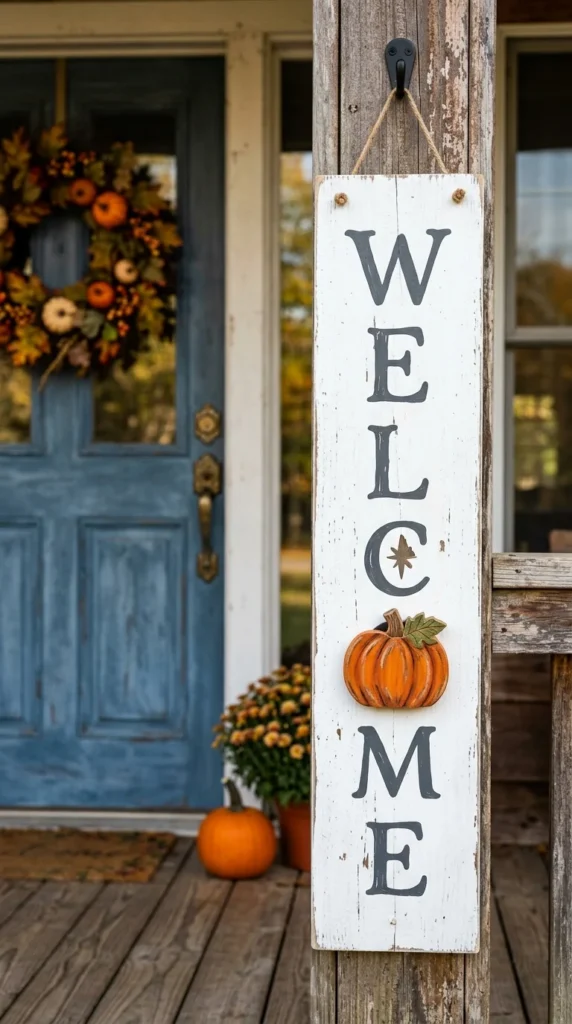
Interchangeable signs are perfect for the person who loves to decorate for every holiday. By replacing one of the letters (usually the “O”) with a magnet or a small hook, you can swap out icons depending on the season—a pumpkin for October, a snowflake for December, or a sunflower for July. This ensures your entryway always feels current and festive.
16. Weathered Whitewash
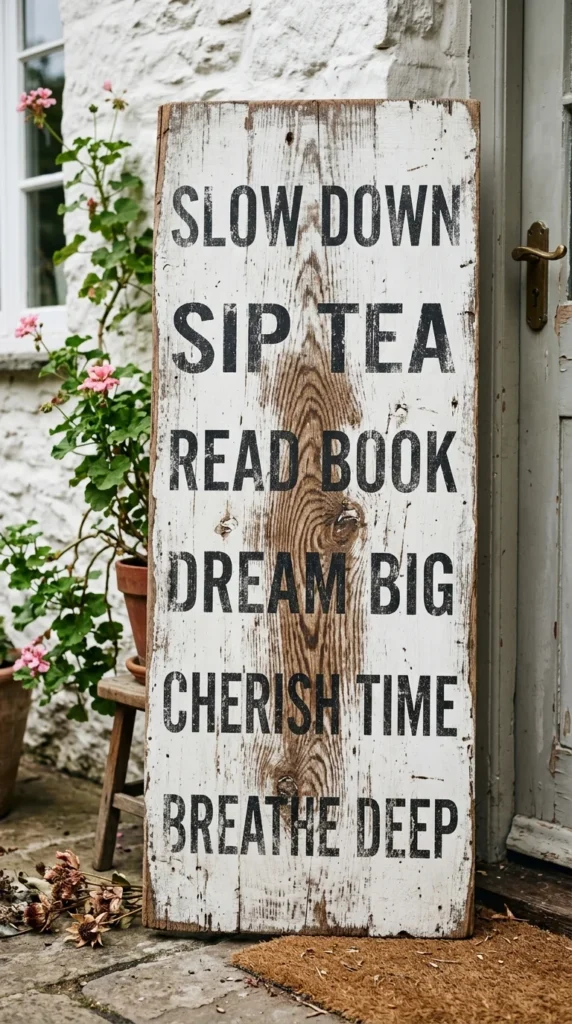
Whitewashing is a technique that highlights the texture of the wood grain while brightening the overall appearance. It’s the perfect middle ground between natural wood and solid paint. This look is synonymous with coastal and “shabby chic” styles. It looks best when paired with other distressed elements, like a vintage milk crate or a weathered bench.
17. Geometric Inlay
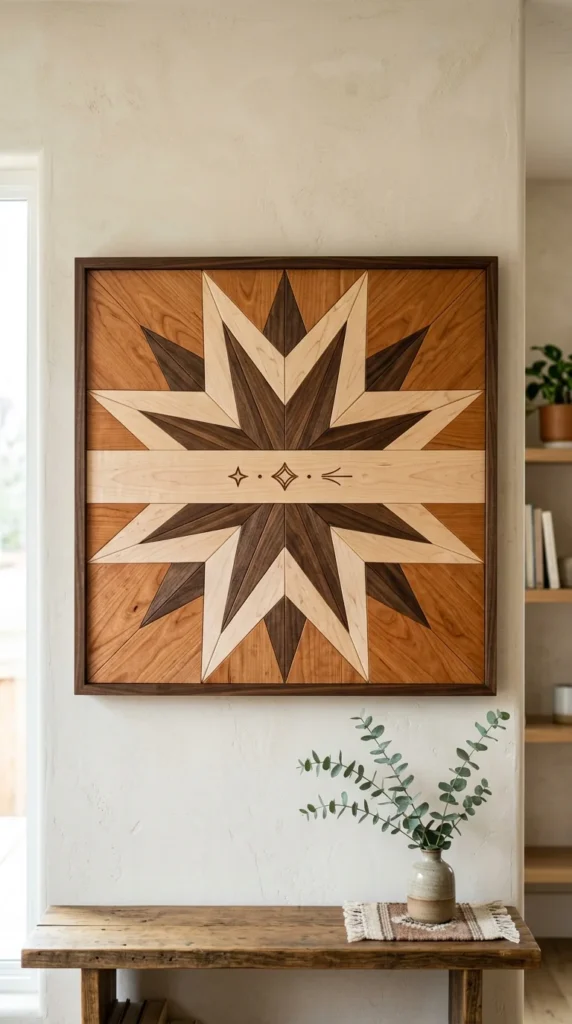
Geometric patterns aren’t just for floors and backsplashes. By using different stains or wood species, you can create a mosaic-like pattern on your welcome sign. Chevron, herringbone, or mid-century starburst patterns turn the sign into a graphic statement piece. It’s a sophisticated way to show off your love for woodworking and design.
18. Natural Live-Edge
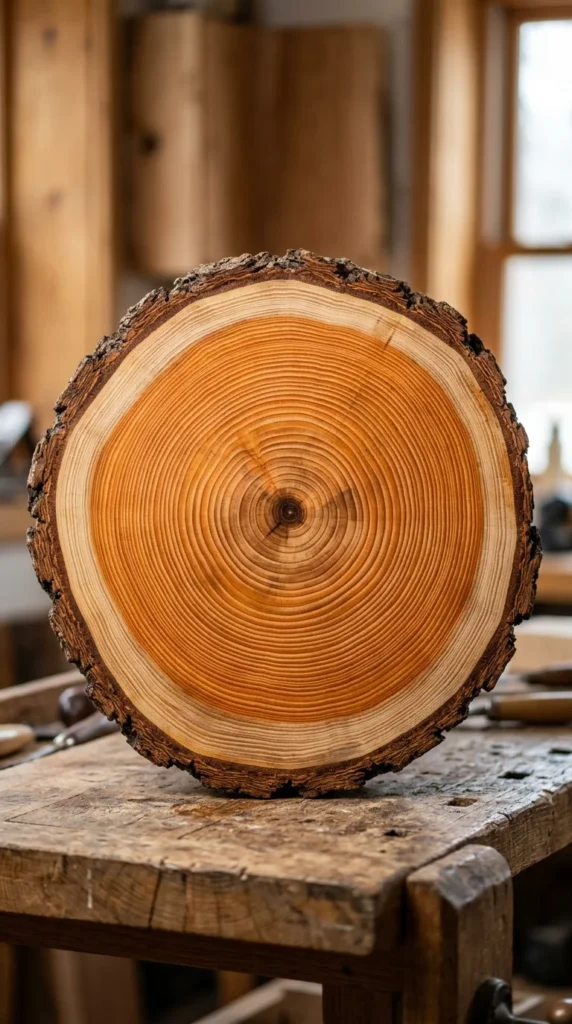
A live-edge sign retains the natural perimeter of the tree, including the bark. This is the ultimate “rustic” choice, bringing a raw, forest-like energy to your door. Because no two trees are the same, every live-edge sign is a one-of-a-kind original. These look best with very simple, burnt-in (pyrography) lettering to avoid distracting from the natural beauty of the wood.
19. Dimensional Wood
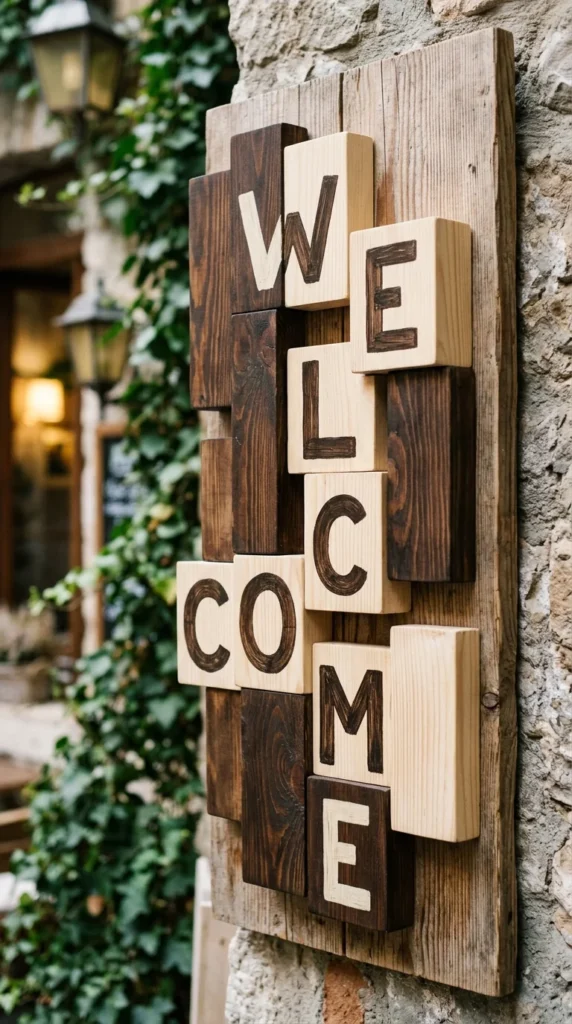
Dimensionality adds visual interest that flat signs lack. By using “3D” wooden letters that stand out an inch or more from the backboard, you create shadows that change throughout the day as the sun moves. This gives the sign a presence and weight that makes it feel like a permanent part of the home’s architecture.
20. Tree Cross-Section
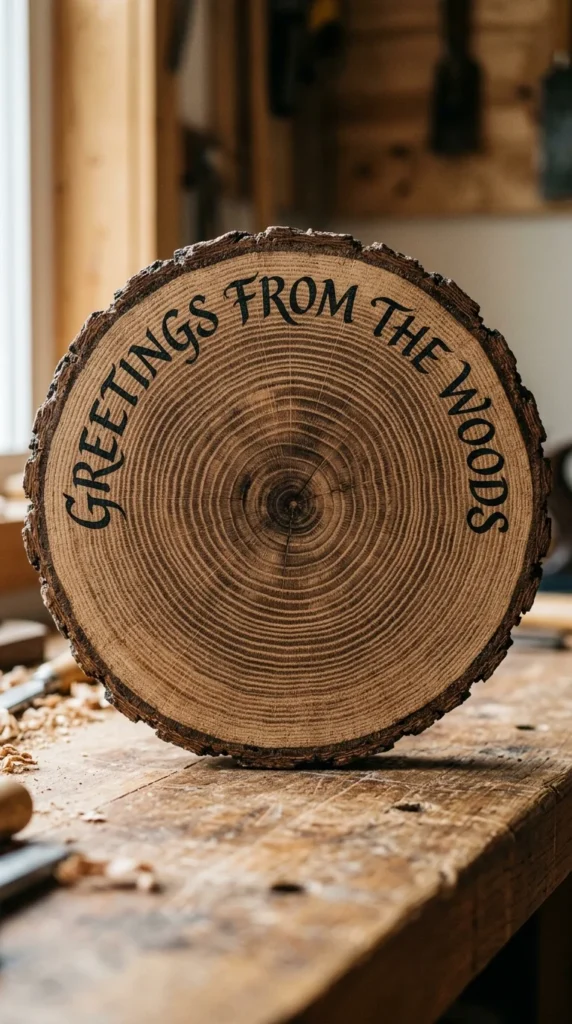
Often called “wood cookies,” these cross-sections are sliced horizontally from a log. They are naturally decorative and offer a wonderful canvas for hand-lettering. Because they are prone to cracking as they dry (which adds to the character), they should be well-sealed with a polyurethane finish to preserve them for years to come.
21. Upcycled Pallet
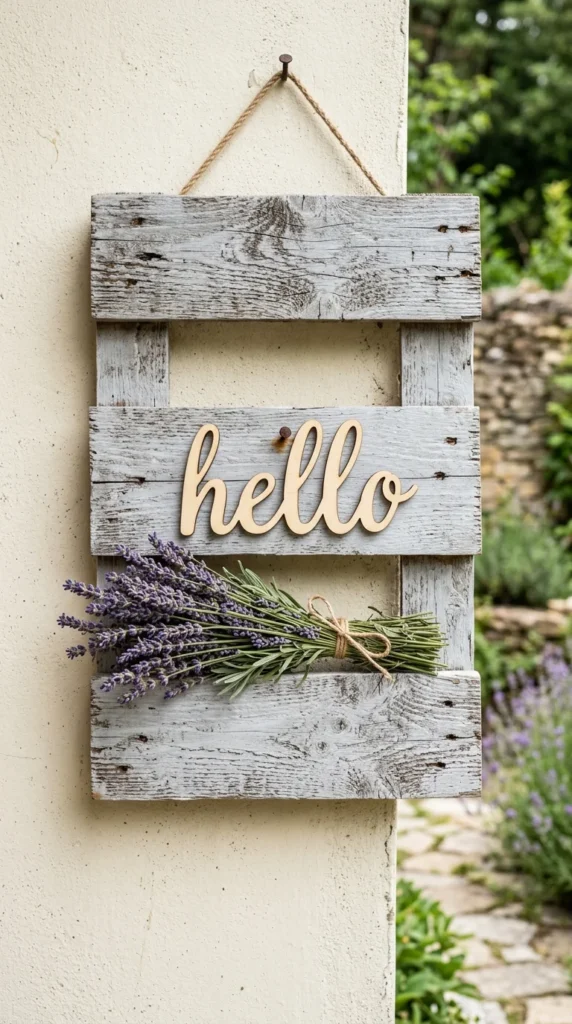
Pallet projects are budget-friendly and eco-conscious. The irregular spacing and varied wood types found in pallets lend themselves to a “found object” aesthetic. You can use the entire width of the pallet for a large-scale statement or break it down into smaller, individual slats for a more refined look.
22. Midnight Ebony
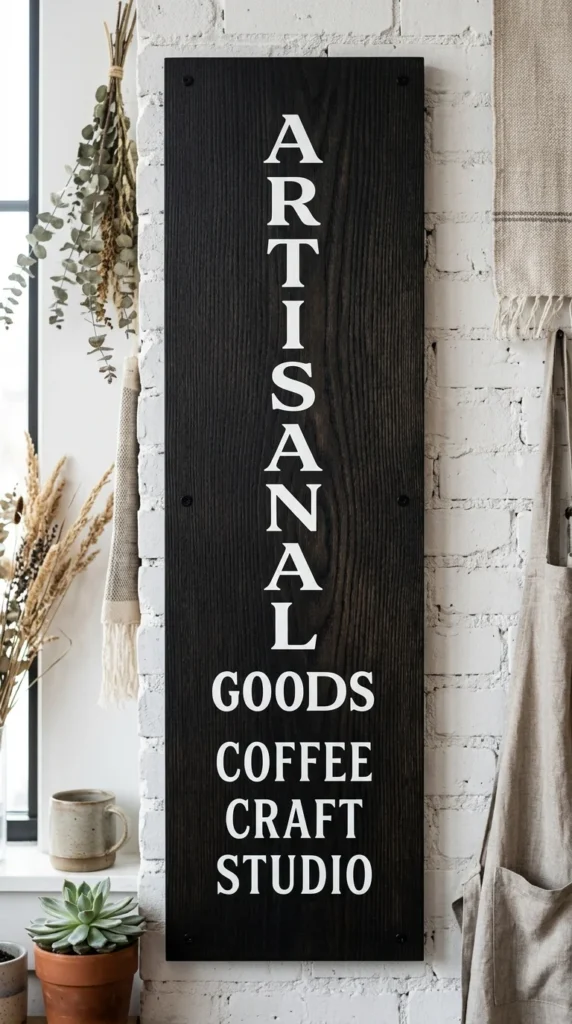
Black or ebony-stained wood provides a dramatic, high-contrast look that fits perfectly with the “modern farmhouse” or “urban industrial” trends. It looks particularly striking against a white or light gray house. Using white or silver lettering makes the message pop, ensuring it can be read from the street.
23. Burlap Wrapped
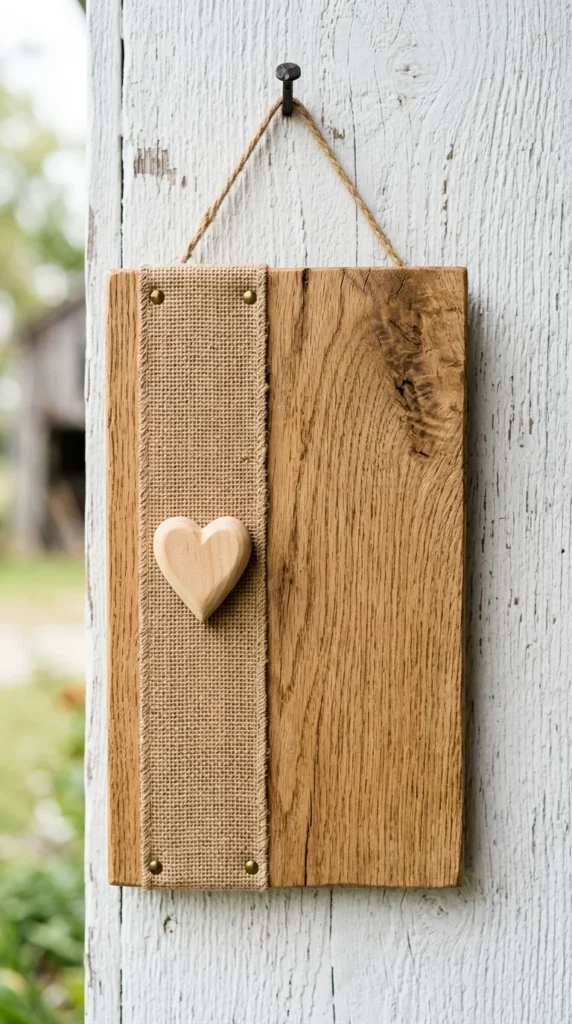
Mixing textiles with wood adds a layer of warmth and “softness” to the entryway. Burlap is a natural choice for wooden signs because its earthy tone and rough weave complement the organic nature of the timber. You can use it as a background for the lettering or as a decorative wrap to add a bit of farmhouse flair.
24. Metallic Inlay
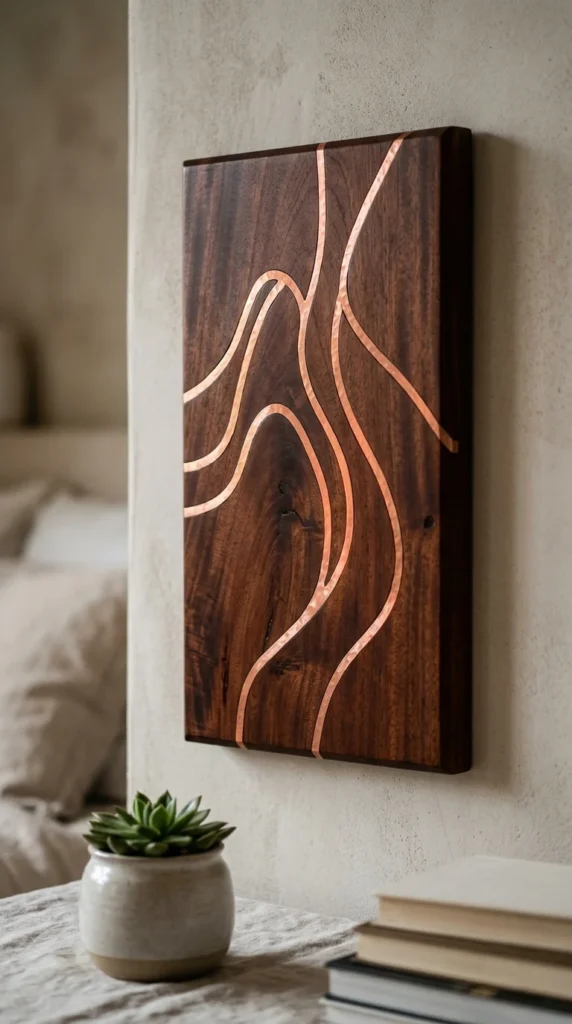
Inlay is a premium technique where a channel is carved into the wood and filled with another material. Using copper, brass, or silver wire for the greeting creates a flush, seamless surface that looks incredibly sophisticated. As the metal patinas over time, the sign will only get more beautiful and full of character.
25. Giant Leaner
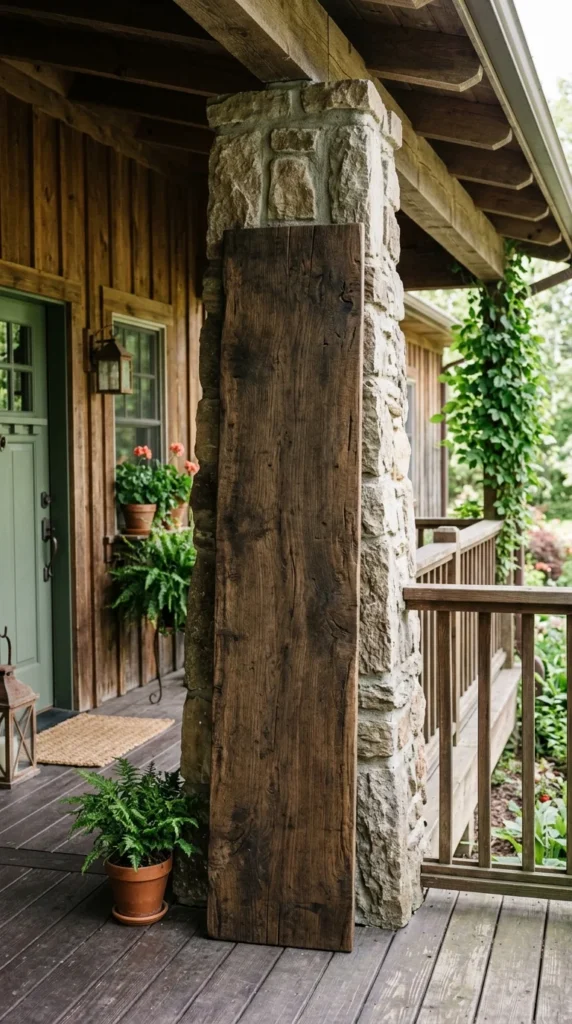
Sometimes, scale is the most important factor. A “giant” leaner is designed to be noticed. These signs work best on homes with large porches or high entryways that can handle the visual weight. Because of their size, they often feature just a single word—like “WELCOME” or your family name—in massive, easy-to-read letters.
26. Swing Bracket
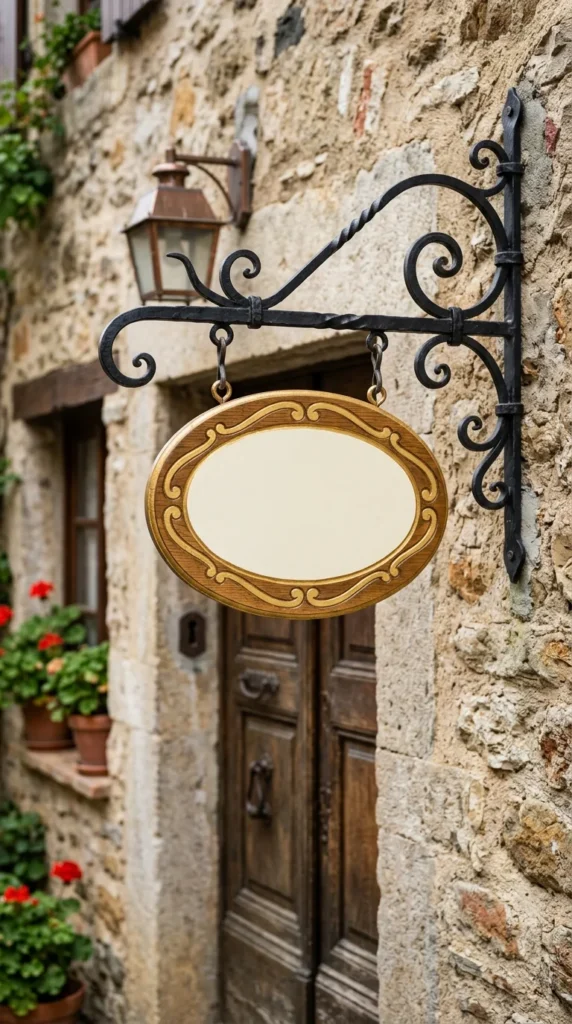
Hanging signs offer a classic “inn-keeper” vibe. Instead of leaning against a wall, these signs hang perpendicularly from a wrought-iron bracket. This makes them visible to people walking down the sidewalk, not just those standing directly in front of the door. They add a charming, European-street-style feel to your home’s exterior.
27. Parquet Design
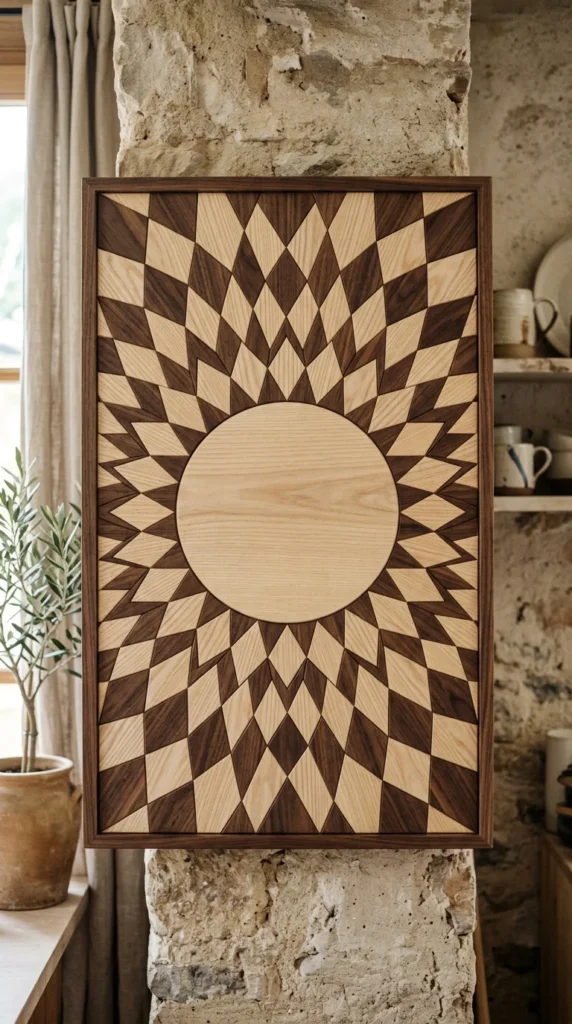
Parquet is the art of creating patterns using small pieces of wood. A parquet-style welcome sign is a masterpiece of craftsmanship. Whether it’s a simple checkerboard or a complex 3D illusion pattern, this sign acts as a piece of fine furniture for your porch. It’s a sophisticated way to greet your guests with style and artistry.