
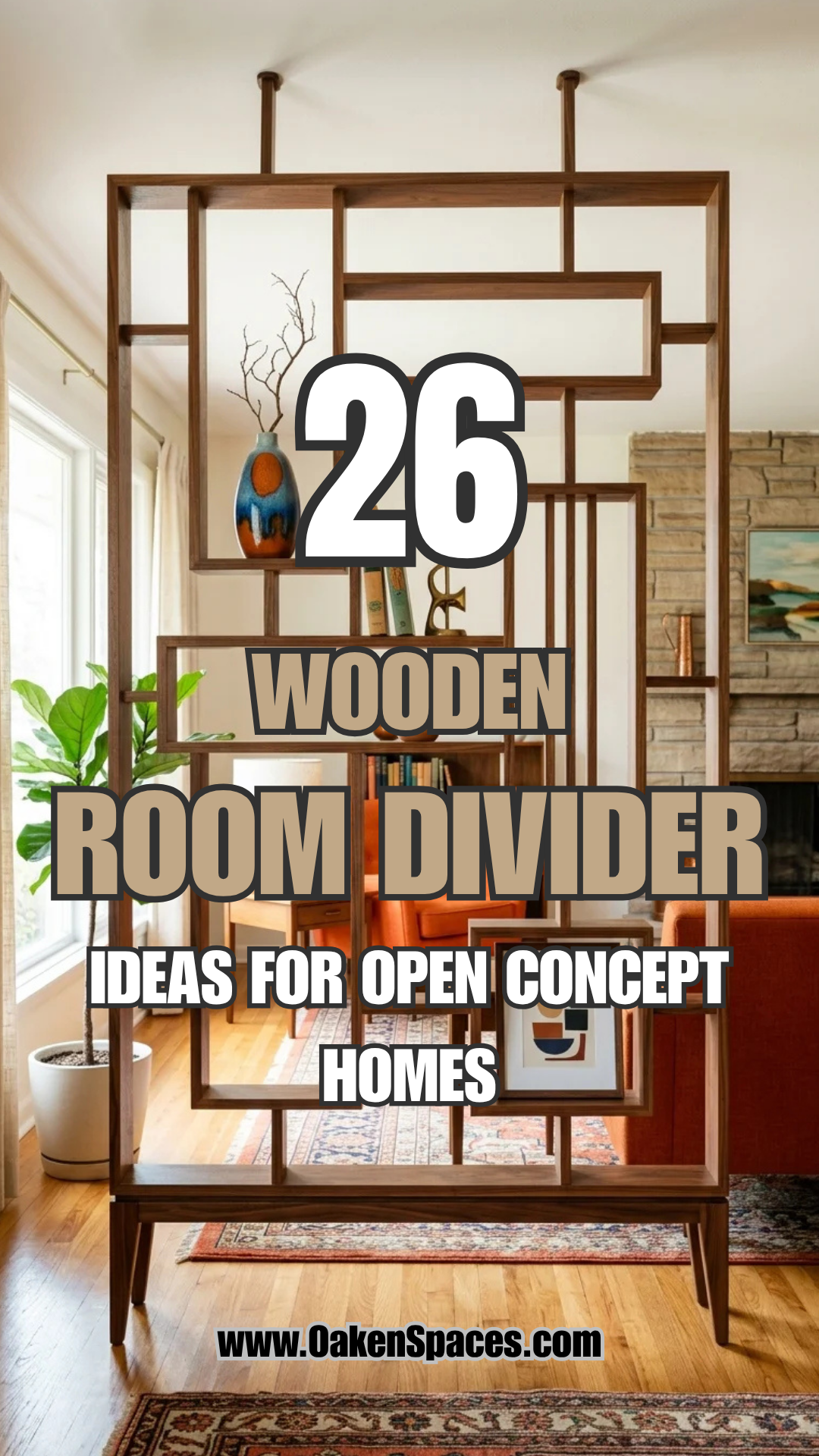
Open-concept living is the hallmark of modern architecture, offering a sense of freedom, flow, and shared light. However, the lack of defined boundaries can sometimes make a large room feel unanchored or cluttered. This is where wooden room dividers come into play. Wood brings a natural warmth, organic texture, and timeless elegance that cold steel or plastic simply cannot replicate. From floor-to-ceiling architectural slats to portable vintage screens, here are 26 wooden room divider ideas to help you master the art of zoning your home.
1. Vertical Slats
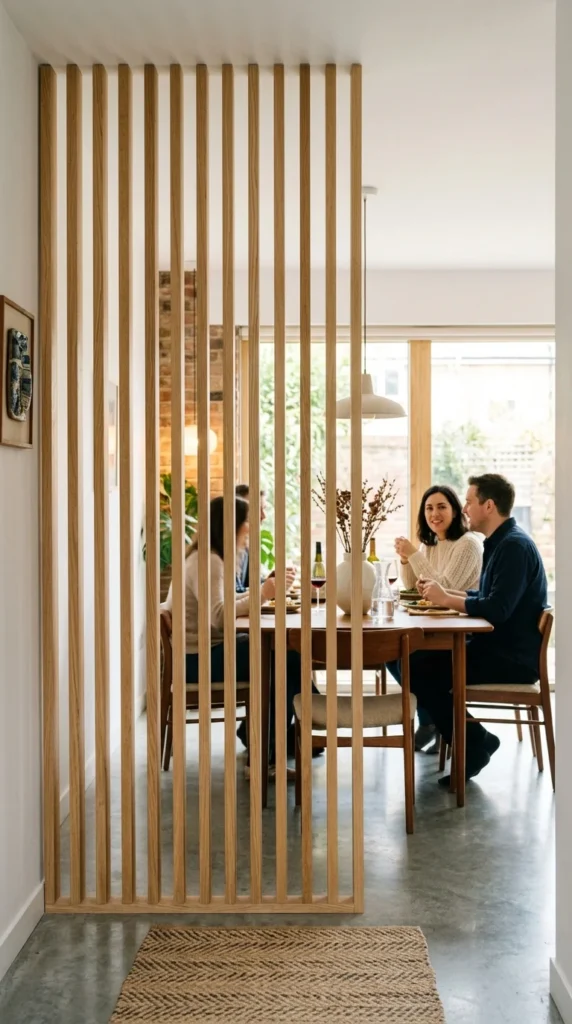
Vertical slat dividers are a favorite in contemporary design. By using thin strips of timber—like oak, ash, or walnut—spaced slightly apart, you create a visual boundary that doesn’t block the flow of light or air. This “peek-a-boo” effect maintains the airy feel of an open-concept home while clearly defining zones like an entryway or a home office.
2. Folding Screens
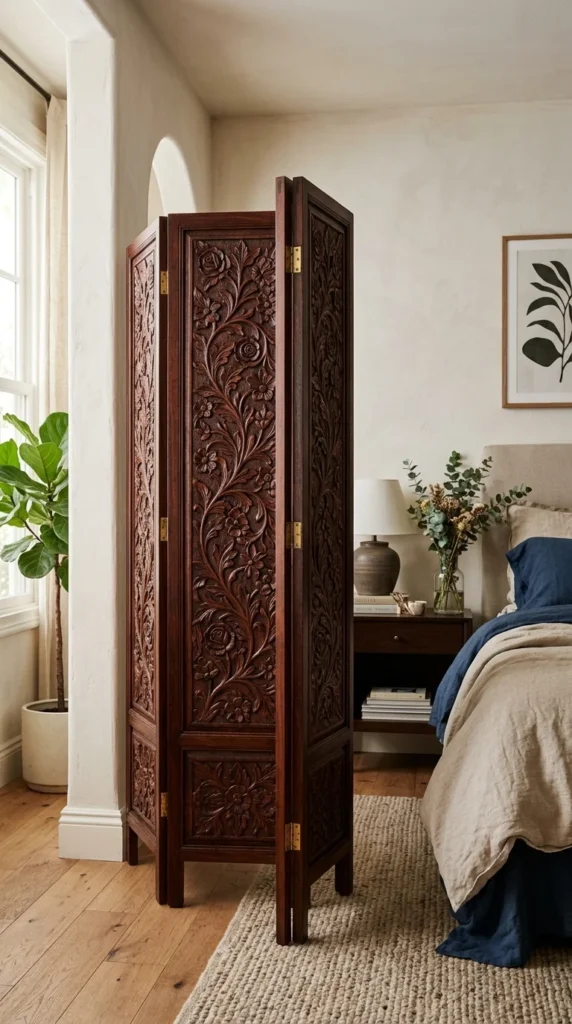
Folding screens, or shoji-style partitions, offer the ultimate flexibility. They are portable, meaning you can move them whenever you need to reconfigure your space. Whether you choose a solid wood design for total privacy or one with fabric inserts, a folding screen adds a layer of decorative charm and historical character to any room.
3. Open Bookshelves
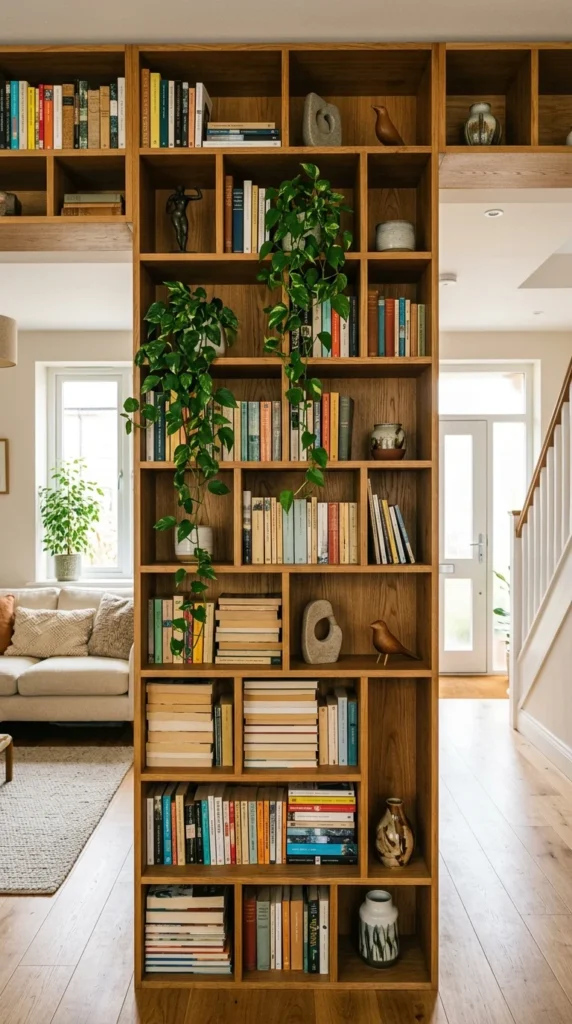
Why settle for just a wall when you can have storage? An open-backed wooden bookshelf serves two purposes: it creates a physical barrier and provides a stage for your favorite decor. Because it lacks a back panel, it feels lightweight and allows light to pass through the gaps between books and ornaments.
4. Reclaimed Wood
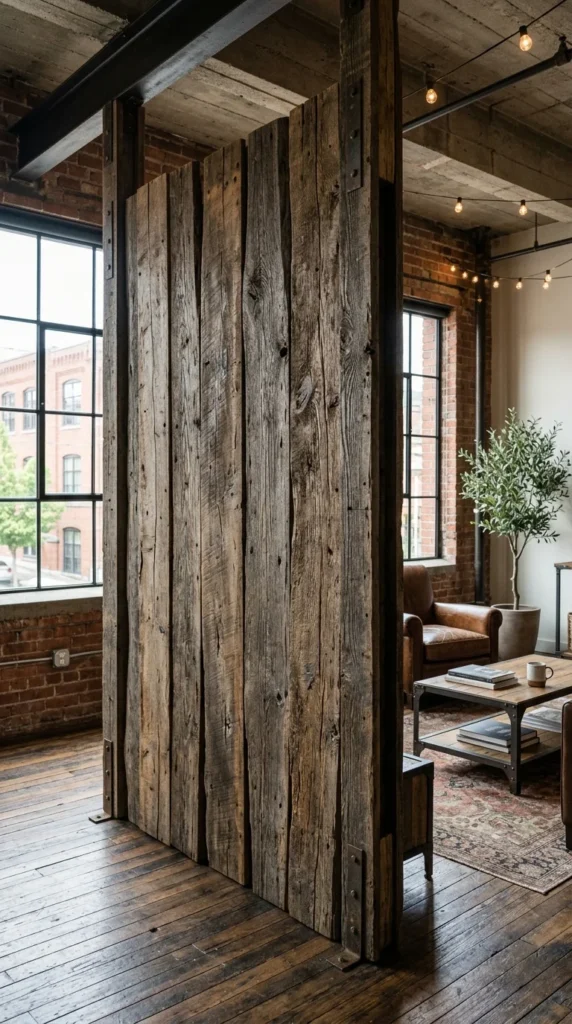
For those who love the “lived-in” look, reclaimed wood partitions are a perfect choice. Using old barn doors or salvaged timber adds a sense of history and soul to a modern home. The varying textures and colors of aged wood provide a beautiful contrast against smooth, painted walls.
5. Barn Doors
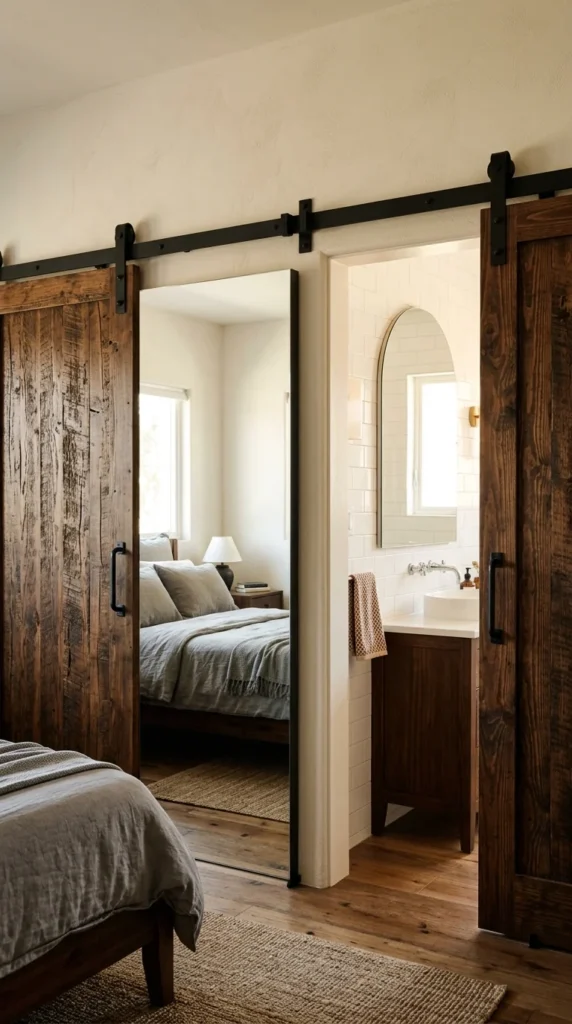
Sliding barn doors are excellent for open-concept homes that occasionally need total privacy. When open, they sit flush against the wall, maintaining the open feel. When closed, they act as a heavy, rustic feature wall that completely isolates a room, such as a home theater or a guest suite.
6. Hanging Panels
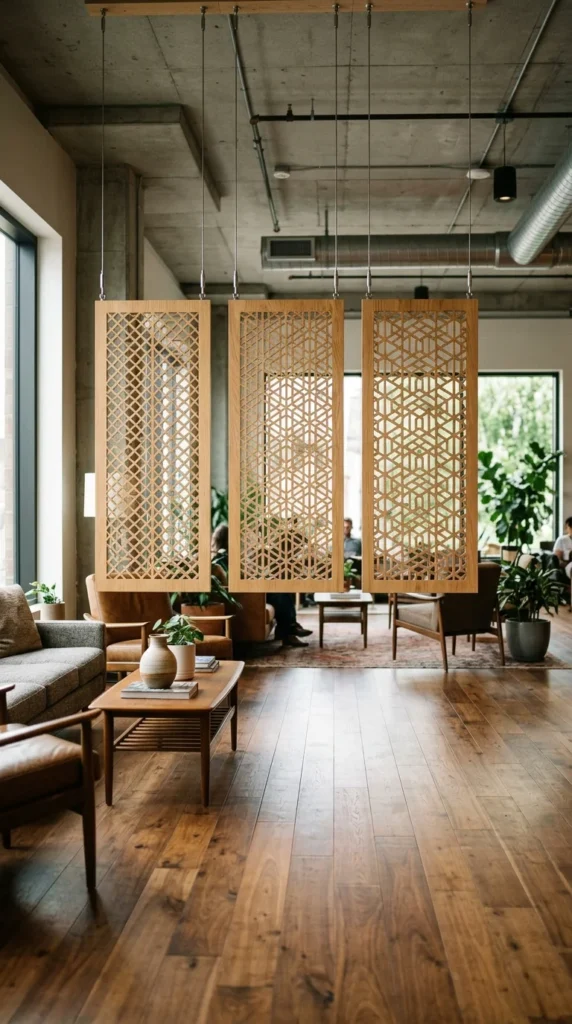
Hanging wooden panels create an artistic, “floating” effect. These are usually suspended from the ceiling with discreet hardware, leaving a gap at the floor level. This prevents the divider from feeling too heavy and adds a sculptural element to the interior design.
7. Geometric Cutouts
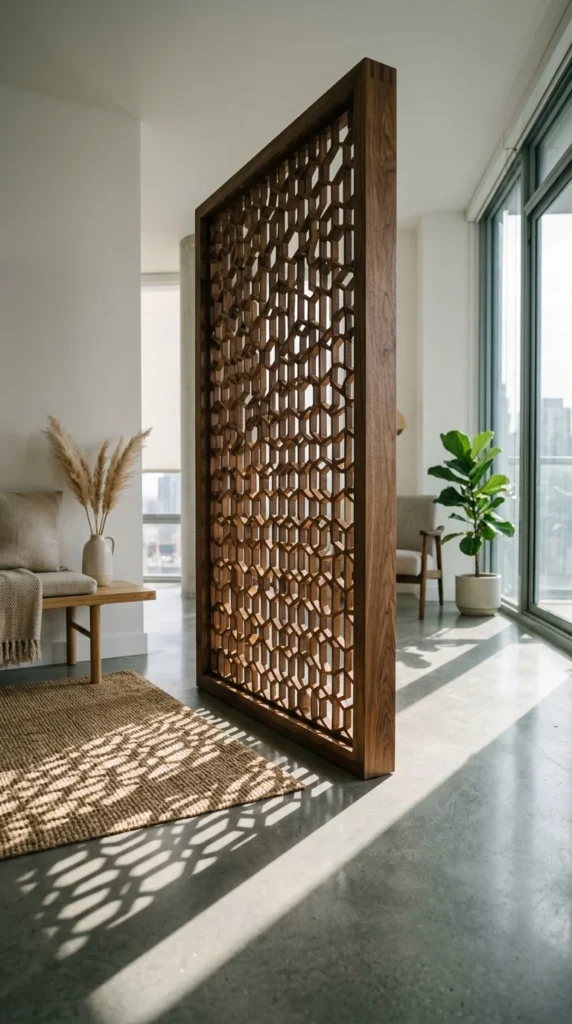
Geometric cutouts turn a simple room divider into a piece of art. Whether it’s a mid-century modern starburst pattern or a contemporary hexagonal grid, these dividers play with light and shadow, casting beautiful shapes across the room throughout the day.
8. Vertical Planters
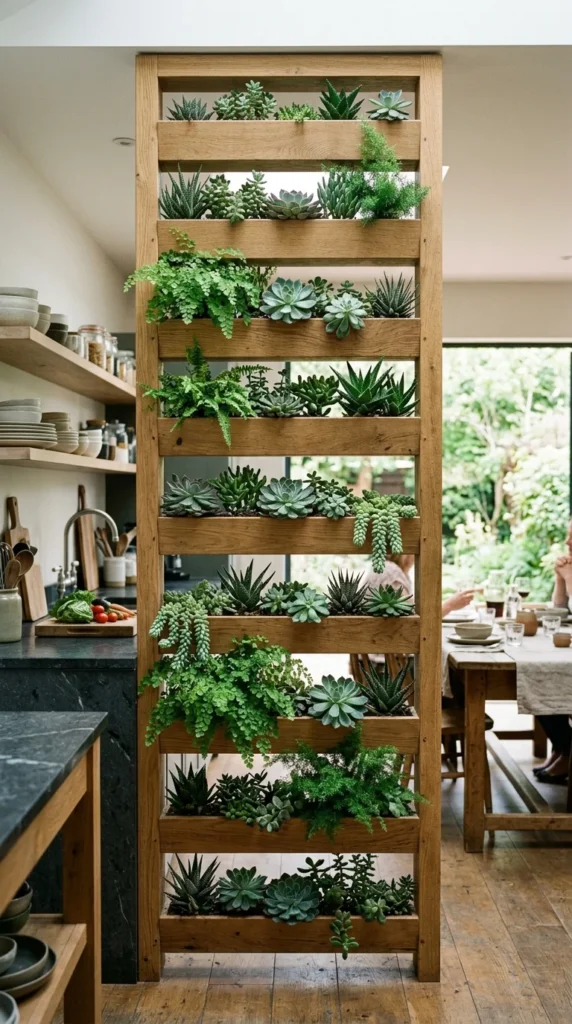
Bring the outdoors in by integrating greenery into your wooden divider. A wooden frame designed to hold potted plants or built-in troughs creates a “living wall.” It’s an organic way to divide a space while improving air quality and adding a pop of vibrant color.
9. Plywood Partitions
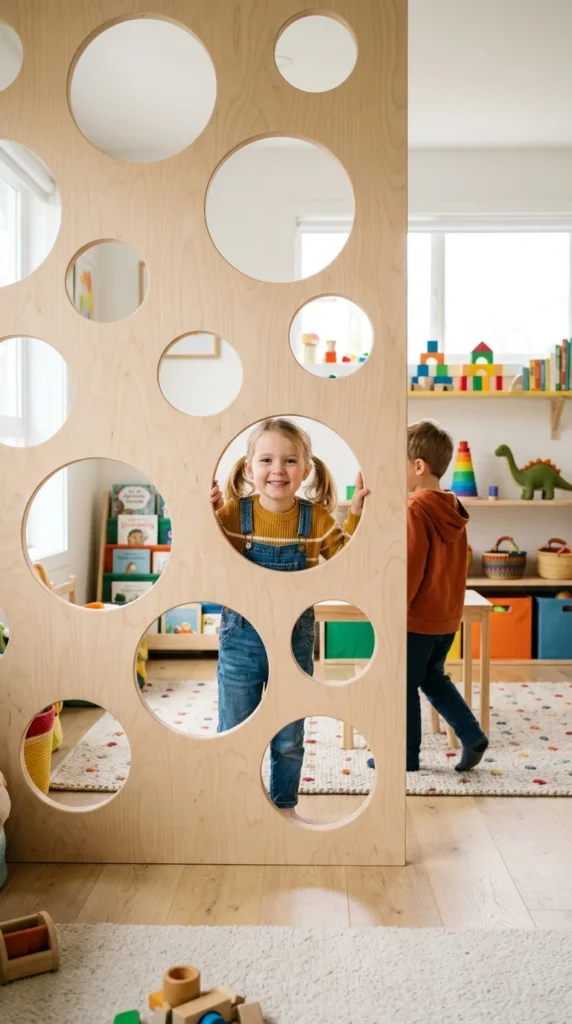
Plywood is no longer just a construction material; it’s a design trend. Its clean lines and pale tones are perfect for Scandi-style homes. A large sheet of high-quality birch plywood can be used as a minimalist screen, often featuring circular or square cutouts to keep the space feeling connected.
10. Bamboo Poles
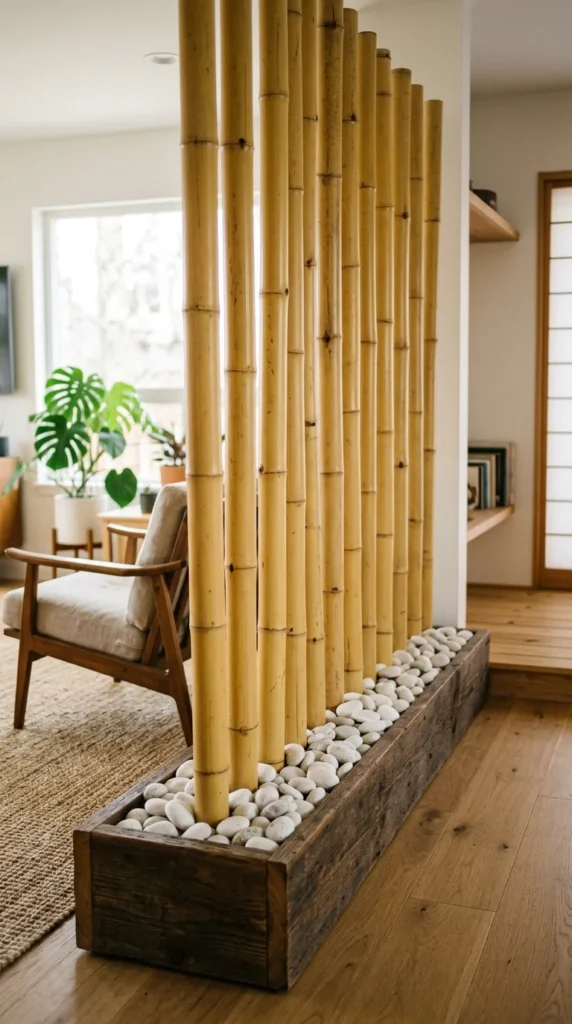
For a Zen or tropical vibe, bamboo poles are an excellent alternative to traditional timber. They offer a unique round texture and a warm, golden hue. When grouped together in a base, they create a dense but organic screen that works beautifully in bathrooms or relaxation zones.
11. Mid-Century Modern
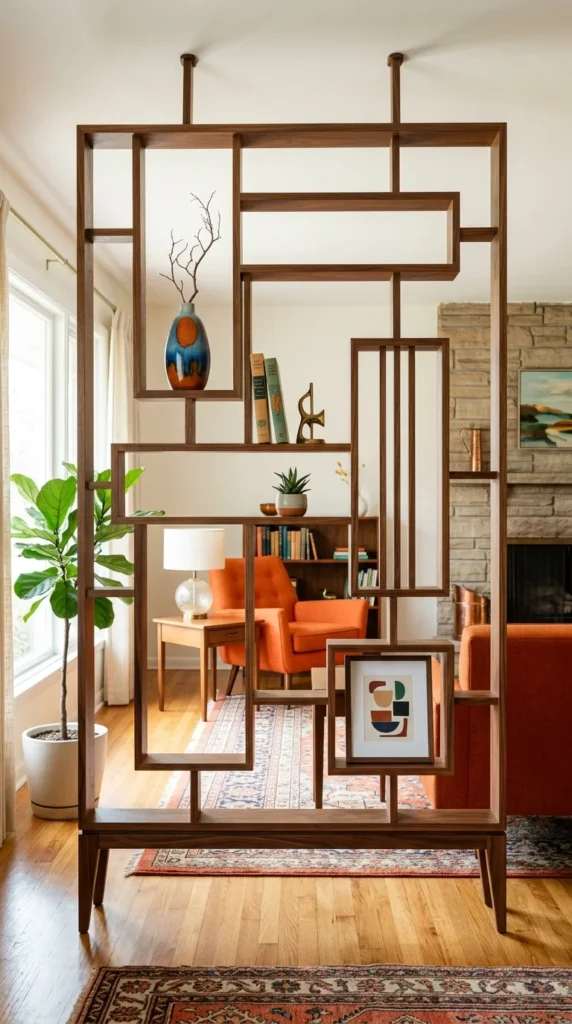
Mid-century modern dividers often feature rich woods like walnut and iconic geometric shapes. These pieces usually have a “furniture-like” quality, often including small shelves or built-in cabinets at the bottom to ground the piece while the top remains open and airy.
12. Lattice Screens
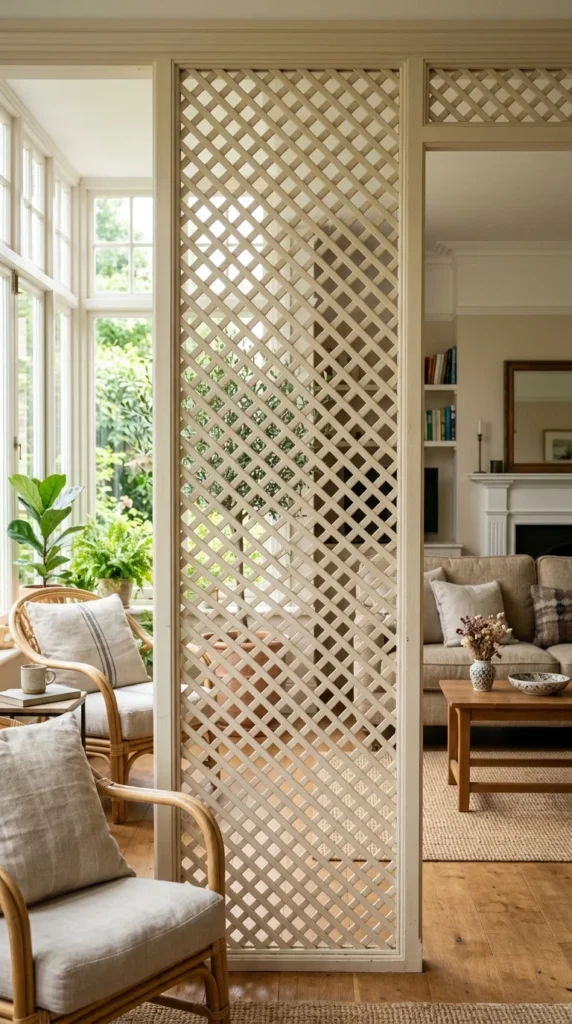
Lattice dividers are a classic choice that offers a high degree of privacy without sacrificing ventilation. The crisscross pattern is traditionally associated with garden design, but when used indoors, it adds a delicate, romantic touch to a space.
13. Shiplap Walls
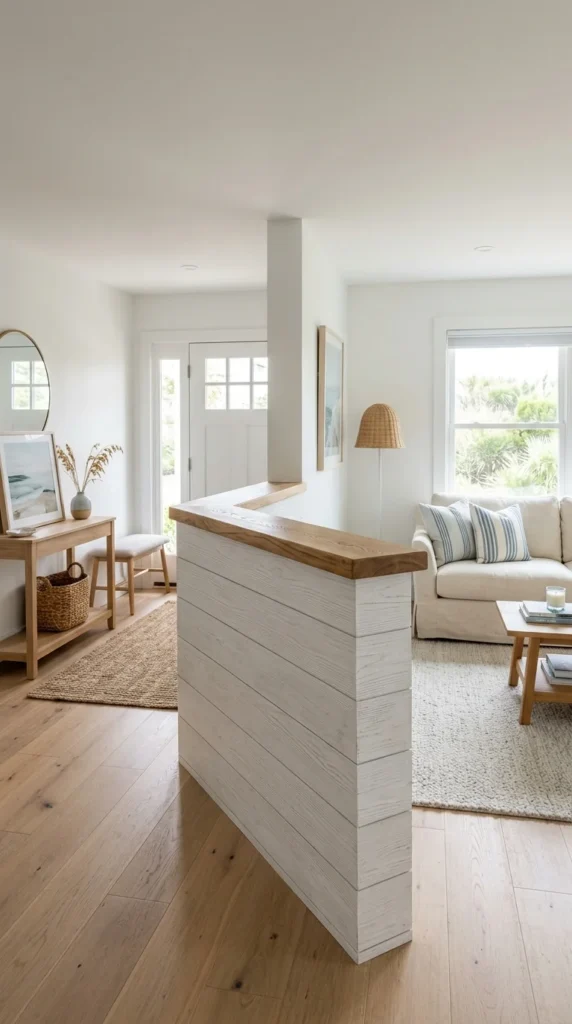
If you want a more permanent but non-intrusive divider, a shiplap half-wall (or “pony wall”) is ideal. It provides a solid boundary that you can lean furniture against, while the horizontal lines of the shiplap help to visually “stretch” the room, making it feel wider.
14. Wood and Glass
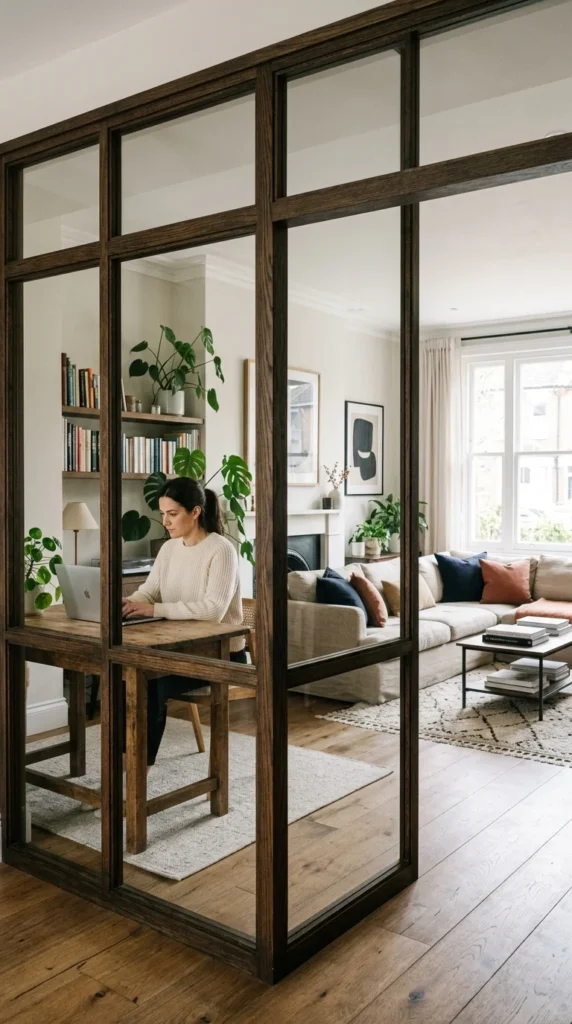
Combining wood with glass allows you to achieve total sound insulation without losing any visual connection between rooms. A wooden-framed glass wall is perfect for a home office, allowing you to see the rest of the house while keeping the noise out.
15. Live Edge Slabs
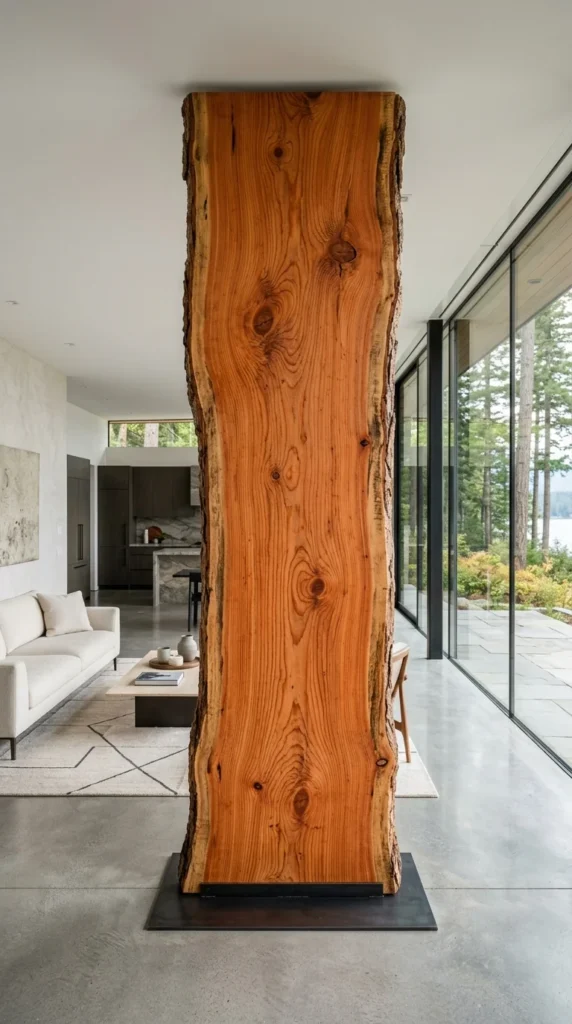
A live edge slab is the ultimate statement piece. By taking a cross-section of a tree and mounting it vertically, you bring a raw, sculptural element into your home. Each piece is unique, showcasing the natural “edge” of the tree, including the bark and knots.