
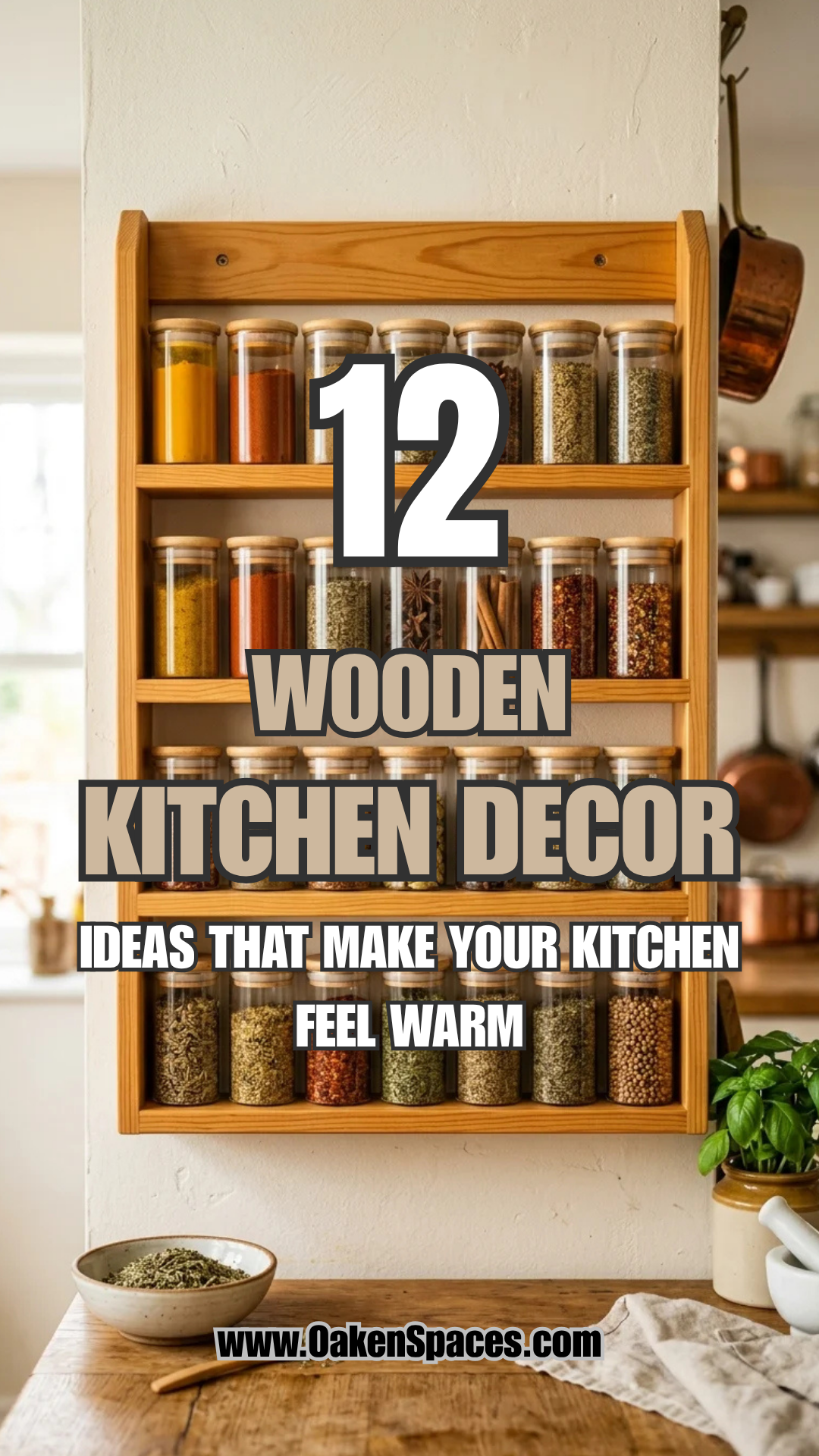
The kitchen is often called the heart of the home, but without the right materials, it can easily feel sterile, cold, and purely functional. While stainless steel and marble have their place, nothing breathes life and “soul” into a culinary space quite like wood. Wood is timeless, versatile, and possesses an organic texture that immediately softens the hard edges of modern appliances.
Whether you are aiming for a rustic farmhouse vibe, a sleek Scandinavian aesthetic, or a cozy traditional look, incorporating wooden elements is the most effective way to introduce warmth. Here are 12 wooden kitchen decor ideas that will transform your kitchen into a welcoming sanctuary.
1. Floating Shelves
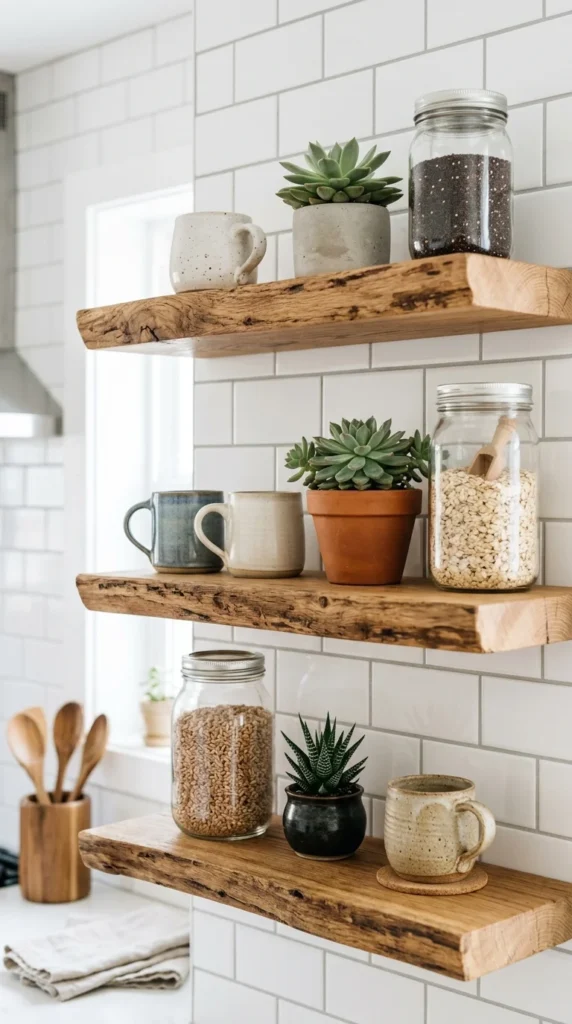
Replacing heavy upper cabinets with wooden floating shelves is a design move that opens up the room and invites a sense of airiness. Unlike closed cabinets, which can feel imposing, wooden shelves allow you to display your most beautiful kitchenware while putting the natural grain of the timber on full display.
When choosing wood for shelves, consider “live-edge” pieces for a more organic, raw look, or neatly planed oak and walnut for a more refined finish. These shelves serve as a bridge between functionality and decor, providing a platform for plants, cookbooks, and artisanal ceramics that contribute to the overall warmth of the room.
2. Butcher Blocks
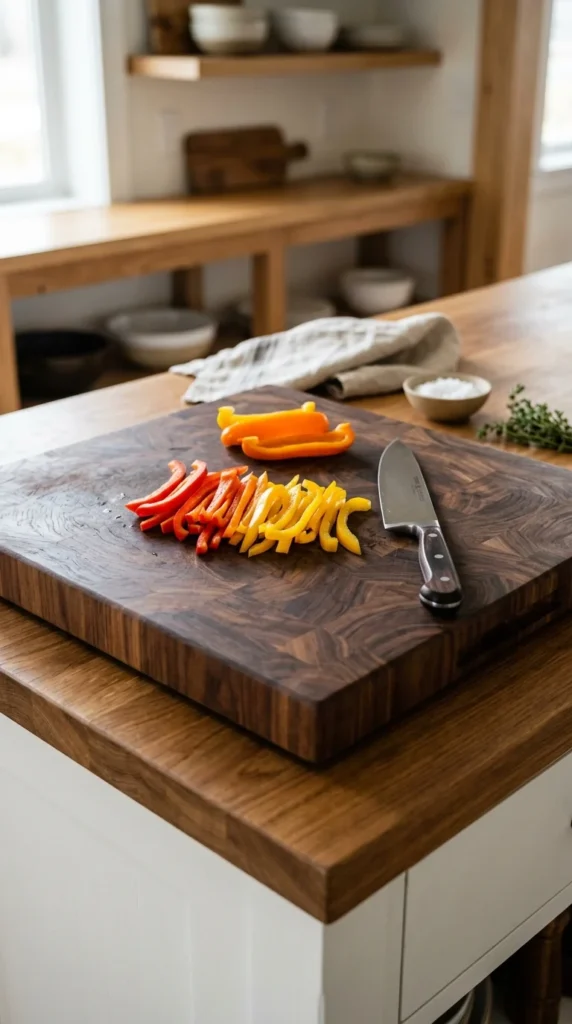
There is something inherently comforting about a sturdy butcher block. Whether it is an entire countertop or a built-in section of a kitchen island, the thick, heavy nature of the wood suggests durability and home-cooked meals.
Butcher blocks are unique because they are “living” surfaces; they develop a patina over time that tells the story of the kitchen. From a design perspective, the multi-tonal patterns of end-grain wood (where the wood fibers are oriented vertically) add a rich, mosaic-like visual interest that breaks up the monotony of stone or laminate surfaces.
3. Layered Boards
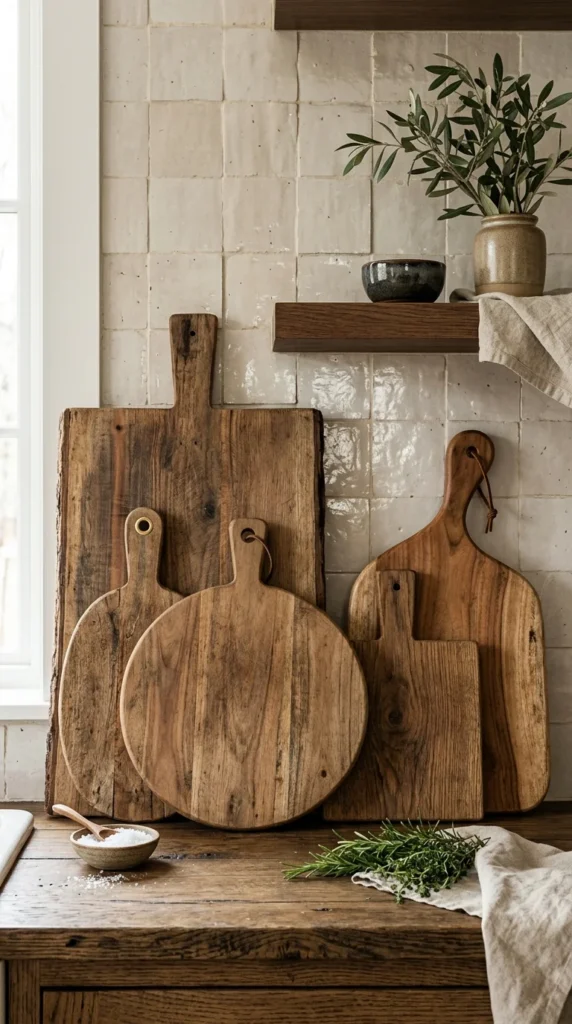
You don’t need a massive renovation to bring wood into your kitchen. One of the most popular styling tricks used by interior designers is the “layered board” look. By leaning several wooden cutting boards of different heights, shapes, and wood species against your backsplash, you create an instant focal point.
This approach introduces multiple wood tones—such as the light cream of maple, the reddish hues of cherry, and the deep browns of walnut—into a small area. This layering effect adds depth and texture, making the countertop feel curated and lived-in rather than cluttered.
4. Ceiling Beams
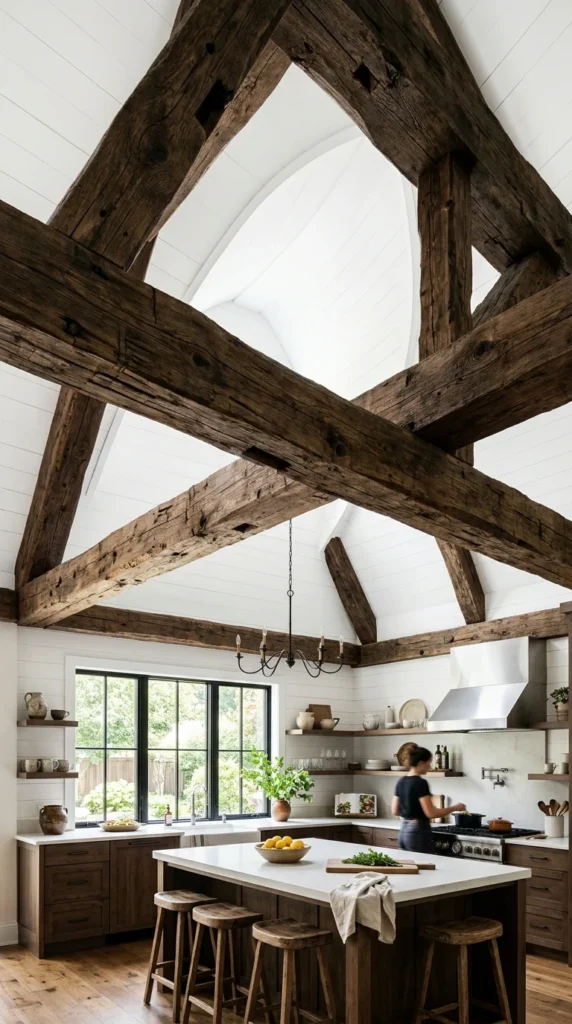
If you want to make a dramatic statement, look upward. Exposed wooden ceiling beams are an architectural powerhouse. They draw the eye up, emphasizing the height of the room while simultaneously making a large space feel more intimate and “grounded.”
Reclaimed timber beams are particularly effective for adding warmth because they often carry the scars of their previous life—nail holes, saw marks, and weathered textures. These imperfections provide a “soulful” contrast to the perfectly smooth surfaces found elsewhere in a modern kitchen.
5. Wooden Stools
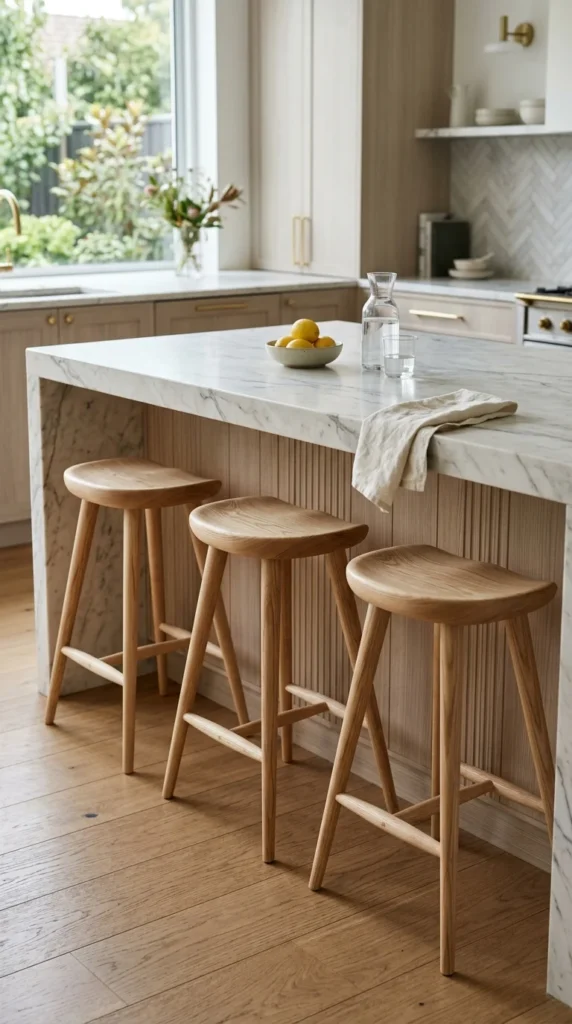
Seating is one of the easiest ways to introduce wood at eye level. If your kitchen features a breakfast bar or an island, opting for wooden stools instead of metal or plastic ones can completely change the temperature of the room.
Wood is naturally warmer to the touch than metal, making the seating area more inviting for family and guests. Whether you choose spindle-back Windsor chairs for a traditional look or sleek, carved tractor seats for a modern edge, the organic curves of wooden furniture help break the straight, rigid lines of kitchen cabinetry.
6. Utensil Crocks
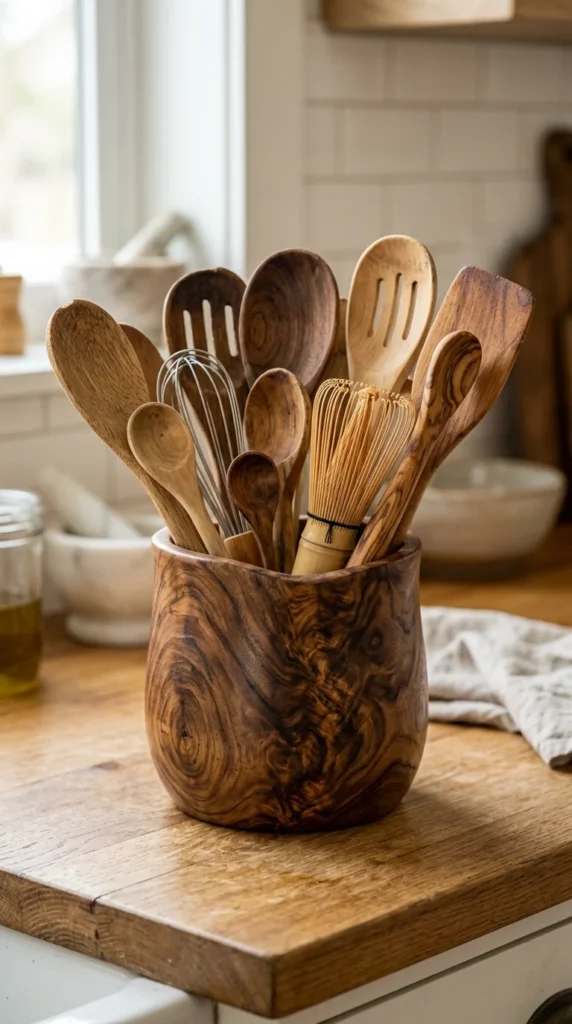
Small details often make the biggest impact. A hand-turned wooden bowl or a carved wooden crock used to hold kitchen tools is a subtle way to pepper warmth across your workspace.
When you pair a wooden container with wooden-handled spatulas and spoons, you create a cohesive “micro-moment” of natural texture. This is especially effective in kitchens with dark or very bright white countertops, as the wood acts as a natural middle ground that balances the light.
7. Spice Racks
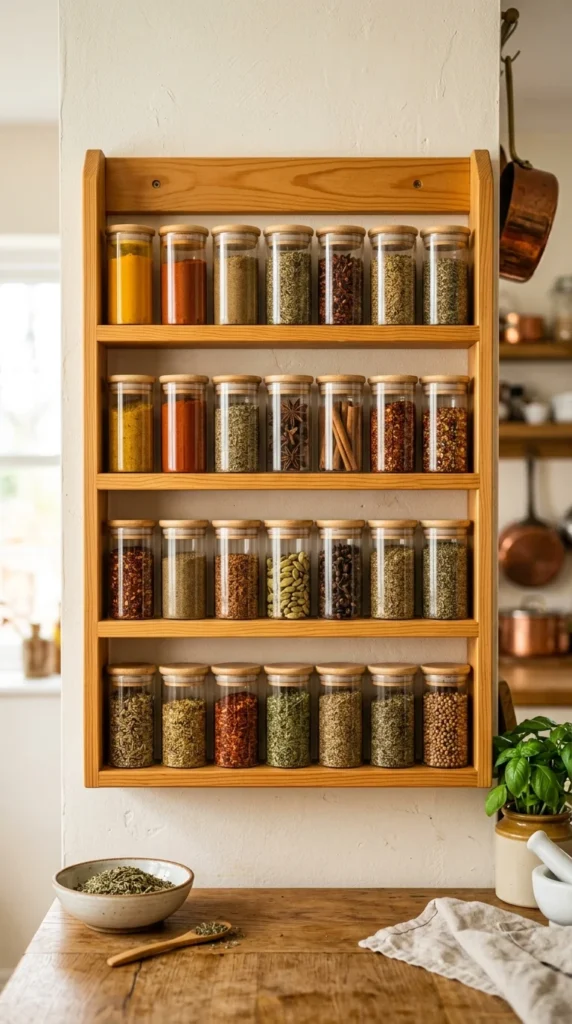
Organization doesn’t have to be clinical. A custom-built wooden spice rack turns your ingredients into a piece of art. The warmth of the wood provides a beautiful frame for the vibrant oranges, reds, and greens of your spices.
Wall-mounted wooden racks add a “workshop” feel to the kitchen, suggesting that the space is a place of craft and creativity. By choosing a wood finish that matches your flooring or shelving, you can tie the entire room’s design together seamlessly.
8. Pendant Lights
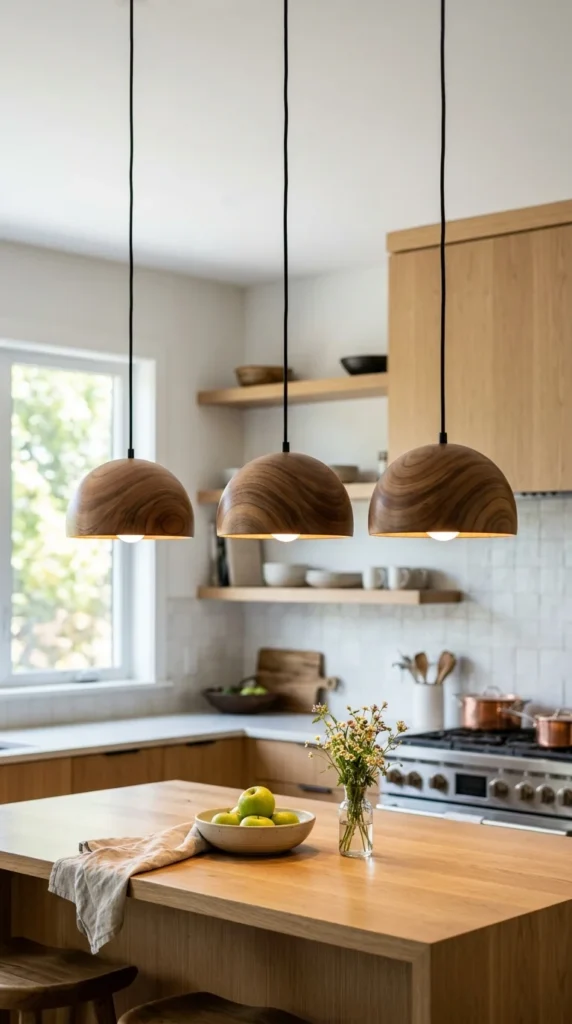
Lighting is often the “jewelry” of the kitchen, and wooden light fixtures are a rising trend that offers a soft, Scandinavian-inspired warmth. While glass and metal pendants reflect light in a sharp, sometimes harsh way, wooden shades or accents absorb and diffuse the glow, creating a much softer ambiance.
A wooden pendant light serves as an unexpected element in a kitchen, as wood is rarely the first material people think of for electrical fixtures. This element of surprise, combined with the natural beauty of the grain, makes the kitchen feel more like a cozy living space.
9. Cabinetry Accents
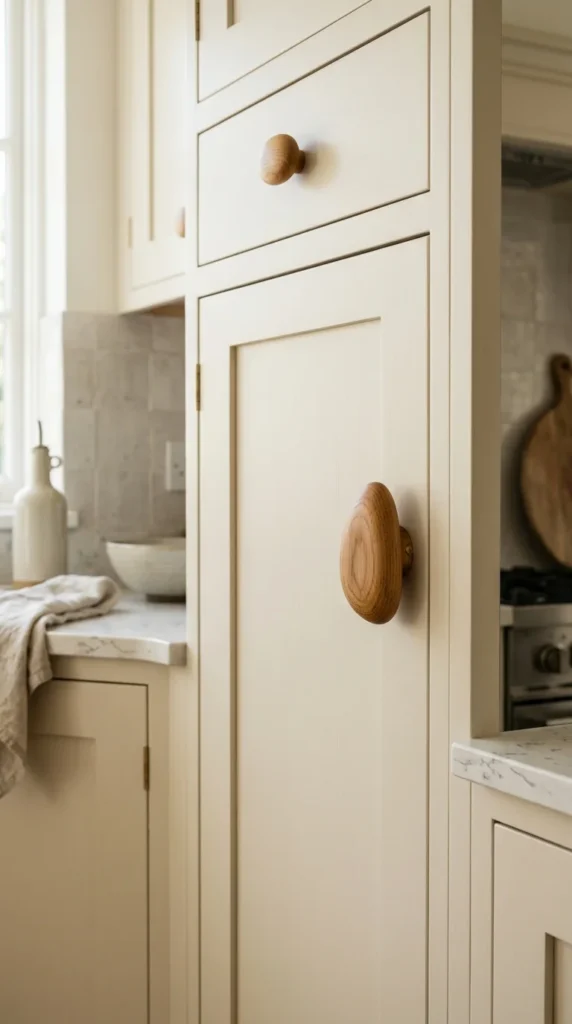
If you aren’t ready to commit to full wooden cabinets, consider wooden hardware. Swapping out standard chrome or brass handles for hand-carved wooden pulls can transform the feel of your cabinetry.
Wooden hardware feels wonderful in the hand—it’s warm, tactile, and provides a “soft” grip. These small accents are perfect for breaking up a sea of painted cabinets, adding a touch of nature to every interaction you have with your kitchen storage.
10. Window Frames
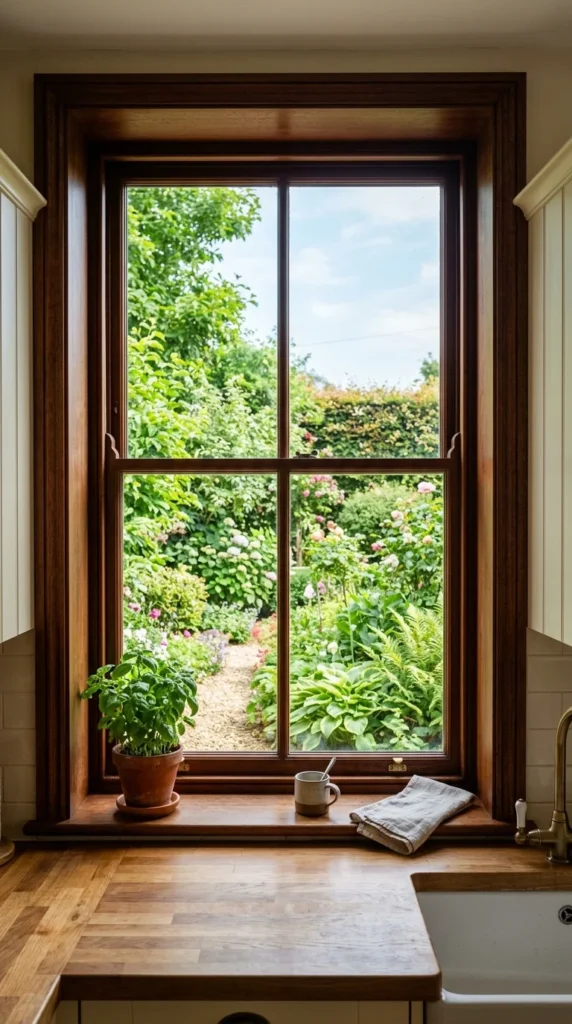
Windows are the primary source of natural light, and framing that light in wood enhances its golden quality. A wooden window frame or a thick wooden window sill provides a natural transition between the interior of the home and the world outside.
In a kitchen, a wooden window sill is also the perfect place for a small indoor herb garden. The combination of green plants and warm wood creates a “biophilic” design that has been proven to reduce stress and increase the sense of well-being in a home.
11. Wall Panels
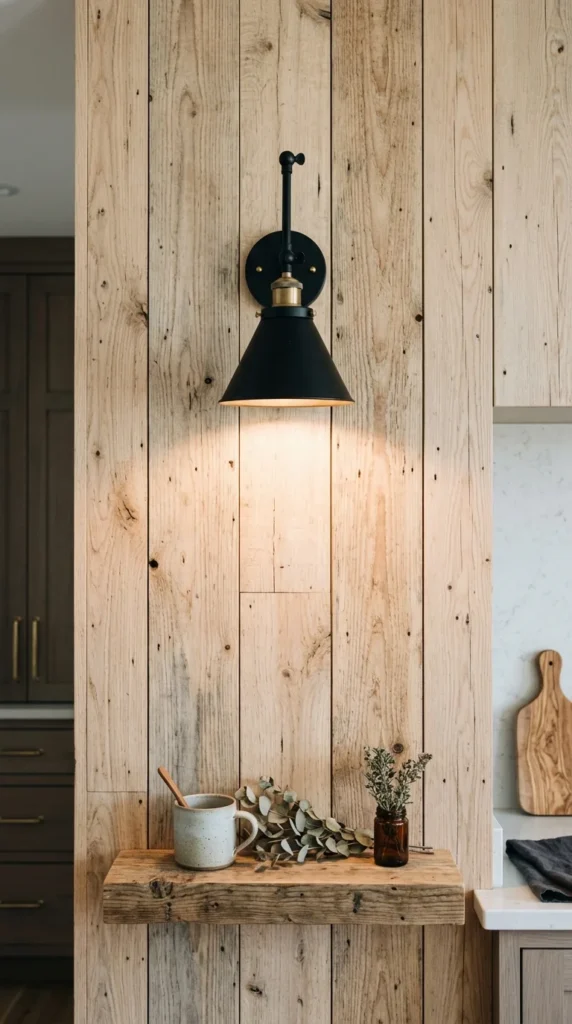
Wood paneling has come a long way since the 1970s. Modern wooden wall treatments, such as vertical slats or refined shiplap, add incredible texture and architectural depth to a kitchen.
Using wood as a backsplash or a feature wall behind a dining nook creates a “cocoon” effect. This is particularly useful in open-concept homes where the kitchen can sometimes feel lost in a large space; the wood paneling helps define the area and makes it feel distinct and cozy.
12. Rolling Carts
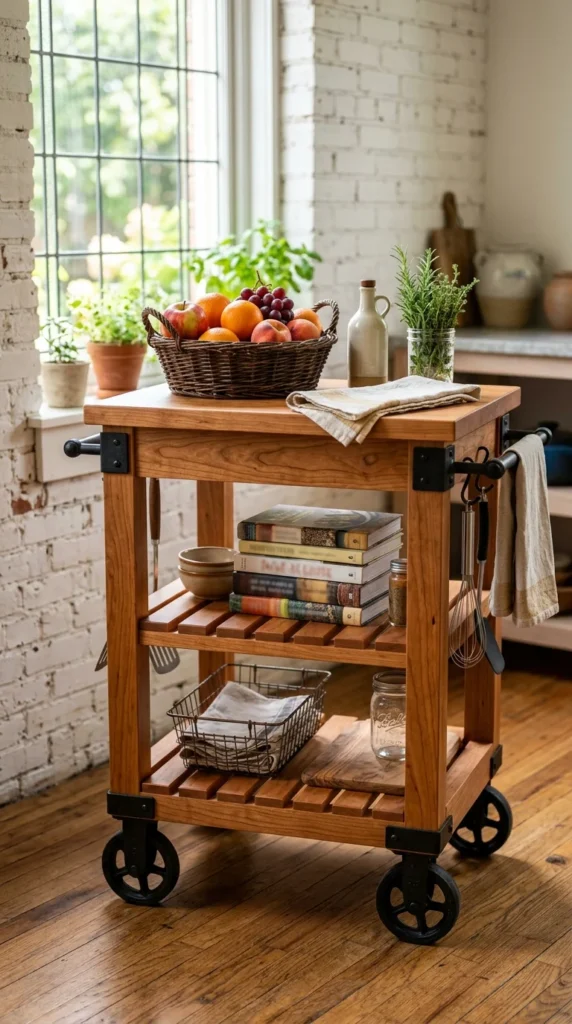
For those with limited space, a wooden rolling cart or “kitchen trolley” is a versatile decor piece. It provides the warmth of wood with the added benefit of mobility.
A wooden cart can serve as a coffee station, a bar cart, or extra prep space. Its presence adds a layer of “functional furniture” to the kitchen, making the room feel less like a rigid laboratory and more like a flexible, hospitable environment.
Finding the Right Balance
While wood is the ultimate tool for adding warmth, the key to a beautiful kitchen is balance. You don’t want to overdo it to the point where the room feels like a sauna. The most successful kitchens mix wood with other materials—cool stones, sleek metals, and soft textiles. By choosing two or three of the ideas above, you can create a kitchen that feels grounded, organic, and, most importantly, like home.