
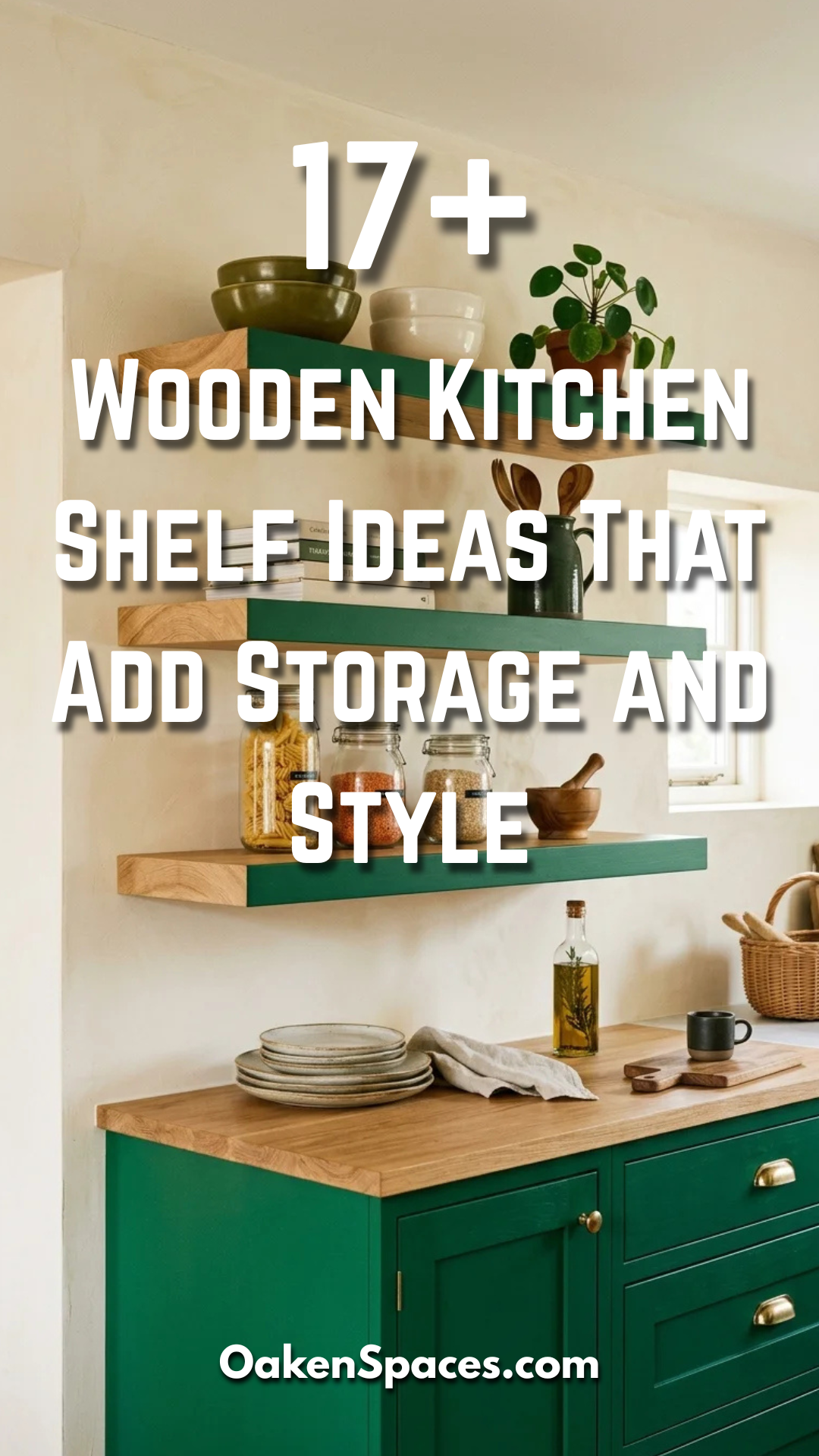
The kitchen is often called the heart of the home, but it is also the room that demands the most organization. Striking the perfect balance between utility and aesthetics can be a challenge, yet wooden shelving offers a timeless solution. Whether you are aiming for a rustic farmhouse vibe, a sleek modern look, or an industrial edge, wood brings a natural warmth that stone and metal simply cannot replicate.
Open shelving has moved beyond a mere trend; it is now a design staple that allows homeowners to showcase their personality while keeping essential tools within arm’s reach. From live-edge slabs that tell a story of nature to minimalist floating planks that defy gravity, here are 17 wooden kitchen shelf ideas to transform your cooking space.
1. Live Edge
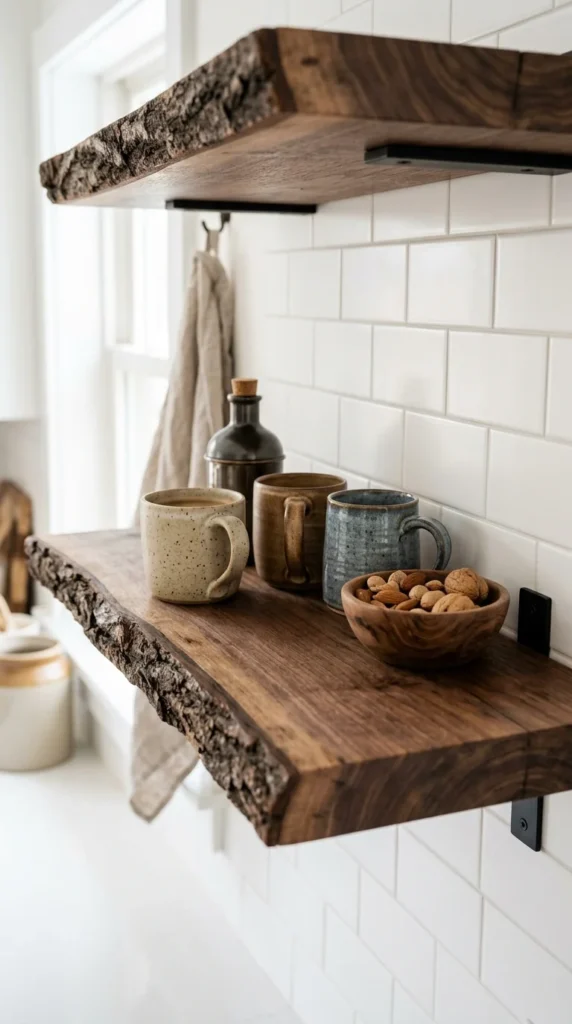
Live edge shelves are the ultimate statement of organic beauty. These shelves retain the natural curve and texture of the tree from which they were cut, meaning no two pieces are ever identical. They work exceptionally well in kitchens that need a touch of softness to break up the rigid lines of cabinetry and appliances. To make them pop, pair deep-toned woods like walnut or cherry against a neutral backsplash. The contrast between the rugged, unrefined edge and a polished kitchen environment creates a sophisticated, “collected” look.
2. Reclaimed Barnwood
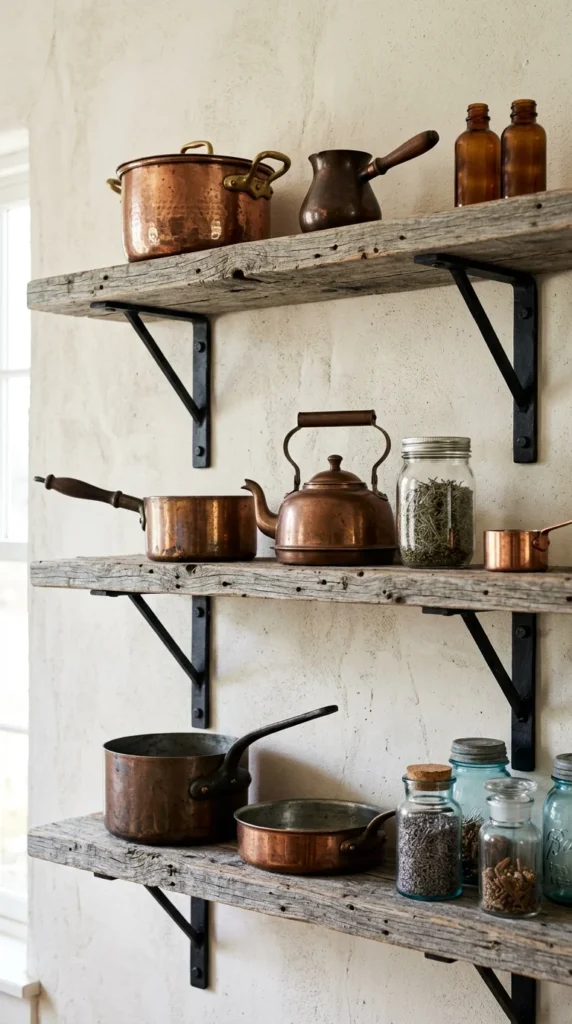
There is a unique soul in reclaimed wood. Sourced from old barns, factories, or shipping crates, these shelves bring a sense of history and environmental consciousness to your kitchen. The patina—composed of weathered textures, old nail holes, and natural staining—adds layers of character that new wood lacks. These are perfect for farmhouse or industrial-style kitchens. Because reclaimed wood is often quite dry and porous, it’s a good idea to seal it with a matte finish to protect it from kitchen moisture while preserving its rugged appearance.
3. Floating Oak
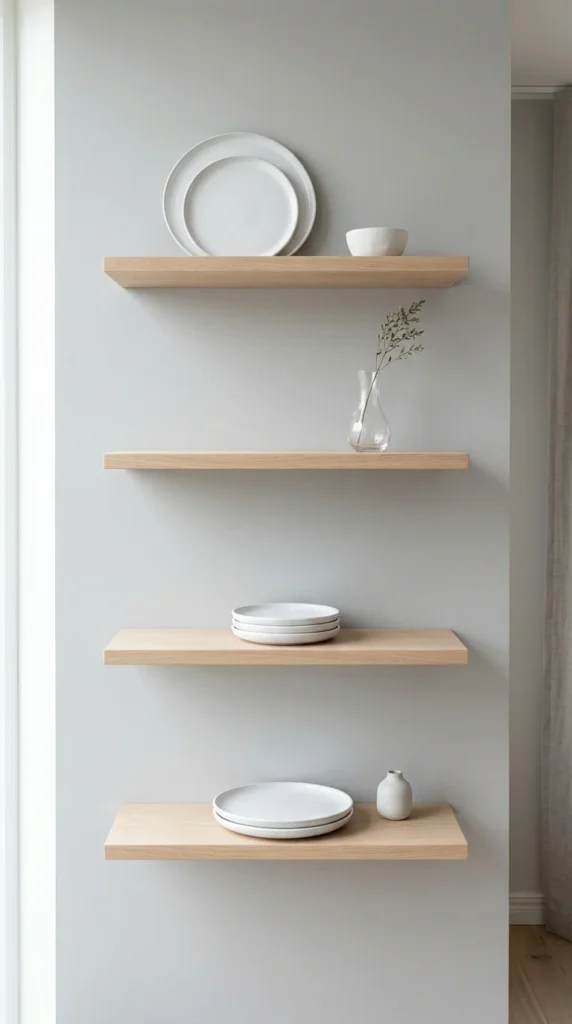
For those who lean toward a modern or Scandinavian aesthetic, floating oak shelves are a masterclass in minimalism. By using hidden internal brackets, these shelves appear to grow directly out of the wall. White oak is particularly popular for its tight grain and neutral, honey-colored hue, which brightens up smaller kitchens. The lack of visible hardware creates a clean, streamlined look that emphasizes the quality of the wood itself.
4. Industrial Pipes
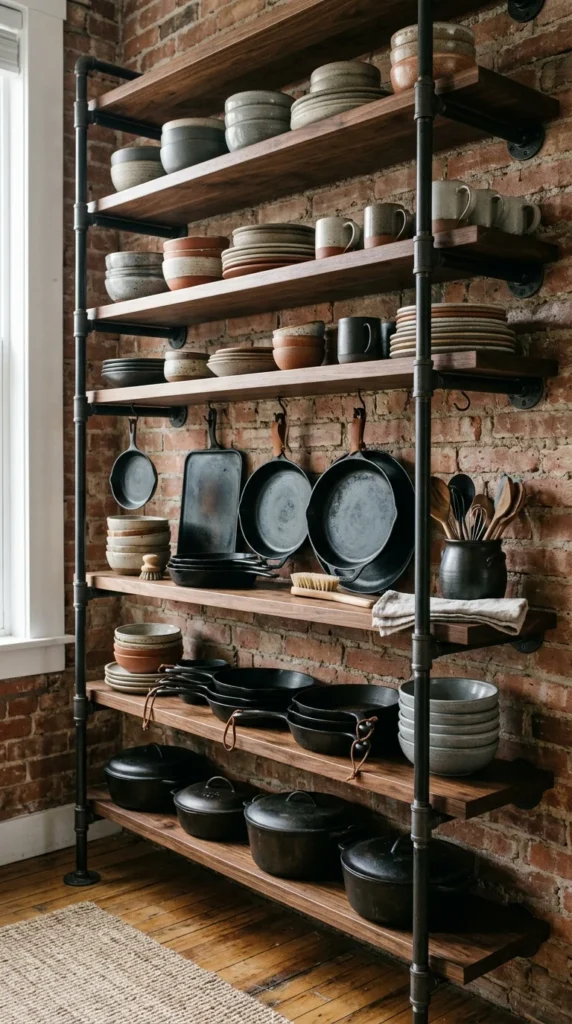
If you want your kitchen to feel like a converted urban loft, industrial pipe shelving is the way to go. This design combines the warmth of thick wooden planks with the cold, hard utility of black iron or galvanized steel pipes. Not only is this style incredibly sturdy—capable of holding your heaviest Dutch ovens and cookbooks—but it also adds a structural, architectural element to the room. It’s an excellent DIY project for those looking to customize their storage height and width.
5. Corner Floating
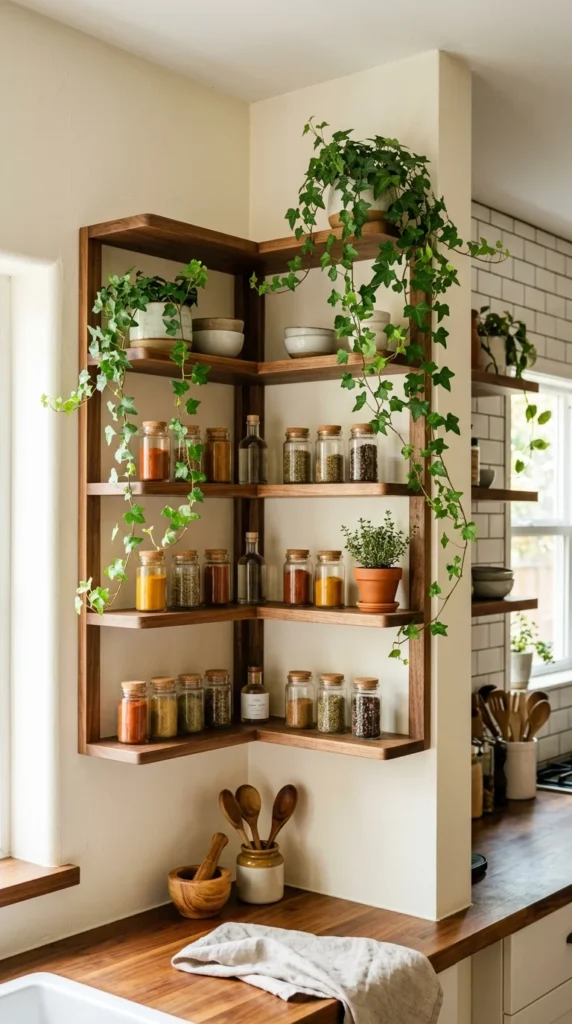
Corner space is notoriously difficult to utilize in a kitchen, often resulting in “dead zones” or awkward deep cabinets. Corner floating shelves turn these neglected nooks into a design feature. By wrapping the wood around the corner, you create a continuous line that makes the kitchen feel larger and more cohesive. It’s an ideal spot for frequently used items like coffee mugs or your most-used spices, keeping them accessible without cluttering the main workspace.
6. Wooden Pegboards
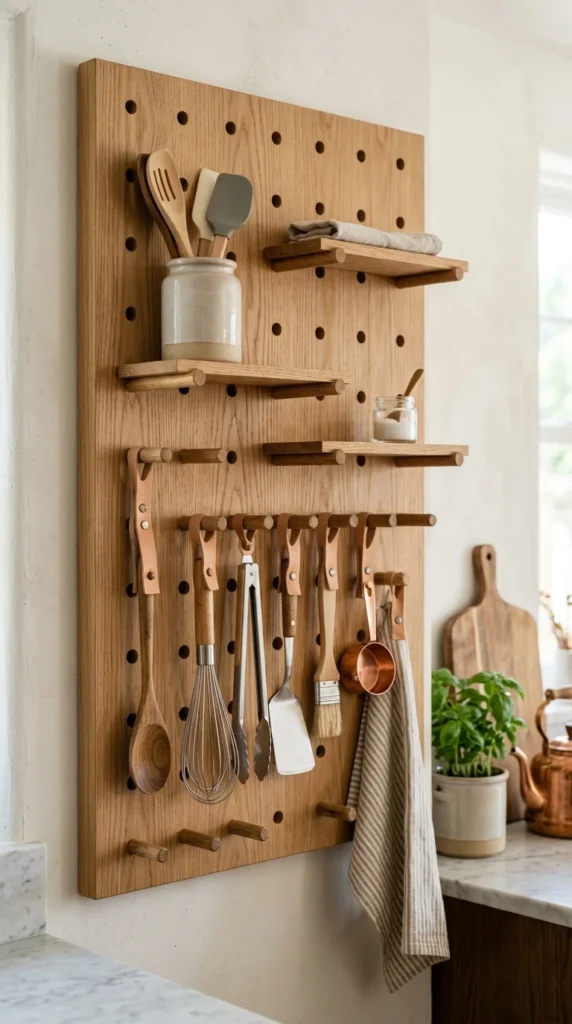
Versatility is the hallmark of the wooden pegboard. Unlike fixed shelves, a pegboard allows you to move your storage around as your needs change. You can rearrange the pegs and small shelf platforms to accommodate a tall pitcher one day and a set of small ramekins the next. Crafted from light birch or plywood, these systems add a playful, mid-century modern vibe to the kitchen while functioning as a giant, customizable organization hub.
7. Under-Cabinet Slim
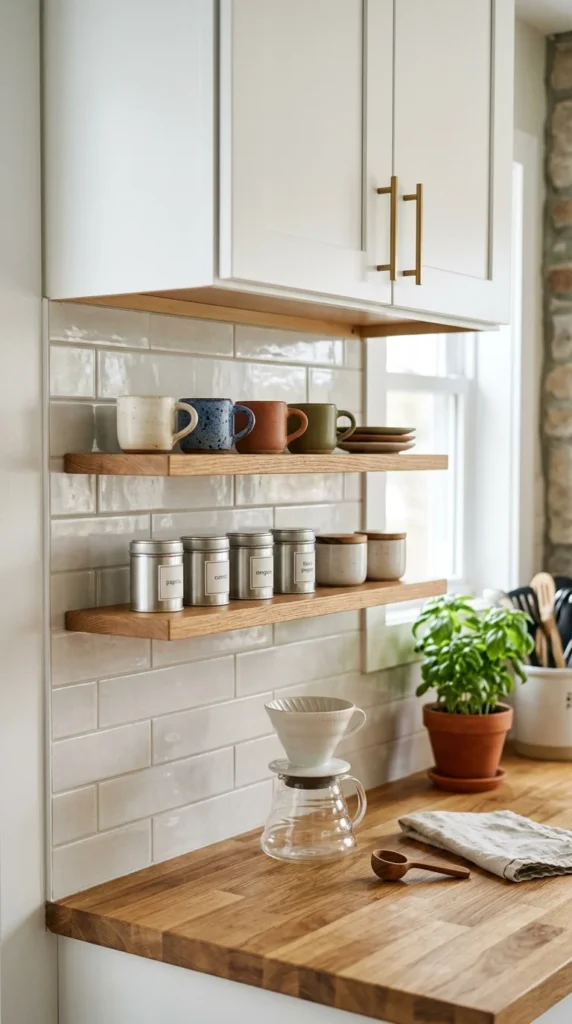
In smaller kitchens, every inch of vertical space counts. Under-cabinet shelves are thin wooden slats installed just a few inches below your main cabinetry. This “micro-storage” is perfect for the small things that often get lost in deep cupboards, such as salt cellars, timers, or a collection of teas. It keeps the countertop clear for food prep while ensuring that the small essentials are always at eye level.
8. Chunky Mantels
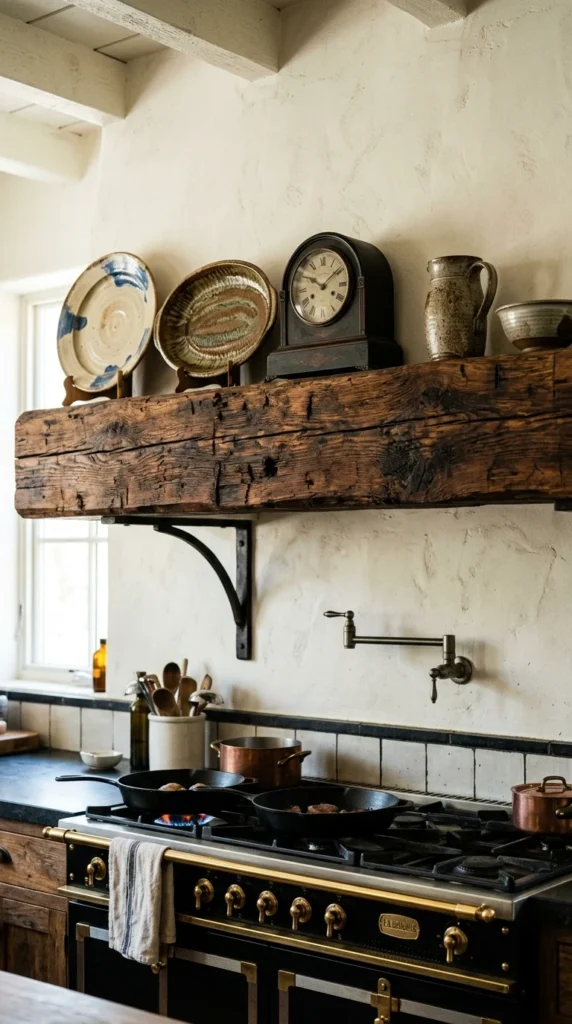
Sometimes, one big gesture is better than several small ones. A chunky wooden mantel shelf, usually installed above a range or a sink, acts as a visual anchor for the entire room. These are often made from solid 4×4 or 6×6 beams, providing a sense of weight and permanence. Because of their thickness, they can handle larger decorative items, such as oversized vases or framed art, turning a functional area into a gallery-like focal point.
9. Painted Accents
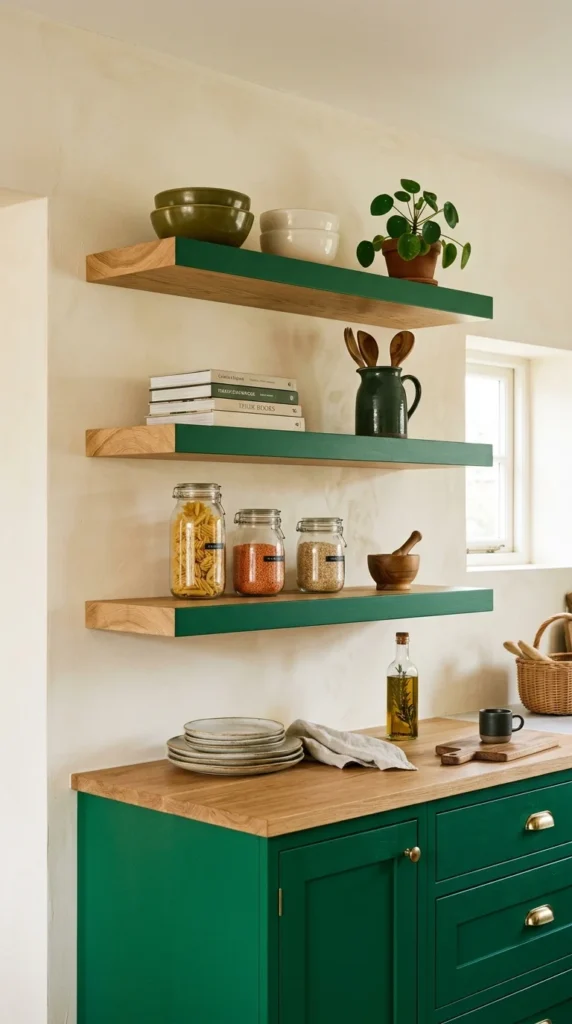
Who says wooden shelves have to be brown? Painted wooden shelves allow you to bridge the gap between your cabinetry color and the natural textures in the room. You can paint the entire shelf to match your walls for a “hidden” look, or just paint the edges for a pop of color. This approach is great for adding a playful element to a breakfast nook or a coffee station, allowing the wood grain to peek through while the color ties the room’s palette together.
10. Slatted Racks
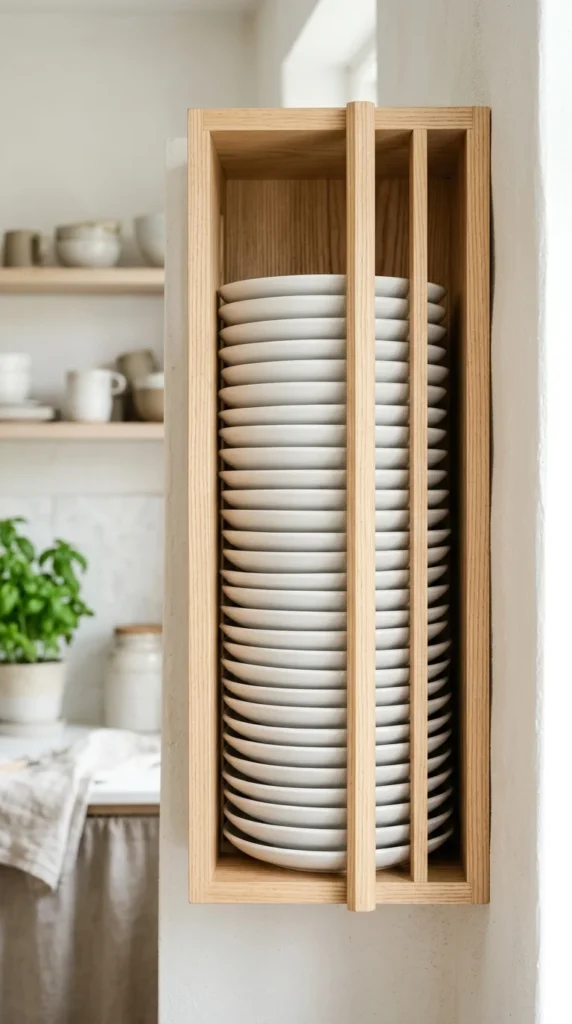
Inspired by traditional European kitchens, slatted wooden plate racks are both functional and incredibly charming. Instead of stacking your plates in a dark cabinet, these racks allow you to display them vertically. This not only makes it easier to grab a single plate without lifting a whole stack but also allows the dishes to act as decor. The vertical lines of the wooden slats add a sense of height and rhythm to the kitchen walls.
11. Hanging Ropes
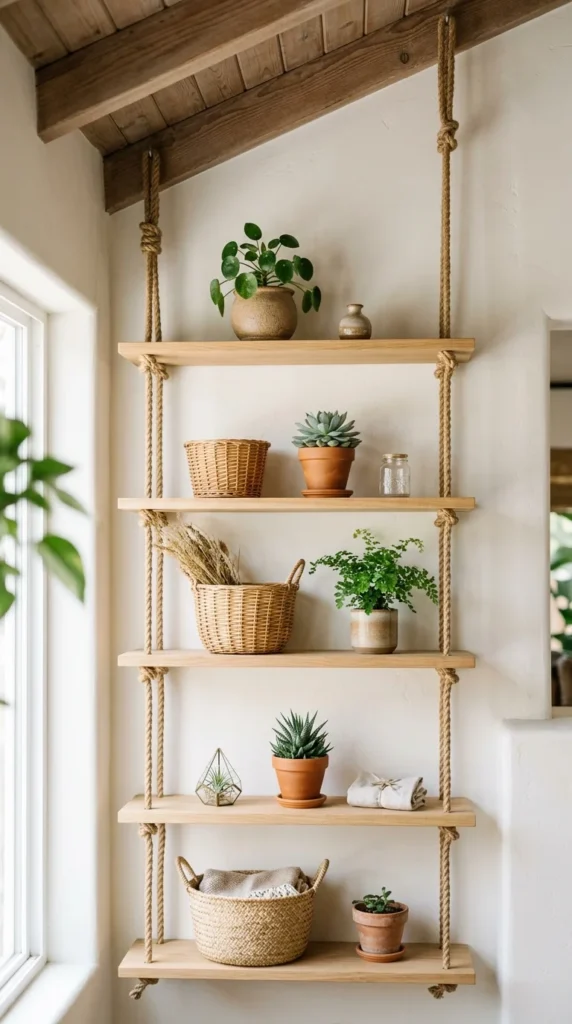
For a touch of bohemian or coastal flair, hanging wooden shelves offer a unique, airy feel. Suspended by heavy rope or leather straps, these shelves don’t touch the wall at all, creating a sense of movement. They are best suited for lighter items like glassware, herbs, or baskets of bread. Because they hang from the ceiling or a high wall bracket, they are a great way to add storage in front of a window without completely blocking the view.
12. Built-in Nooks
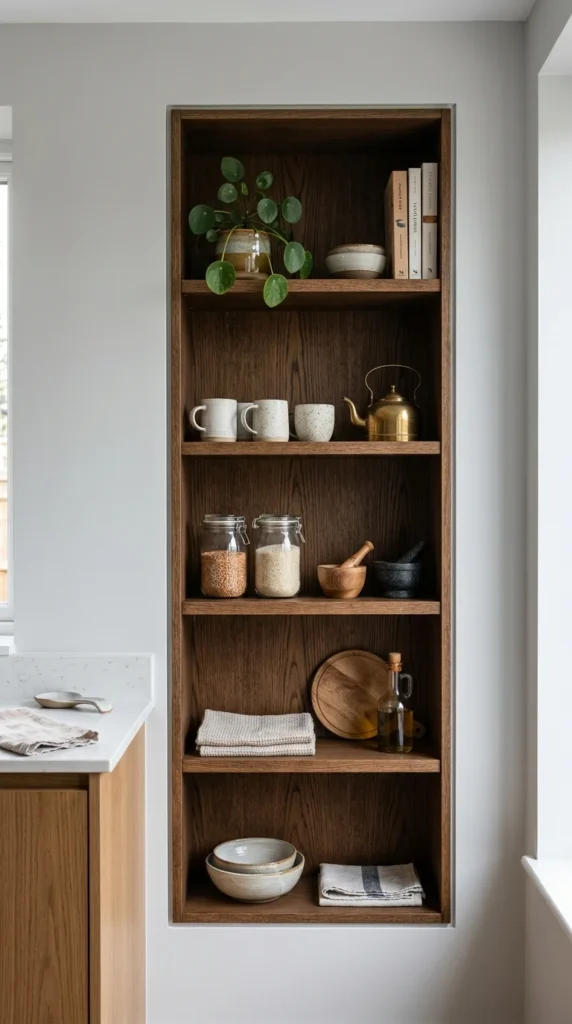
Built-in wooden nooks offer a high-end, custom look that feels like part of the home’s architecture. By recessing the shelves into the wall and lining the “box” with wood, you create a cozy, framed space for your items. This is a particularly effective way to use the space between wall studs. The wood lining adds a “jewelry box” effect, making whatever you place inside—from vintage glassware to everyday bowls—look special.
13. Dark Walnut
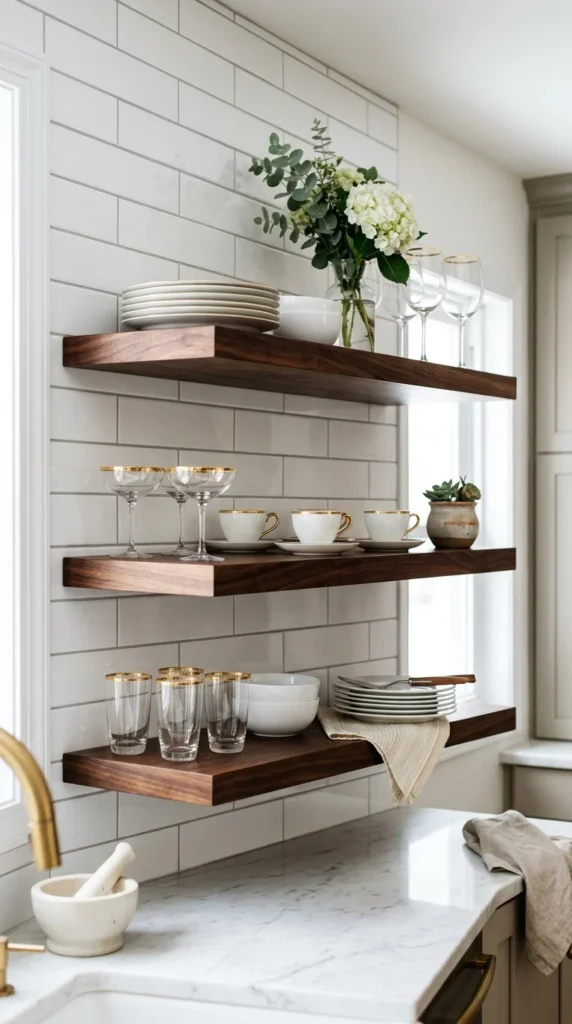
Walnut is the king of kitchen woods. Its deep, chocolatey tones and elegant grain patterns scream luxury. Dark walnut shelves are perfect for creating a “moody” or high-contrast kitchen. When paired with brass hardware and white marble, walnut creates a sophisticated, mid-century look that feels expensive and curated. Because walnut is a hardwood, it is also incredibly durable and resistant to the dings and scratches of a busy kitchen.
14. Pull-out Pantries
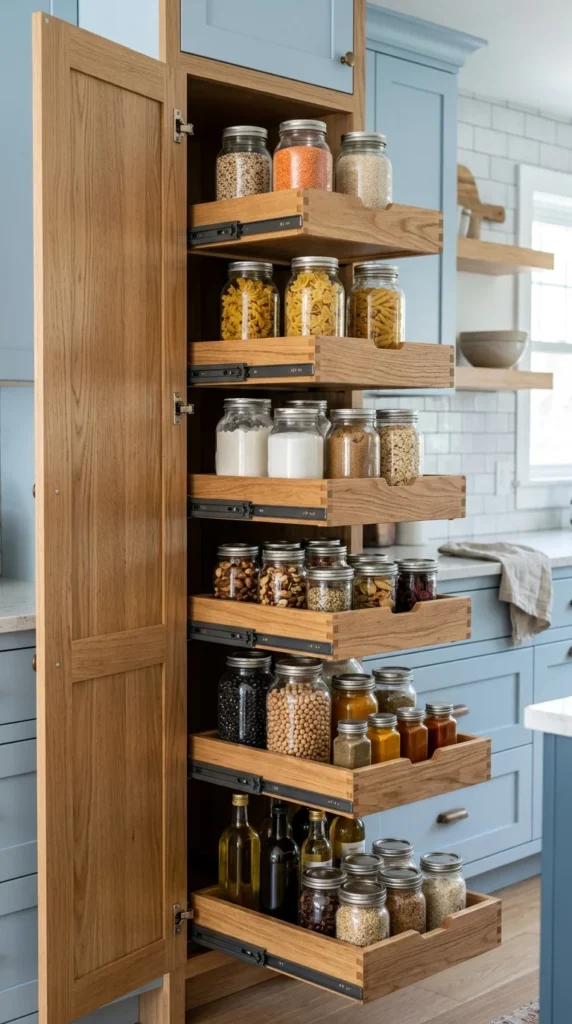
Storage isn’t always about what’s on display. Wooden pull-out shelves inside a pantry or a deep base cabinet can revolutionize how you use your kitchen. Replacing standard wire racks with solid wood pull-outs makes the space feel more premium and prevents small items from tipping over or falling through gaps. The warmth of the wood makes opening your pantry a more tactile and pleasant experience, turning a chore into a moment of organized bliss.
15. Window Shelves
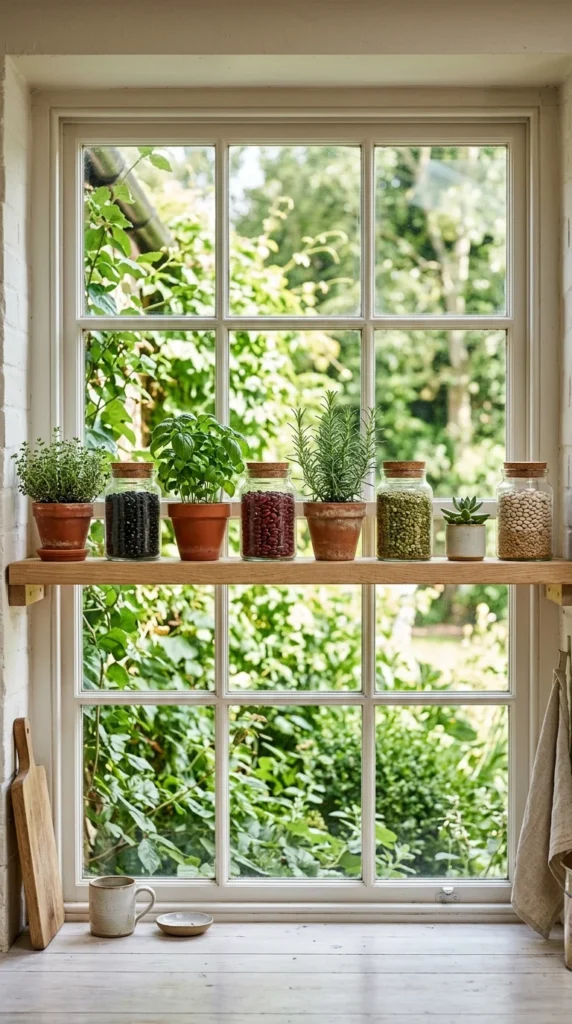
If you have a large window and a lack of wall space, why not put a shelf right across the glass? A wooden window shelf is the perfect place for a sun-drenched herb garden. The natural light highlights the wood grain and creates beautiful shadows. By using a relatively thin piece of wood, you can maintain your view while gaining valuable real estate for plants, transparent glassware, or anything else that looks beautiful when backlit by the sun.
16. Tiered Spice Riser
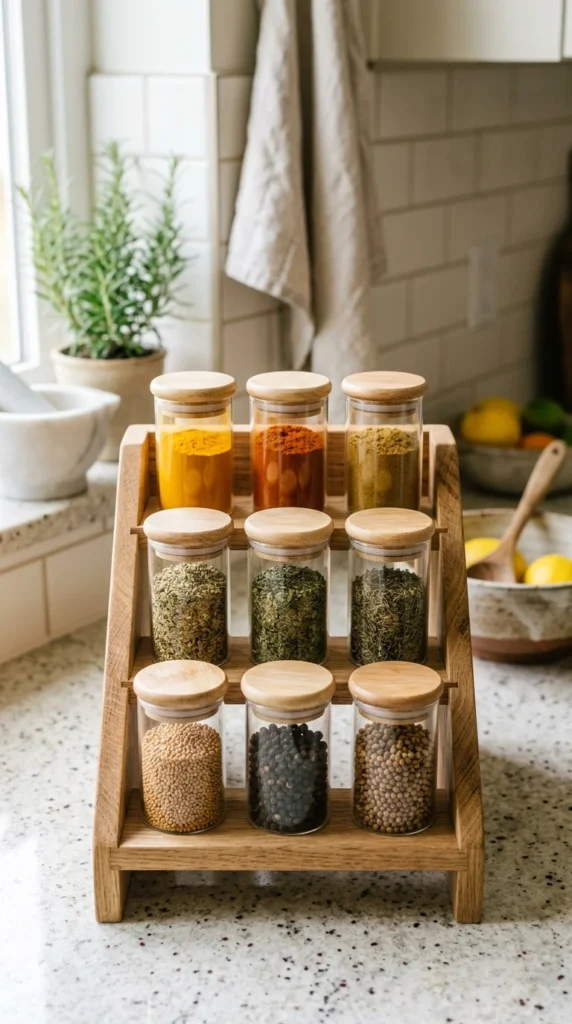
Organization is all about visibility. A tiered wooden spice riser takes the “shelf” concept and shrinks it down for the countertop or the inside of a cabinet. By elevating each row of spices, you can see every label at once, eliminating the need to rummage through a cluttered pile. This is a small but mighty addition that brings the beauty of natural wood to the functional corners of your prep area.
17. Butcher Block
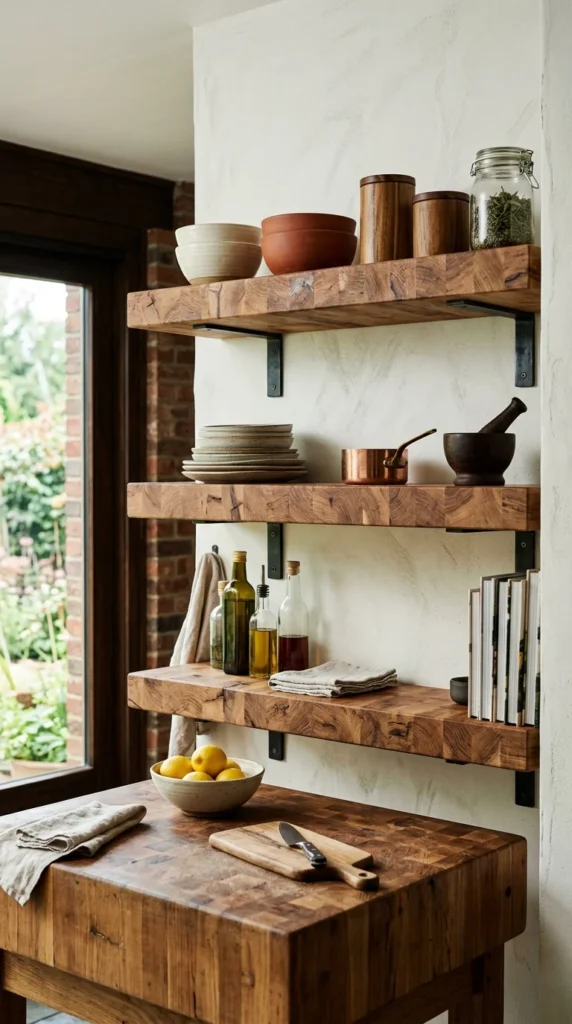
Butcher block isn’t just for countertops. Using extra-thick butcher block for your shelving creates a sense of professional-grade utility. These shelves are heavy and incredibly durable, making them perfect for holding a collection of heavy cookbooks or professional stand mixers. The “end-grain” or “edge-grain” pattern of the wood provides a beautiful, mosaic-like texture that adds visual interest and a rugged, chef-ready vibe to the room.