

Creating a home library is about more than just storage; it is about crafting a sanctuary for the mind. Wood, with its organic warmth, durability, and timeless appeal, remains the premier choice for bibliophiles looking to house their collections. Whether you have a sprawling dedicated room or a cozy corner in a studio apartment, these 27 wooden bookshelf ideas will help you transform your space into a literary haven.
1. Floor-to-Ceiling
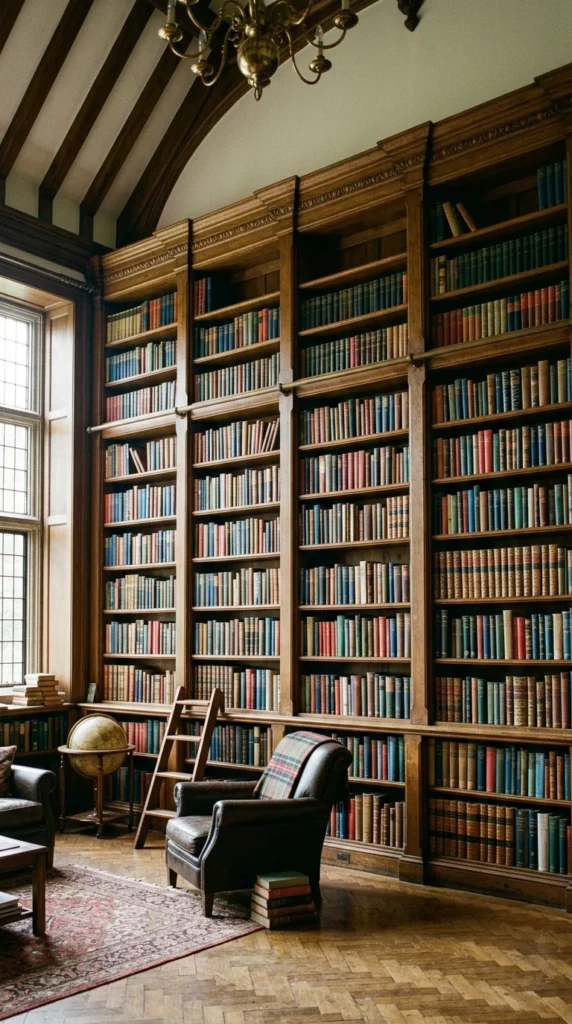
The ultimate dream for any book lover is the floor-to-ceiling library. This design maximizes vertical space and creates an immersive “wall of books” effect. By using a consistent wood grain across the entire wall, you create a sense of architectural permanence. It turns your collection into the primary decor element of the room, providing both insulation and a stunning visual backdrop for video calls or quiet evenings.
2. Rolling Ladder
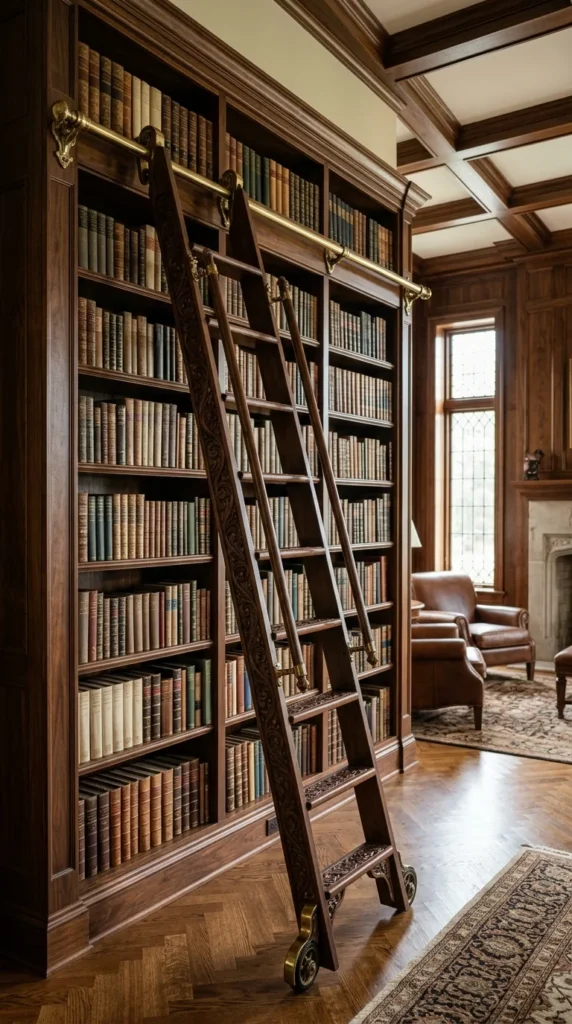
If you opt for height, a rolling ladder is a functional and whimsical necessity. Often associated with grand old-world libraries, a wooden ladder on a brass or steel rail adds a touch of Victorian elegance. It allows you to access the highest reaches of your collection safely while serving as a gorgeous focal point that invites movement and exploration within the room.
3. Reclaimed Wood
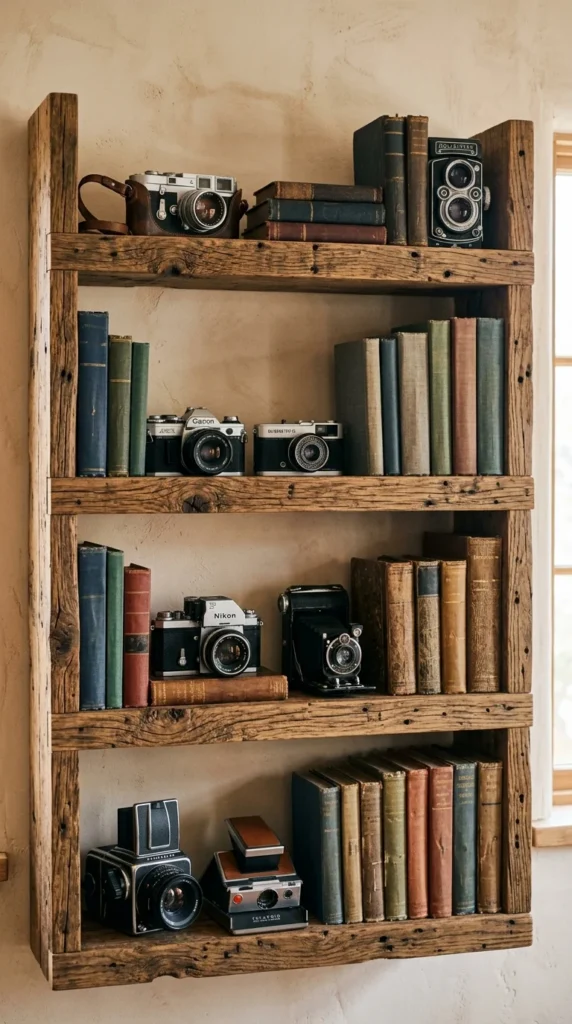
For those who love the “lived-in” look, reclaimed wood offers unparalleled character. Each shelf tells a story through its knots, nail holes, and weathered texture. Using salvaged timber from old barns or factories is not only an eco-friendly choice but also adds a layer of history to your library. It pairs beautifully with industrial accents or farmhouse-style decor.
4. Geometric Honeycomb
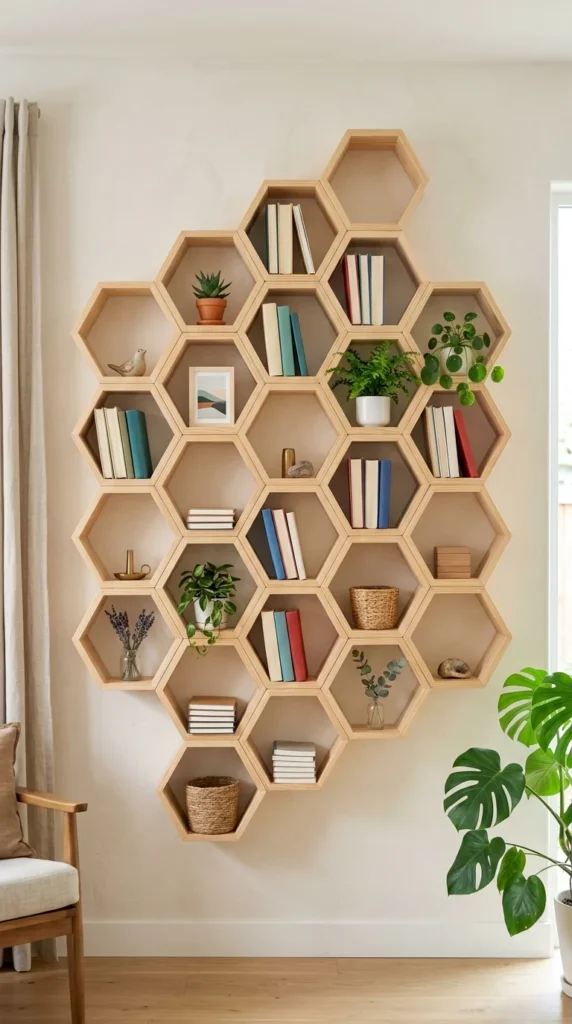
Break away from traditional horizontal lines with a geometric honeycomb design. These hexagonal wooden cells create a modern, beehive-like structure on your wall. This layout is perfect for mixing books with decorative objects, as the unique shape of each “cell” naturally frames whatever is placed inside. It’s a sculptural approach to storage that feels like a work of art.
5. Built-in Alcove
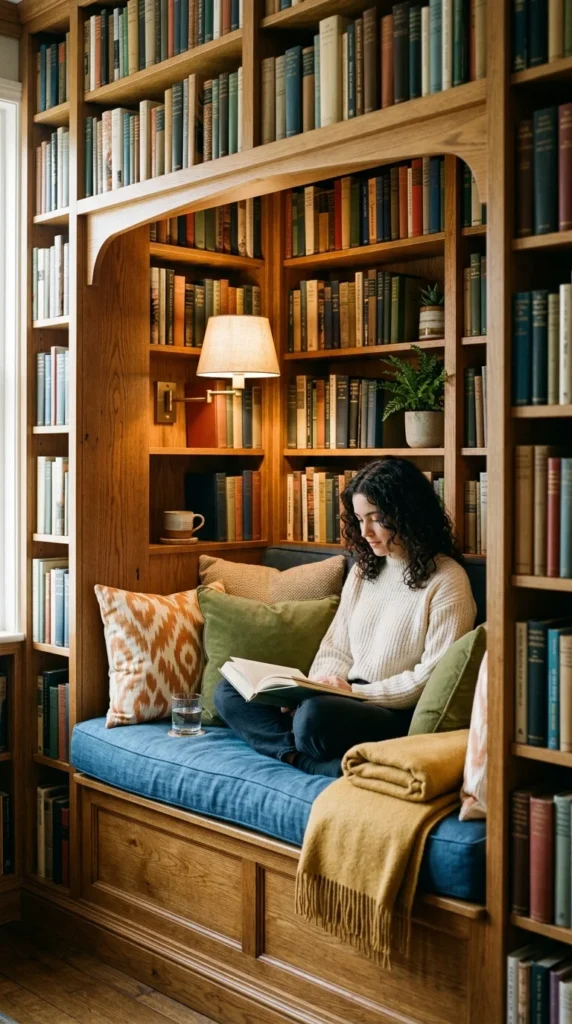
Utilize the architectural quirks of your home by installing built-in shelves into existing alcoves or recessed walls. This “flush” look makes the bookshelves feel like a part of the house’s original skeleton. It saves floor space and creates a streamlined, tidy appearance, especially in smaller rooms where bulky furniture might feel overwhelming.
6. Dark Mahogany
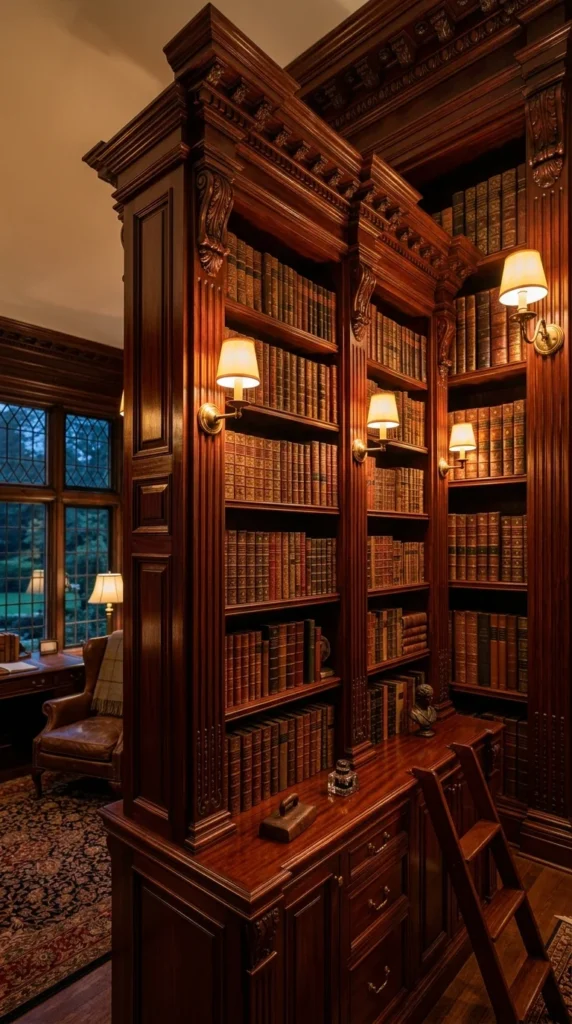
For a classic, sophisticated atmosphere, nothing beats dark mahogany. The deep red and chocolate tones of this wood evoke the feeling of a private gentleman’s club or an Ivy League study. Mahogany is dense and durable, making it ideal for supporting heavy art books or encyclopedias. Pair it with leather seating and gold accents for a truly regal aesthetic.
7. Industrial Pipe
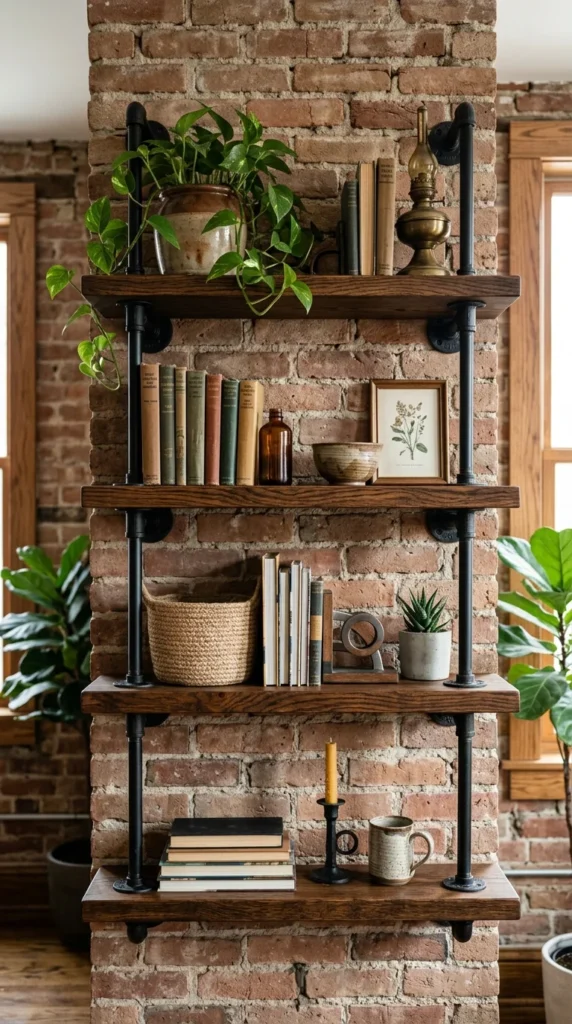
Combining the organic warmth of wood with the cold strength of metal, industrial pipe shelving is a popular DIY choice that looks professional and rugged. The black iron pipes provide a sturdy frame, while the wooden planks offer a soft landing for your books. This style works exceptionally well in lofts or rooms with exposed brickwork.
8. Floating Shelves
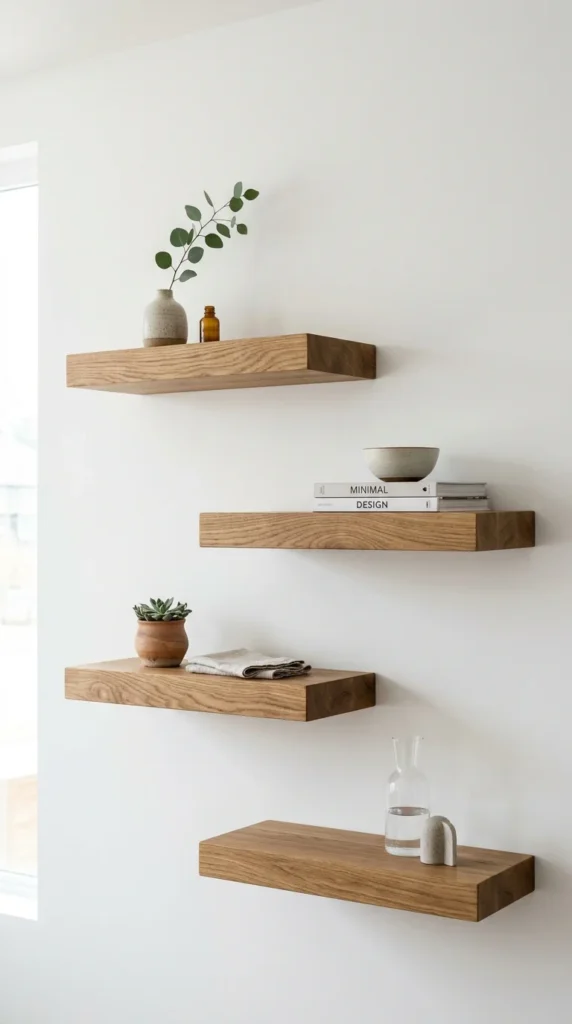
If you prefer a minimalist look, floating wooden shelves are the way to go. By hiding the mounting hardware, the wood appears to hover against the wall, creating a light and airy feel. This is an excellent solution for displaying a curated selection of favorites or “TBR” (to-be-read) piles without the heavy footprint of a full cabinet.
9. Corner Carousel
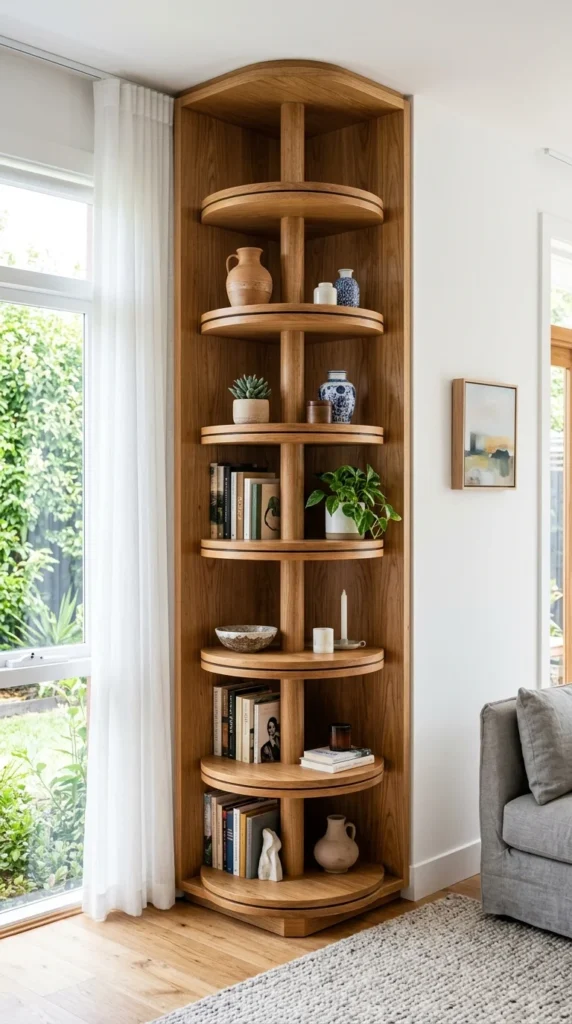
Don’t let corner space go to waste. A wooden corner carousel or L-shaped shelving unit wraps around the bend of a room, providing seamless storage. This design is particularly effective in small libraries where every square inch counts. It creates a “wrap-around” feeling that makes the reader feel completely surrounded by their favorite stories.
10. Under-Stairs
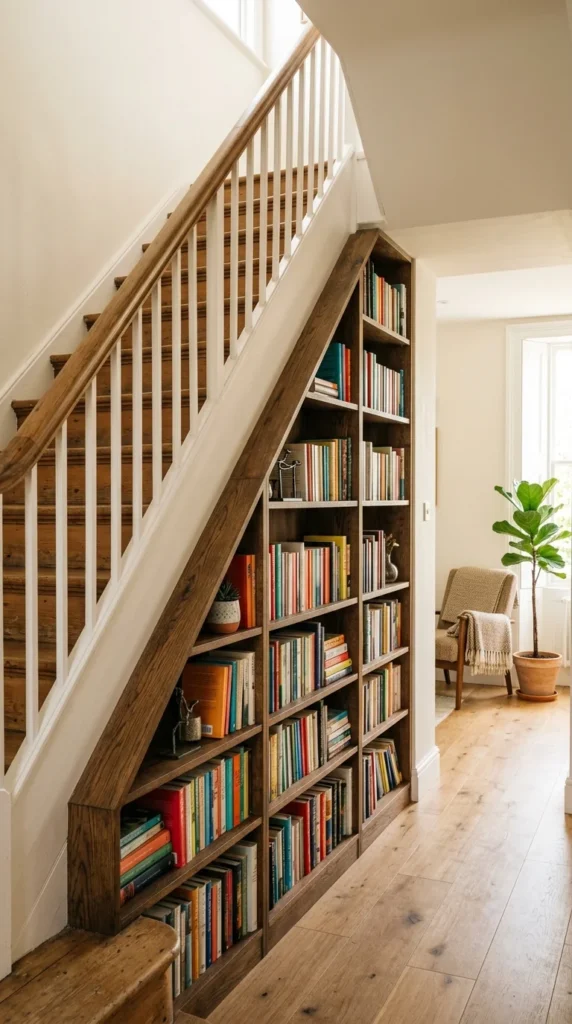
The space under the stairs is often neglected, but it’s the perfect spot for a custom wooden library. By tailoring the shelves to fit the diagonal slope of the staircase, you create a charming and efficient storage solution. It’s a great way to turn a high-traffic hallway into a functional part of your home library.
11. Live Edge
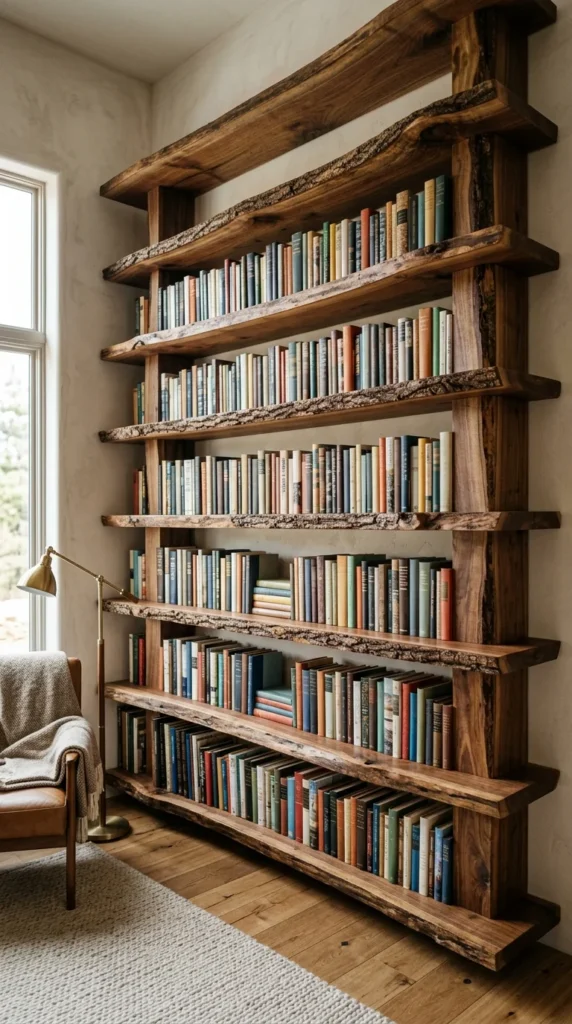
Bring the forest indoors with live-edge wooden shelves. These pieces retain the natural silhouette of the tree from which they were cut, including the bark and the irregular, winding edges. Each shelf is a one-of-a-kind masterpiece. This style works best in modern-rustic homes where the focus is on raw, natural materials.
12. Minimalist Scandi
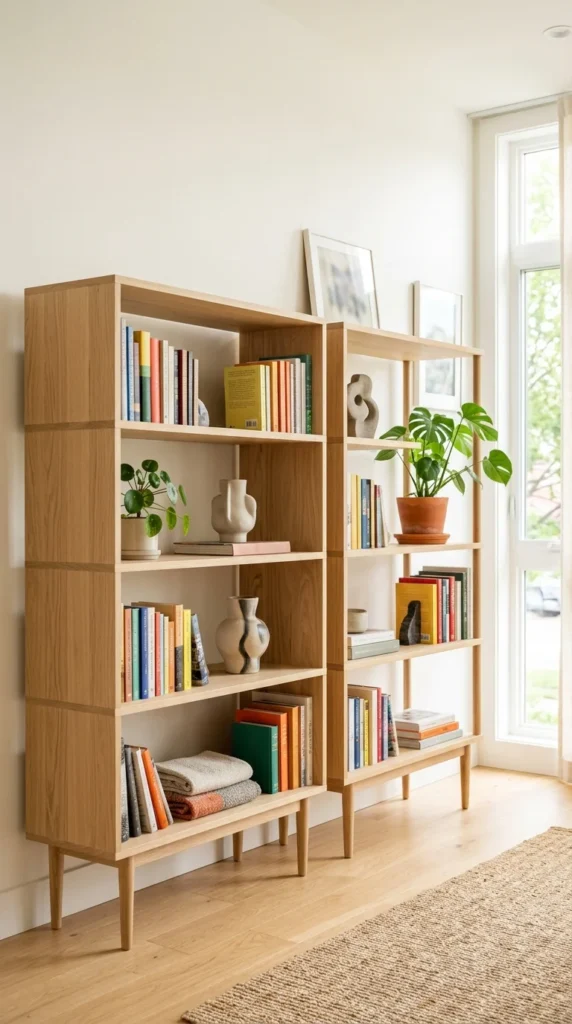
Scandinavian design is all about functionality and light. Using light woods like ash, birch, or pale oak, Scandi-style bookshelves feature clean lines and an open, clutter-free look. These shelves often have slim profiles and tapered legs, preventing the library from feeling too “heavy” or dark.
13. Mid-Century Modern
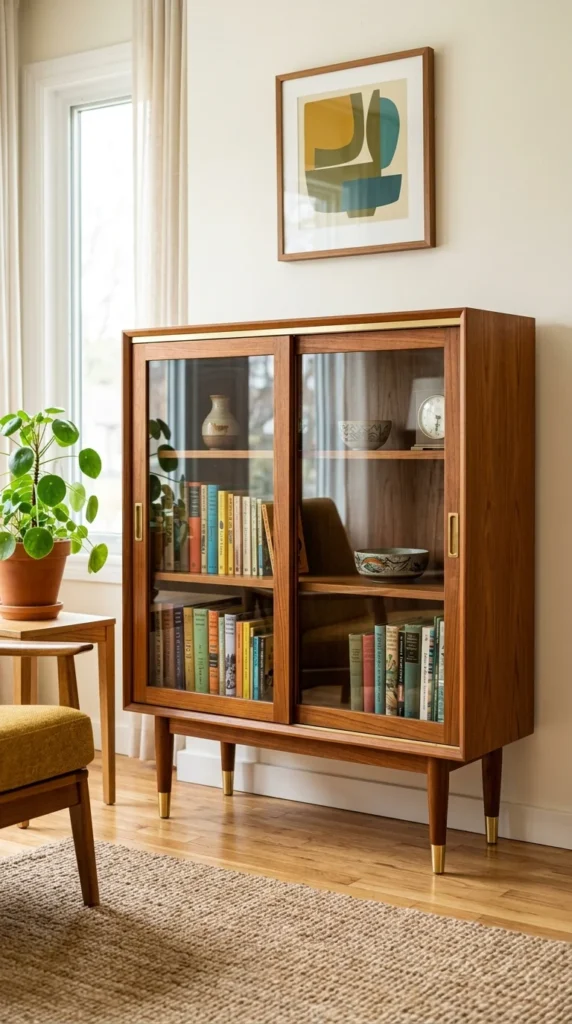
Capture the elegance of the 1950s and 60s with a mid-century modern wooden unit. Look for rich teak or walnut finishes, slanted “peg” legs, and perhaps some integrated cabinetry at the bottom. These units often function as room dividers, allowing you to define a library space within a larger open-concept living area.
14. Tree-Shaped
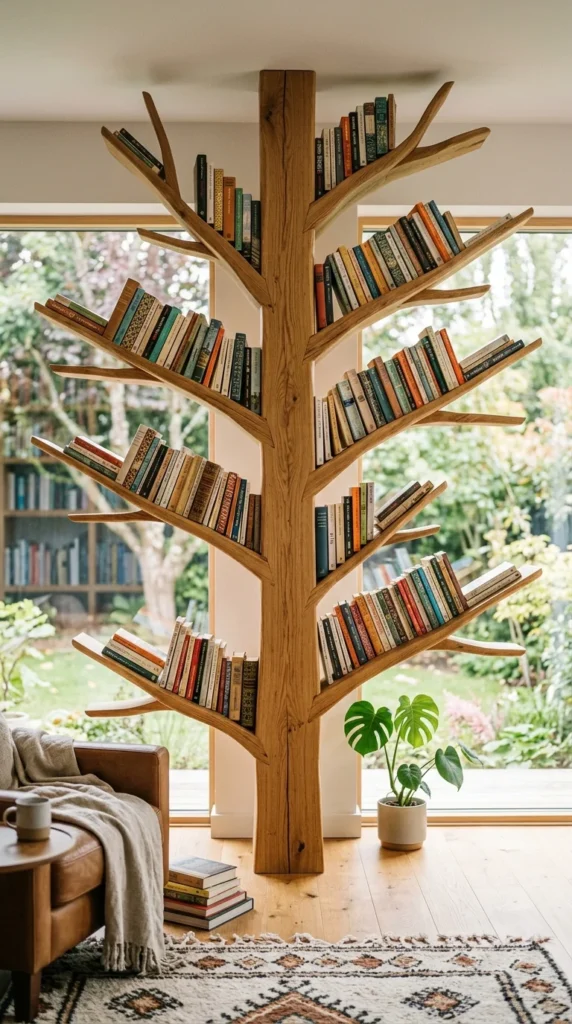
Perfect for a children’s library or a whimsical home office, a tree-shaped bookshelf is a literal interpretation of the “tree of knowledge.” The central “trunk” supports several “branches” that act as slanted shelves. It’s a playful, sculptural piece that adds a touch of fantasy to your reading environment.
15. Hidden Door
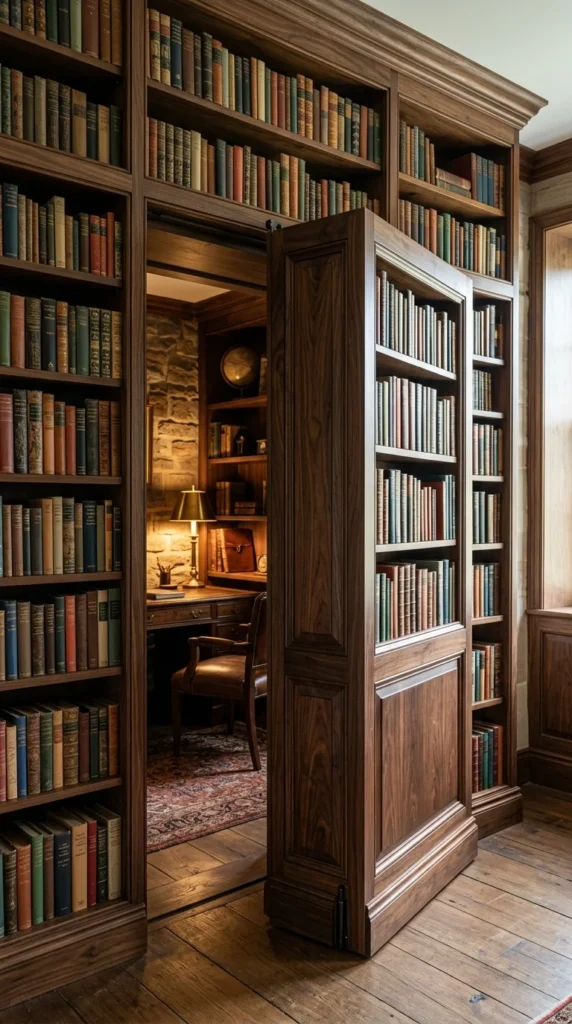
Is there anything more magical than a secret room behind a bookshelf? A “Murphy door” or hidden bookshelf door is built into a sturdy wooden frame on heavy-duty hinges. When closed, it looks like a standard part of your library; when pushed, it reveals a hidden study, closet, or wine cellar.
16. Arched Top
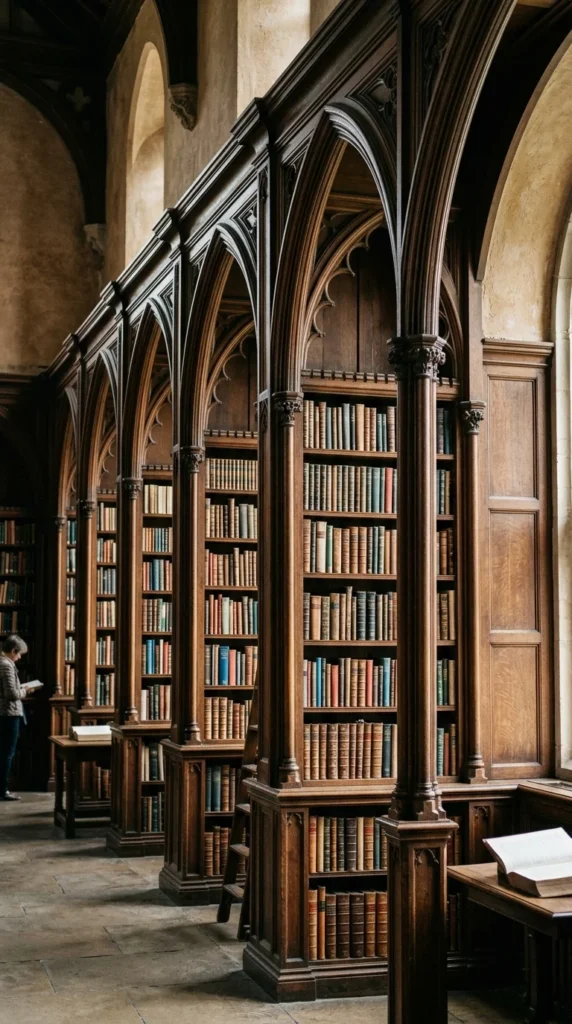
Softening the sharp angles of a room, arched wooden bookshelves add a sense of architectural grace. These units mimic the windows of old cathedrals or grand European libraries. The curved tops provide an elegant frame for the books below and can be highlighted with internal LED strip lighting to accentuate the shape.
17. Rainbow Sorted
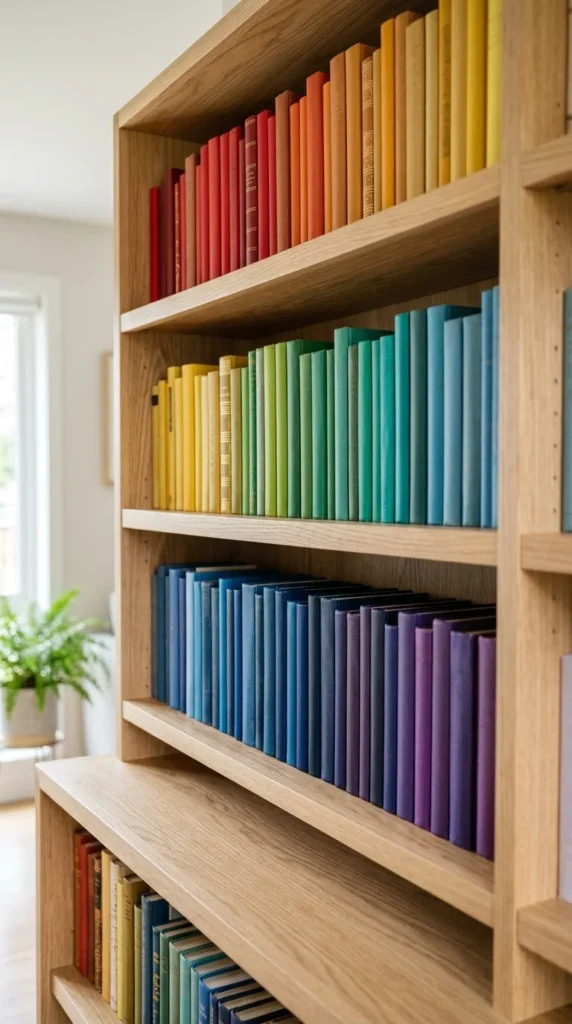
While the wood provides the structure, how you organize your books defines the vibe. Sorting your collection by color against a light wooden background creates a striking visual statement. The natural neutrality of the wood allows the vibrant colors of the book spines to pop, turning your library into a rainbow-themed art installation.
18. Window Seat Surround
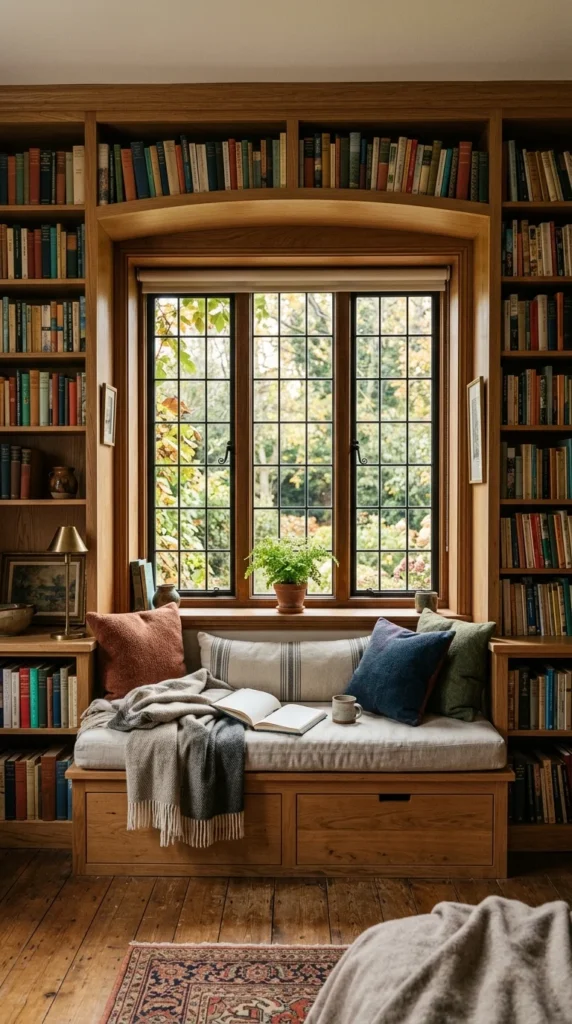
There is no better place to read than by a window. By building wooden shelves around a window frame and including a cushioned bench underneath, you create the ultimate reading nook. You get the benefit of natural light for reading and a cozy, “cocooned” feeling from being surrounded by your books.
19. Rustic Crate
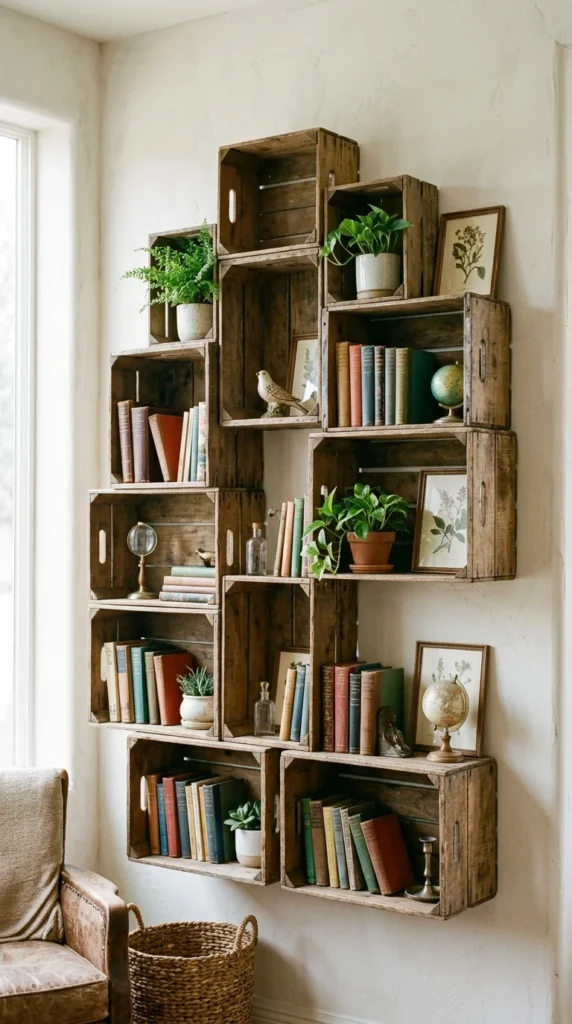
For a more casual and budget-friendly option, consider a rustic crate wall. Using high-quality wooden crates, you can stack and bolt them together in various configurations. This modular approach allows you to expand your library as your collection grows, and the deep boxes are perfect for oversized coffee table books.
20. Walnut Credenza
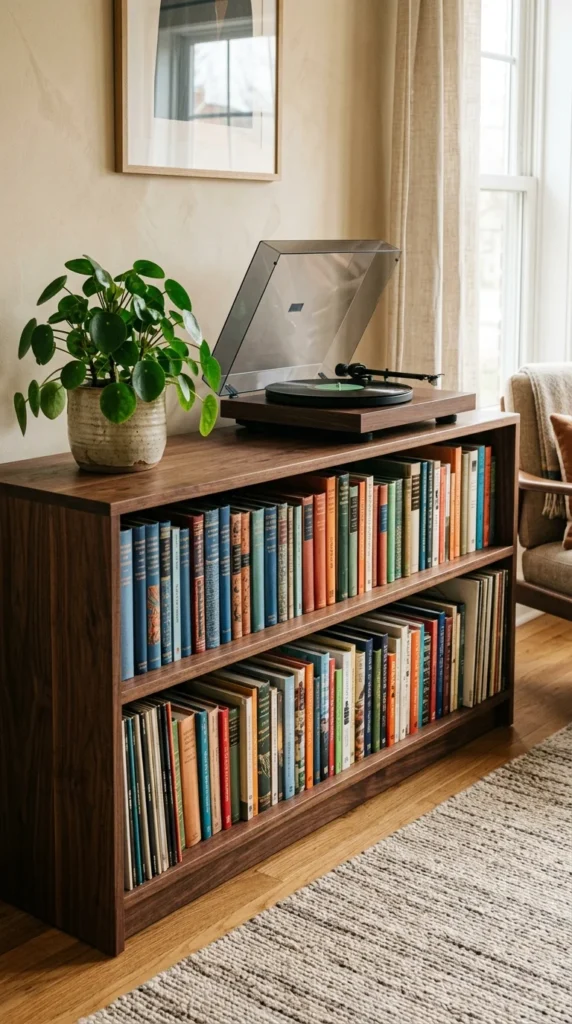
Not every library needs to be tall. A low-profile walnut credenza or “lawyer’s bookcase” offers a sophisticated way to store books while leaving wall space for art. The top surface provides a perfect stage for a record player, a collection of globes, or a series of framed photographs, making the library feel more personal.
21. Modular Cubes
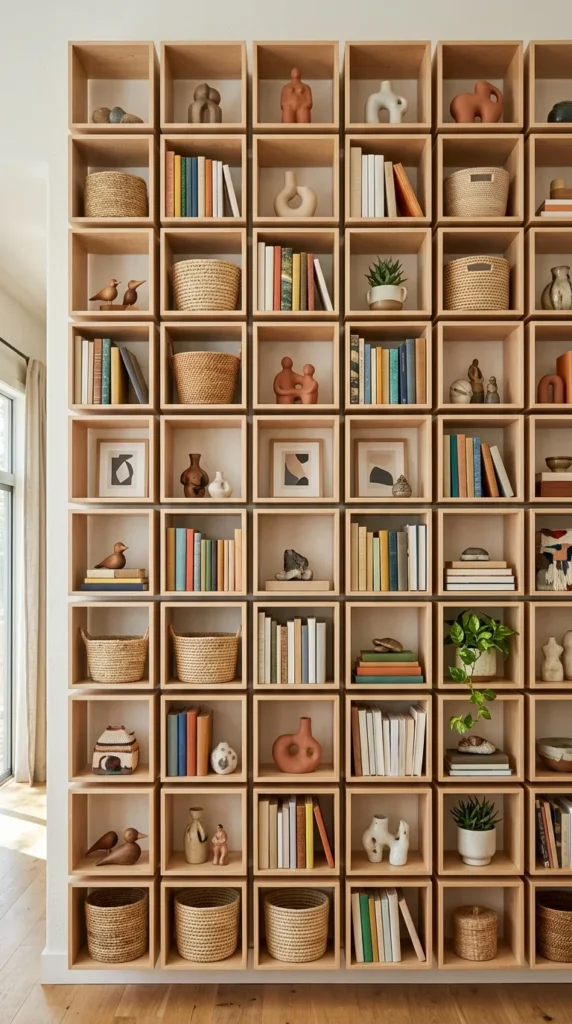
Modular wooden cubes offer incredible flexibility. You can arrange them in a perfect square grid, a stepped pyramid, or spread them across different rooms. Because each cube is a self-contained unit, the wood provides a clean, rhythmic frame for your books, making even a chaotic collection look organized and intentional.
22. Herringbone Backing
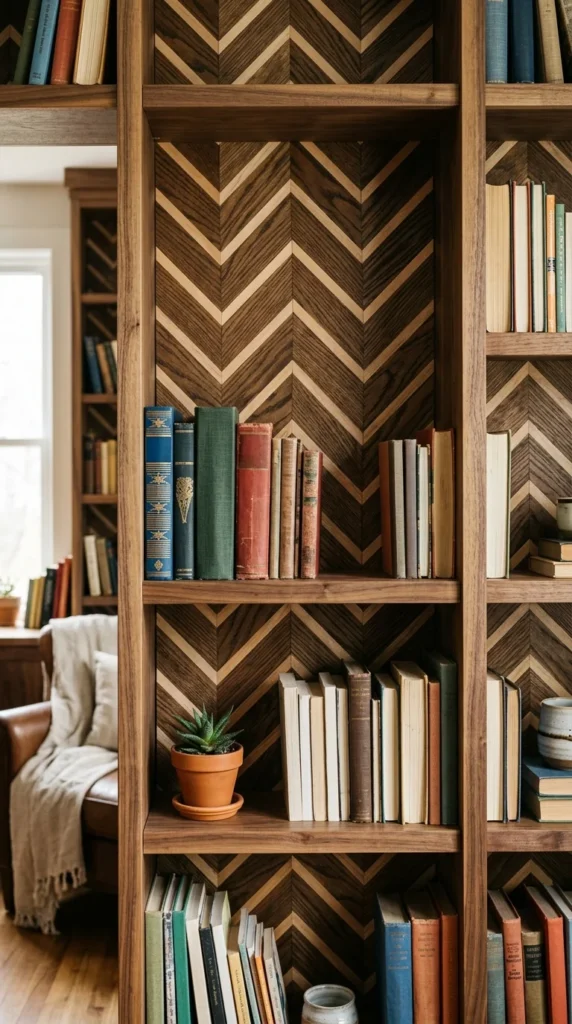
Sometimes the beauty is in the details. A wooden bookshelf with a herringbone or chevron pattern on the back panel adds an extra layer of luxury. When the shelves aren’t completely packed, the patterned wood peeks through, adding texture and a high-end designer feel to the unit.
23. Glass-Fronted
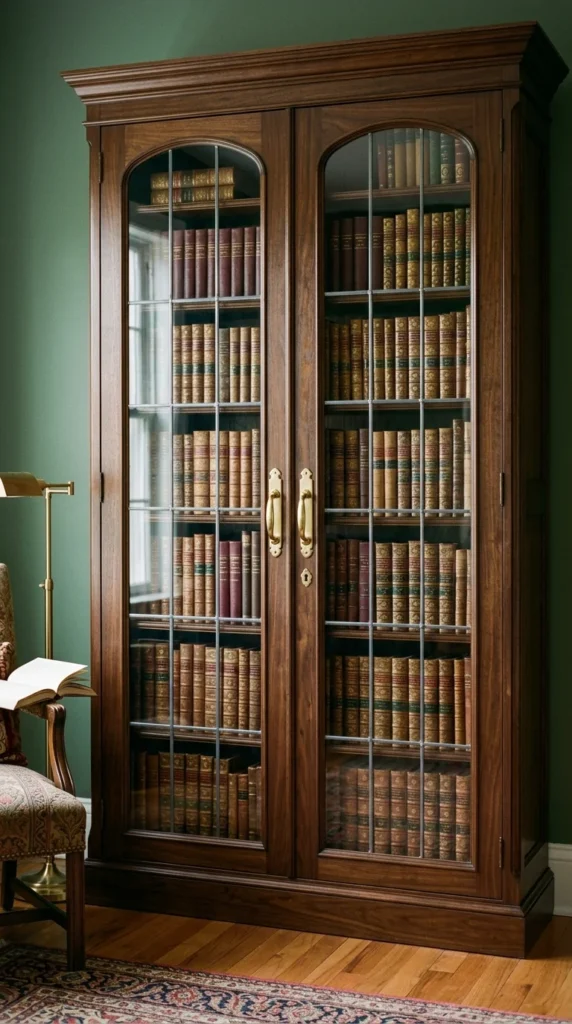
To protect rare editions or prevent dust buildup, glass-fronted wooden cabinets are essential. These units—often called “barrister bookcases”—combine the warmth of wood with the clarity of glass. They give the library a museum-like quality and keep your most precious volumes in pristine condition.
24. Painted Interior
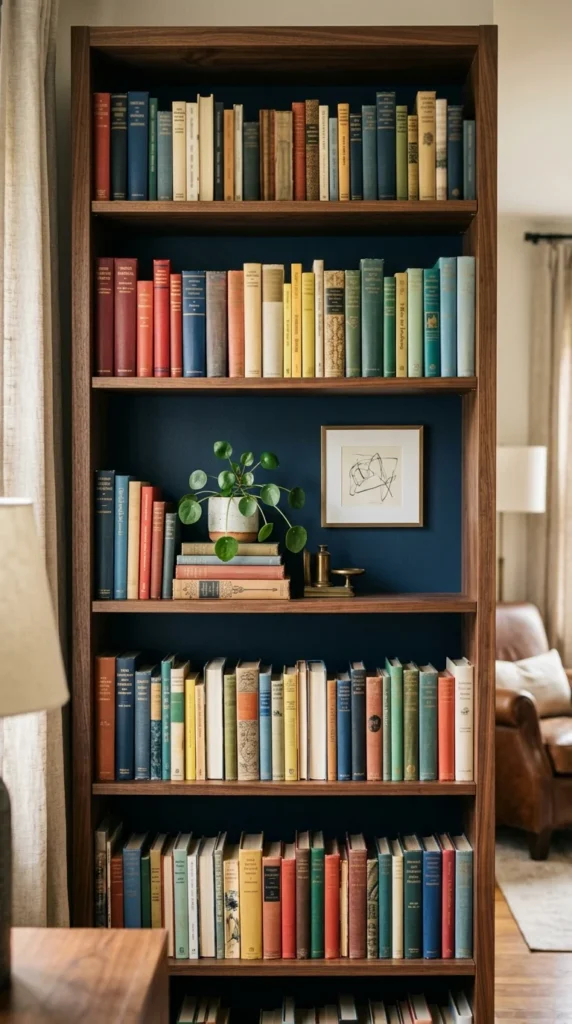
For a modern twist, keep the exterior of the bookshelf in a natural wood finish but paint the interior backing a bold color. A deep navy, hunter green, or even a bright terracotta can make the books stand out and add depth to the room. It’s a great way to tie the library’s color palette together.
25. Distressed Farmhouse
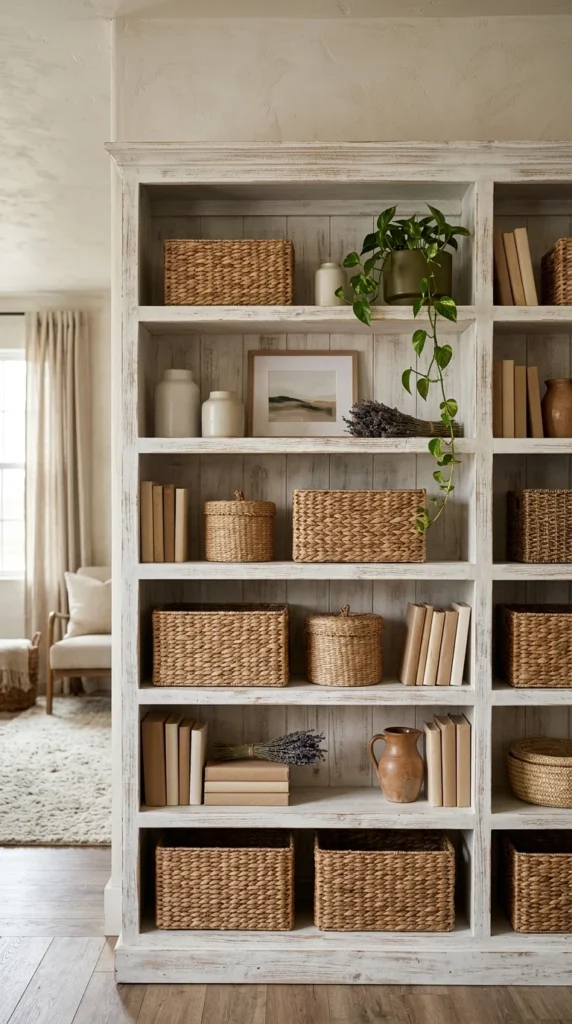
The farmhouse aesthetic relies heavily on “perfectly imperfect” wood. A distressed or white-washed wooden bookshelf brings a cozy, cottage-core feel to your library. It’s less formal than polished mahogany and feels instantly welcoming, encouraging guests to pull a book off the shelf and stay a while.
26. Asymmetrical Blocks
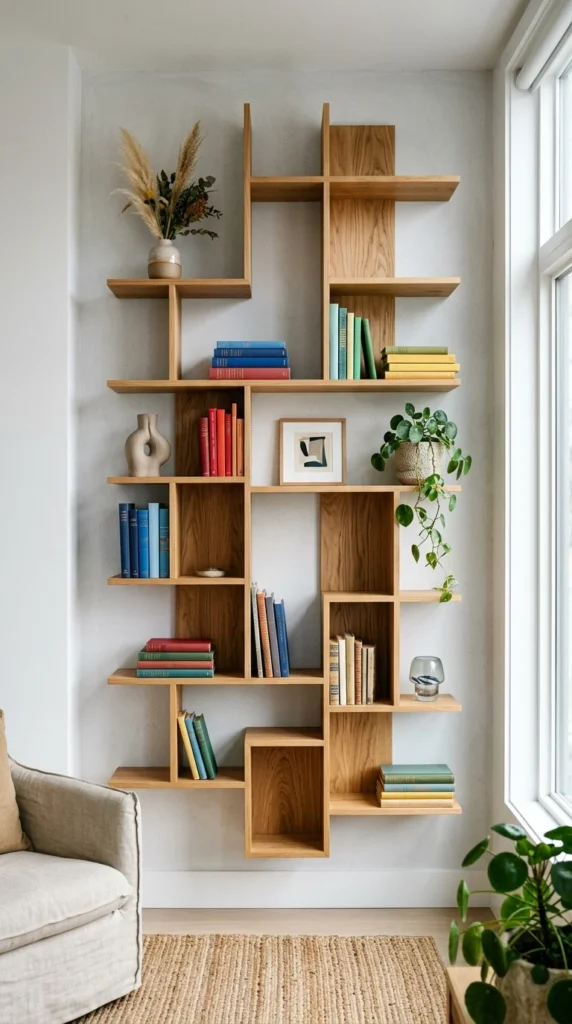
Embrace the unexpected with asymmetrical shelving. By varying the height and width of the wooden compartments, you create a dynamic look that accommodates books of all sizes—from tiny paperbacks to massive art portfolios. This “tetris-style” arrangement is a favorite for contemporary homes.
27. Library Island
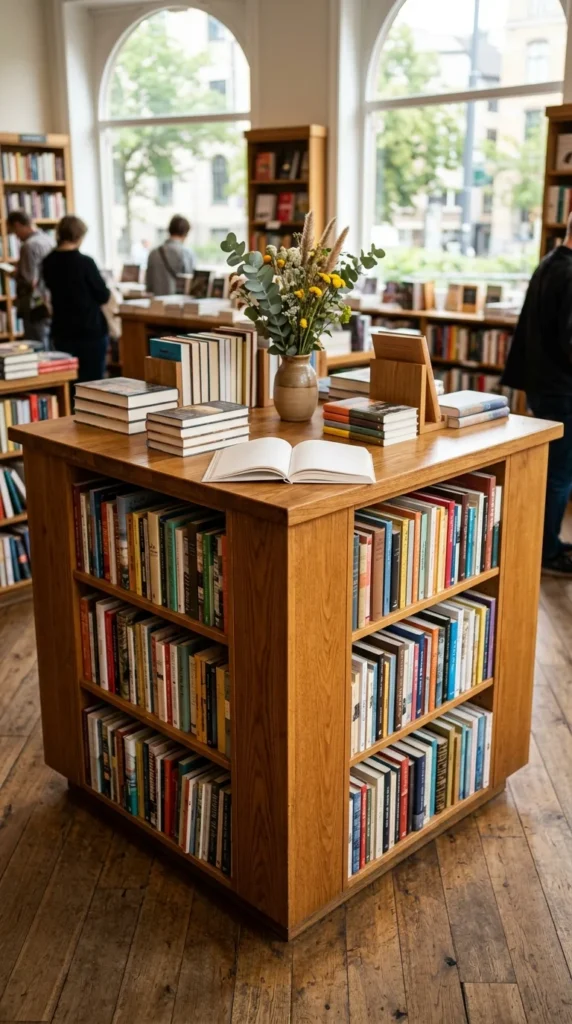
If you have a large room, consider a library island. Much like a kitchen island, this is a free-standing wooden unit placed in the center of the space. It provides extra storage and a flat surface for laying out large maps, sorting through new acquisitions, or displaying a rotating “book of the week.”
Choosing the right wooden bookshelf is about balancing your personal style with the needs of your collection. From the rugged charm of reclaimed wood to the stately elegance of floor-to-ceiling mahogany, wood provides the perfect foundation for a home library that is as beautiful as it is functional. No matter which style you choose, your books will finally have the home they deserve.