
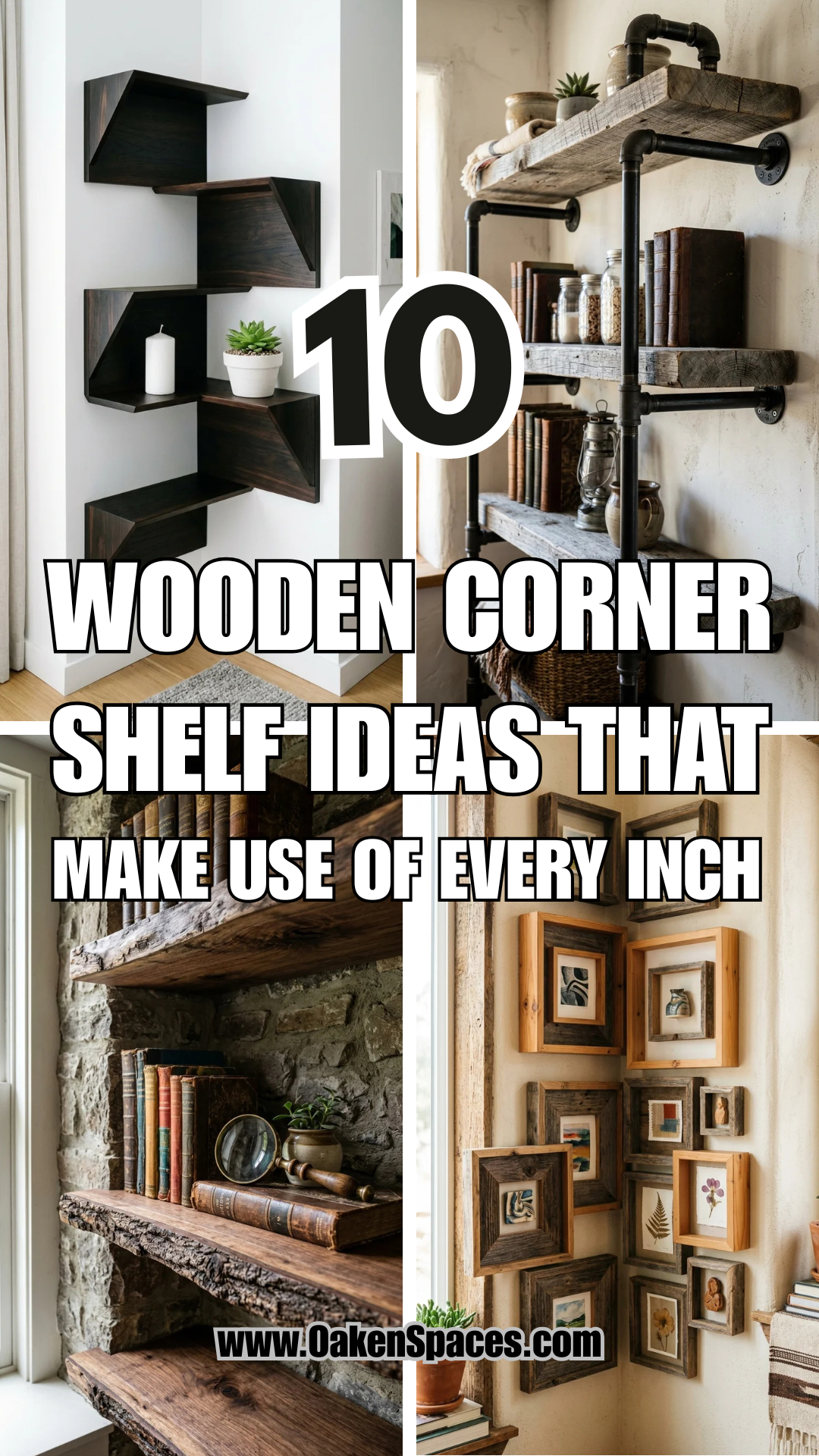
In the world of interior design, corners are often the most neglected territories. They are the “dead zones” where dust bunnies thrive and furniture rarely fits. However, for the savvy homeowner, these 90-degree angles represent a goldmine of untapped potential. Wooden corner shelves are the ultimate solution, blending the organic warmth of timber with the surgical precision of space-saving engineering.
Whether you are looking to display a curated collection of succulents, organize a burgeoning home library, or simply find a home for your car keys, the right corner shelf can transform a room from cluttered to architectural. Wood, as a medium, offers a versatility that metal or plastic simply cannot match—it can be rustic, industrial, minimalist, or ornate.
Here are ten ingenious wooden corner shelf ideas that will help you reclaim every square inch of your home.
1. Zig-Zag Shelves
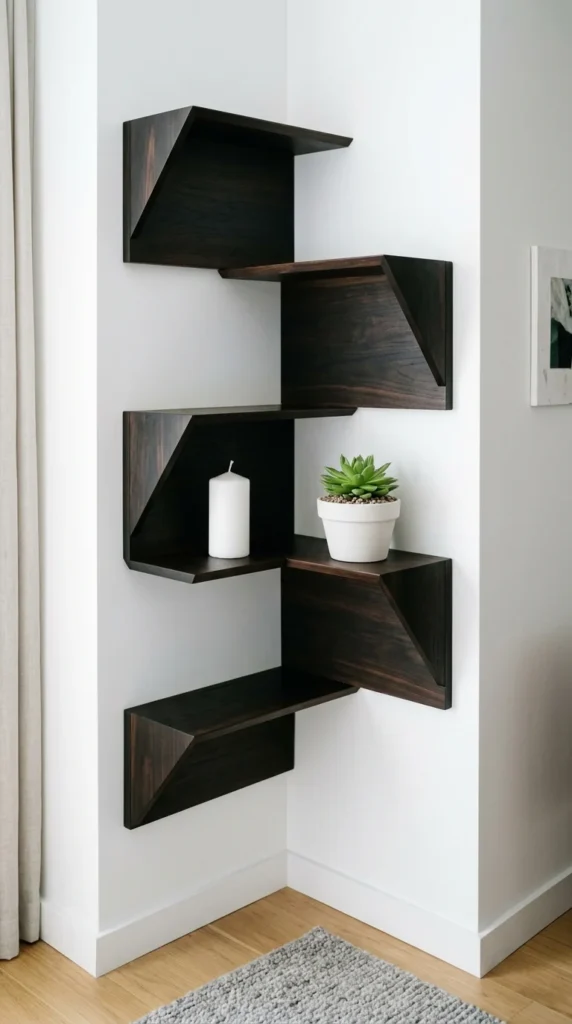
The zig-zag shelf is a masterclass in modern geometry. Unlike traditional horizontal planes, these shelves utilize a continuous piece of wood (or the illusion of one) that snakes up the corner in alternating directions. This design is particularly effective because it draws the eye upward, creating a sense of height in rooms with low ceilings.
From a functional standpoint, the alternating tiers allow for taller items to sit on one side while smaller trinkets occupy the other. It’s less of a storage unit and more of a piece of wall art. When crafted from a dark wood like walnut or stained oak, it provides a bold contrast against neutral-colored walls, making the corner a focal point rather than an afterthought.
2. Floating L-Shapes
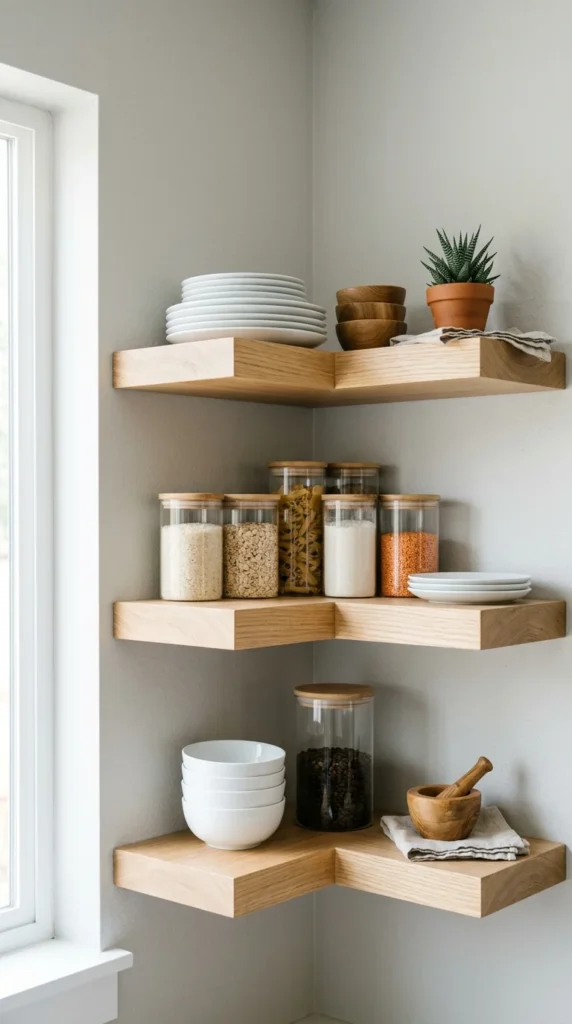
Floating L-shaped shelves are the “ghosts” of the shelving world—they offer sturdy support without the visual clutter of brackets or bulky frames. By wrapping around the corner in a seamless L-shape, these shelves maximize surface area by utilizing the depth of both intersecting walls.
This style is perfect for kitchens or dining areas where you need quick access to everyday items but want to maintain a clean, “scandi-chic” aesthetic. The key to this look is the miter joint at the corner; when executed perfectly, the wood grain appears to flow uninterrupted around the bend. It’s a sleek, sophisticated way to turn a sharp angle into a soft, functional curve.
3. Live Edge
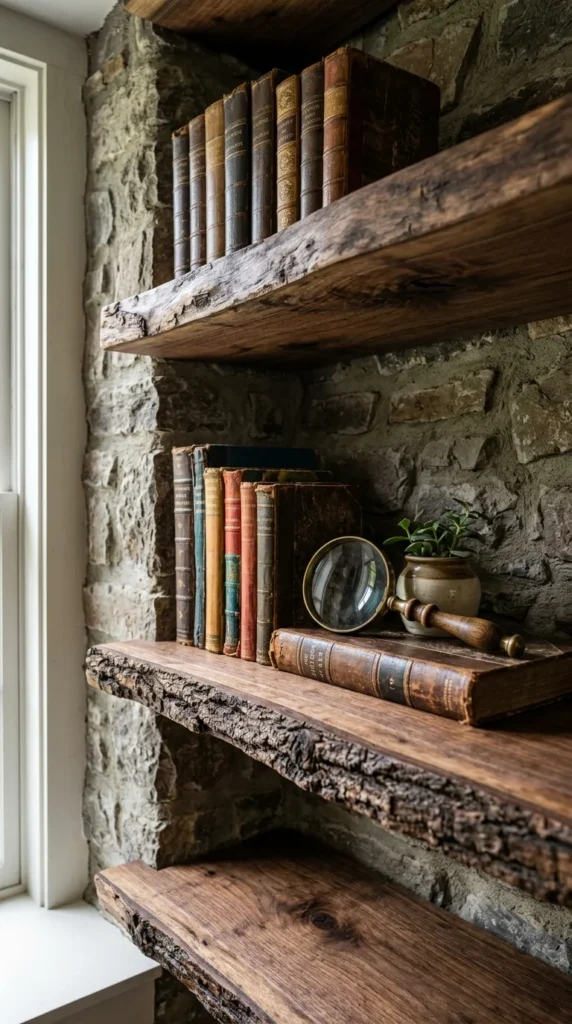
For those who crave a connection to the outdoors, live-edge corner shelves are the ultimate choice. These shelves retain the natural silhouette of the tree from which they were cut, complete with knots, cracks, and bark edges. Placing these organic shapes into a rigid 90-degree corner creates a stunning juxtaposition between nature and architecture.
Live-edge wood works best in rustic, farmhouse, or bohemian settings. Because each slab is unique, your shelving becomes a one-of-a-kind installation. Pair these with hidden heavy-duty brackets to ensure the weight of the thick timber is well-supported. They are particularly striking when used in a study or a cozy reading nook, where the texture of the wood adds a tactile warmth to the space.
4. Floor-to-Ceiling
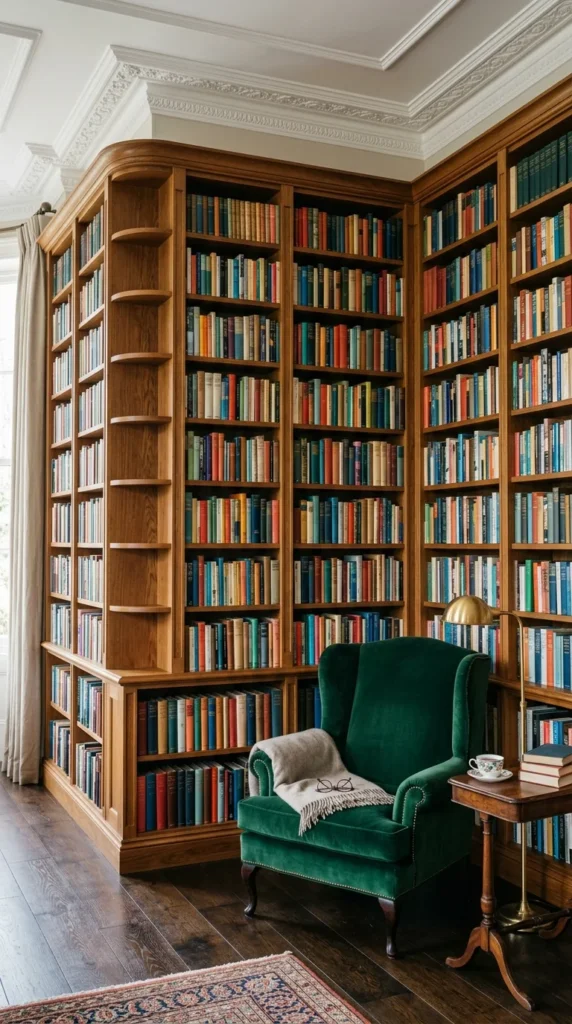
If you have a large collection and a small footprint, the only way to go is up. Floor-to-ceiling corner units act as “built-ins,” even if they are standalone pieces. By occupying the full vertical height of the wall, you effectively triple your storage capacity without taking up any additional floor space beyond the initial corner footprint.
These units are excellent for home libraries or displaying large-scale collections. To keep the structure from feeling too heavy or imposing, consider using lighter woods like birch or pine, or leave some “negative space” between the items on the shelves. Adding a small integrated spotlight at the top can also help illuminate the corner, preventing it from becoming a dark pocket in the room.
5. Circular Tiers
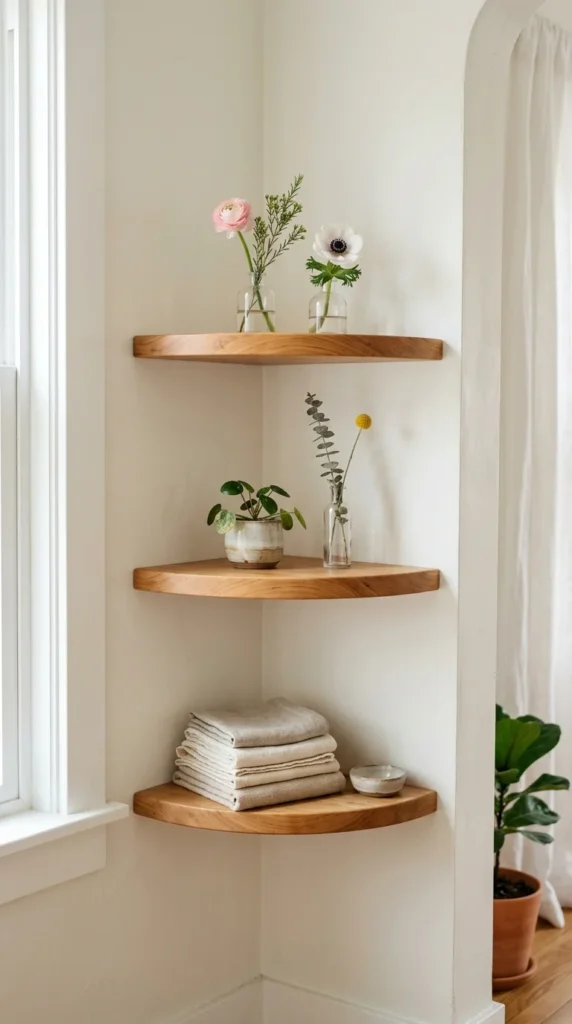
Not every corner shelf has to be angular. Circular or “pie-shaped” tiers are a fantastic way to soften the harsh lines of a room. By rounding off the front edge of the shelf, you create a more fluid transition that is both aesthetically pleasing and safer in high-traffic areas where people might bump into sharp corners.
This style is particularly popular in nurseries or bathrooms. In a nursery, the soft edges provide peace of mind, while in a bathroom, the curved wood can mimic the organic shapes of porcelain tubs and sinks. Use a light-colored wood with a high-gloss finish to reflect light and make the corner feel airy and open.
6. Ladder Shelves
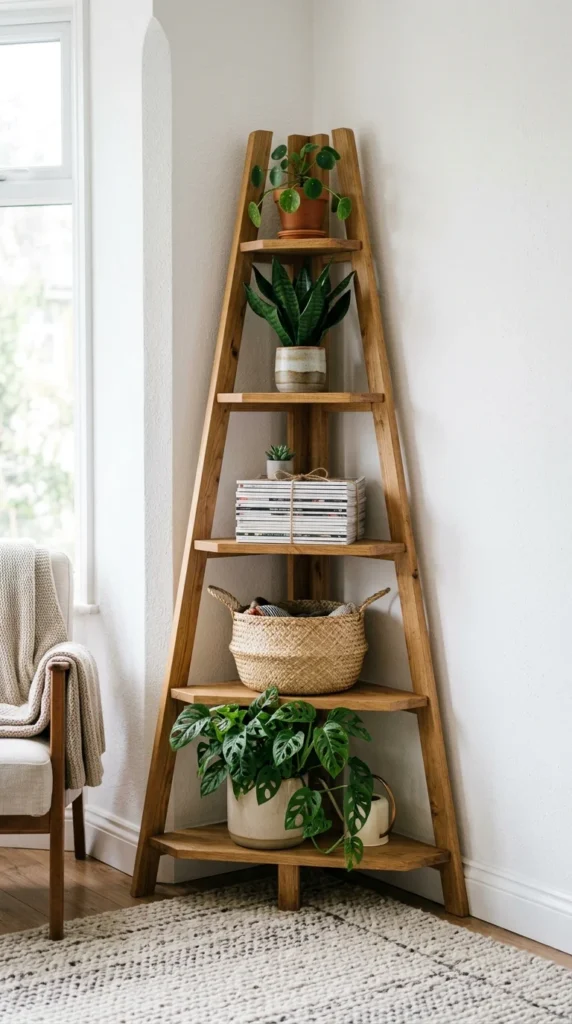
The ladder shelf is a darling of the “shabby chic” and industrial movements. Specifically designed corner ladders lean into the vertex of the room, with shelves that gradually increase in depth as they descend toward the floor. This provides a stable, grounded look that is also incredibly portable.
The beauty of the ladder shelf is its versatility. Because it isn’t permanently mounted to the wall, you can move it as your needs change. It’s an ideal solution for renters who want the functionality of a corner unit without drilling multiple holes into the masonry. The tapered design also prevents the top of the shelf from feeling too crowded, making it a great spot for trailing plants that can hang down the sides.
7. Box Frames
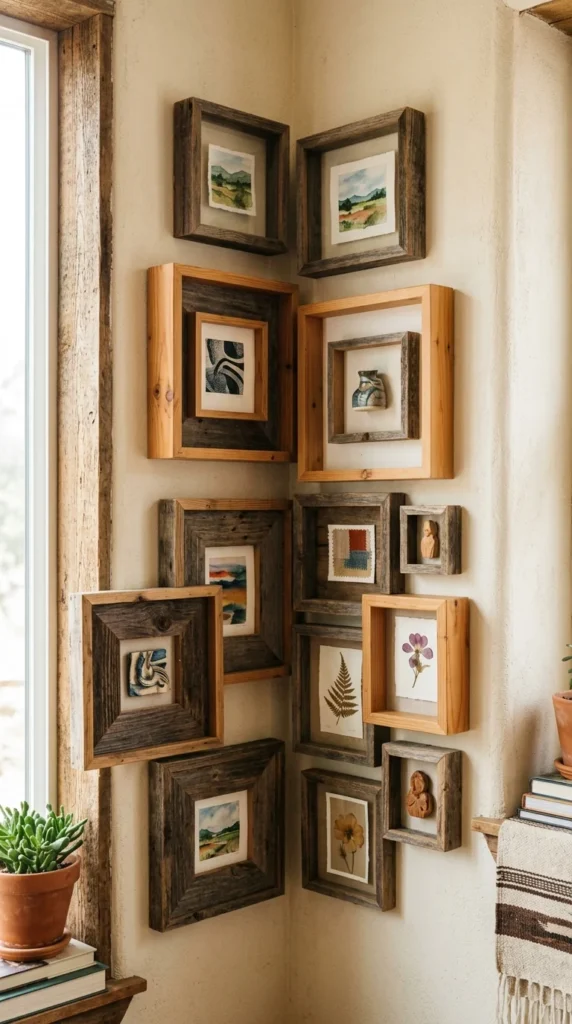
Box frames, or “shadow box” shelves, offer a more structured and architectural approach to corner storage. Instead of a simple flat surface, these are five-sided boxes that provide both a shelf and a frame for whatever is placed inside. When arranged in a corner, they can be stacked or staggered to create a dynamic, 3D gallery wall.
This idea is perfect for collectors of small figurines, vintage cameras, or delicate glassware. The “walls” of the boxes provide an extra layer of protection and help to define each item as a separate piece of art. Using reclaimed wood for these boxes can add a sense of history and grit, making even a new apartment feel like a converted industrial loft.
8. Industrial Pipe
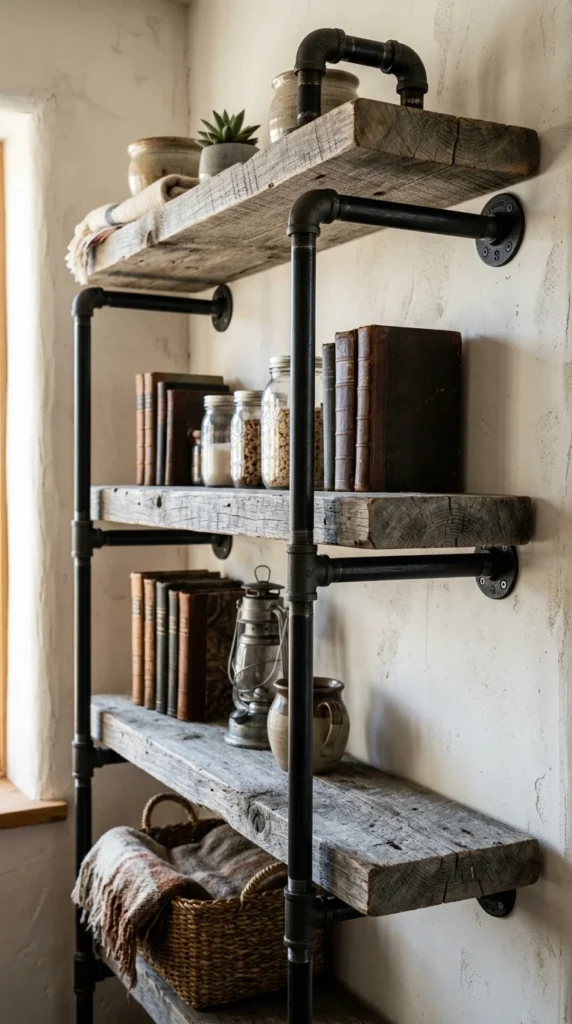
The marriage of wood and metal is a classic design trope that never goes out of style. Industrial pipe shelves use heavy-duty black or galvanized iron pipes as the structural support for thick wooden planks. By mounting the pipe flanges into both sides of the corner, you create an incredibly sturdy shelf capable of holding significant weight, such as heavy kitchen appliances or large stacks of vinyl records.
The industrial look is all about honesty in materials. Look for wood with a high degree of character—reclaimed barn wood or scaffolding planks are perfect. This setup works exceptionally well in kitchens, home bars, or garages where you need a “workhorse” shelf that also looks intentionally designed.
9. Pocket Shelves
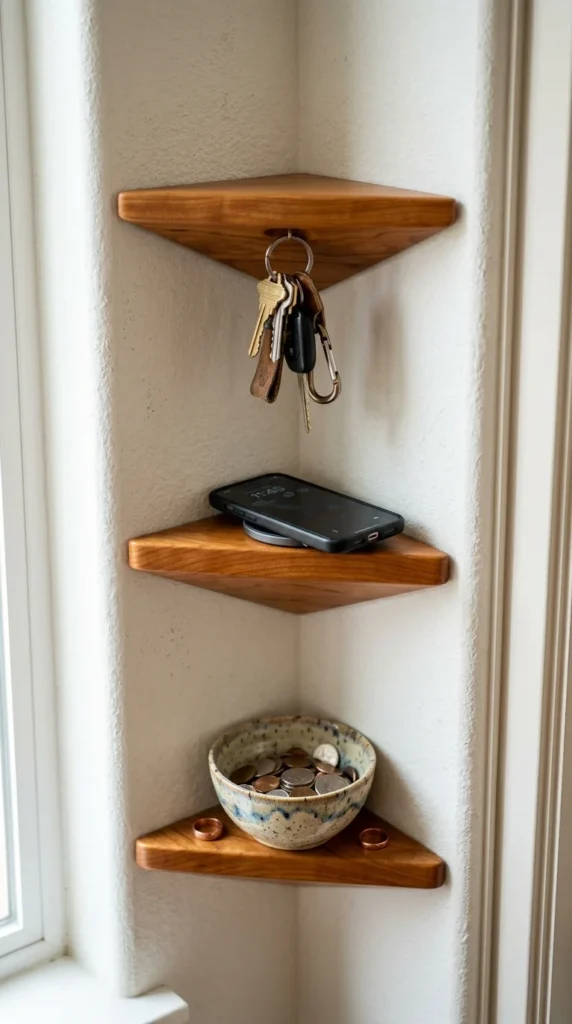
Sometimes, you don’t need a massive shelving unit; you just need a place to put your “everyday carry” items. Pocket shelves are small, triangular wedges of wood that fit snugly into the tightest corners. They are the ultimate “micro-storage” solution for hallways, entryways, or even beside the bed where a traditional nightstand won’t fit.
These tiny shelves are perfect for keeping surfaces clear. A single pocket shelf at chest height can hold your phone and charger, while one near the floor can act as a discreet spot for a shoe horn or a small pet bowl. Because they are so small, you can experiment with more expensive or exotic woods like zebrawood or teak without breaking the bank.
10. Wraparound Units
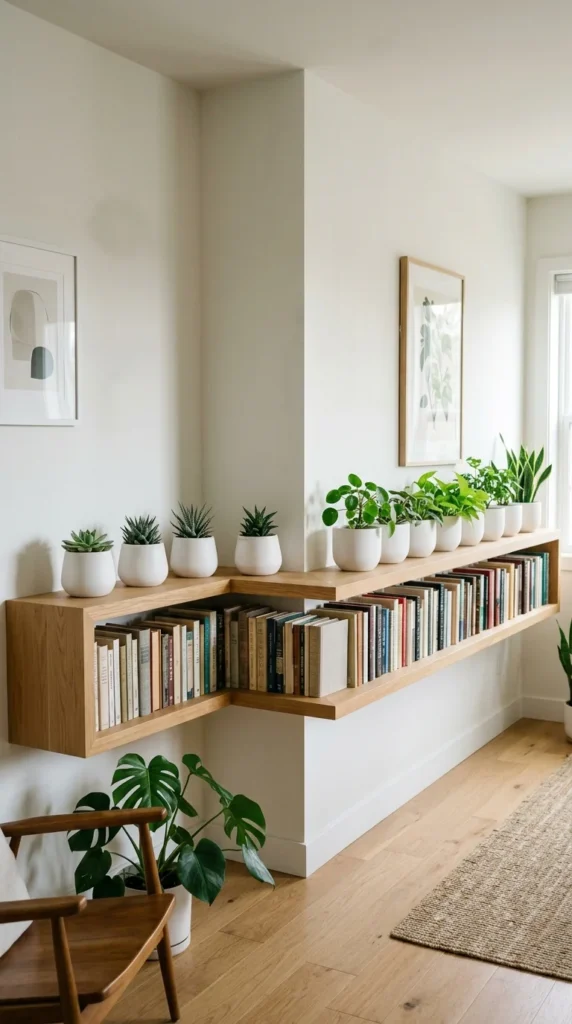
While most corner shelves focus on the interior angle, wraparound units can be designed for both interior and exterior corners. This idea involves extending the shelf significantly past the corner on both sides, effectively turning two walls into one continuous storage surface.
This is a high-end look that often requires custom carpentry to ensure the shelf is perfectly level across such a long span. Wraparound shelves are excellent for creating a “unified” feel in an open-concept living space. They can connect a dining area to a living room, providing a visual bridge that makes the entire home feel more cohesive. When styled with a mix of books, art, and greenery, it becomes a powerful horizontal element that grounds the entire room.
Choosing the Right Wood
When selecting wood for your corner shelves, consider the environment. Hardwoods like oak, maple, and walnut are incredibly durable and resistant to warping, making them ideal for heavy books or kitchenware. Softwoods like pine or cedar are easier to work with for DIY projects and offer a more rustic, knotty appearance.
Regardless of the style you choose, the corner shelf remains one of the most effective ways to maximize your living space. It’s a testament to the fact that with a little creativity and a few planks of wood, no space is ever truly wasted.