
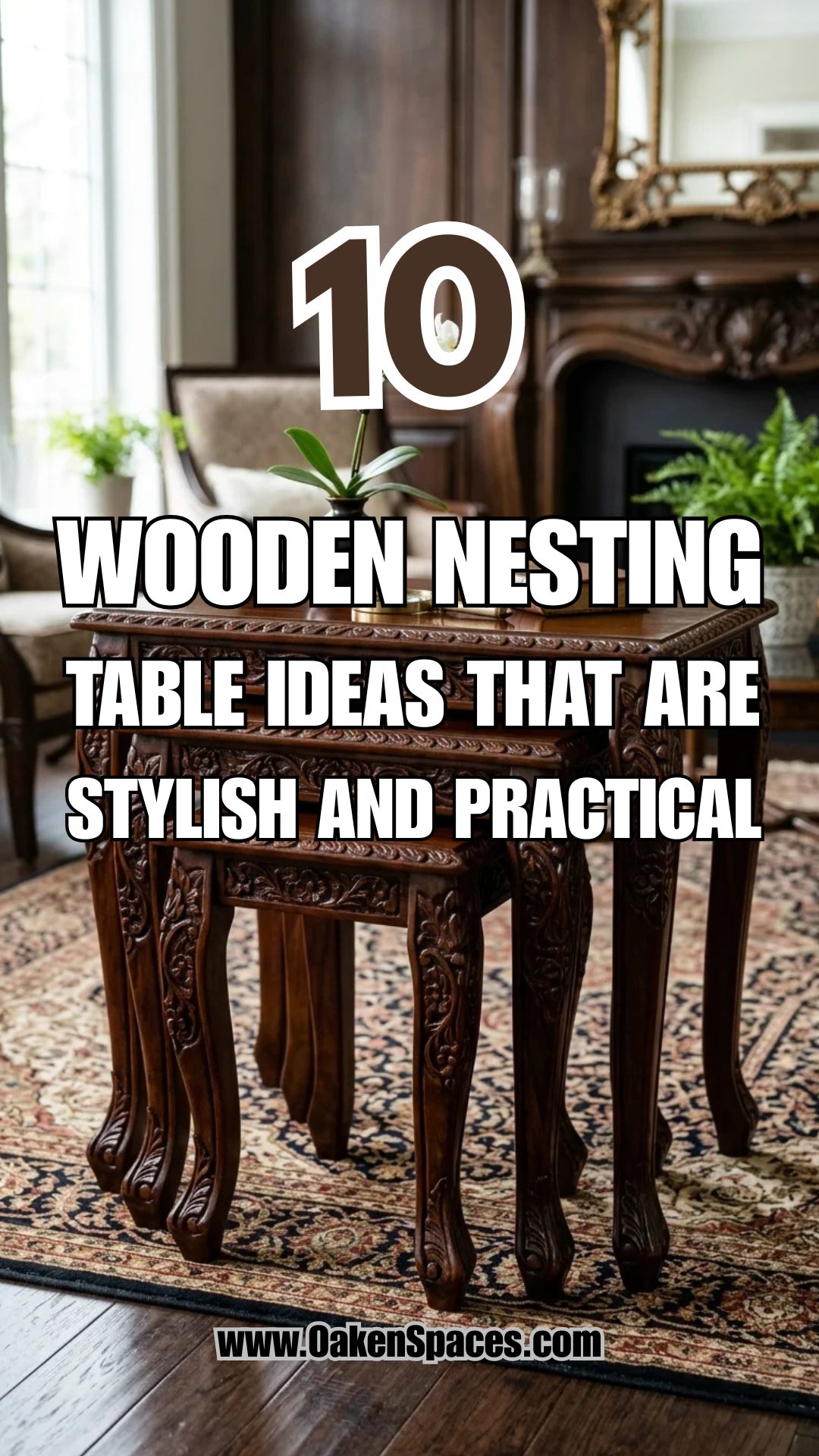
In the world of interior design, few pieces of furniture work as hard as the humble nesting table. It is the ultimate “chameleon” of the home—a space-saving miracle that hides in plain sight until the moment you need an extra surface for a cocktail, a laptop, or a blooming bouquet of flowers. When crafted from wood, these tables bring an organic warmth and timeless durability that synthetic materials simply cannot replicate.
Whether you are living in a compact city apartment where every square inch is precious or a sprawling suburban home that needs versatile accent pieces, wooden nesting tables are the answer. From the sleek silhouettes of the 1950s to the raw, rugged beauty of reclaimed timber, there is a style to suit every aesthetic. Here are ten wooden nesting table ideas that prove you don’t have to sacrifice style for functionality.
1. Mid-Century Modern
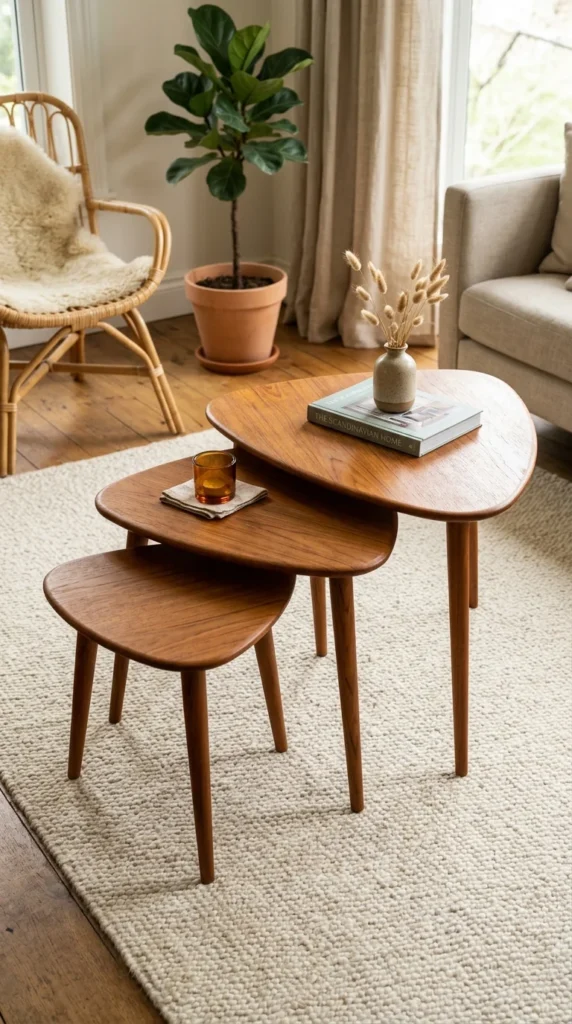
The Mid-Century Modern (MCM) aesthetic is perhaps the most iconic choice for nesting tables. Characterized by clean lines, organic curves, and tapered legs, these tables evoke a sense of nostalgic sophistication. Usually crafted from teak, walnut, or acorn-stained wood, MCM nesting tables are designed to look lightweight and airy. Their “peg” legs prevent a room from feeling cluttered, making them perfect for smaller living areas. They pair beautifully with low-profile leather sofas and bold, geometric rugs.
2. Rustic Live Edge
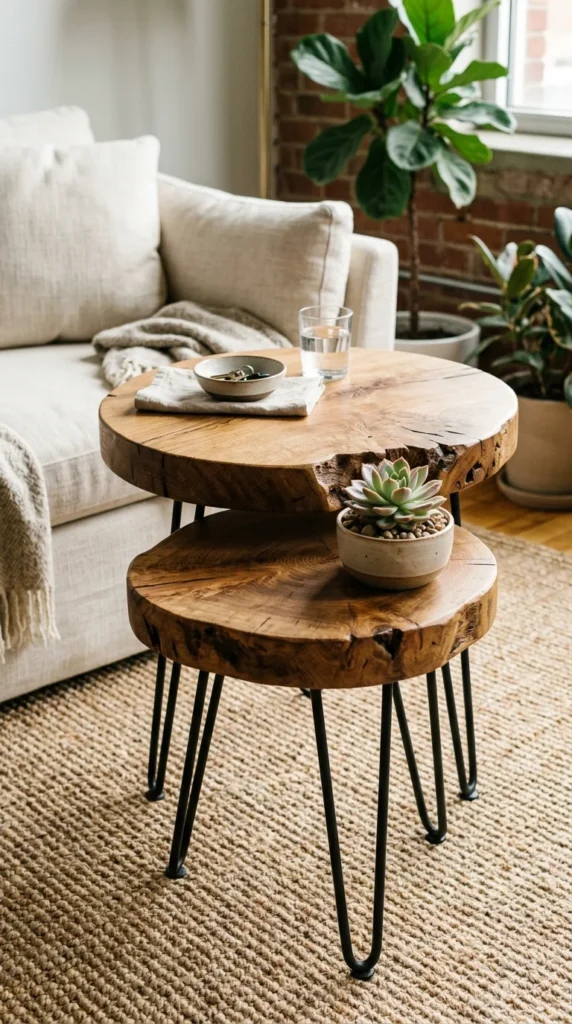
If you want to bring the outdoors in, live-edge nesting tables are a showstopper. These tables celebrate the natural imperfections of the tree, preserving the original contours of the wood. No two sets are exactly alike, as the grain patterns and “wavy” edges are unique to the slice of timber used. These are typically heavier and more grounded than other styles, making them excellent statement pieces for a cabin-style home or an eclectic, bohemian living room.
3. Industrial Metal-Wood
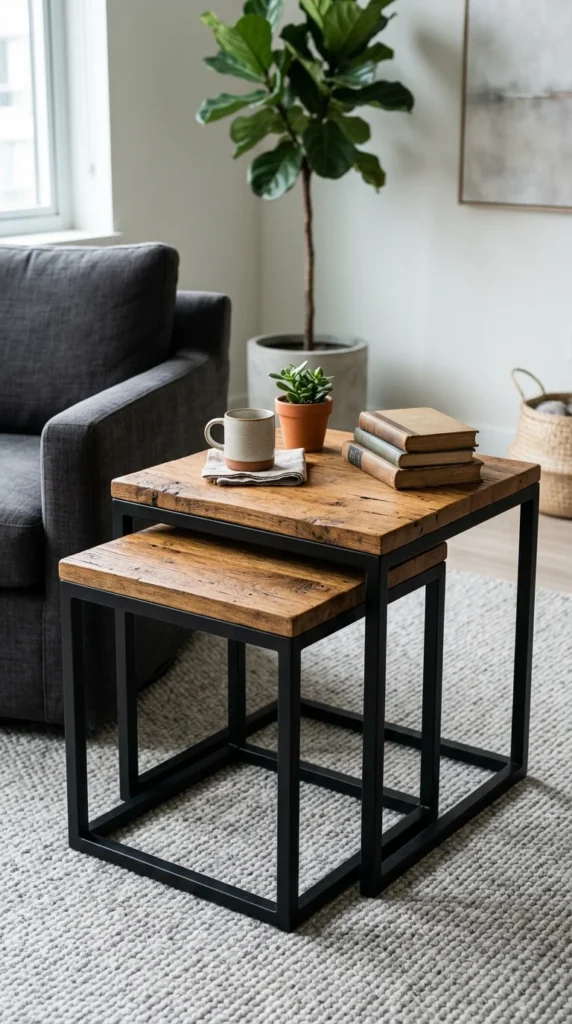
The industrial look is all about the marriage of raw materials. By combining a wooden top with a black metal frame, these nesting tables offer a “loft” vibe that is both edgy and practical. The metal frames provide exceptional stability, while the wood softens the overall look. These are particularly popular in modern bachelor pads or urban industrial spaces. Look for sets where the metal frames are “open” on one side, allowing the smaller table to slide completely under the larger one without any obstruction.
4. Scandinavian Minimalist
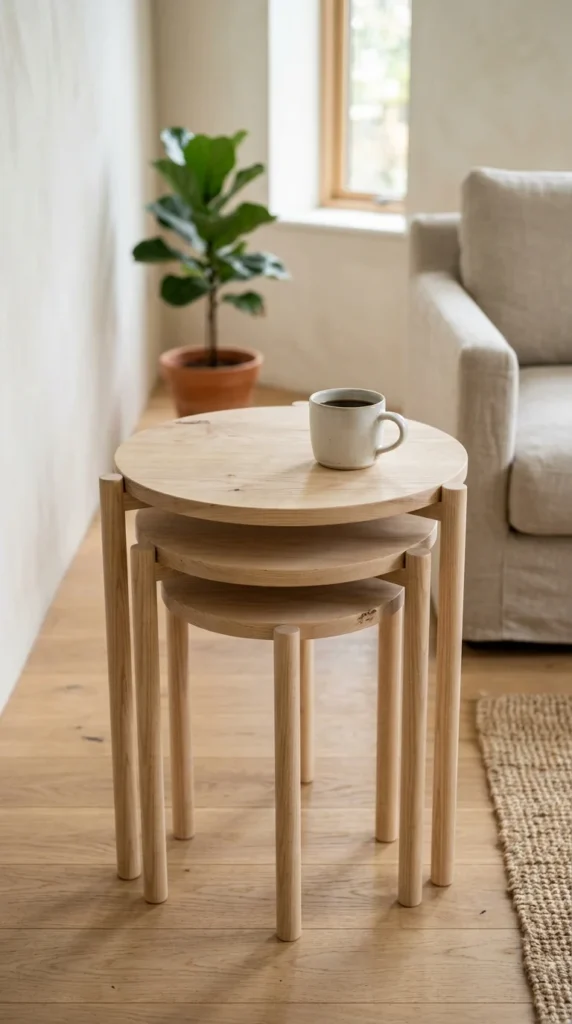
Scandinavian design is rooted in the philosophy of “hygge”—comfort and simplicity. Scandi-style nesting tables often use light woods like blonde oak, ash, or birch. The color palette is neutral, often featuring white-washed finishes or pale natural tones. These tables usually have round or “soft square” tops to avoid harsh angles. They are the perfect choice for a bright, airy room where you want the furniture to blend seamlessly into the background rather than dominate the space.
5. Vintage Carved
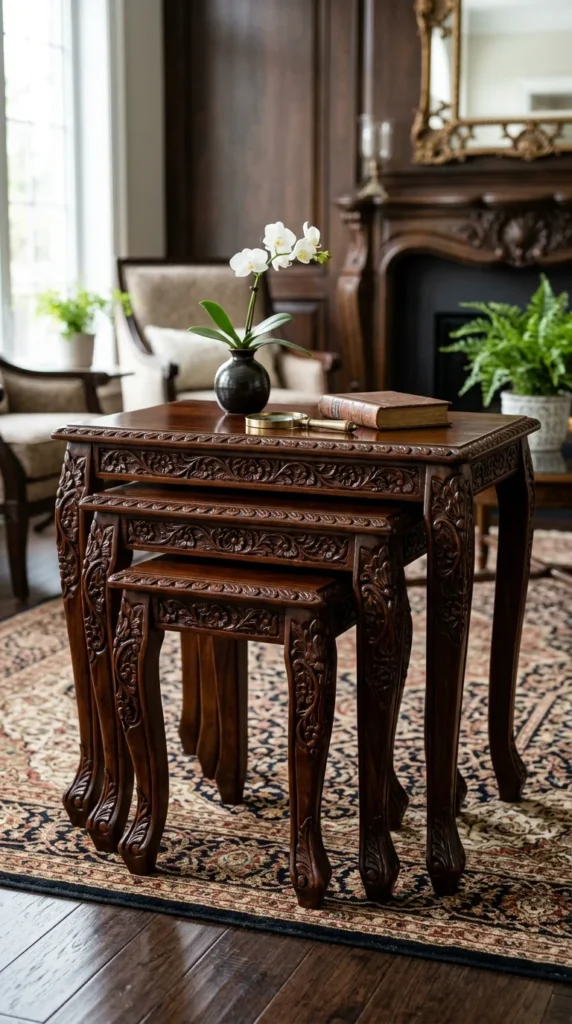
For those who love a touch of maximalism or traditional elegance, vintage-inspired carved tables are a treasure. Often influenced by Indian or East Asian craftsmanship, these sets feature intricate fretwork or floral carvings. Made from dense woods like rosewood or mahogany, they add a sense of history and “soul” to a room. While they are highly decorative, they remain functional, providing a sturdy surface for afternoon tea or a collection of antique glass coasters.
6. Geometric Hexagon
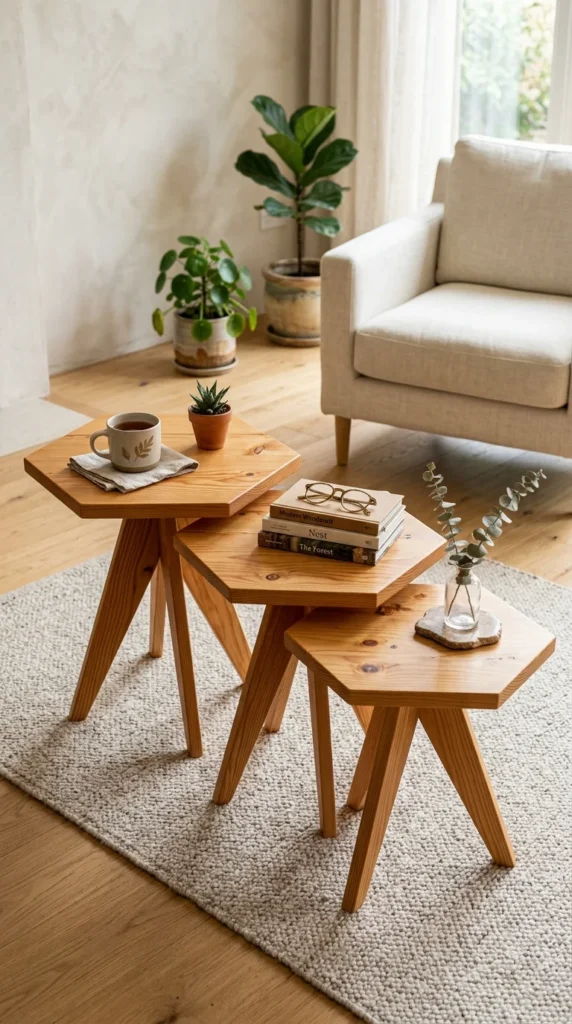
Who says nesting tables have to be square or round? Hexagonal nesting tables offer a playful, modular approach to furniture. Because of their six-sided shape, they can be tessellated in various configurations—stretched out in a long line to serve as a coffee table or clustered together to create a honeycomb-shaped centerpiece. This geometric approach is highly modern and works exceptionally well in creative workspaces or contemporary dens.
7. Walnut Waterfall
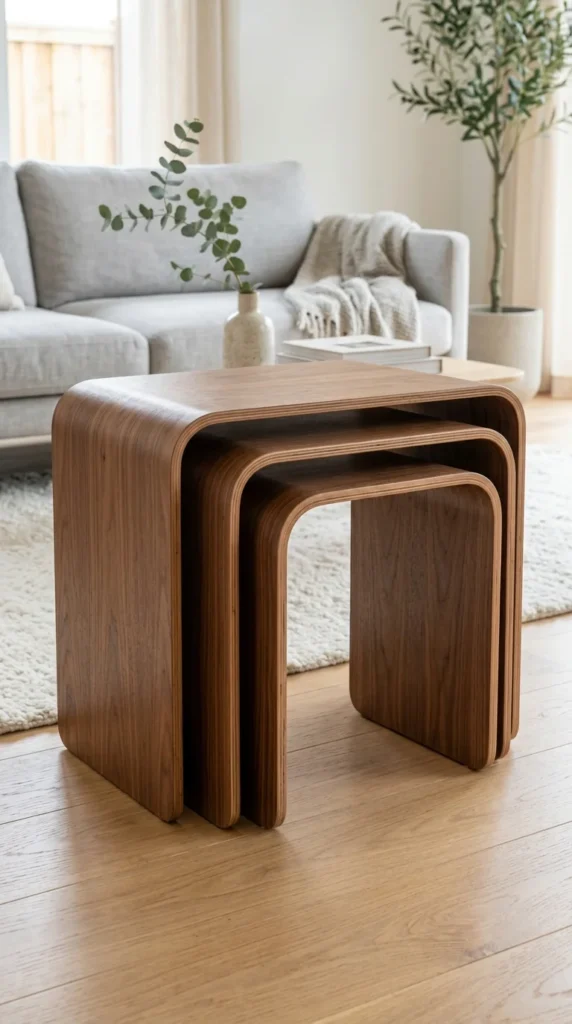
The “waterfall” design is a masterclass in woodworking. Instead of separate legs attached to a top, the wood appears to flow over the edge and down to the floor in one continuous piece. Usually made from high-quality walnut veneer or bent plywood, these tables have a sleek, high-end look. The lack of joints creates a minimalist silhouette that feels incredibly luxurious. They are ideal for high-traffic areas because they have no sharp corners to bump into.
8. Painted Accents
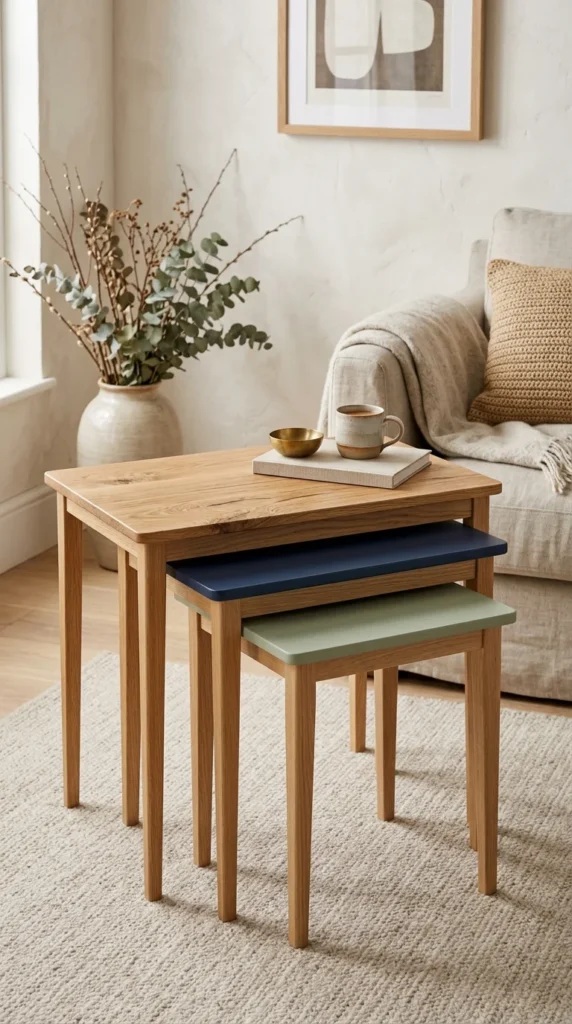
If your room feels a bit too “brown,” painted wooden nesting tables can provide a much-needed pop of color. You don’t have to go for fully painted sets; some of the most stylish versions feature “dipped” legs (where the bottom few inches of the legs are painted) or just have the tabletops colored while the grain shows on the sides. This style is excellent for nurseries, playrooms, or any space that needs a bit of whimsical energy.
9. Distressed Farmhouse
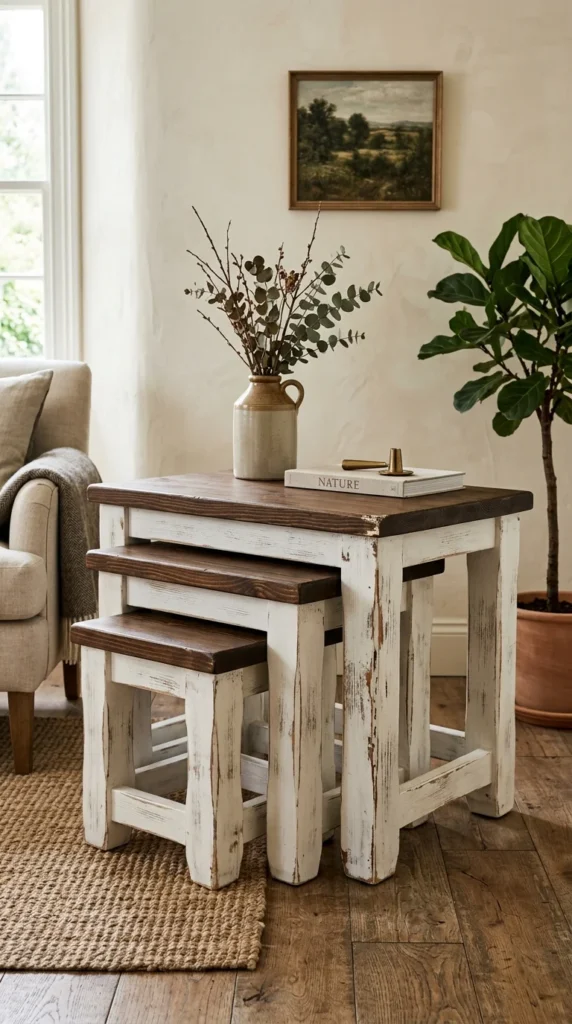
The farmhouse trend continues to be a favorite for its “lived-in” feel. Farmhouse nesting tables are characterized by their bulkier, turned legs and dual-tone finishes. Often, the base is painted white or cream and then sanded down to look aged, while the top is left as stained wood. These tables are incredibly sturdy and can handle the wear and tear of a busy family household. They look best when paired with linen sofas and woven wicker baskets.
10. Bamboo Eco-Friendly
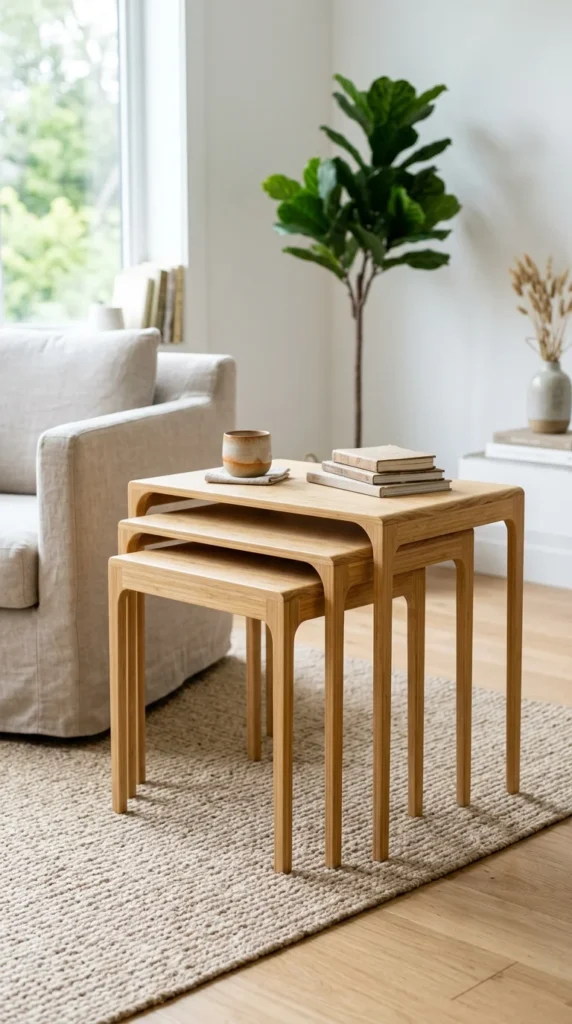
For the environmentally conscious decorator, bamboo is the material of choice. While technically a grass, bamboo is harder than many hardwoods and grows significantly faster, making it a highly sustainable option. Bamboo nesting tables are typically very light, making them easy to move around the house as needed. They often feature a “Zen” aesthetic—simple, clean, and harmonious—which works beautifully in bathrooms, spas, or minimalist bedrooms.
Why Every Home Needs a Set of Nesting Tables
Wooden nesting tables aren’t just about aesthetics; they are about solving problems. Here is why they remain a staple in interior design:
- Versatility: You can use them as a single coffee table unit or separate them into three different rooms when guests come over.
- Space Management: In a small apartment, you can keep them stacked to save floor space, then pull them out only when you’re hosting a movie night or need a side table for your laptop.
- Layering and Depth: Designers love nesting tables because they add “levels” to a room. By pulling the smaller tables out slightly, you create visual depth that makes a room feel more curated and less “flat.”
- Durability: Unlike glass or plastic, wood ages gracefully. A scratch on a wooden table often adds “character,” and a well-made set can be sanded and refinished decades later, making it a true heirloom piece.
When choosing your set, consider the height of your sofa or chairs. The tallest nesting table should ideally be within two inches of the height of your sofa’s armrest for maximum comfort and accessibility. Whether you choose the rugged charm of the live edge or the sleek sophistication of the walnut waterfall, these tables are sure to become the hardest-working pieces in your home.