
The kitchen is the heart of the home, but it is often the most cluttered room in the house. Between small appliances, mismatched Tupperware, and an ever-growing collection of spices, space disappears quickly. While plastic and metal organizers are functional, nothing matches the timeless aesthetic and durability of wood. Wood brings a sense of warmth, texture, and organic beauty to a space that can often feel clinical.
From the sustainable charm of bamboo to the rich grains of acacia and walnut, wooden organizers are as much about style as they are about substance. If you are looking to reclaim your countertops and declutter your cabinets, here are 11 wooden kitchen organizer ideas designed to maximize every square inch of your culinary sanctuary.
1. Spice Racks
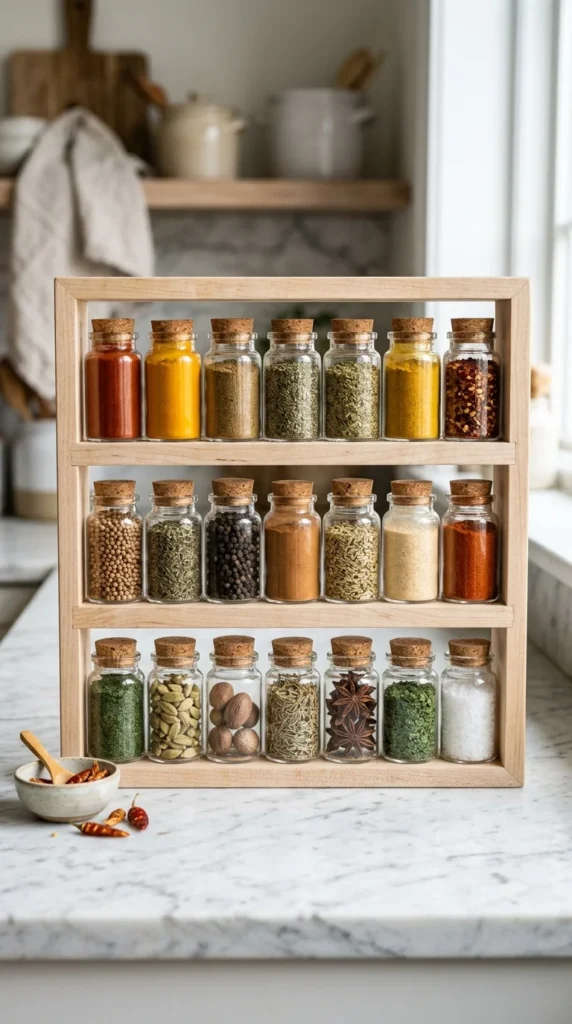
Spices are notorious for creating “cabinet chaos.” A tiered wooden spice rack solves this by utilizing vertical space, allowing you to see every jar at a glance without having to dig through rows of containers.
- The Tiered Advantage: Tiered designs (often called stadium seating for spices) ensure that the back row is just as visible as the front.
- Material Choice: Opt for bamboo or rubberwood for a moisture-resistant finish that stands up to steam from the stovetop.
- Customization: If you have deep cabinets, consider a pull-out wooden spice drawer insert that keeps jars tilted at an angle for easy reading.
2. Drawer Dividers
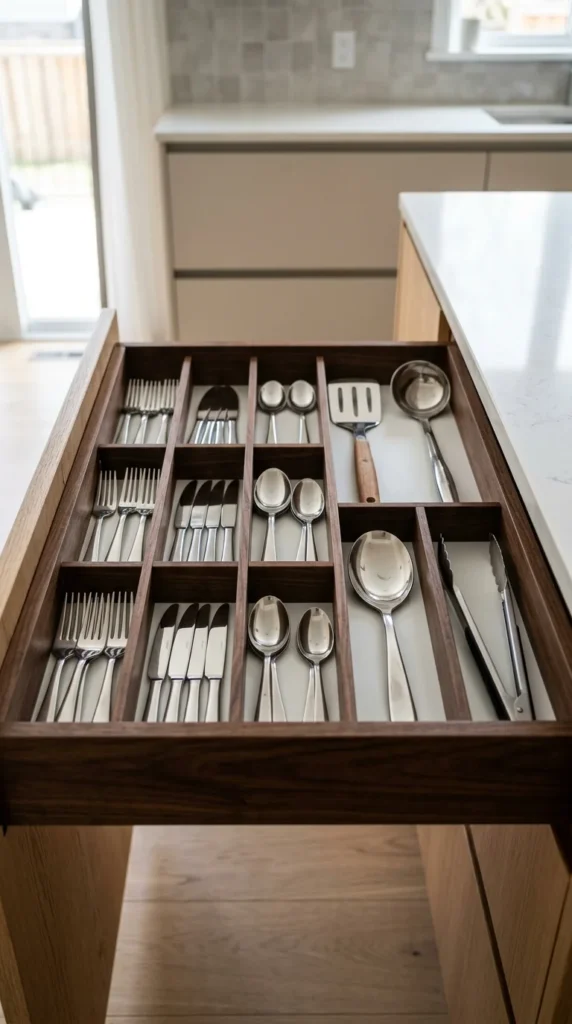
Generic plastic cutlery trays rarely fit a drawer perfectly, leaving awkward gaps where crumbs and small items disappear. Custom or adjustable wooden drawer dividers are the gold standard for internal organization.
- Modular Design: Many wooden dividers come with spring-loaded ends, allowing them to fit snugly into any drawer depth.
- Aesthetic Continuity: Using the same wood species as your cabinetry creates a high-end, bespoke look that makes your kitchen feel more expensive.
- Beyond Cutlery: Use these dividers in deep drawers to stack pot lids vertically or to keep dish towels neatly folded.
3. Pull-out Shelves
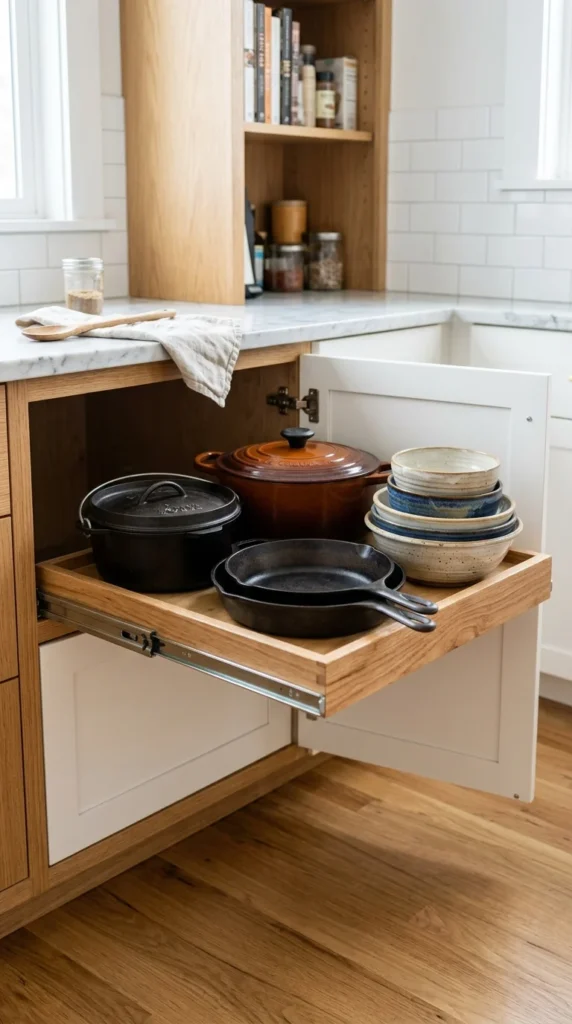
Deep cabinets are the “black holes” of the kitchen. Items pushed to the back are often forgotten for years. Installing wooden pull-out shelves (or “roll-out trays”) transforms these dark voids into accessible storage.
- Ergonomics: Instead of kneeling on the floor to find a blender, you simply slide the wooden tray toward you.
- Durability: Solid wood or high-quality plywood construction is essential here to support the weight of heavy Dutch ovens and stand mixers.
- Retrofitting: These can be added to existing cabinetry relatively easily, instantly doubling the usable space of a lower cabinet.
4. Magnetic Strips
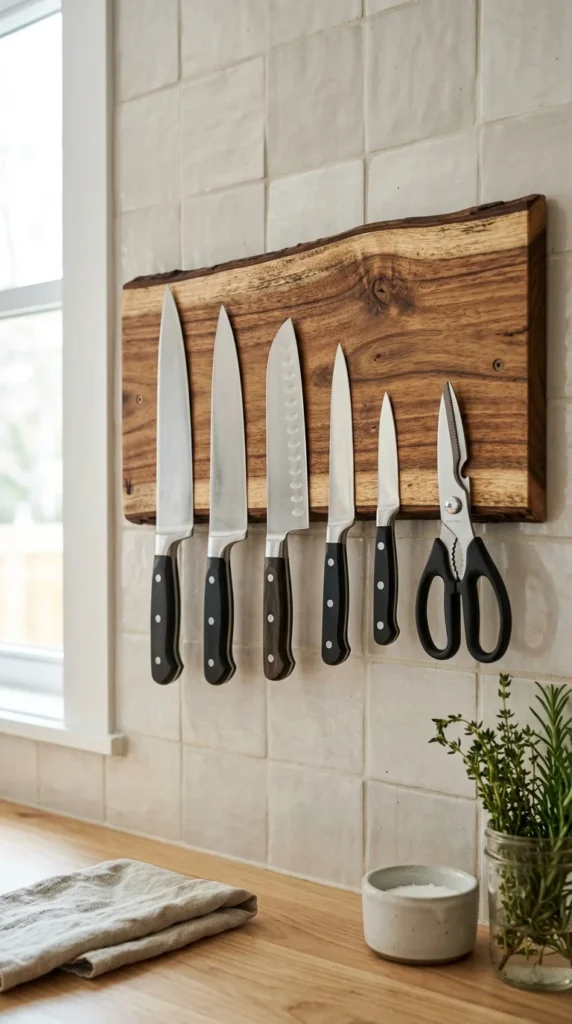
Counter space is precious, and bulky knife blocks are notorious space-wasters. A wooden magnetic knife strip moves your blades to the wall, freeing up several inches of countertop while keeping your tools within arm’s reach.
- Blade Protection: Unlike metal strips, wooden surfaces are gentler on the sharp edges of your knives, preventing nicks and dulling.
- Safety: Keeping knives high on the wall keeps them out of reach of curious children.
- Style Point: A beautiful piece of walnut or olive wood acts as functional wall art, showcasing your cutlery collection.
5. Pegboard Systems
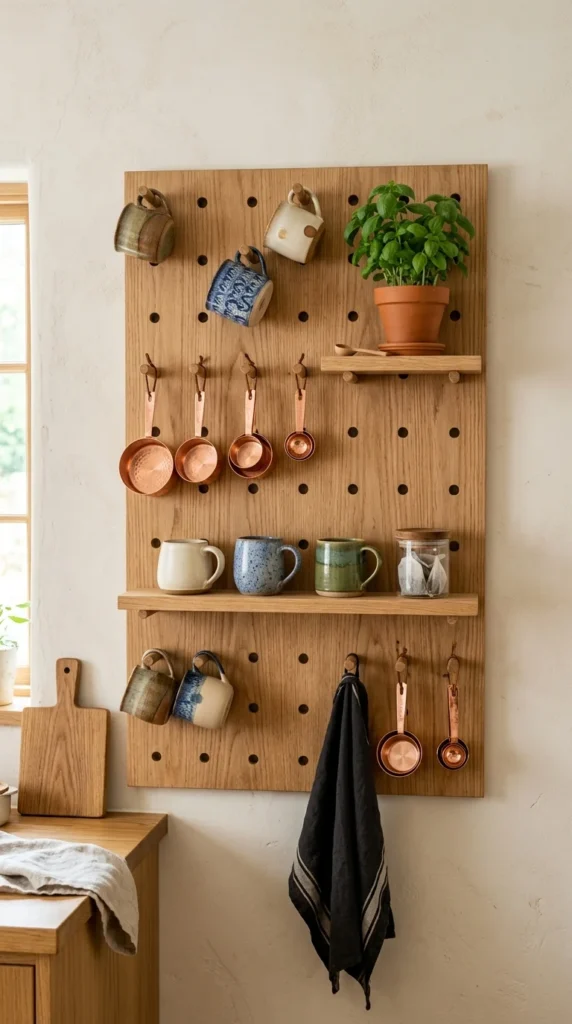
Inspired by professional workshops, wooden pegboards are becoming a staple in modern, minimalist kitchens. They offer total flexibility; as your tool collection grows, you simply move the pegs.
- Vertical Storage: This is the ultimate solution for small kitchens with limited cabinet space. You can hang pans, colanders, and even small baskets.
- Aesthetic Appeal: Unlike industrial metal pegboards, wooden versions look sophisticated and “hygge,” especially when finished with a light natural oil.
- Zoning: Use a pegboard to create a dedicated coffee station or a baking zone by grouping all related tools in one visual area.
6. Lazy Susans
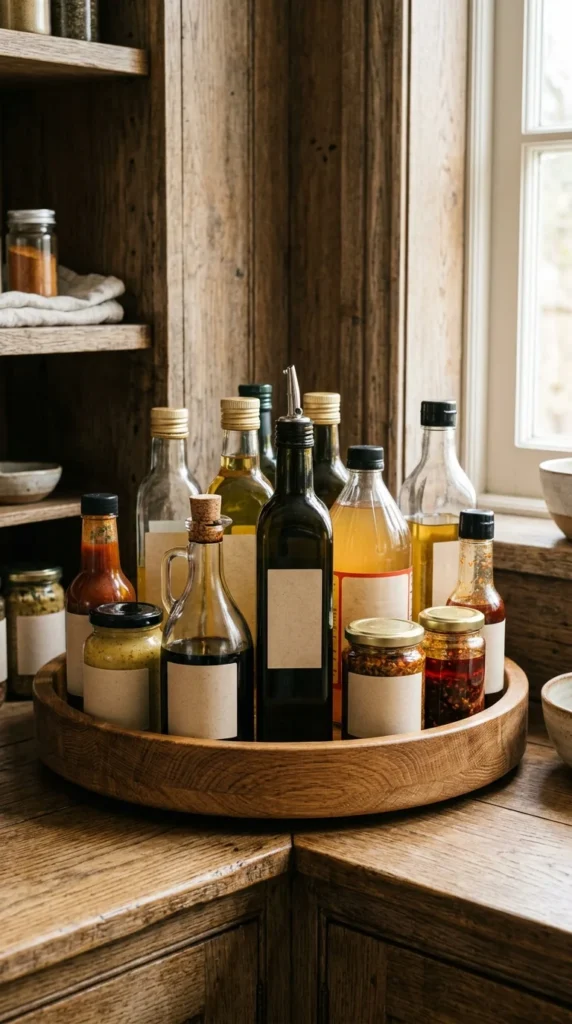
The corner cabinet is often the most wasted space in a kitchen. A wooden Lazy Susan turns these awkward “blind corners” into a spinning carousel of efficiency.
- 360-Degree Access: One quick spin brings the soy sauce from the very back right to your fingertips.
- Countertop Use: Beyond cabinets, a small wooden Lazy Susan on the counter is perfect for holding frequently used oils, salt cellars, and pepper grinders.
- Lip Detail: Look for designs with a slight raised edge (a “lip”) to prevent bottles from sliding off during a fast spin.
7. Floating Shelves
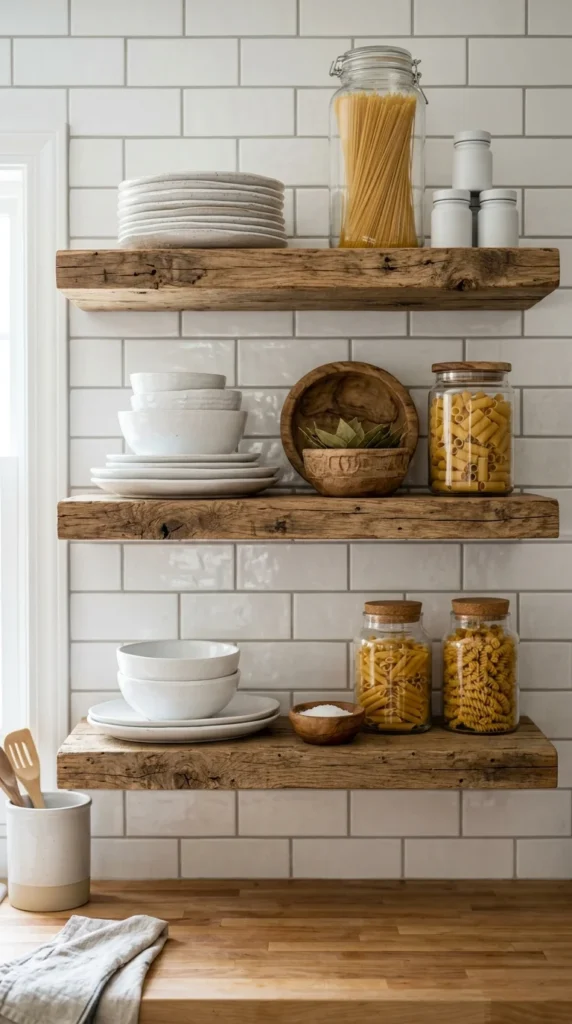
If your kitchen feels cramped, removing upper cabinets and replacing them with wooden floating shelves can open the space up visually while maintaining storage capacity.
- Open Concept: Floating shelves force you to stay organized because everything is on display. They are perfect for your most-used items like coffee mugs and daily dinnerware.
- Display Space: It’s an opportunity to mix utility with decor—place a trailing plant next to your cookbooks.
- Weight Capacity: Ensure these are anchored into studs, especially if you plan to store heavy stacks of ceramic plates.
8. Countertop Boxes
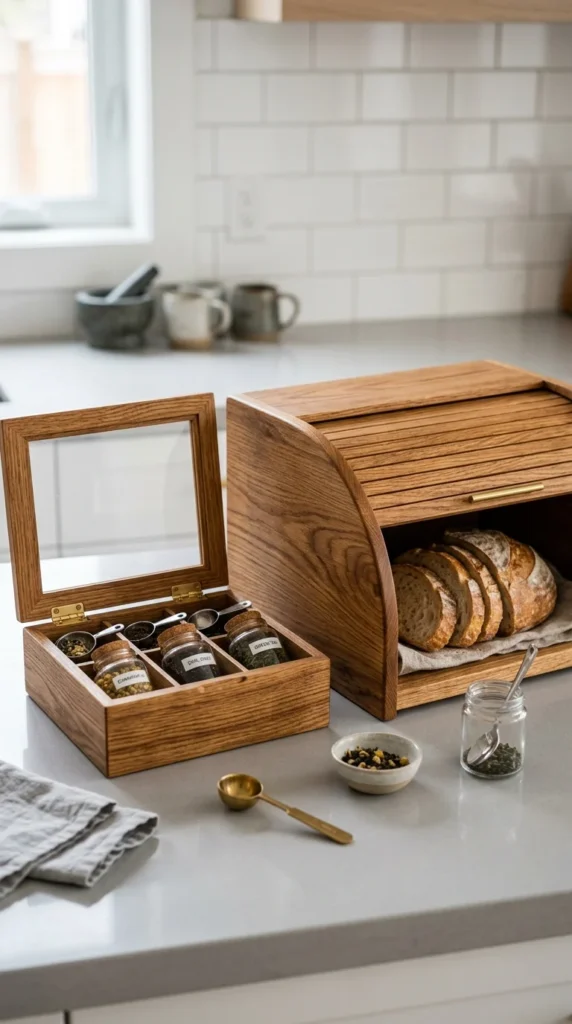
To keep a kitchen looking tidy, you need a place to hide the “visual noise” of packaging. Wooden boxes and canisters provide a cohesive look for items that must stay on the counter.
- Bread Boxes: A wooden bread box keeps loaves fresh by allowing just enough airflow while hiding the unsightly plastic bags bread often comes in.
- Tea & Coffee Organizers: Wooden chests with dividers are perfect for sorting tea bags or coffee pods, turning a cluttered corner into a cafe-style experience.
- Uniformity: Matching the wood of your boxes to your cutting boards creates a curated, intentional design language.
9. Wine Racks
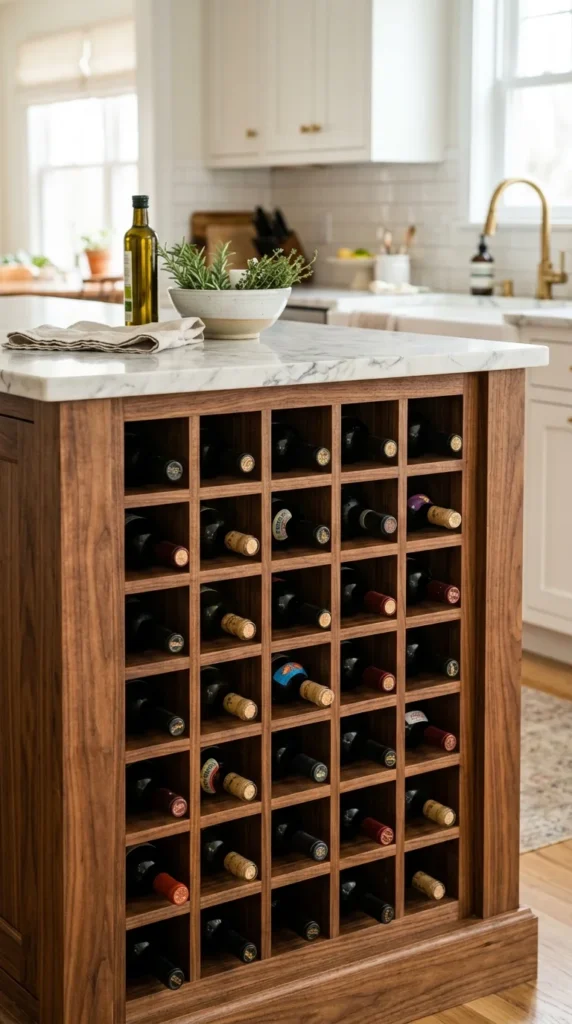
Wine bottles are bulky and difficult to stack. Dedicated wooden wine racks or cubbies utilize small gaps in your cabinetry—such as the space above the fridge or at the end of an island.
- Horizontal Storage: Storing wine in wood racks keeps the cork moist, which is essential for preserving the quality of the wine.
- Integration: A wooden lattice rack can be tucked into almost any narrow vertical space that would otherwise be covered with a filler panel.
- Stability: Wood absorbs micro-vibrations better than metal, providing a more stable environment for aging bottles.
10. Sink Bridges
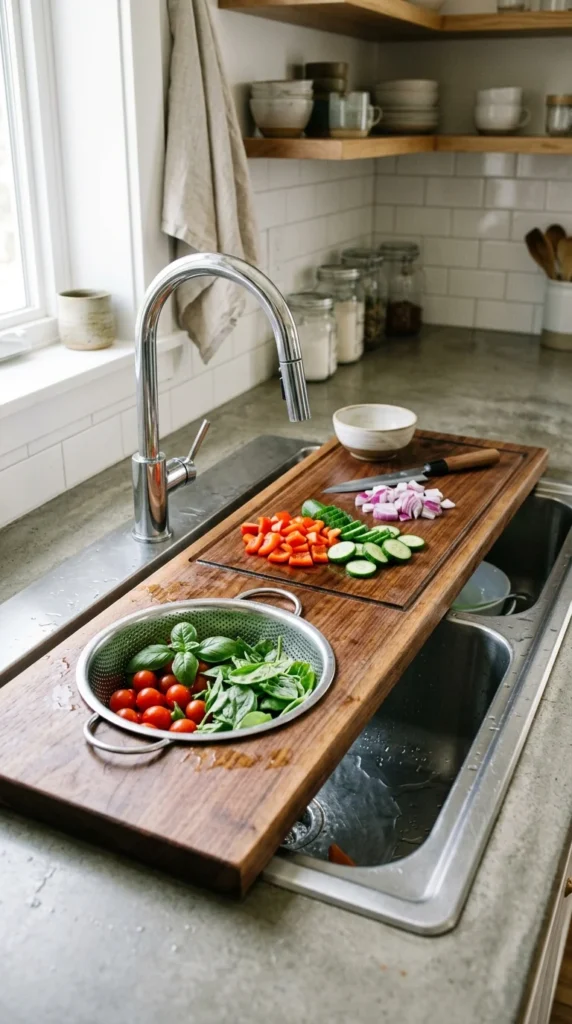
When you run out of counter space, look to the sink. A wooden sink bridge (or over-the-sink cutting board) creates a temporary workstation right over the basin.
- Prep Efficiency: You can wash vegetables and chop them in the same spot, sliding scraps directly into the disposal or a compost bin.
- Small Space Savior: In studio apartments or tiny homes, this effectively adds two square feet of “countertop” that wasn’t there before.
- Solid Construction: Choose water-resistant woods like teak or bamboo to ensure the bridge doesn’t warp from the constant proximity to water.
11. Plate Cradles
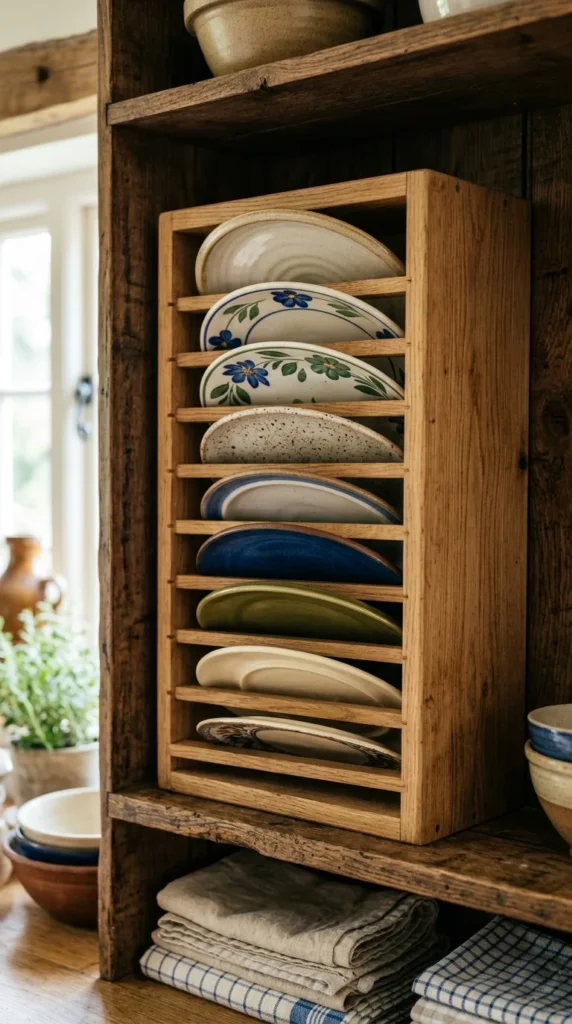
Stacking plates in a high pile is a recipe for chipped edges and a struggle to get the bottom plate out. Wooden plate cradles (or “dish slots”) allow you to store plates vertically.
- Easy Access: You can pull one plate out without moving the entire stack.
- Drying Station: These can also double as a stylish drying rack next to the sink for hand-washed items.
- Protection: The wooden dowels provide a soft buffer, ensuring that fine china or delicate stoneware isn’t scratched by metal-on-metal contact.