
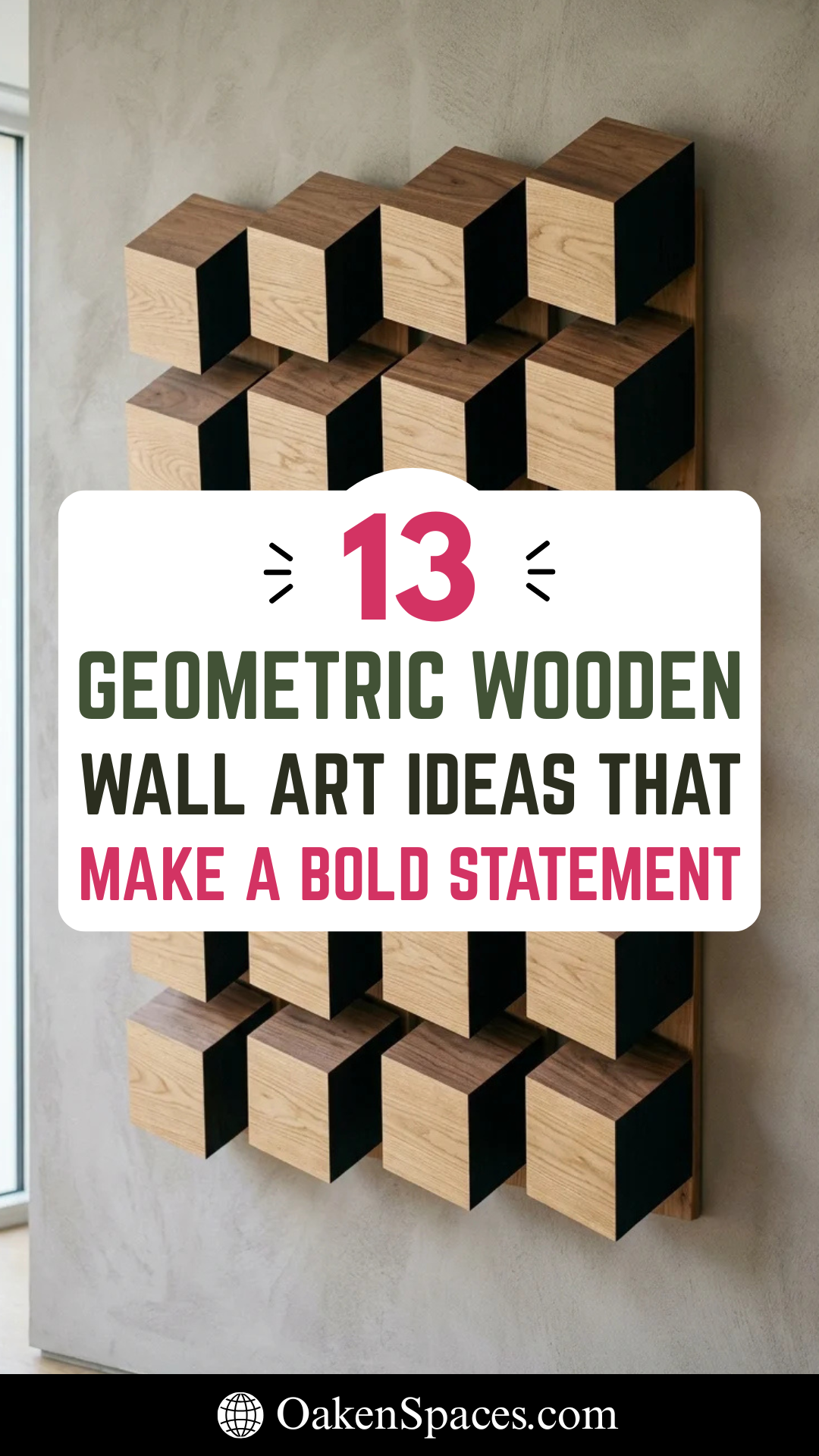
In the world of interior design, few elements bridge the gap between organic warmth and modern precision as effectively as geometric wooden wall art. Whether you are looking to ground a minimalist living room or add a focal point to a sterile office space, the interplay of wood grain and mathematical symmetry creates an undeniable “wow” factor. Wood brings a tactile, grounding energy to a room, while geometric patterns provide a sense of order and sophistication
From intricate 3D mosaics to minimalist mountain silhouettes, the possibilities are endless. If you’re ready to transform your blank walls into a gallery of texture and depth, here are 13 geometric wooden wall art ideas that make a bold, unforgettable statement.
1. Honeycomb Hexagons
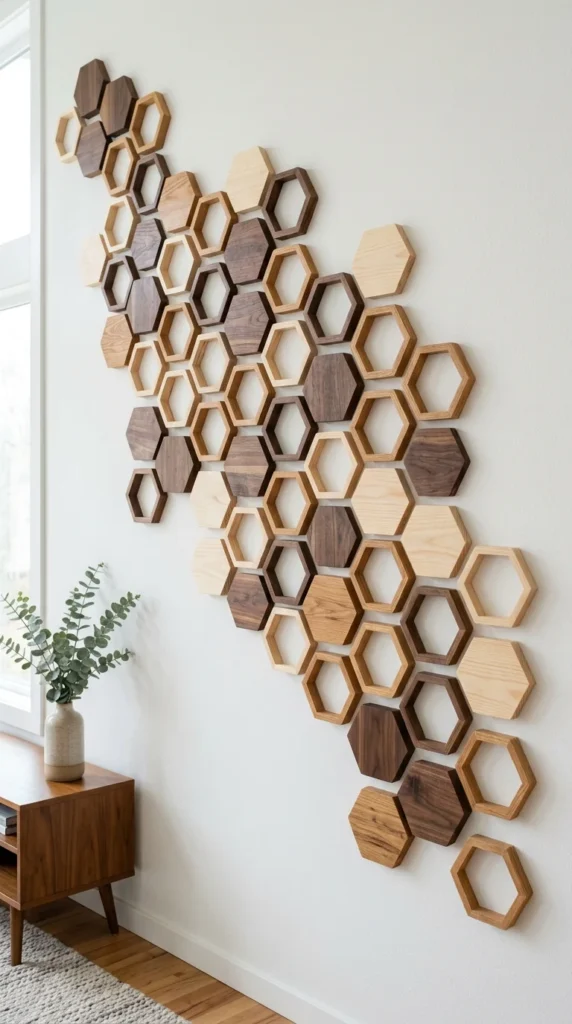
The hexagon is nature’s most efficient shape, and in wooden wall art, it translates into a modular masterpiece. The beauty of the honeycomb pattern lies in its versatility. You can cluster several wooden hexagons together to create a dense focal point or spread them out across a wall to mimic the way honey drips or vines grow. By using different wood species—such as dark walnut, reddish cherry, and light maple—you create a natural color palette that adds depth without the need for paint. This style works exceptionally well in transitional spaces like hallways or behind a dining table.
2. Reclaimed Chevron
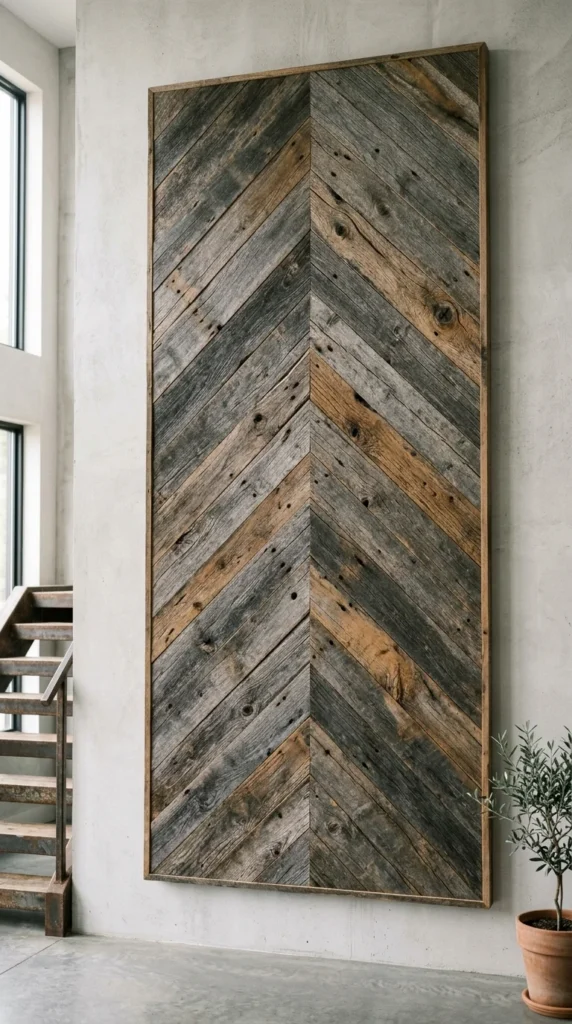
Chevron is a timeless pattern that evokes a sense of movement and direction. When executed with reclaimed wood, it adds a layer of history and “shabby chic” charm to a modern home. The V-shaped stripes draw the eye upward, making ceilings appear higher and the room feel more spacious. Because reclaimed wood often features varying thicknesses and textures—from rough-hewn surfaces to smooth, sanded finishes—a chevron piece becomes a tactile experience. It’s the perfect addition to a rustic bedroom or a farmhouse-style entryway.
3. Abstract Mosaics
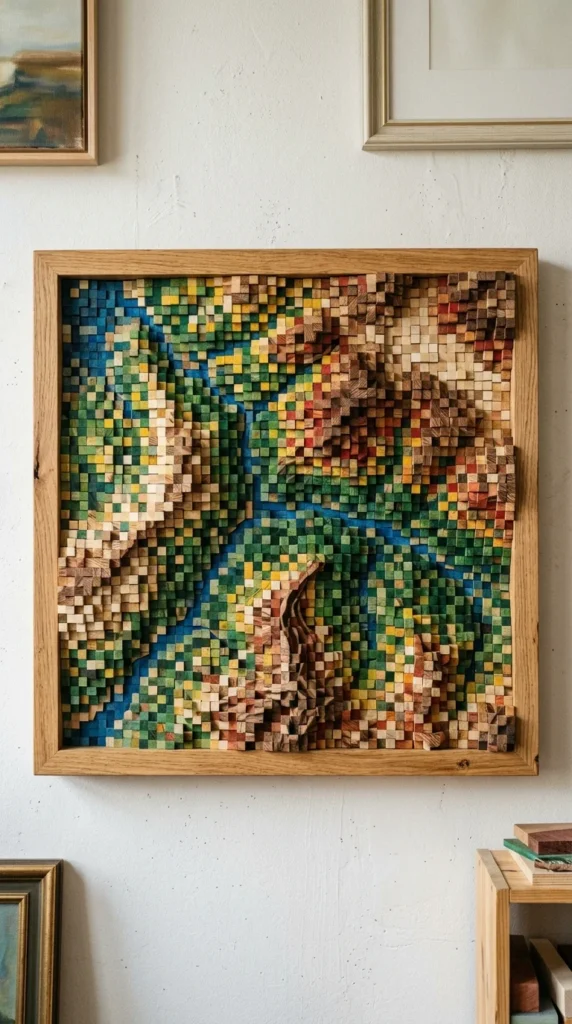
If you want a piece that doubles as a conversation starter, an abstract wood mosaic is the way to go. These pieces are often crafted from scrap wood or offcuts, making them an eco-friendly choice. The artist arranges various geometric shapes—squares, rectangles, and triangles—at different depths to create a 3D effect. As the light in the room changes throughout the day, the shadows cast by the protruding blocks shift, making the art feel alive. This style thrives in contemporary settings where bold textures are encouraged.
4. Mountain Peaks
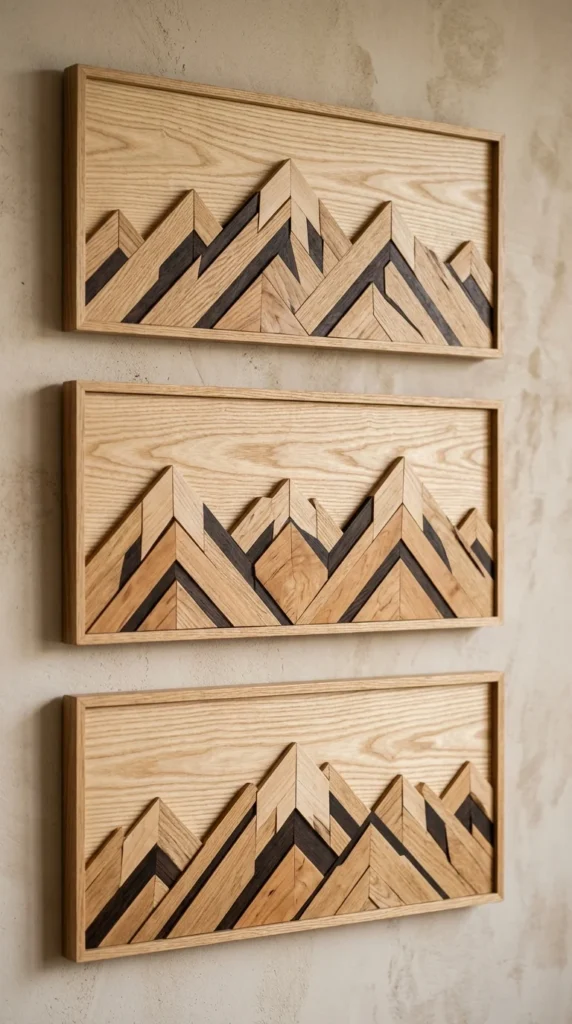
For those who love the great outdoors but prefer a clean, Scandi-inspired aesthetic, geometric mountain art is a perfect compromise. These pieces simplify the rugged beauty of a mountain range into sharp angles and clean lines. Often made with a combination of light pine and dark stains, they provide a serene, calming atmosphere. They are particularly popular in nurseries or home offices, offering a “window” into a stylized wilderness that inspires focus and peace.
5. Sunburst Radiance
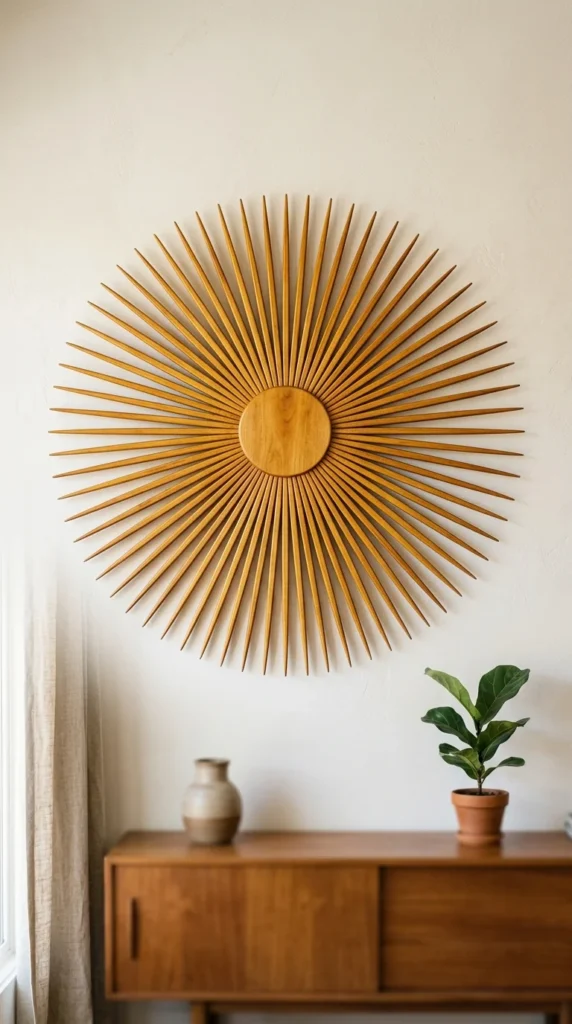
The sunburst is a staple of mid-century modern design, but when crafted entirely from wood, it takes on a more grounded, earthy feel. This circular geometric design acts as a natural “halo” for whatever is placed beneath it. It works beautifully above a headboard or a fireplace. The radiating lines draw the eye toward the center, creating a sense of balance and harmony. To make it even bolder, look for pieces that use charred wood (Shou Sugi Ban) for a dramatic, blackened finish.
6. Herringbone Panels
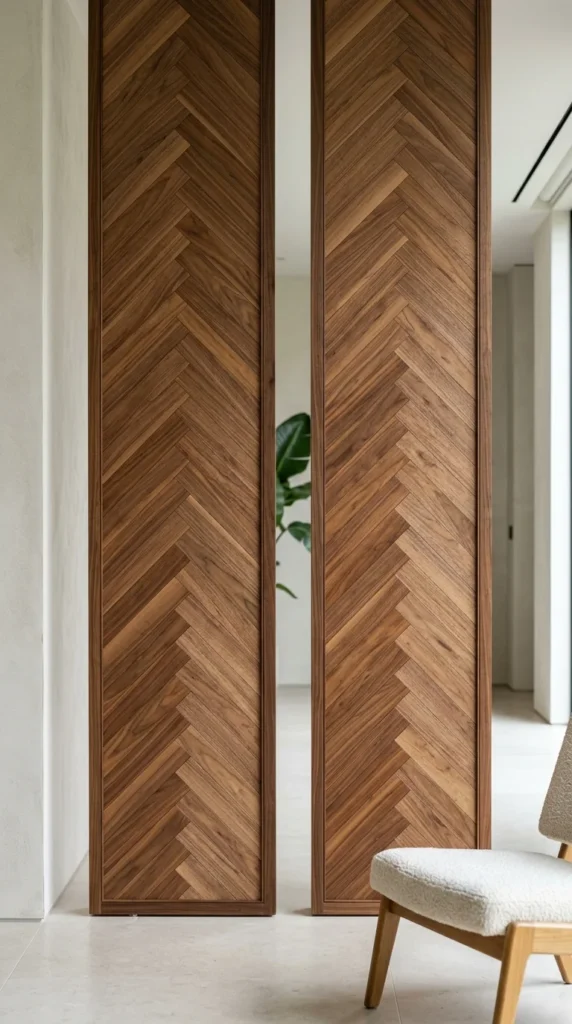
While chevron meets at a point, herringbone uses a staggered, “broken” zigzag that feels slightly more traditional and sophisticated. Herringbone wooden panels are often used to add architectural interest to a flat wall. Because the pattern is so intricate, it’s best to keep the wood tones consistent to let the geometry do the talking. A light oak or a pale birch herringbone piece can add a subtle, high-end “boutique hotel” vibe to a living room or master suite.
7. 3D Cubes
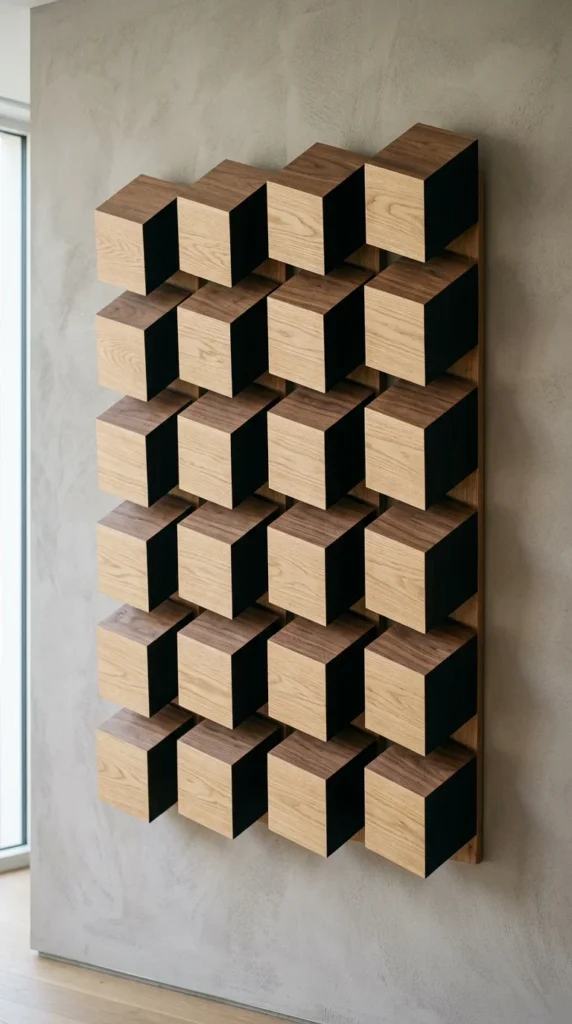
For the lover of mathematics and optical illusions, the 3D cube pattern (also known as the tumbling block pattern) is a must-have. By using three different shades of wood—light, medium, and dark—the artist creates the illusion of three-dimensional depth on a flat surface. This piece is a masterclass in geometric precision. It’s a bold statement that works best on a large, unobstructed wall where the viewer can fully appreciate the trick of the light and perspective.
8. Concentric Circles
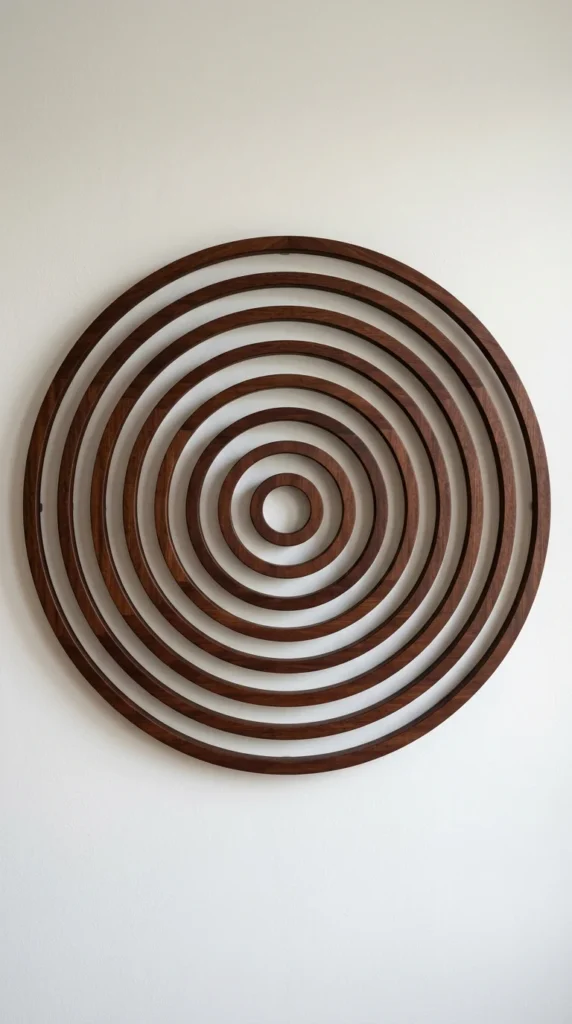
While most geometric art focuses on sharp angles, circles offer a softer approach to geometry. Concentric wooden rings bring a sense of continuity and “zen” to a space. These pieces often emphasize the natural rings of the tree itself, celebrating the wood’s origin. By layering circles of different sizes, you create a rhythmic pattern that feels organic yet structured. This is an excellent choice for a meditation corner or a spa-like bathroom.
9. Triangle Peaks
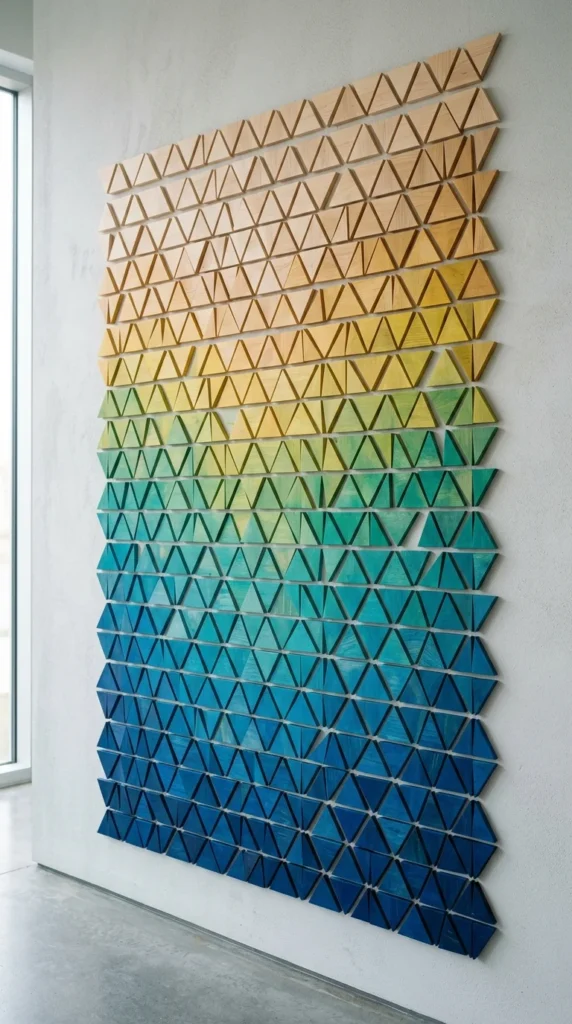
Triangles are the strongest shape in geometry, and they bring a high-energy, modern vibe to wall art. A popular trend involves using hundreds of small equilateral triangles to create a massive wall mural. These can be stained in different colors to create a “pixelated” or gradient effect. Whether you choose a monochromatic look or a vibrant rainbow of stains, triangle-based art adds a sharp, contemporary edge to any room.
10. Parametric Waves
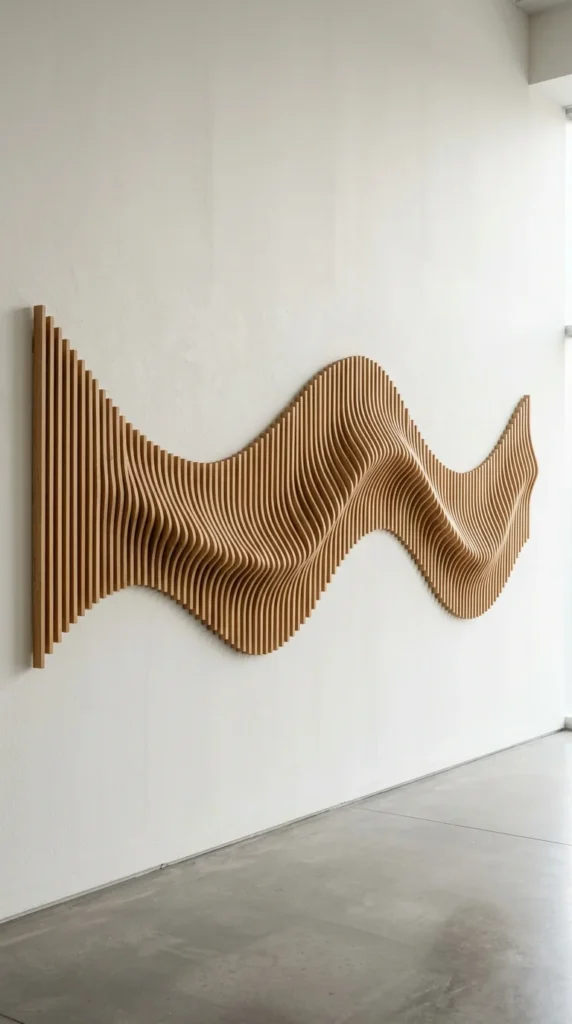
Parametric design uses computer algorithms to create fluid, organic shapes out of rigid materials. In wooden wall art, this often manifests as “ribbed” sculptures that look like moving water or rolling hills. These pieces are highly sophisticated and often found in luxury homes or corporate lobbies. The way the wood “flows” creates a sense of movement that breaks up the static nature of a room, making it feel dynamic and futuristic.
11. Diamond Lattice
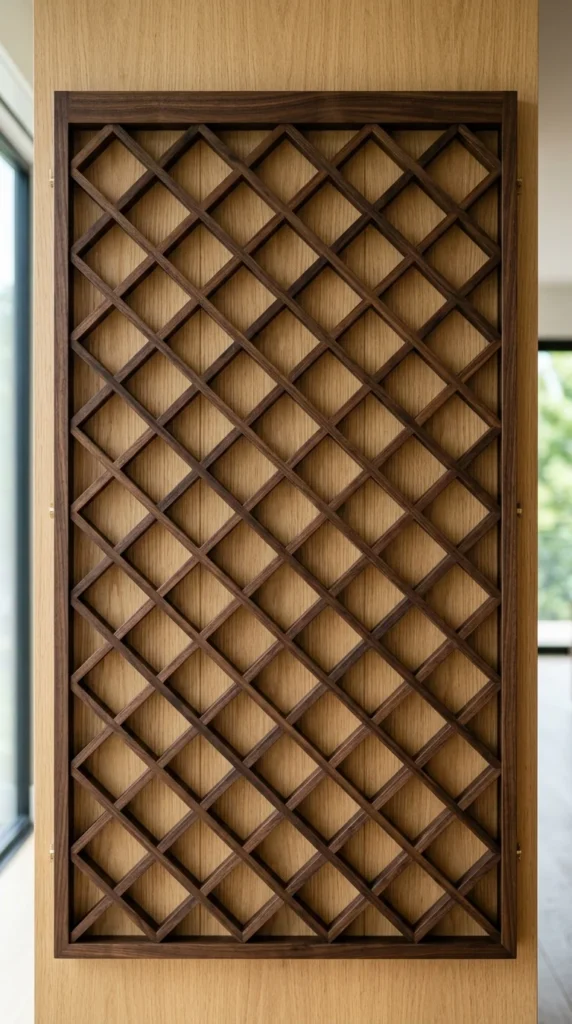
The diamond shape is synonymous with elegance. A wooden diamond lattice piece adds a layer of texture that feels both classic and geometric. This style often incorporates “negative space,” where the wall behind the art becomes part of the design. It’s an excellent way to add a “feature wall” feel without the commitment of wallpaper or paint. A large diamond-patterned piece can act as a sophisticated headboard or a backdrop for a collection of indoor plants.
12. Inlay Stripes
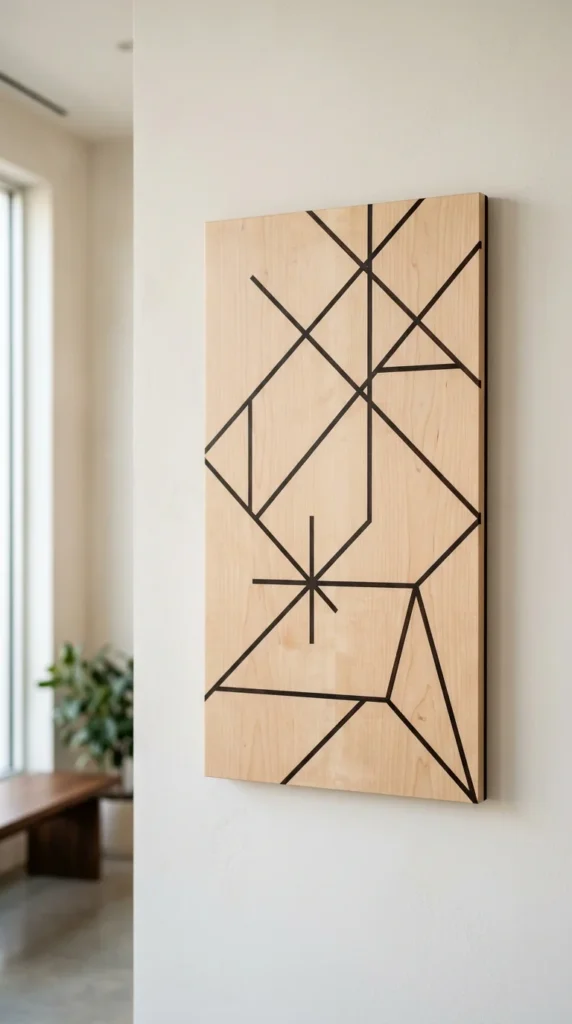
If you prefer a more subtle statement, consider wooden inlay art. This technique involves embedding one type of wood into another to create thin, precise lines. The result is a flat, smooth surface that hides a complex geometric map of stripes, grids, or intersections. This “quiet” luxury is perfect for minimalist homes where the focus is on quality materials and craftsmanship rather than loud, protruding shapes.
13. Floating Squares
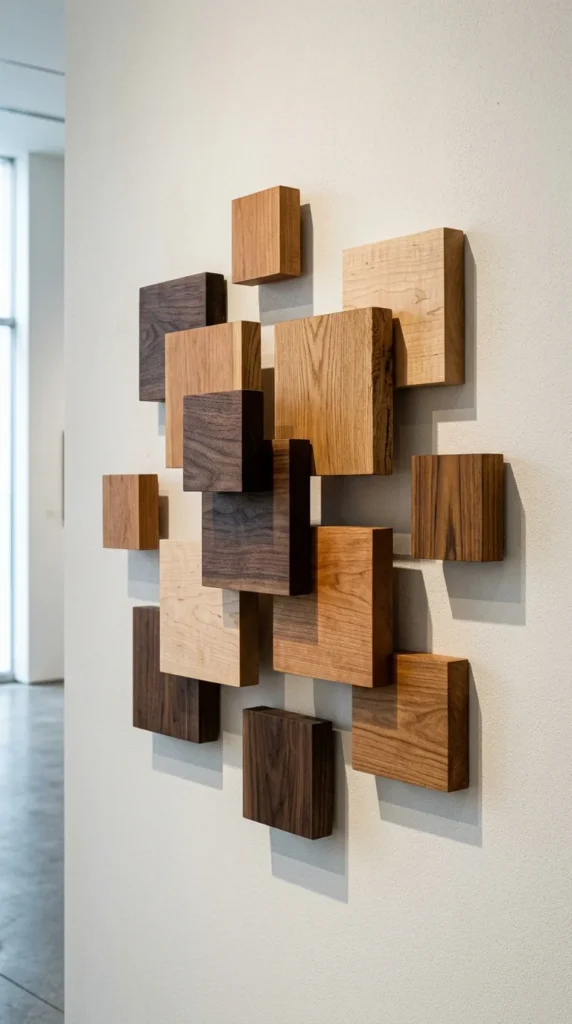
Sometimes, simplicity is the boldest choice of all. A collection of “floating” wooden squares creates a gallery-like atmosphere. By mounting solid blocks of wood—perhaps cedar, walnut, and ash—at different depths, you turn a flat wall into a sculptural landscape. This style emphasizes the beauty of the raw material itself. Each square becomes a canvas for the wood’s unique grain, knots, and color variations, proving that geometry and nature are the perfect partners.