
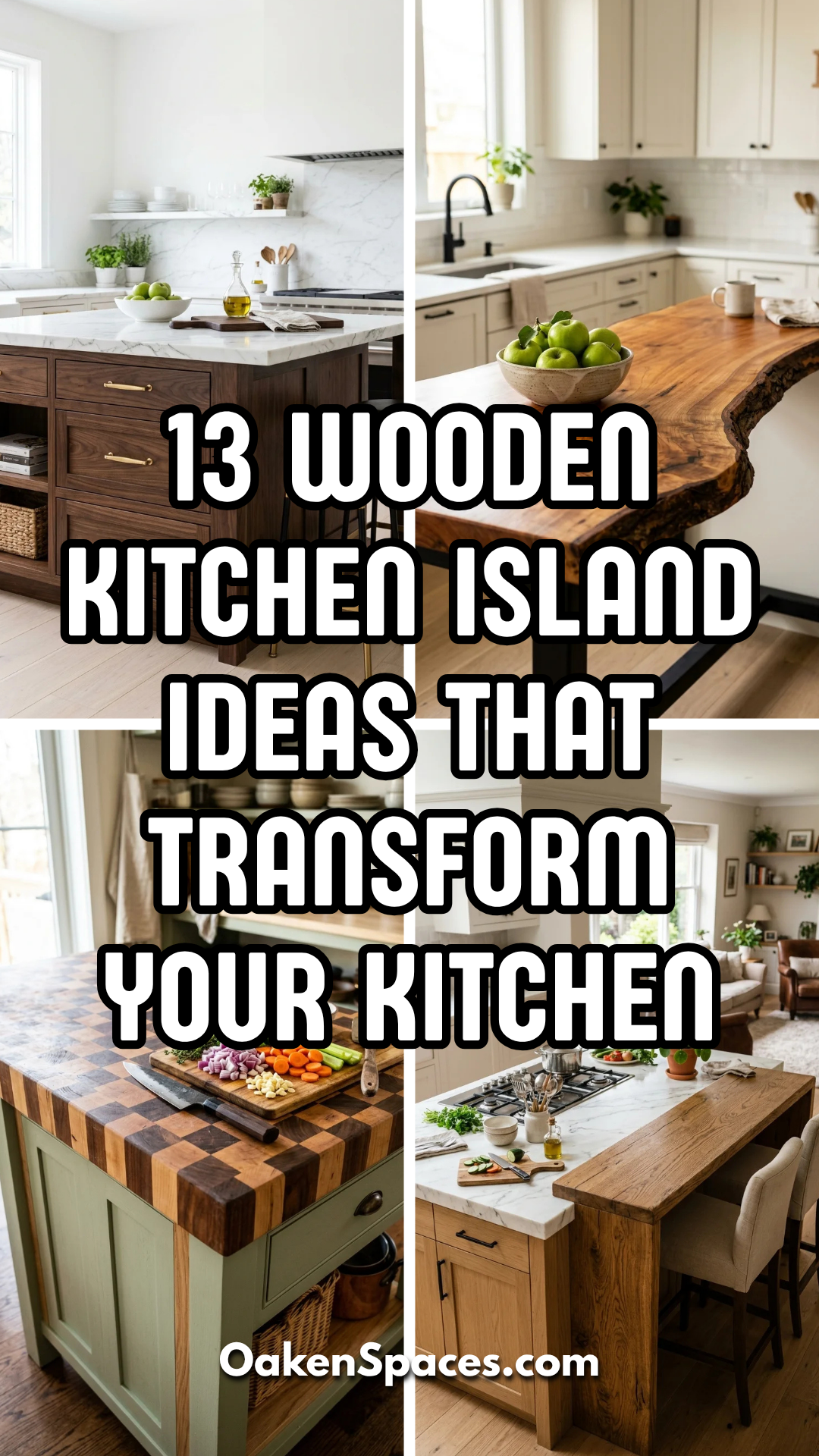
The kitchen is often called the heart of the home, and at the center of that heart sits the island. While marble and quartz have had their moment in the spotlight, there is a timeless, grounding warmth that only wood can provide. A wooden kitchen island isn’t just a workspace; it’s a tactile piece of furniture that brings organic texture, history, and a sense of “home” to an otherwise clinical space of stainless steel and tile. Whether you are aiming for a rugged farmhouse aesthetic or a sleek, modern minimalist vibe, wood is the most versatile medium at your disposal.
1. Reclaimed Wood
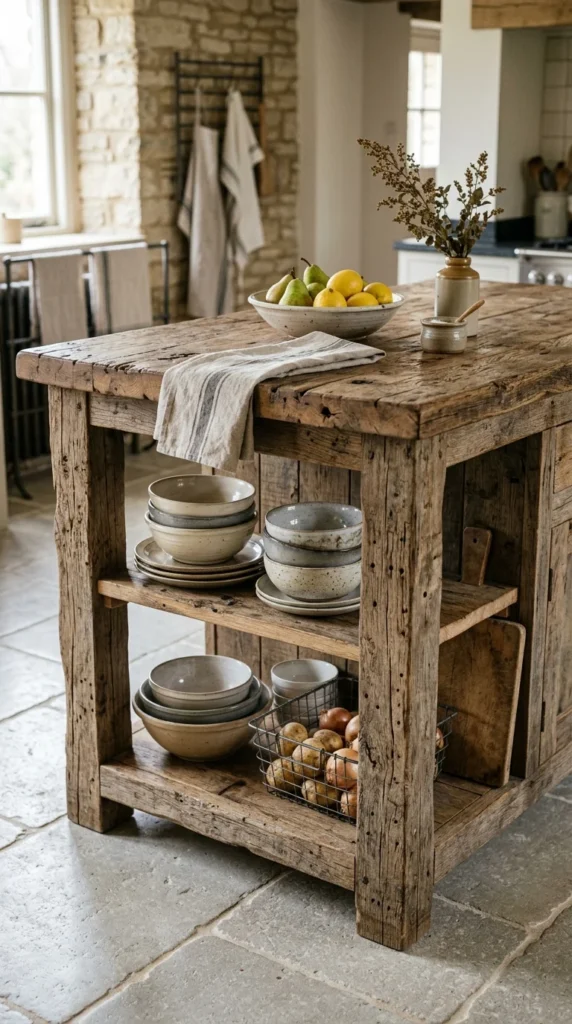
There is something inherently soulful about using reclaimed wood. Each plank tells a story of a previous life, perhaps as a mid-western barn or an old factory floor. Using reclaimed timber for your island adds an instant layer of history and character that brand-new materials simply cannot replicate. The imperfections—the knots, the slight color variations, and the weathered grain—are what make it beautiful. This style works exceptionally well in “Modern Farmhouse” designs where you want to balance crisp white walls with something that feels grounded and aged.
2. Live Edge
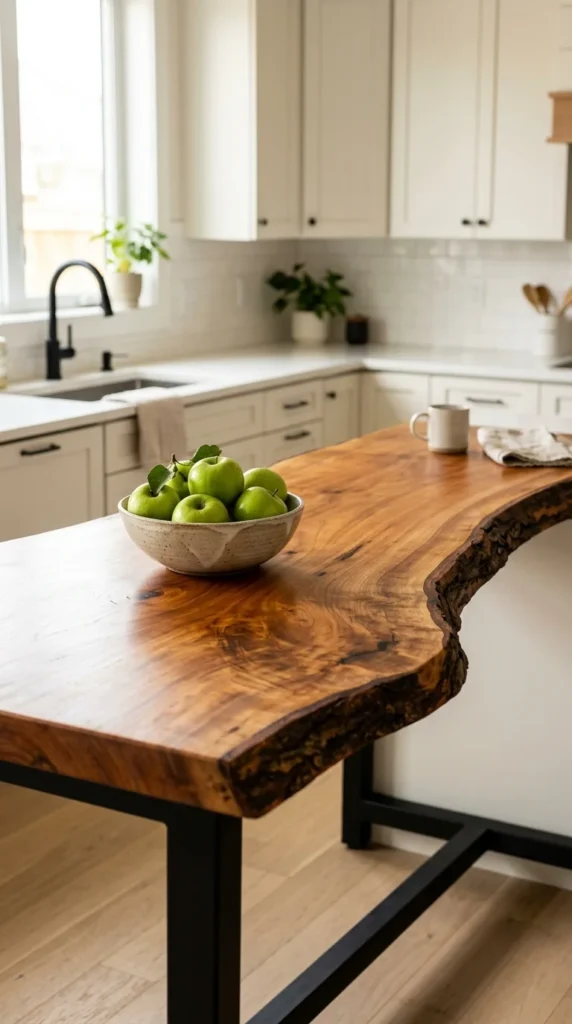
If you want your kitchen island to be a piece of functional art, a live-edge slab is the way to go. Unlike traditional squared-off edges, a live edge retains the natural silhouette of the tree from which it was cut. This brings an organic, flowing energy into the kitchen, breaking up the straight lines of cabinetry and appliances. It’s a bold choice that celebrates nature in its rawest form. Pair it with simple, understated stools to let the unique curves of the wood take center stage.
3. Butcher Block
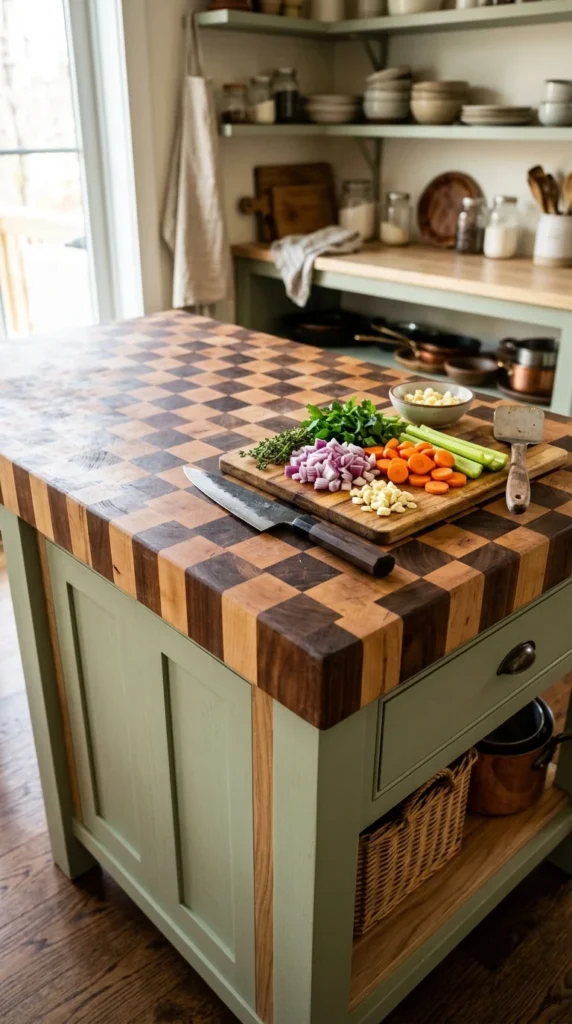
The butcher block island is the ultimate choice for the home chef. Beyond its aesthetic appeal, it is highly functional, designed specifically to be used as a giant cutting board. While edge-grain blocks are common, end-grain blocks (where the wood fibers stand vertically) are the gold standard for durability and knife-friendliness. A thick butcher block adds a sense of sturdiness and professional utility to the kitchen. When oiled regularly, it develops a beautiful patina that only gets better with every meal prepared.
4. Dark Walnut
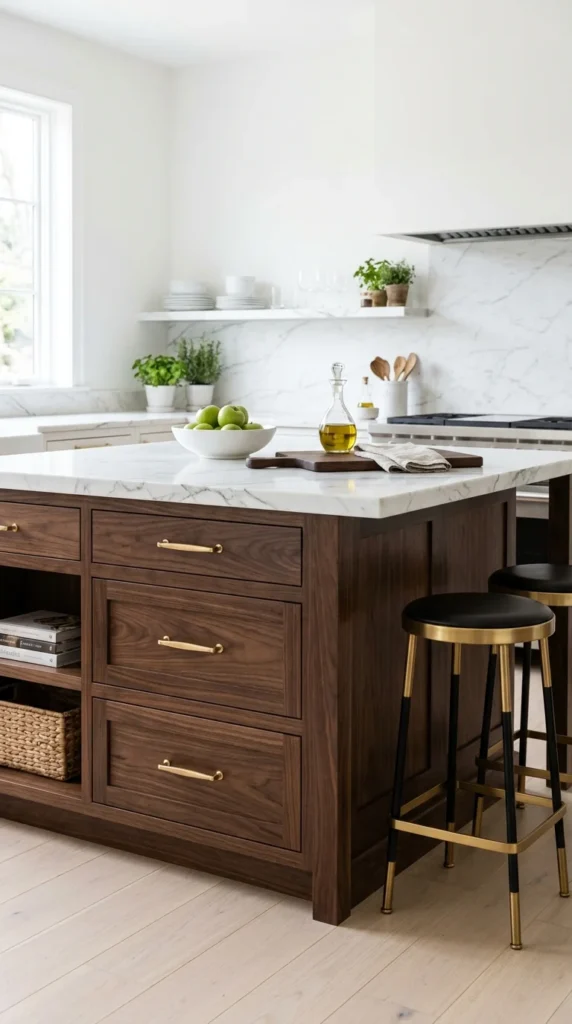
For those seeking a touch of luxury and sophistication, dark walnut is unparalleled. Its rich, chocolatey tones and tight grain patterns exude elegance. A walnut island acts as a perfect anchor in a large, bright kitchen, providing a visual weight that feels expensive and intentional. It pairs beautifully with high-end materials like Carrara marble, brass fixtures, and velvet-upholstered bar stools. It’s the “little black dress” of kitchen islands—timeless and always in style.
5. Painted Base
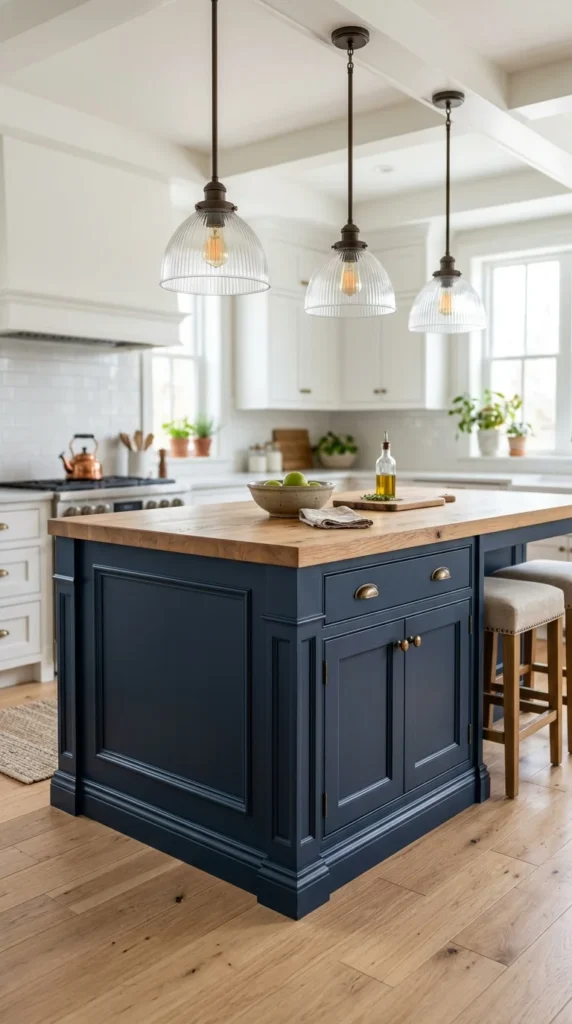
You don’t have to go all-wood to enjoy the warmth of timber. One of the most popular ways to incorporate wood is by pairing a natural wooden top with a painted wooden base. This allows you to introduce a pop of color—be it a moody charcoal, a serene sage, or a bold navy—while maintaining the organic feel of wood where you touch it most. The contrast between a colored base and a honey-toned wood top creates a layered, designer look that feels custom-made for the space.
6. Mid-Century Modern
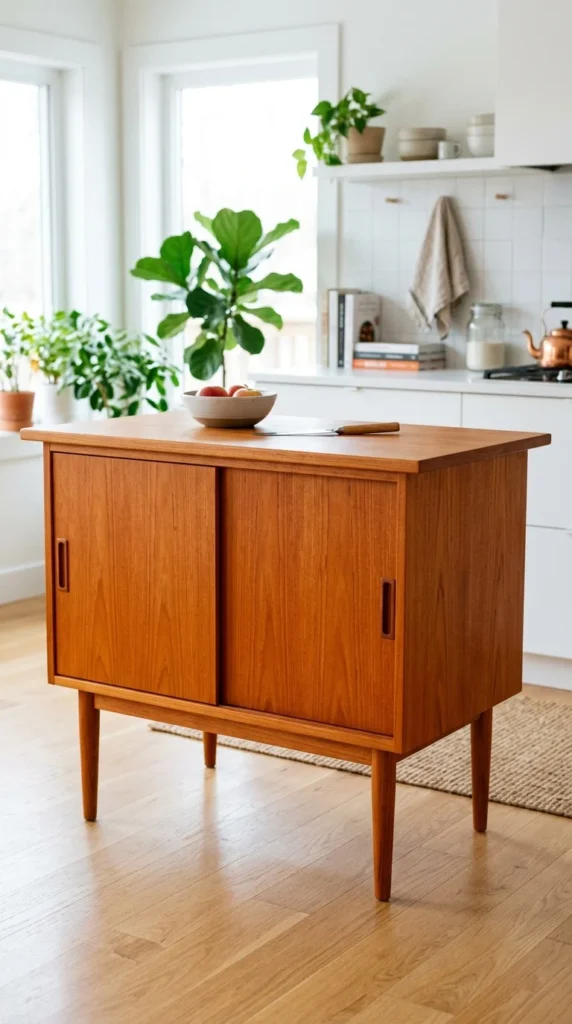
Bring a bit of 1950s flair to your kitchen with a mid-century modern inspired island. This style is defined by clean lines, tapered legs, and the use of warm woods like teak or acorn-finished oak. Instead of a bulky, solid block, these islands often feel lighter and “loftier” because they sit high on legs, allowing you to see the floor underneath. This is a fantastic trick for smaller kitchens to make the room feel more spacious while adding a vintage, architectural edge.
7. Portable Cart
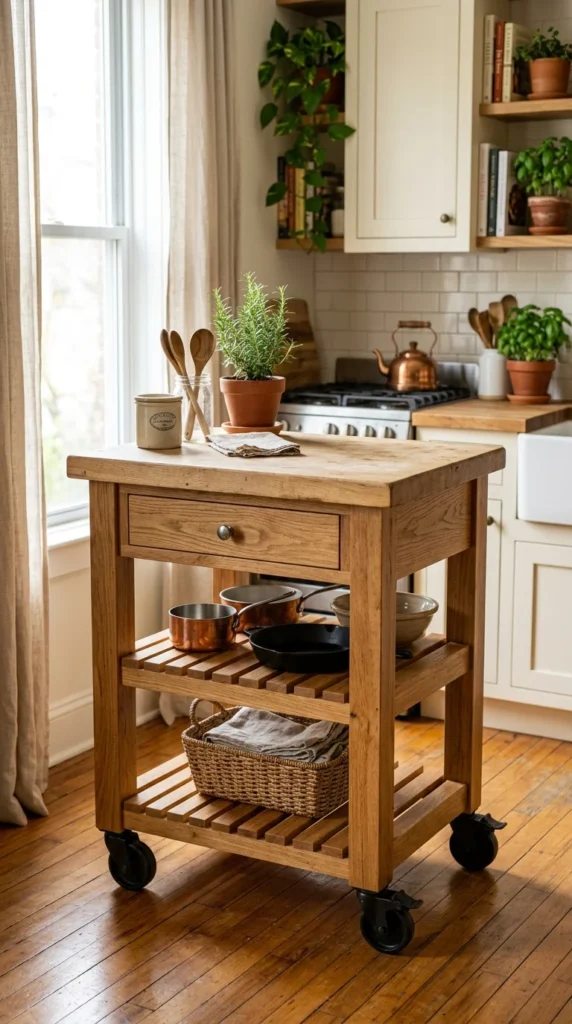
Not every kitchen has the square footage for a permanent, built-in structure. A portable wooden island or kitchen cart offers the same benefits of extra prep space and storage but with the flexibility to move it as needed. These are perfect for urban apartments or smaller homes. Look for models with heavy-duty casters and a solid wood top. When you’re hosting a dinner party, it can serve as a bar cart; when you’re baking, it’s your dedicated kneading station.
8. Minimalist Scandi
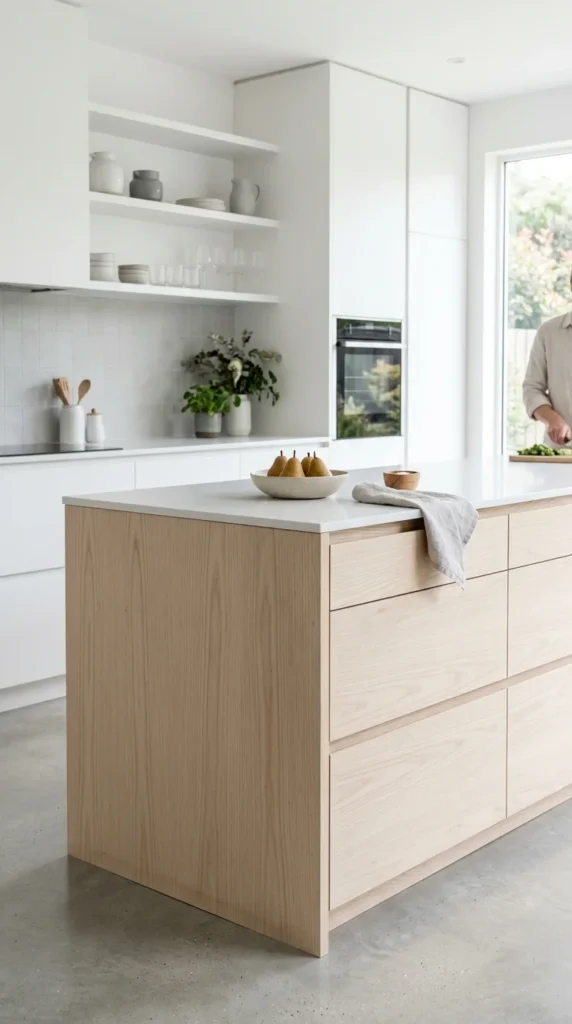
Scandinavian design is all about “hygge” and simplicity. A Scandi-style island typically features light-colored woods like ash, pine, or light oak. The finish is usually matte or “raw-look” to keep the wood looking as natural as possible. This approach is perfect for creating a calm, serene kitchen environment. The light wood reflects the light, making the room feel bright and airy, while the lack of ornate detailing keeps the focus on the quality of the material itself.
9. Industrial Fusion
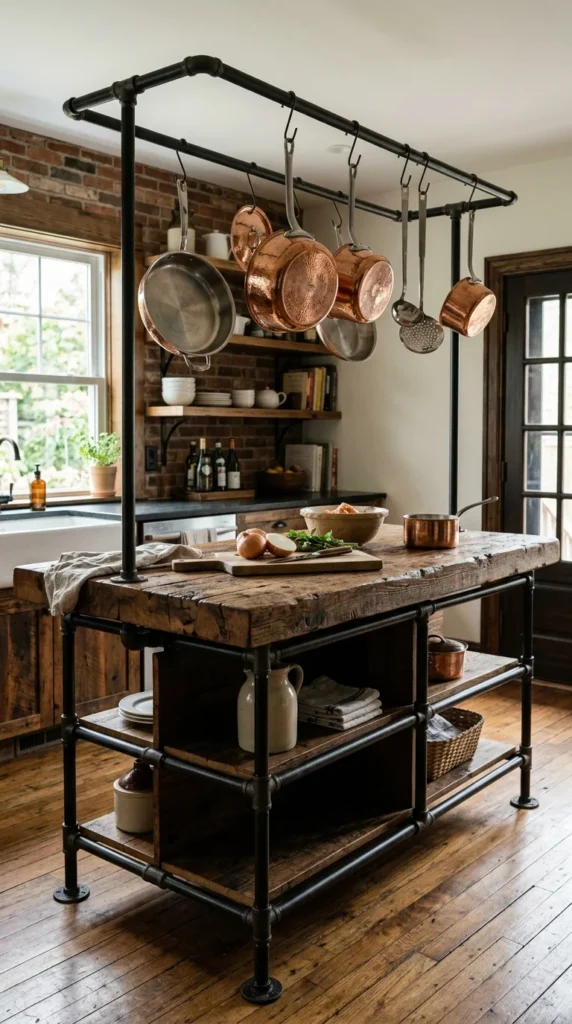
If your style leans toward the edgy and urban, consider a wood-and-metal fusion. The juxtaposition of warm, organic wood against cold, hard steel or iron creates a dynamic visual tension. This style often uses thicker slabs of wood—perhaps with a bit of “distressing”—supported by heavy metal frames. It’s a durable, “no-nonsense” look that fits perfectly in converted lofts or modern homes with an industrial soul.
10. Oversized Statement
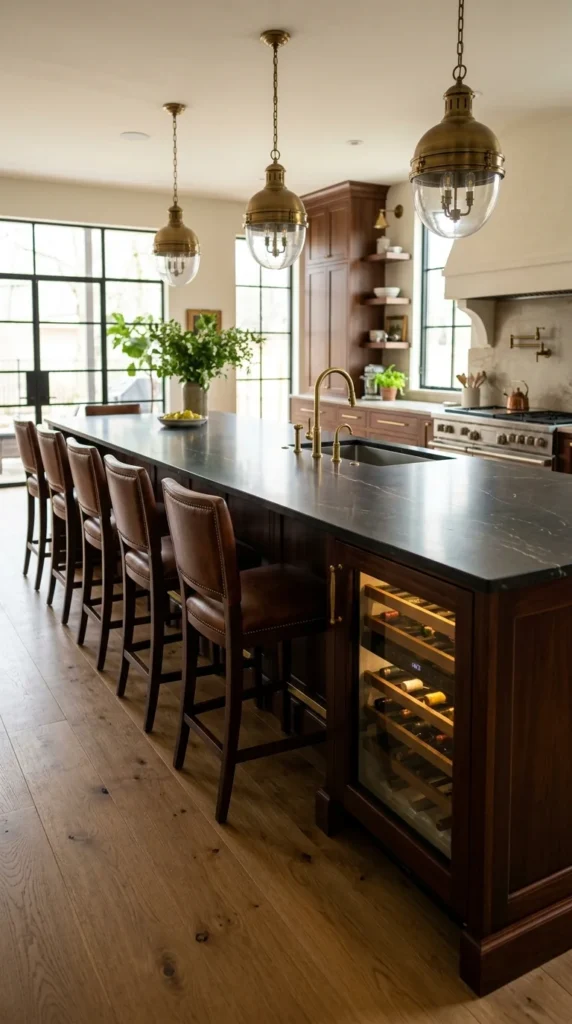
Go big or go home. An oversized wooden island transforms the kitchen from a cooking area into a social hub. By extending the length of the wood, you create a multifunctional surface that handles everything from meal prep and homework to large-scale entertaining. When done in a high-quality wood, an oversized island becomes the architectural anchor of the entire house. It’s a statement of hospitality, signaling that there is always room for one more person at the table.
11. Two-Tiered Island
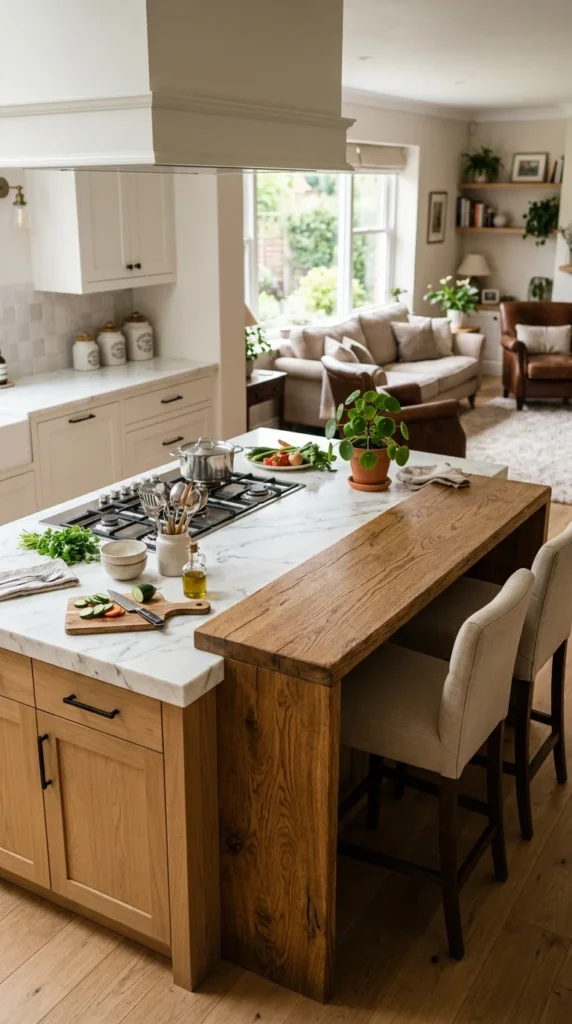
A two-tiered island is a masterclass in ergonomics and zoning. By using wood for the elevated “breakfast bar” portion and a different material (like stone) for the lower prep area, you create a clear visual and physical boundary. The wooden tier provides a warm, comfortable place for guests to lean and eat, while keeping them safely away from the splashes and heat of the cooking zone. It also hides the inevitable “kitchen clutter” from the view of those sitting in the dining or living area.
12. Distressed Vintage
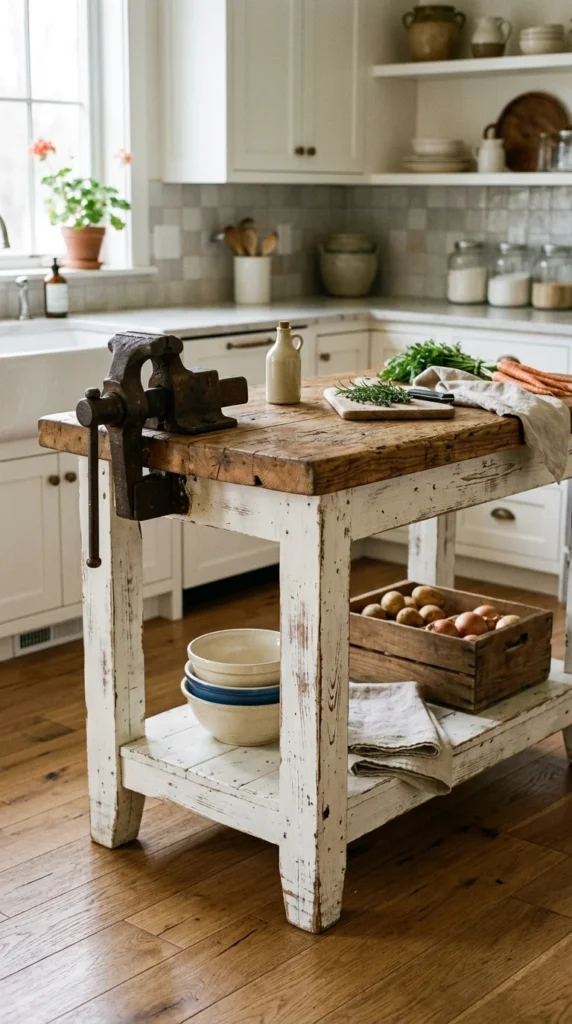
For a kitchen that feels lived-in and cozy, look for a distressed or antique-inspired island. This could be a repurposed antique workbench or a new piece that has been skillfully aged. The dings, scratches, and worn-away paint aren’t flaws—they are the details that make the island feel approachable. It’s the kind of island where you don’t worry about a stray water ring; it just adds to the story. This style is the cornerstone of “Shabby Chic” or “Cottagecore” interior design.
13. Integrated Storage
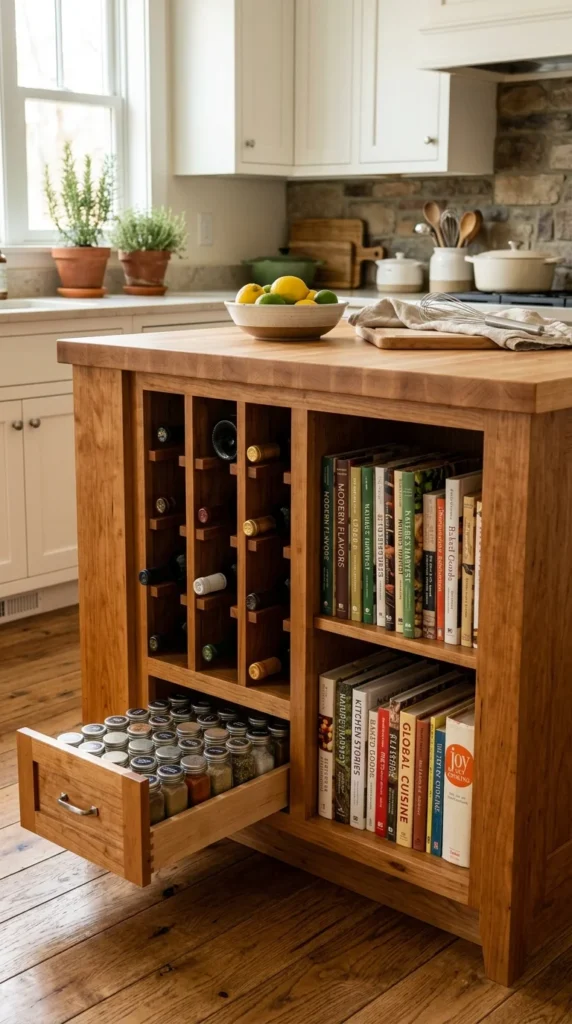
A wooden island can be a secret weapon for organization. Because wood is so easy to customize and mill, you can integrate highly specific storage solutions directly into the island’s body. Think built-in wine racks, vertical slots for baking sheets, deep drawers for heavy pots, or even open cubbies to display a collection of heirloom cookbooks. When your storage is built into a beautiful wooden frame, the organization itself becomes a decorative element of the kitchen.