
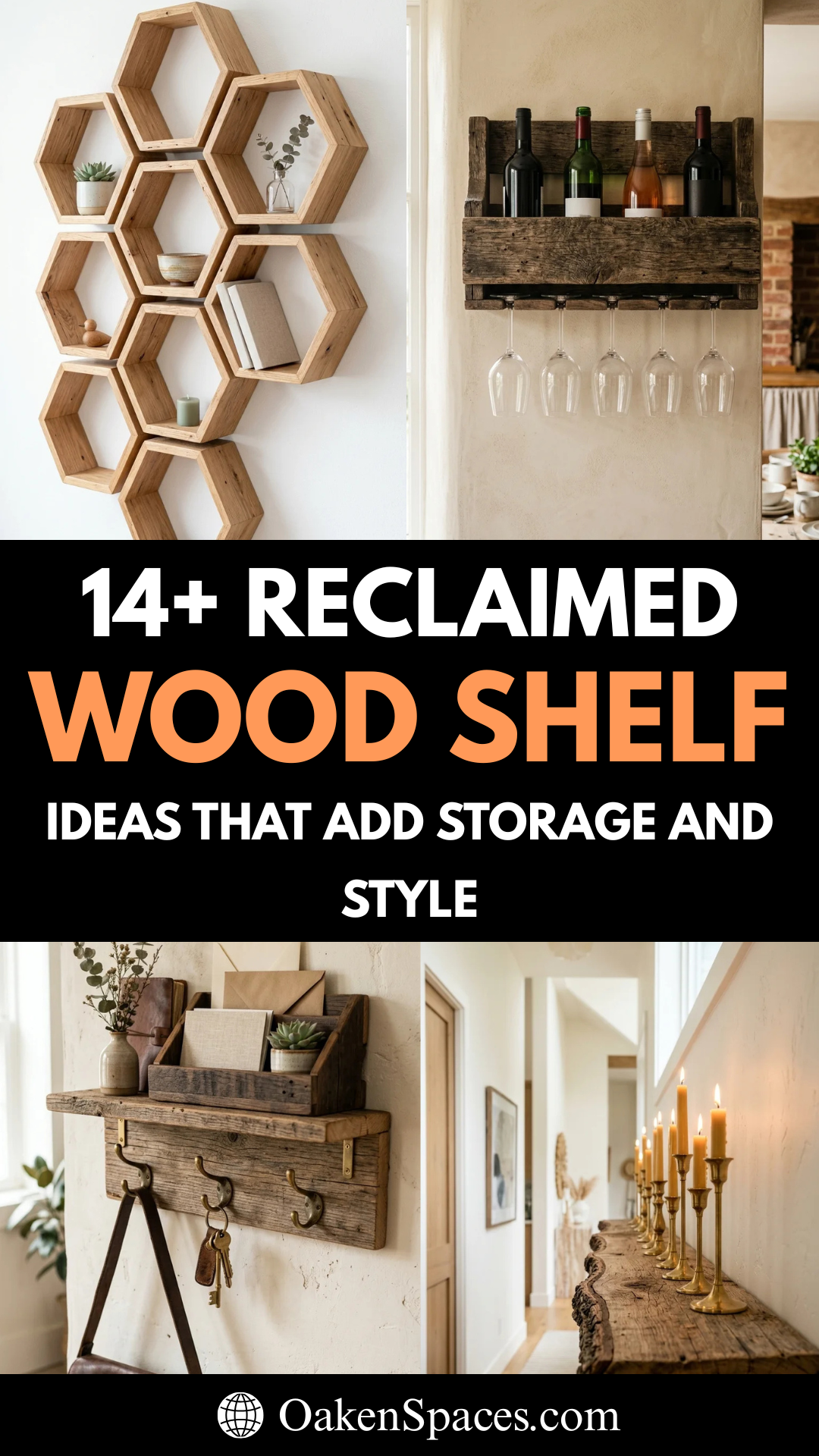
Reclaimed wood is more than just a building material; it is a storyteller. Every knot, nail hole, and weathered grain carries a history from an old barn, a decommissioned factory, or a vintage shipping crate. Integrating reclaimed wood shelves into your home doesn’t just provide much-needed storage; it injects soulful character and a sense of timelessness into your interior design. Whether you are aiming for a rugged industrial look, a soft farmhouse aesthetic, or a modern minimalist vibe, the texture of aged timber offers a warmth that new lumber simply cannot replicate.
1. Floating Shelves
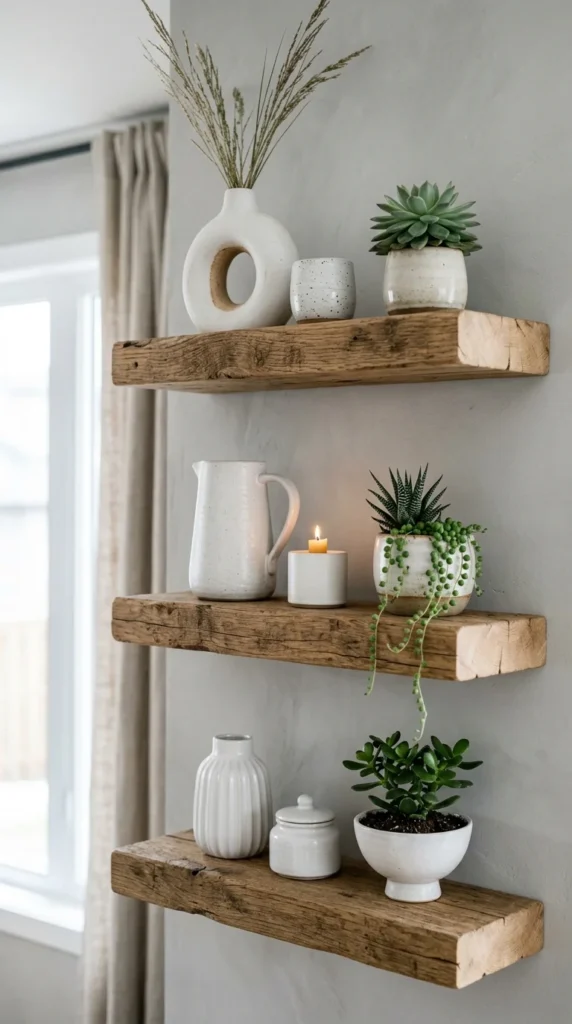
Floating shelves are the gold standard for modern rustic design. By using hidden mounting hardware, the wood appears to grow directly out of the wall, putting the focus entirely on the grain and the raw edges of the timber. In a living room, these can be used to display curated art pieces, while in a kitchen, they provide an airy alternative to heavy upper cabinets. The key to this look is thickness—opting for planks at least 2 to 3 inches thick gives the shelves a “hewn” look that feels substantial and high-end.
2. Industrial Pipes
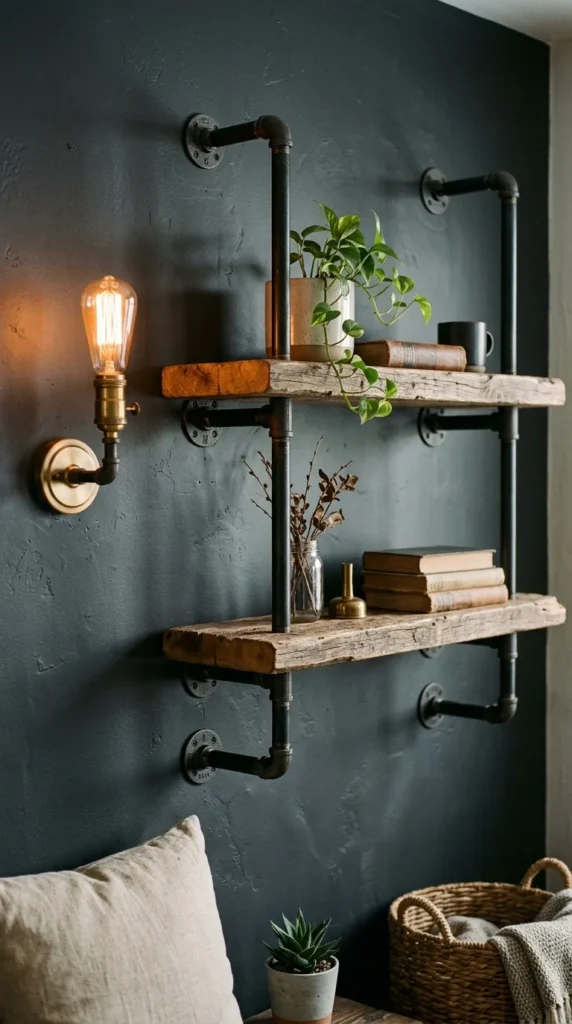
Combining the organic warmth of old wood with the cold, hard edges of black iron piping creates a classic industrial aesthetic. This style is incredibly sturdy, making it ideal for heavy items like large book collections or cast-iron cookware. The juxtaposition of the silver or black metal against the honey-toned or grey-washed wood adds a masculine, structural element to any room. It’s a popular choice for home offices or “man caves” where durability and style are equally important.
3. Live Edge
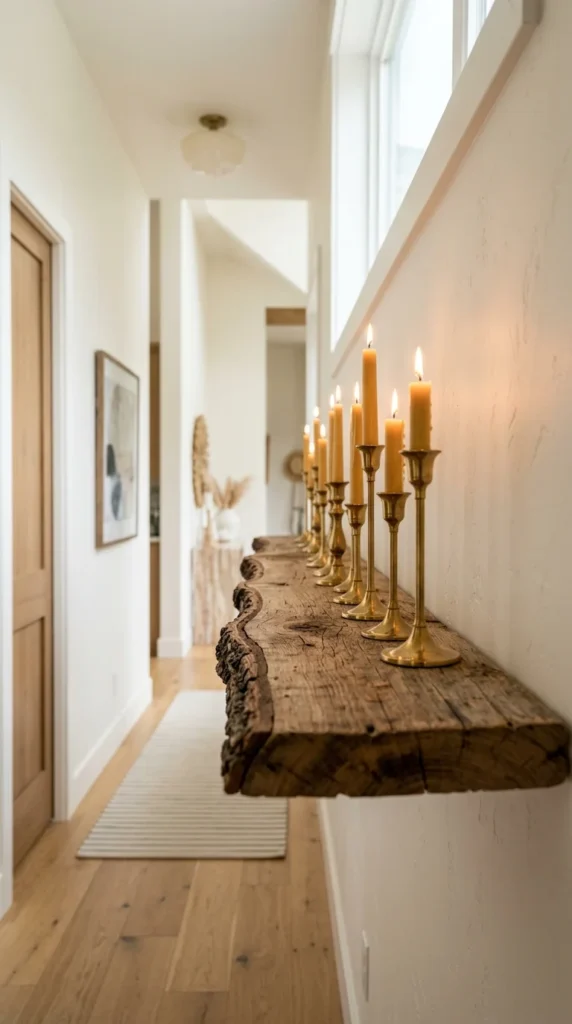
Live edge shelving preserves the original silhouette of the tree from which the wood was cut. Instead of straight, milled edges, these shelves feature the natural curves, bumps, and dips of the trunk. When sourced from reclaimed logs or old-growth timber, these pieces become functional art. They work best in spaces where they can serve as a focal point, such as above a sofa or as a mantelpiece. The organic lines soften the sharp corners of a room, creating a more harmonious, nature-inspired environment.
4. Corner Nooks
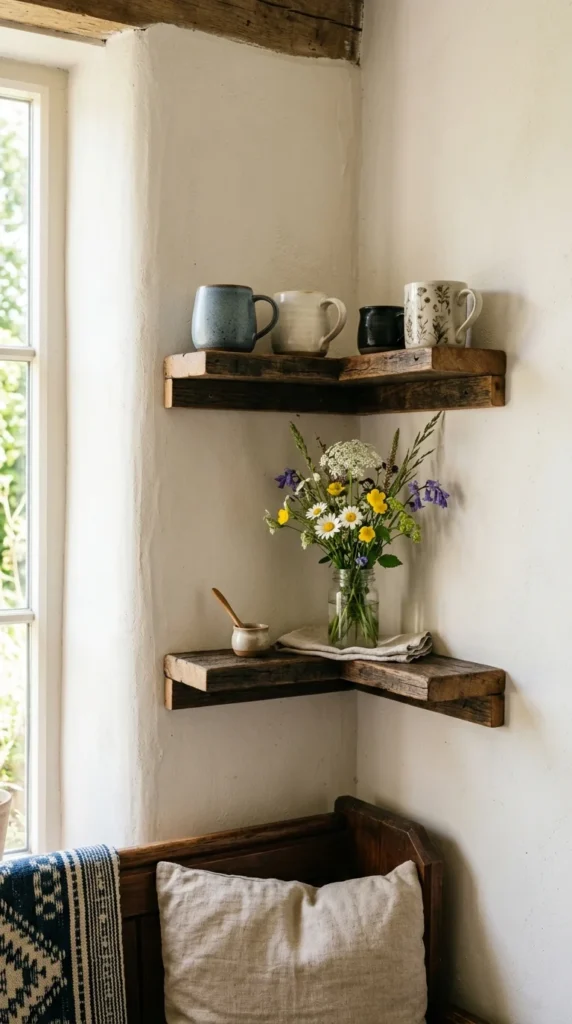
Corners are often the most underutilized spaces in a home. Custom-cutting reclaimed wood to fit into a corner transforms a “dead” zone into a functional storage hub. These are perfect for small apartments or cramped bathrooms. You can stagger the lengths of the shelves to create a dynamic, tiered look. Because reclaimed wood is so visually textured, even a tiny corner shelf can add significant “design weight” to a room, making the space feel more intentional and cozy.
5. Rope Hanging
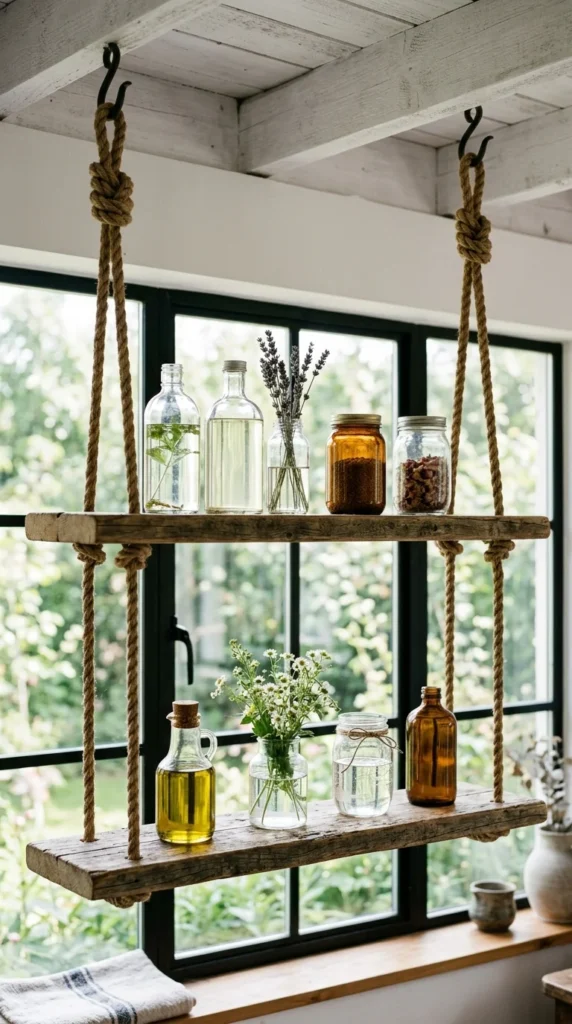
For a touch of bohemian flair or a coastal cottage vibe, hanging shelves are an excellent choice. By drilling holes in the corners of reclaimed boards and threading thick jute or cotton rope through them, you create a swinging, suspended display. This setup is particularly effective for indoor plants, as the natural materials complement the greenery. Hanging shelves work well in front of windows where wall space is limited, allowing light to pass through while providing a platform for your favorite trinkets.
6. Kitchen Spice Rack
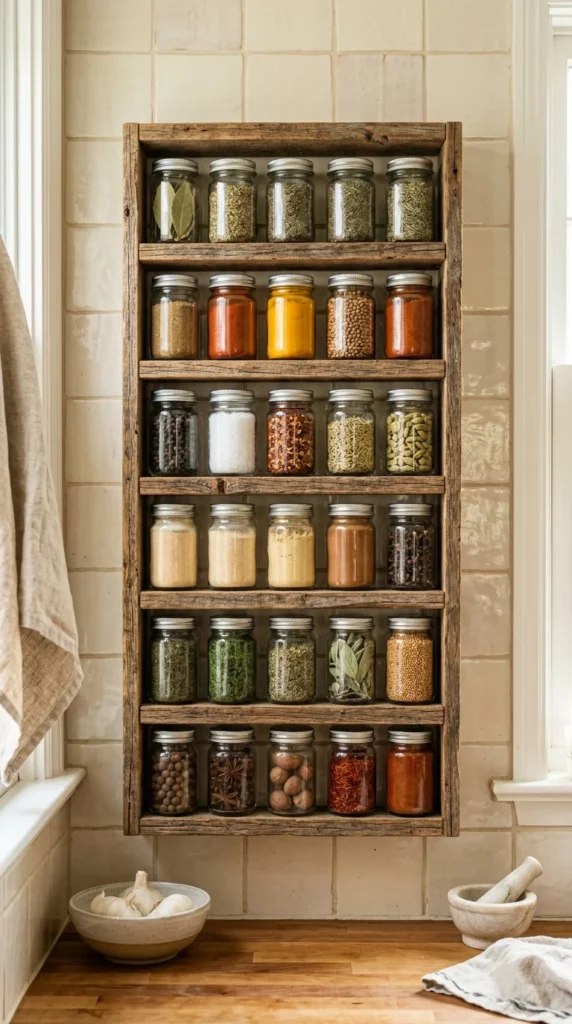
Standard plastic spice racks can look cluttered and cheap. A custom spice rack made from reclaimed wood lath or thin barn wood strips brings a gourmet, “farm-to-table” feel to your kitchen. The aged patina of the wood looks stunning against modern tile backsplashes or stone countertops. Beyond spices, these narrow shelves are perfect for holding olive oil bottles, salt cellars, and fresh herbs, keeping your cooking essentials within arm’s reach while enhancing the kitchen’s aesthetic.
7. Geometric Hexagons
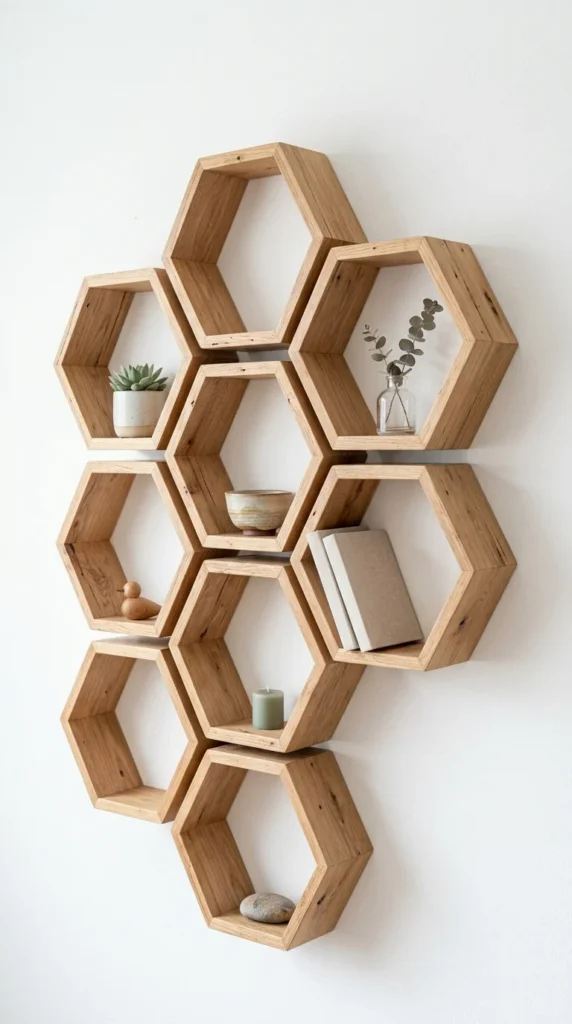
If you love the rustic texture of old wood but prefer a more modern, playful layout, geometric shelves are the answer. Hexagon or “honeycomb” shelves made from reclaimed cedar or pine can be arranged in clusters to create a wall installation. The repeating shapes create visual interest, while the history of the wood keeps the look grounded. These are perfect for small collectibles, air plants, or crystals, turning a plain wall into a three-dimensional gallery.
8. Entryway Organizer
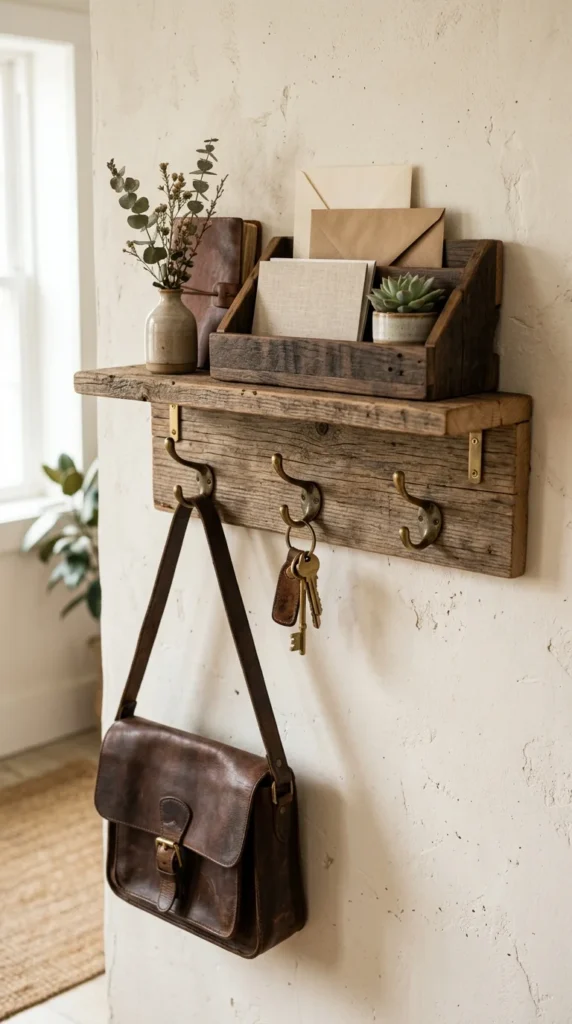
The entryway is the first thing guests see, and a reclaimed wood shelf sets a welcoming tone. Adding antique brass hooks to the underside of a reclaimed board creates a dual-purpose piece: a shelf for mail and sunglasses, and a rack for coats and bags. The durability of old-growth wood ensures the shelf can handle the weight of heavy winter jackets. It’s a practical solution that brings a “mudroom” charm to even the smallest foyer.
9. Ladder Display
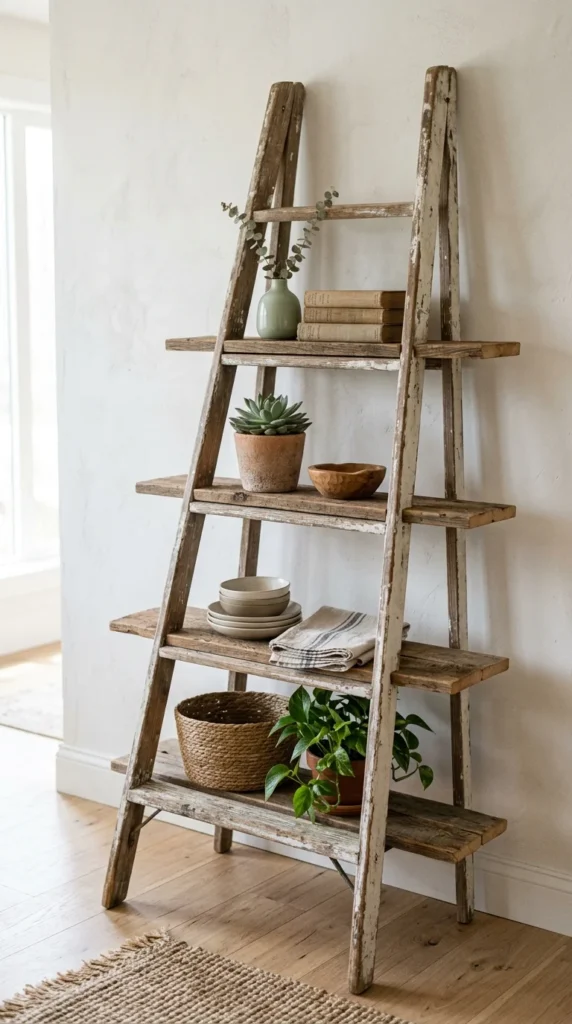
Repurposing an old wooden ladder is a classic DIY move, but using reclaimed planks to widen the steps turns it into a high-capacity shelving unit. This “leaning” style is great for renters because it doesn’t always require permanent wall mounting. It’s an ideal way to display a sprawling collection of indoor plants, blankets, or books. The vertical orientation draws the eye upward, making the ceiling feel higher while providing a massive amount of style.
10. Cubby Boxes
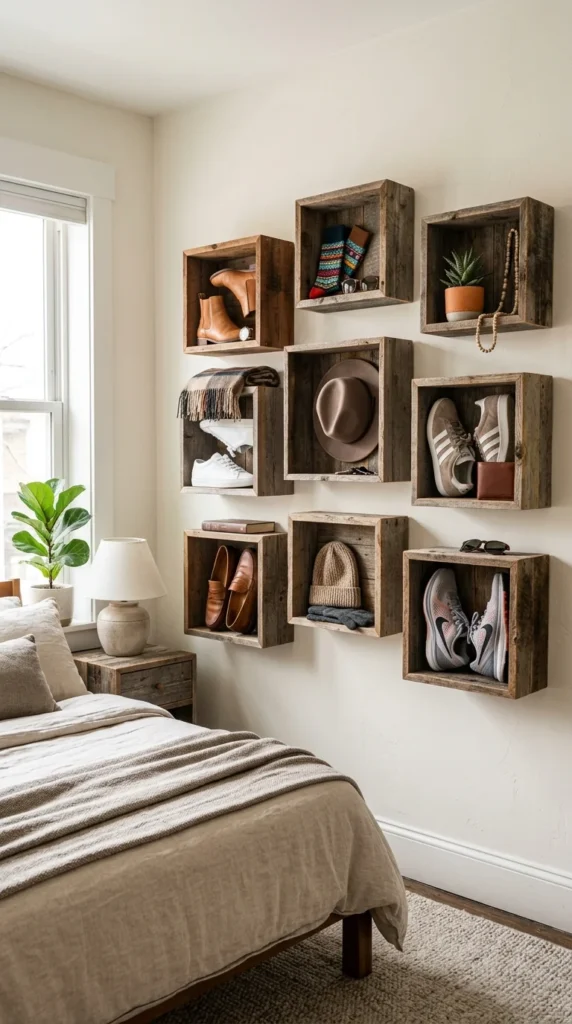
Reclaimed wood boxes, or “shadow boxes,” offer a contained way to organize items. Unlike open shelves, the sides of the boxes frame the objects inside, making them feel like museum exhibits. You can mix and match different types of wood—mixing grey-toned barn wood with warmer cherry or oak—to create a patchwork effect. These are particularly useful in bedrooms for organizing accessories or in a home office for sorting stationery and supplies.
11. Wine Rack
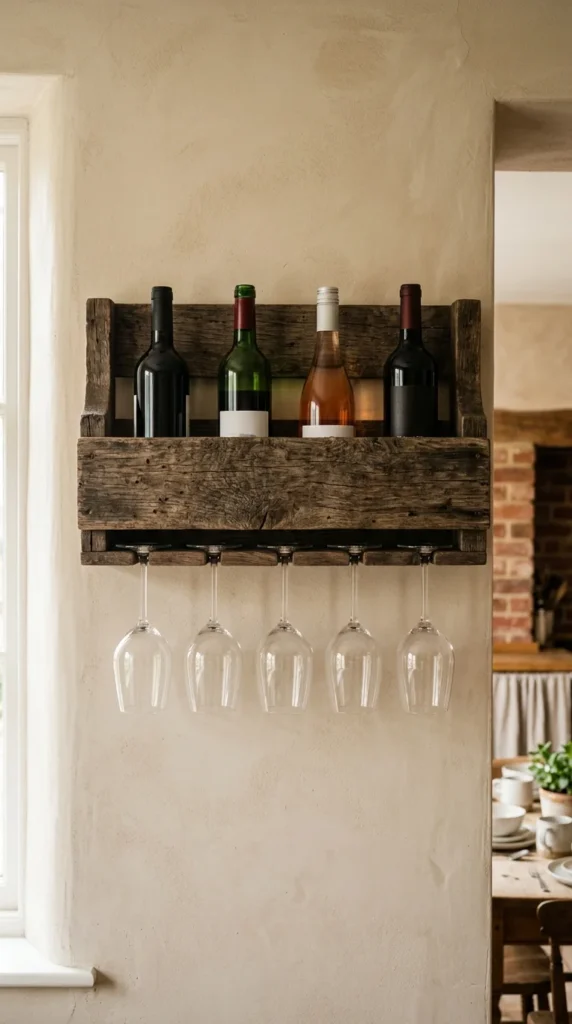
Wine and wood are a natural pairing. A reclaimed wood wine shelf adds a sophisticated, vineyard-inspired touch to a dining room or kitchen. By adding a simple slotted rail to the bottom of the shelf, you can hang stemware, while the top surface holds your favorite vintages. The aged look of the wood suggests a cellar-like environment, enhancing the overall experience of entertaining guests.
12. Library Wall
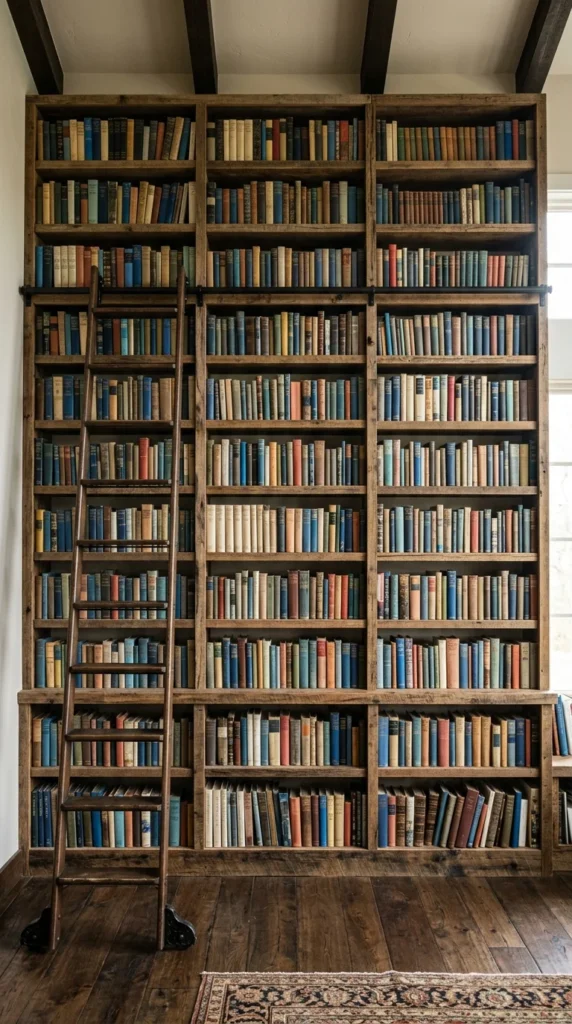
For the ultimate bibliophile, a full wall of reclaimed wood shelves creates a private library that feels established and scholarly. The strength of old-growth timber is perfect for supporting the immense weight of a large book collection without sagging over time. To keep the look from feeling too heavy, leave some gaps between book stacks to display small sculptures or bookends made from the same wood.
13. Picture Ledges
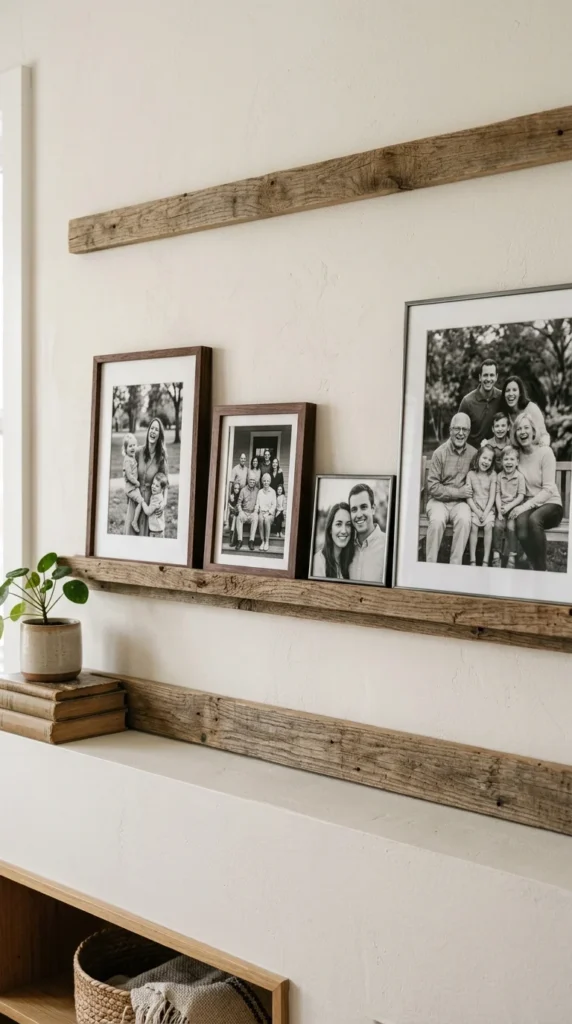
If you want the look of reclaimed wood without taking up too much physical space, picture ledges are the way to go. These are thin, shallow shelves designed specifically for leaning frames and artwork. They allow you to swap out photos and art frequently without the need for new nails in the wall. The rough texture of the wood provides a beautiful contrast to the sleek glass and sharp lines of modern picture frames.
14. Over-the-Desk Storage
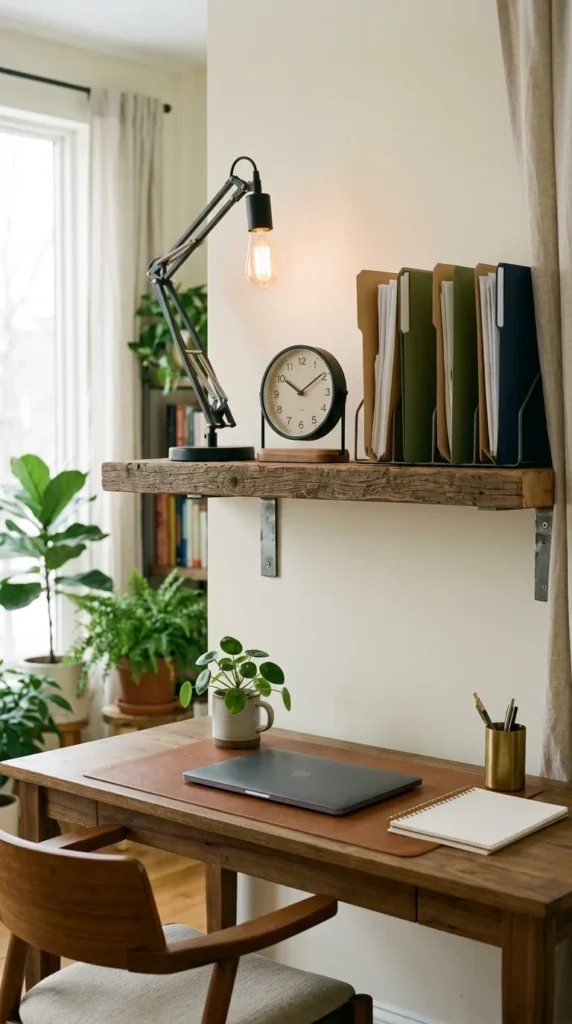
In a home office, organization is key to productivity, but that doesn’t mean it has to be boring. A long, reclaimed wood shelf mounted above your desk provides space for office supplies, reference books, and personal mementos without cluttering your workspace. The natural warmth of the wood can also help reduce the “sterile” feel of computer equipment and monitors, making your work-from-home environment feel more creative and inspired.