
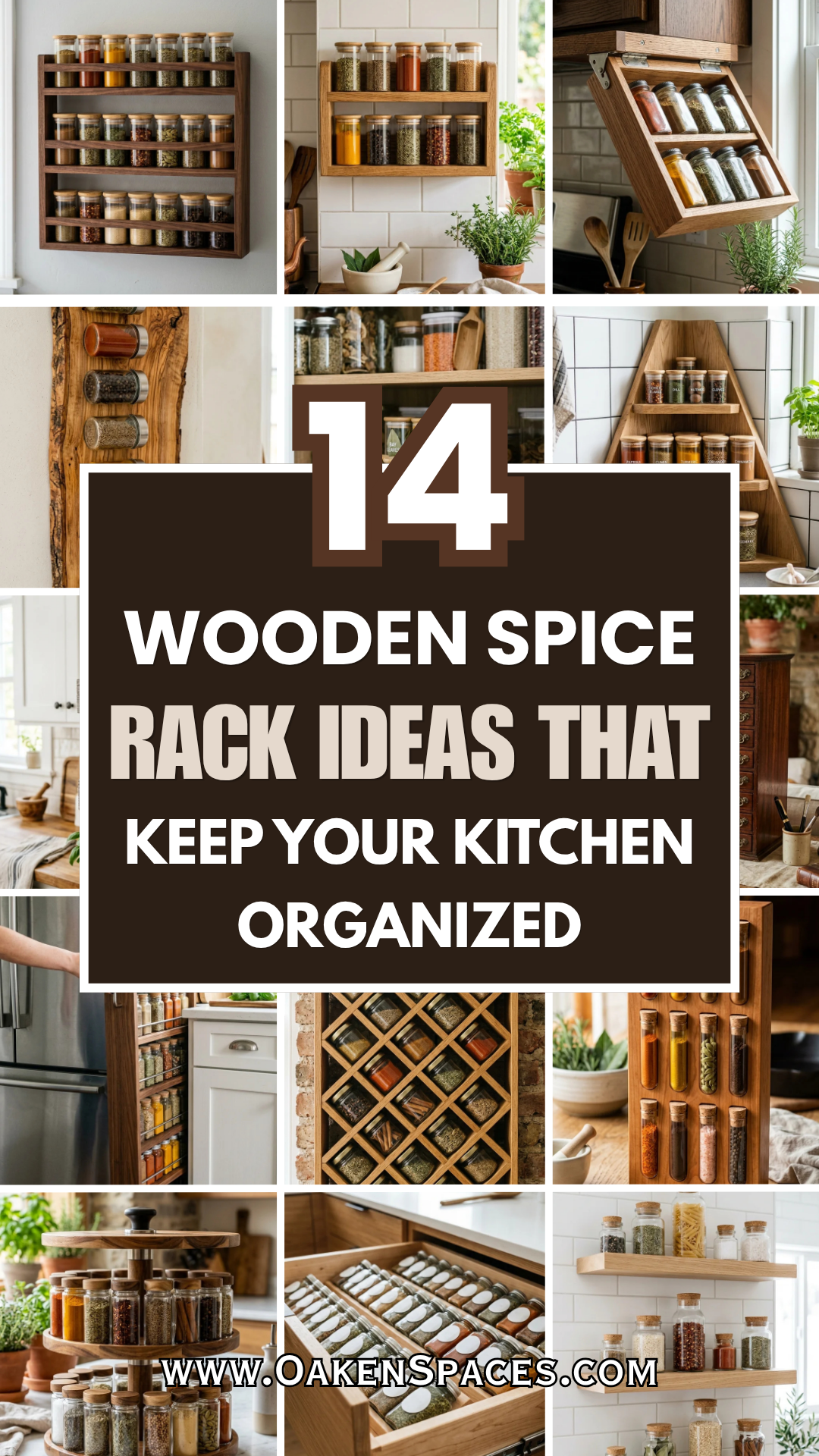
A kitchen is the heart of the home, but for anyone who loves to cook, it can quickly become a chaotic battlefield of half-used seasoning packets and mismatched jars. The secret to a culinary sanctuary isn’t just having the right ingredients; it’s having them within arm’s reach and beautifully displayed. Wood, with its timeless appeal and sturdy nature, offers the perfect medium for spice organization. Whether you’re a fan of the sleek modern look or the cozy farmhouse aesthetic, these wooden spice rack ideas will transform your cooking space from cluttered to curated.
1. Tiered Wall-Mounts
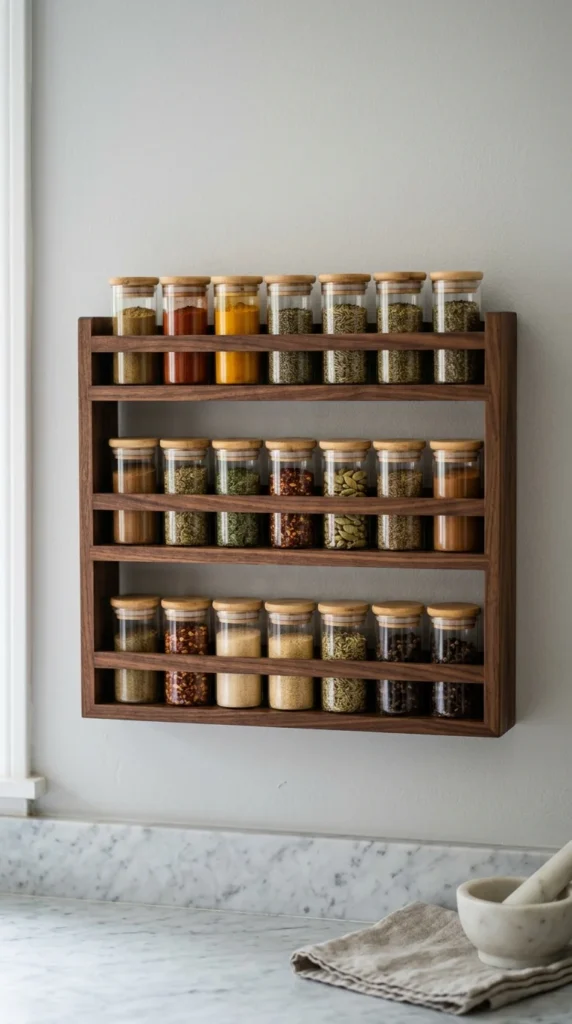
The tiered wall-mounted rack is the gold standard of kitchen organization. By utilizing vertical space, you clear up valuable real estate on your countertops. Walnut or mahogany provides a rich, sophisticated look that pops against lighter walls. This style allows you to see every label at a glance, ensuring you never grab cinnamon when you were looking for cumin.
2. Floating Shelves
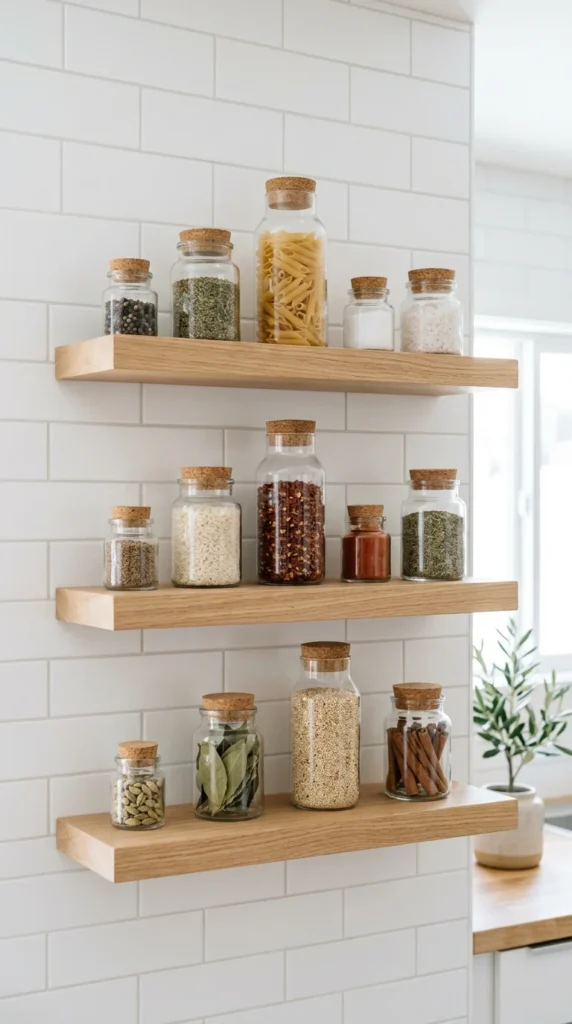
For those who embrace minimalism, floating shelves are a dream. These thick slabs of wood—whether blonde oak or reclaimed pine—give the illusion of suspended spices. This design is particularly effective in small kitchens where bulky furniture can feel suffocating. It turns your spices into a piece of living art, showcasing the vibrant colors of turmeric, paprika, and dried herbs.
3. Drawer Inserts
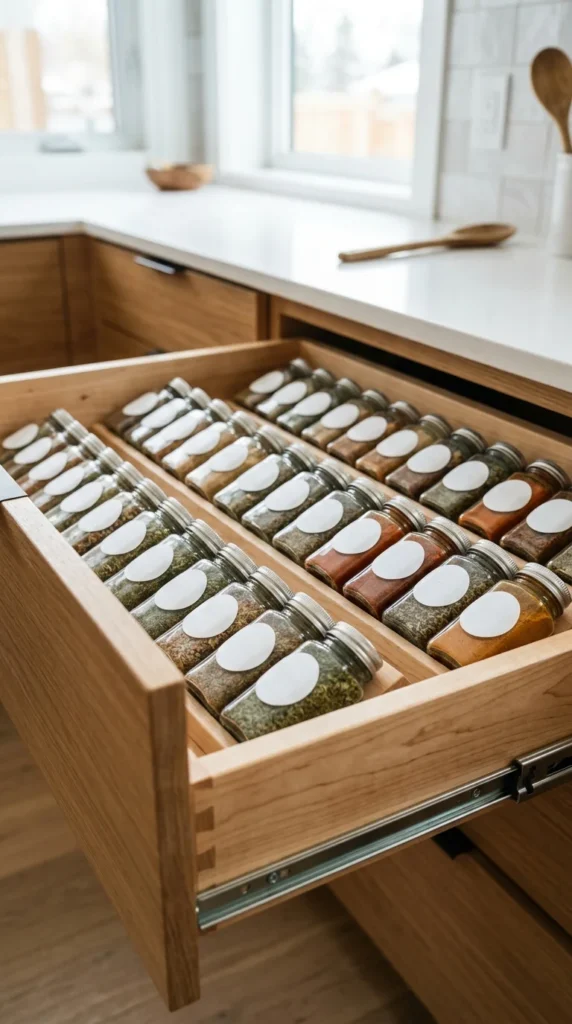
If you prefer your countertops to be completely clear, wooden drawer inserts are the ultimate hidden gem. These inserts feature angled tiers that cradle your jars horizontally. This positioning ensures that as soon as you pull the drawer open, every label is facing you. It’s a seamless way to integrate organization into your existing cabinetry without changing the external look of your kitchen.
4. Lazy Susans
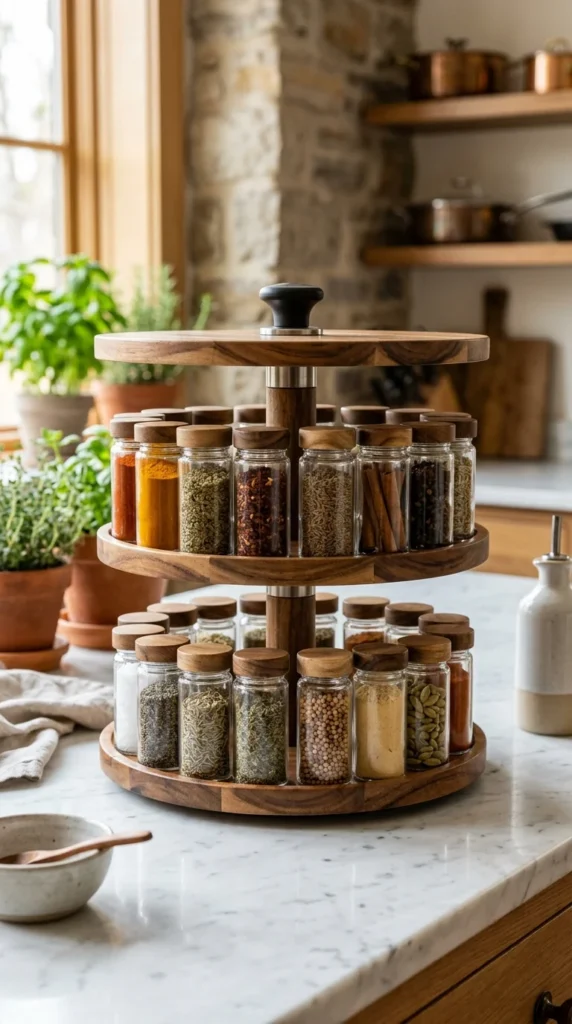
The rotating Lazy Susan is a classic for a reason. It’s the most efficient way to access spices stored in deep cabinets or tight corners. A wooden version, crafted from durable acacia or bamboo, adds a touch of elegance to a functional tool. With a quick flick of the wrist, you can spin through your entire collection, making it perfect for the “chaos cook” who needs ten different seasonings in five minutes.
5. Cabinet Door Racks
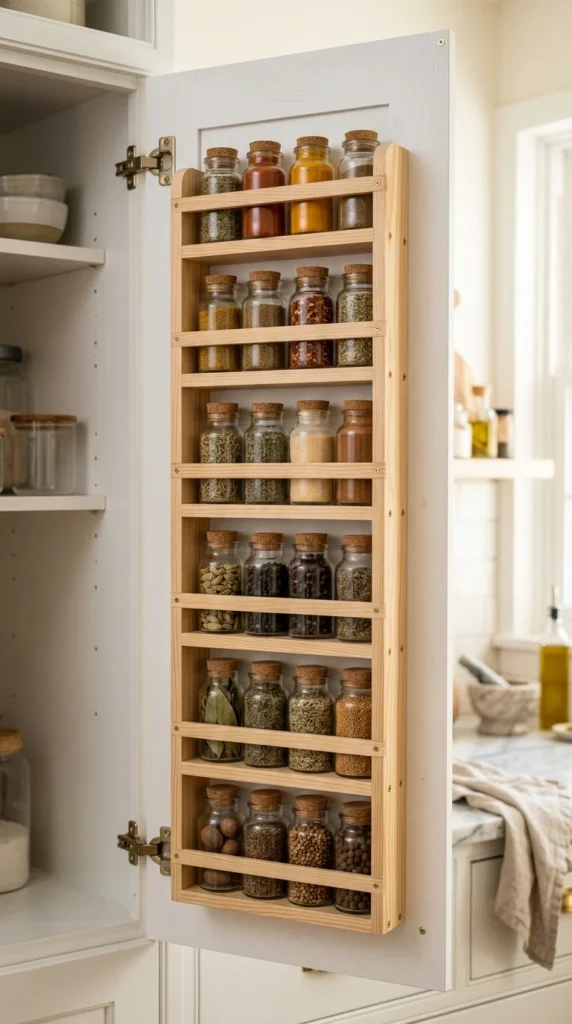
Maximized storage is about finding space where none seems to exist. The back of a cabinet door is often wasted real estate. By attaching slim wooden racks to the interior of your cupboard doors, you create a hidden pantry. This is a fantastic DIY project that requires only thin strips of wood and a few screws, providing a tucked-away solution that keeps your kitchen looking streamlined.
6. Criss-Cross Lattices
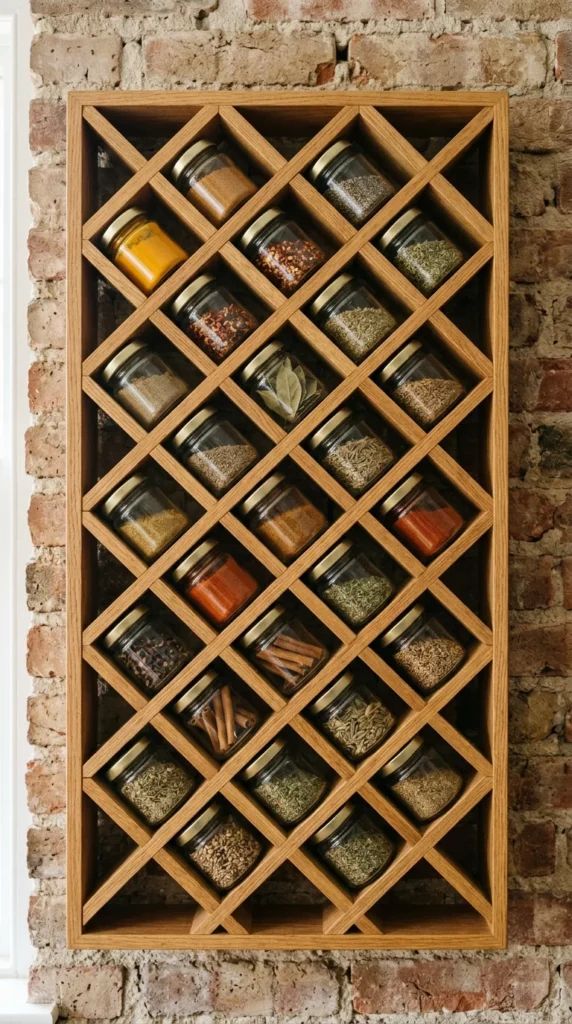
Inspired by traditional wine racks, the criss-cross or lattice wooden rack adds a geometric flair to the kitchen. Each jar sits in its own individual “cubby,” angled perfectly for easy retrieval. This style works exceptionally well for uniform jars and provides a textured, architectural element to your kitchen decor.
7. Test Tube Blocks
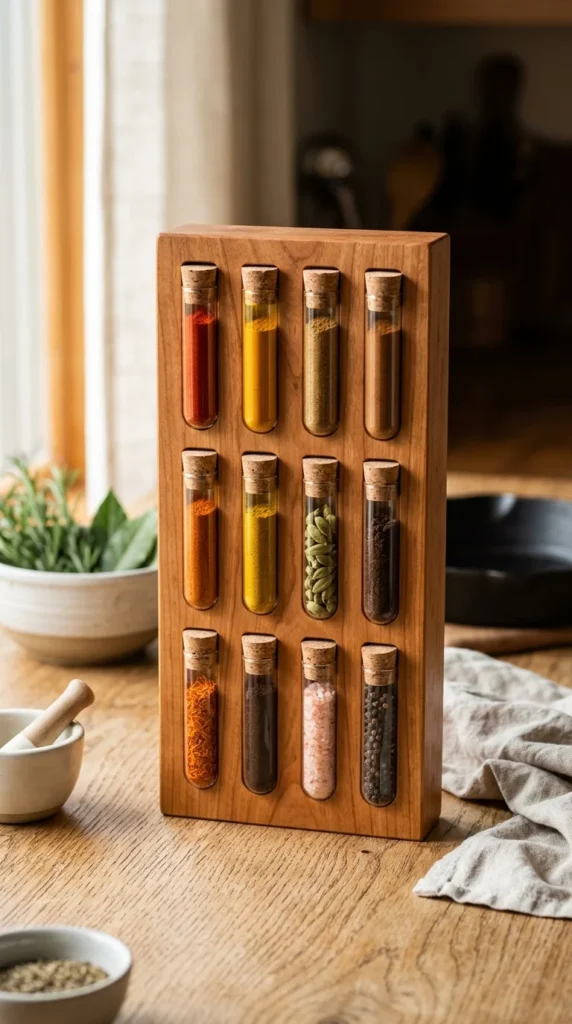
For the cook who views the kitchen as a laboratory, the test tube spice rack is a sophisticated choice. A heavy block of wood—like cherry or teak—is drilled with holes to hold glass test tubes. This is a sleek, modern take on spice storage that looks stunning on a kitchen island. It’s best for whole spices like peppercorns, star anise, and cloves.
8. Reclaimed Pallets
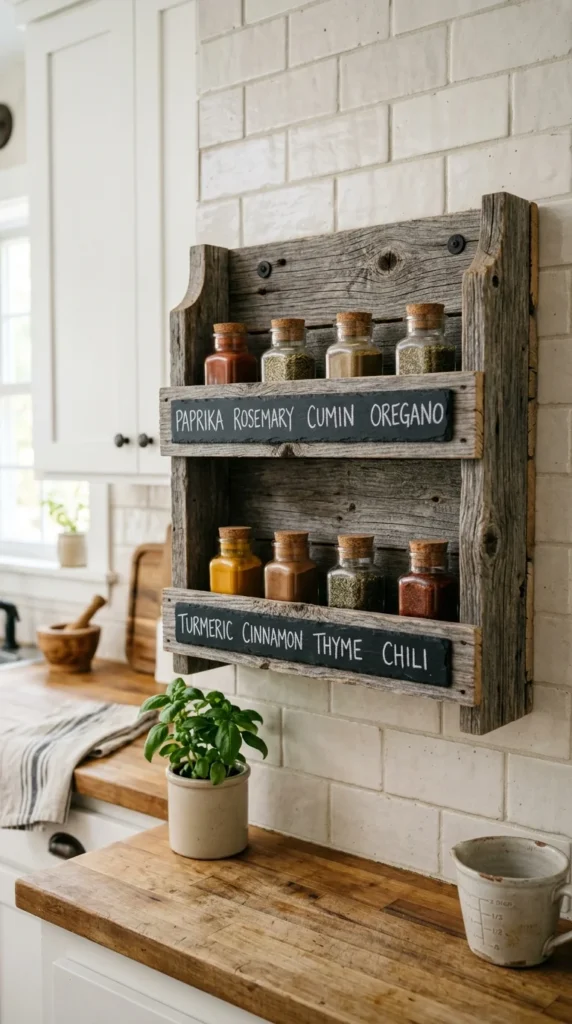
Eco-conscious decorators will love the reclaimed pallet spice rack. The weathered texture of old wood brings a sense of history and “shabby chic” charm to the room. These racks often include a small ledge at the bottom for oils or vinegars, making them a comprehensive flavor station. The addition of a chalkboard strip allows you to label sections or jot down a quick grocery list.
9. Apothecary Chests
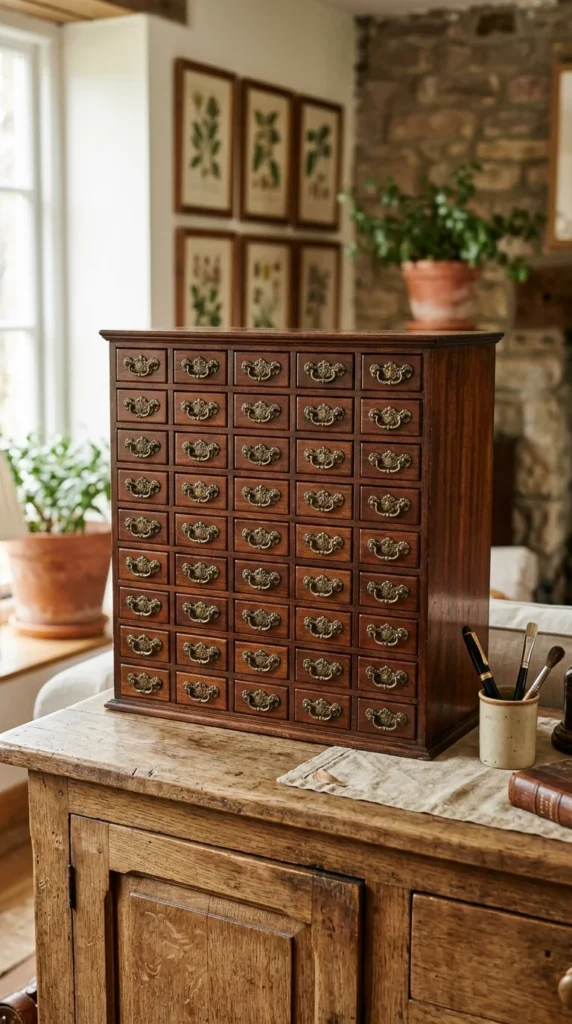
If you prefer to keep your spices away from the light to preserve their potency, a mini wooden apothecary chest is the perfect solution. These small chests feature multiple tiny drawers that house individual spice jars. It’s an antique-inspired look that feels both mysterious and deeply organized, reminiscent of old-world spice traders.
10. Slim Pull-Outs
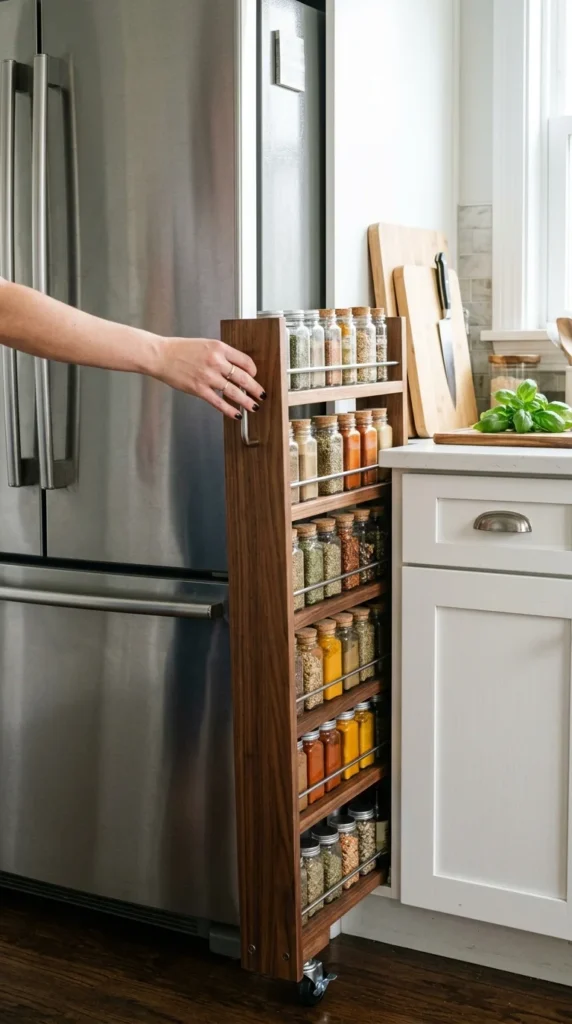
The “gap filler” spice rack is a miracle for tiny apartments. This is a tall, narrow wooden rack on casters that slides into the slim space between your fridge and the counter. It can hold dozens of jars in a space that is usually only 4 to 6 inches wide. When you’re done seasoning, it simply slides back out of sight.
11. Under-Cabinet Flips
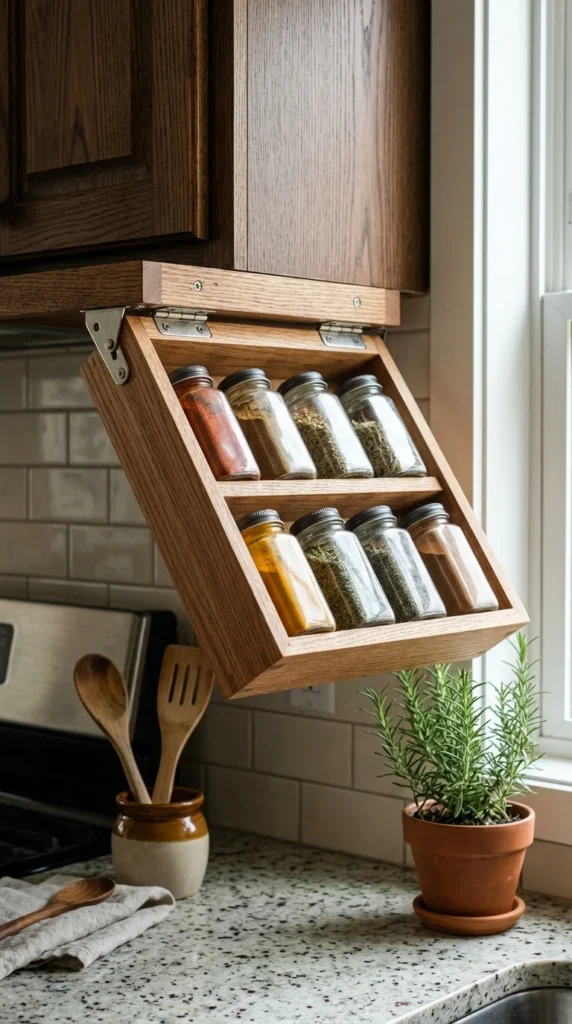
Under-cabinet flip-down racks are the ultimate space-savers. When closed, the rack is invisible, tucked flat against the bottom of your upper cabinets. When you need a spice, you simply pull it down, and the wooden frame hinges forward to present your jars. This protects spices from the heat of the stove while keeping them at eye level.
12. Magnetic Backings
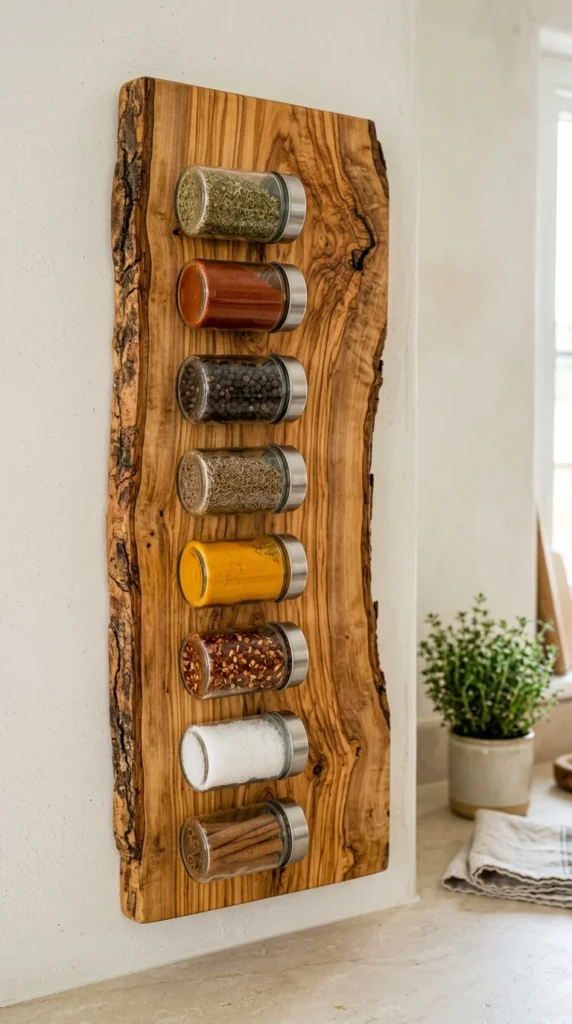
Combine the organic beauty of wood with the modern convenience of magnets. By embedding strong rare-earth magnets behind a thin layer of wood or using a wooden board with a metal strip, you can “stick” your spice jars directly to the wood surface. This creates a floating effect that is both high-tech and rustic at the same time.
13. Corner Carousels
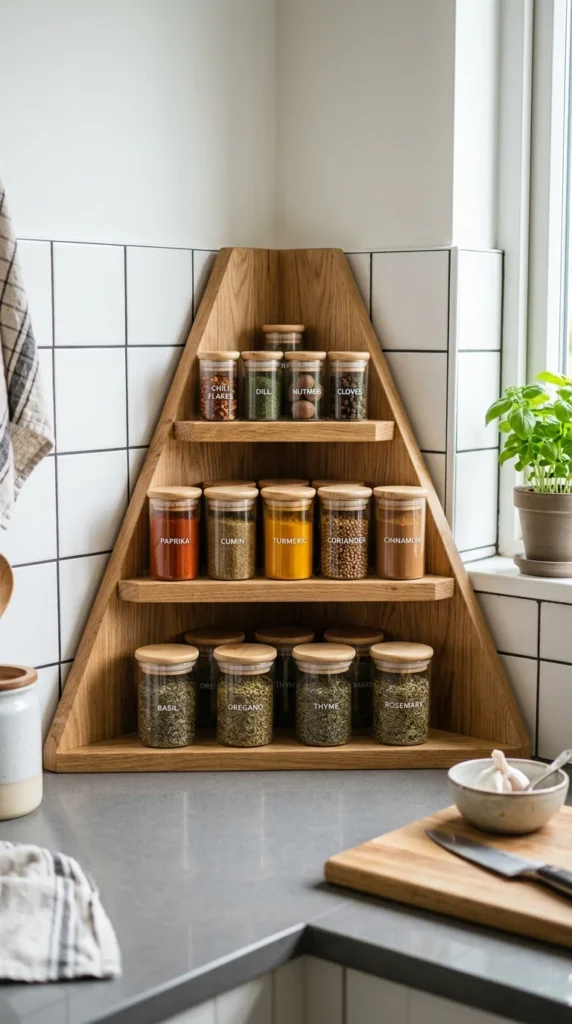
Corners are notoriously difficult to organize, often becoming a “dead zone” for clutter. A corner-specific wooden rack uses a triangular or tiered design to nestle perfectly into the 90-degree angle of your countertops. This turns a useless corner into a focal point of your kitchen’s organization system.
14. Stadium Steps
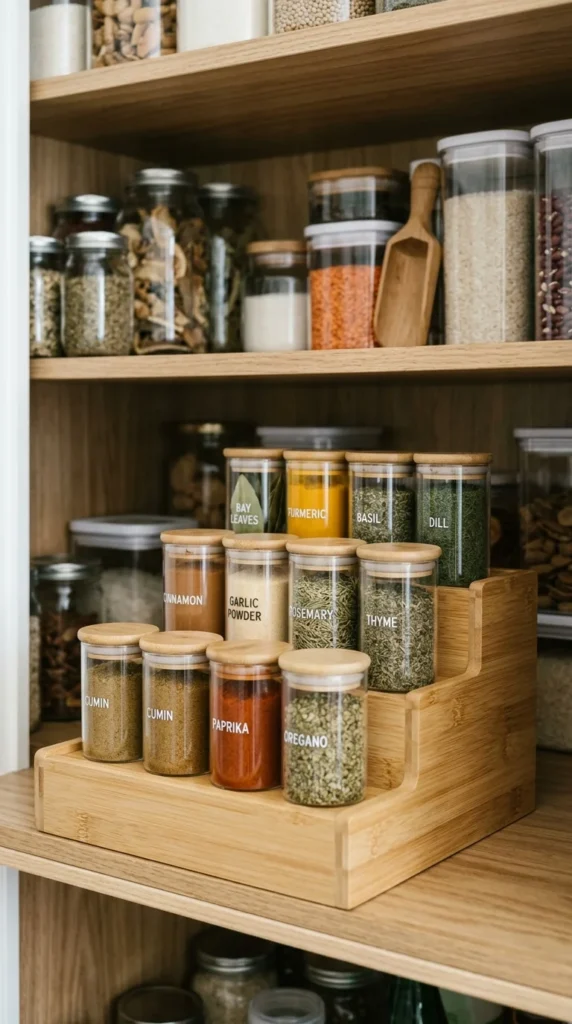
Sometimes the simplest ideas are the most effective. A wooden “stadium seating” insert for your pantry allows you to see the spices in the back row just as clearly as the ones in the front. By elevating each row, you eliminate the need to dig through piles of jars to find the one you need. It’s a low-cost, high-impact way to bring order to a cluttered pantry.
Choosing the Right Wood for Your Kitchen
When selecting a wooden spice rack, consider the environment of your kitchen.
- Oak and Maple: These are incredibly hard woods that resist dents and scratches, making them ideal for high-traffic kitchens.
- Bamboo: An eco-friendly and moisture-resistant option that fits perfectly in modern, bright spaces.
- Walnut: Best for adding a touch of luxury and warmth to a kitchen with a darker color palette.
- Pine: Excellent for that rustic, farmhouse look, though it is a softer wood that may develop a “patina” of wear over time.
By choosing one of these wooden spice rack ideas, you aren’t just cleaning up a mess—you’re investing in a piece of functional decor that will make every meal prep more enjoyable. Your spices deserve a home as flavorful as they are.