
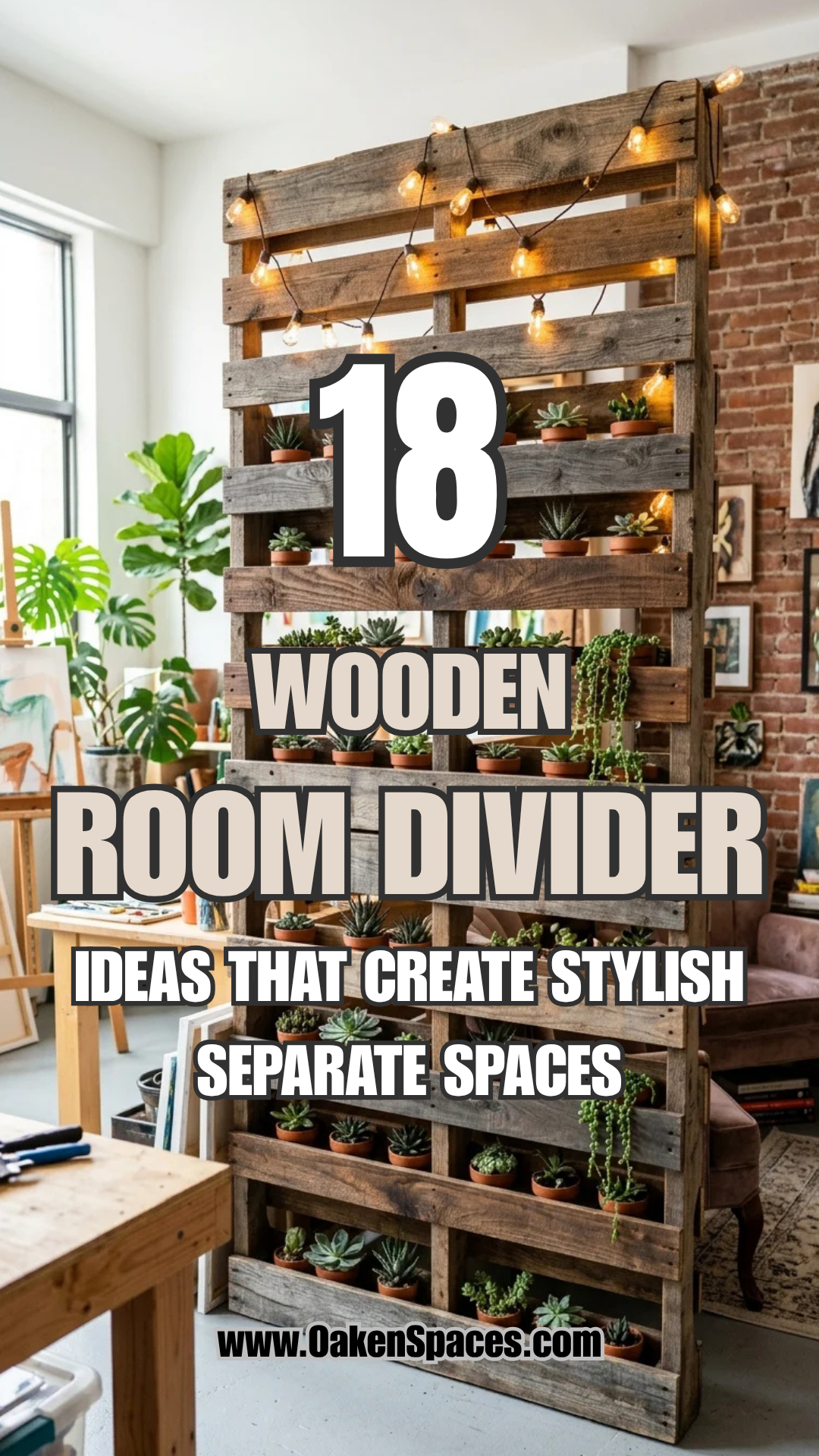
The open-concept floor plan has dominated interior design for decades, offering a sense of airiness and flow that traditional walled rooms simply cannot match. However, as we spend more time at home, the need for distinct zones—for working, sleeping, or relaxing—has become paramount. Enter the wooden room divider: a versatile, tactile, and aesthetically pleasing solution that adds architectural interest without the permanence of a drywall. Wood brings warmth, organic texture, and a sense of timelessness to any interior. Whether you are looking for a DIY project or a high-end custom installation, these eighteen wooden room divider ideas will help you carve out your own private sanctuary with style.
1. Slatted Wood
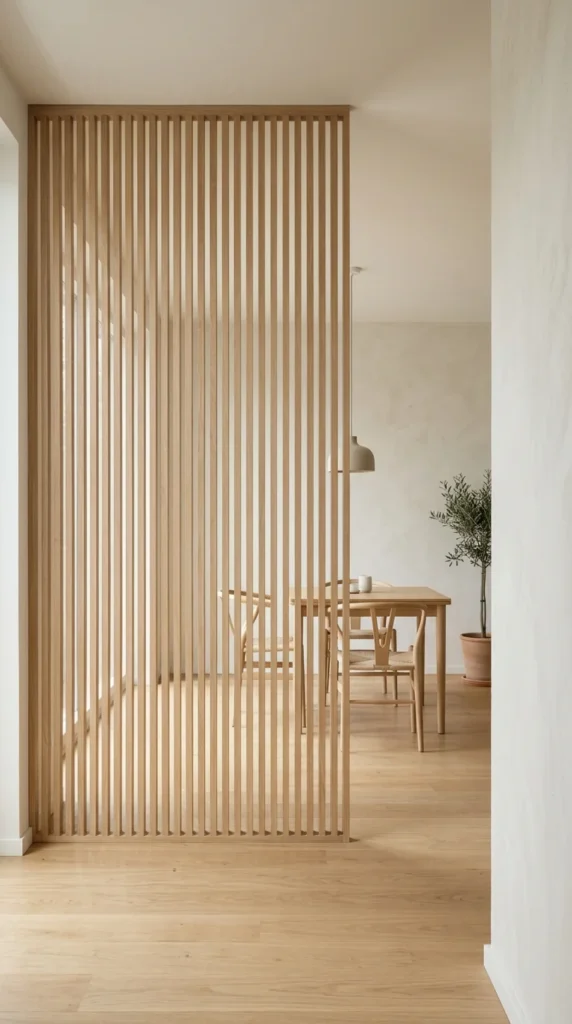
The slatted wood divider is a darling of modern interior design. By using thin vertical or horizontal strips of timber, you create a visual boundary that doesn’t completely block the light or the view. This “peek-a-boo” effect maintains the spacious feel of an open room while clearly defining two separate areas. It’s particularly effective in entryways, where it can create a foyer experience without closing off the living room. The rhythm of the slats adds a sense of height and architectural sophistication to the space.
2. Reclaimed Barnwood
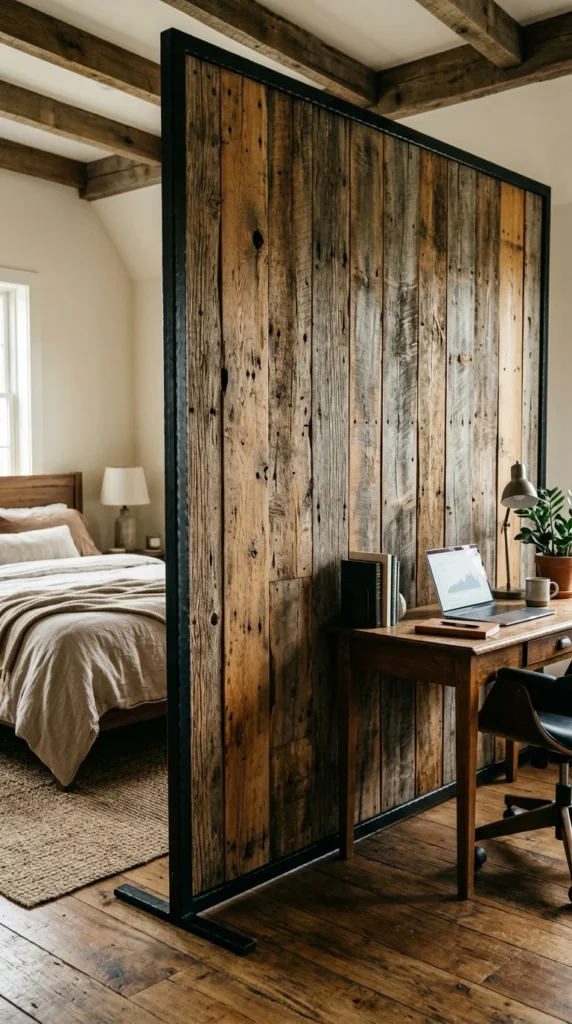
For those who lean towards a rustic or industrial aesthetic, reclaimed barnwood is the ultimate choice. Each plank tells a story, featuring unique patinas, saw marks, and weather-worn textures that new wood simply cannot replicate. A solid partition made from these planks acts as a focal point, grounding a large room with its heavy, historical presence. It’s a sustainable choice that brings the soul of the outdoors inside, pairing beautifully with leather furniture and metal accents.
3. Geometric Cutouts
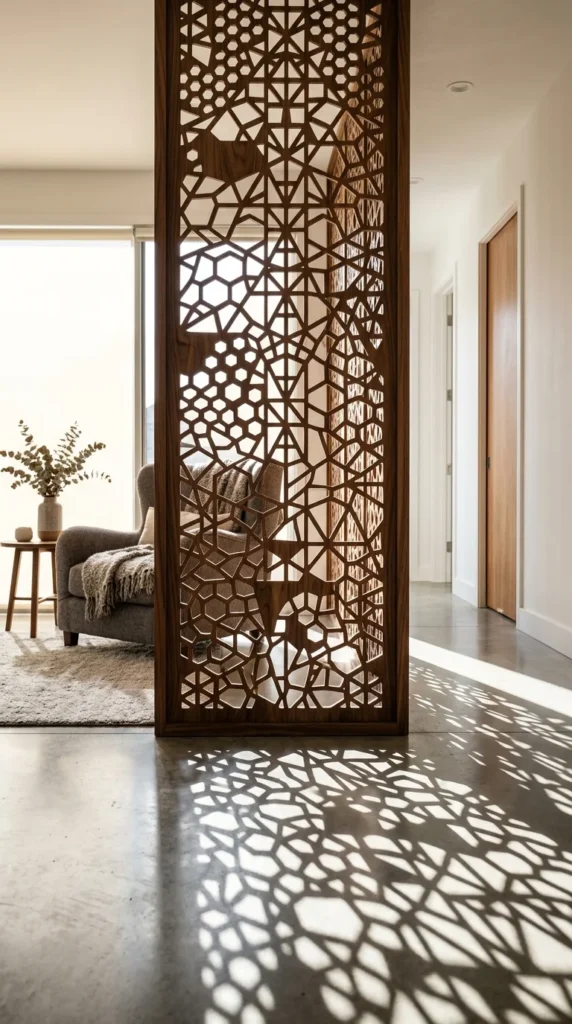
If you view your home as a gallery, a wooden divider with geometric cutouts serves as a piece of functional art. Using CNC or laser-cutting technology, designers can create intricate patterns—from mid-century honeycombs to abstract Moroccan motifs. These screens act as light filters, casting ever-changing shadows throughout the day. They provide a high level of visual interest and are perfect for separating a sophisticated dining area from a living room.
4. Vertical Beams
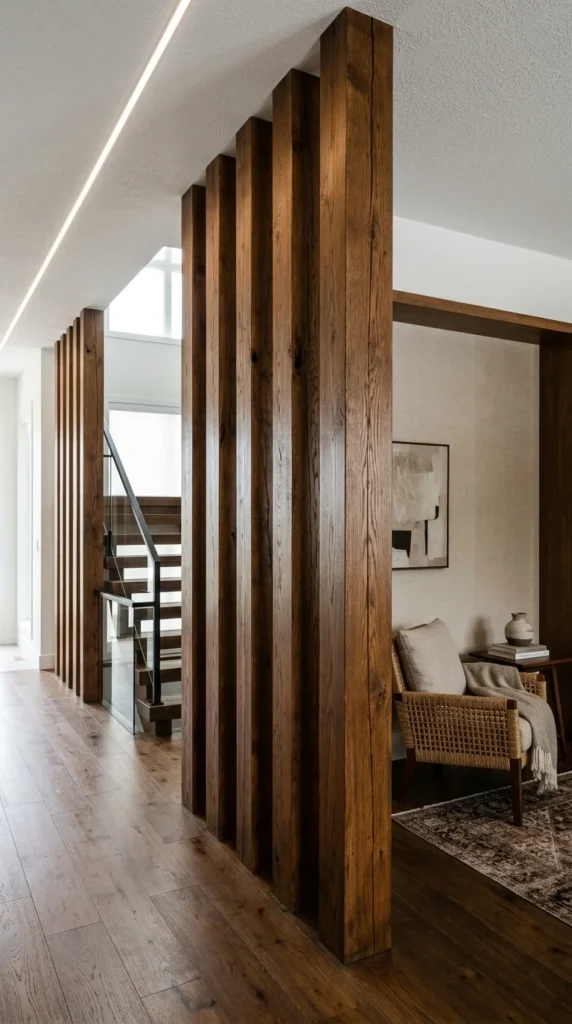
Vertical beams offer a more substantial, architectural feel than thin slats. By using thicker pieces of timber, you create a sense of structural integrity and grandeur. This style works exceptionally well in homes with high ceilings, as it draws the eye upward and emphasizes the volume of the space. The gaps between the beams allow for conversation and light to flow, but the sheer mass of the wood provides a strong sense of enclosure.
5. Bookshelf Divider
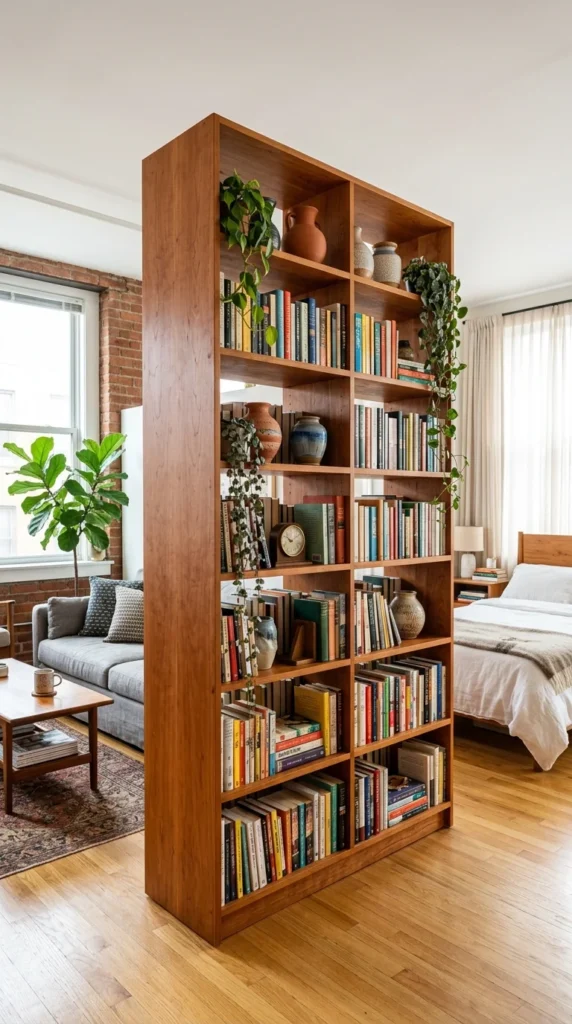
Functionality meets style in the bookshelf divider. This is perhaps the most practical way to split a room, as it provides much-needed storage and display space. By choosing an open-backed design, you ensure that light reaches both sides of the room. You can style the shelves with a mix of books, art objects, and greenery to create a “living wall” that reflects your personality. It’s an ideal solution for studio apartments or multi-purpose guest rooms.
6. Folding Screen
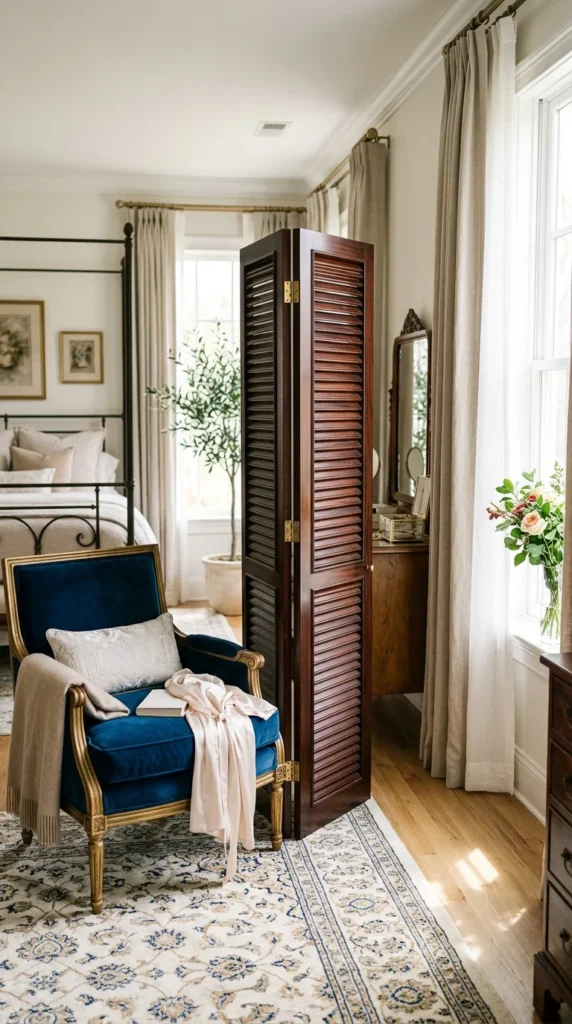
The folding screen, or paravent, is a timeless classic. Its primary advantage is portability; you can move it, fold it, or tuck it away whenever the needs of the space change. Wooden folding screens come in endless varieties, from solid carved panels to airy shutter-style designs. They are perfect for hiding a messy workspace at the end of the day or creating a temporary dressing area in a master suite.
7. Bamboo Poles
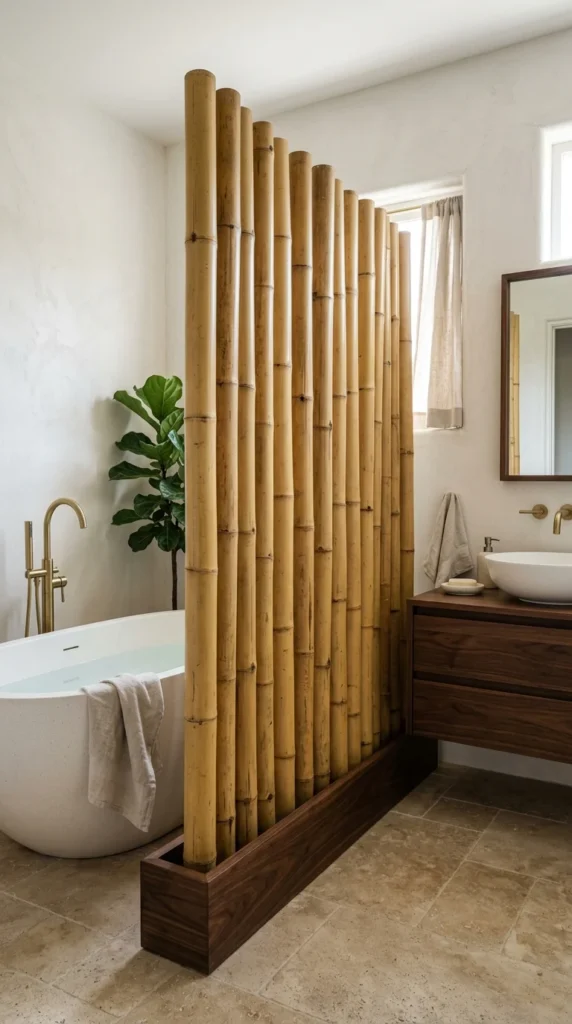
For a touch of organic, Zen-inspired design, bamboo poles are an excellent alternative to traditional lumber. Bamboo grows quickly and is incredibly durable, making it an eco-friendly choice. When arranged in a dense row, these poles create a textured, rounded wall that feels soft and natural. This style is particularly popular in spas or bathrooms, where the moisture-resistant properties of bamboo and its calming aesthetic can be fully appreciated.
8. Hanging Panels
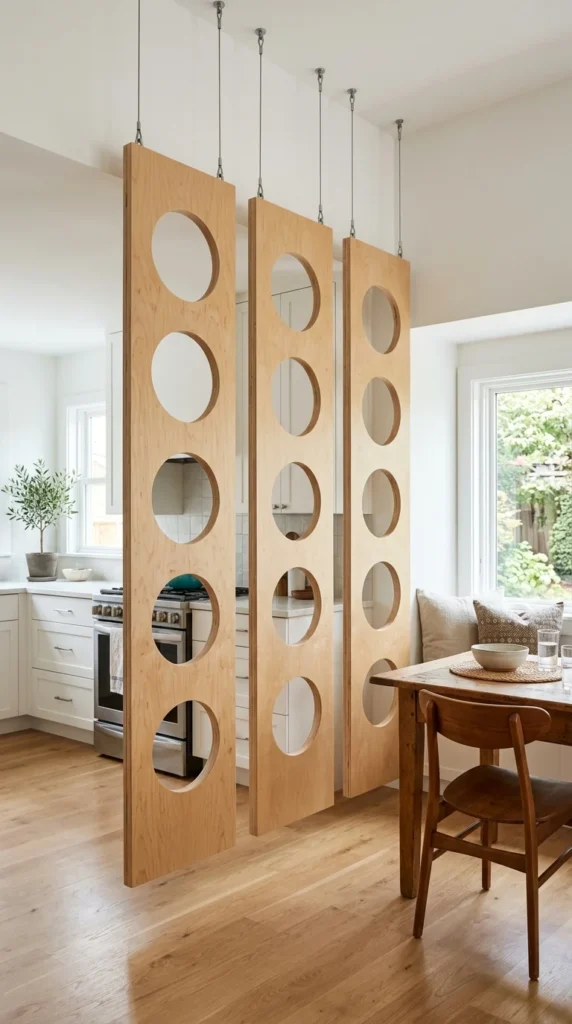
Hanging wooden panels offer a floating, ethereal quality. Because they don’t touch the floor, they maintain a sense of openness and make cleaning a breeze. You can hang a single large panel or a series of smaller ones to create a modular look. This approach is highly customizable—you can choose solid wood for privacy or perforated panels for a more decorative, airy feel. The hardware itself, whether it’s industrial chains or sleek cables, adds another layer of design.
9. Live Edge
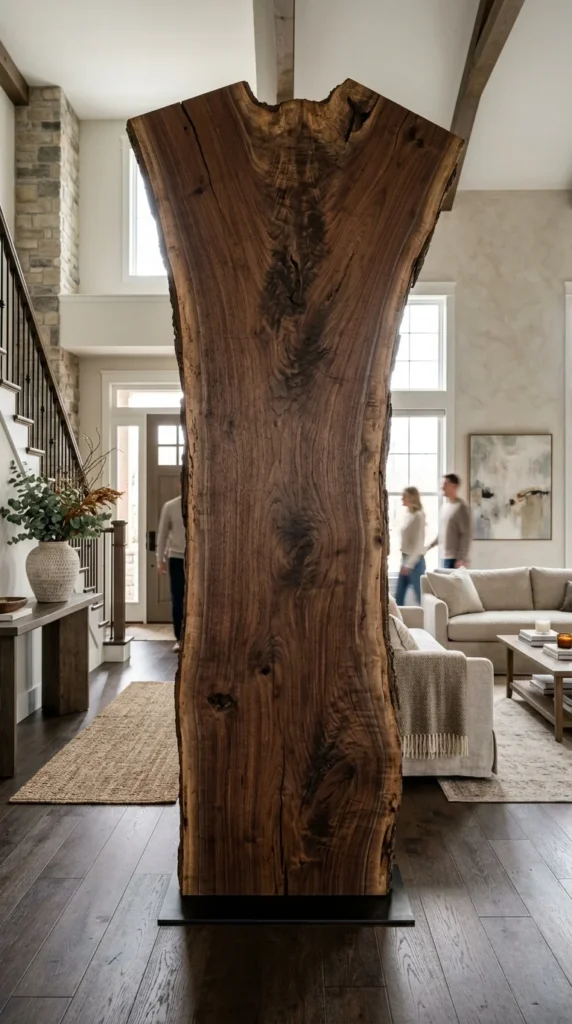
A live edge wood divider is the ultimate statement piece. These are made from a single, cross-sectioned slice of a tree, preserving the natural shape of the bark and the organic curves of the trunk. No two pieces are ever the same. A vertical live-edge slab brings a raw, powerful energy into a room, acting more like a sculpture than a furniture piece. It’s a celebration of nature’s imperfections and works beautifully in both ultra-modern and rustic-chic homes.
10. Shuttered Panels
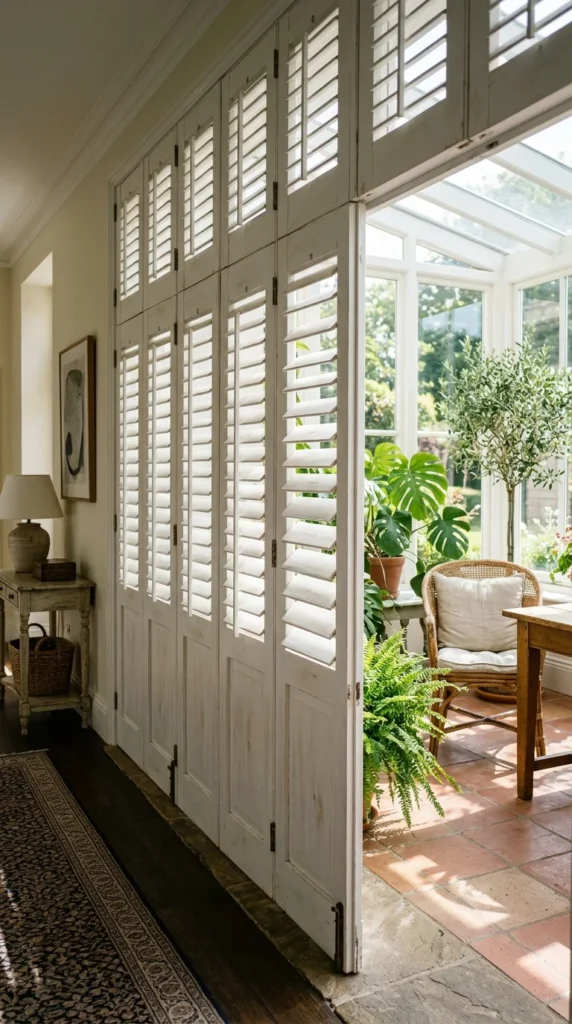
Shuttered dividers bring a sense of “French Country” or “Coastal” charm to a home. The adjustable louvers allow you to control the level of light and privacy throughout the day. You can leave them white for a clean, breezy look, or stain them in dark wood tones for a more traditional, colonial feel. They are particularly effective for blocking unsightly views or creating a ventilated screen for a laundry area.
11. Pallet Wood
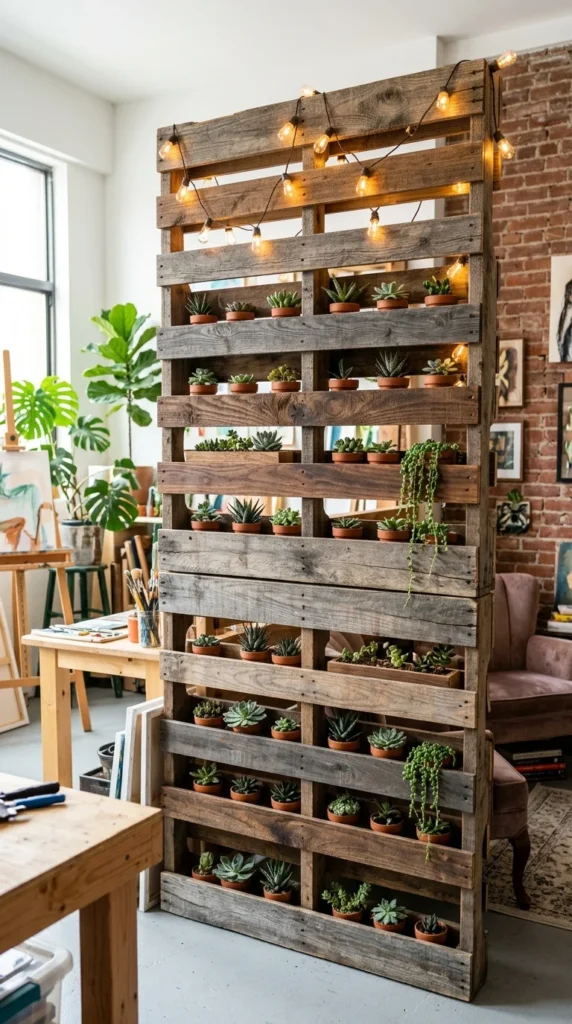
For the budget-conscious decorator or the DIY enthusiast, pallet wood offers endless possibilities. Once sanded and treated, pallets can be stacked or dismantled and rebuilt into rustic partitions. This look is perfect for lofts, garages, or creative studios where a “shabby chic” or “upcycled” vibe is desired. You can even use the internal structure of the pallets as built-in cubby holes for small plants or tools.
12. Mid-Century Modern
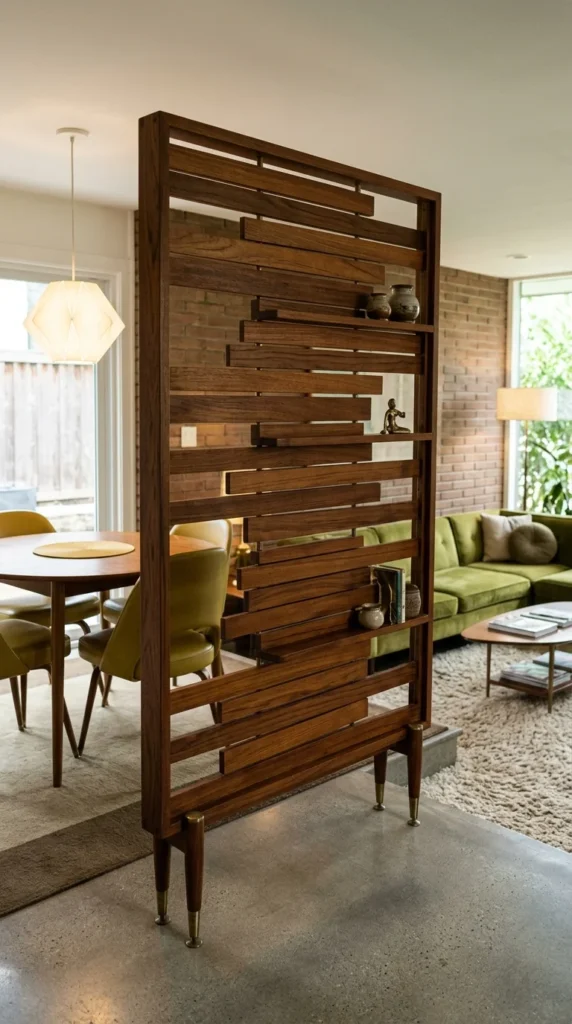
Mid-century modern dividers often feature clean lines, warm wood tones like teak or walnut, and a focus on geometric balance. These dividers are usually furniture-grade pieces that look just as good from the back as they do from the front. They often incorporate brass accents or “tension pole” designs that allow them to be secured between the floor and ceiling without permanent screws. They are the perfect accompaniment to Eames chairs and sunburst clocks.
13. Integrated Planter
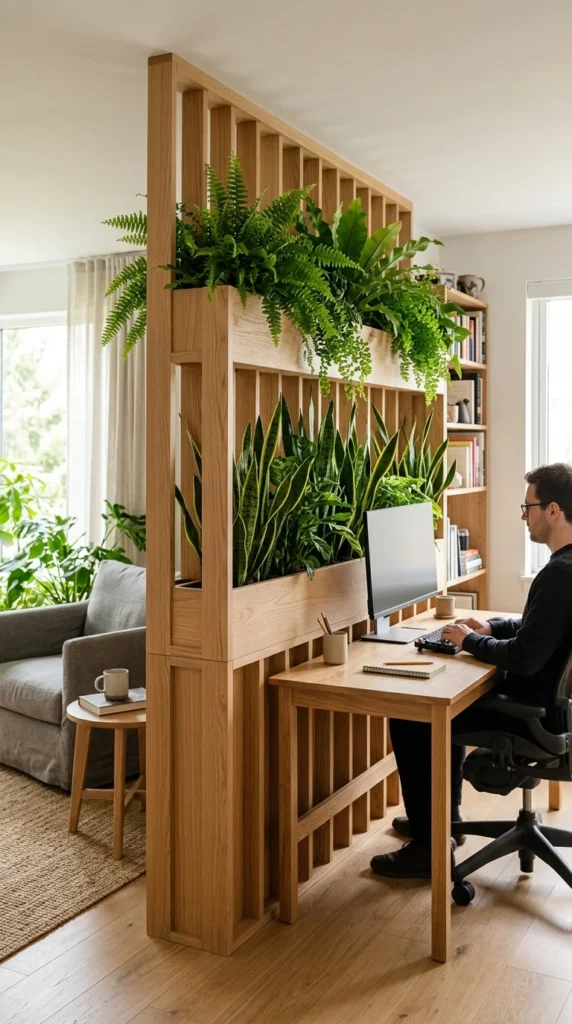
Why choose between a room divider and a plant stand when you can have both? A wooden divider with an integrated planter brings life and air-purifying qualities into your home. The wood provides the structure, while the greenery provides a soft, organic texture that changes over time. This “biophilic” design choice is proven to reduce stress and improve focus, making it a brilliant choice for separating a workspace from the rest of the home.
14. Lattice Work
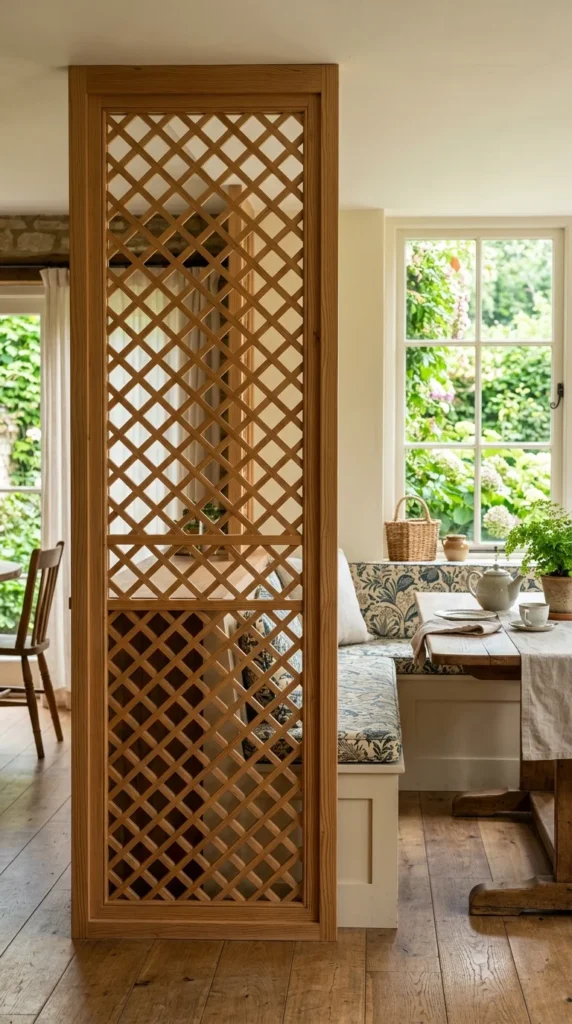
Lattice work is often associated with garden fences, but it can be incredibly sophisticated indoors. A finely crafted wooden lattice provides a delicate, feminine touch to a room. It offers a high degree of transparency, making it suitable for small spaces where a solid wall would feel claustrophobic. You can even use the lattice to hang photographs, lightweight art, or trailing indoor ivy.
15. Laser-Cut Walnut
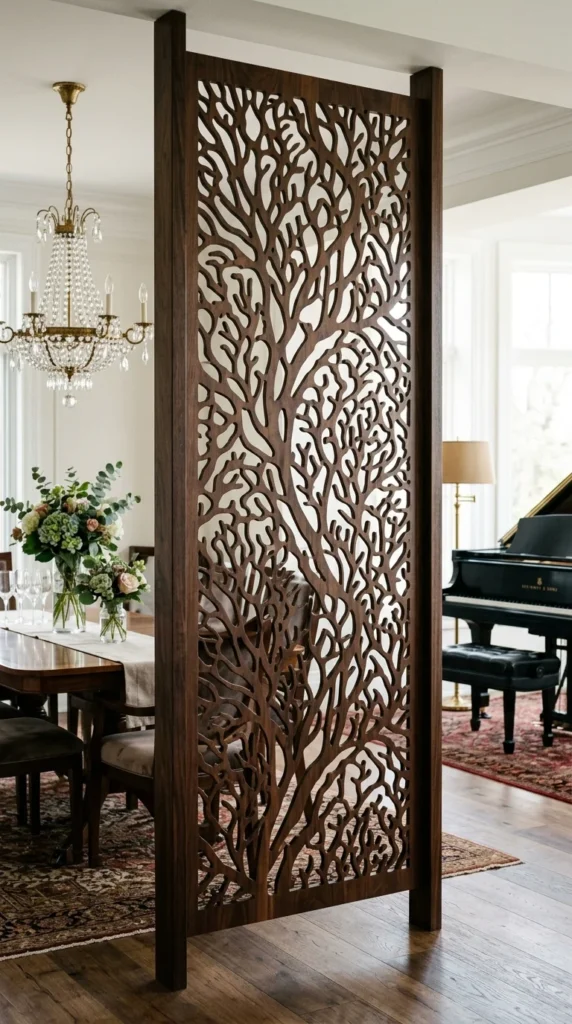
When precision is key, laser-cut walnut panels offer a level of detail that hand-carving can rarely match. These panels can be customized with virtually any design, from family crests to intricate floral patterns. Walnut is a premium hardwood known for its deep, rich color and durability. A laser-cut walnut screen is less of a divider and more of a permanent architectural feature that adds significant value and “wow factor” to a luxury interior.
16. Pivoting Doors
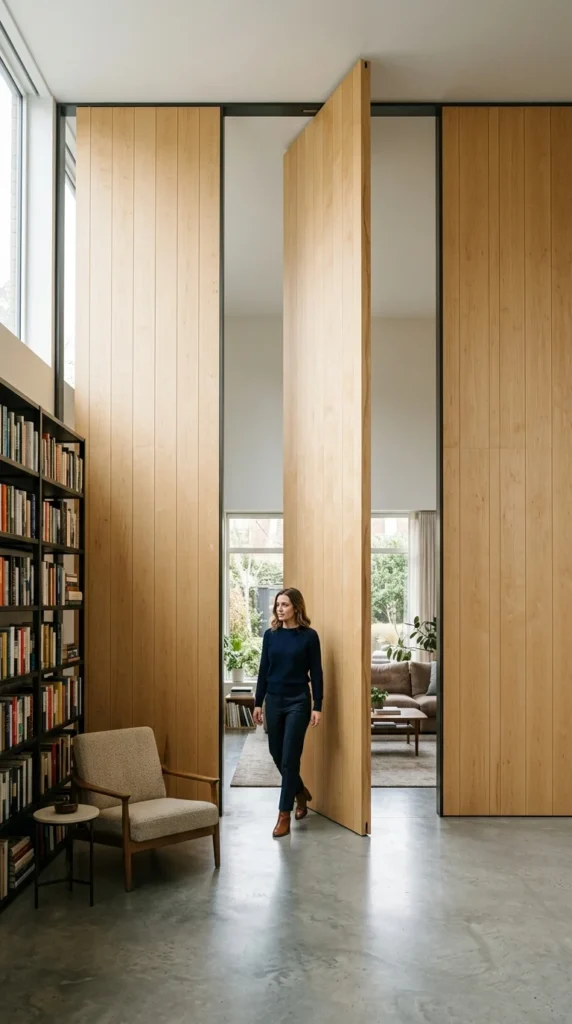
For a truly dramatic and interactive experience, consider pivoting wooden panels. Instead of being fixed in place, these large slabs of wood rotate on a central axis. This allows you to change the configuration of the room in seconds—opening the space for a party or closing it off for a private meeting. It’s a grand, modern solution that treats the room divider as a moving part of the home’s architecture.
17. Driftwood Screen
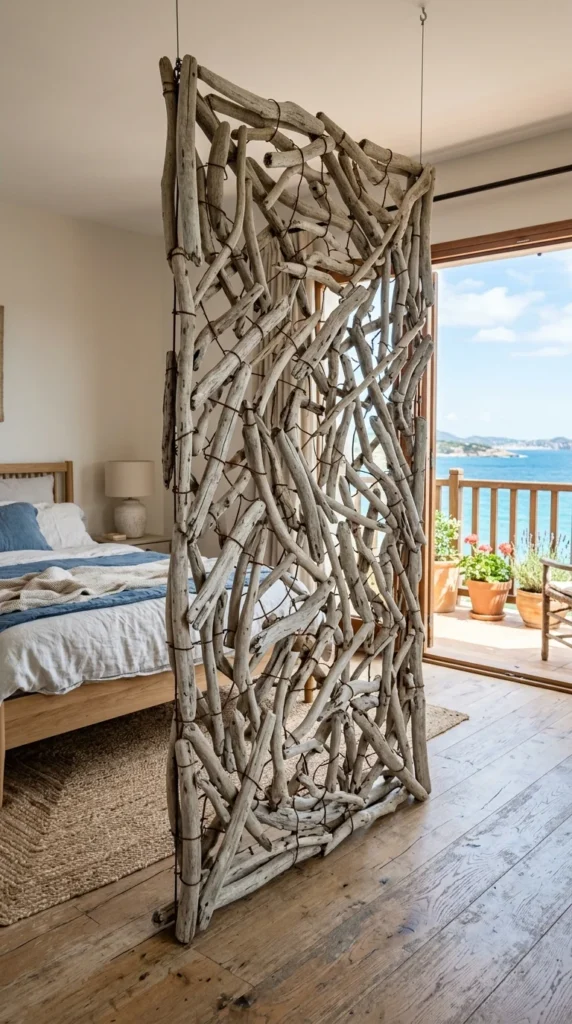
If you live by the coast—or just wish you did—a driftwood screen brings the essence of the ocean indoors. These dividers are often handcrafted, with individual pieces of wood selected for their unique shapes and silver-grey tones. The resulting screen is highly textured and irregular, casting soft, dappled shadows. It’s a perfect way to add a relaxed, beach-house vibe to a bedroom or bathroom.
18. Accordion Walls
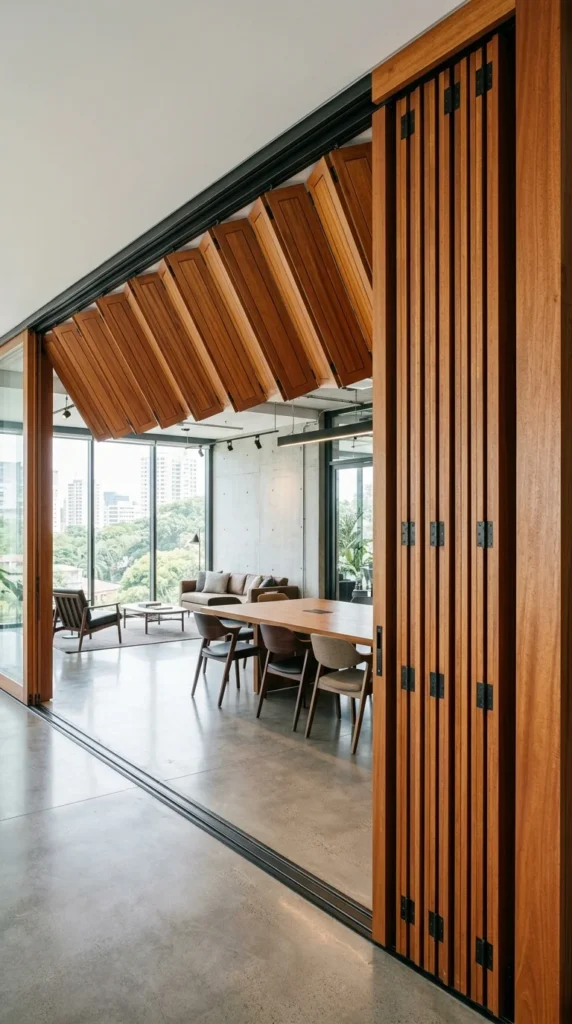
When you need to divide a massive space—like a basement or a large open-plan living area—accordion walls are the go-to solution. These consist of several wooden panels hinged together that slide along a track in the ceiling. They offer the most flexibility of any divider on this list, allowing you to have a completely open room, a partially screened area, or a fully enclosed private space with the pull of a handle. Modern versions feature excellent sound-dampening properties, making them as functional as they are stylish.