
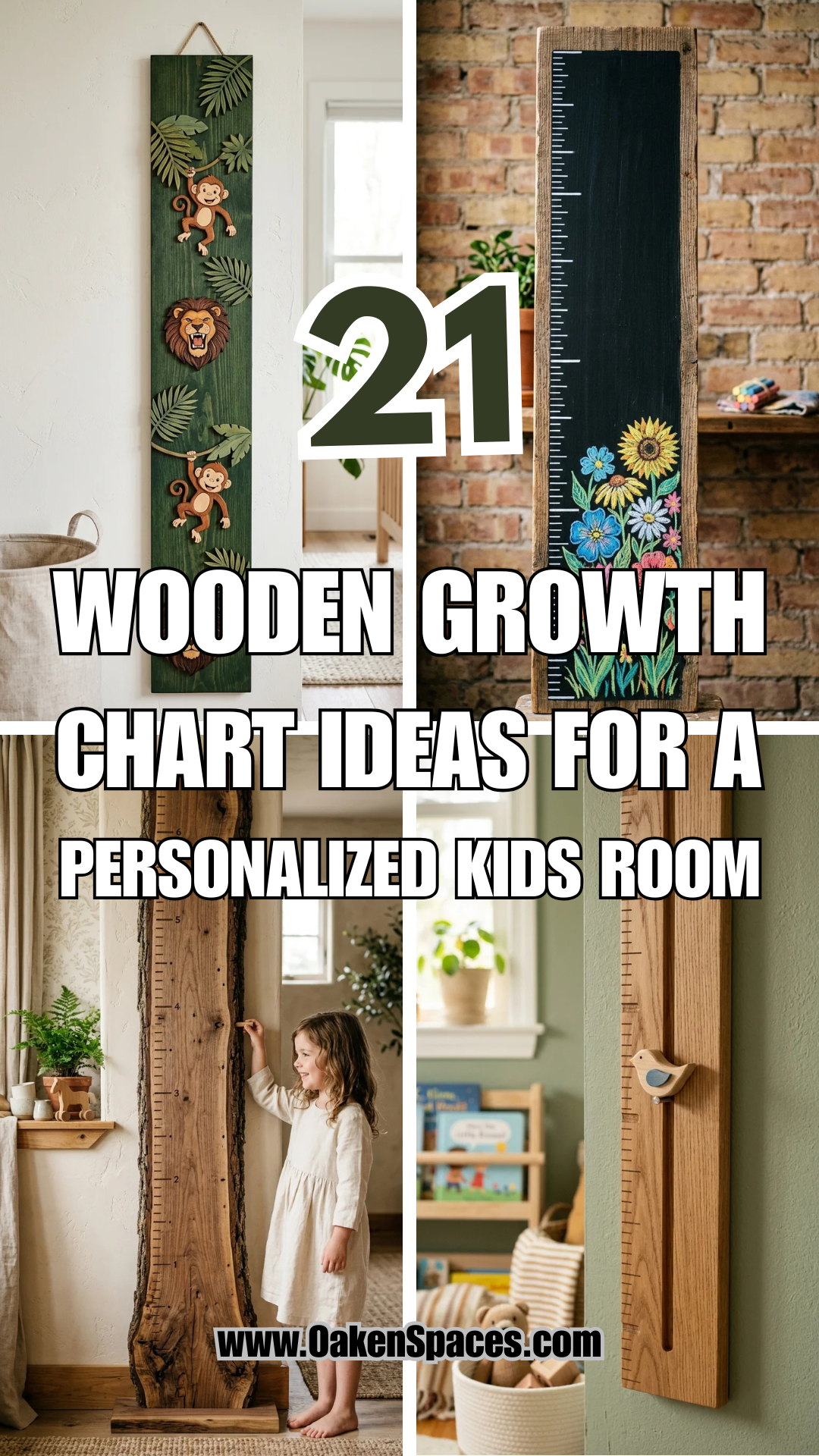
Watching a child grow is one of life’s most fleeting and beautiful experiences. While pencil marks on a doorframe are traditional, they often disappear when you move houses or decide to repaint. A wooden growth chart offers a portable, durable, and stylish alternative that transforms a simple measurement tool into a cherished family heirloom. Whether your nursery theme is modern minimalist, whimsical woodland, or rugged adventure, there is a wooden design that fits perfectly.
Here are 21 creative wooden growth chart ideas to help you track those “growing like a weed” moments in style.
1. Classic Ruler
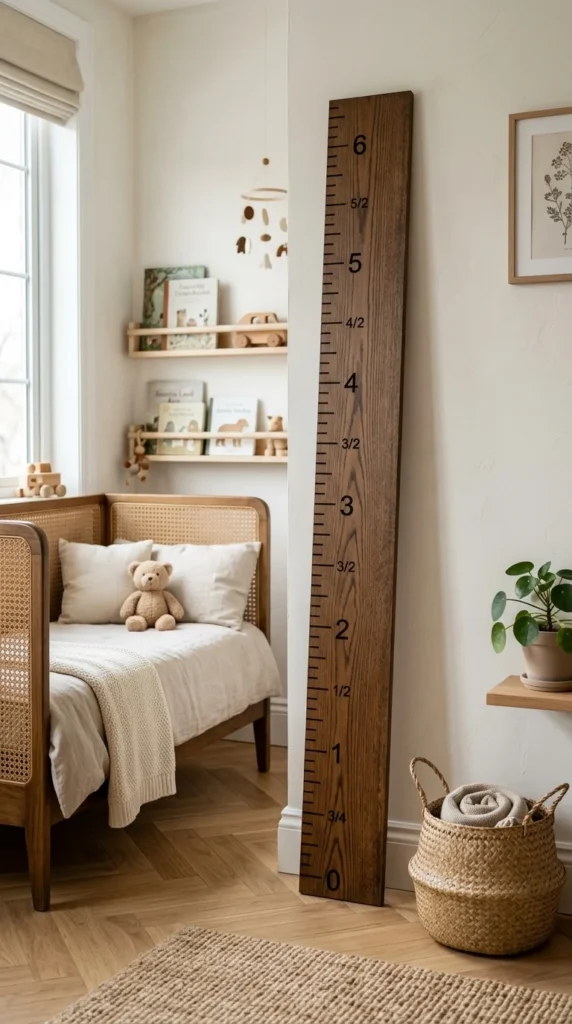
The classic oversized ruler is the gold standard for wooden growth charts. It brings a sense of nostalgia and timelessness to a room. Usually crafted from a single solid plank of pine or oak, these charts feature bold, dark numbers and tick marks that mimic an architect’s scale. It’s versatile enough to transition from a baby’s nursery to a teenager’s bedroom without ever looking out of place.
2. Mountain Range
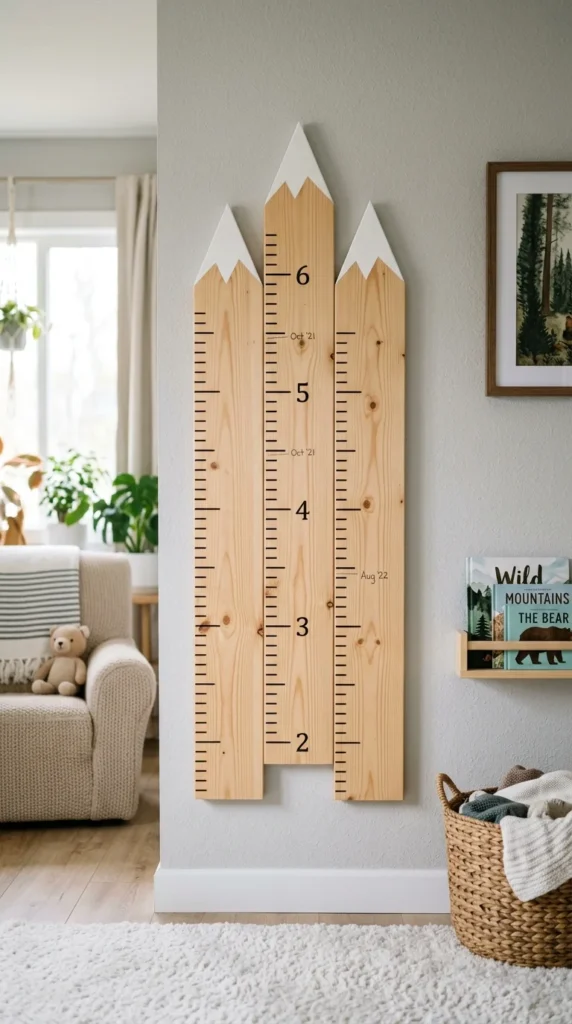
For the adventure-themed room, a mountain silhouette growth chart is a perfect choice. This design often uses multiple shades of wood stain to create depth, mimicking a distant range. The peaks represent the heights your child will eventually reach, making it both a functional tool and an inspiring piece of wall art.
3. Botanical Engravings
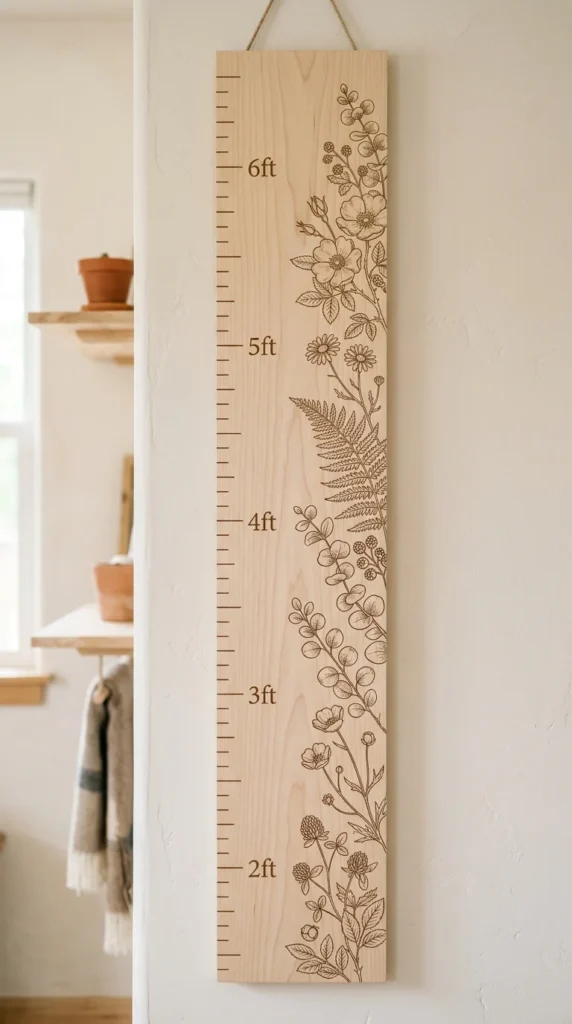
If you prefer a softer, more organic aesthetic, look for a chart featuring botanical engravings. Delicate etched patterns of lavender, vines, or forest leaves can run up the side of the wood. This style pairs beautifully with “boho” decor and adds a touch of nature-inspired tranquility to the space.
4. Animal Silhouettes
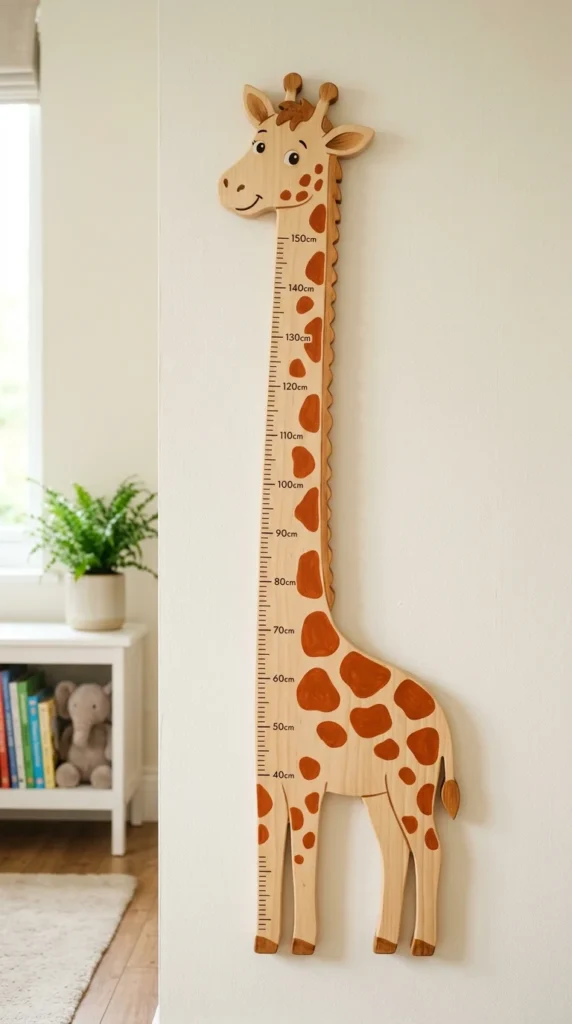
Animals are a staple of childhood wonder. You can find wooden charts shaped like giraffes, elephants, or even dinosaurs. A giraffe is particularly popular because its naturally long neck serves as the perfect canvas for height increments. These are often painted in vibrant colors, making them a focal point of the room’s play area.
5. Scandi Minimalism
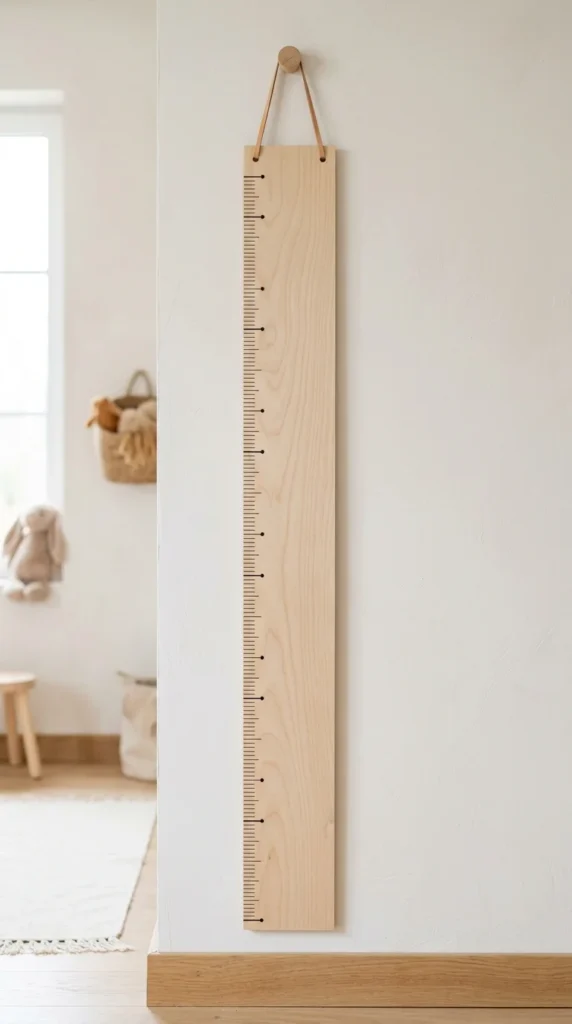
The Scandinavian style is all about “less is more.” A Scandi-inspired growth chart typically uses light woods like plywood or ash and features very thin, clean lines. Instead of bulky numbers, it might use simple dots. These charts often hang from a leather strap or a hidden mount, giving them a floating, airy appearance.
6. Distressed Barnwood
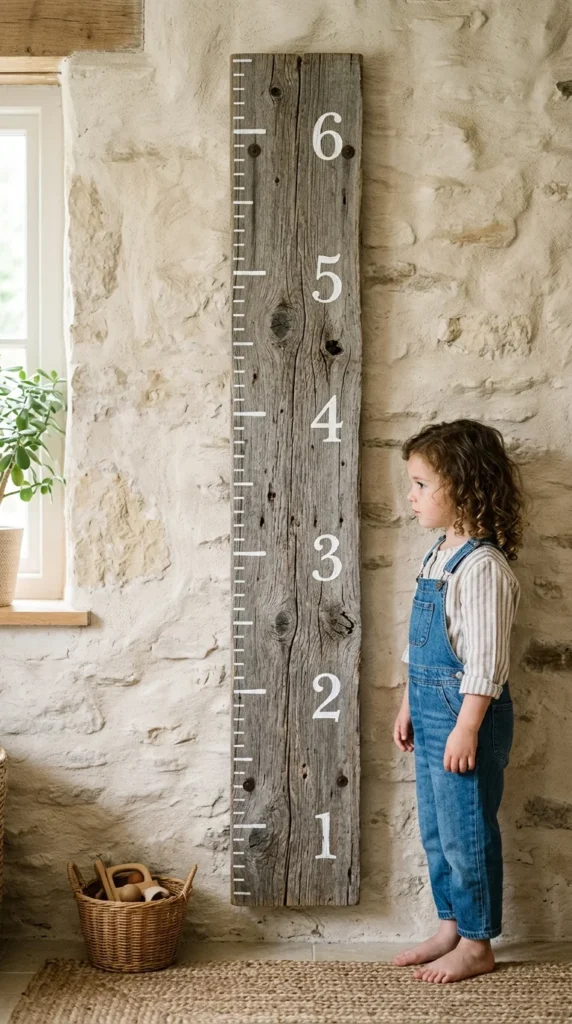
For a farmhouse or rustic-style home, reclaimed barnwood is an excellent choice. The natural imperfections in the wood—knots, nail holes, and grain variations—give the chart a sense of history. This style is incredibly durable and masks any accidental scratches or extra marks made by energetic toddlers.
7. Space Explorer
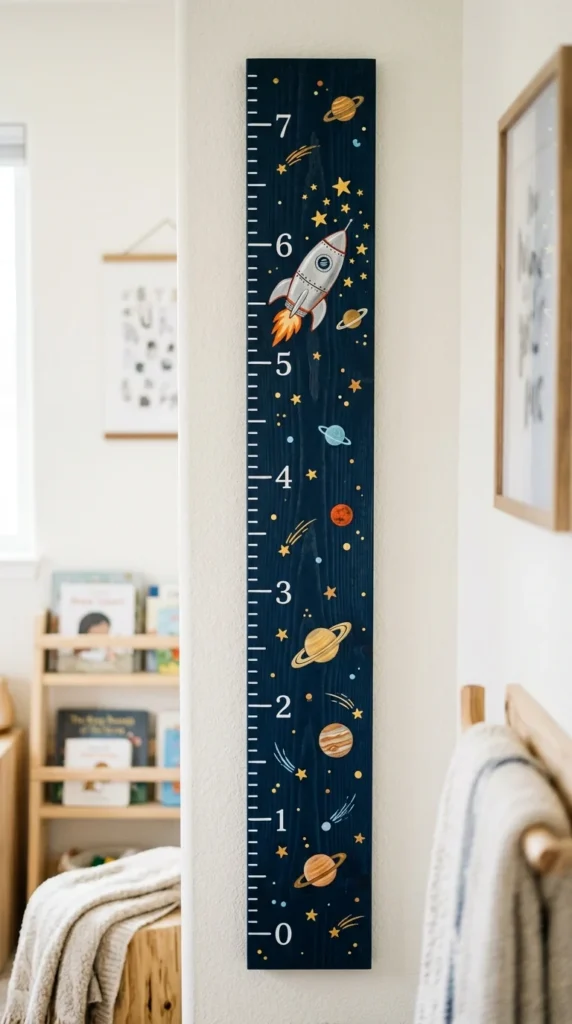
Encourage your little one to reach for the stars with a space-themed chart. By using a dark wood stain (like navy or charcoal), you can create a “night sky” effect. Adding small wooden cutouts of planets or stars that can be moved as the child grows adds an interactive element that kids love.
8. Colorful Pastel
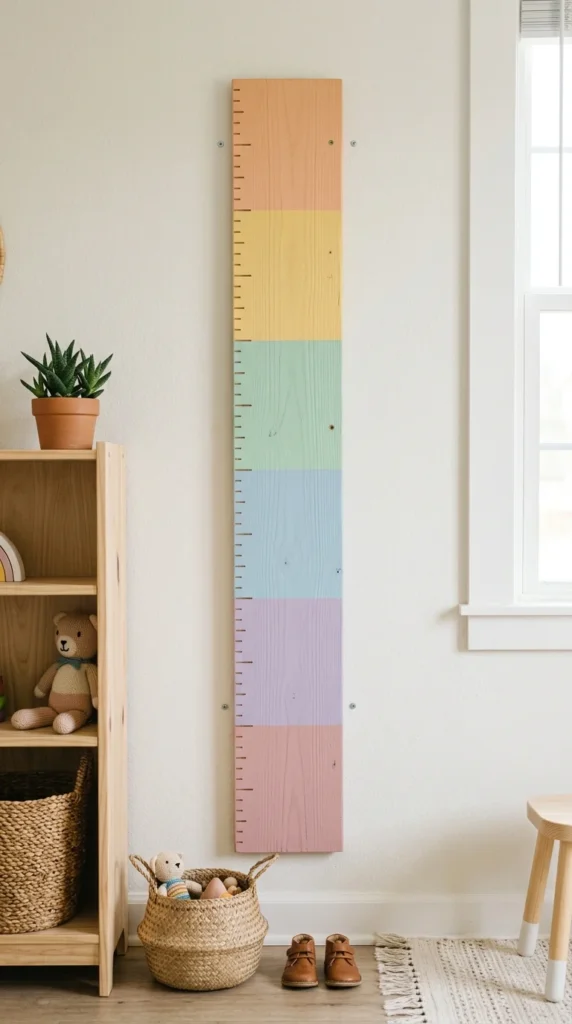
If the room is filled with bright colors, a monochromatic wood chart might feel too heavy. A pastel-painted chart uses soft hues like mint green, dusty rose, and pale lemon to create a cheerful, welcoming vibe. It’s a great way to tie together various colors used in bedding and curtains.
9. Photo Inlays
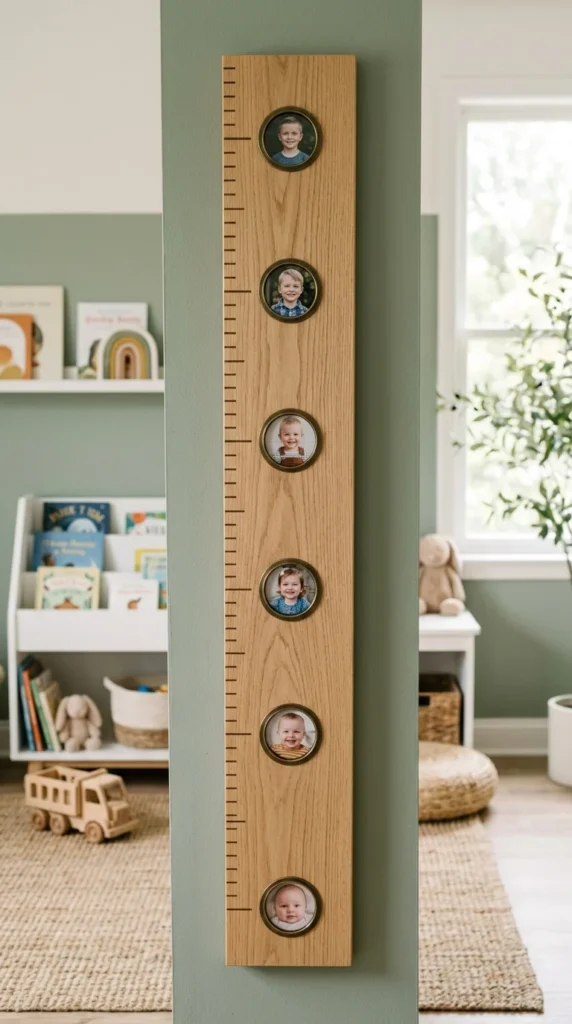
One of the most personalized options is a chart that includes space for photos. These designs feature small frames or recessed slots where you can insert a picture of your child at each specific height milestone. It creates a visual timeline of their face changing alongside their height.
10. Map Theme
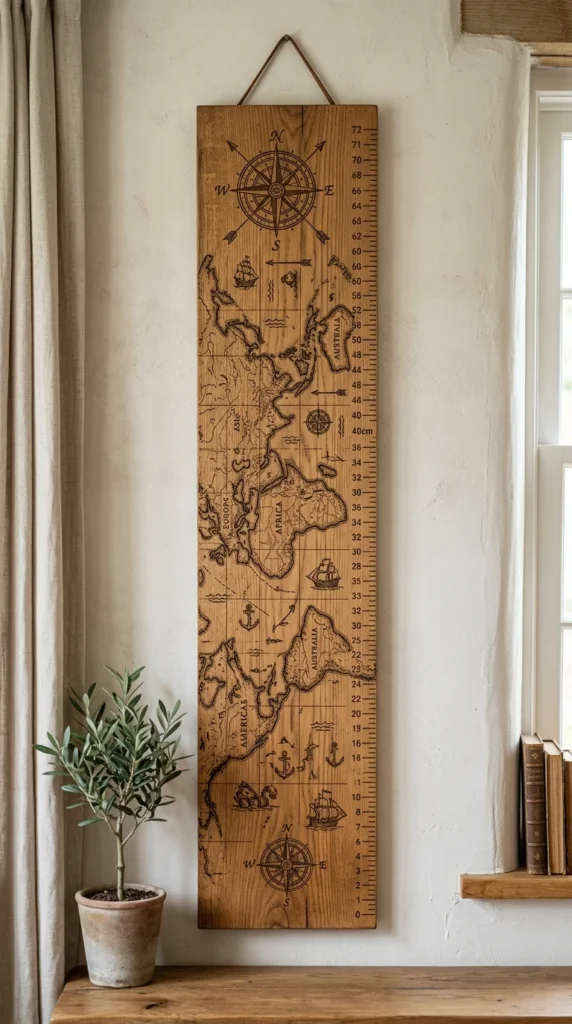
A “world traveler” or “nautical” room benefits greatly from a map-themed chart. The wood can be laser-engraved with continents or a treasure map. This design subtly reminds children that as they grow taller, the world becomes a place for them to explore.
11. Nautical Rope
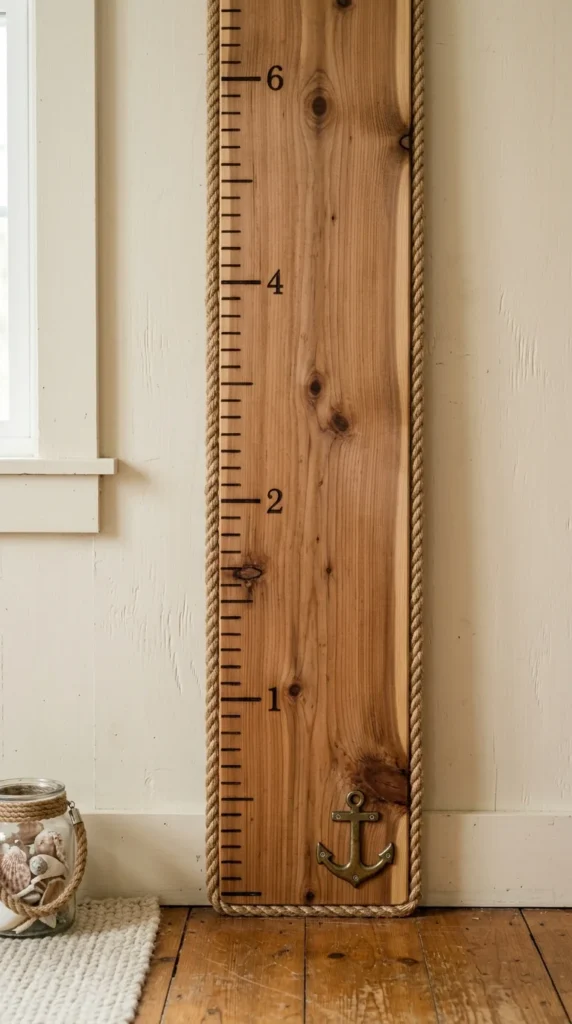
Perfect for a coastal-themed nursery, this idea incorporates mixed materials. The wood provides the structure, while nautical rope accents along the edges or used as the hanging mechanism add texture. It evokes the feeling of a seaside dock or a captain’s cabin.
12. Name Engraved
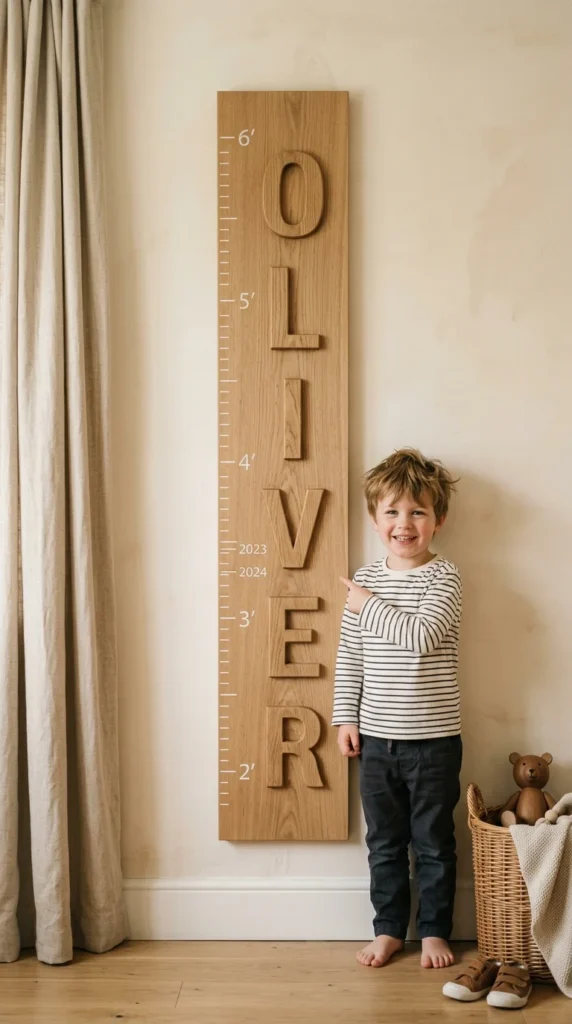
Personalization is key to making a room feel like it belongs to the child. A chart with the child’s name carved or painted in large letters makes it uniquely theirs. If you have multiple children, you can have a wider board with each child’s name at the top or color-code their individual measurements.
13. Glow-in-the-Dark
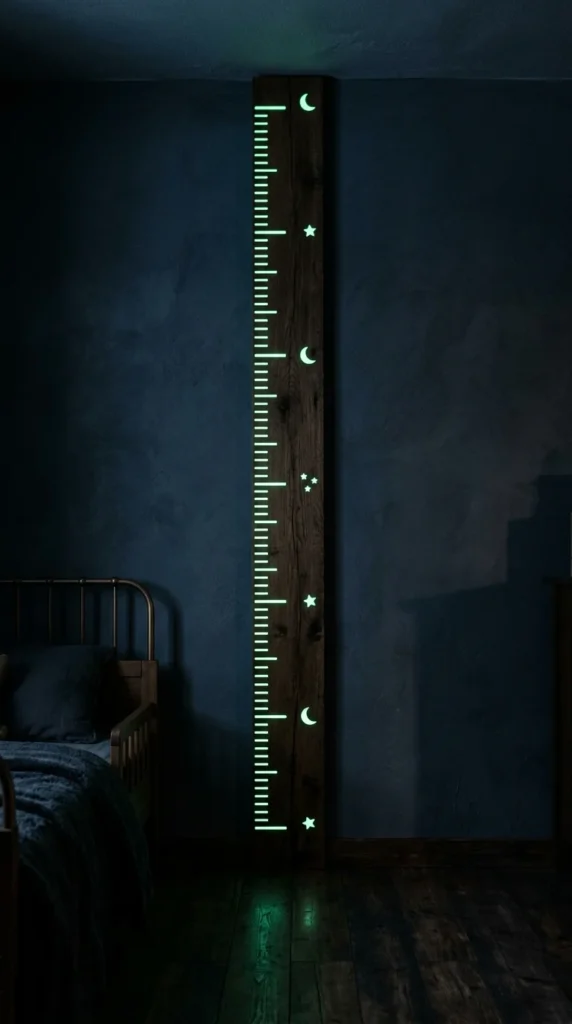
Make measurement time an evening adventure. By using phosphorescent paint on the etched lines or numbers, the chart becomes a magical glowing feature when the lights go out. This can also serve as a comforting “night light” element for children who might be afraid of the dark.
14. Geometric Shapes
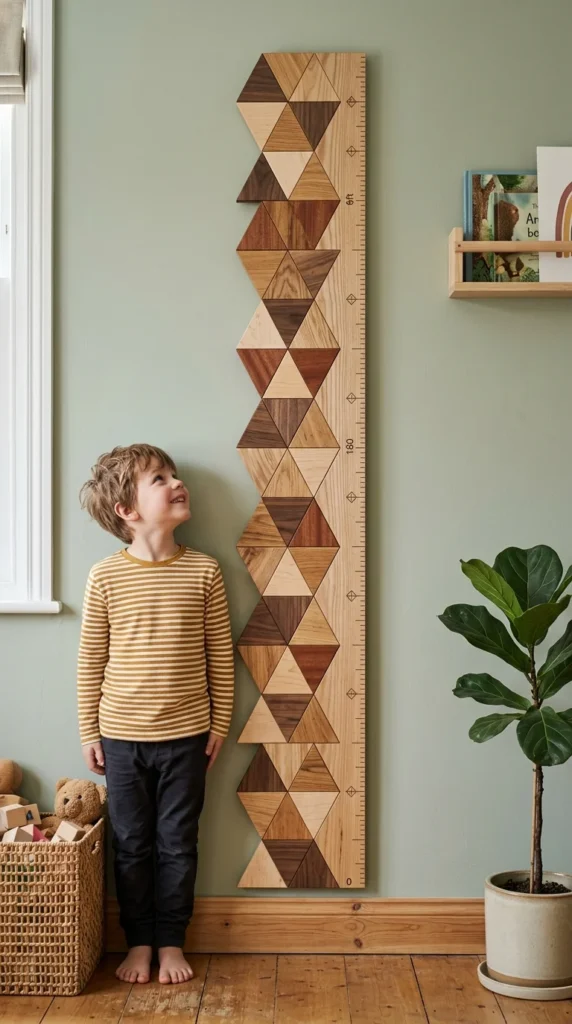
For the modern parent, geometric patterns offer a sophisticated look. Instead of a single flat plank, these charts are often made of smaller wooden shapes—like hexagons or triangles—fitted together. The abstract design looks more like a piece of high-end wall art than a traditional growth chart.
15. Rainbow Arch
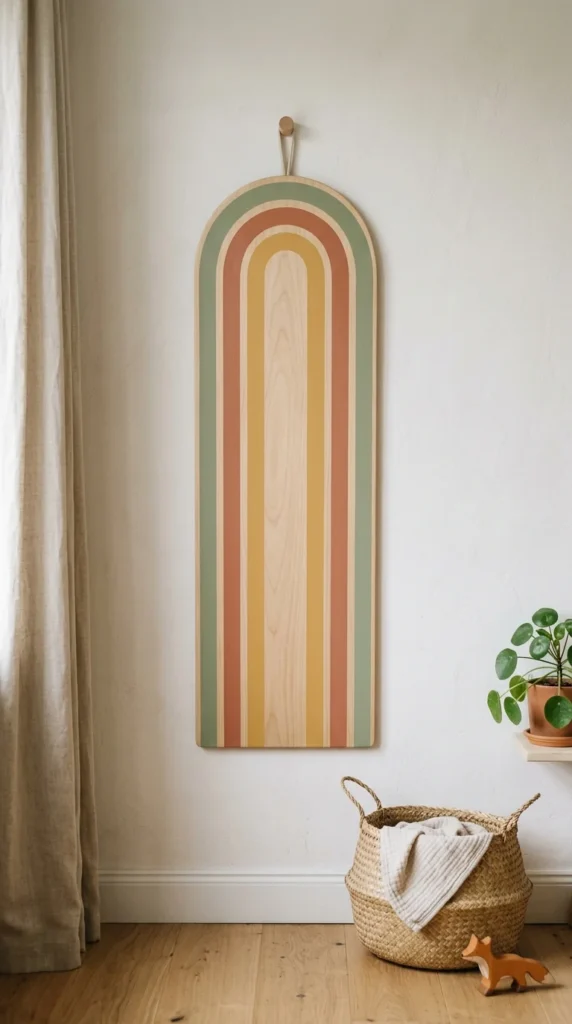
The “boho rainbow” trend is huge in nursery design. A wooden chart cut into an elongated arch shape and painted with earthy, muted tones provides a trendy and calming aesthetic. It’s a softer take on the traditional rectangular plank.
16. Chalkboard Surface
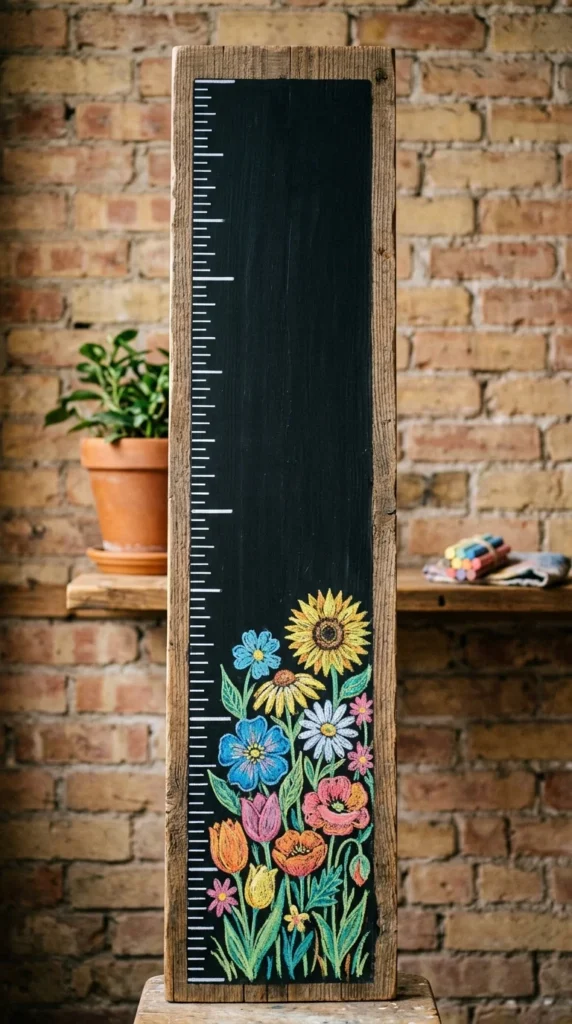
A chalkboard growth chart offers ultimate flexibility. While the measurement marks are usually permanent, the rest of the board can be used for doodling, writing the date of the measurement, or even recording the child’s current favorite food or hobby next to their height.
17. Tree Trunk
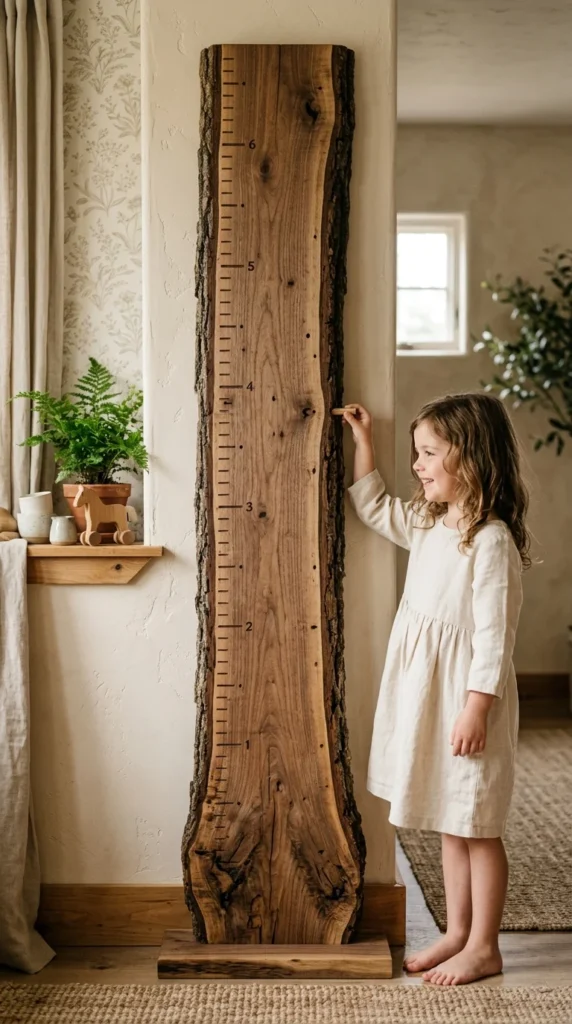
Bringing the outdoors in is easy with a live-edge wooden chart. These are made from vertical slices of a tree, keeping the natural bark and irregular edges intact. It creates a “forest” feel and works exceptionally well in rooms with a woodland or camping theme.
18. Boho Tassels
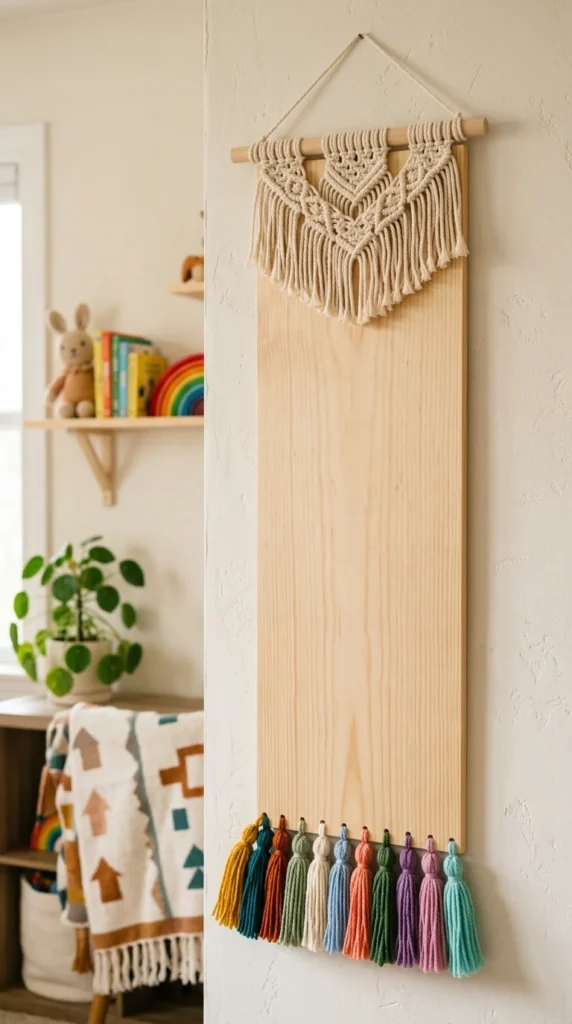
Texture is a great way to add warmth to a room. You can take a simple wooden growth chart and customize it with macrame hangings or yarn tassels in various colors. This softens the hard edges of the wood and makes it feel more like a textile art piece.
19. Safari Jungle
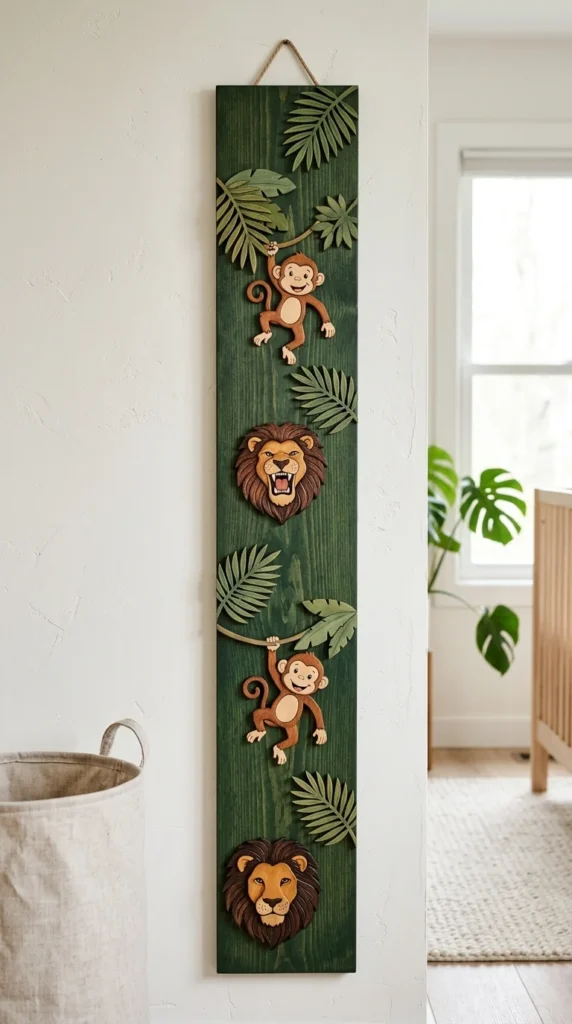
If your child’s room is a jungle-themed sanctuary, add 3D elements to the growth chart. Wooden cutouts of lions, tigers, and monkeys can be “climbing” up the chart. This adds a playful, tactile dimension that children will love to touch as they get measured.
20. Farmhouse White
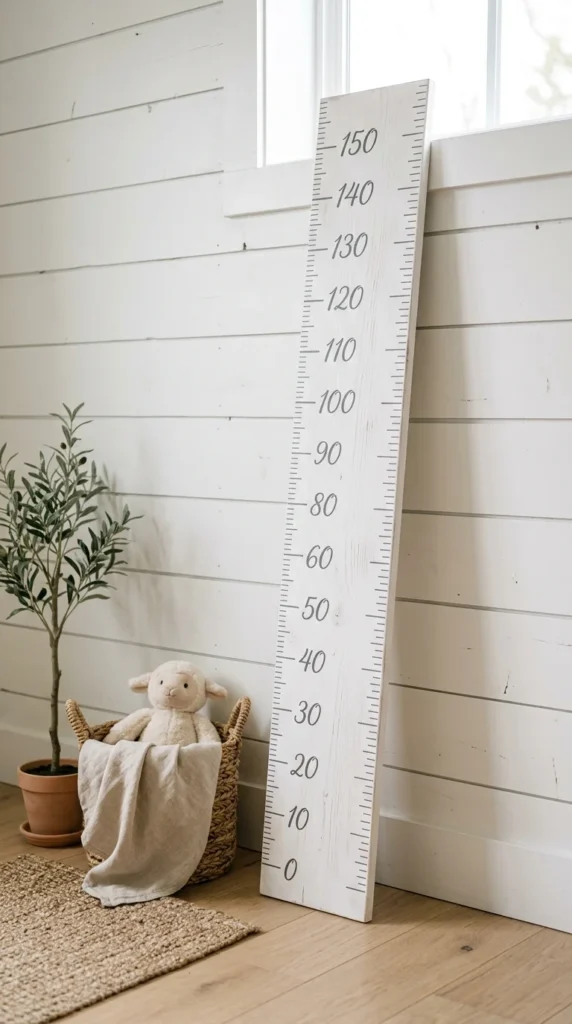
For a clean, bright, and airy look, a white-washed finish is ideal. It allows the natural grain of the wood to peek through while maintaining a cohesive look with white furniture. This style is often paired with elegant script fonts for a more “shabby chic” or sophisticated farmhouse feel.
21. Sliding Marker
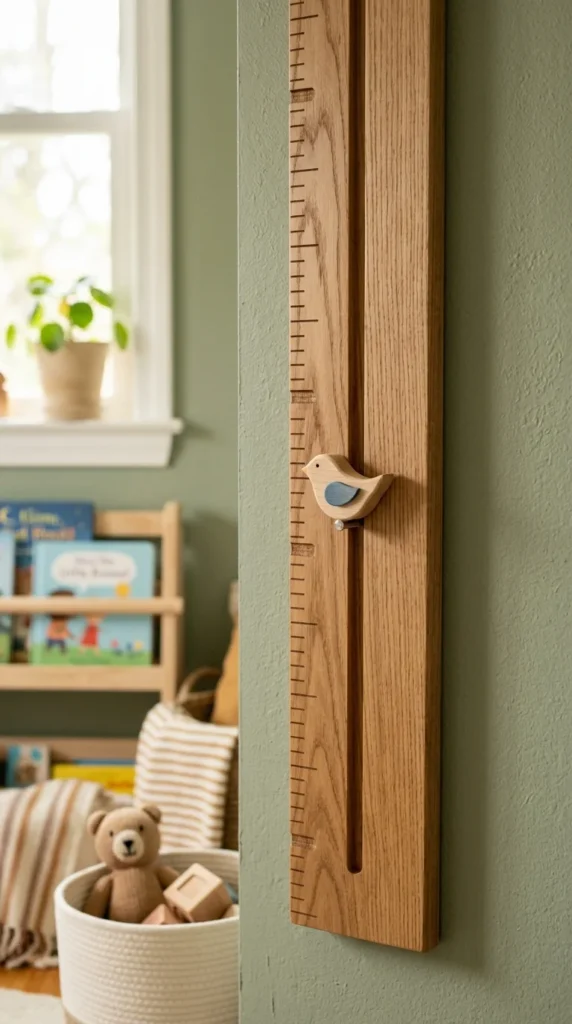
Interactive charts are the most fun for kids. A sliding marker—whether it’s a small wooden bird, a car, or a simple arrow—allows the child to participate in the process. They can physically move the marker to their new height, making the milestone feel even more rewarding.
Tips for Installing Your Wooden Growth Chart
- Mind the Baseboards: Most growth charts are designed to start at the 6-inch or 12-inch mark so they can be hung above the baseboards. Use a tape measure to ensure the bottom of the board is at exactly the right height before mounting.
- Secure Mounting: Kids are curious. Ensure the chart is securely screwed into a wall stud or use heavy-duty wall anchors to prevent it from tipping or being pulled down.
- The Right Pen: Use a fine-point permanent marker or a specialized wood paint pen to mark heights. Test it on the back of the board first to ensure the ink doesn’t “bleed” into the wood grain.
- Date Everything: Don’t just mark the height—write the date and maybe even a quick note about a milestone reached that day. It turns the chart into a diary of your child’s journey.