
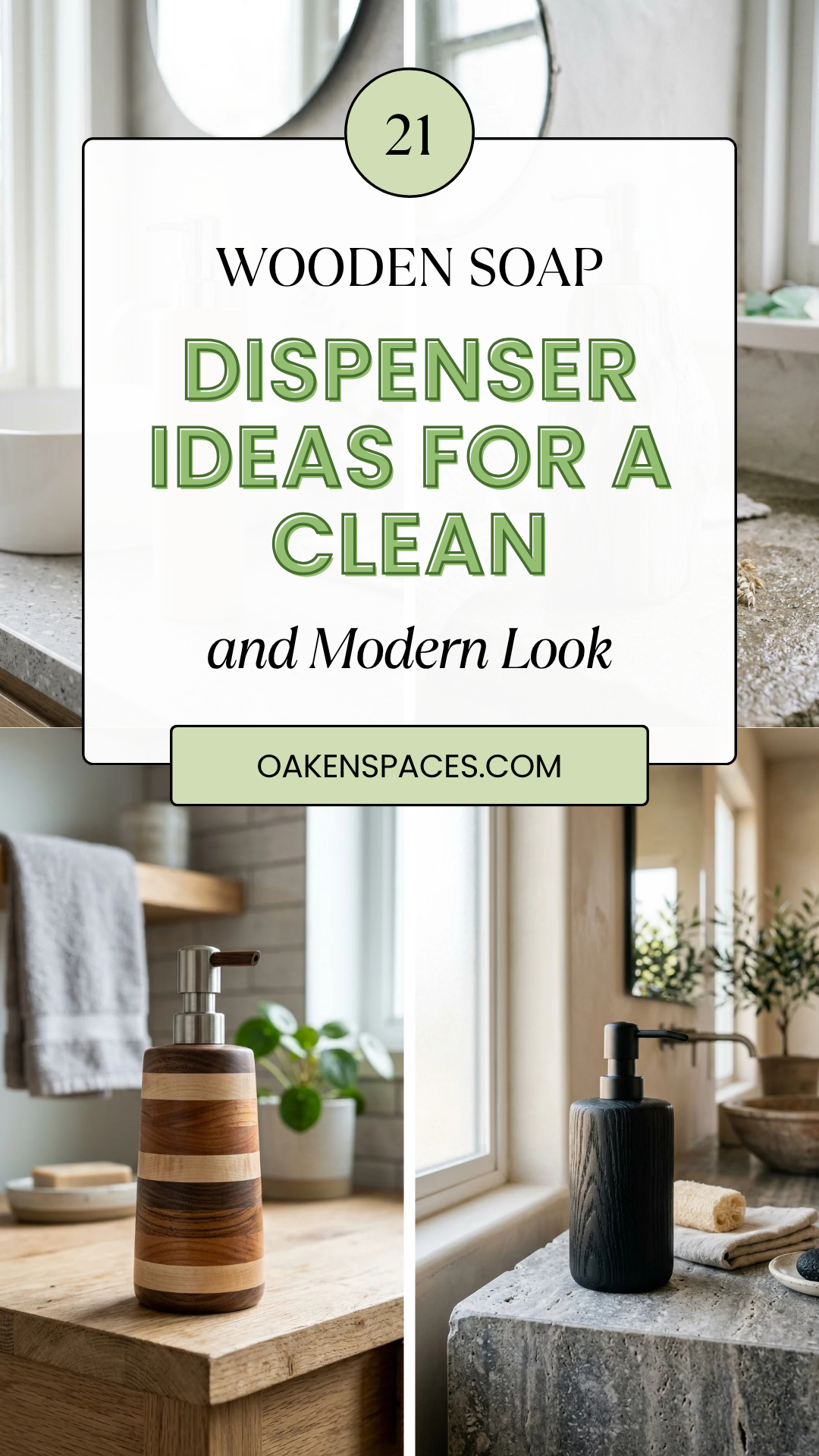
In the world of interior design, the bathroom and kitchen are often the hardest places to balance utility with warmth. Cold tiles, stainless steel fixtures, and porcelain surfaces can sometimes feel clinical. Enter the wooden soap dispenser—a small but transformative accessory that bridges the gap between modern minimalism and organic comfort.
Whether you are aiming for a Japanese-inspired spa vibe or a rugged Scandinavian aesthetic, wood brings a tactile, grounding element to your sinks. Here are 21 innovative wooden soap dispenser ideas to elevate your home.
1. Bamboo Minimalist
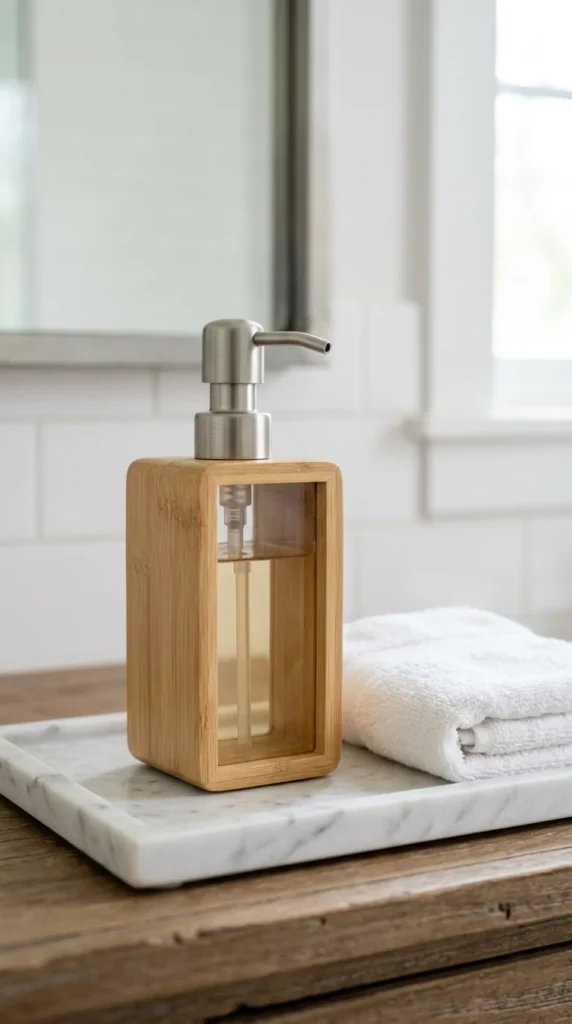
Bamboo is the gold standard for sustainable modern design. Its light grain and neutral palette make it incredibly versatile. A square or cylindrical bamboo dispenser works perfectly in a bright, airy bathroom. Because bamboo is naturally water-resistant, it handles the moisture of a sink area better than many other woods, maintaining its structural integrity while providing a clean, linear look.
2. Dark Walnut
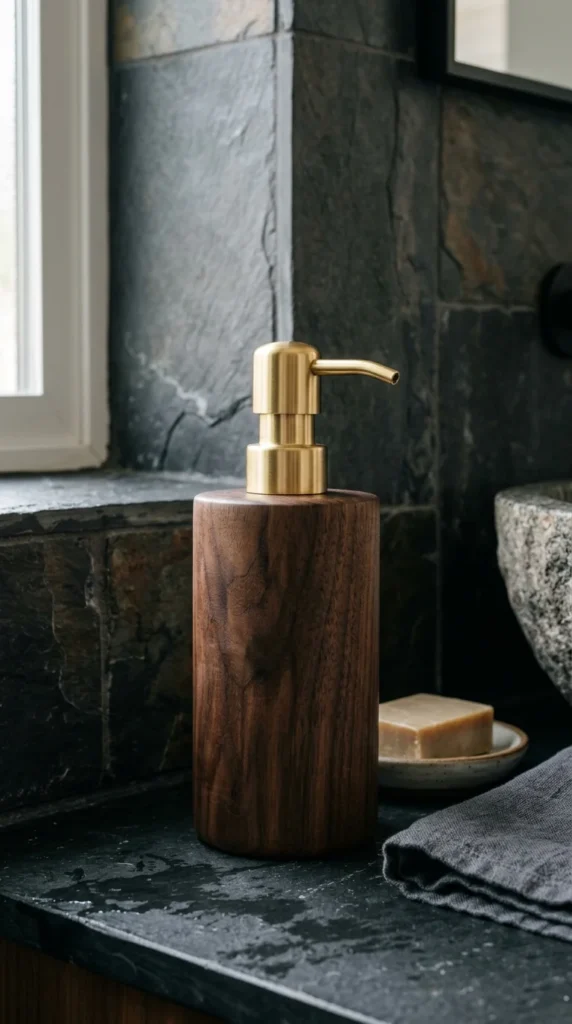
For those who prefer a touch of luxury, dark walnut is the answer. The rich, chocolatey tones and swirling grain patterns provide a sophisticated contrast to white porcelain sinks. Pairing a walnut dispenser with a gold or brass pump creates a mid-century modern aesthetic that feels timeless and expensive.
3. Teak Elegance
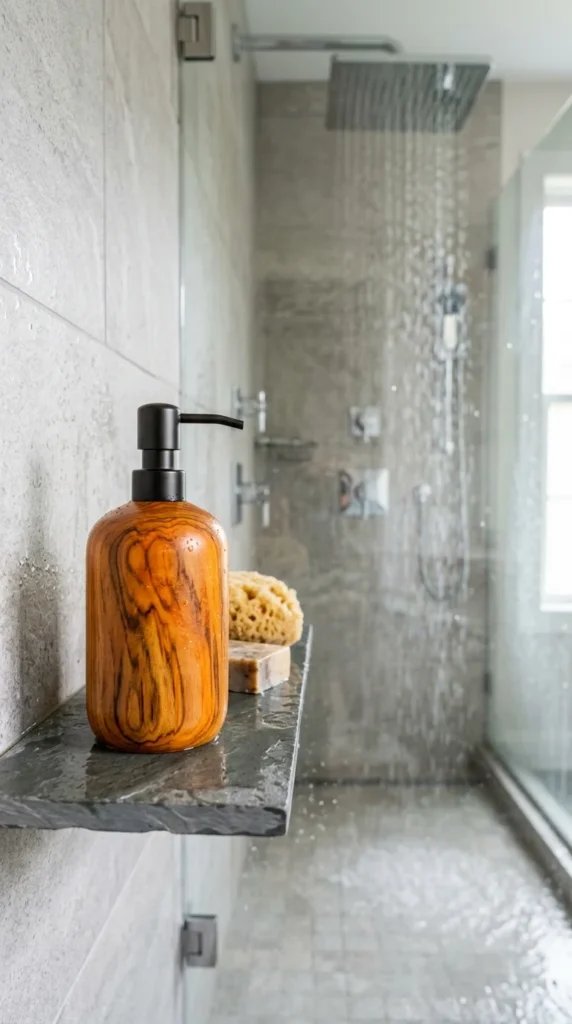
Teak is legendary for its durability in wet environments, which is why it’s a staple on high-end yachts. A teak soap dispenser offers a warm, honey-toned glow that deepens over time. Its high oil content makes it naturally resistant to rot, making it the perfect choice for a heavy-use kitchen or a steam-filled master bath.
4. Geometric Pine
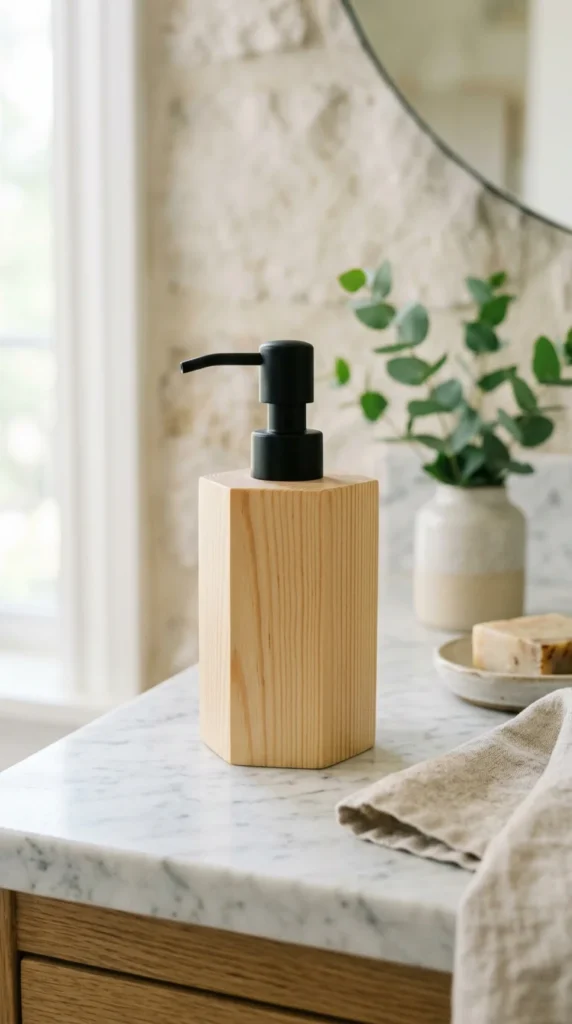
Modern design is often defined by its geometry. A pine dispenser carved into a hexagon or a faceted diamond shape adds an architectural element to your vanity. The pale, knotty appearance of pine lends a “cabin-chic” feel that remains firmly rooted in contemporary style thanks to the sharp, deliberate edges.
5. Reclaimed Oak
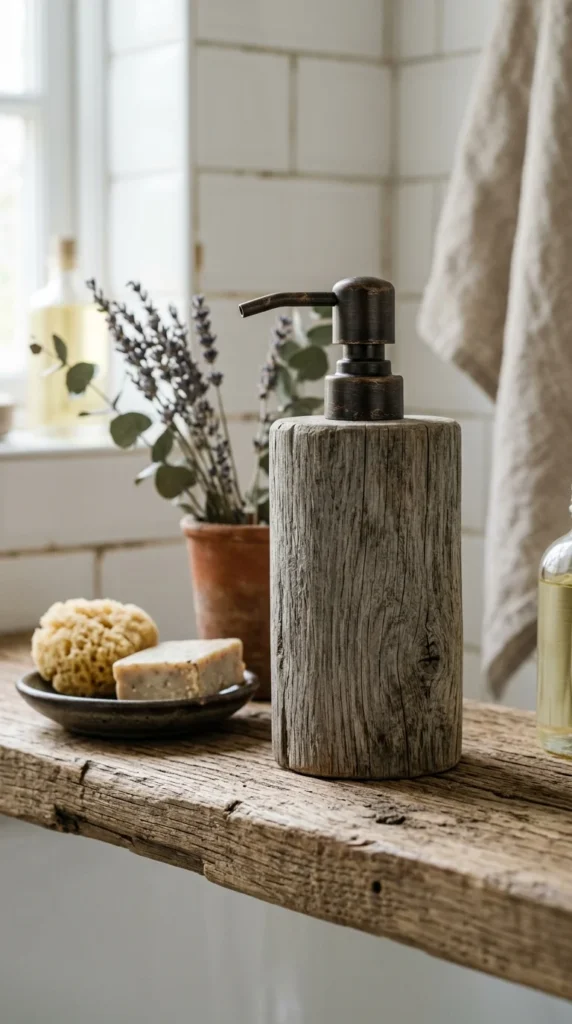
If you love the “wabi-sabi” philosophy of finding beauty in imperfection, reclaimed oak is a fantastic choice. These dispensers often feature unique textures, small cracks, or nail holes that tell a story. When paired with a modern pump, the juxtaposition of old-world material and new-world function creates a stunning focal point.
6. Acacia Curve
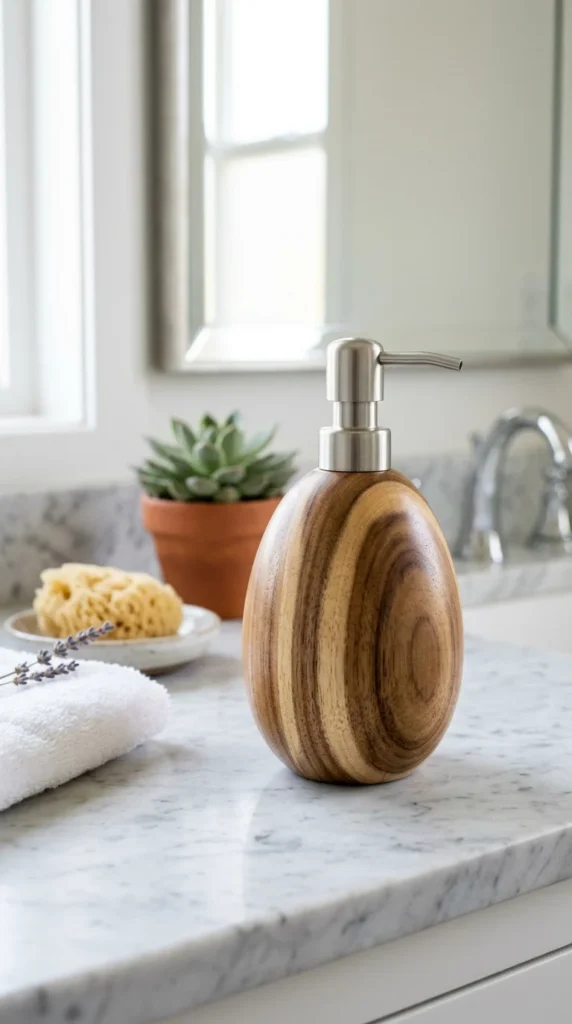
Acacia wood is known for its dramatic grain variations. A curved, organic-shaped acacia dispenser softens the harsh lines of a square sink. The undulating patterns of the wood grain provide a sense of movement, making the dispenser feel like a piece of functional sculpture rather than a mere utility item.
7. Matte Black/Wood Hybrid
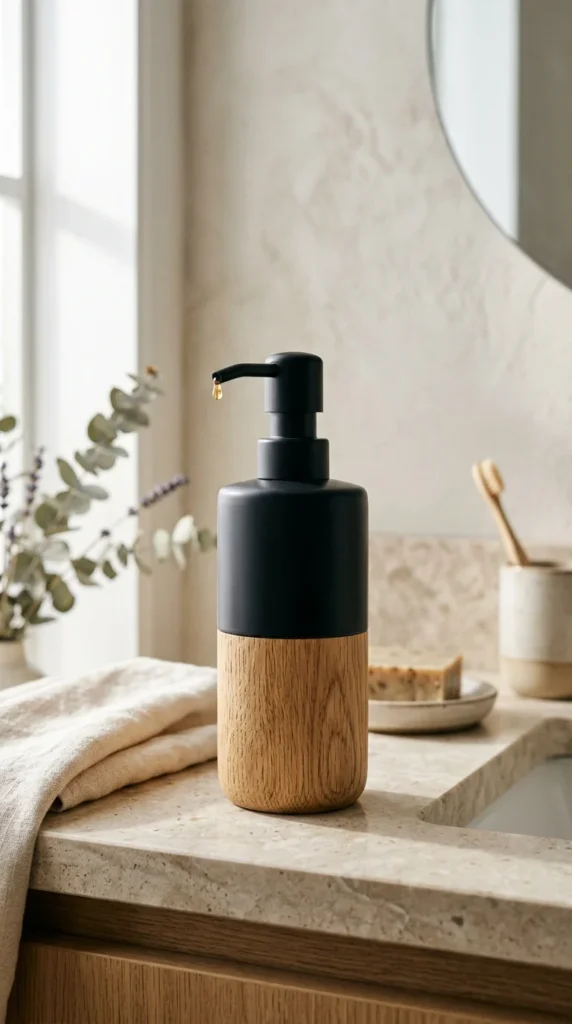
Can’t decide between wood and modern industrial materials? The hybrid look is incredibly popular. By combining a wooden base with a matte black ceramic or metal top, you get the warmth of the timber and the “cool” factor of industrial design. This look is particularly effective in masculine-leaning or ultra-modern monochromatic bathrooms.
8. Olive Wood
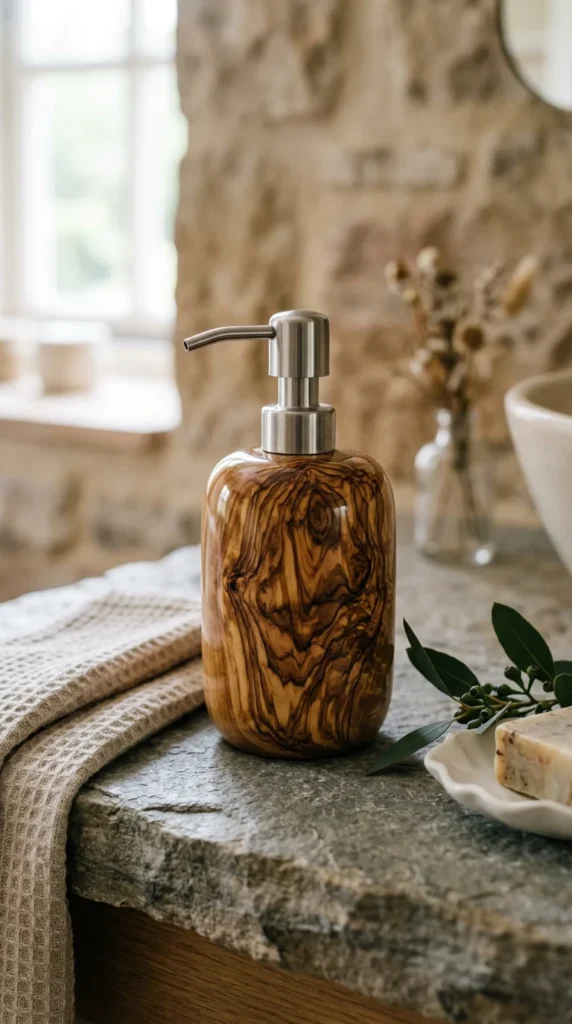
Olive wood is perhaps the most decorative of all timbers. Its grain is wild, unpredictable, and visually arresting. Because olive trees grow slowly, the wood is very dense and durable. An olive wood dispenser acts as a “jewel” for your sink, requiring very little else around it to look complete.
9. Japanese Hinoki
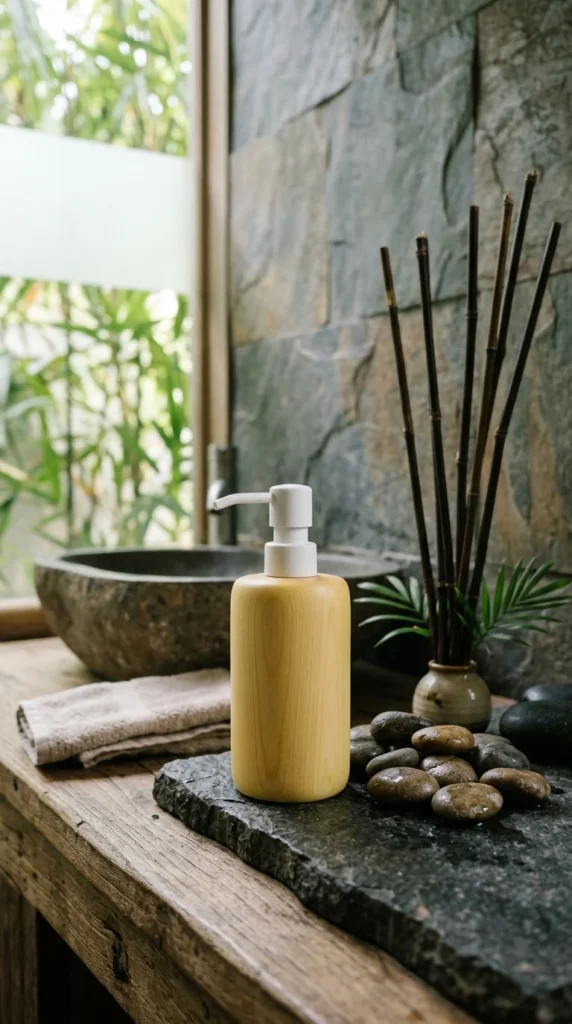
Hinoki, or Japanese Cypress, is prized for its soft scent and pale, elegant color. In a modern bathroom, a Hinoki dispenser brings a sense of “spa-at-home” tranquility. The wood is traditionally used in Japanese baths because it can handle humidity while emitting a light, citrusy fragrance when wet.
10. Floating Wall-Mount
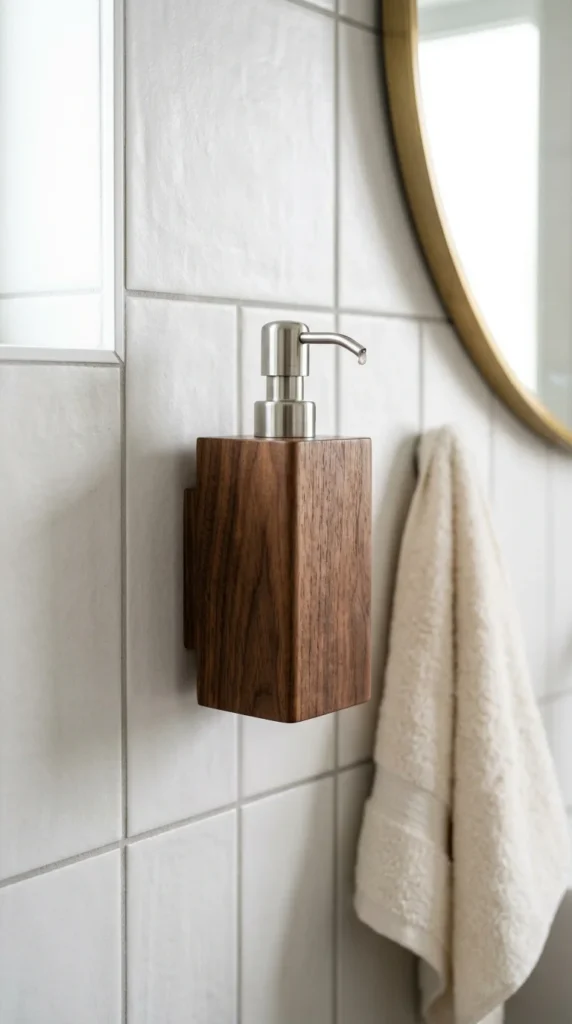
To achieve the ultimate clean look, get the dispenser off the counter. A wall-mounted wooden dispenser saves space and prevents water from pooling at the base. This design is ideal for small powder rooms or minimalist kitchens where clear surfaces are a priority.
11. White-Washed Birch
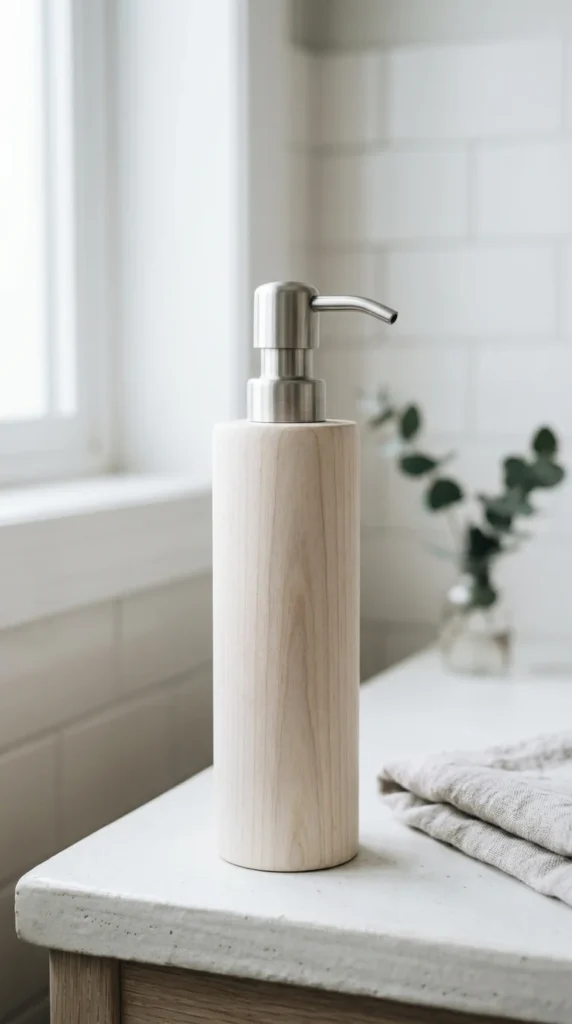
For a Scandinavian or coastal look, white-washed birch is the way to go. The light stain softens the yellow tones of the wood, creating a breezy, clean aesthetic. It pairs beautifully with light blue accents, seagrass baskets, and plenty of natural light.
12. Resin Inlay
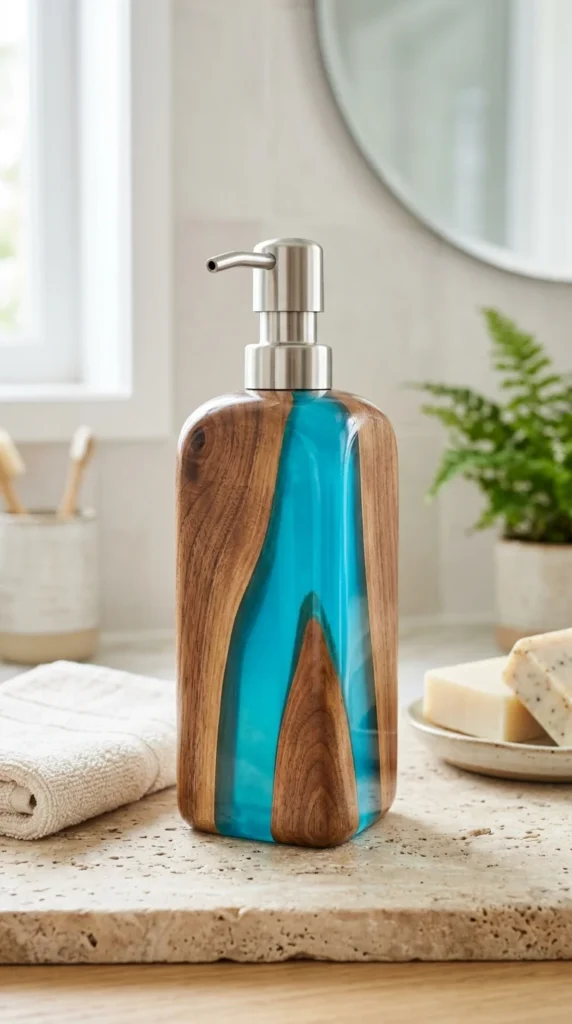
Inspired by the “river table” trend, these dispensers feature a split of wood bonded together with colored or clear epoxy resin. This adds a pop of color and a futuristic touch to the organic wood, making it a great conversation piece for a guest bathroom.
13. Cork Texture
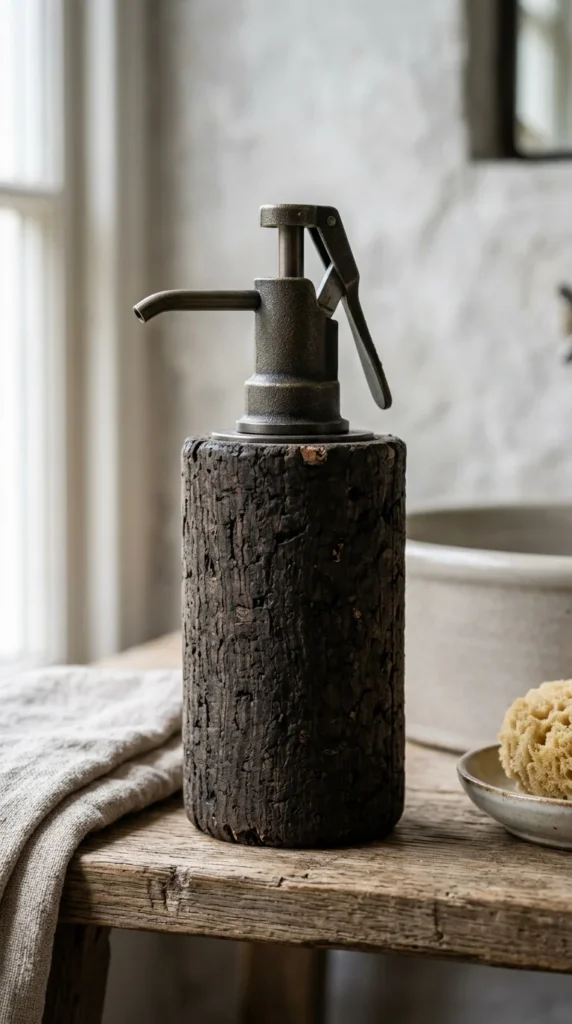
While technically bark, cork is a “woody” material that offers an incredible tactile experience. It’s naturally anti-microbial and provides a non-slip grip even when your hands are wet. A cork-wrapped dispenser adds an earthy, matte texture that contrasts beautifully with shiny chrome faucets.
14. Ebonized Ash
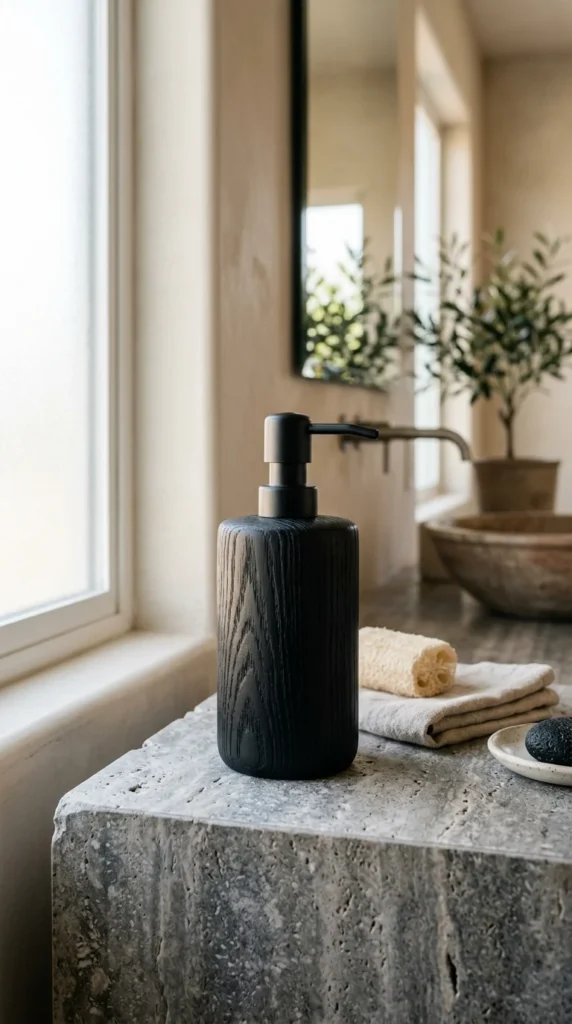
Ebonizing is a process that turns wood black while preserving the visibility of the grain. An ebonized ash dispenser offers the sleekness of black plastic but with the soul and texture of real timber. It’s the perfect choice for a sophisticated, “moody” bathroom design.
15. Mixed Wood Mosaic
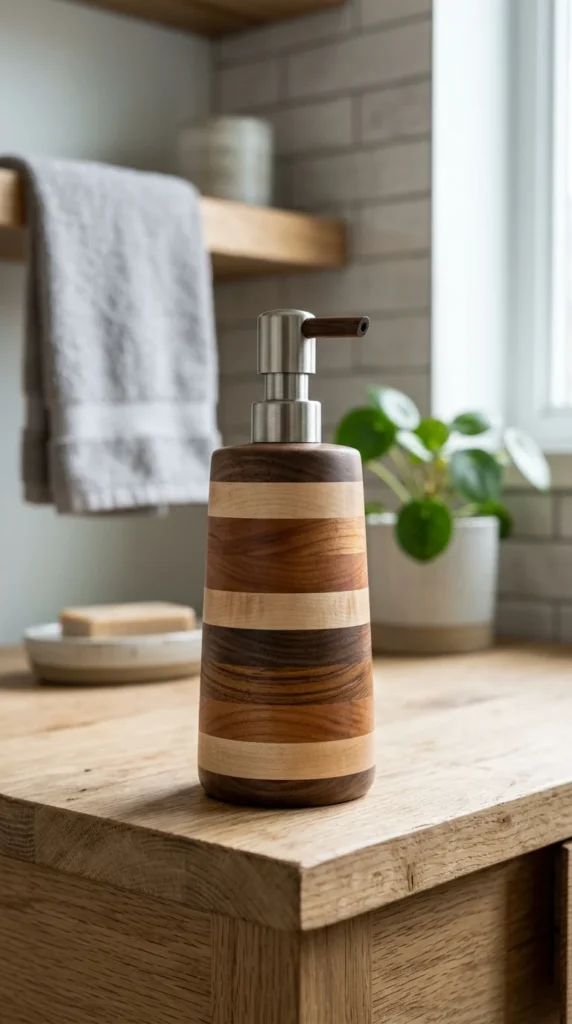
Why settle for one type of wood when you can have several? A mosaic or layered dispenser uses offcuts of various timbers to create a striped, multi-tonal look. This is a great way to tie together different wood tones already present in your home.
16. Raw Cedar
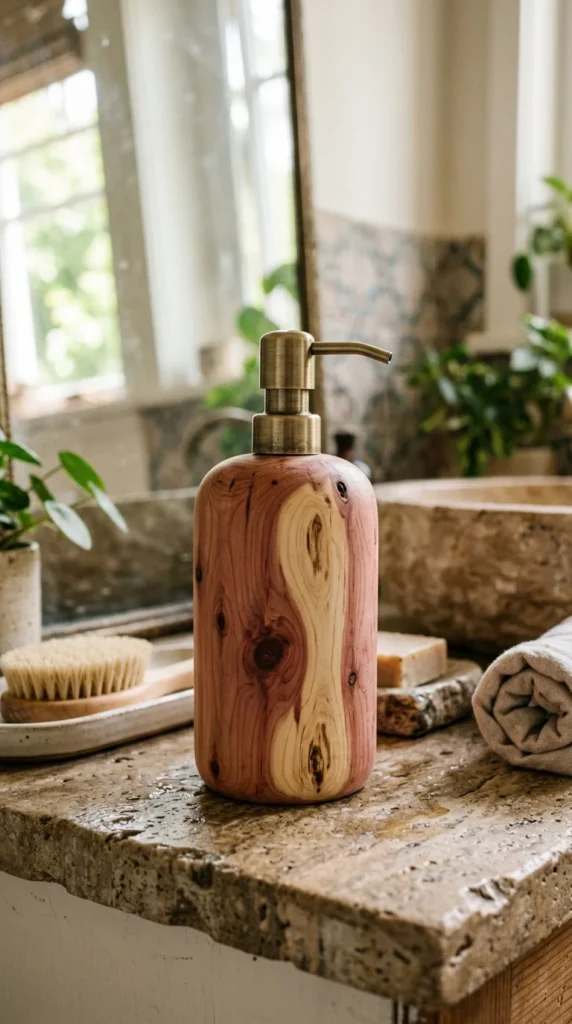
Cedar is famous for its incredible aroma and natural resistance to pests and moisture. A raw-finish cedar dispenser brings a rustic, “outdoorsy” vibe to a modern setting. It works exceptionally well in homes that use a lot of natural stone and leather.
17. Gold-Piped Mahogany
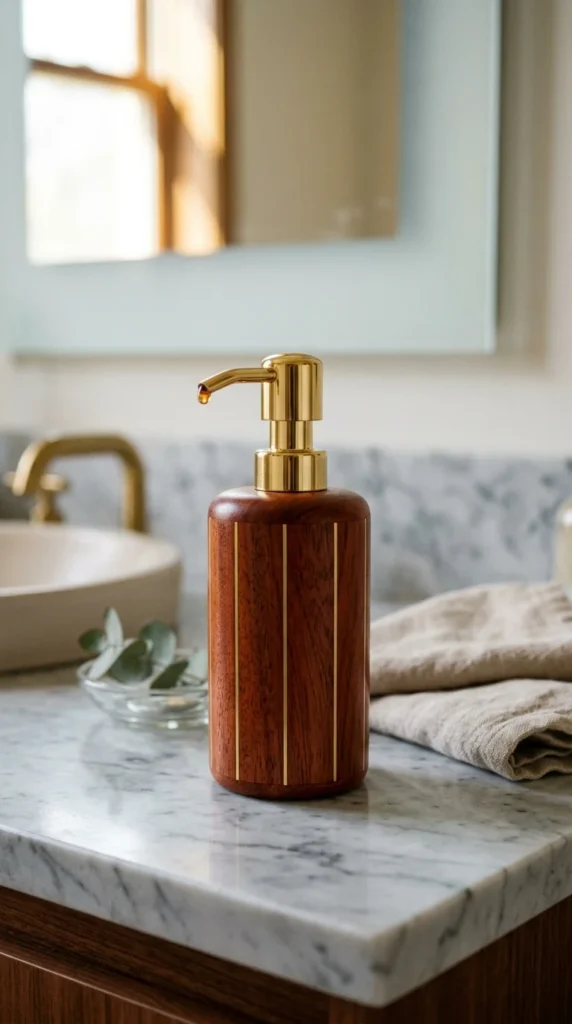
Mahogany is the pinnacle of traditional elegance, but when given a modern silhouette and gold accents, it feels completely current. The deep red hues of the mahogany provide a “warmth” that makes a large, cold bathroom feel much more inviting.
18. Beechwood Square
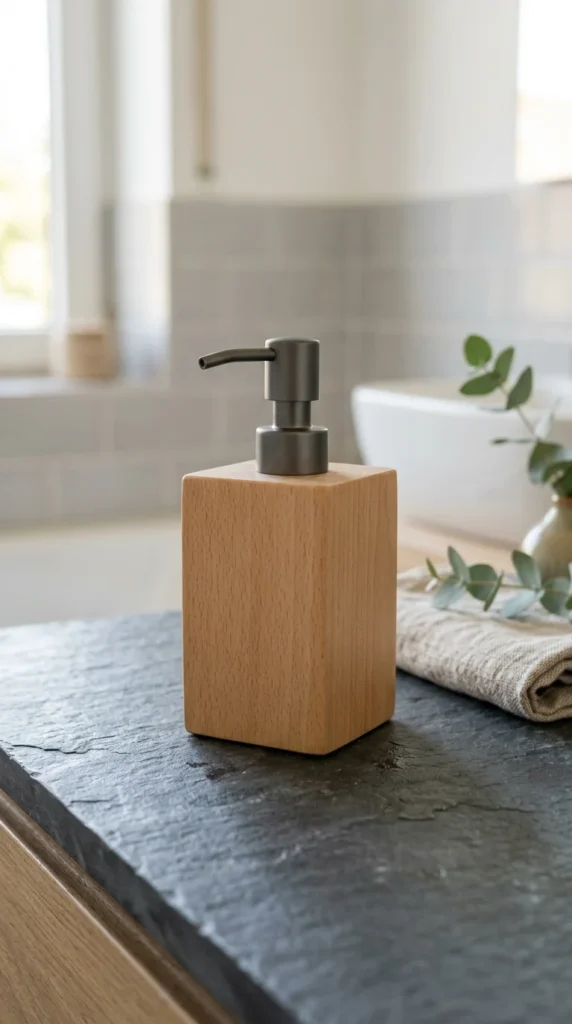
Beechwood has a very tight, consistent grain that looks almost like a solid color from a distance. In a square format, it looks incredibly architectural and clean. This is the go-to choice for fans of the “Muji” aesthetic—unassuming, functional, and beautiful in its simplicity.
19. Driftwood Style
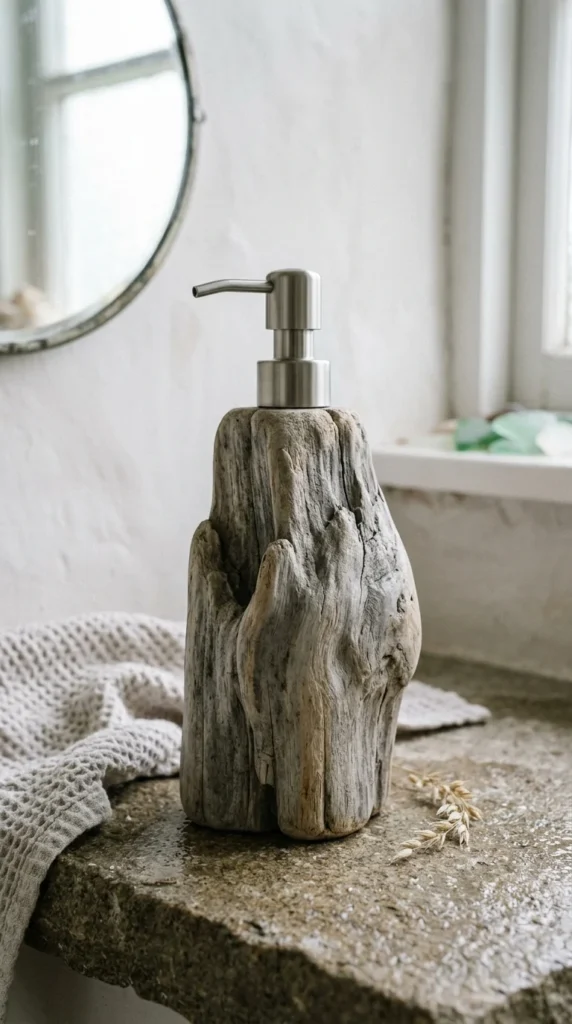
For a beach house or a coastal-themed room, a driftwood-style dispenser is a must. These are often carved from reclaimed wood that has been treated to look like it spent years in the ocean. The soft greys and tans are perfect for a relaxed, sun-drenched environment.
20. Maple Cylinder
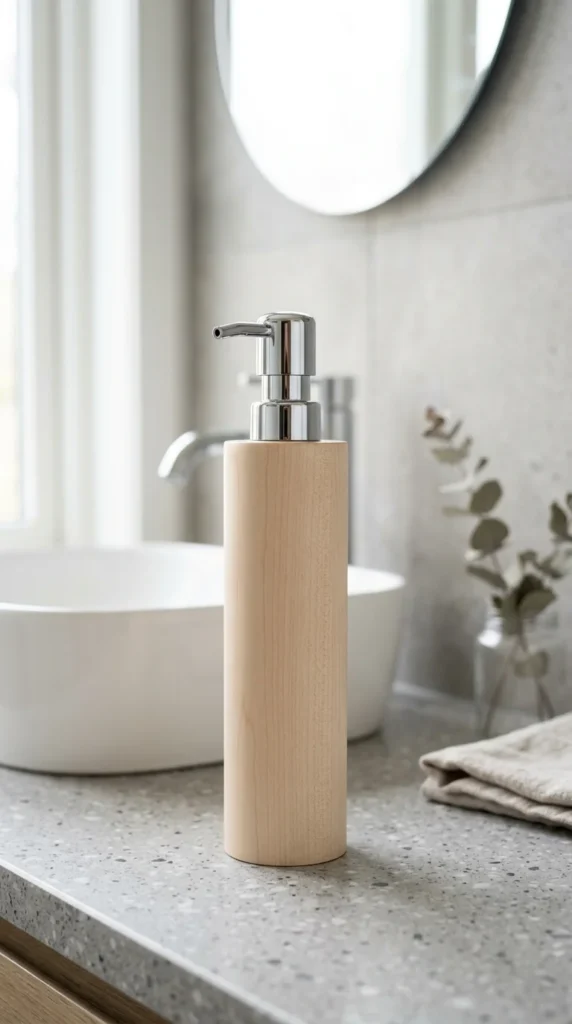
Maple is a hard, durable wood with a very light, creamy color. A tall, thin cylinder made of maple is the epitome of “modern clean.” It takes up very little visual space, making it perfect for a crowded kitchen sink or a tiny pedestal basin.
21. Cherry Wood Slim
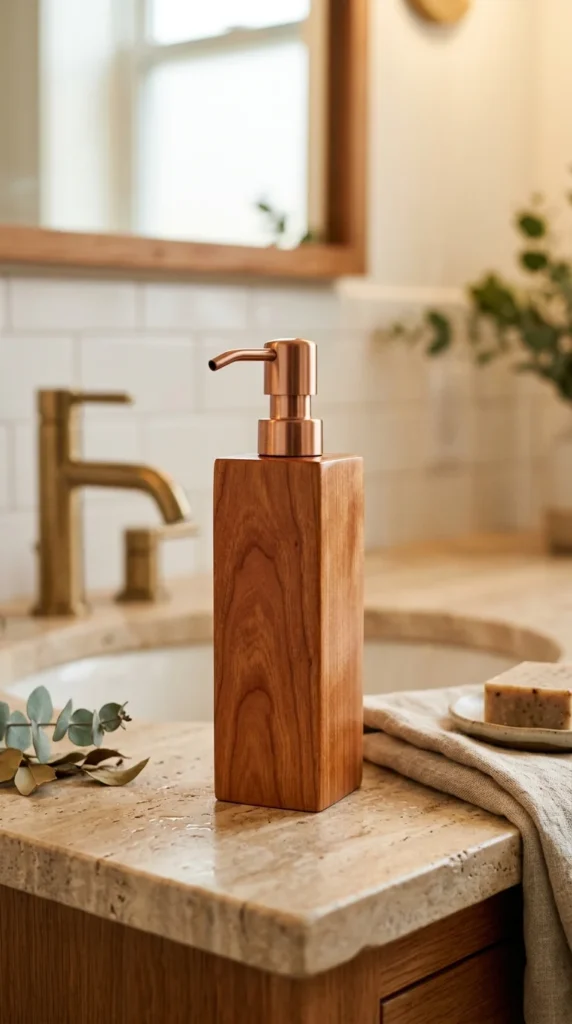
Cherry wood is unique because it actually darkens and becomes richer when exposed to light. A slim cherry wood dispenser will start as a warm tan and eventually turn into a deep, glowing amber-red. It’s a “living” piece of decor that evolves with your home.
How to Maintain Your Wooden Soap Dispenser
To ensure your wooden dispenser stays looking modern and clean for years to come, follow these simple maintenance tips:
- Seal the Wood: Ensure your dispenser is finished with a water-resistant sealant like polyurethane or a heavy-duty wax. If the wood starts to look dull, apply a fresh coat of food-safe mineral oil.
- Avoid Standing Water: While the wood might be water-resistant, it is not waterproof. Avoid letting the dispenser sit in a puddle of water. Use a small tray with drainage or wipe the base dry occasionally.
- Clean Gently: Use a damp cloth to wipe down the exterior. Avoid harsh chemical cleaners that can strip the finish or bleach the natural color of the wood.
- Check the Pump: Occasionally flush the pump mechanism with warm water to prevent soap buildup, which can lead to leaks that might damage the wood around the neck.
By choosing wood, you’re not just picking a container for soap—you’re bringing a piece of the natural world into your daily routine, creating a space that feels both modern and deeply human.