
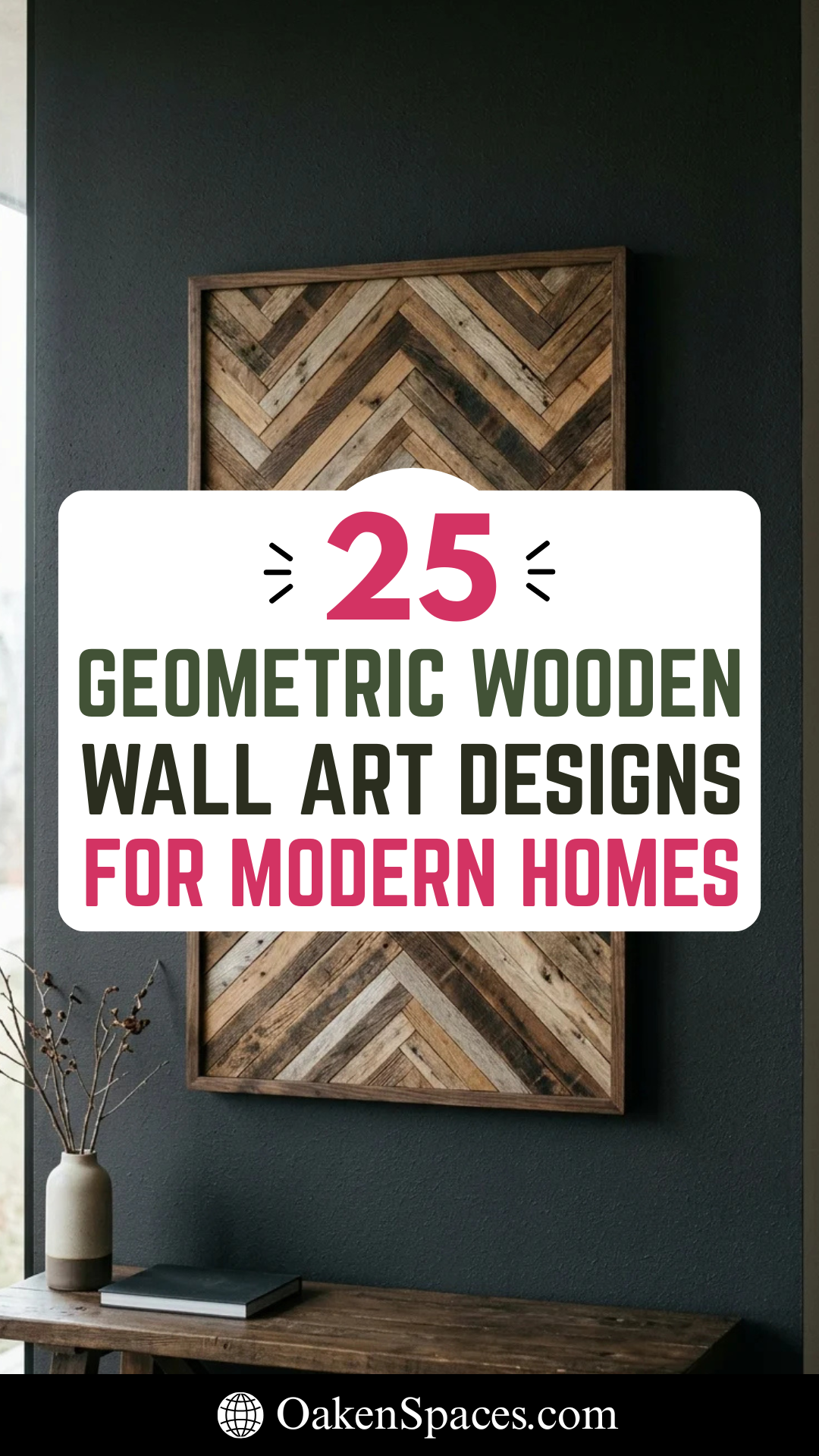
In the world of interior design, few elements bridge the gap between organic warmth and modern precision as effectively as geometric wooden wall art. These pieces act as the soul of a room, providing texture, depth, and a focal point that demands attention without overwhelming the space. Whether you are aiming for a minimalist Scandinavian look or a rugged industrial vibe, the right wooden installation can transform a flat wall into a three-dimensional masterpiece.
Here are 25 stunning geometric wooden wall art designs to inspire your next home makeover.
1. Herringbone Slats
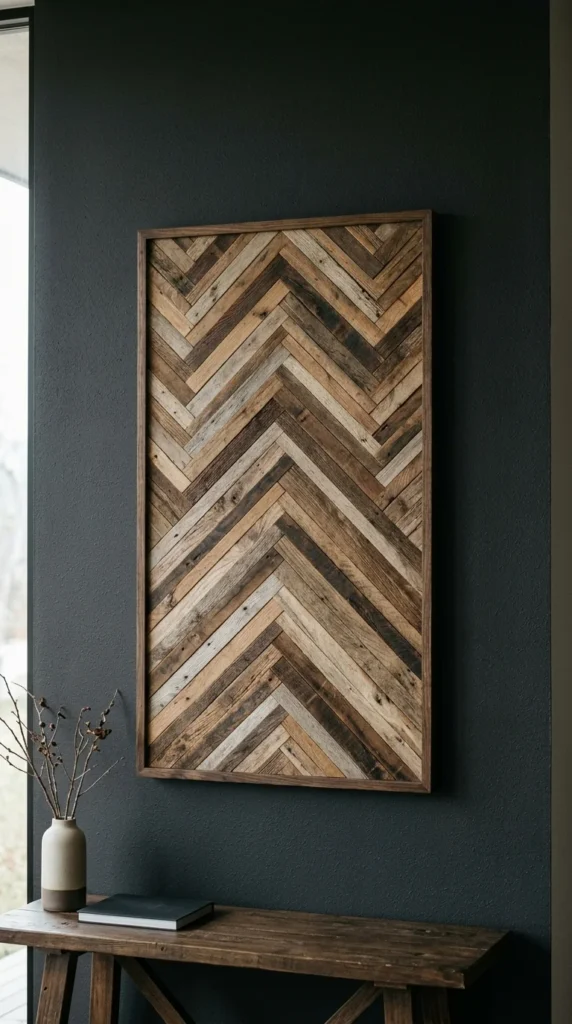
The herringbone pattern is a timeless classic that brings a sense of movement to a room. By using thin wooden slats, this design emphasizes directionality. It works exceptionally well in entryways or behind a bed, drawing the eye upward and making low ceilings feel taller. The variation in wood stains adds a “patchwork” charm that balances the rigid geometry.
2. Mountain Peaks
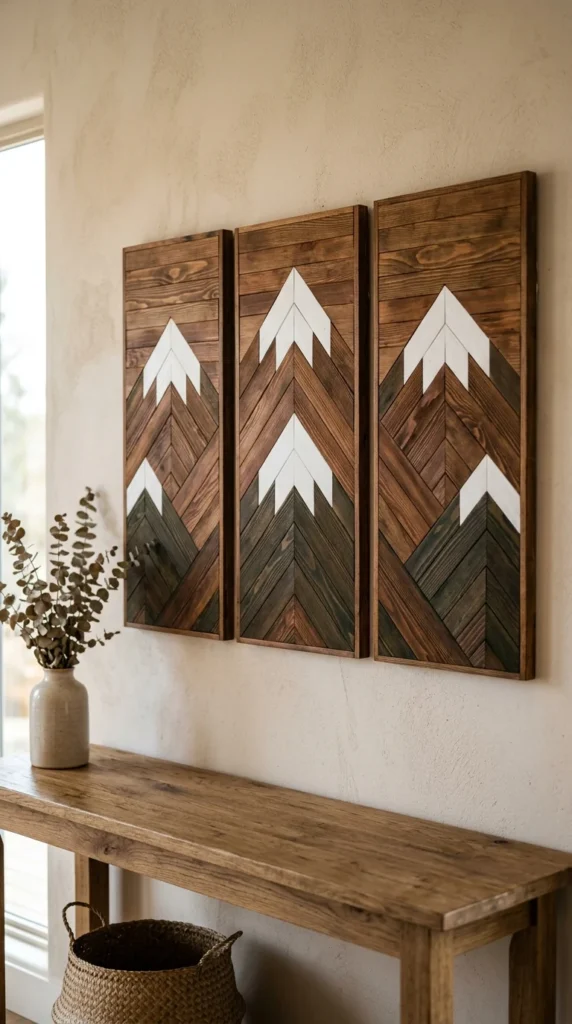
Ideal for those who want to bring the outdoors in, the mountain peak design uses sharp triangles to mimic a rugged horizon. This style is often created as a triptych (three separate panels), allowing you to spread the design across a wide wall. It’s a favorite for nurseries and home offices where a touch of nature-inspired serenity is needed.
3. 3D Cubes
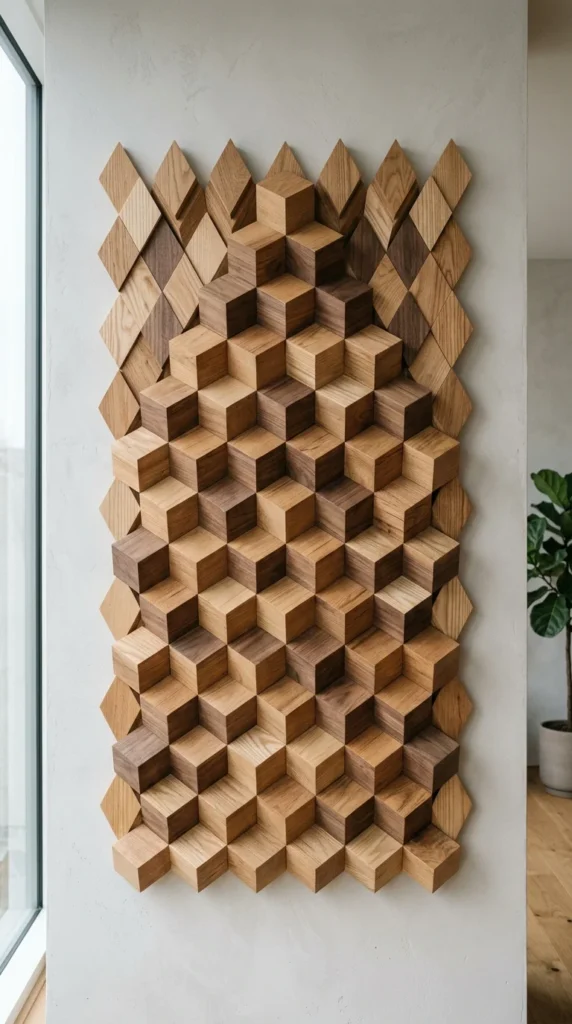
For a truly modern, architectural feel, 3D cubes use isometric geometry to play with light and shadow. By varying the thickness of each diamond-shaped block, the art changes its appearance as you walk past it or as the sun moves across the room. It’s a sophisticated choice for a formal dining room or a high-tech media room.
4. Sunburst Radial
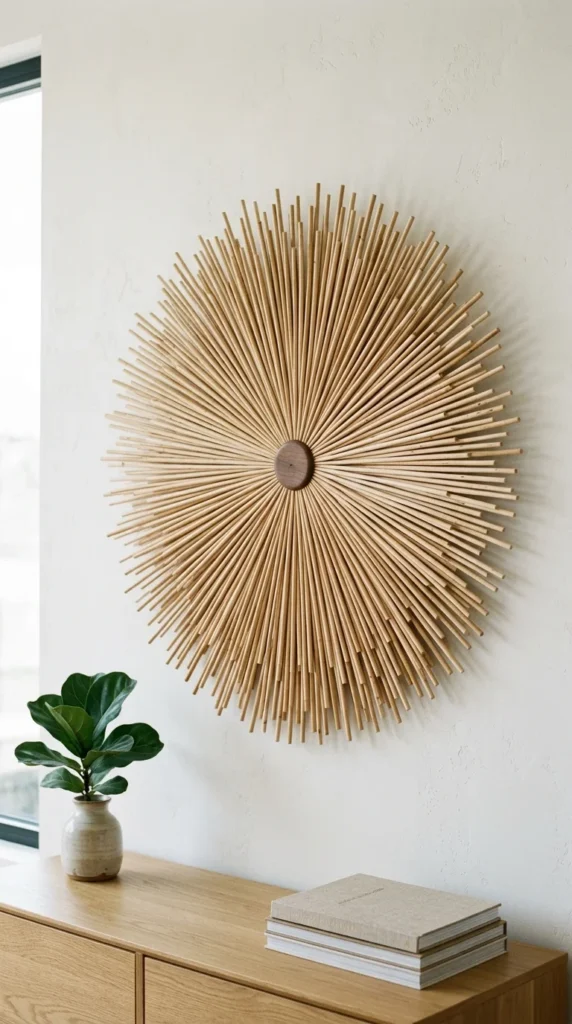
The sunburst design is an energetic addition to any space. It breaks up the straight lines of furniture and doors with its circular silhouette. This design often incorporates mid-century modern aesthetics, making it a perfect companion for tapered-leg sideboards and retro lounge chairs.
5. Hexagonal Honeycomb
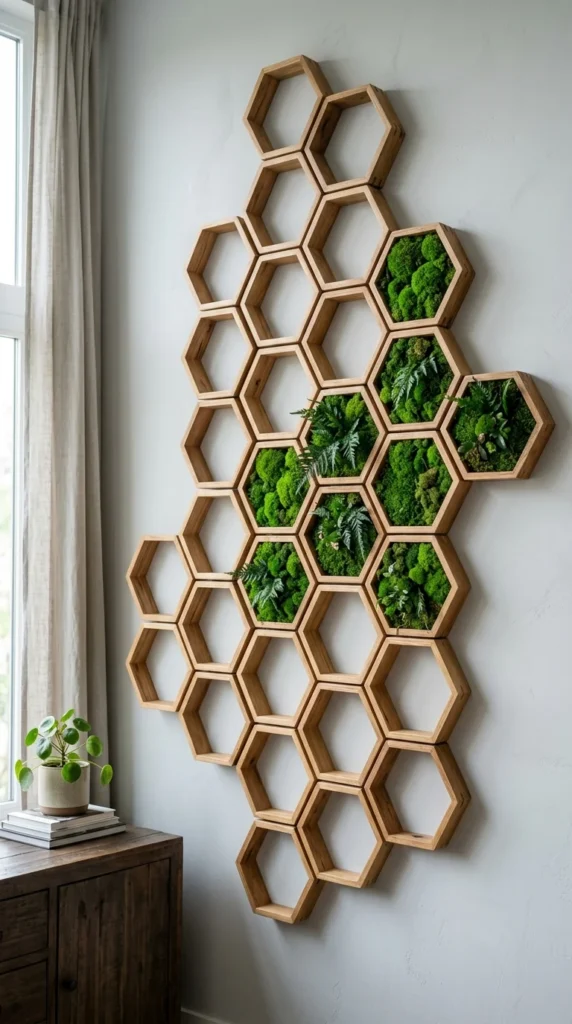
Hexagons are nature’s favorite shape, and they offer incredible modularity. You can start with a few pieces and “grow” the installation over time. Mixing solid wood hexagons with “skeleton” frames or even preserved moss inserts creates a biophilic design that feels alive and evolving.
6. Chevron Strips
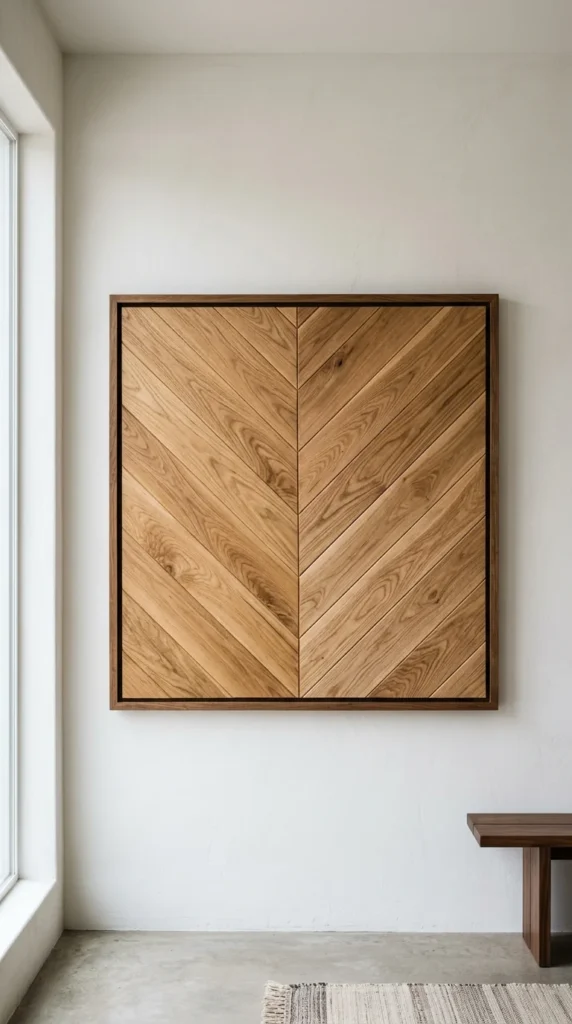
While similar to herringbone, the chevron pattern is more deliberate and structured, with the wood planks meeting at a perfect mitered joint. This design provides a clean, sophisticated look that thrives in large formats. Use it as a “headboard” alternative to ground a bedroom’s design.
7. Abstract Triangles
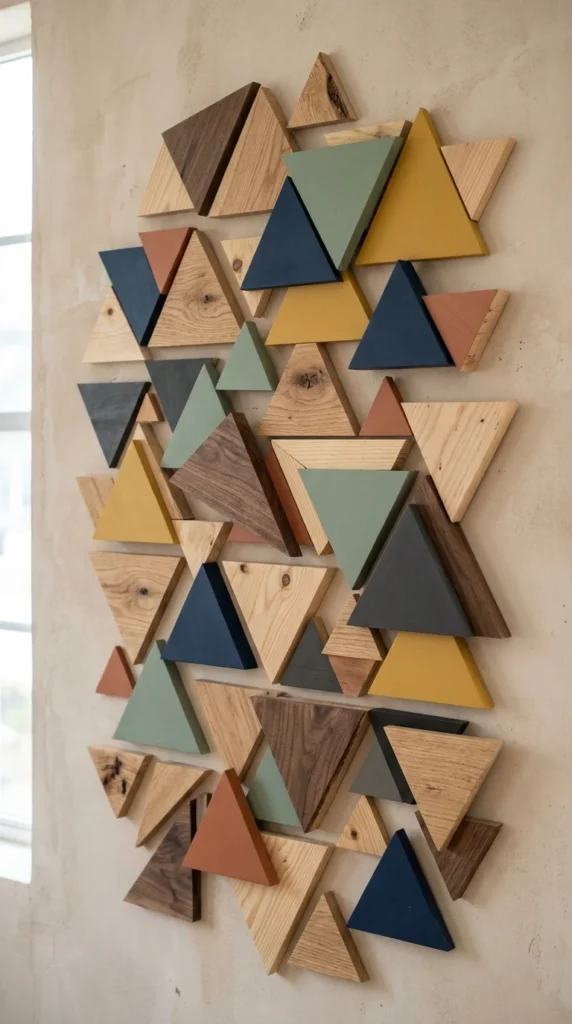
If you prefer something less predictable, abstract triangles allow for creative freedom. This design focuses on balance rather than symmetry. By mixing painted sections with natural wood, you can tie in the color palette of your existing decor, making the art feel like a bespoke part of the architecture.
8. Concentric Squares
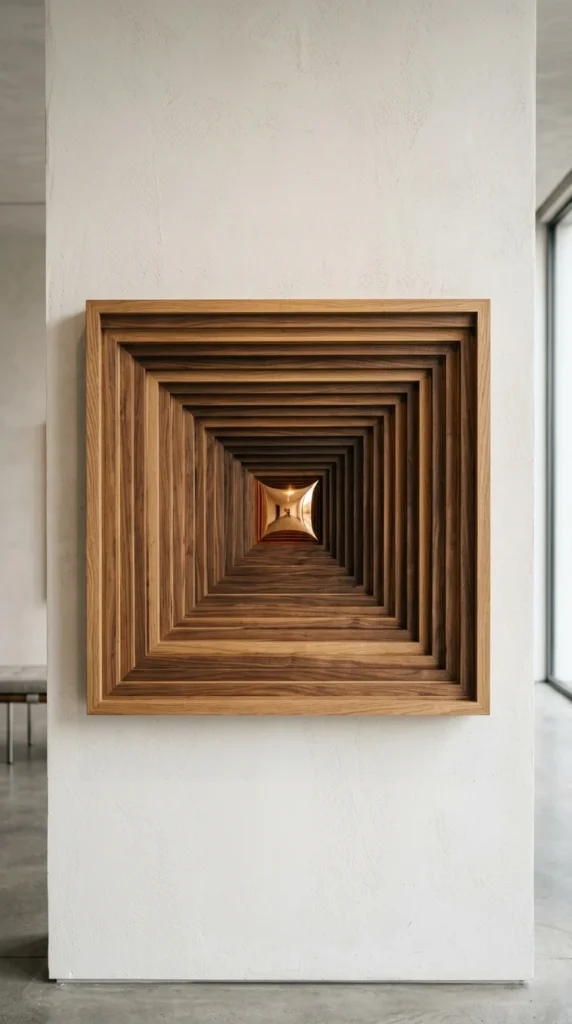
Concentric squares offer a hypnotic, disciplined aesthetic. This design is highly effective in minimalist homes where “less is more.” The repetition of the square shape creates a sense of order and stability, making it a grounding element for a busy living area.
9. Scandi-Lines
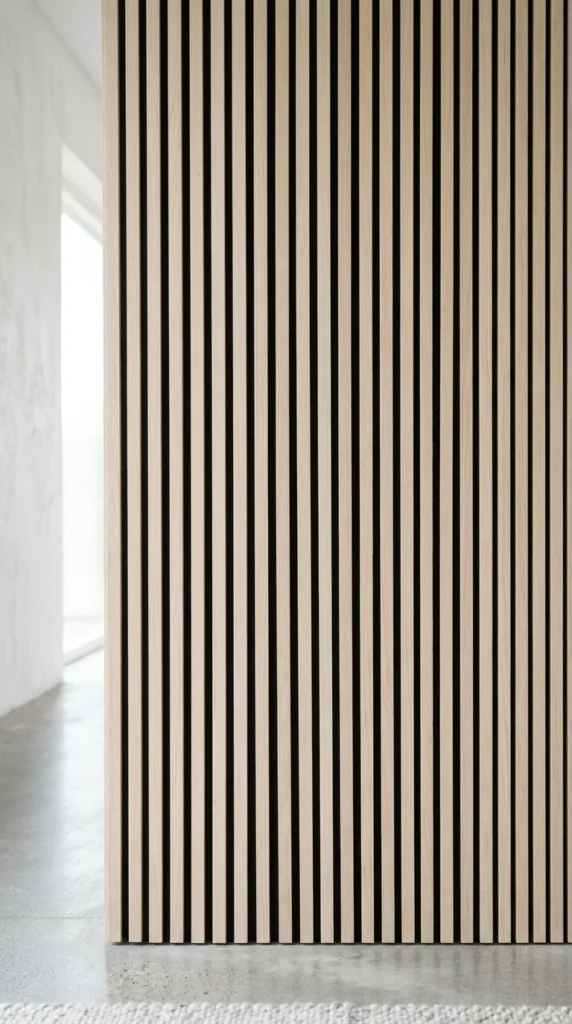
Inspired by Scandinavian saunas and modern architecture, this design is all about the “negative space” between the wood. The black backing creates high-contrast shadow lines that look like a barcode or a musical score. It is the pinnacle of understated luxury.
10. Floating Rhombus
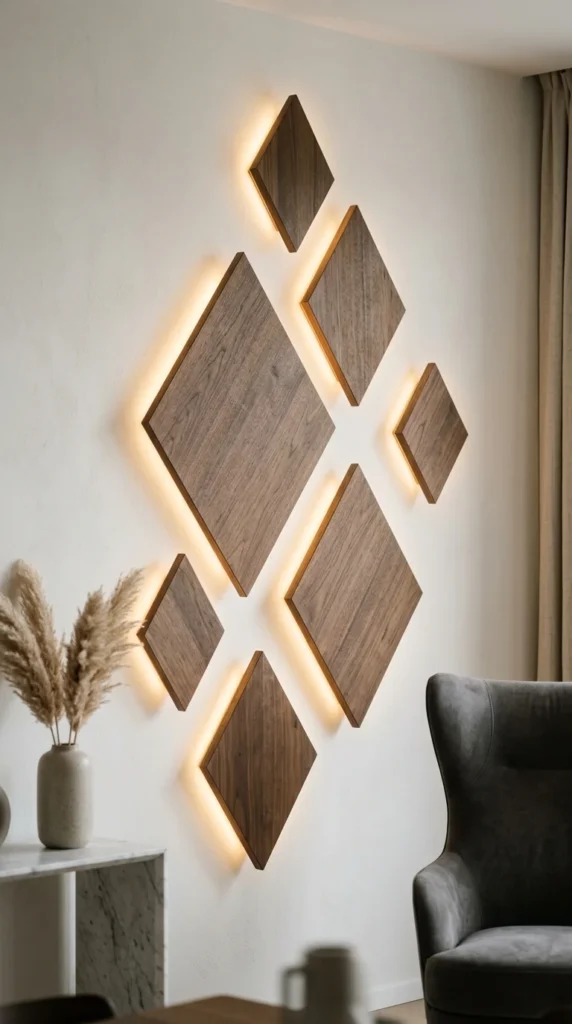
A rhombus adds a sense of tension and dynamism that a simple square cannot. When these shapes are “floated” off the wall using spacers, they gain a sculptural quality. Adding integrated LED lighting behind the pieces turns the wall art into a secondary light source for cozy evenings.
11. Circular Mosaic
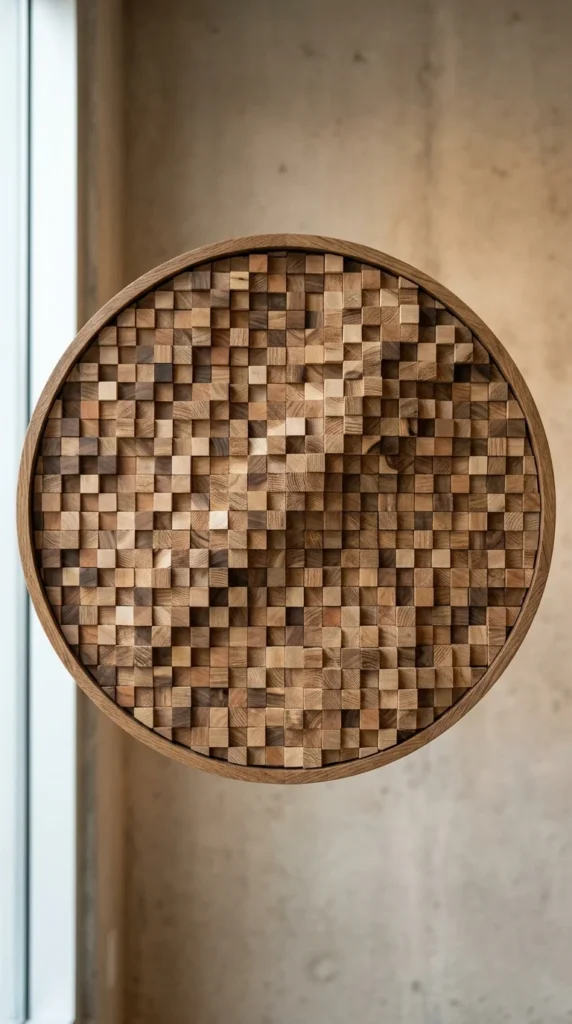
End-grain wood reveals the “rings” of the tree, adding a unique circular texture to each small block. When packed into a large circular frame, these blocks create a dense, rich mosaic that celebrates the raw history of the timber.
12. Mid-Century Diamonds
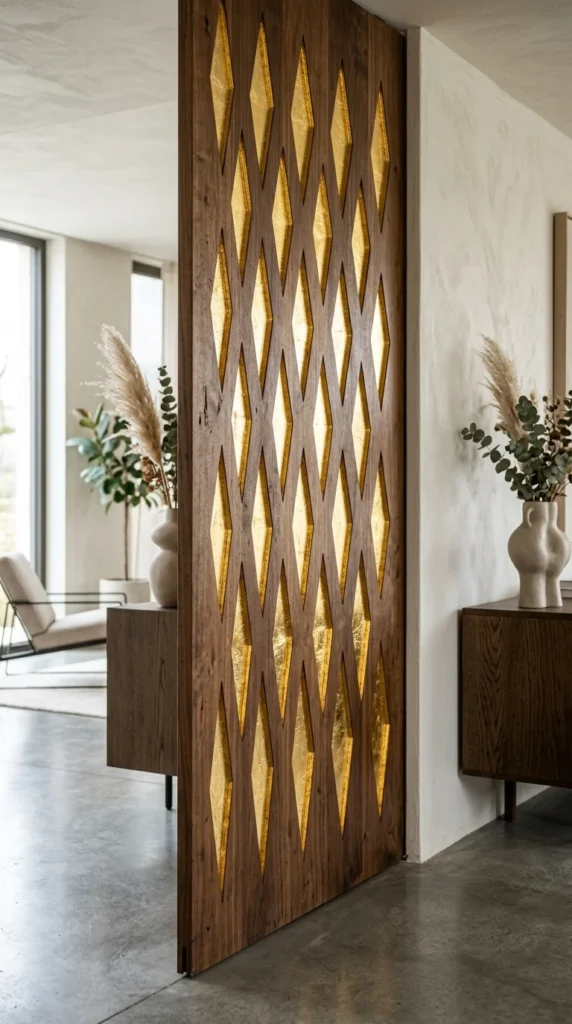
This design leans heavily into the 1950s and 60s aesthetic. The elongated “harlequin” diamond shape is quintessential mid-century. By layering different materials—like wood and gold leaf—you create a piece that feels like a vintage find from a high-end estate.
13. Parquet Patchwork
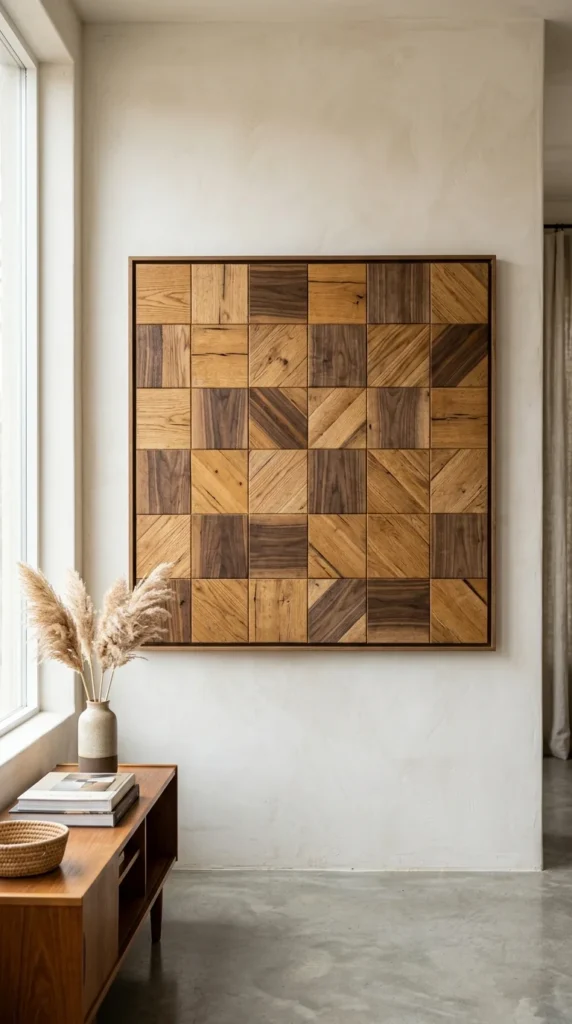
Parquet isn’t just for floors. Taking traditional flooring patterns and putting them on the wall at eye level allows you to appreciate the intricate craftsmanship. This design is perfect for adding a sense of history and “old-world” charm to a brand-new apartment.
14. Vertical Ribs
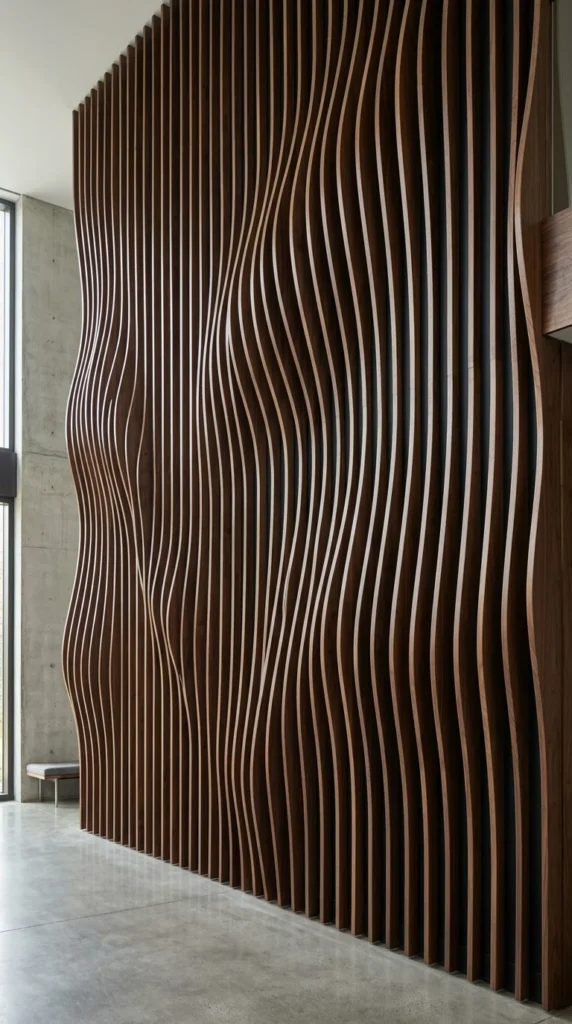
Vertical ribs or “fins” offer a rhythmic, almost musical quality to a room. When the fins are varied in depth, they create a wave-like motion that changes depending on your viewing angle. This is a bold choice for a hallway or a long transitional wall.
15. Inlaid Brass
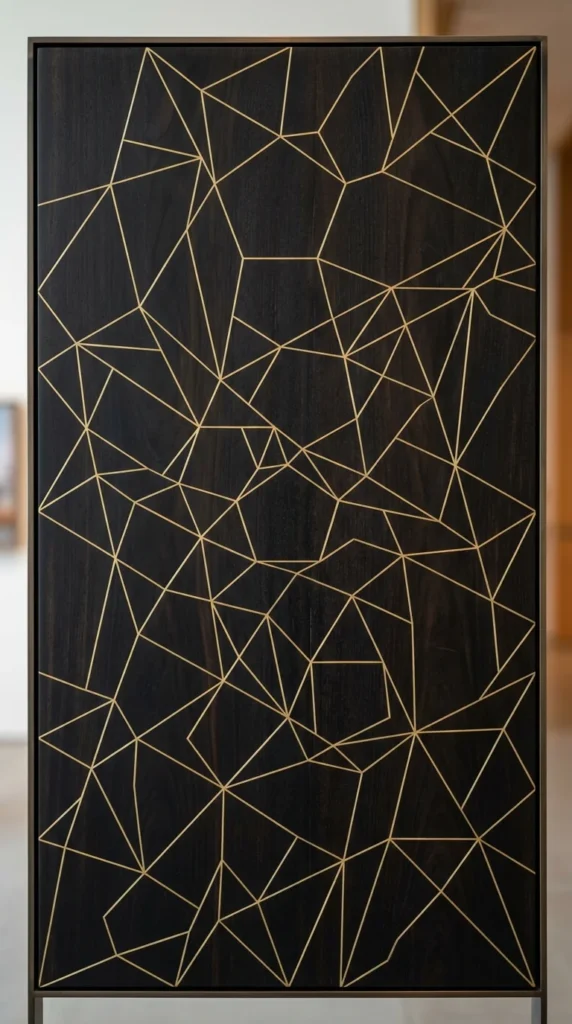
Wood and metal are a match made in design heaven. By inlaying thin strips of brass or copper into a dark-stained wood base, you create a piece that feels both organic and industrial. The metal catches the light, providing a “spark” that keeps the wood from feeling too heavy.
16. Shoshugi Ban Black
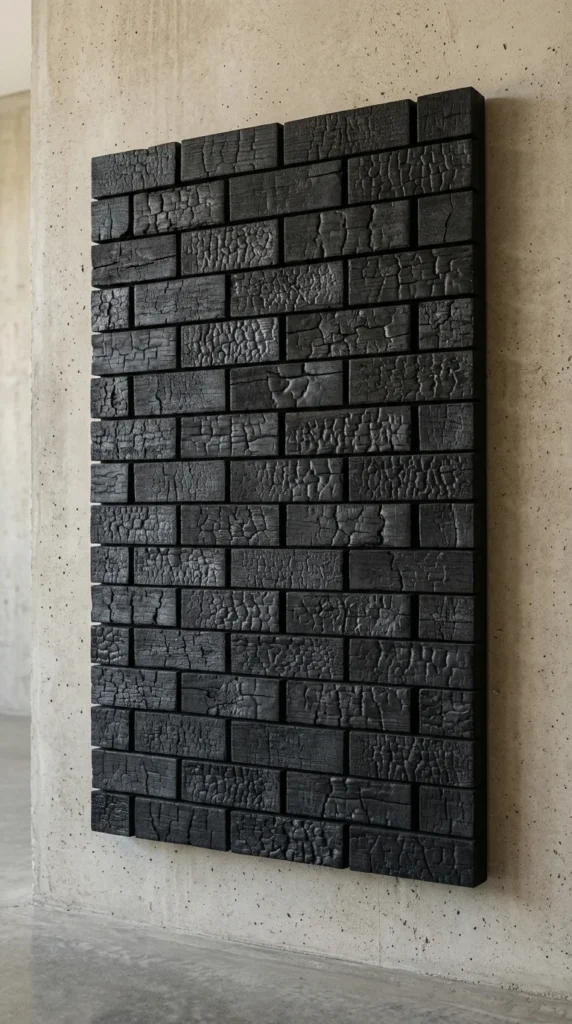
Shoshugi Ban is the ancient Japanese art of charring wood to preserve it. The result is a deep, iridescent black that no paint can replicate. Using this technique for geometric art adds a layer of “wabi-sabi” (beauty in imperfection) to a modern home.
17. Layered Pyramids
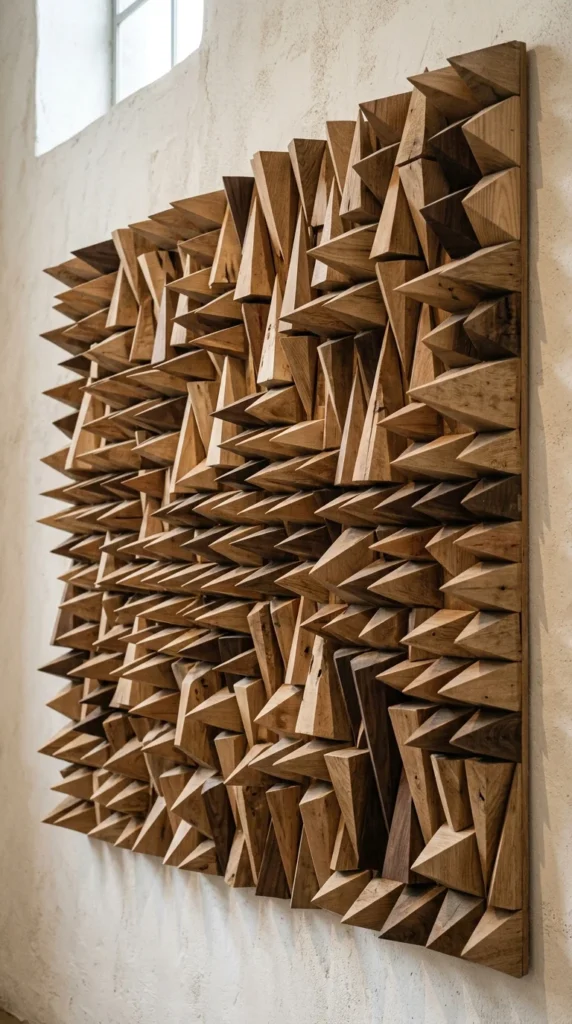
This is for the homeowner who wants maximum 3D impact. The layered pyramids create a surface that is tactile and provocative. It’s best used in a spot where it can be lit from the side (like with a sconce) to maximize the long shadows cast by the peaks.
18. Split Log Geometry
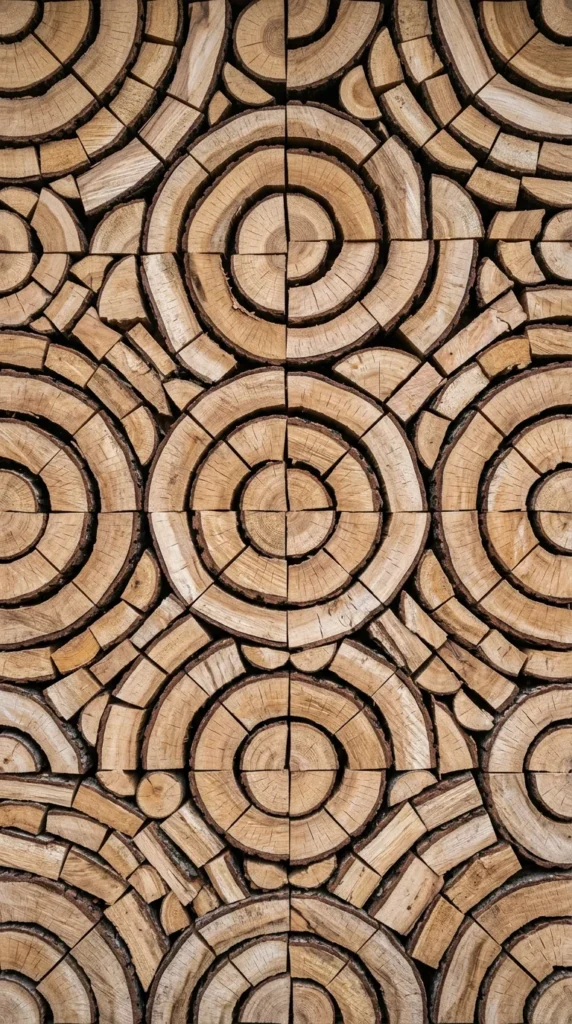
By using the natural roundness of logs and cutting them into geometric segments, this design bridges the gap between raw nature and human geometry. It’s a “warm” design that fits perfectly in a modern cabin or a rustic-modern living room.
19. Floating Rectangles
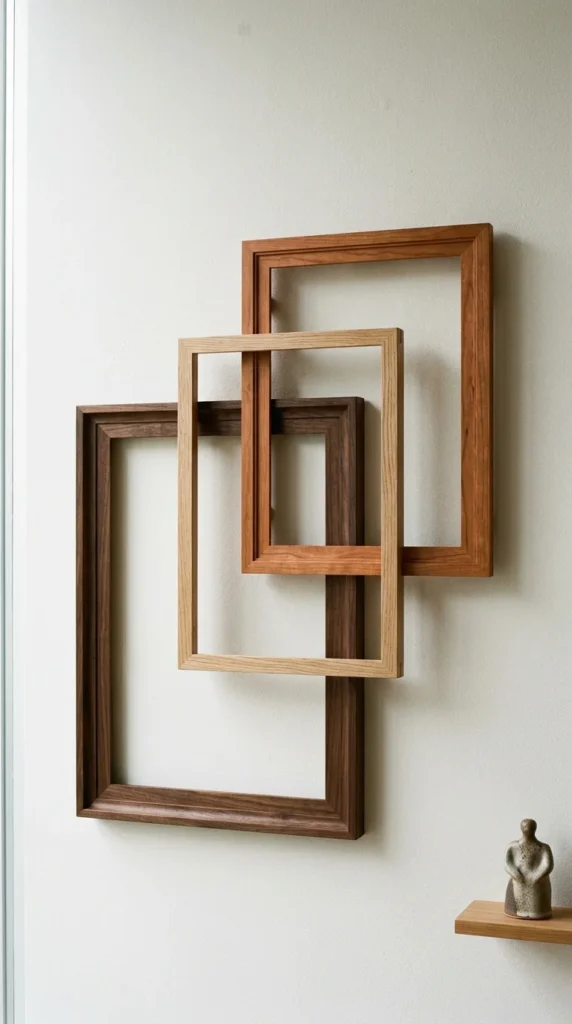
This design is about lightness and air. Instead of solid panels, it uses frames to “map out” space on the wall. The overlapping wood creates a sense of complexity without the weight of a solid installation.
20. Stained Ombre
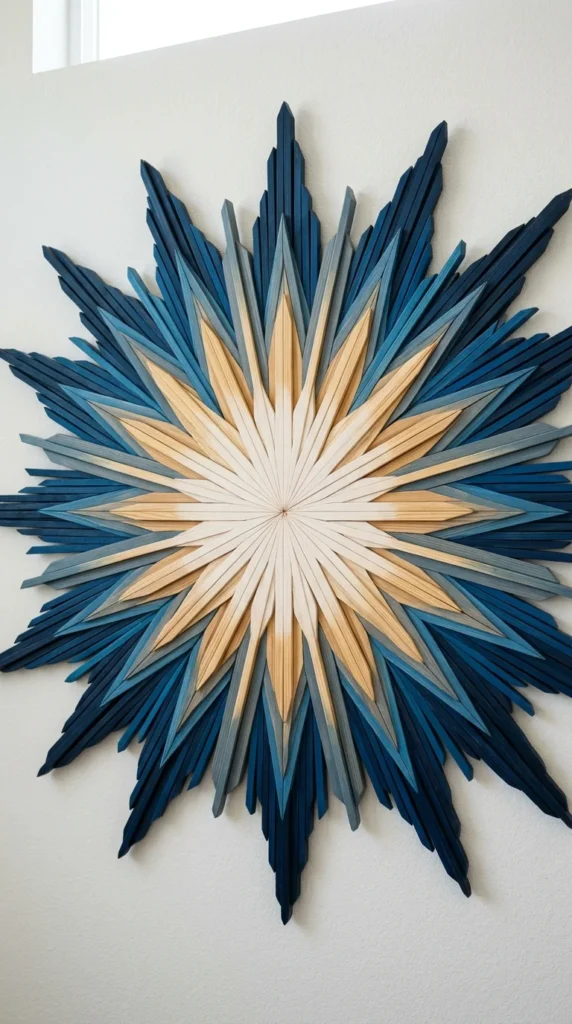
Ombre staining takes a geometric design and adds a color story to it. This technique softens the sharp edges of the geometry, making the piece feel more artistic and less like a construction project. It’s an excellent way to introduce color into a neutral room.
21. Interlocking Rhomboids
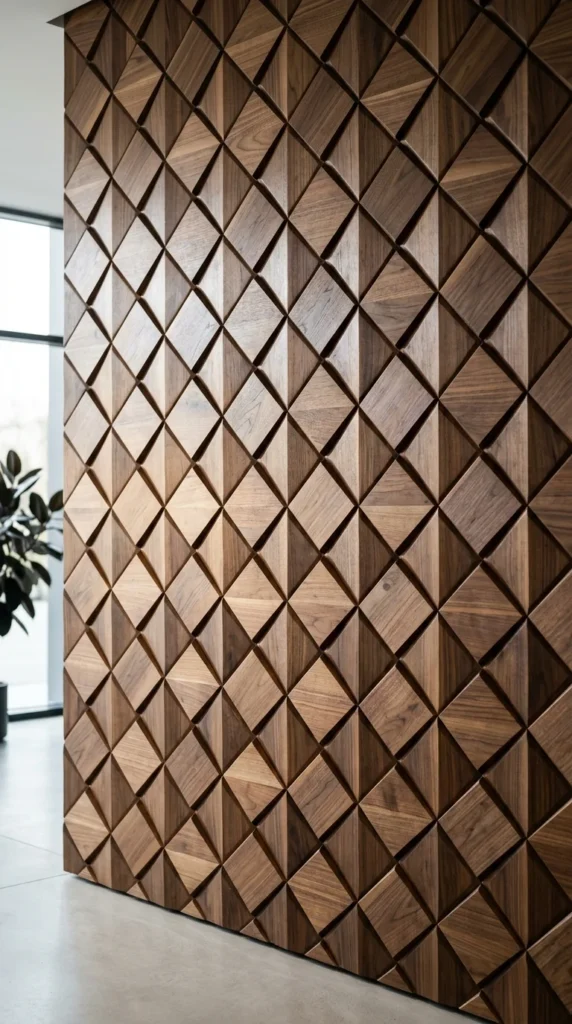
This design mimics a woven basket but in a rigid, wooden form. The interlocking shapes create a sense of unity and strength. Because the grain direction is constantly changing, the piece appears to “glow” differently from every angle.
22. Live Edge Geometry
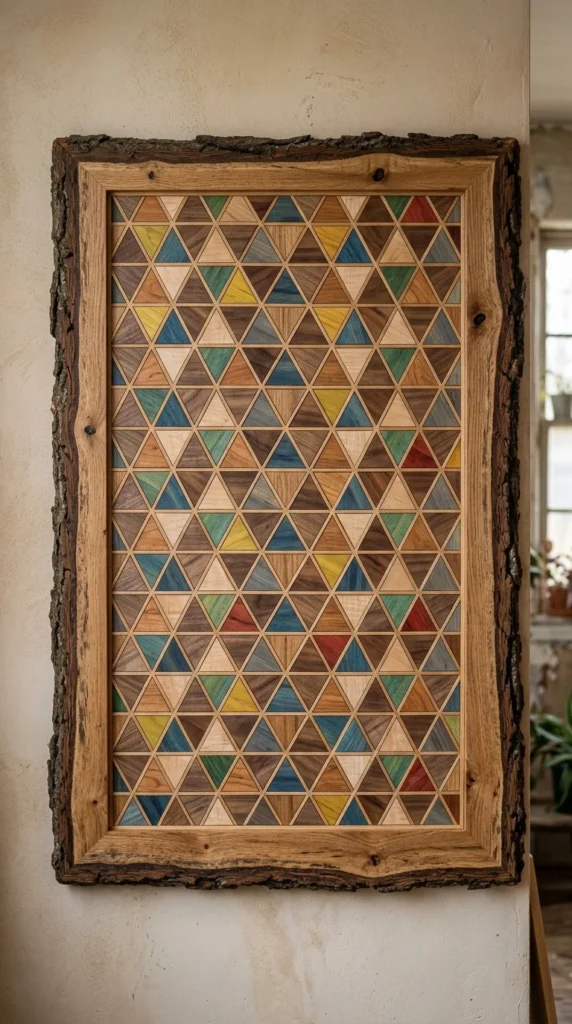
Live edge furniture is popular, but live edge geometric art is a unique twist. It combines the straight, “man-made” lines of geometry with the raw, “god-made” edges of the tree. It’s a conversation starter that emphasizes the origin of the material.
23. Distressed Reclaimed
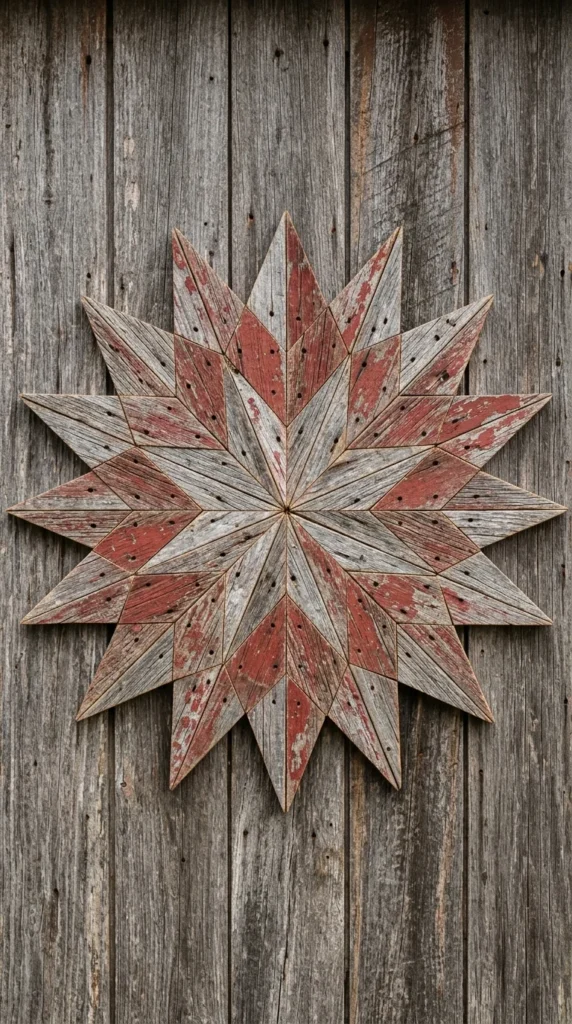
Using reclaimed wood adds a layer of history. Each scratch and nail hole tells a story. When this “messy” history is forced into a precise geometric pattern, the contrast is stunning. It’s the perfect way to add “soul” to a sterile modern apartment.
24. Carved Mandalas
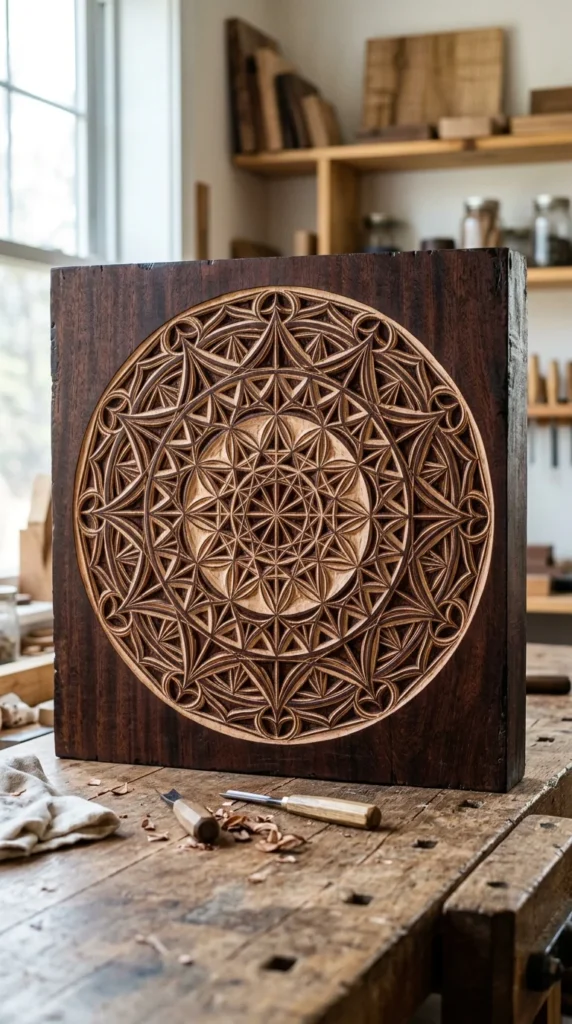
Mandalas are spiritual symbols of the universe, and when carved into wood, they provide a sense of calm and focus. The precision of the CNC or hand-carved lines against the solid mass of the wood slab creates a balanced, meditative piece of art.
25. Triptych Driftwood
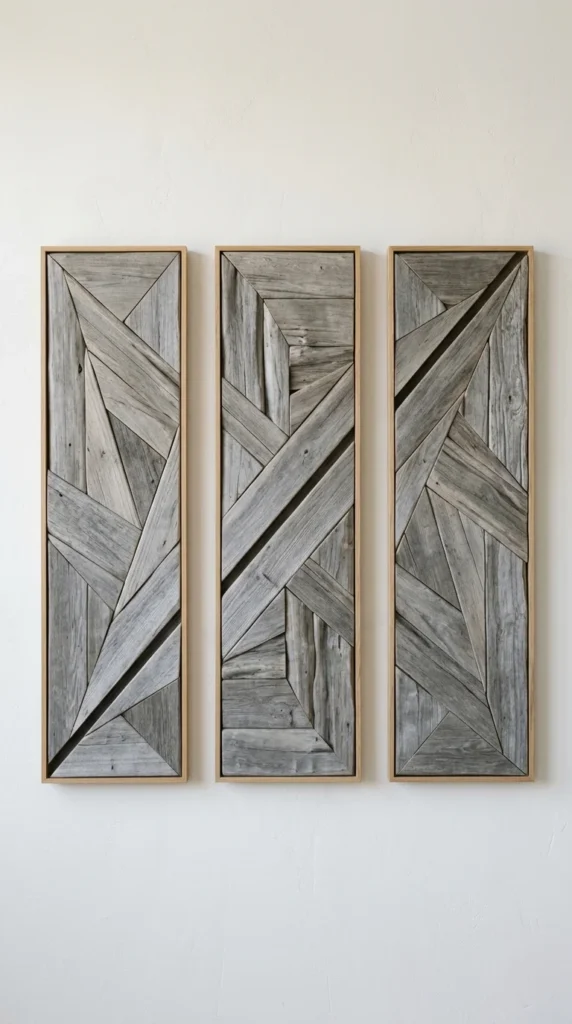
Driftwood offers a unique, sun-bleached color palette that fits “coastal modern” homes. Arranging these natural, weather-beaten pieces into sharp geometric lines creates a fascinating tension between the elements and human design.
Final Tips for Choosing Your Wood Art
- Scale Matters: For a large sofa, choose a piece that is at least two-thirds the width of the furniture to maintain visual balance.
- Lighting is Key: Geometric art lives and dies by its shadows. Use track lighting or wall sconces to highlight the 3D aspects of the wood.
- Mix Your Woods: Don’t feel like you have to match the art to your flooring. Often, a contrasting wood species (like dark walnut art on light oak floors) makes the piece pop.