
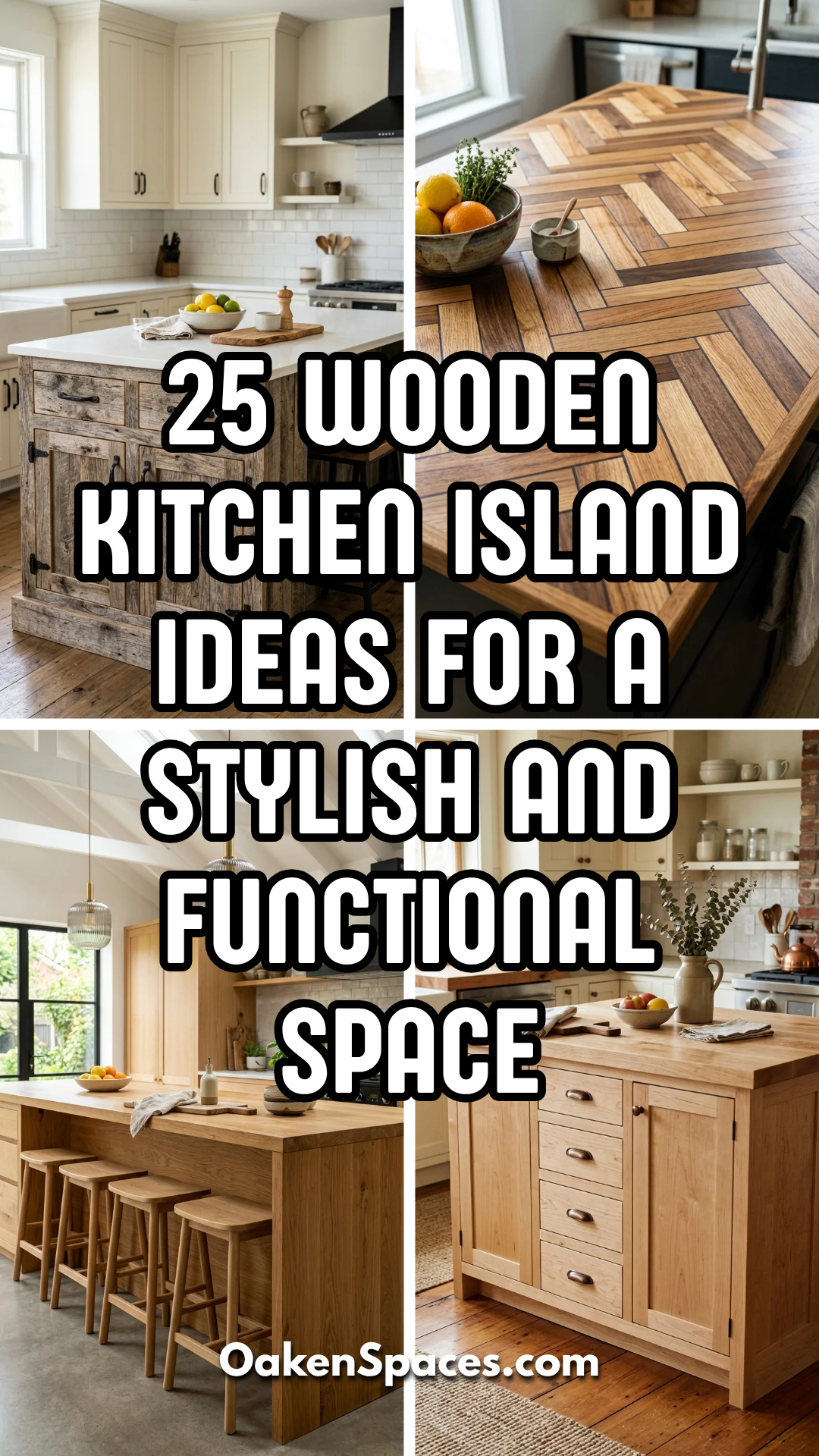
The kitchen island is the heart of the modern home. It is where morning coffee is poured, where homework is finished, and where guests congregate during a dinner party. While stone and marble have their place, nothing brings warmth, character, and organic beauty to a kitchen quite like wood. Whether you are aiming for a rugged farmhouse aesthetic or a sleek, modern look, a wooden kitchen island provides a versatile foundation that ages gracefully.
Here are 25 inspiring wooden kitchen island ideas to transform your culinary space into a masterpiece of design and utility.
1. Reclaimed Oak
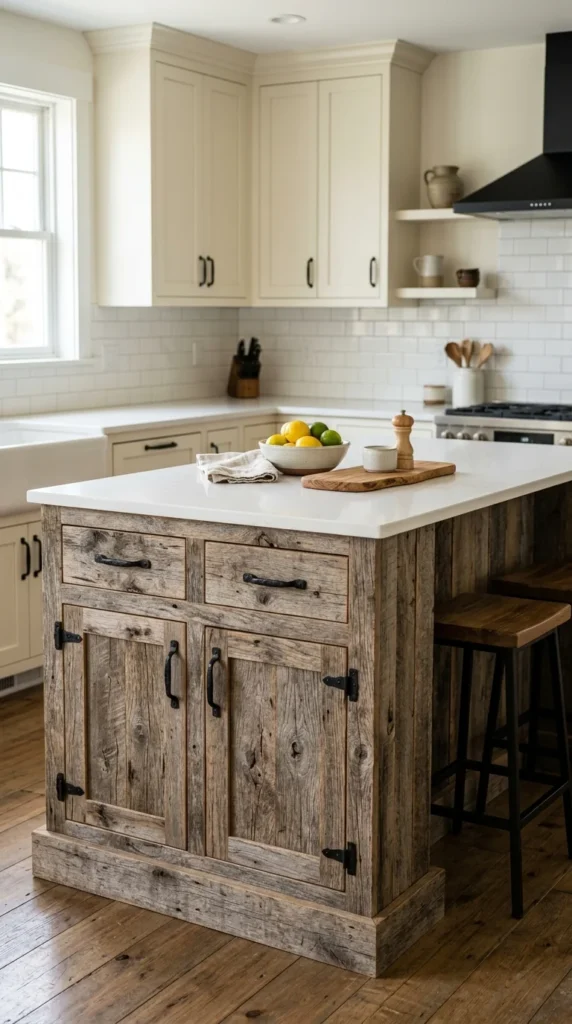
Reclaimed oak is the gold standard for those who want their kitchen to tell a story. Using salvaged wood from old barns or historic buildings adds an instant sense of history and soul to your home. The deep textures and varied tones of reclaimed oak pair beautifully with modern appliances, creating a high-contrast look that feels both grounded and sophisticated.
2. Walnut Butcher-Block
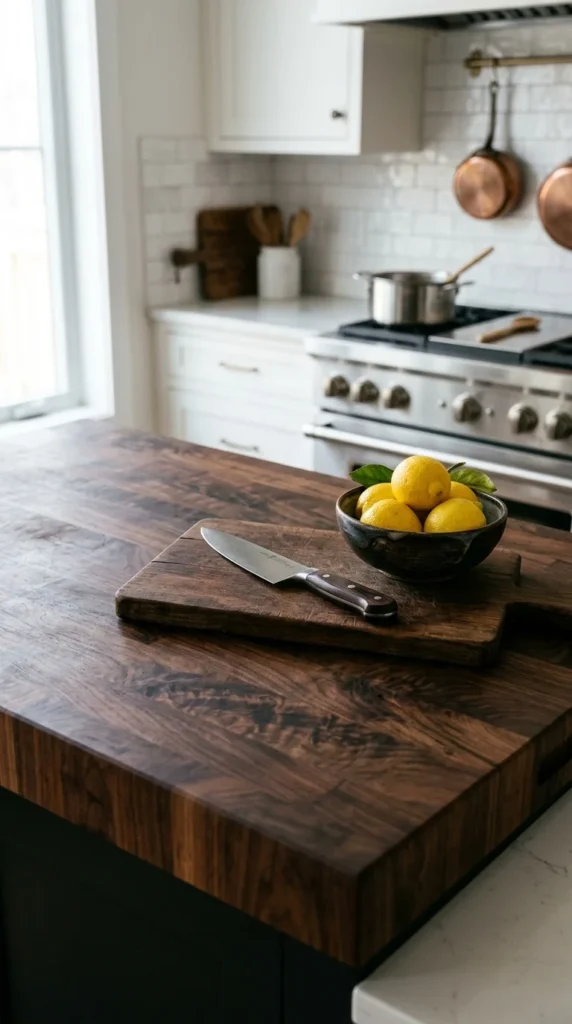
Walnut is prized for its rich, dark hues and durability. A walnut butcher-block island isn’t just a design statement; it’s a functional workstation. The end-grain construction is gentle on knives and resistant to deep gouges, making it the perfect choice for the serious home cook who wants luxury underfoot and underhand.
3. Rustic Farmhouse
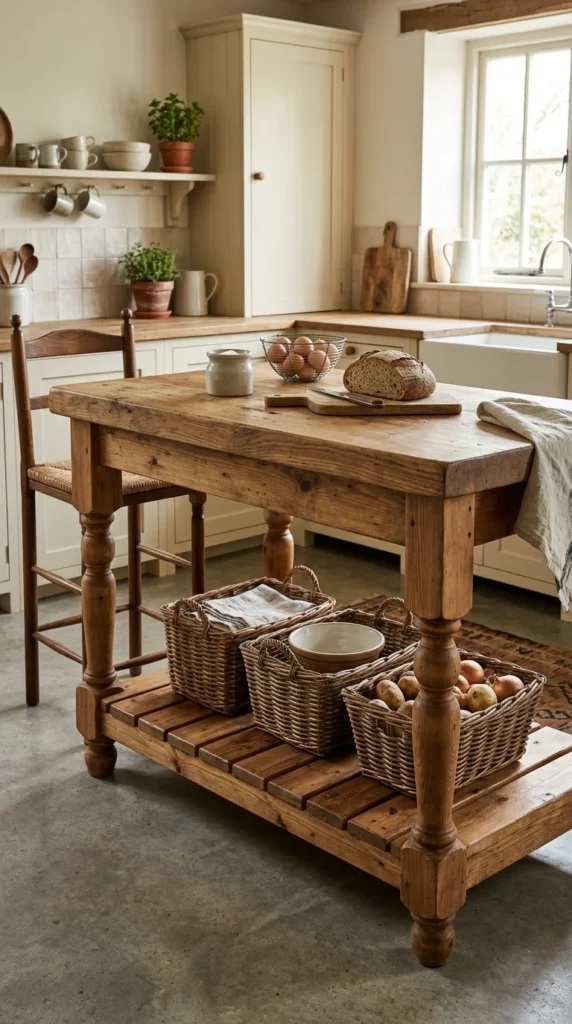
The farmhouse island is all about presence. With heavy, turned legs and a substantial silhouette, this style anchors a large kitchen. It often includes open lower shelving for baskets or large pots, emphasizing a “lived-in” feel that encourages family gatherings and casual meal prep.
4. Minimalist Teak
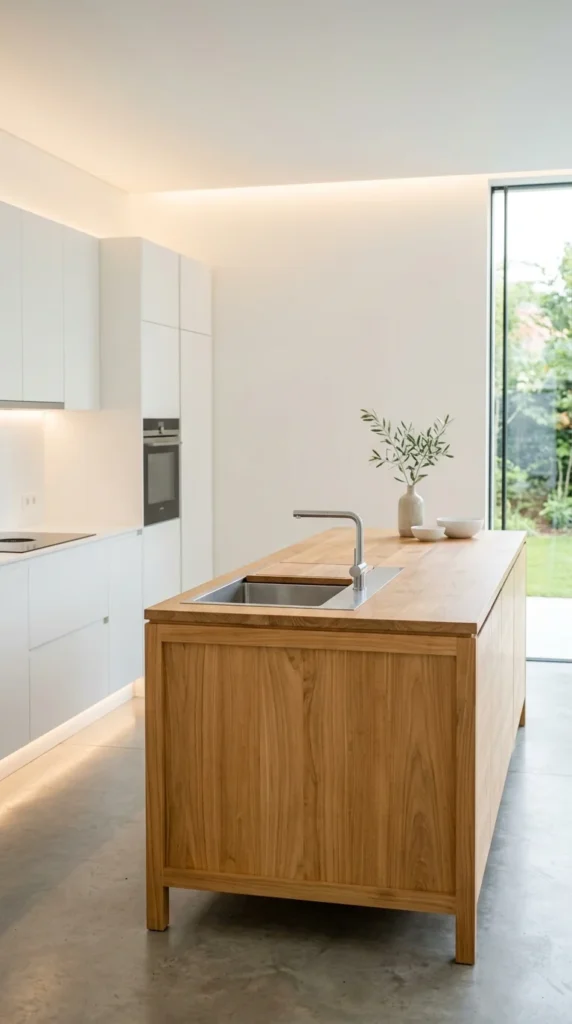
Teak is not just for outdoor furniture. Its high oil content makes it naturally water-resistant, which is ideal for a kitchen environment. A minimalist teak island, characterized by sharp angles and a smooth finish, brings a touch of “spa-like” serenity to a contemporary kitchen, offering warmth without the clutter of traditional detailing.
5. Industrial Pipe-Leg
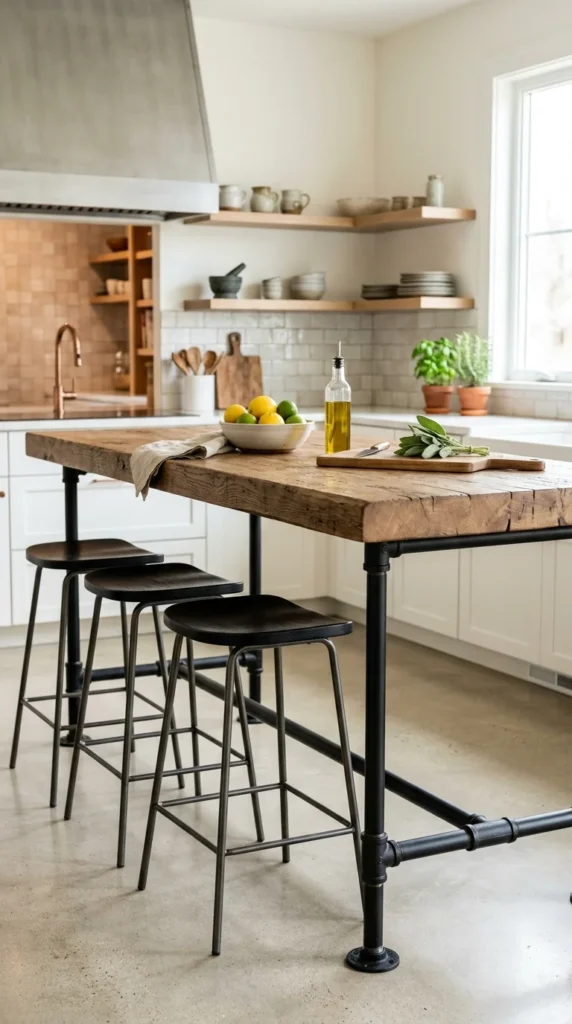
For those who love the loft-style aesthetic, combining wood with metal is the way to go. An industrial island uses heavy timber for the surface and black iron or steel pipes for the base. This creates a visually light but structurally strong piece that works perfectly in open-concept living spaces.
6. Live Edge
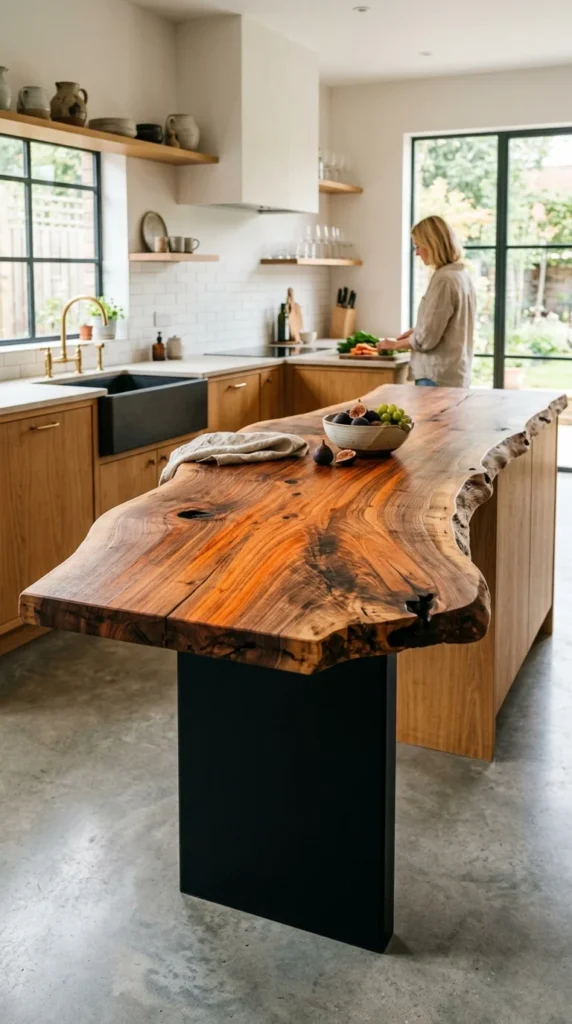
If you want a one-of-a-kind centerpiece, a live-edge island is unmatched. By keeping the natural silhouette of the tree on the edges of the wood, you bring the raw beauty of nature indoors. It serves as a functional piece of art, especially when paired with a simple, understated base that doesn’t compete with the wood’s organic curves.
7. Painted Base
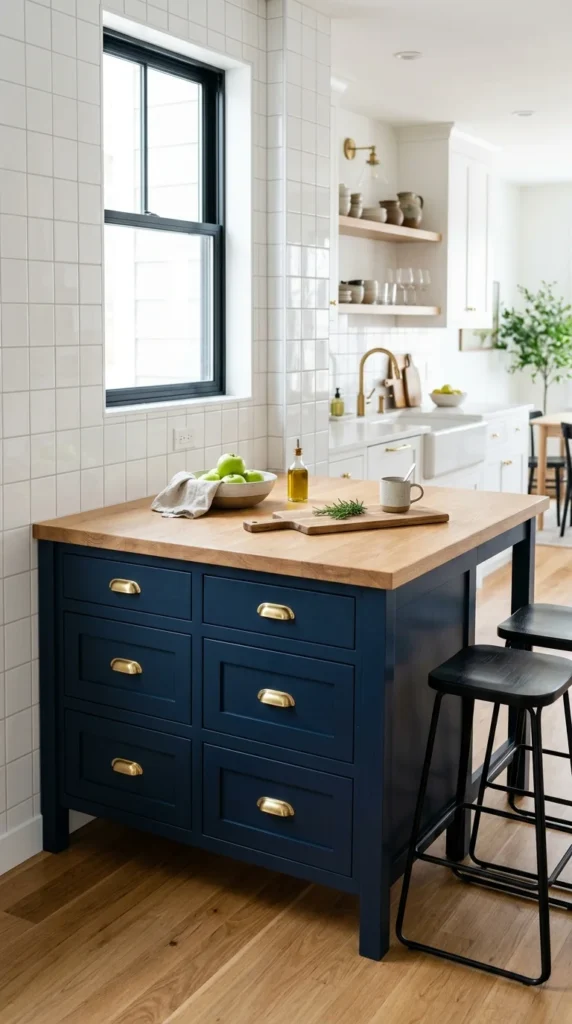
You don’t have to go “all wood” to enjoy the benefits of timber. A wooden island with a painted base allows you to introduce color into your kitchen. Navy blue, forest green, or even charcoal grey bases provide a stunning contrast against a natural wood countertop, highlighting the grain of the wood while anchoring the room’s color palette.
8. Two-Tiered Design
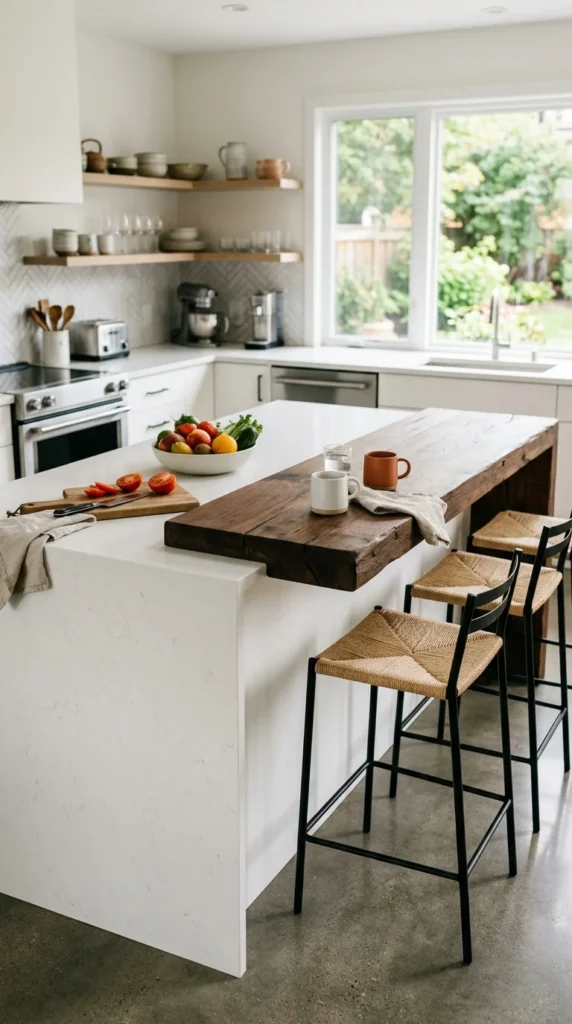
A two-tiered island is the ultimate functional upgrade. It separates the “work” zone (usually the lower level with a sink or prep space) from the “social” zone (the higher wooden tier for dining). This elevation change adds architectural interest and keeps guests away from the heat and mess of active cooking.
9. Portable Cart
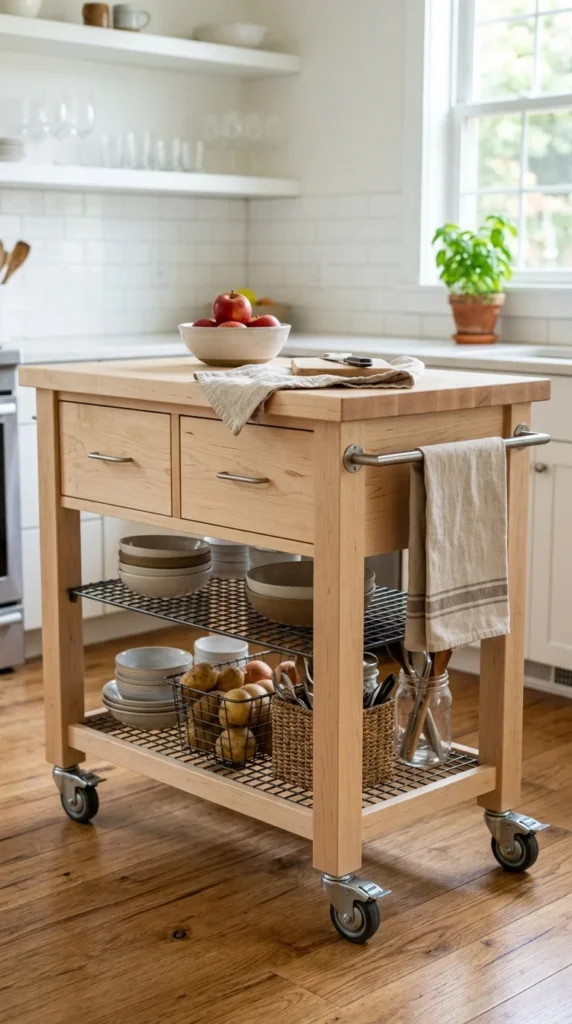
Not every kitchen has the square footage for a permanent fixture. A portable wooden island on wheels offers flexibility. You can roll it into the center of the room when prepping a big meal and tuck it against a wall when you need more floor space. It’s a stylish solution for apartments and smaller homes.
10. Mid-Century Modern
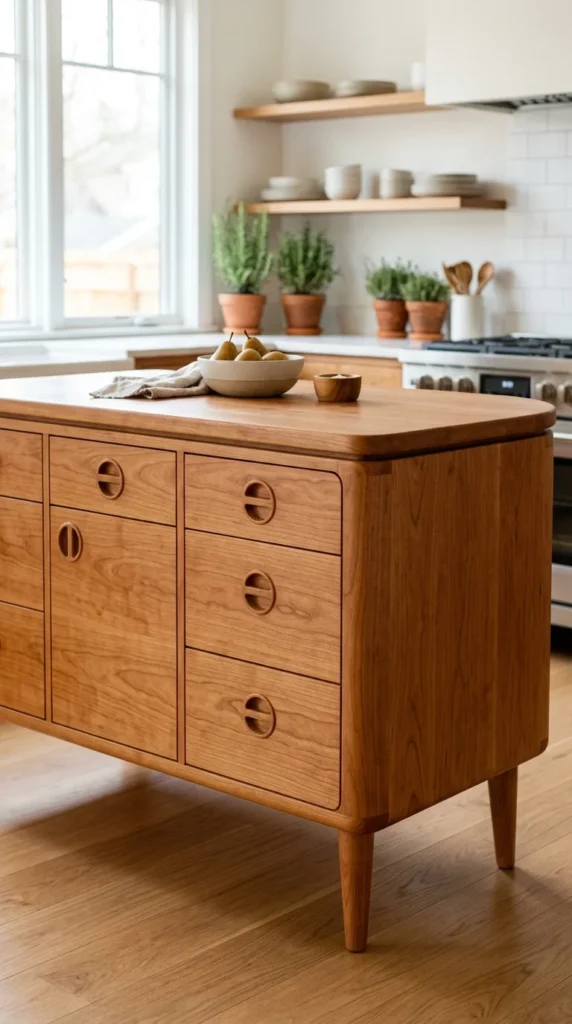
Characterized by clean lines and organic shapes, a Mid-Century Modern wooden island brings a retro-cool vibe to the kitchen. Look for islands with tapered legs and warm-toned woods like cherry or teak. This style feels light and airy, preventing a small kitchen from feeling overcrowded.
11. Shaker Style
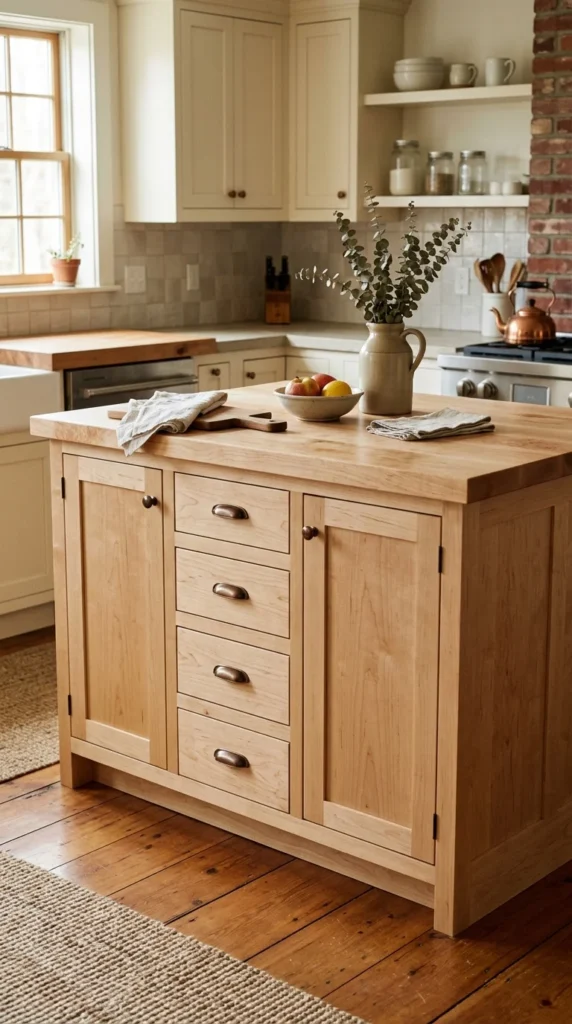
Shaker design is celebrated for its simplicity and utility. A Shaker-style wooden island features clean, recessed paneling and sturdy construction. It is a timeless choice that fits into almost any home decor, from traditional to transitional, focusing on quality craftsmanship over flashy ornamentation.
12. Dark Mahogany
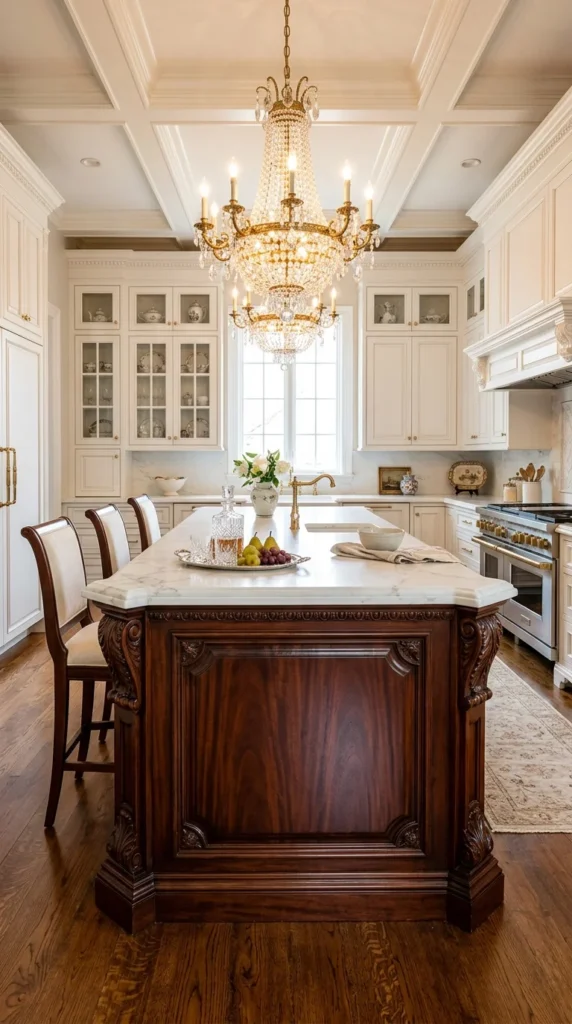
For a look of pure luxury and formality, mahogany is the premier choice. Its deep reddish-brown color and fine grain create an atmosphere of elegance. A mahogany island often features more ornate details, such as carved corbels or decorative molding, making it the focal point of a traditional, high-end kitchen.
13. Scandinavian Light-Wood
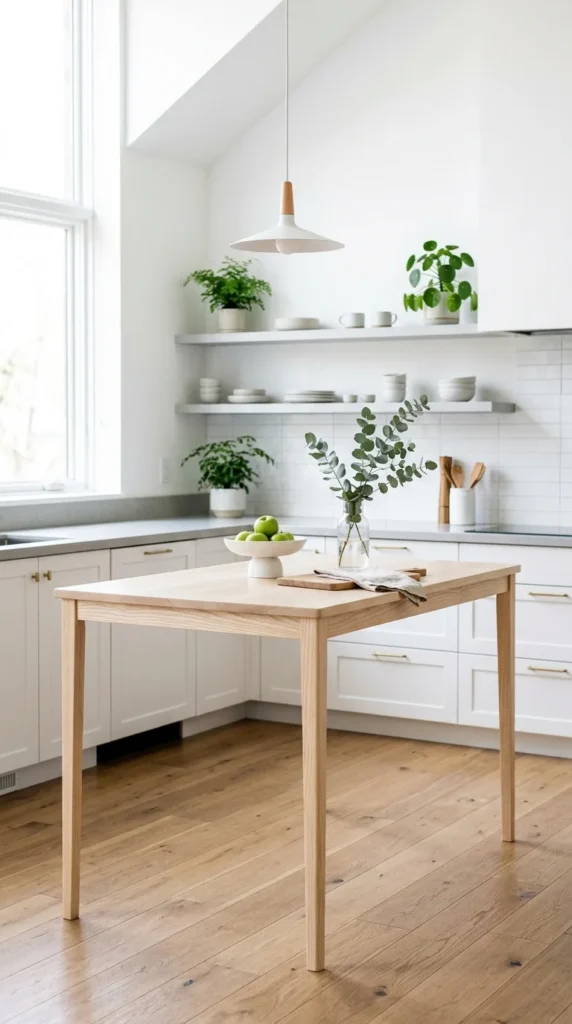
Scandinavian design relies heavily on light-colored woods like ash, birch, or blonde oak. A light-wood island reflects natural light, making the kitchen feel larger and more open. It’s the perfect choice for a “Scandi-chic” home that prioritizes brightness and a clutter-free environment.
14. Integrated Seating
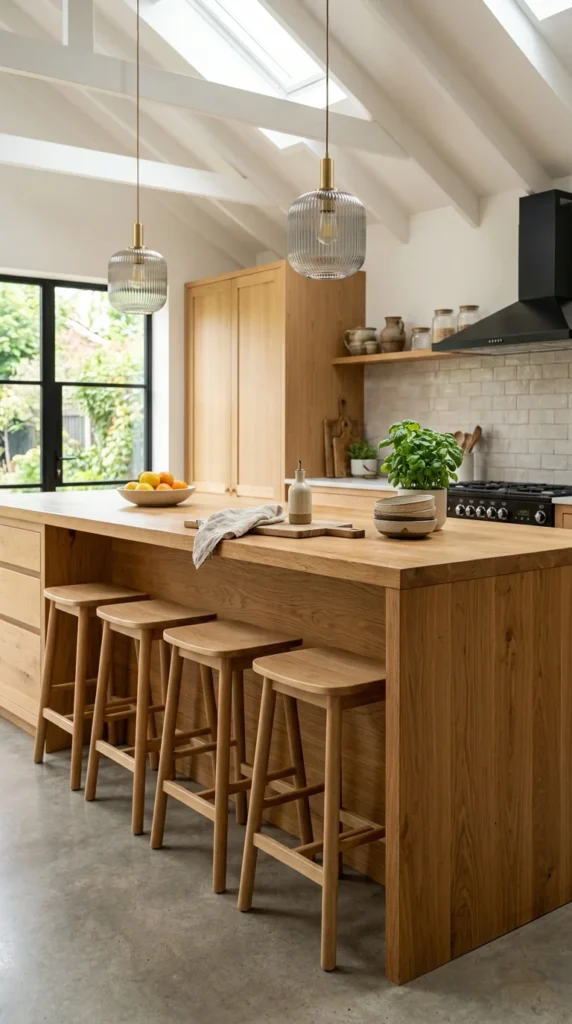
Modern islands often serve as the primary dining area. By designing the wooden island with a deep overhang, you create a comfortable space for seating. This “built-in” look keeps the kitchen organized and encourages the island to be used as a social hub rather than just a prep station.
15. Oversized Grandeur
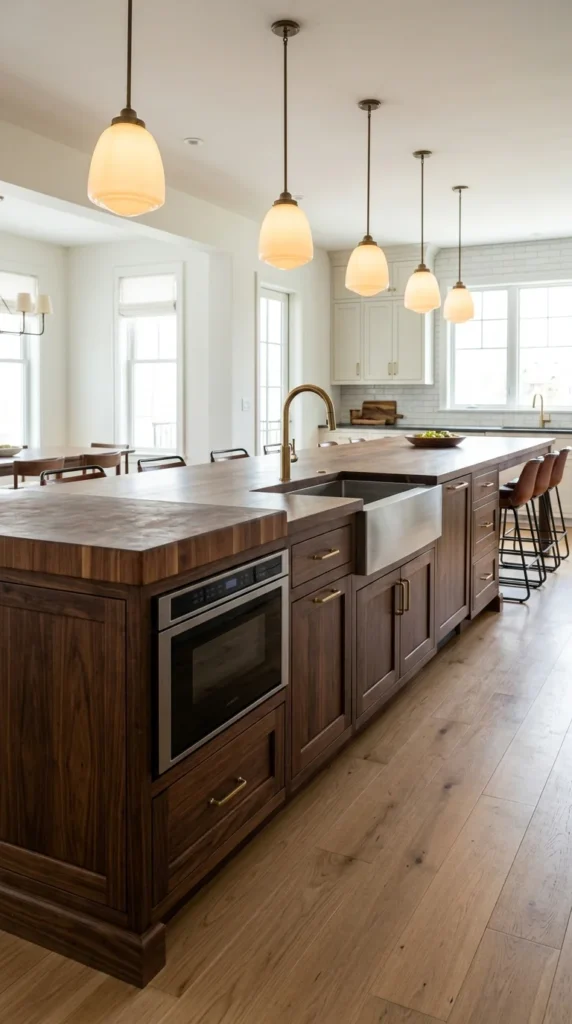
If you have the space, go big. An oversized wooden island provides an expansive surface for baking, entertaining, and display. Using a single species of wood for such a large piece creates a dramatic visual impact and provides an incredible amount of storage in the form of drawers and cabinets below.
16. Herringbone Pattern
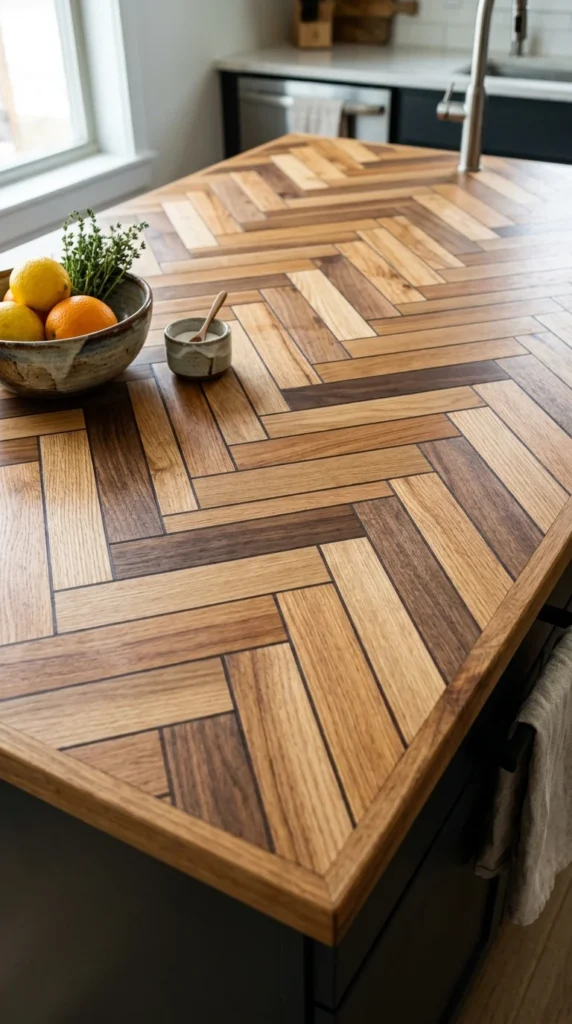
For a touch of sophisticated pattern, consider a herringbone wood top. By arranging wooden slats in a V-shaped pattern, you add texture and movement to the island. This detail works particularly well in kitchens that have simple, monochromatic cabinets, as it draws the eye directly to the craftsmanship of the island.
17. Curved Edges
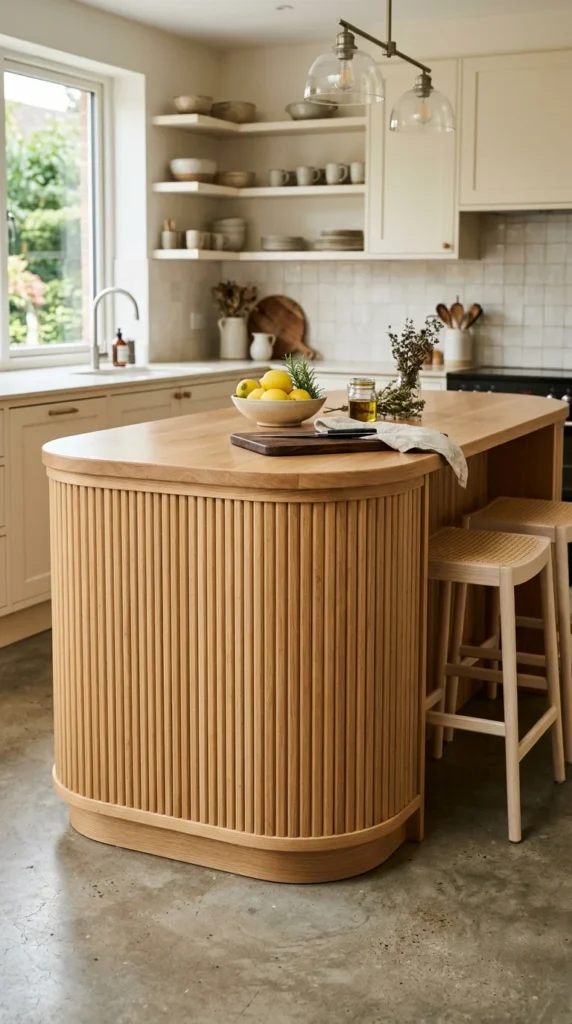
Break away from the traditional rectangle. An island with curved or rounded edges feels softer and more inviting. It also improves “flow” in a high-traffic kitchen, as there are no sharp corners to bump into. Wrapping the base in tambour (vertical wood slats) can further emphasize the curved aesthetic.
18. Waterfall Edge
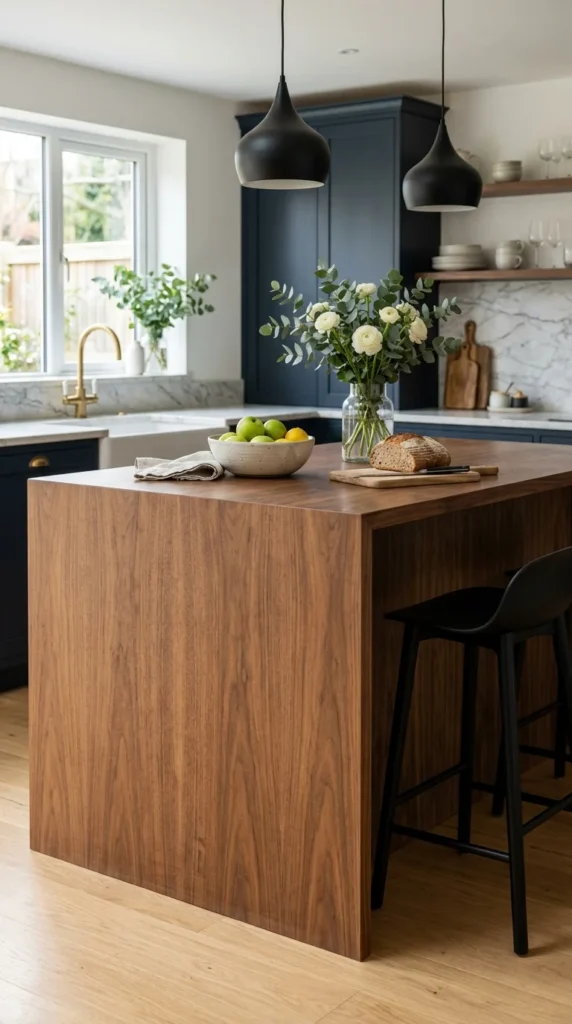
The waterfall edge is a favorite in modern architecture. Instead of the wood stopping at the edge of the island, it “pours” down the sides to the floor. This showcases the wood grain from multiple angles and creates a clean, sculptural look that is both bold and minimalist.
19. Open Shelving
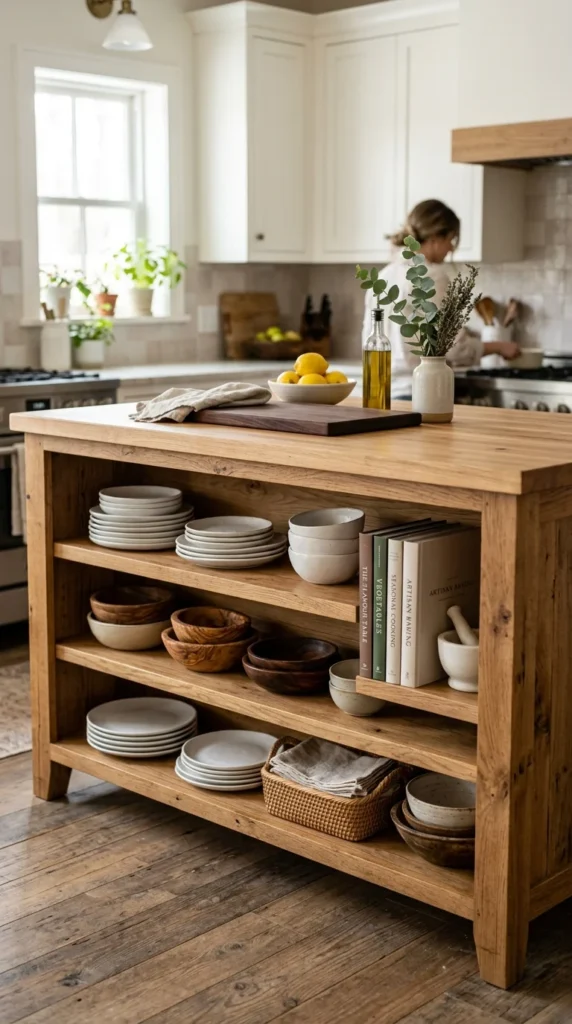
If you love to display your kitchenware, an island with open shelving is a great choice. It makes the island feel lighter and less like a heavy piece of furniture. This style is perfect for those who enjoy a “chef’s kitchen” vibe where everything is easily accessible and within arm’s reach.
20. Distressed Finish
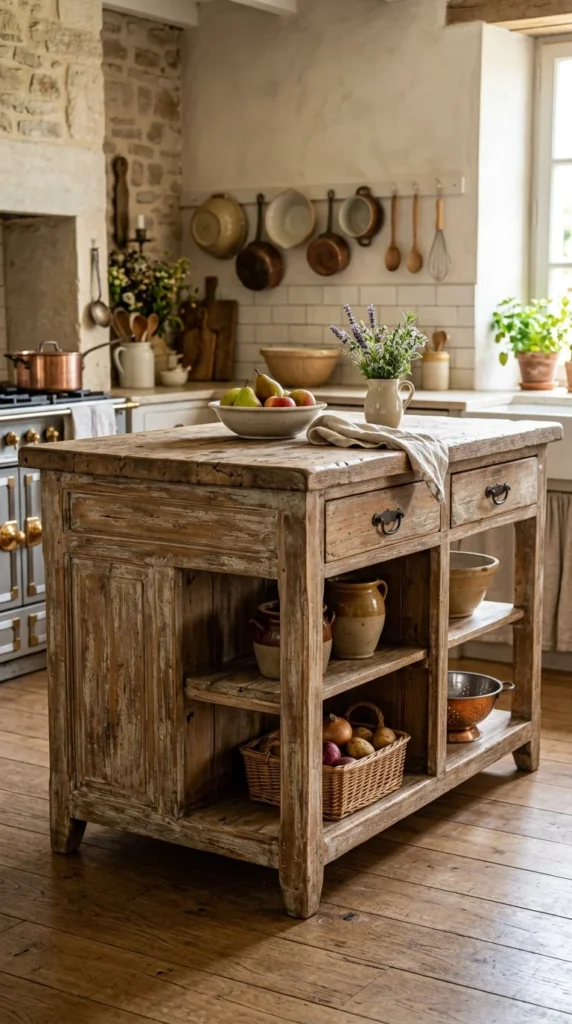
A distressed wooden island is perfect for a home that embraces “perfect imperfection.” This finish is incredibly practical for families with children, as any new scratches or dings simply blend into the existing aged look. It adds a cozy, rustic charm that feels warm and unpretentious.
21. Marble-Topped Wood
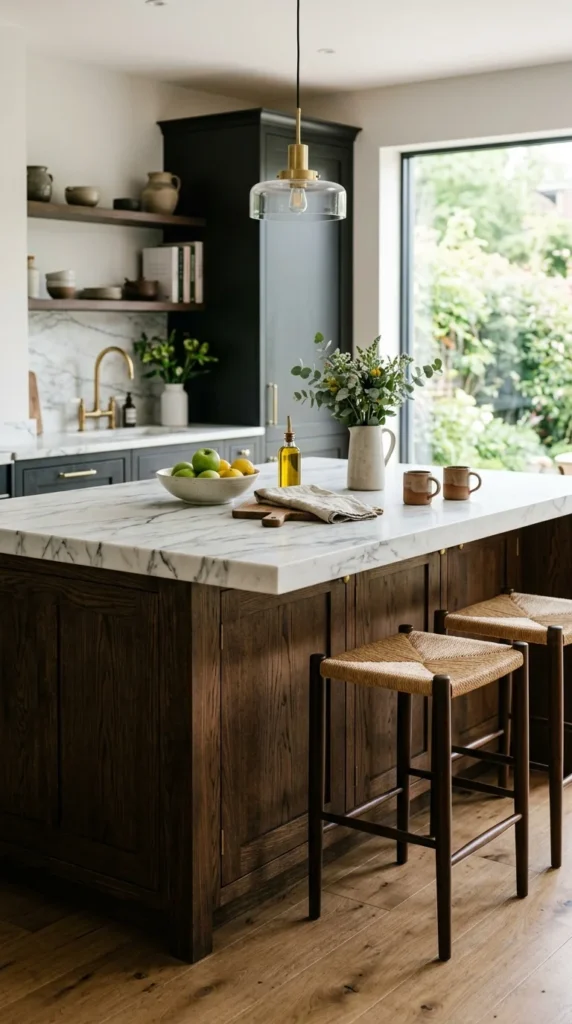
Can’t decide between stone and wood? Use both. A wooden base provides the warmth and storage you need, while a marble or quartz top provides a cool surface for rolling out pastry. The juxtaposition of the natural wood grain and the elegant stone veining is a classic design choice that never goes out of style.
22. Coastal Driftwood
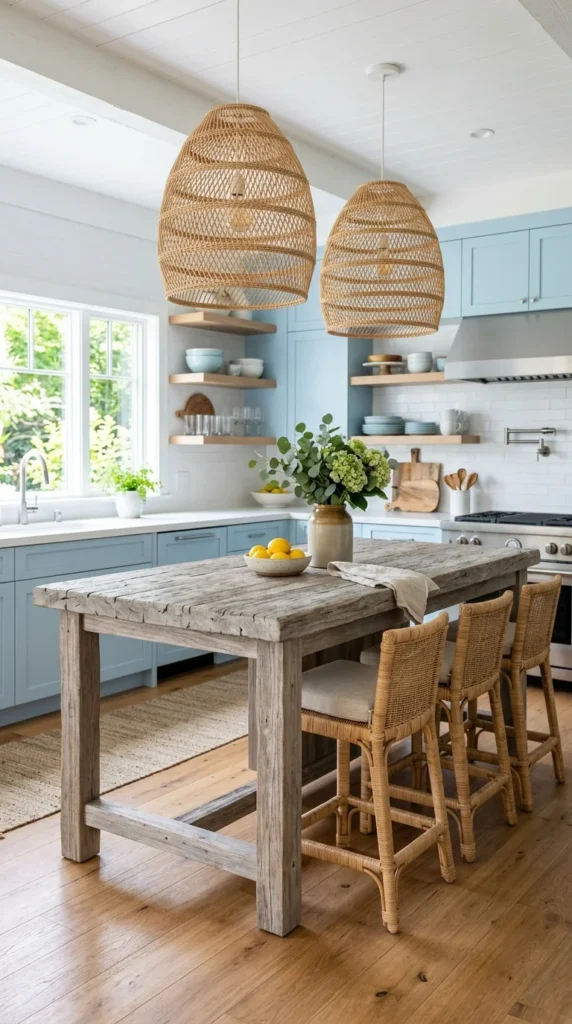
For a beach house or a coastal-themed home, a driftwood finish is ideal. This light, airy wood tone pairs beautifully with blues, whites, and natural fibers like jute or rattan. It brings a relaxed, vacation-like feel to the kitchen, making it feel bright and breezy.
23. Wine Storage
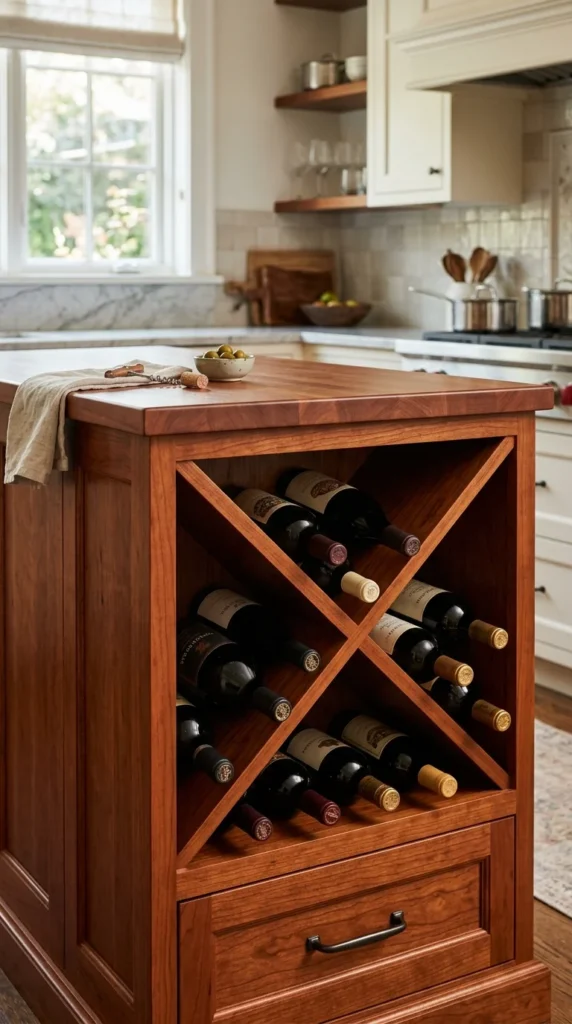
Maximize your island’s functionality by incorporating dedicated wine storage. Whether it’s an integrated wine fridge or custom-built wooden “X” cubbies, the island is the perfect place to keep your collection. This addition makes the island even more of a social centerpiece for entertaining guests.
24. Trestle Base
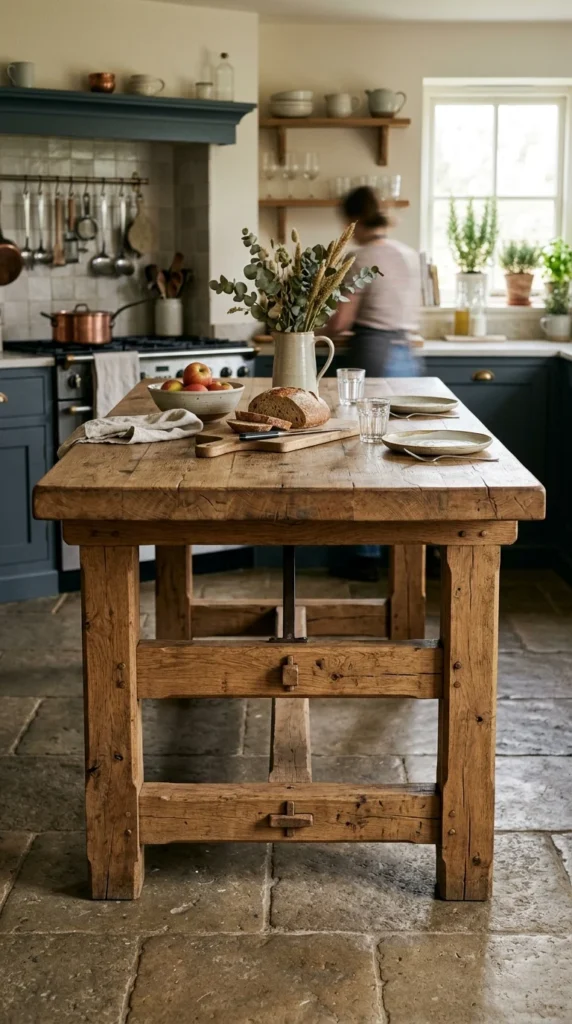
A trestle base gives your kitchen island the appearance of a sturdy dining table. This design is excellent for open-concept homes where the kitchen and dining areas merge. It provides plenty of legroom for those sitting at the island and offers a timeless, architectural look.
25. Hidden Storage
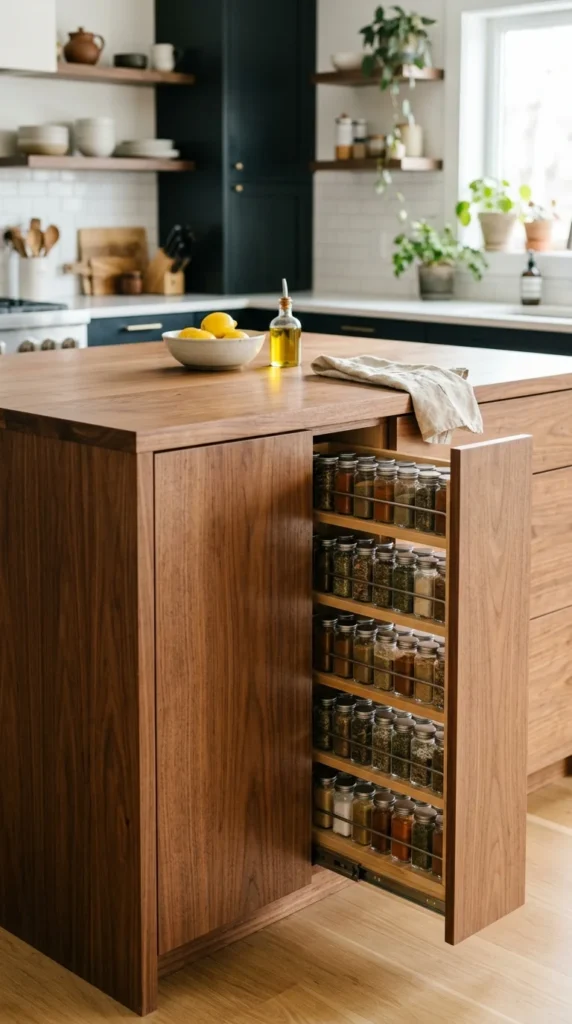
In a minimalist kitchen, clutter is the enemy. A wooden island can be designed with “hidden” storage—seamless panels that pop open to reveal spice racks, trash pull-outs, or even charging stations for electronics. This keeps the exterior of the wood looking clean and uninterrupted while maximizing every inch of internal space.
Final Thoughts on Choosing a Wood Island
When selecting the right wooden island for your space, consider the hardness of the wood (Janka scale) if you plan on using it as a direct cutting surface. Hardwoods like maple, oak, and walnut are the most durable for daily wear and tear. Furthermore, remember that wood is a living material; it will require occasional oiling or sealing to maintain its beauty and prevent drying.
Whether you go for a rugged reclaimed look or a polished mahogany masterpiece, a wooden kitchen island is more than just a piece of furniture—it’s an investment in the warmth and functionality of your home.