
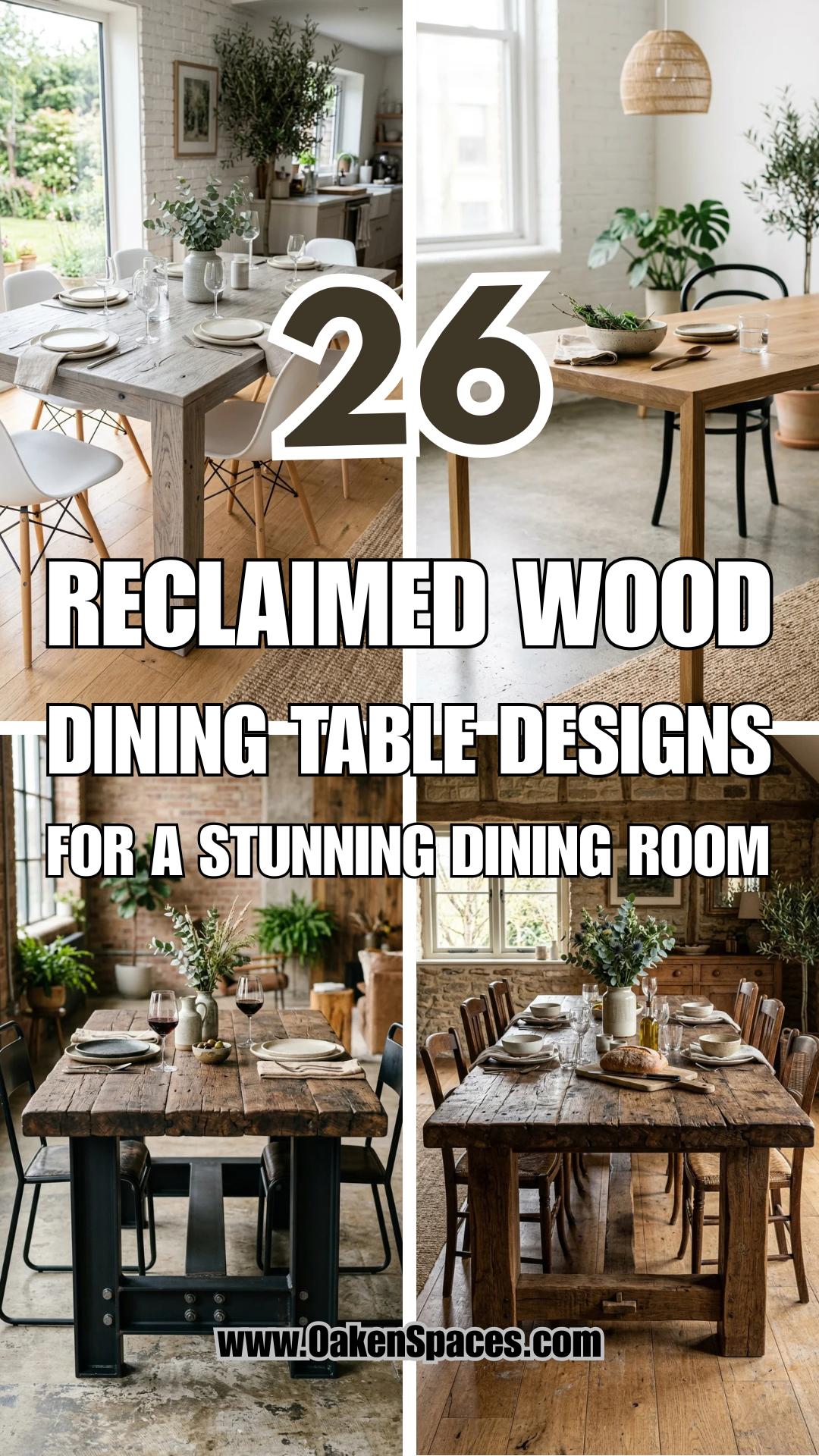
Reclaimed wood is more than just a sustainable building material; it is a piece of history brought into the heart of your home. Each plank carries a narrative—whether it originated from an old tobacco barn, a decommissioned factory, or a century-old bridge. Integrating a reclaimed wood dining table into your home doesn’t just provide a place to eat; it introduces texture, warmth, and an undeniable soul into your interior design.
From the rugged charm of a traditional farmhouse to the sleek lines of a modern industrial loft, these 26 designs showcase the incredible versatility of repurposed timber.
1. Farmhouse Classic
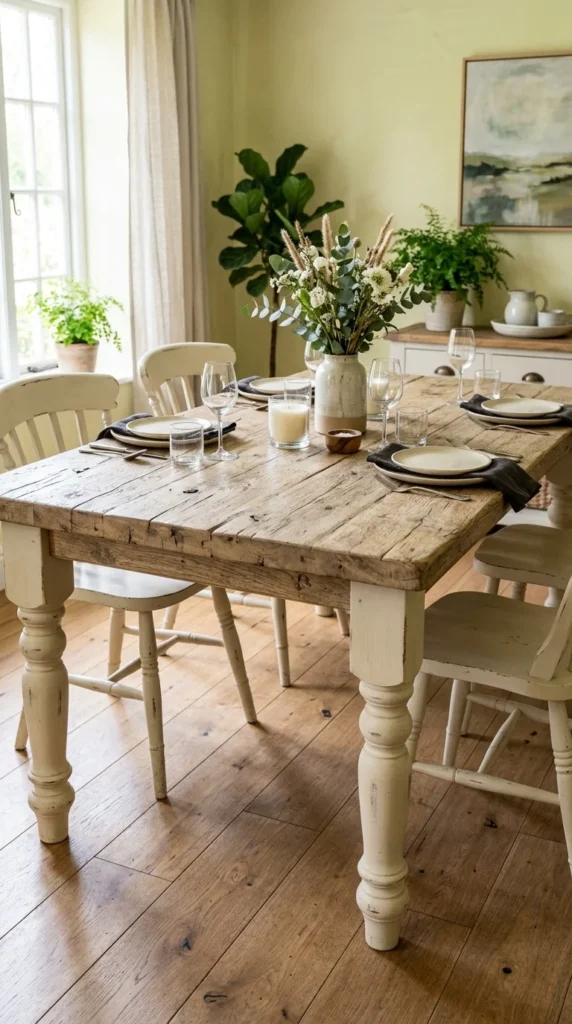
The quintessential farmhouse design focuses on sturdy construction and a welcoming presence. By using reclaimed oak or pine, these tables offer a sense of permanence. The contrast between a natural wood top and painted legs helps brighten a room while maintaining a rustic aesthetic.
2. Industrial Edge
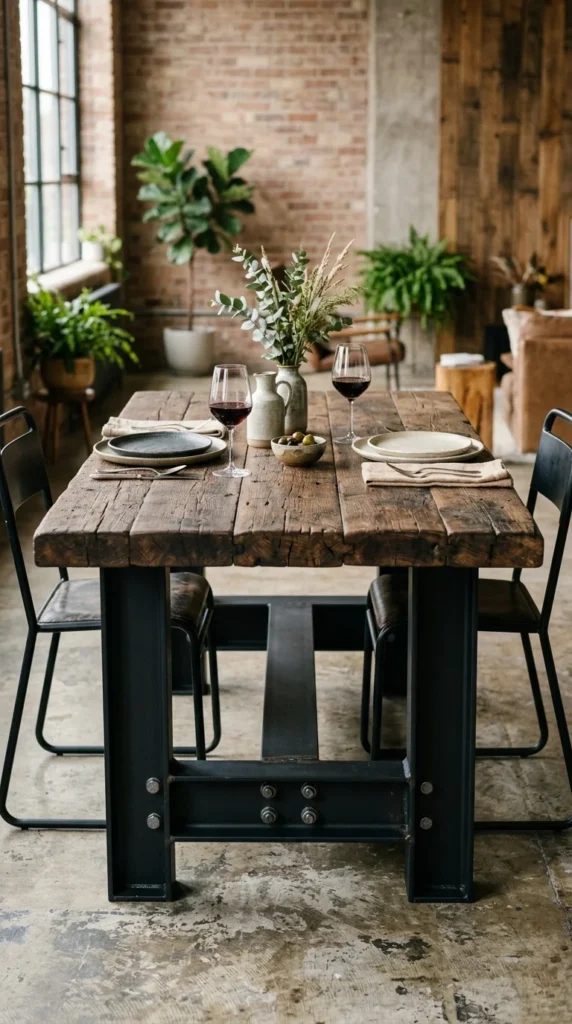
This design marries the organic warmth of old wood with the cold, hard lines of structural steel. It’s a perfect fit for urban lofts or modern homes looking for a masculine, architectural statement piece.
3. Live Edge
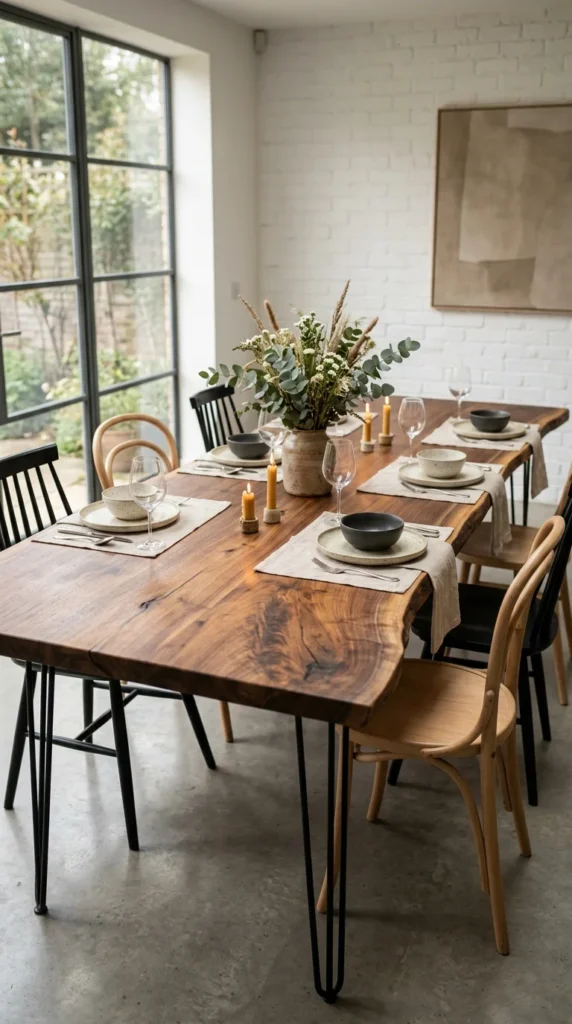
Live edge tables celebrate the raw beauty of nature. When using reclaimed wood for this style, the knots and “imperfections” become the focal point, creating a functional piece of art that feels like it was pulled straight from a forest.
4. Trestle Base
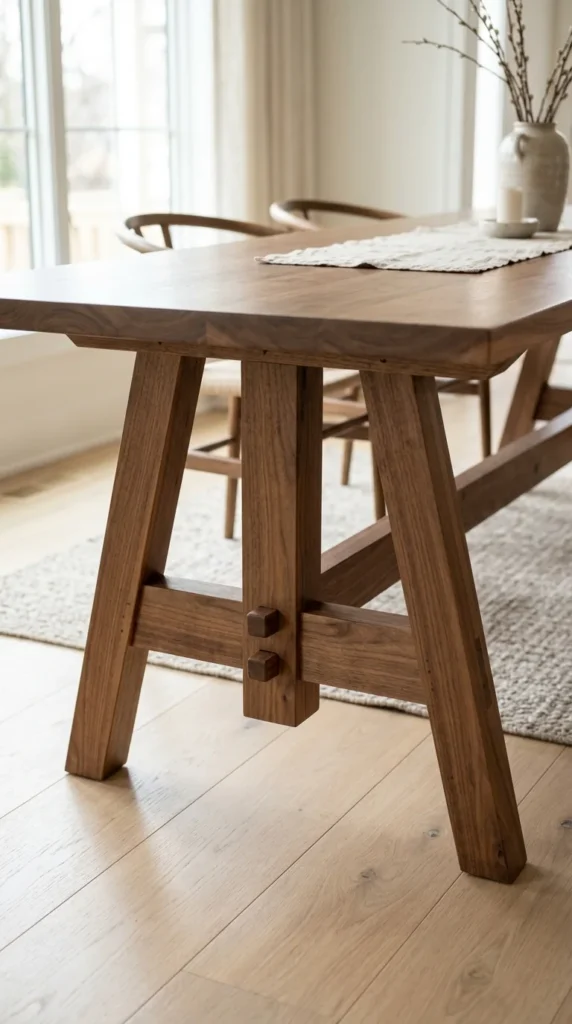
Trestle tables are timeless and practical, offering maximum legroom for guests. Using reclaimed timber for a trestle design adds a layer of heritage, making the table look like a cherished heirloom passed down through generations.
5. Herringbone Pattern
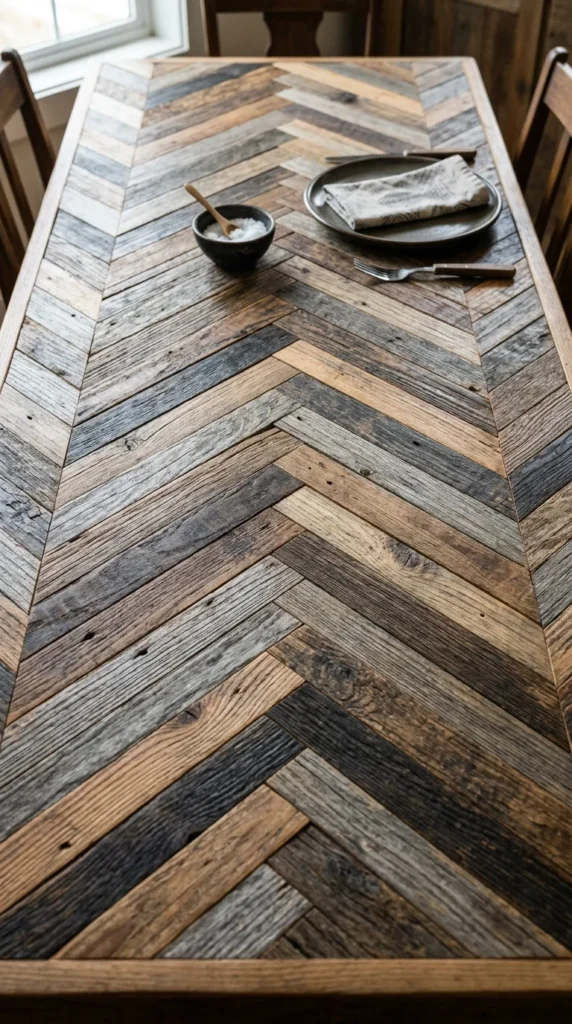
For those who love texture, a herringbone or chevron pattern transforms reclaimed scraps into a sophisticated geometric masterpiece. The different ages and species of wood used in the pattern create a stunning visual rhythm.
6. Pedestal Style
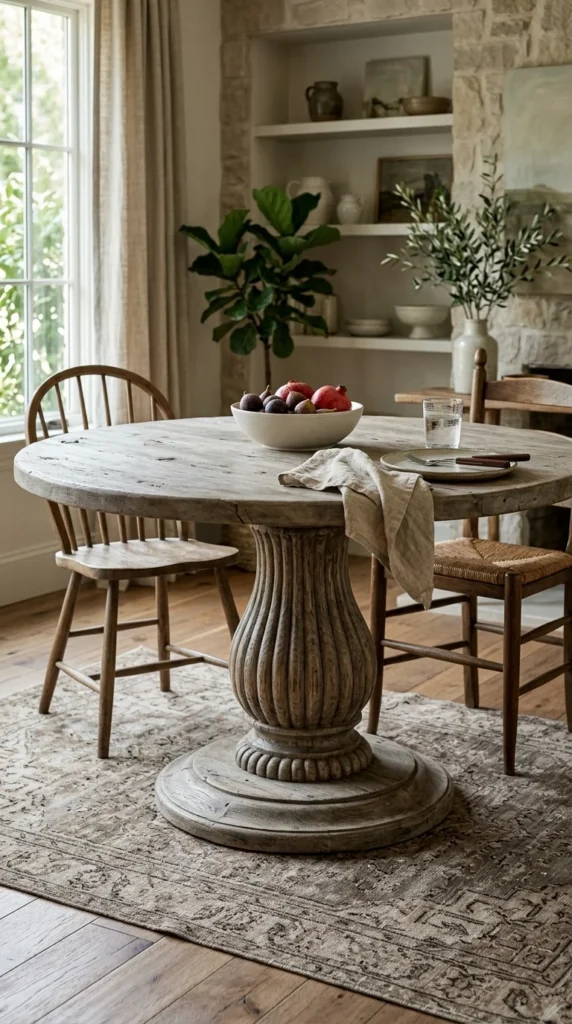
Round tables encourage conversation, and a reclaimed wood pedestal table does so with grace. This design is ideal for smaller dining nooks where a bulky cornered table might feel too intrusive.
7. Gray Wash
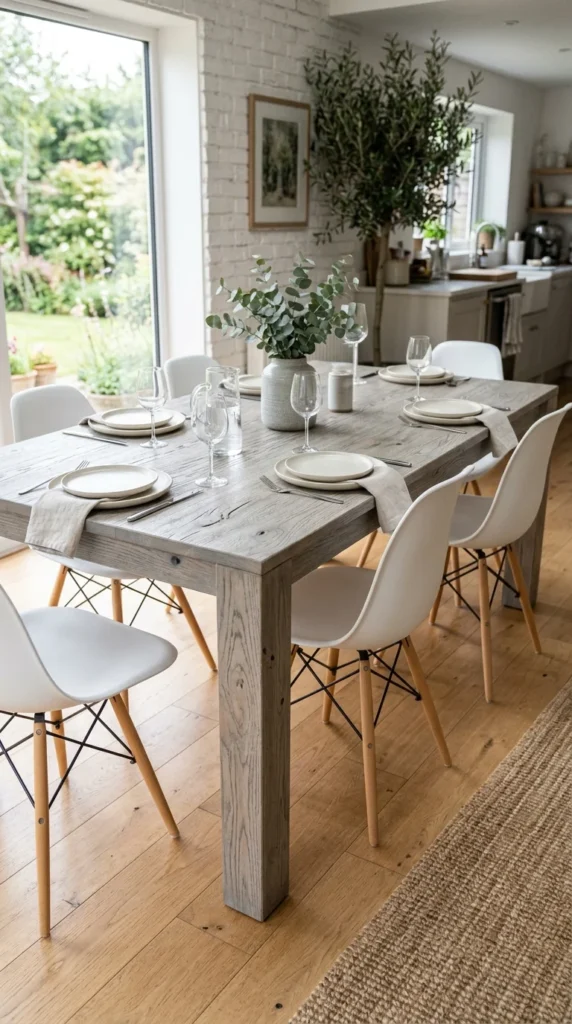
If the orange tones of natural wood don’t fit your palette, a gray wash offers a coastal, weathered look. This finish mimics the appearance of driftwood, bringing a breezy, relaxed vibe to the dining area.
8. X-Base Design
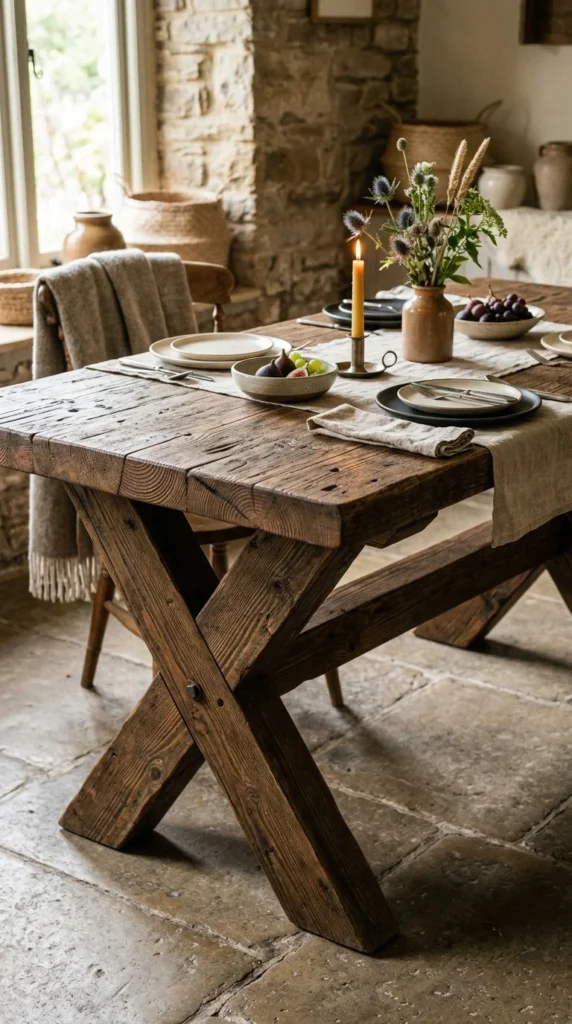
The X-base is a staple of “modern farmhouse” decor. It provides incredible stability and a bold visual silhouette that works well in large, open-concept living spaces.
9. Modern Minimalist
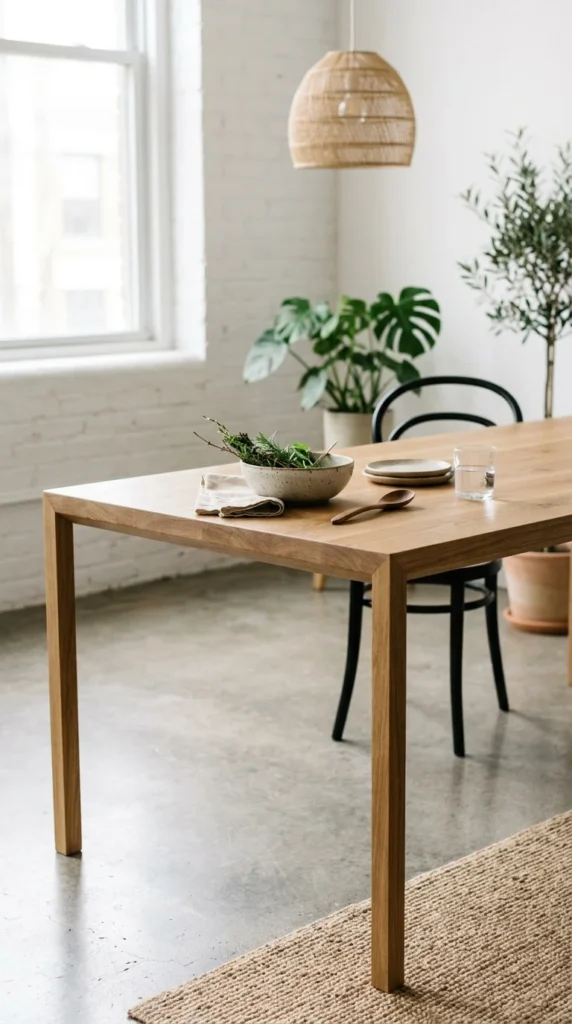
Reclaimed wood doesn’t always have to be “chunky.” A minimalist approach uses thin-profile reclaimed boards to create a sleek, contemporary look that fits perfectly in a Scandinavian-inspired home.
10. Barn Door Top
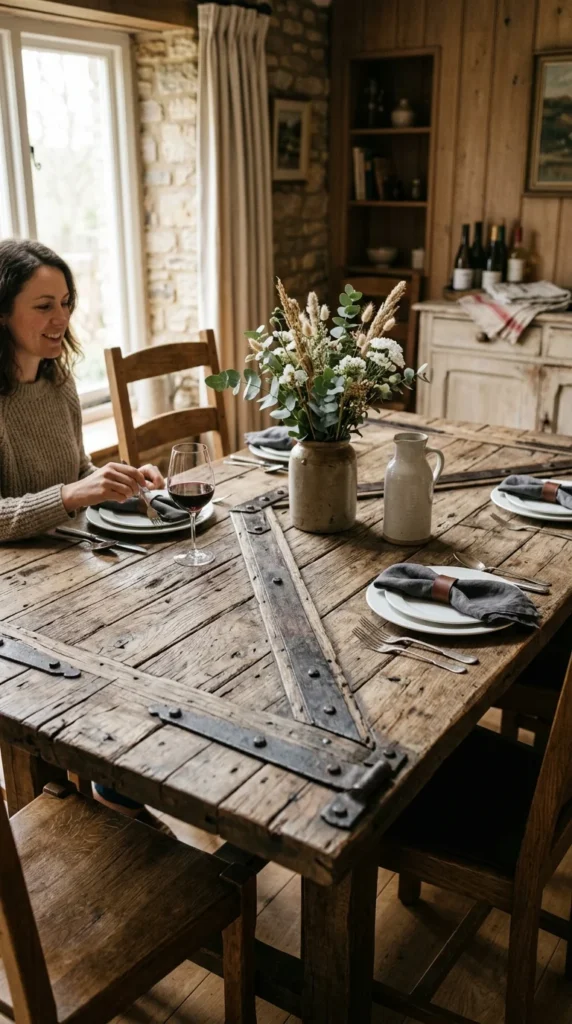
This literal interpretation of reclaimed wood uses the iconic “Z” pattern found on barn doors. It’s a literal nod to the wood’s origins and adds a playful, thematic touch to a country kitchen.
11. Circular Beauty
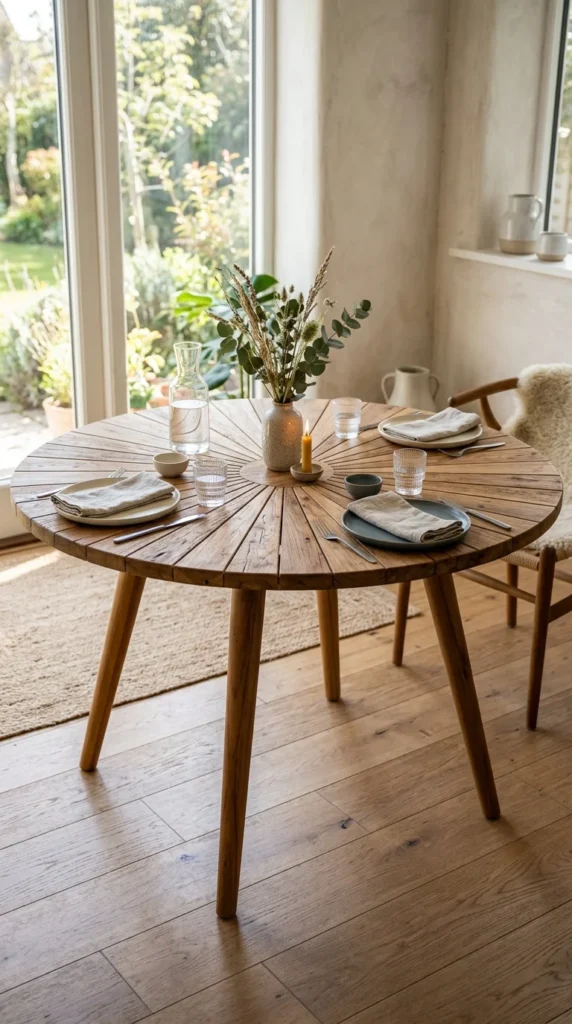
Circular designs are perfect for creating intimacy. A sunburst pattern on the tabletop highlights the unique grain of each reclaimed piece, drawing the eye toward the center of the table.
12. Mid-Century Modern
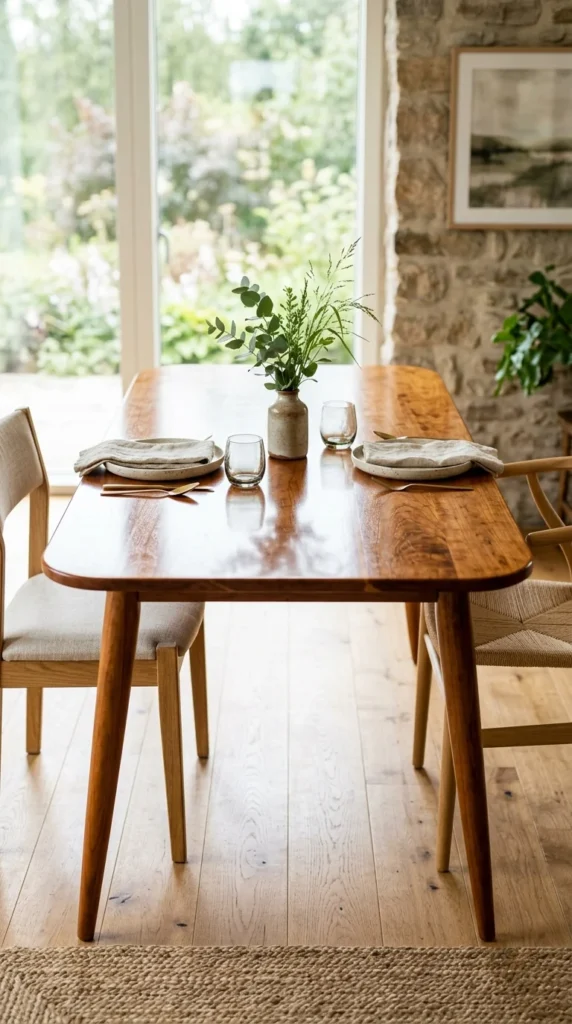
By applying mid-century proportions to reclaimed materials, you get the best of both worlds: iconic 1950s style and the sustainability of repurposed wood.
13. Chunky Leg
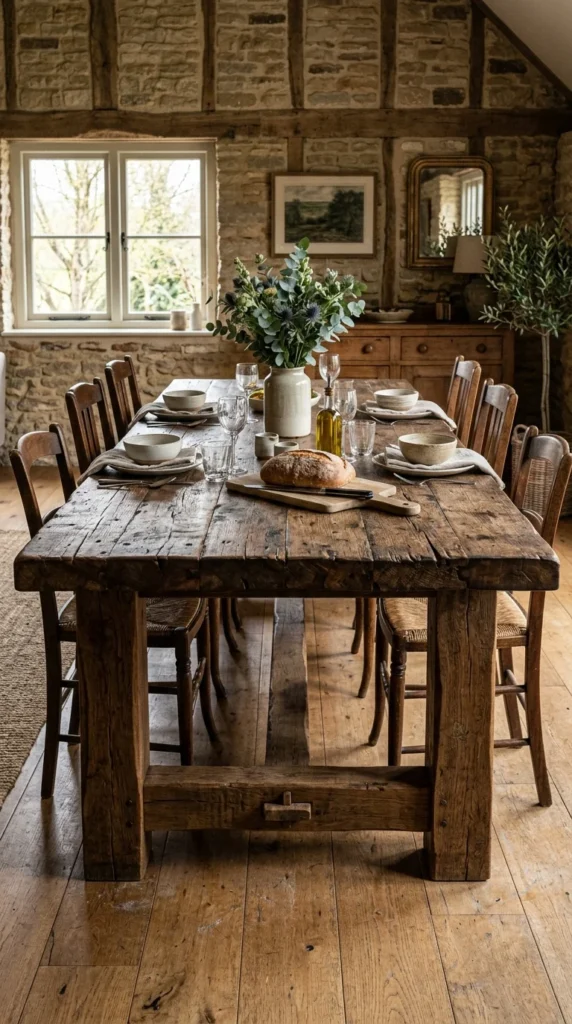
Sometimes, more is more. A chunky leg design emphasizes the weight and strength of the reclaimed timber, making it the undeniable “anchor” of the room.
14. Hairpin Legs
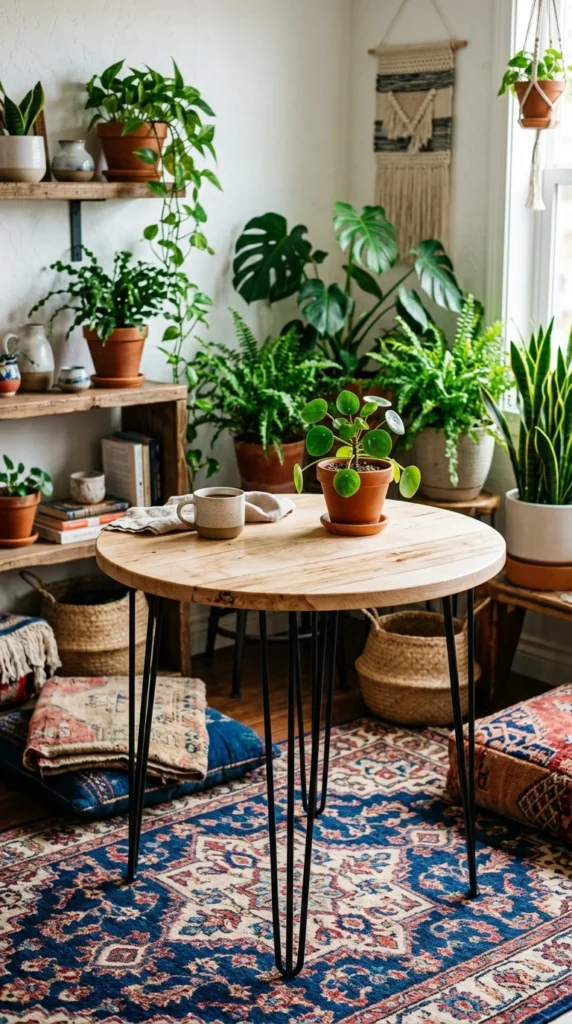
Hairpin legs offer a “light” look that prevents a heavy wood top from overwhelming a small space. It’s a popular choice for apartments and mid-century enthusiasts.
15. Oval Elegance
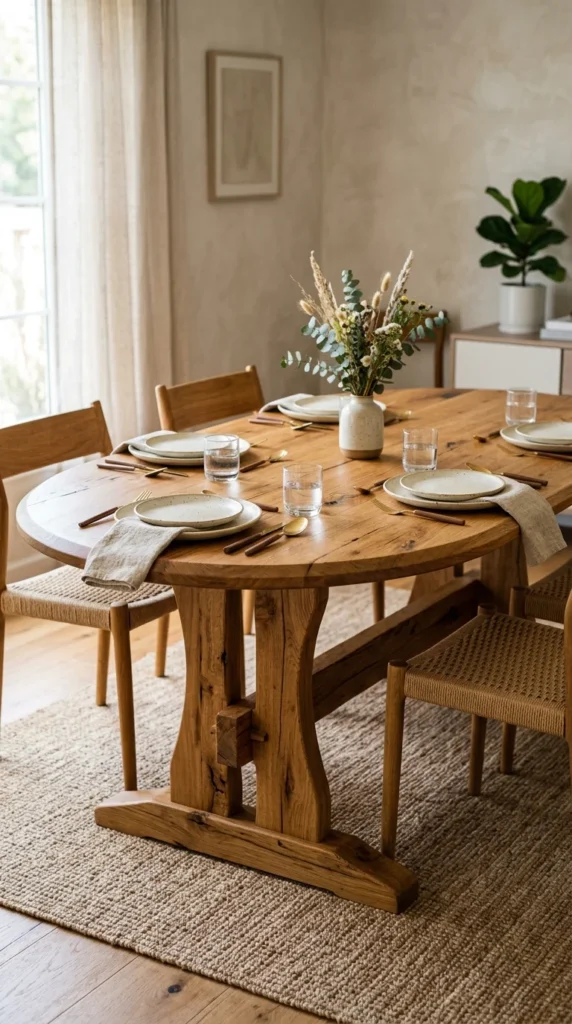
The oval shape is a sophisticated alternative to the standard rectangle. It softens the hard lines of a dining room and works beautifully with the organic texture of reclaimed grain.
16. Scandi-Chic
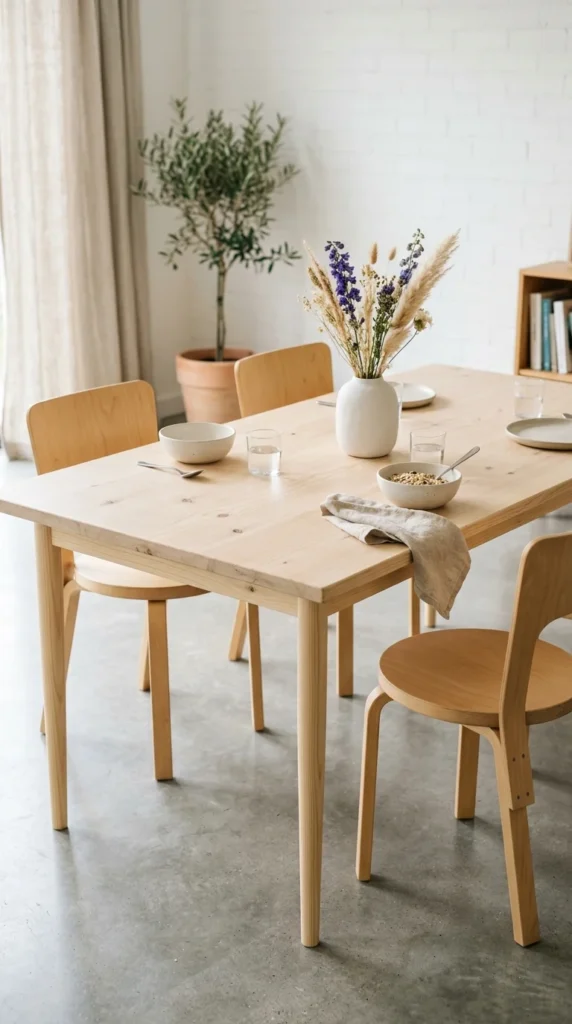
Scandinavian design focuses on light and functionality. Using reclaimed light woods like pine or ash, finished with natural oils, creates a serene and bright atmosphere.
17. Concrete Mix
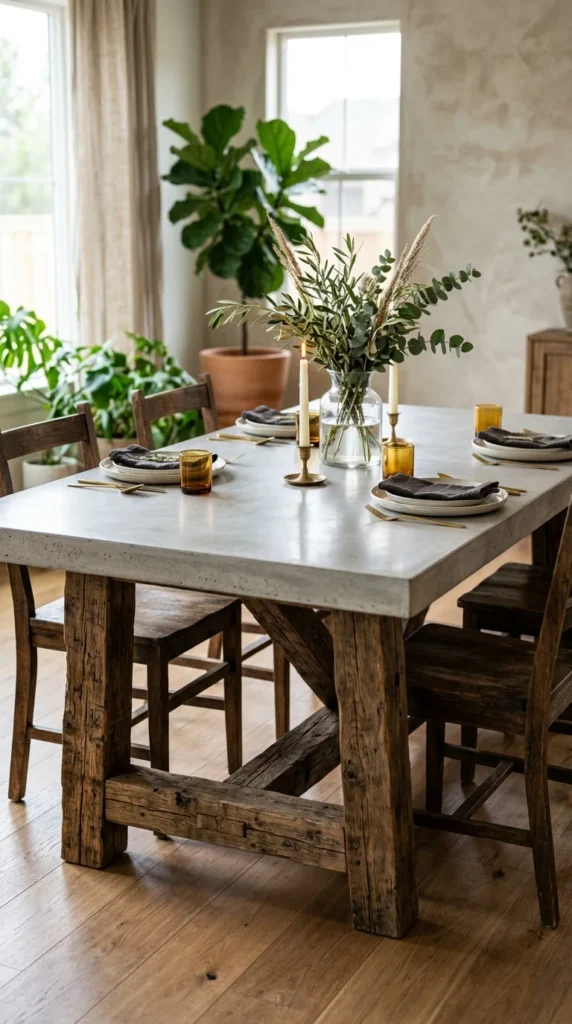
The juxtaposition of the warm wood base and the cool, smooth concrete top is a hallmark of contemporary design. It’s exceptionally durable and adds a “cool factor” to the home.
18. Butcher Block
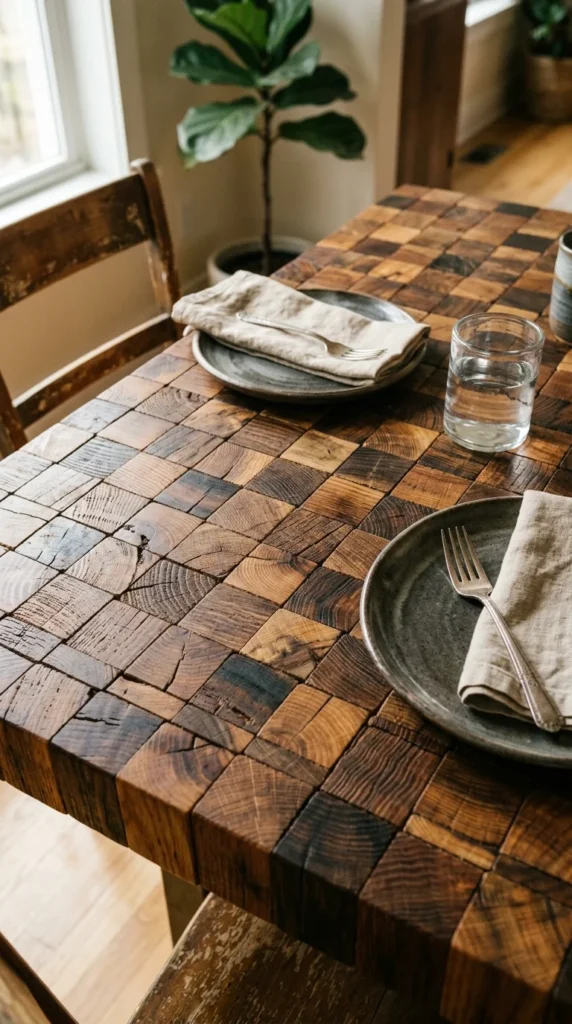
Using end-grain reclaimed wood creates a surface that is nearly indestructible. The butcher block style is visually dense and highlights the growth rings of the trees the wood came from.
19. Coastal Driftwood
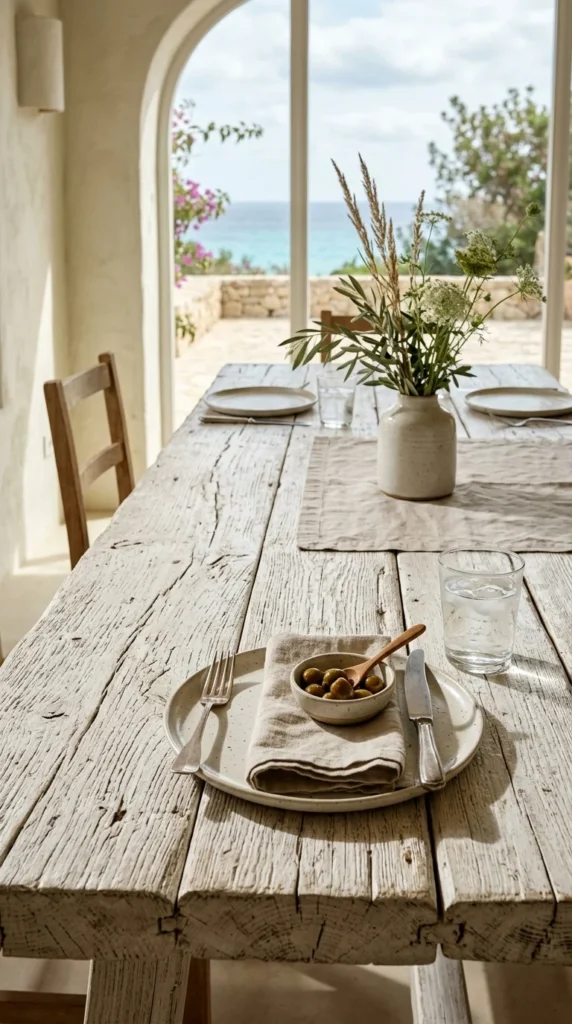
Perfect for a beach house, this style focuses on the tactile nature of the wood. The finish is usually matte and “dry” to the touch, evoking the feeling of a day at the shore.
20. Blackened Finish
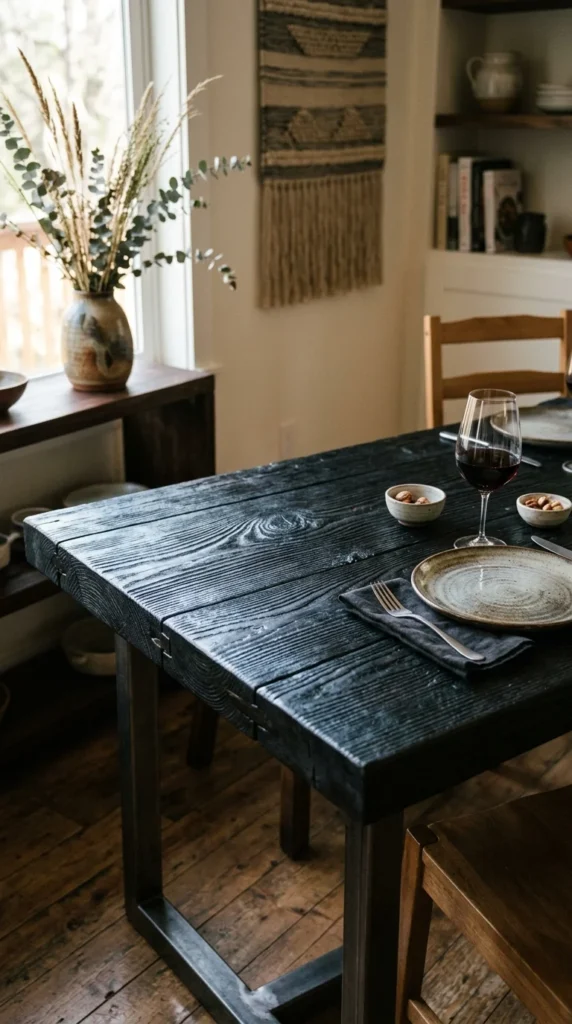
The ancient Japanese technique of charring wood (Shou Sugi Ban) preserves the timber while giving it a dramatic, modern black look. The reclaimed grain becomes incredibly pronounced under this treatment.
21. Parquet Detail
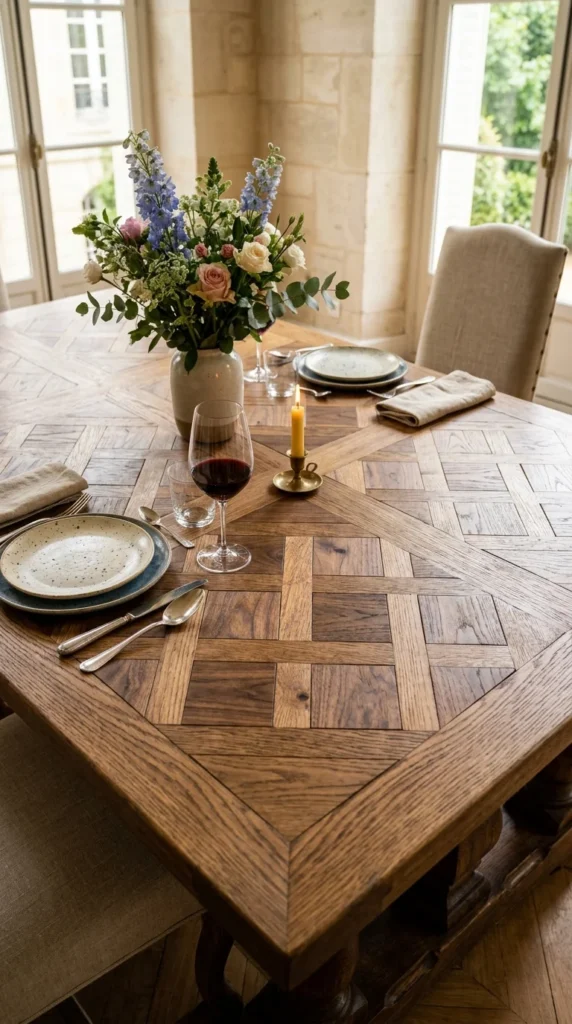
Parquet isn’t just for floors. A reclaimed wood table with a complex inlaid pattern brings an air of French chateau elegance to any dining experience.
22. Bench Combo
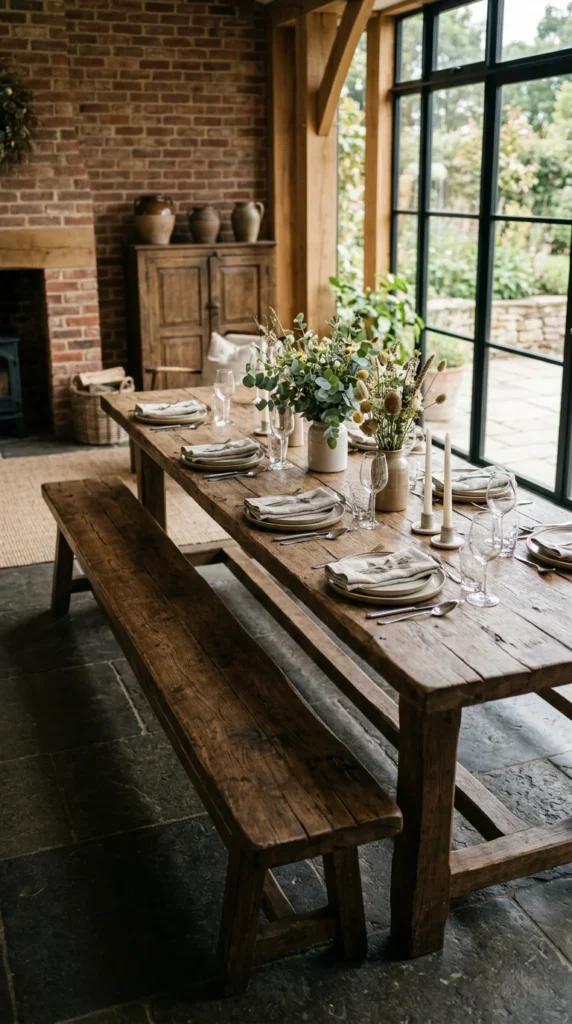
Benches encourage a casual, communal dining experience. Matching the reclaimed wood of the bench to the table creates a seamless, grounded look that is perfect for large families.
23. Foldable Extension
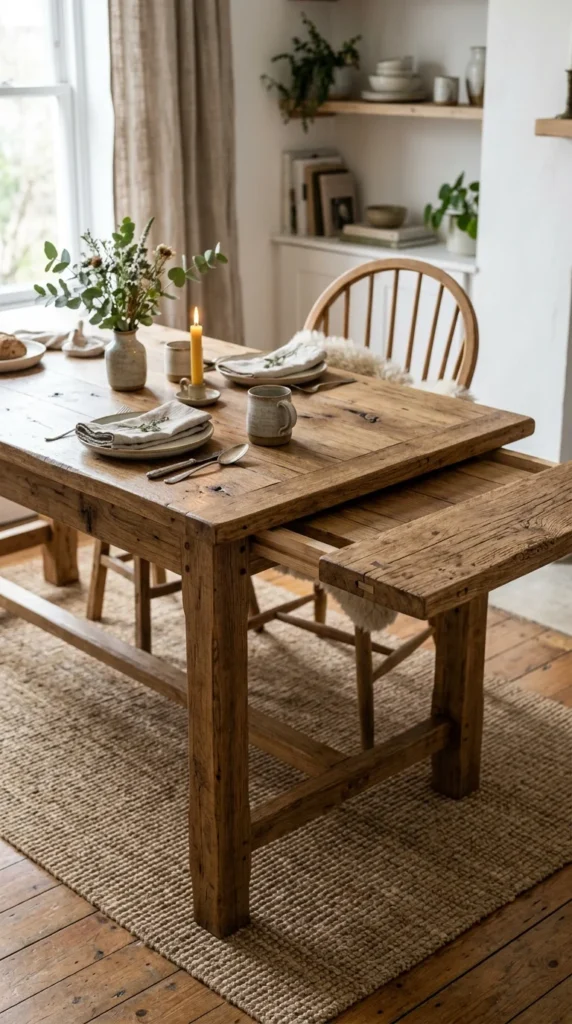
Functionality meets history. A reclaimed wood table with an extension leaf allows you to host large gatherings without sacrificing space on a daily basis.
24. Glass Inlay
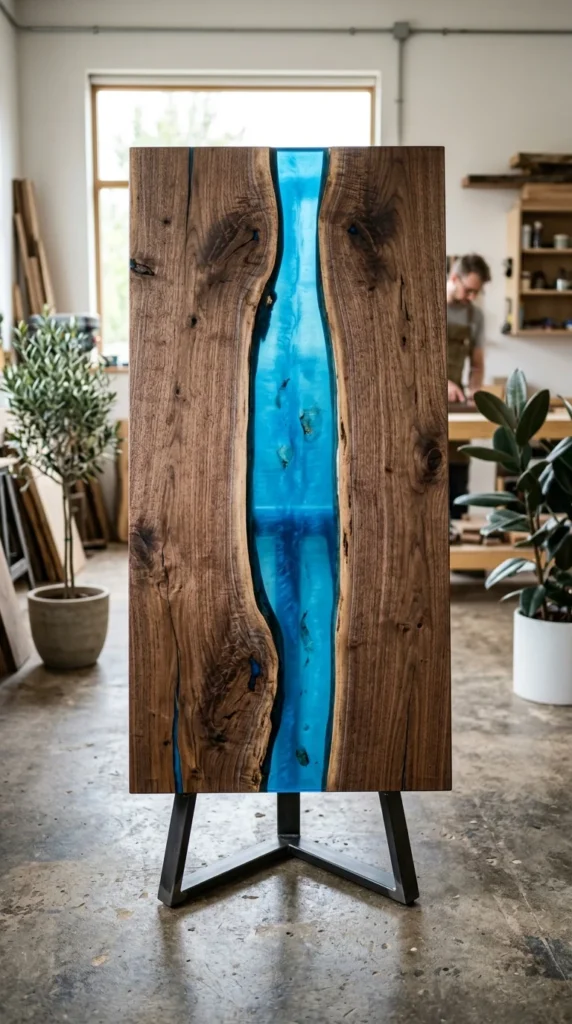
Often called “river tables,” these designs use glass (or resin) to bridge the gaps in reclaimed slabs. It’s a stunning way to highlight the natural irregularities of the wood.
25. Distressed Pine
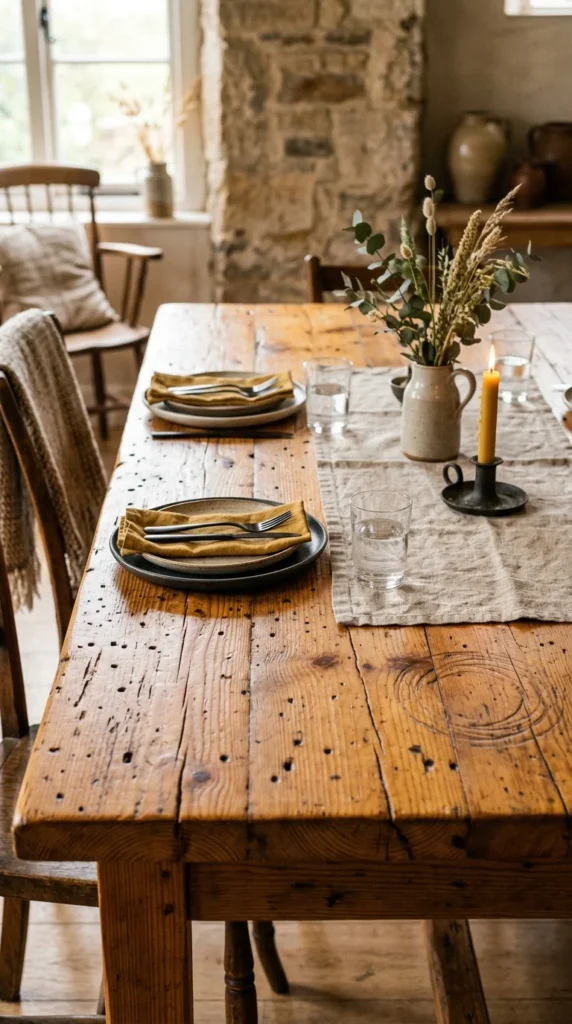
This design leans into the “flaws.” It celebrates the wood’s past life, making no effort to hide the scars of time, which results in a table with immense character.
26. Beam Construction
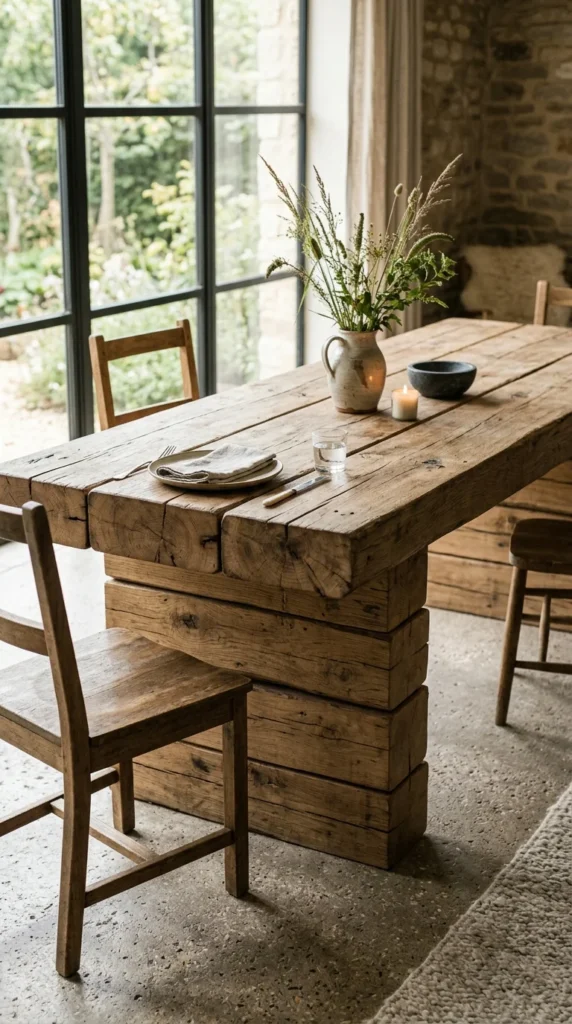
For the ultimate statement in sustainability and strength, beam construction uses the largest pieces of reclaimed timber available. It’s a bold, heavy design that feels like a permanent part of the home’s architecture.