

The bathroom is no longer just a functional utility room; it has evolved into a sanctuary, a place of relaxation and rejuvenation. When it comes to designing a space that feels both high-end and inviting, few materials can compete with the timeless appeal of wood. A wooden vanity brings organic warmth, rich texture, and a sense of grounding to a space often dominated by cold surfaces like tile and porcelain.
Whether you are aiming for a rugged rustic look, a sleek mid-century modern vibe, or a serene spa-like atmosphere, wood is the versatile foundation you need. Here are nine wooden bathroom vanity ideas that will instantly elevate your home.
1. Floating Oak
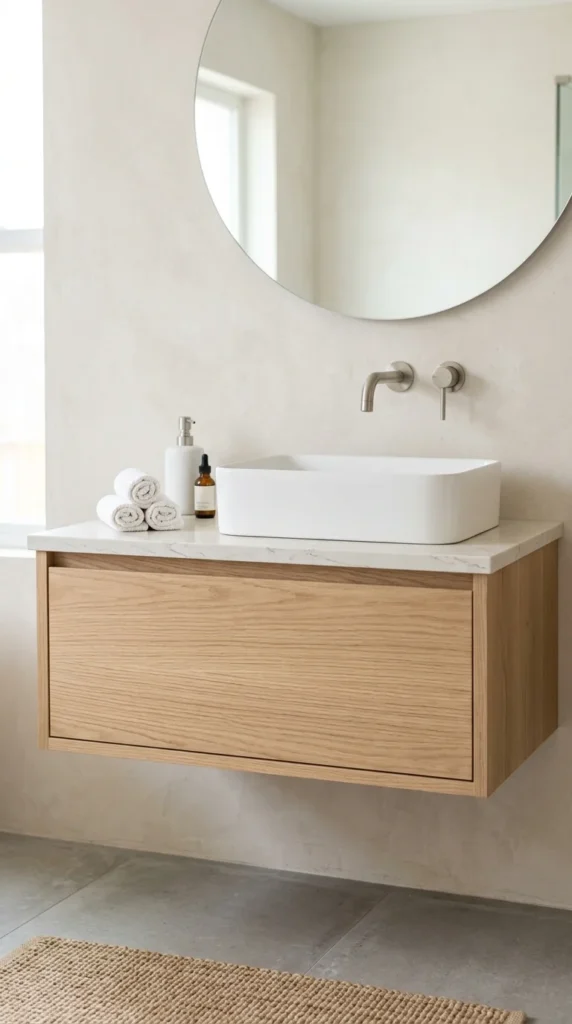
The floating oak vanity is the epitome of modern minimalism. By lifting the vanity off the floor, you create an illusion of more space, making it an ideal choice for smaller bathrooms or powder rooms. Oak is prized for its durability and its beautiful, straight grain patterns.
- Design Tip: Pair light oak with matte black hardware for a “Scandi-industrial” look. The contrast between the warm wood and the sharp black metal creates a sophisticated visual balance.
- Storage: Since floating vanities lack a base, opt for deep drawers with internal organizers to maximize every inch of space.
2. Reclaimed Barnwood
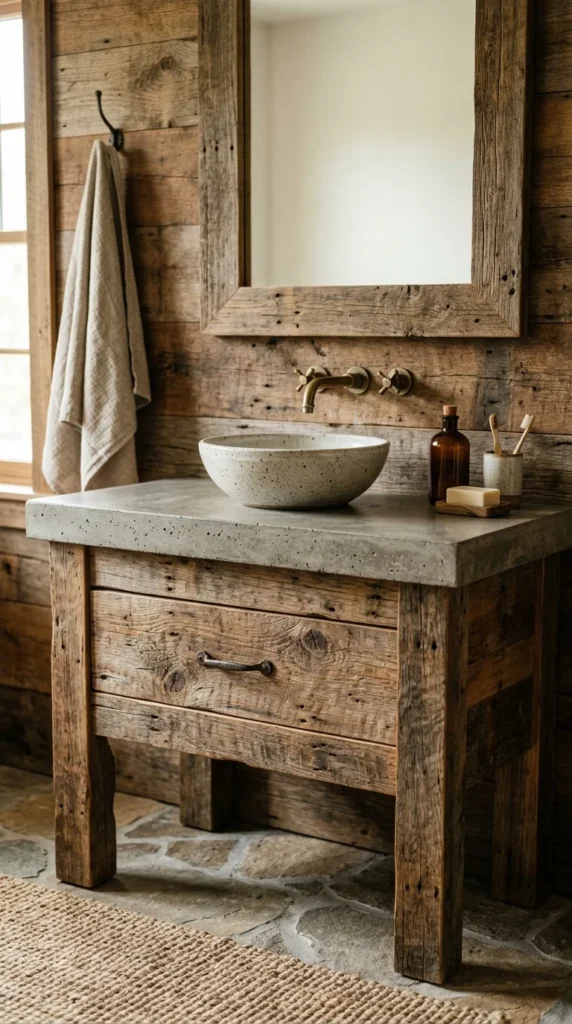
For those who love a home with a story, reclaimed barnwood is the ultimate choice. Each piece of wood carries its own history, featuring unique weathering, knots, and textures that cannot be replicated in a factory. This style adds an instant “farmhouse chic” or “industrial loft” feel to the bathroom.
- Eco-Friendly: Using reclaimed wood is a sustainable choice that prevents new timber from being harvested and gives old materials a second life.
- Texture Play: The ruggedness of reclaimed wood looks stunning when paired with smooth, modern elements like a white quartz countertop or a polished chrome faucet.
3. Mid-Century Walnut
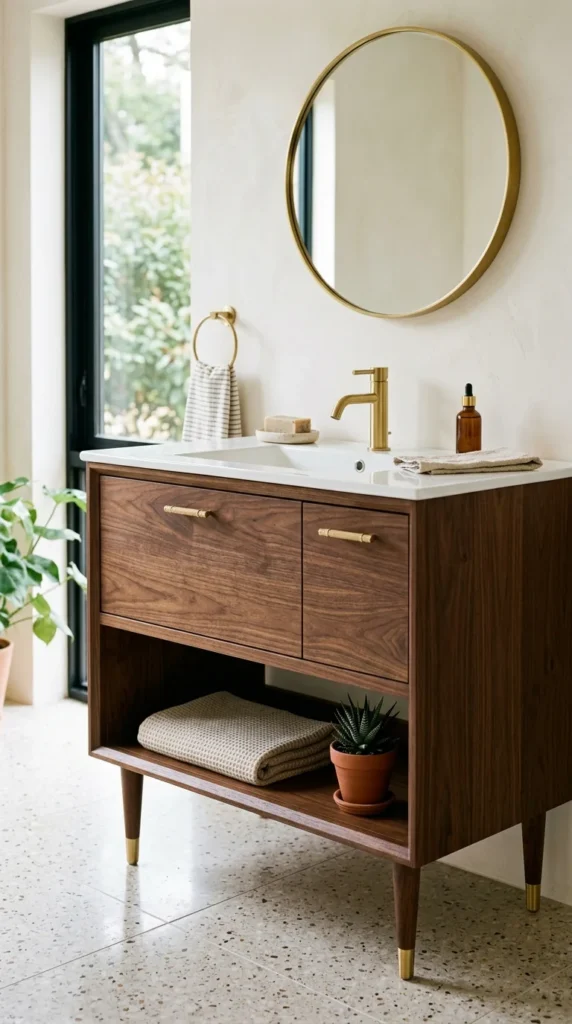
Mid-century modern design continues to dominate interior trends, and for good reason. A walnut vanity with tapered legs and clean lines offers a nostalgic yet timeless aesthetic. Walnut is a premium hardwood known for its deep, chocolatey tones and elegant swirl patterns.
- The Legs: The key to this look is the furniture-style legs. It makes the vanity feel like a curated piece of furniture rather than a built-in cabinet.
- Hardware: Brass or gold hardware is the perfect companion for walnut, as the warm metallic tones highlight the natural reddish hues in the wood.
4. Double Trough
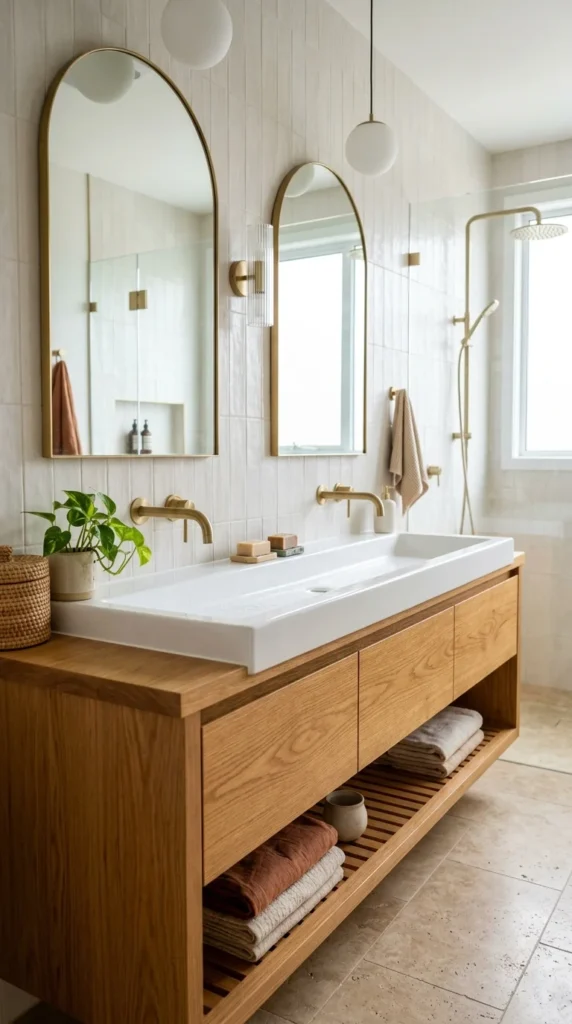
If you have a shared primary bathroom, the double trough vanity is a showstopper. Instead of two separate sinks, a single large trough sink sits atop a sprawling wooden base. This configuration is both highly functional for couples and visually striking.
- Symmetry: Use a large wooden base with symmetrical drawers or open shelving underneath to maintain a clean, organized look.
- Material Mix: Try a dark wood base with a light stone trough sink to create a dramatic focal point in a large bathroom.
5. Distressed Pine
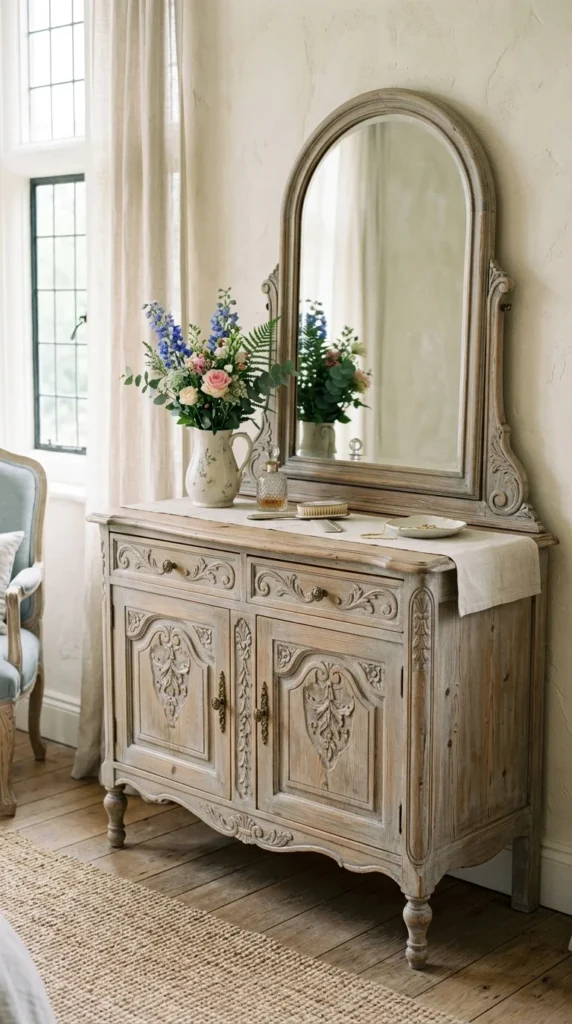
Distressed pine offers a softer, more romantic take on the wooden vanity. Often finished with a whitewash or a grey-toned glaze, this style works beautifully in French country, coastal, or cottage-inspired bathrooms. It feels lived-in and comfortable.
- Soft Color Palettes: Pine pairs beautifully with pastel tiles, such as sage green or dusty blue.
- Aged Charm: Look for vanities with “turned” legs or beadboard detailing to enhance the vintage character of the pine.
6. Minimalist Bamboo
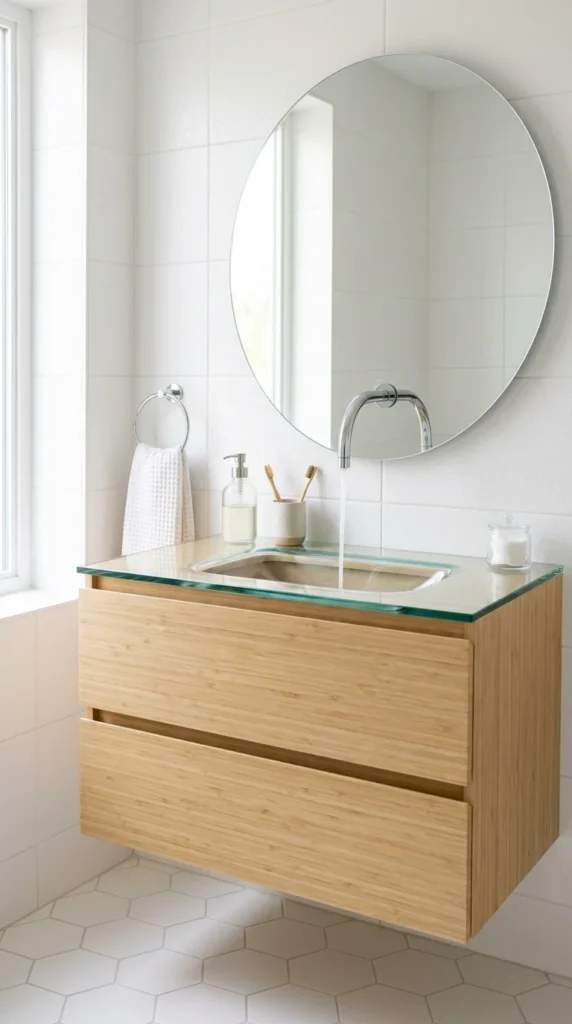
For a bathroom that feels like a high-end Japanese spa, bamboo is the material of choice. It is incredibly sustainable, moisture-resistant, and features a very fine, uniform grain that promotes a sense of calm and order.
- Spa Aesthetics: Keep the countertop clear of clutter and add a few river stones or a single bamboo plant to complete the Zen vibe.
- Durability: Bamboo is naturally dense and handles the humidity of a bathroom exceptionally well, resisting warping and swelling better than some traditional hardwoods.
7. Live Edge
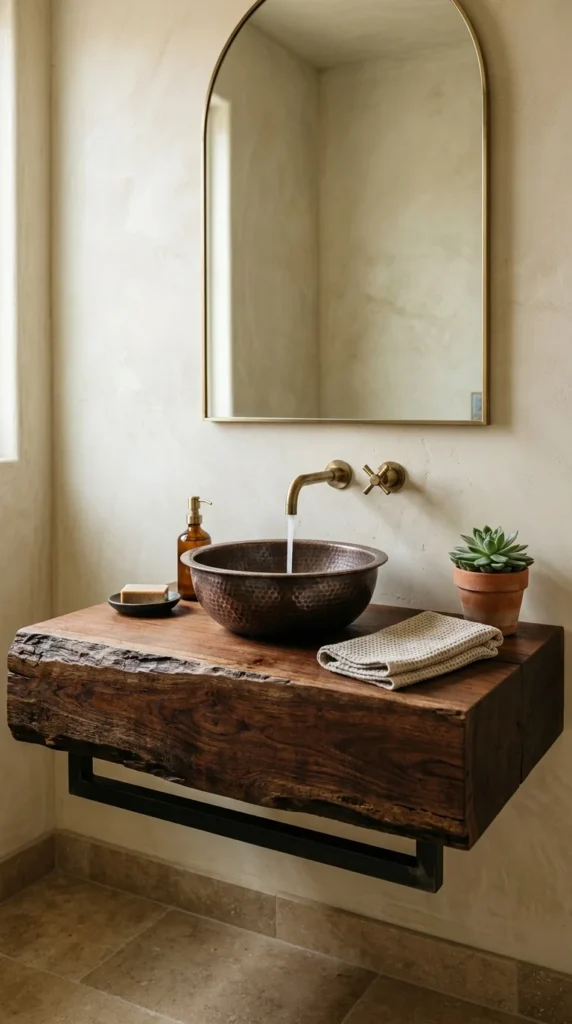
A live edge vanity is a piece of functional art. By keeping the natural, irregular edge of the tree trunk intact, you bring a raw, organic element into the home. No two live edge vanities are exactly alike, ensuring your bathroom is truly one-of-a-kind.
- Drama Factor: Because the wood is so visually dominant, keep the rest of the bathroom relatively simple. A plain tiled wall or a simple mirror will let the wood slab be the star.
- Pairings: Live edge wood looks incredible with natural stone, such as a slate floor or a granite sink.
8. Shaker Style
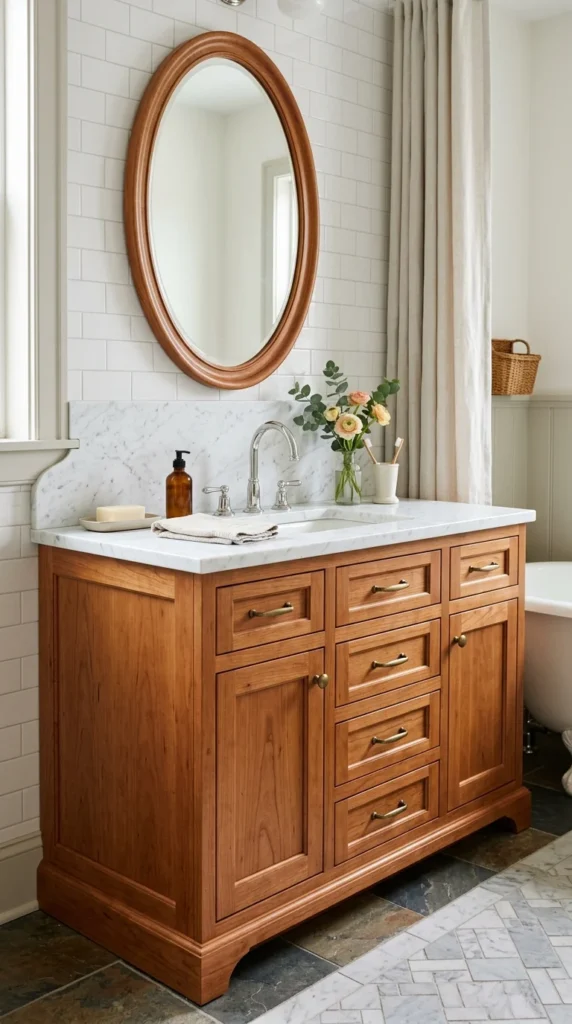
If you want a look that will never go out of style, the Shaker vanity is your best bet. Characterized by its recessed center panels and sturdy construction, this style bridges the gap between traditional and contemporary design.
- Versatility: Shaker vanities can be stained to show the natural grain or painted while still retaining the wood’s texture. A natural wood stain, however, provides a warmth that painted cabinets often lack.
- Organization: Because this is a classic cabinet style, it usually offers the most storage, featuring a combination of large cupboards and stacked drawers.
9. Dark Teak
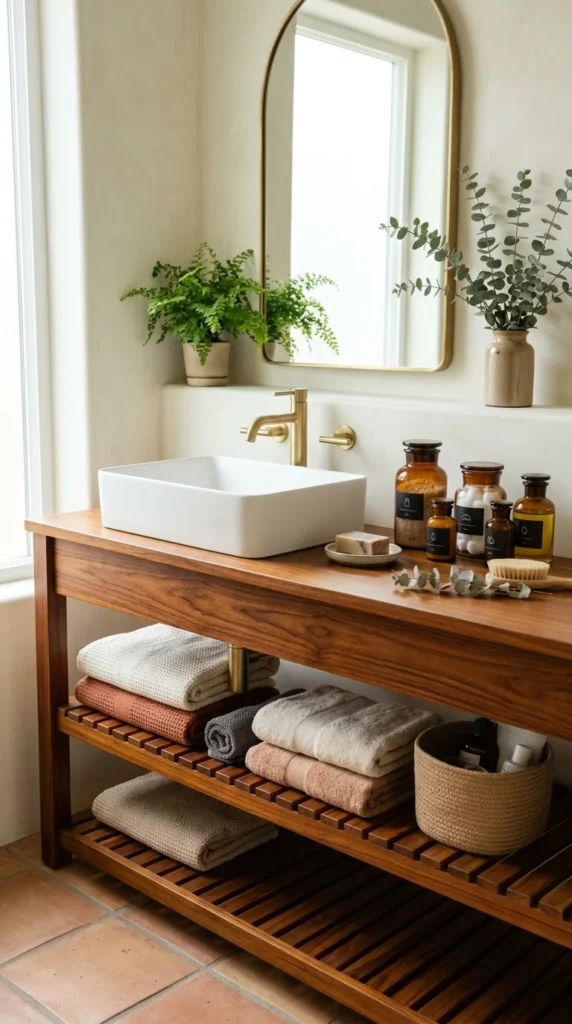
Teak is the gold standard for bathroom wood. Historically used in boat building, teak is naturally oily and incredibly water-resistant. A dark teak vanity brings a tropical, masculine, or mid-century vibe to the space, depending on how it’s styled.
- Slatted Details: Teak vanities often feature slatted shelves (like a spa bench), which allow for airflow—perfect for storing damp towels.
- Richness: The deep color of teak provides a wonderful anchor for a bathroom with white or light grey walls, preventing the space from feeling too “washed out.”
How to Maintain a Wooden Vanity
Many homeowners shy away from wood in the bathroom due to concerns about water damage. However, with the right care, a wooden vanity can last a lifetime.
- Proper Sealing: Ensure your vanity is treated with a high-quality, moisture-resistant sealer or marine-grade varnish. This creates a barrier that prevents water from seeping into the pores of the wood.
- Ventilation is Key: Always use an exhaust fan during and after showers to reduce humidity levels in the room.
- Wipe Spills Immediately: Never let standing water sit on the wooden surface. Keep a soft cloth nearby to wipe down the vanity after use.
- Avoid Harsh Chemicals: Use a mild, pH-neutral wood cleaner rather than abrasive bathroom scrubs which can strip the finish and damage the wood’s natural beauty.