
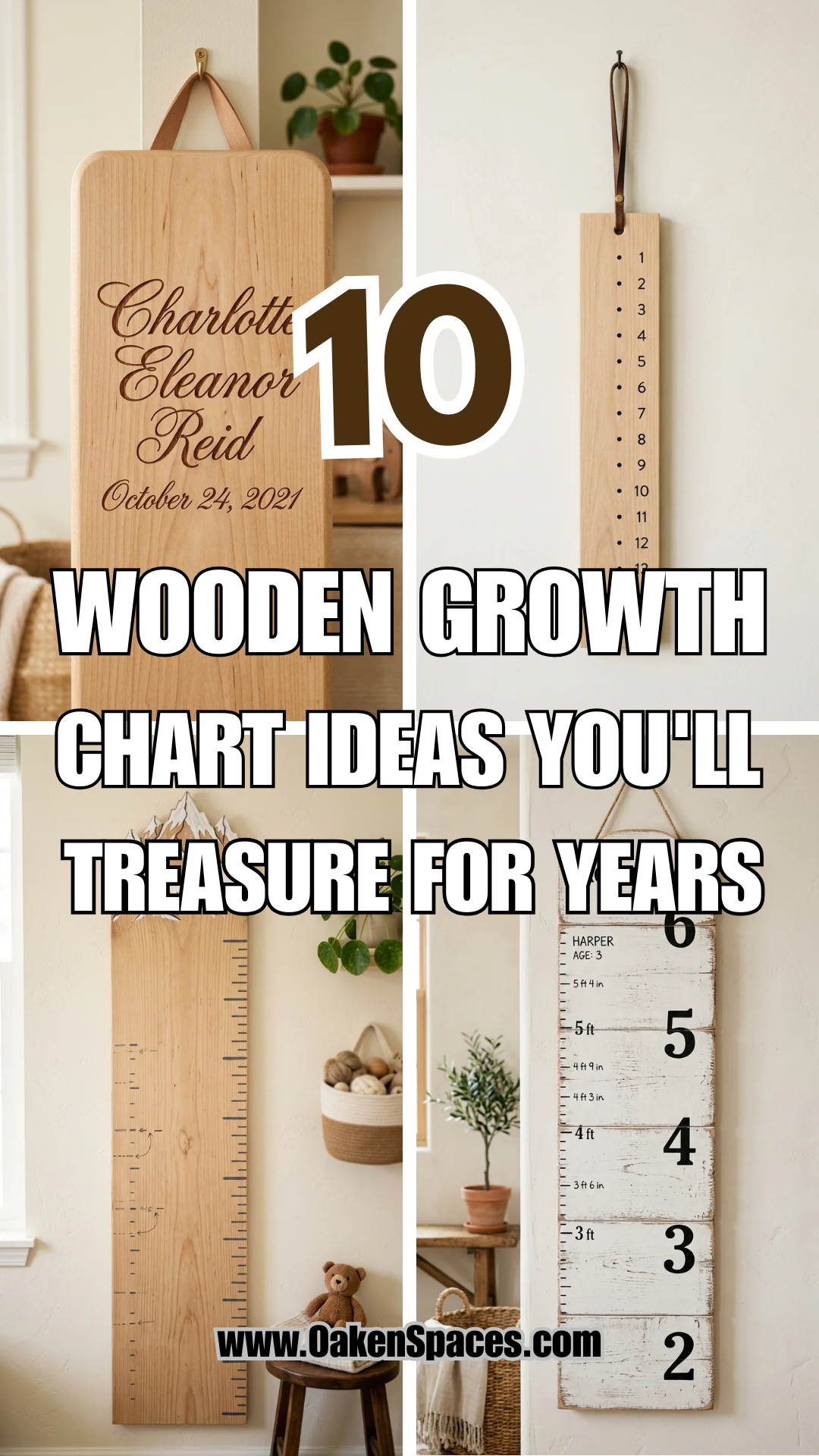
Watching a child grow is one of life’s most bittersweet experiences. One day they are swaddled in your arms, and the next, they are reaching for the cookie jar on the counter. While pencil marks on a doorframe are a classic tradition, they often get lost during a move or painted over during a renovation. This is why wooden growth charts have become the gold standard for modern parents. They are portable, durable, and serve as a stunning piece of home decor that tells the story of your family’s journey.
Unlike flimsy paper charts, a high-quality wooden growth chart becomes a family heirloom. It captures the fleeting moments of childhood in a physical, tactile way. Whether your home style is ultra-modern, rustic farmhouse, or whimsical and eclectic, there is a wooden growth chart design that will fit perfectly into your life. Here are ten incredible ideas to inspire your next family keepsake.
1. Classic Ruler
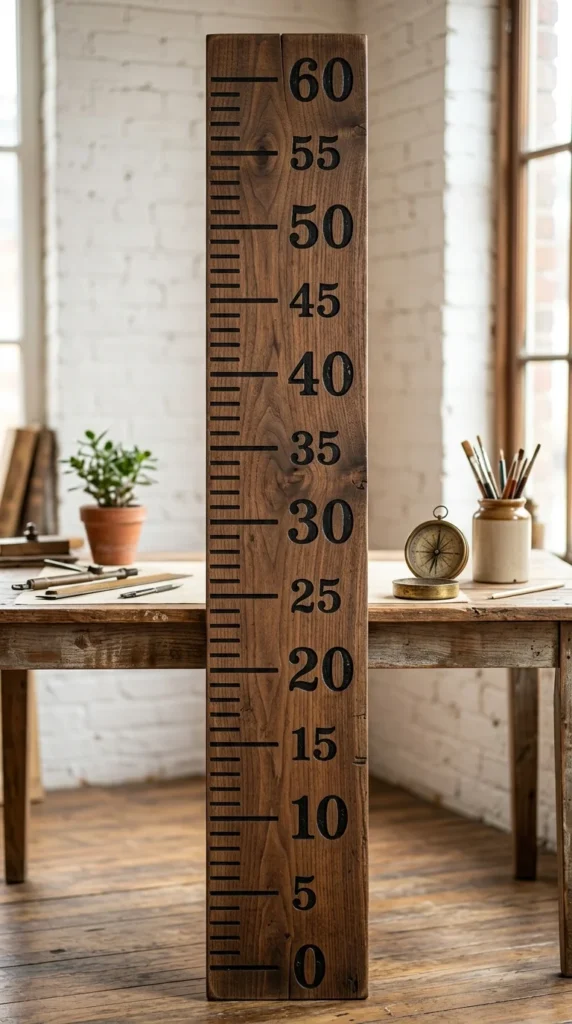
The oversized ruler is perhaps the most iconic growth chart design. It mimics the look of a traditional schoolhouse ruler but at a massive scale. Usually standing about six feet tall, these charts are often made from solid pine or cedar. The beauty of the classic ruler lies in its simplicity; it doesn’t distract from the rest of your room’s decor, yet it provides a clear, easy-to-read scale for tracking height.
Many families choose a “tobacco” or “espresso” stain to give the wood a vintage, aged feel. The markings are typically burned into the wood or painted with a high-contrast acrylic. This style is particularly popular because it is gender-neutral and can easily transition from a nursery to a hallway or a family mudroom as your children grow older.
2. Live Edge
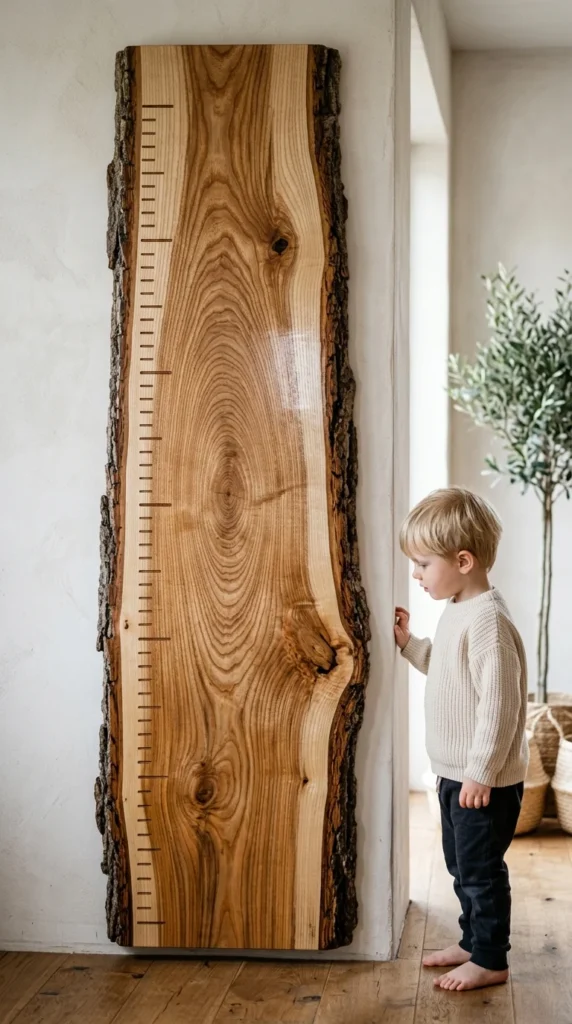
For families who love the “great outdoors” or organic modern aesthetics, a live-edge wooden growth chart is a showstopper. These charts use a single vertical slice of a tree—often walnut, maple, or cherry—preserving the natural silhouette of the trunk. No two pieces are ever the same, meaning your growth chart is as unique as your child.
The raw, organic edges provide a beautiful texture against a flat wall. To keep the focus on the wood’s natural grain, many designers use subtle brass tacks or small notches to indicate height rather than large numbers. It’s less of a “tool” and more of a piece of functional art that brings a sense of the forest into your home.
3. Shiplap Farmhouse
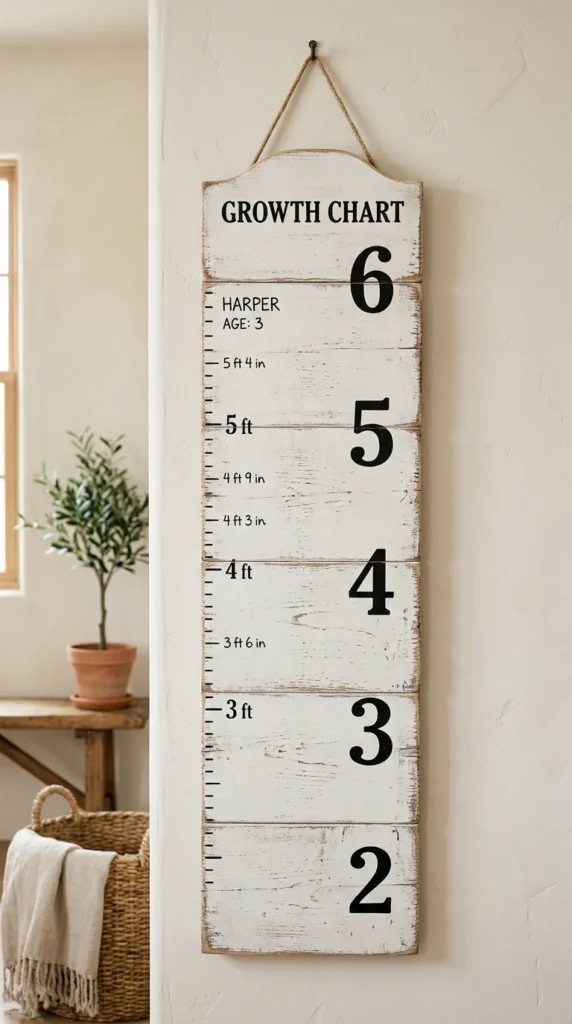
The farmhouse trend continues to dominate interior design, and a shiplap-style growth chart fits this aesthetic perfectly. These charts are often constructed from multiple horizontal slats joined together or a single board routed to look like planks. They are frequently painted in “antique white” or “sea salt gray” and then lightly sanded to create a distressed, lived-in look.
This style looks particularly striking when paired with black hardware. Because the background is light, it’s incredibly easy to write on with a fine-tip permanent marker. You can add notes next to the height marks, such as “First Day of Kindergarten” or “Taller than Grandma!” without the text getting lost in the wood grain.
4. Personalized Engraving
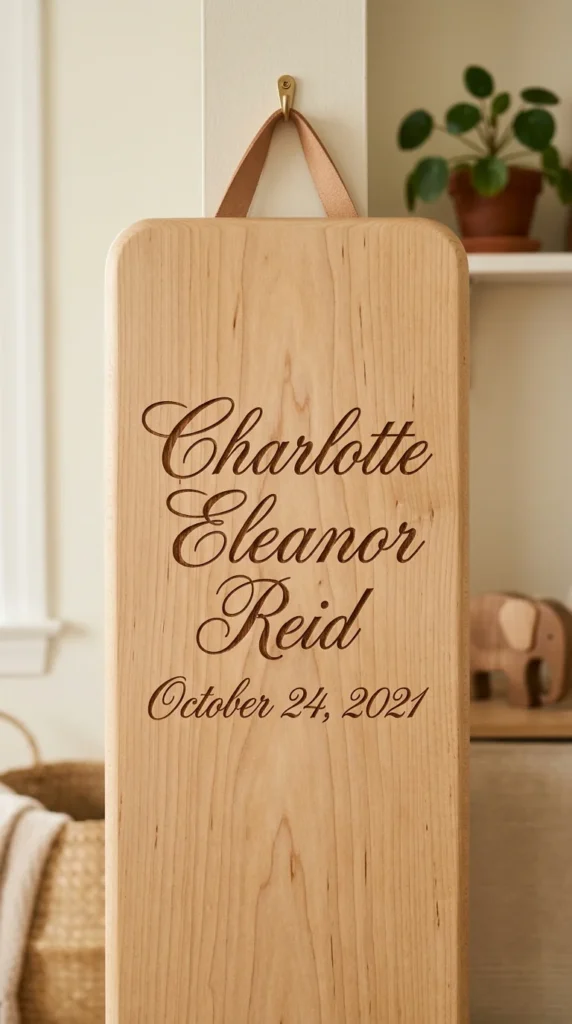
Nothing makes a piece feel more like a treasure than personalization. Custom-engraved growth charts often feature the family surname at the top (e.g., “The Miller Family Growth Chart”) or the specific name of the child. Adding a birth date, weight, and length at the bottom creates a “base” for the story you are about to record.
Engraving is superior to vinyl decals because it won’t peel or fade over time. As the years pass, the grooves of the engraving become part of the wood’s character. If you have multiple children, you can even engrave their names at different heights on the side of the board to show where they started their journey.
5. Photo Integrated
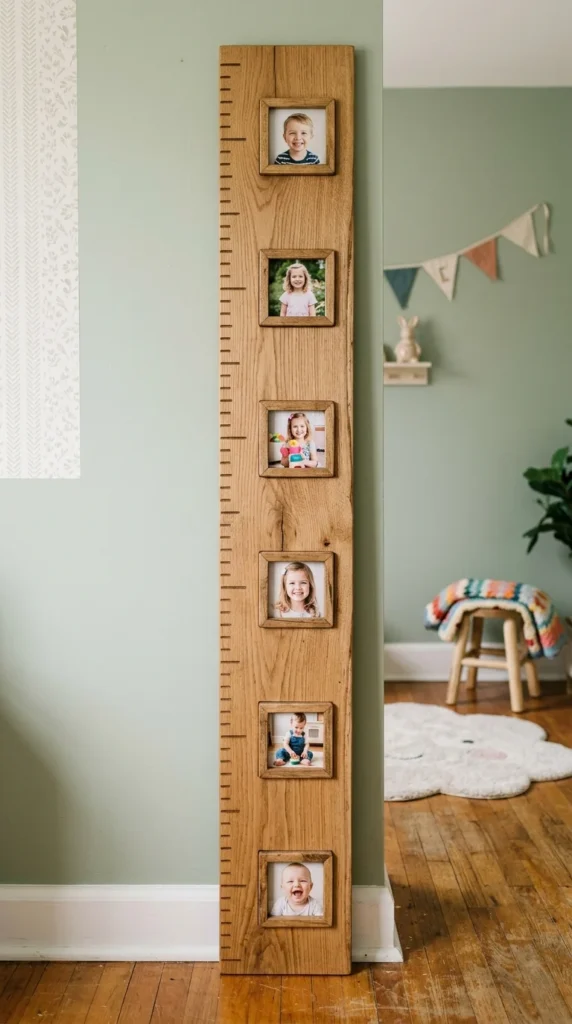
If a picture is worth a thousand words, then a photo-integrated growth chart is a full-length novel. This design features small clips or recessed frames at specific height intervals. The idea is to place a photo of your child next to their height mark at each birthday.
This creates a visual timeline of their transformation. You see not just the change in their stature, but the loss of baby teeth, the change in hairstyles, and the evolving personality in their eyes. It’s a powerful way to celebrate growth that goes beyond just inches and centimeters.
6. Botanical Hand-Painted
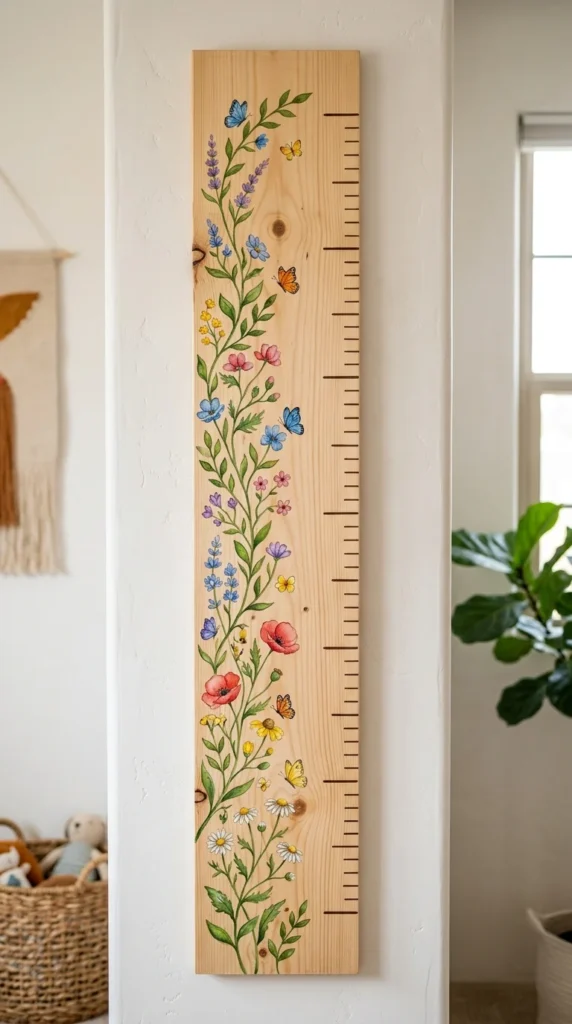
For a whimsical or bohemian nursery, a hand-painted botanical growth chart adds a touch of enchantment. These are often made from lighter woods like birch or plywood to allow the colors of the paint to pop. Artists might paint climbing ivy, blooming peonies, or even a tall sunflower that “grows” alongside the child.
This style turns the growth chart into a mural. It’s a wonderful choice for parents who want to move away from the “industrial” look of rulers and toward something softer and more illustrative. It encourages children to interact with the chart, perhaps picking out their favorite flower as they stand tall against the wood.
7. Reclaimed Barnwood
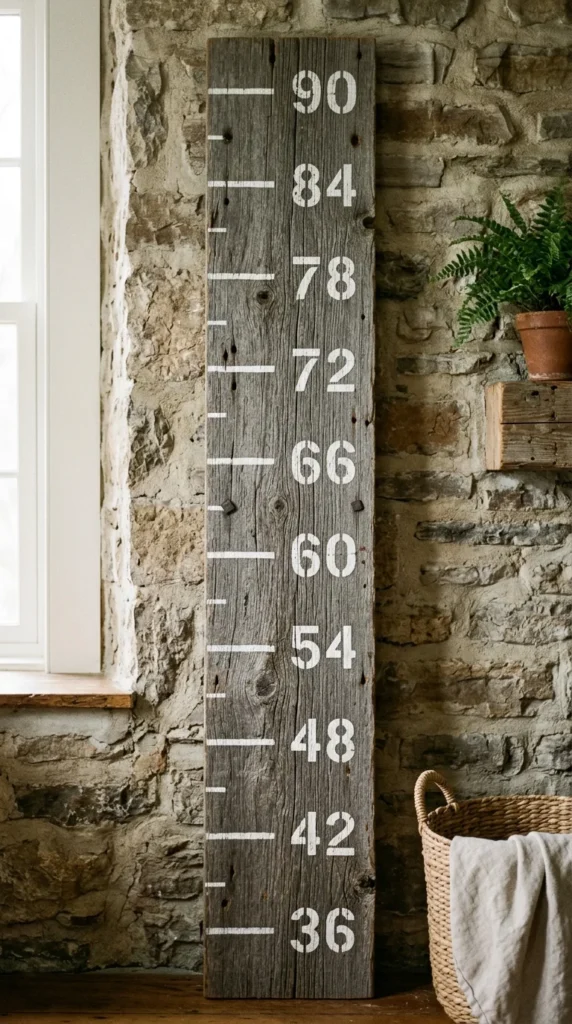
There is something deeply poetic about recording a new life on wood that has already lived a long history. Reclaimed barnwood growth charts are made from salvaged timber from old barns, fences, or ships. The wood is naturally weathered by the elements, resulting in a stunning silver-gray patina or deep, craggy browns.
These charts are incredibly durable and hide “wear and tear” perfectly. If your toddler accidentally bumps a toy truck into it, it just adds to the character. For families who value sustainability and history, using reclaimed wood is a meaningful way to track the future while honoring the past.
8. Mountain Silhouette
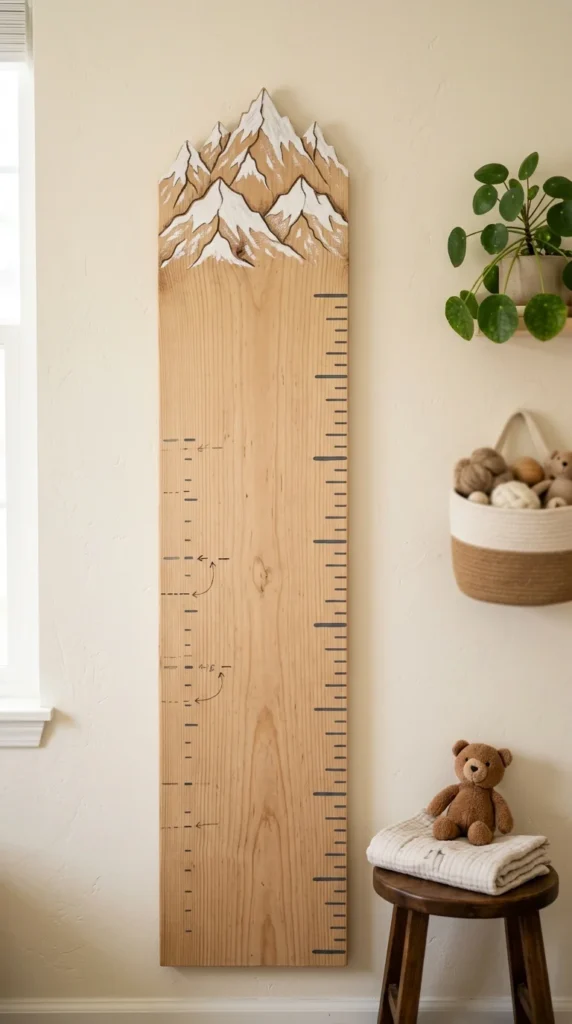
Adventure-themed nurseries are a popular choice, and a mountain silhouette growth chart is the perfect focal point. Instead of a flat top, the wood is custom-cut into the shape of a mountain range. This symbolizes the “climb” of childhood and the many peaks your child will reach throughout their life.
Often, these charts use a “dipped” paint technique where the bottom half is natural wood and the top peaks are painted in navy, forest green, or white snowcaps. It’s a playful, imaginative take on the traditional vertical board and serves as a constant reminder to “aim high.”
9. Minimalist Scandi
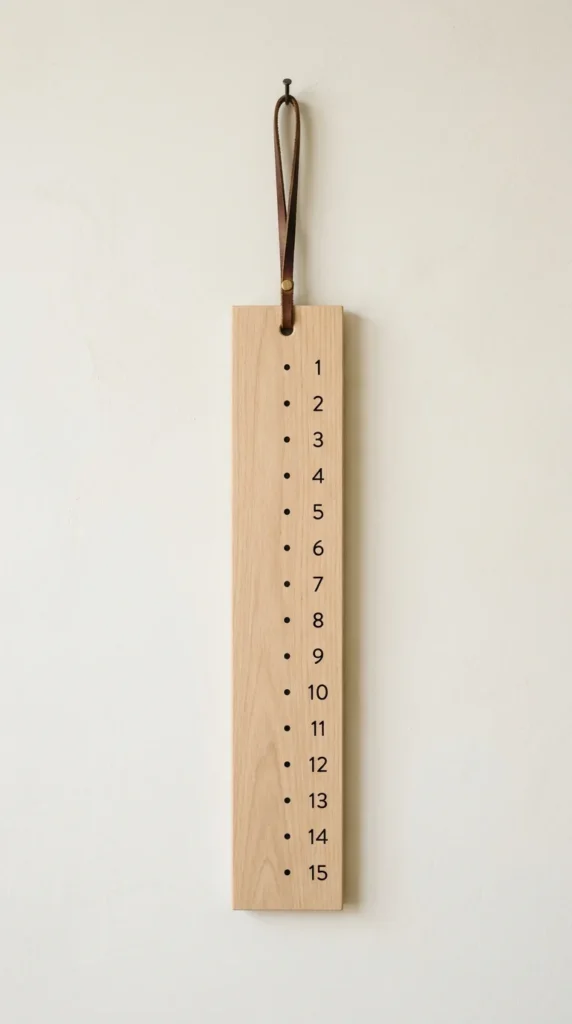
In a world of clutter, many parents are turning to Scandinavian minimalism. A Scandi-style growth chart is characterized by clean lines, light woods (like ash or oak), and plenty of “white space.” The markings are usually very fine, and the typography is modern and understated.
These charts often don’t even use nails for mounting; instead, they might hang from a simple leather strap or a hidden magnetic bracket. This style is perfect for the “invisible” decor look, where the object blends seamlessly into the room until you step closer to see the precious data recorded upon it.
10. Hinged Folding
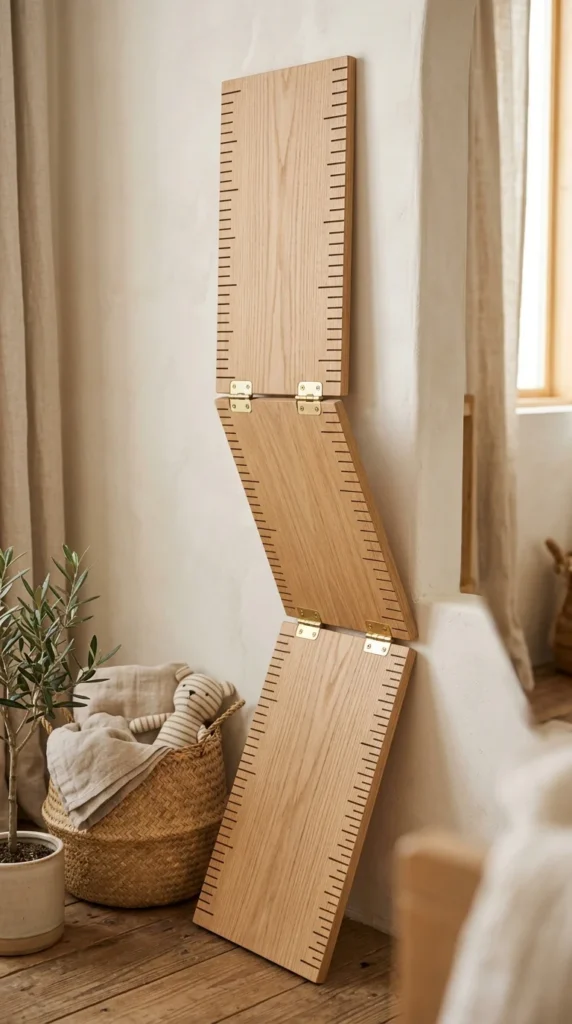
One of the biggest fears parents have is moving house and losing their growth marks. While most wooden charts are portable, the hinged folding chart takes this a step further. This chart is designed in sections—usually three two-foot pieces—connected by high-quality hinges.
This allows the chart to be folded down into a compact size, making it easy to store in a keepsake box or tuck into a suitcase if you are moving across the country. It’s a practical solution for families who move frequently (such as military families) but refuse to leave their memories behind. When unfolded and mounted, the hinges add a beautiful metallic detail that gives the wood an “antique chest” feel.
Tips for Maintaining Your Wooden Growth Chart
To ensure your wooden growth chart lasts for decades, keep these tips in mind:
- Choose the Right Marker: Use a fine-tip permanent marker or a paint pen. Avoid regular felt-tip markers, as the ink can “bleed” into the grain of the wood over time, making the writing blurry.
- Mounting Height: Most growth charts are designed to start at 6 inches or 12 inches off the ground to account for baseboards. Use a measuring tape to ensure you mount it at exactly the right height from the floor, or your measurements will be inaccurate!
- Seal the Wood: If you are DIY-ing your chart, ensure you use a clear matte or satin sealant. This protects the wood from humidity and prevents the markings from fading.
- Record More Than Height: Don’t be afraid to jot down the date, the child’s age, or a quick note about a milestone. These small details are what transform a piece of wood into a storied legacy.