
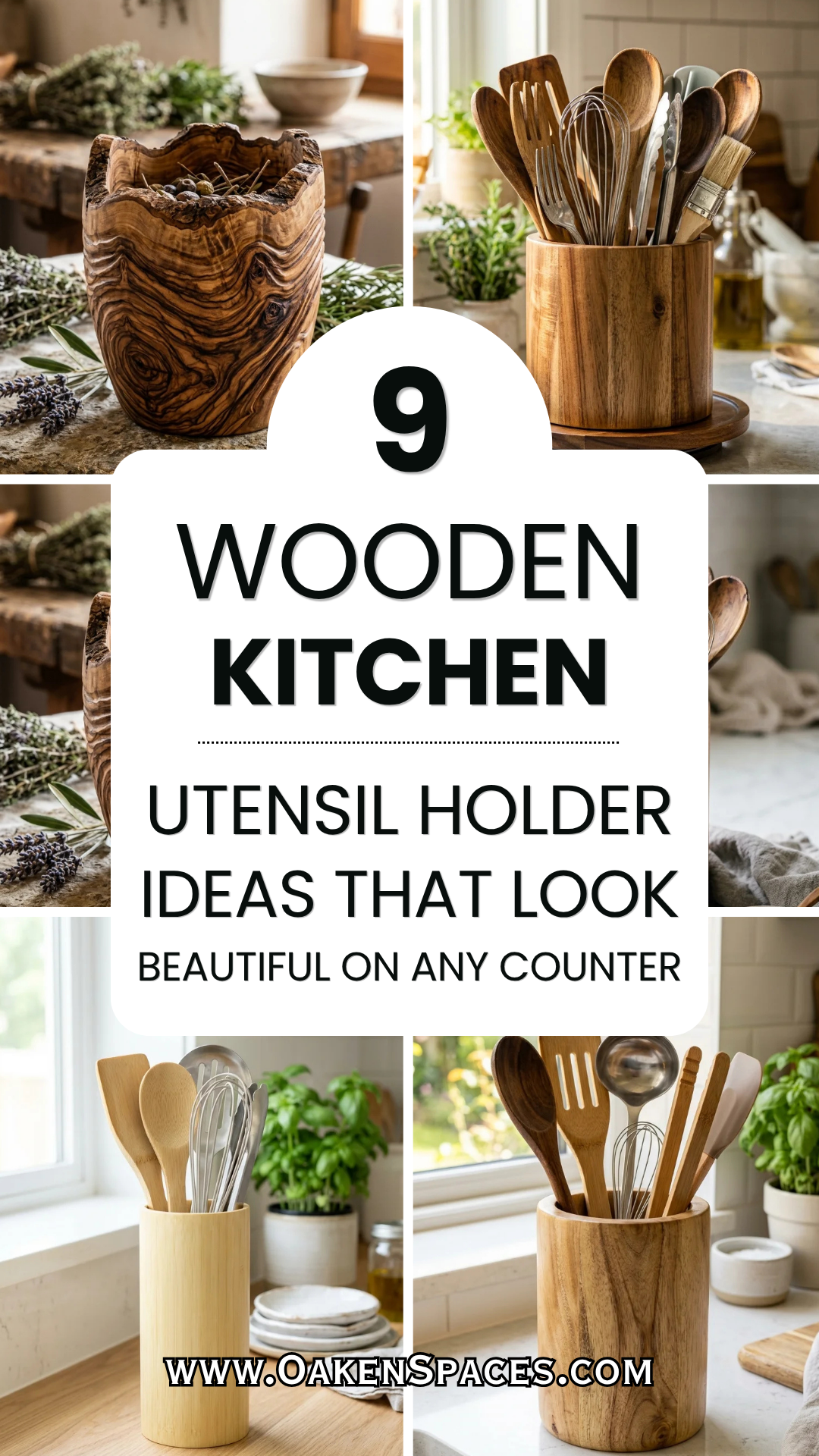
The kitchen is often called the heart of the home, and nothing brings a sense of warmth and organic beauty to this space quite like wood. While stainless steel and ceramic have their place, wooden kitchen utensil holders offer a unique blend of durability, timeless style, and a tactile connection to nature. Whether your kitchen aesthetic leans toward modern minimalism, rustic farmhouse, or eclectic bohemian, a wooden crock can serve as a stunning focal point while keeping your most-used tools within arm’s reach.
Beyond their looks, wooden holders are remarkably practical. They don’t clatter like metal, they don’t chip like ceramic, and they age beautifully, developing a patina that tells the story of countless family meals. If you’re looking to upgrade your countertop organization, here are nine wooden kitchen utensil holder ideas that will look beautiful in any home.
1. Mango Wood
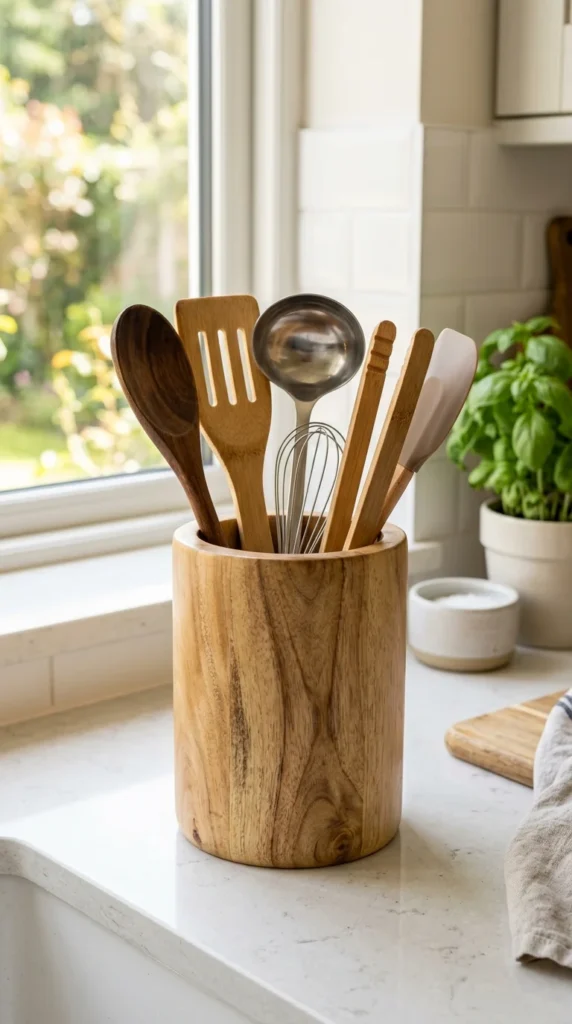
Mango wood is a favorite among interior designers for its sustainable origins and its incredibly diverse grain patterns. Typically ranging from a golden brown to a deep amber, mango wood often features streaks of pink, green, or black, making every single piece unique.
A mango wood utensil holder brings a soft, tropical warmth to the kitchen. It is naturally water-resistant, which is essential for a high-moisture environment like a kitchen counter. Its dense grain means it is heavy enough to remain stable even when filled with long-handled heavy ladles or rolling pins. To keep it looking its best, a light rub with food-safe mineral oil every few months will maintain its luster and prevent the wood from drying out.
2. Acacia Grain
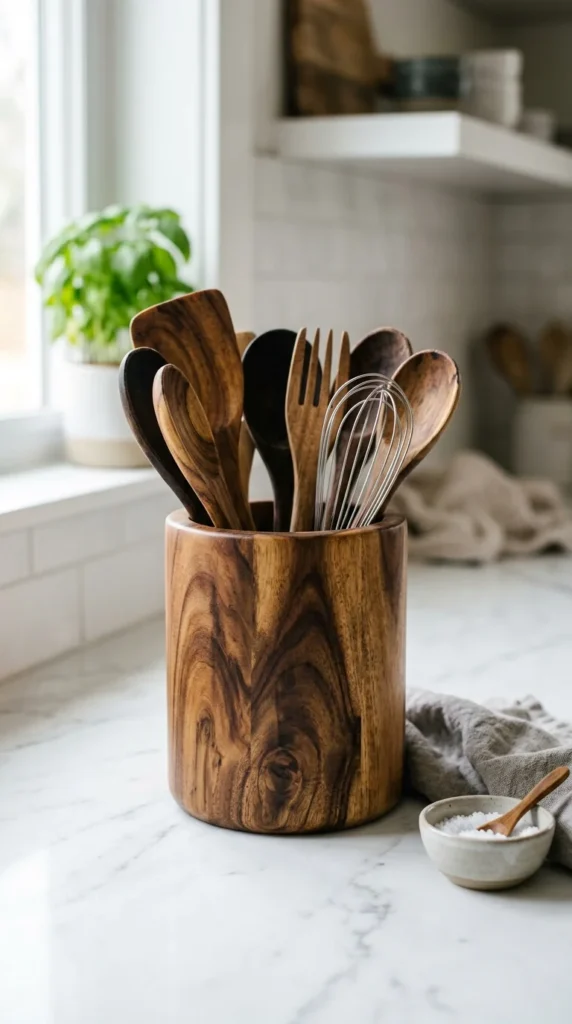
Acacia is renowned for its strength and its striking color contrasts. An acacia wood holder often showcases a beautiful interplay between dark heartwood and lighter sapwood, creating a “striped” or “marbled” look that captures the eye immediately.
Because acacia is an exceptionally hard wood, these holders are incredibly durable and resistant to scratches. This makes them perfect for a busy kitchen where tools are frequently tossed in and out. The rich, chocolatey tones of acacia pair beautifully with white marble countertops or dark cabinetry, providing a sophisticated, high-end feel without the high-end price tag.
3. Farmhouse Crate
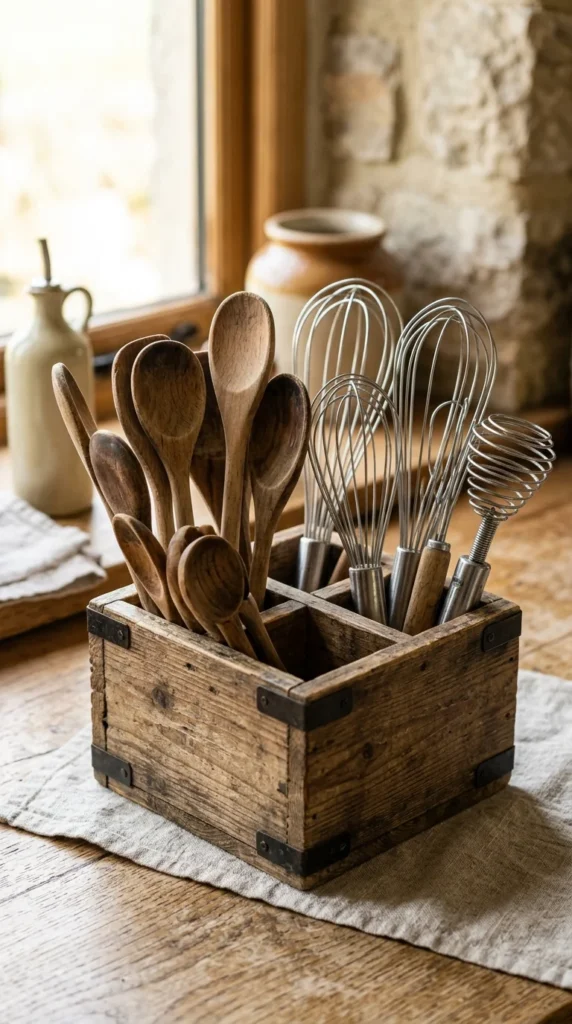
If you love the “fixer-upper” aesthetic, a farmhouse-style wooden crate is the way to go. Unlike cylindrical crocks, these are usually square or rectangular and often feature internal dividers. These dividers are a game-changer for organization, allowing you to separate your wooden spoons from your metal spatulas or silicone whisks.
Farmhouse crates are often made from pine or cedar and can be finished with a light whitewash or a dark, weathered stain. They provide a wider footprint, which makes them very stable. This design is particularly effective for those who have a large collection of utensils, as the rectangular shape often holds more than a standard round crock.
4. Minimalist Bamboo
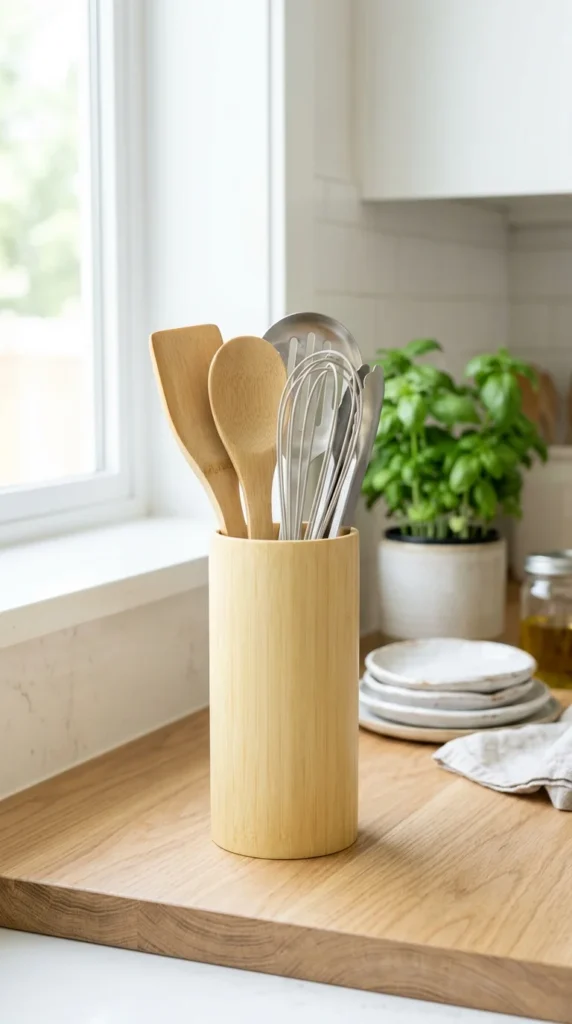
For those who prefer a clean, modern, and eco-friendly look, bamboo is the ultimate choice. Technically a grass rather than a wood, bamboo grows incredibly fast, making it one of the most sustainable materials in the kitchen.
Bamboo utensil holders are typically characterized by their light, blonde color and straight, uniform grain. They are lightweight yet surprisingly strong. Because of their minimalist appearance, they fit perfectly in “Scandi-style” kitchens or spaces with a lot of natural light. Bamboo is also naturally antimicrobial, which provides an extra layer of hygiene for your cooking tools.
5. Carved Olivewood
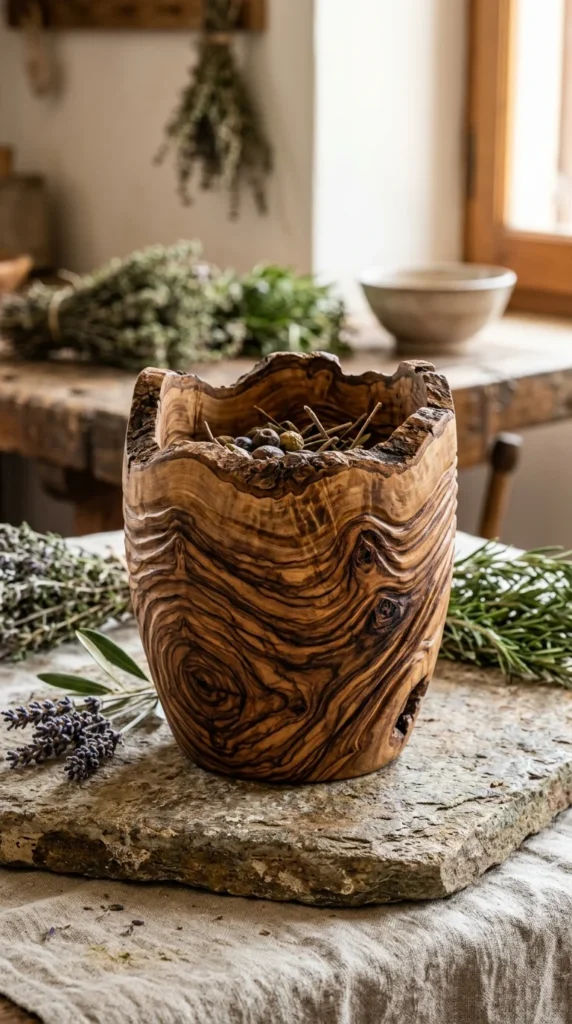
Olivewood is the “luxury” choice for wooden kitchenware. It is a slow-growing wood, resulting in an incredibly dense material with a dramatic, swirling grain that looks like liquid marble. An olivewood utensil holder is often hand-carved, meaning the shape might be slightly irregular, adding to its artisanal charm.
Because of its high oil content, olivewood is naturally resistant to odors and bacteria. It feels heavy and substantial in the hand. While olivewood holders are often smaller than other types, they serve as a piece of functional art on your counter. They pair exceptionally well with Mediterranean-style kitchens or any space that celebrates handcrafted quality.
6. Reclaimed Timber
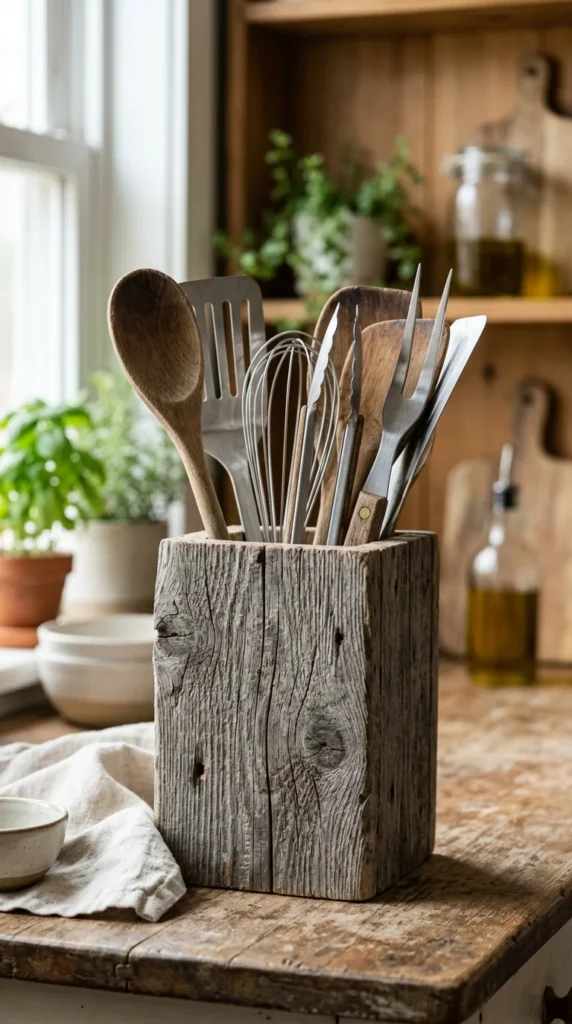
There is something deeply satisfying about using materials that have a history. Reclaimed wood utensil holders are often fashioned from old barn beams, shipping pallets, or floorboards. These pieces celebrate imperfections—nail holes, knots, and weathered textures are all part of the appeal.
A reclaimed timber holder adds instant character and a sense of “soul” to a kitchen. It works particularly well in industrial-style homes or rustic cabins. Because the wood has already stood the test of time, these holders are incredibly sturdy. To prevent snagging, ensure the piece has been properly sanded and sealed with a matte, food-safe finish.
7. Walnut Block
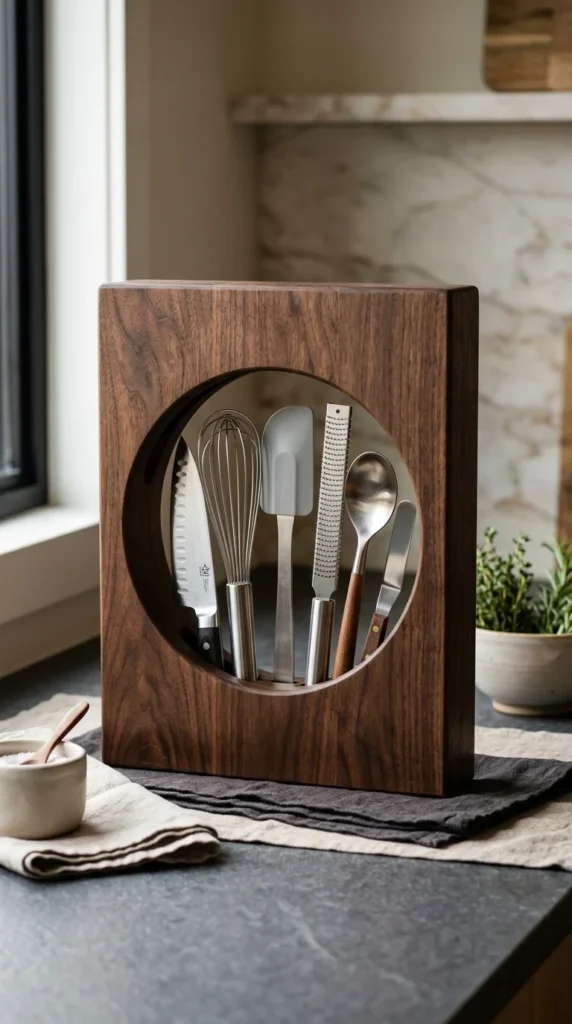
Walnut is the gold standard for elegance. With its deep, cool brown tones and straight, fine grain, a walnut utensil holder screams sophistication. Unlike the warm yellows of mango or the reds of acacia, walnut provides a moody, dark accent that looks stunning against gold or brass hardware.
A solid walnut block holder—often square with a circular hollow carved out of the center—provides a weighted, architectural feel. It is a favorite for modern kitchens that favor sharp lines and high-quality materials. Walnut is a premium hardwood, so while it may be an investment, it is a piece that will last a lifetime.
8. Rotating Susan
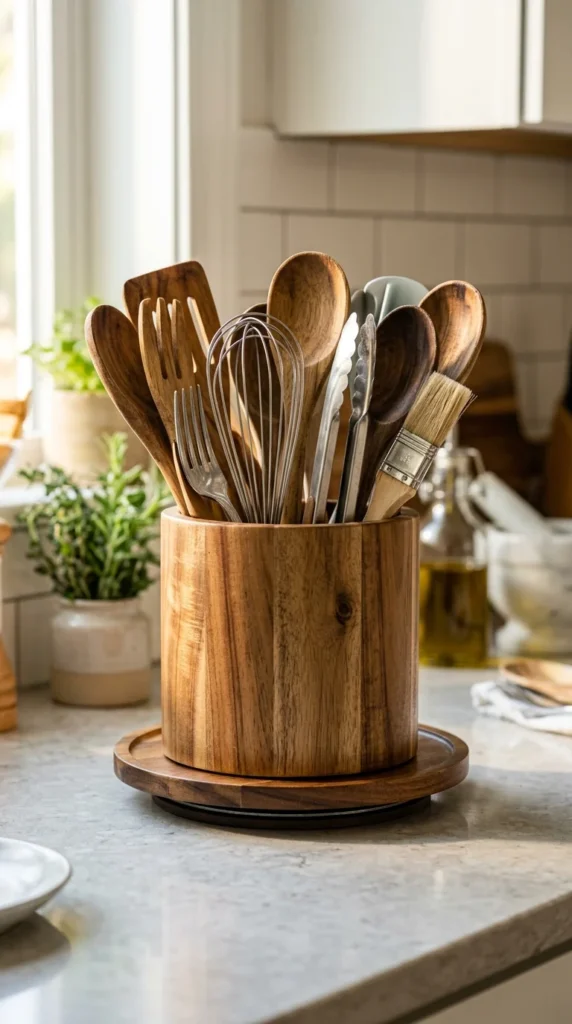
Functionality meets style with the rotating wooden utensil holder. Inspired by the “Lazy Susan,” these holders feature a swivel base that allows you to spin the crock to find exactly what you need. This is particularly useful if you store your holder in a corner or under a low cabinet.
These are often larger in diameter and may feature multiple compartments. You can find them in various woods, but oak and cherry are popular choices for this design because of their structural integrity. A rotating holder is the perfect solution for the “power cook” who has dozens of tools and needs quick access to all of them without digging through a cluttered drawer.
9. Painted Accents
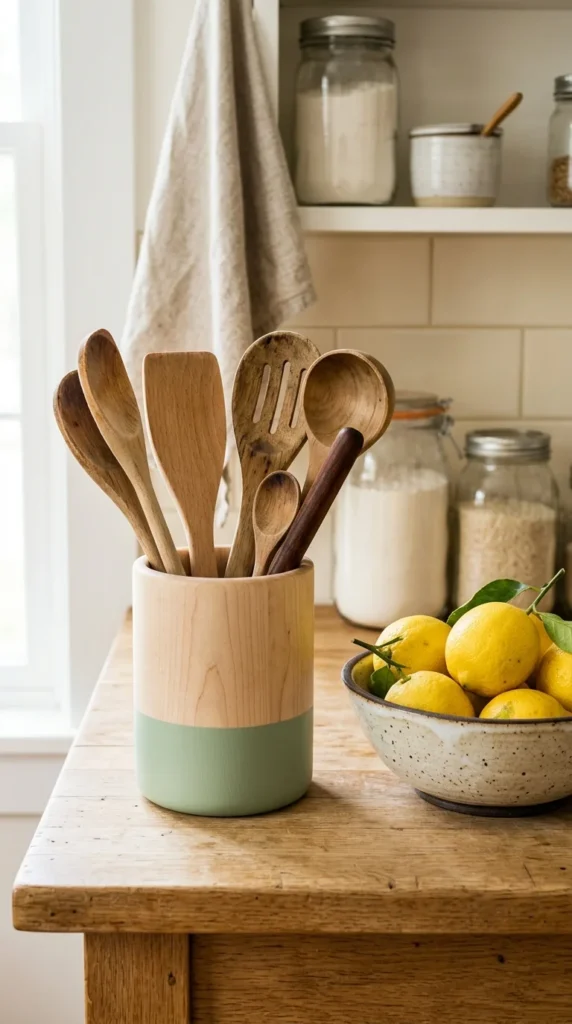
If you want the warmth of wood but also want to tie in your kitchen’s color scheme, look for a “dipped” or painted wooden holder. These usually feature the top half in natural wood grain, while the bottom third or half is painted in a solid matte color like white, navy blue, or sage green.
This style bridges the gap between traditional and contemporary. The paint provides a pop of color, while the exposed wood grain keeps the piece grounded and organic. It’s an excellent way to coordinate your countertop accessories with your backsplash tiles or cabinet colors. For a DIY project, you can even take a plain wooden holder and add your own “dipped” paint effect using non-toxic, food-safe craft paint.
Caring for Your Wood Utensil Holder
To ensure your wooden holder remains a centerpiece for years to come, follow these simple maintenance tips:
- Hand Wash Only: Never put a wooden holder in the dishwasher. The high heat and intense water pressure will cause the wood to warp and crack.
- Dry Immediately: After wiping it down with a damp cloth, dry it thoroughly with a towel.
- Oil Regularly: Use a food-grade mineral oil or beeswax cream every few months to keep the wood hydrated and vibrant.
- Avoid Direct Sunlight: Long-term exposure to direct sunlight can bleach the wood and cause it to dry out prematurely.