
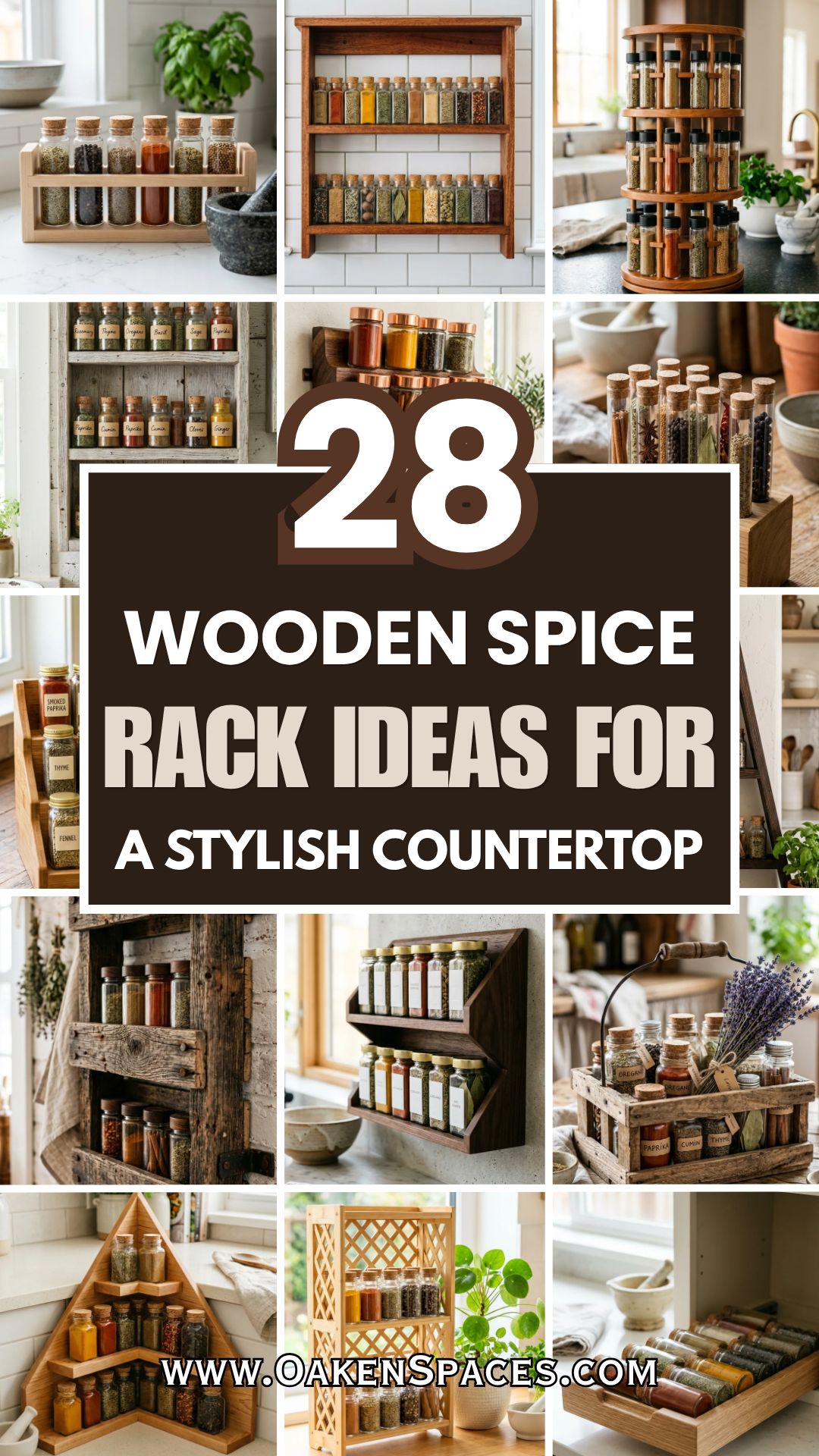
The kitchen is often considered the heart of the home, and at the center of every great meal is a collection of vibrant, aromatic spices. However, keeping these flavor enhancers organized can be a challenge. While plastic or metal organizers are functional, nothing beats the warmth, durability, and timeless aesthetic of wood. A wooden spice rack doesn’t just store your seasonings; it acts as a piece of furniture for your countertop, elevating the entire room’s design. Whether you prefer the rugged look of reclaimed timber or the sleek lines of modern walnut, there is a wooden solution for every culinary space.
1. Single Tier
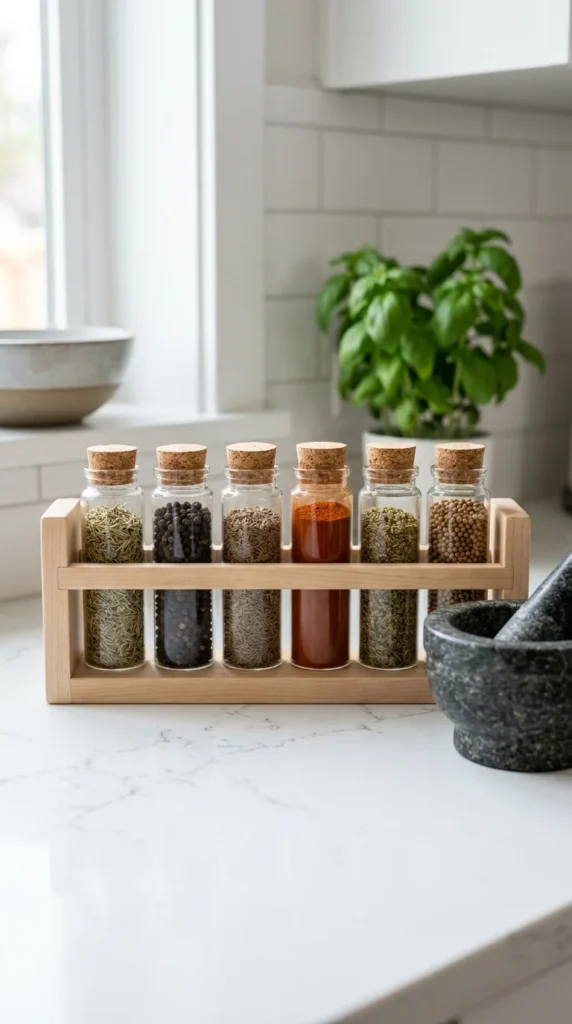
The single-tier rack is the pinnacle of minimalist design. Perfect for small kitchens or for those who only keep their most frequently used spices within arm’s reach. Its low profile ensures it doesn’t clutter the visual space of your countertop, while the natural grain of the wood provides a subtle, organic touch.
2. Double Tier
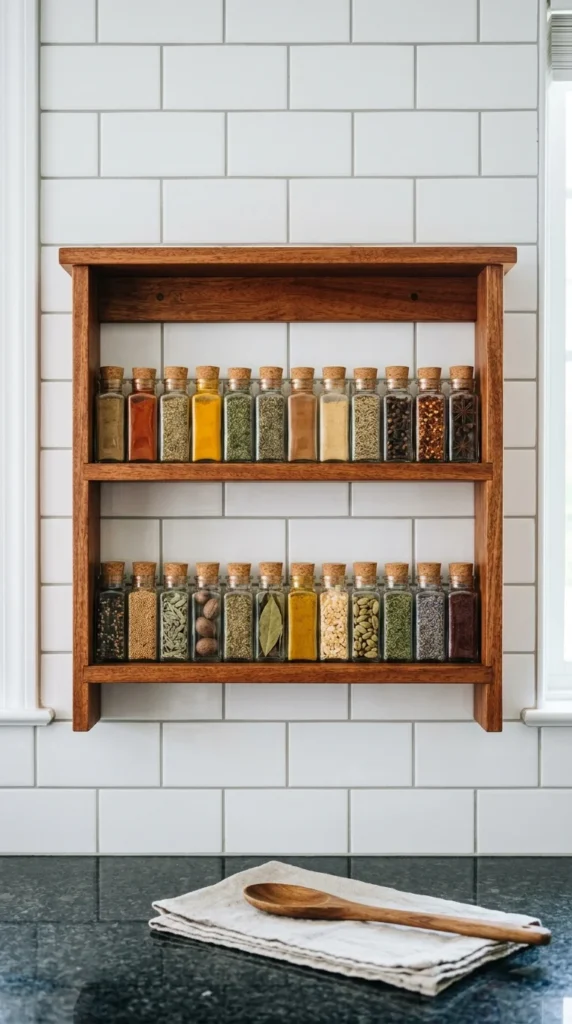
When one level isn’t enough, the double tier steps in to provide ample storage without taking up additional “real estate” on your counter. By stacking vertically, you can categorize your spices—herbs on top, ground spices on the bottom—making your cooking process much more efficient.
3. Revolving Tower
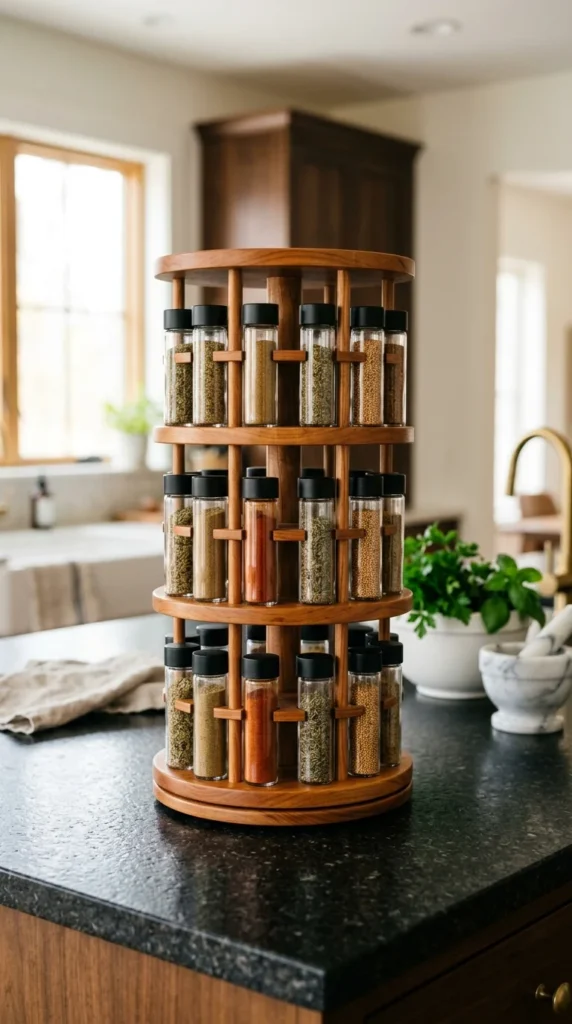
The revolving spice rack, or “Lazy Susan” style, is a classic for a reason. It allows for high-density storage and 360-degree access. A wooden version adds a touch of sophistication to this functional piece, turning a spinning tool into a centerpiece.
4. Distressed Pine
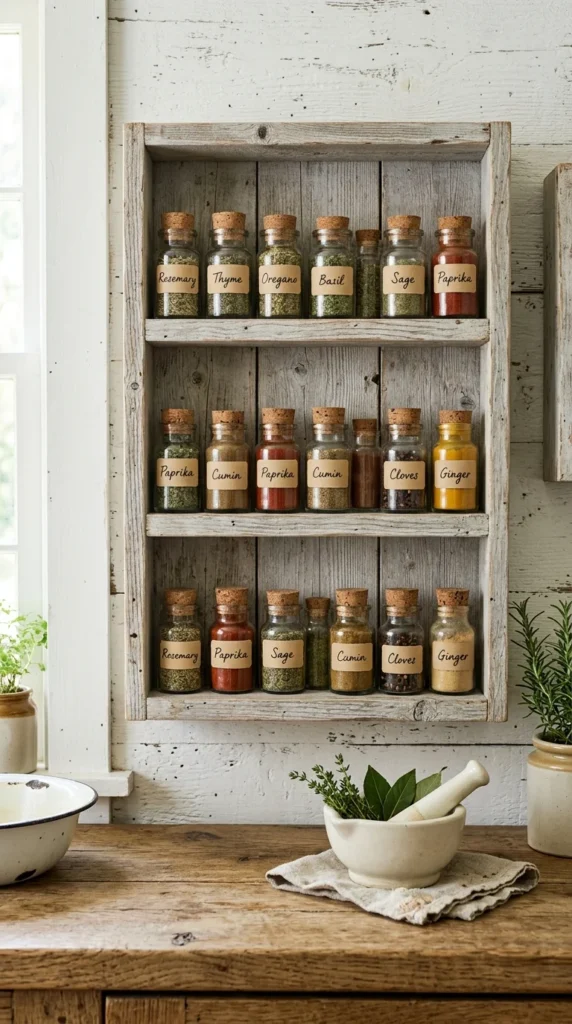
For those who love the farmhouse or shabby chic aesthetic, distressed pine is the way to go. The imperfections in the wood—nicks, scratches, and varying stains—tell a story and add a cozy, lived-in feel to your kitchen environment.
5. Live Edge
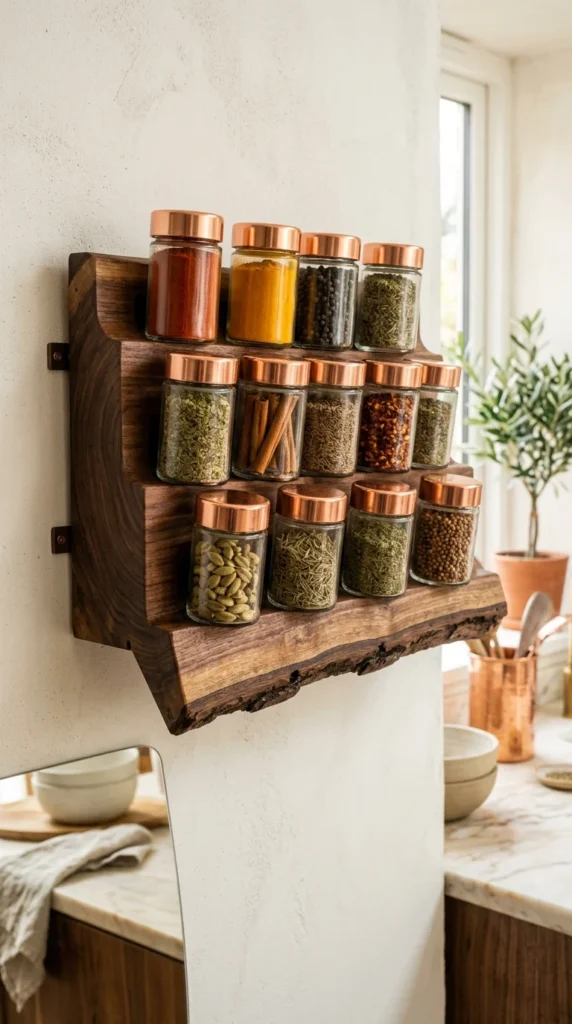
A live edge spice rack celebrates the natural silhouette of the tree. Each piece is unique, featuring the original curves and bark lines of the timber. It’s a functional work of art that brings a raw, elemental feeling to a modern or rustic kitchen.
6. Minimalist Block
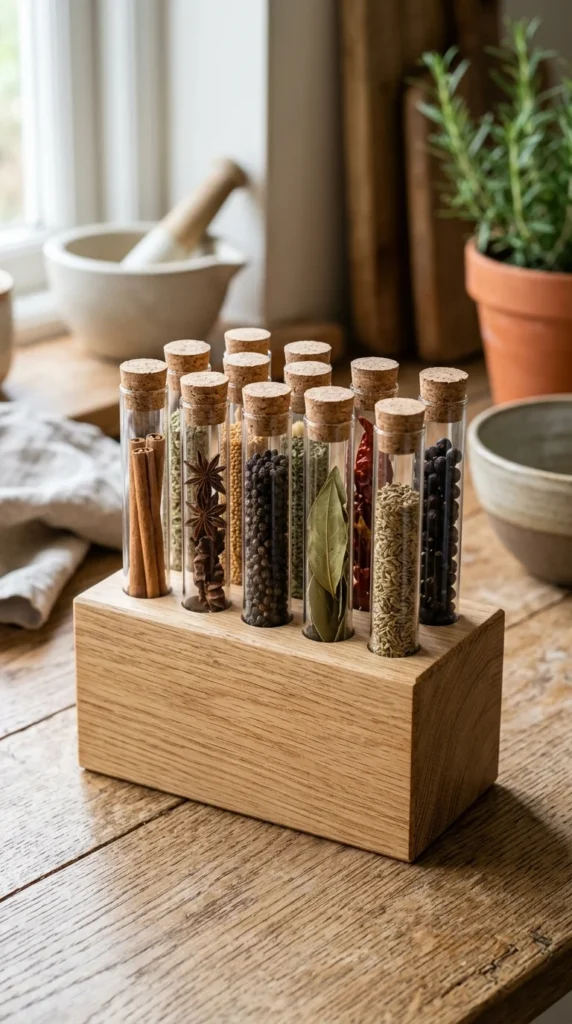
The minimalist block is a contemporary take on organization. Instead of shelves, the spices are tucked into custom-drilled holes. This design is incredibly stable and offers a clean, architectural look that hides the labels for a more uniform appearance.
7. Tiered Steps
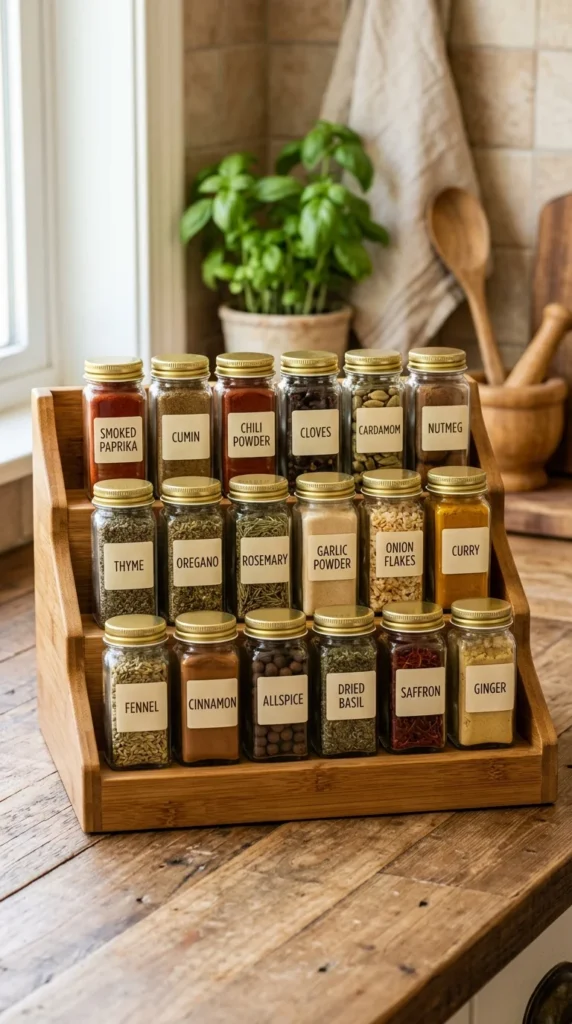
Stadium seating for your spices! This “stepped” design ensures that the jars in the back aren’t hidden by the ones in the front. It’s the ultimate choice for the organized chef who wants to see every label at a single glance.
8. Vertical A-Frame
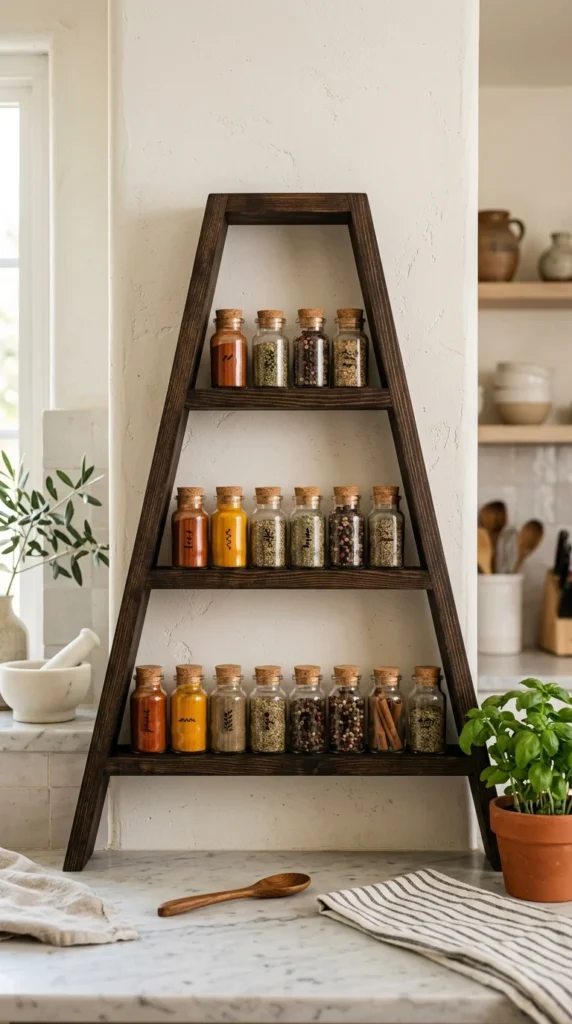
The A-frame design offers a whimsical, ladder-like appearance. It provides a sense of height and structure, making it a great choice for kitchens with high ceilings or those looking to break up the horizontal lines of the cabinetry.
9. Reclaimed Pallet
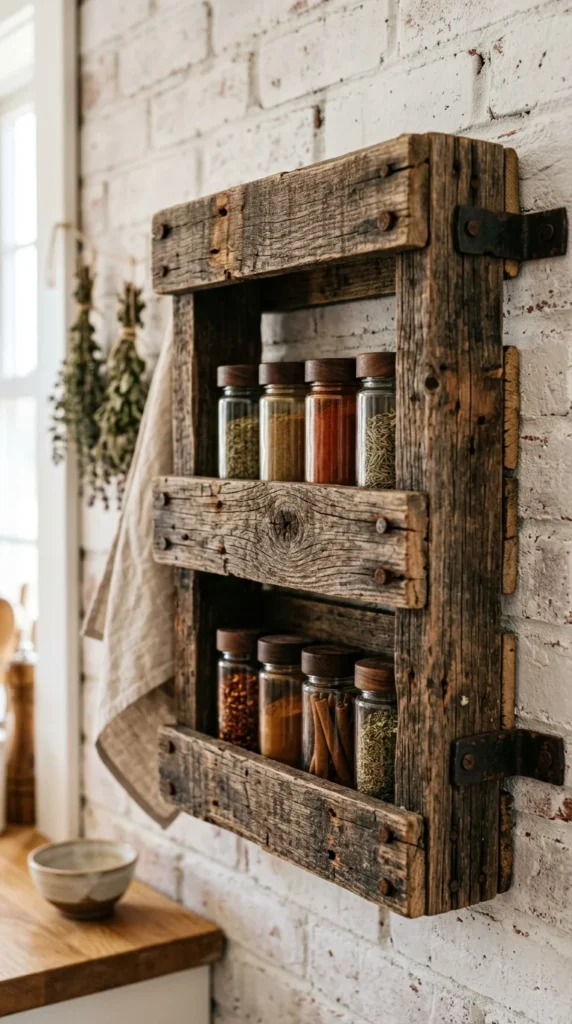
Sustainability meets style with a reclaimed pallet rack. These are often DIY favorites, offering a rugged, industrial charm. The varied tones of the wood and the history behind the material make it a great conversation starter.
10. Walnut Modern
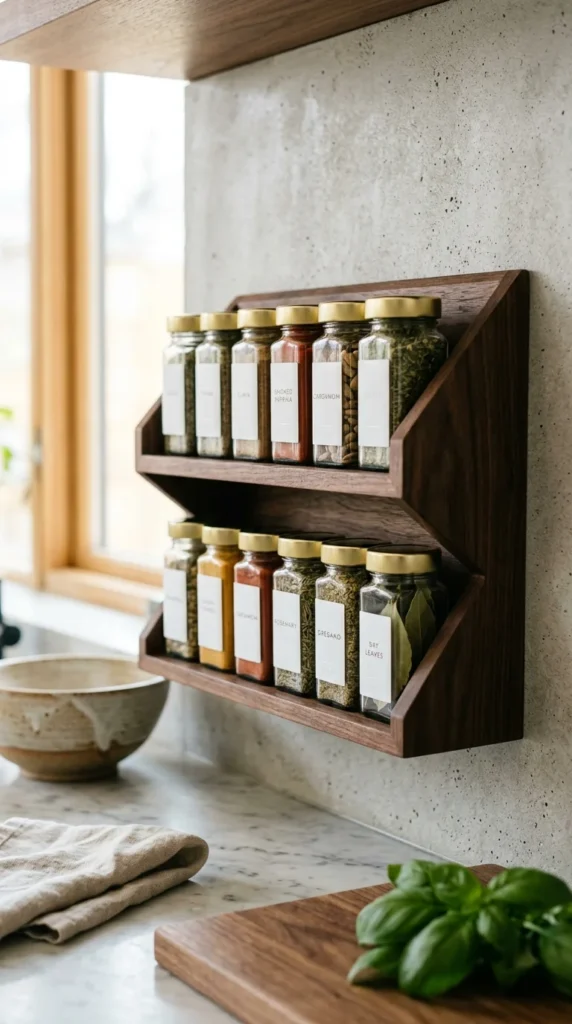
Walnut is the king of hardwoods for the kitchen. Its deep, chocolatey tones and tight grain scream luxury. A modern walnut rack with sharp, clean edges fits perfectly into a high-end, contemporary kitchen.
11. Bamboo Eco-Friendly
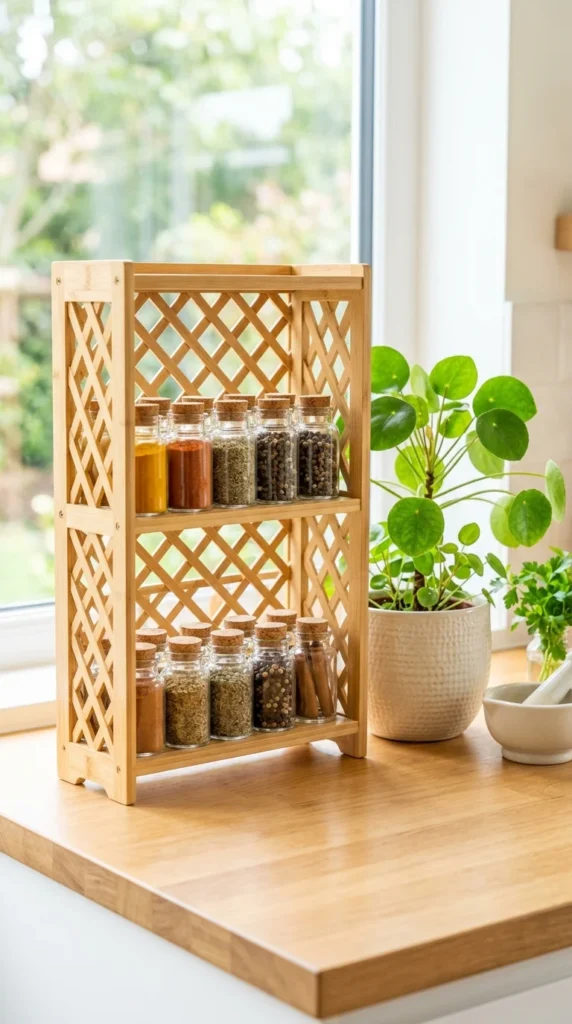
Bamboo is not only incredibly durable and water-resistant, but it’s also one of the most sustainable materials available. Its light color and distinct “knuckle” patterns bring a bright, zen-like energy to the countertop.
12. Corner Wedge
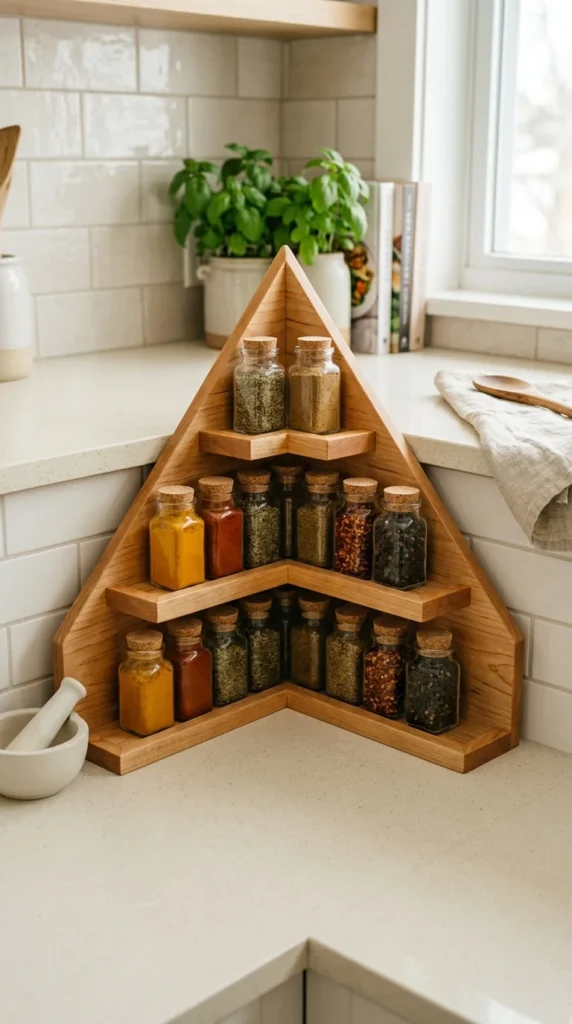
The corner is often the most underutilized space in a kitchen. A wedge-shaped spice rack fills that dead zone perfectly, providing deep storage and making use of every square inch of your prep area.
13. Farmhouse Crate
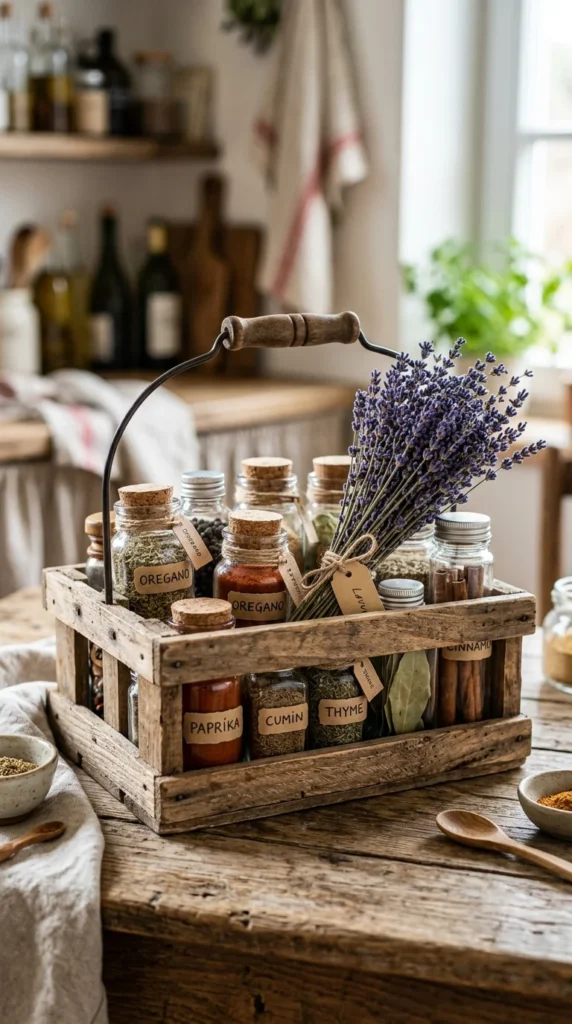
Inspired by vintage apple crates, this design is perfect for a country kitchen. It feels casual and effortless, and the addition of a handle makes it easy to move the entire collection from the counter to the dining table.
14. Hexagonal Honeycomb
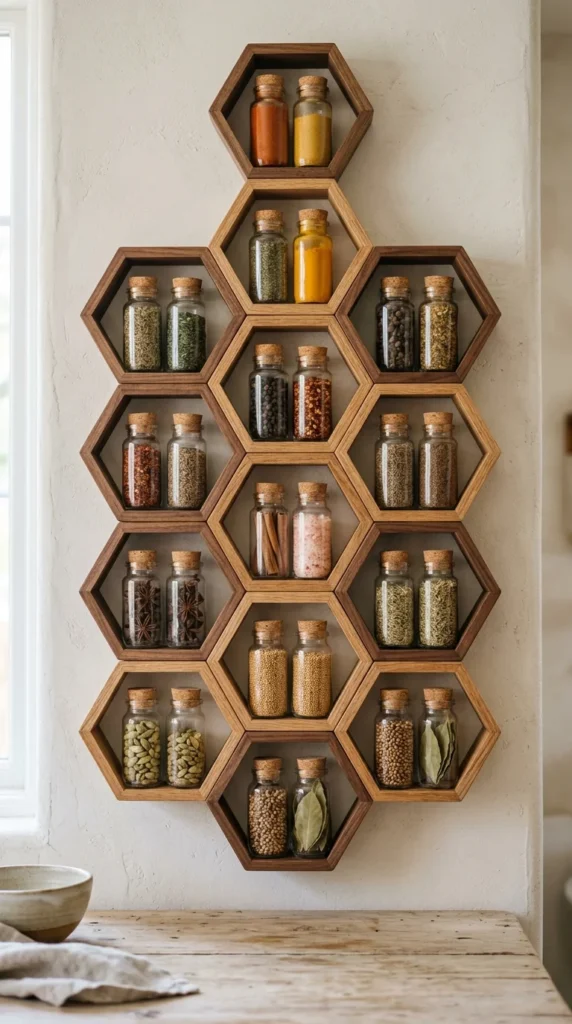
Geometric shapes are a major trend in interior design. A honeycomb rack allows you to add “cells” as your spice collection grows. It’s modular, playful, and looks like a piece of wall art that just happens to sit on your counter.
15. Slide-Out Tray
If you prefer to keep your spices tucked away but want them accessible, a slide-out wooden tray is ideal. It keeps the jars horizontal, which can protect delicate spices from light exposure while maintaining a very tidy look.
16. Magnetic Wood Strip
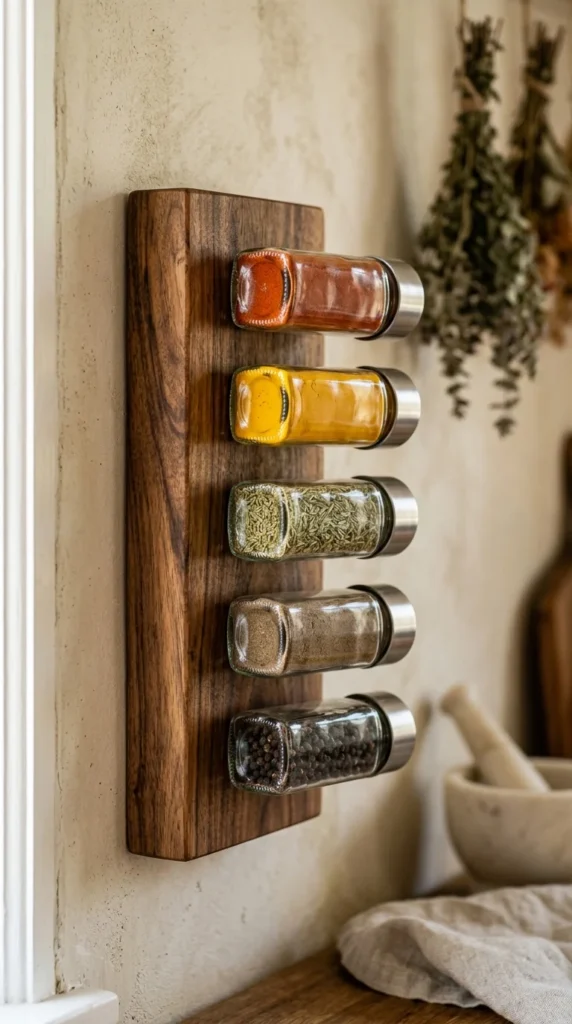
While many magnetic racks are metal, a wooden block with embedded magnets offers a “magic” aesthetic. The jars appear to stick directly to the wood, combining modern technology with traditional materials.
17. Dark Mahogany
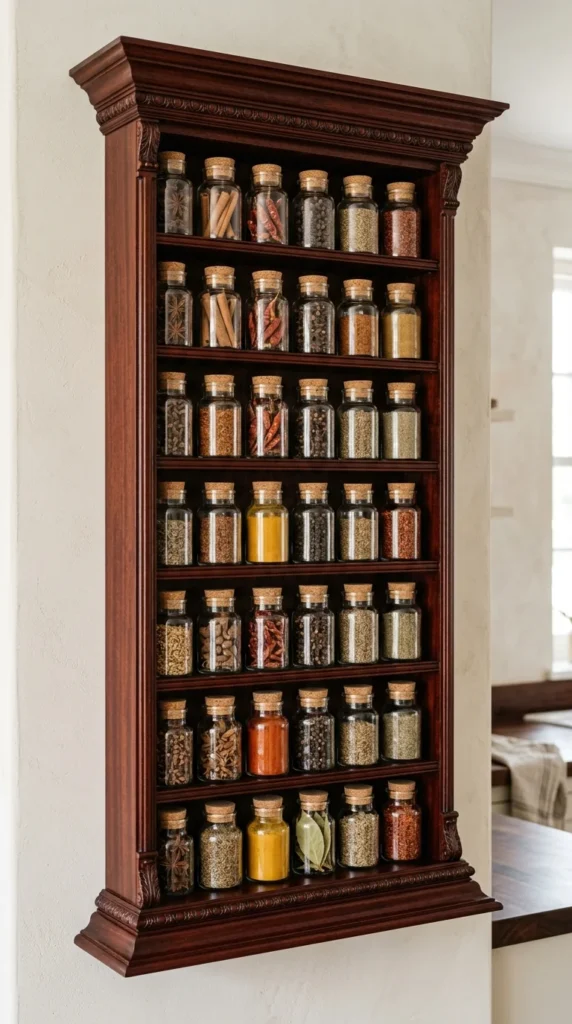
For a traditional or Victorian-style kitchen, dark mahogany provides a sense of gravity and elegance. It pairs beautifully with brass hardware and marble surfaces, offering a timeless, “old-world” culinary feel.
18. White-Washed Oak
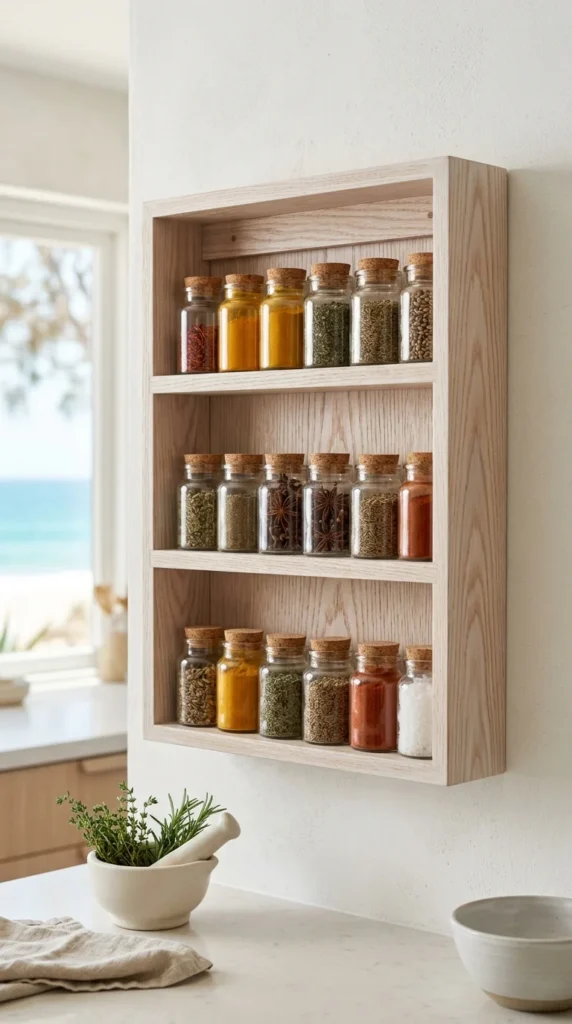
White-washed wood is perfect for coastal or Nordic-inspired homes. It feels light and breezy while still providing the tactile warmth of real timber. It brightens up the countertop and pairs well with blue or green kitchen accents.
19. Mid-Century Tapered
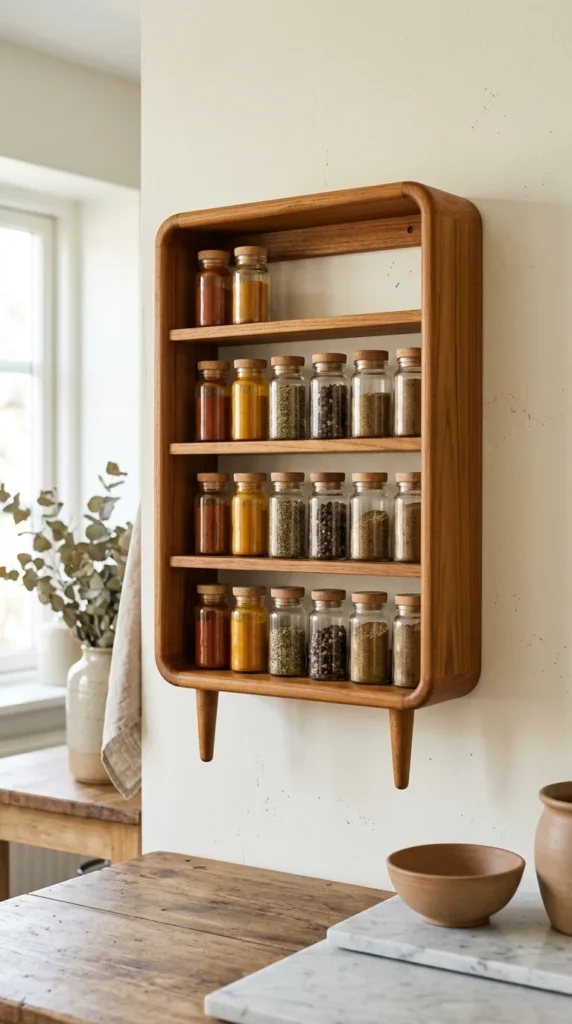
Mid-century modern design is all about “atomic” shapes and functional beauty. A spice rack with small tapered legs lifts the unit off the counter, making the space feel larger and adding a retro-cool vibe.
20. Industrial Wood & Metal
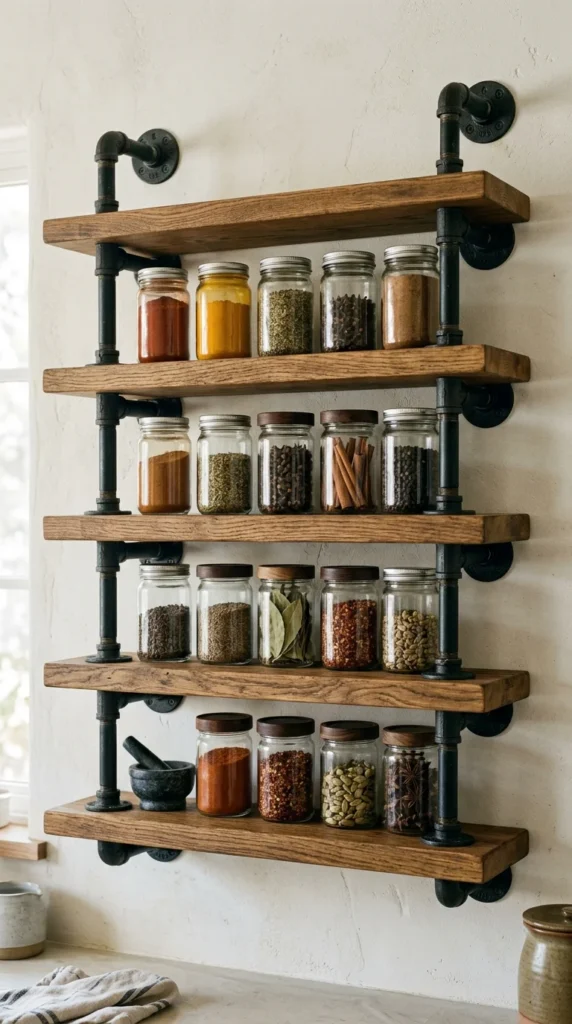
This style blends the warmth of wood with the cold strength of iron. It’s perfect for loft-style apartments or “man-cave” kitchens. The contrast between the natural grain and the dark metal creates a bold, masculine look.
21. Geometric Prism
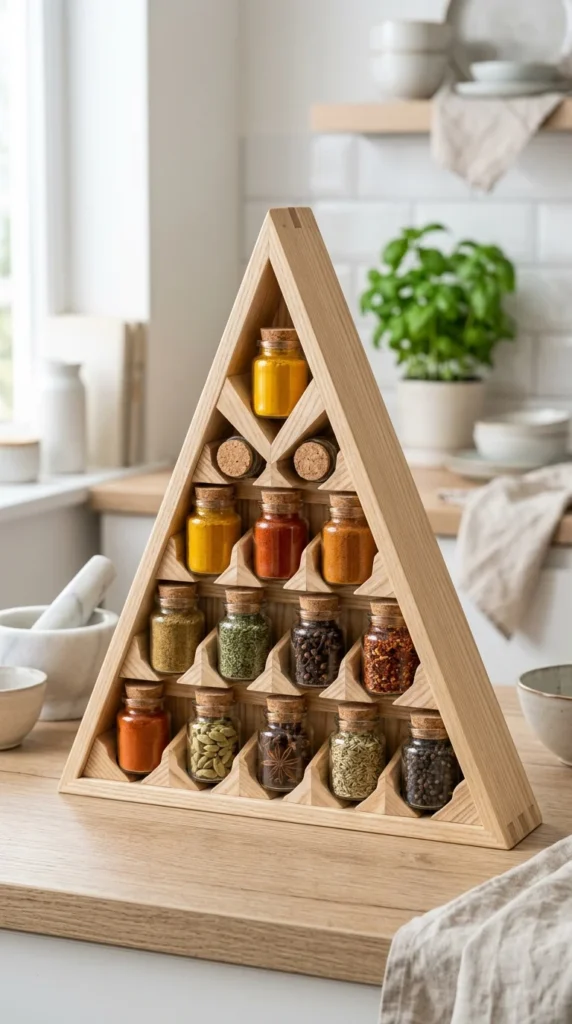
A prism-shaped rack defies traditional shelf expectations. Its slanted design makes it easy to grab jars from an ergonomic angle, and its sharp silhouette makes it a focal point of any countertop.
22. Floating Plank
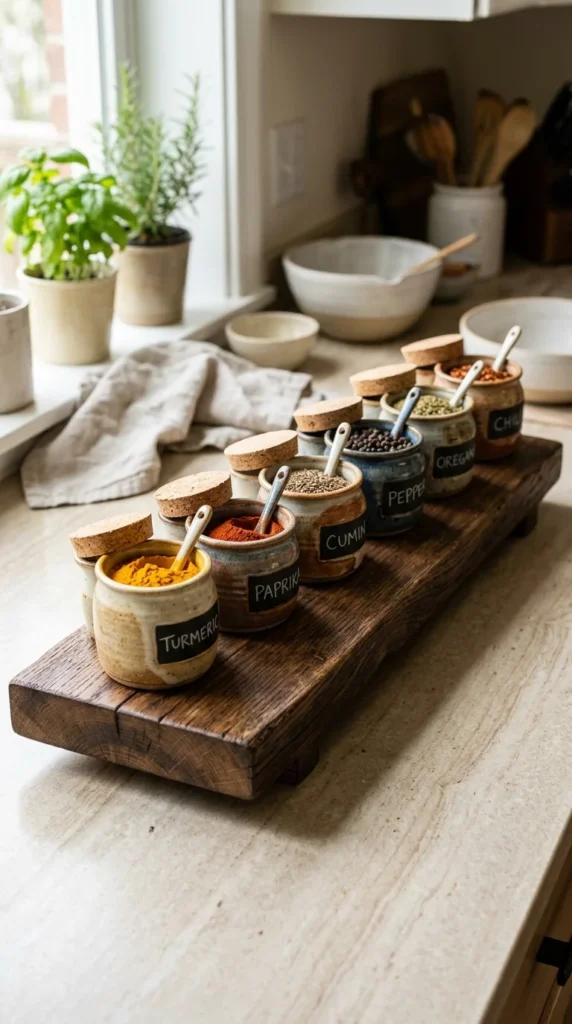
The floating plank is the ultimate in “chunk” design. It uses a thick piece of timber to create a platform for your spices. It’s simple, heavy, and emphasizes the quality of the wood species used.
23. Circular Pedestal
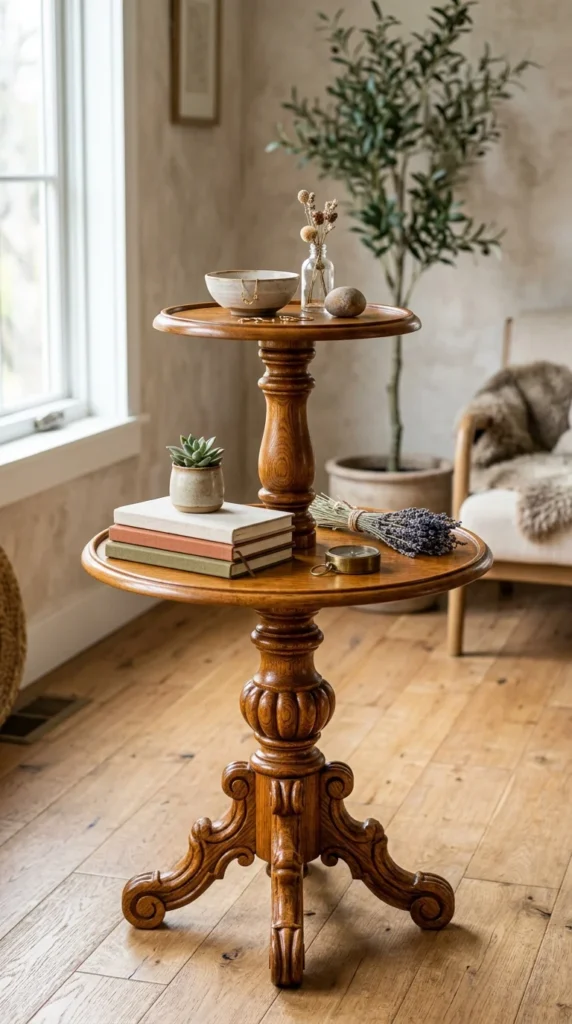
Reminiscent of a cake stand, the circular pedestal adds height and a touch of formality. It works well on kitchen islands where the rack can be accessed from all sides during meal prep or entertaining.
24. Foldable Accordion
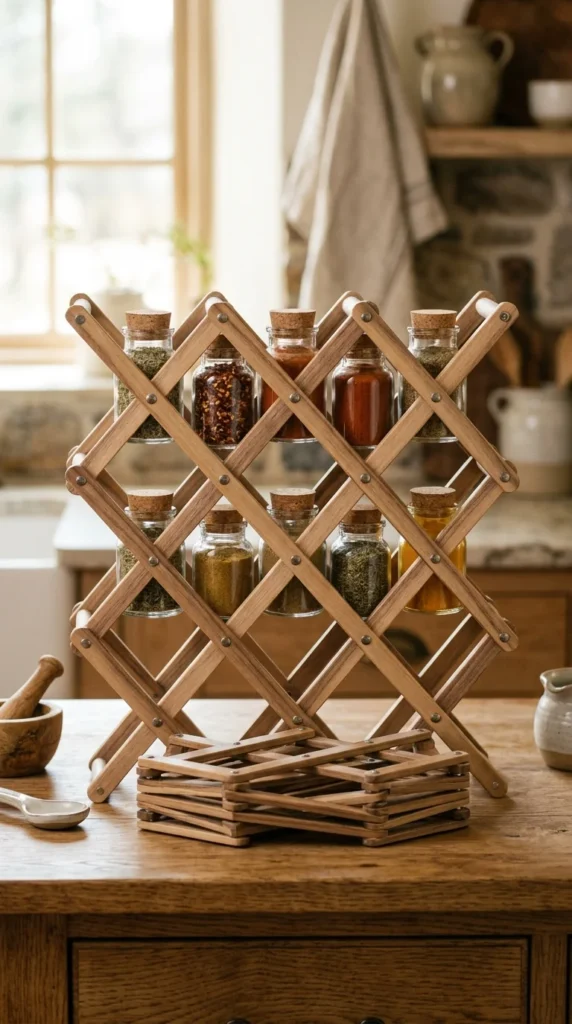
Flexibility is key for home cooks who are constantly changing their inventory. An accordion-style rack can be tucked away when not in use or expanded to hold a seasonal harvest of dried herbs from the garden.
25. Hidden Compartment
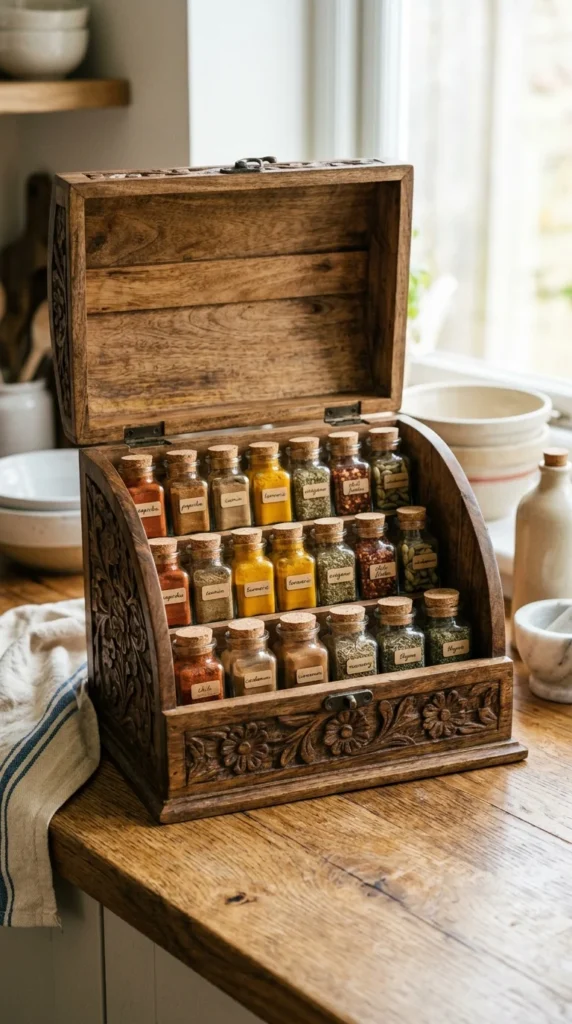
For the ultimate clean-counter look, a “hidden” rack keeps the visual clutter at zero. From the outside, it looks like a sleek wooden box or chest; inside, it’s a highly organized spice sanctuary.
26. Carved Floral
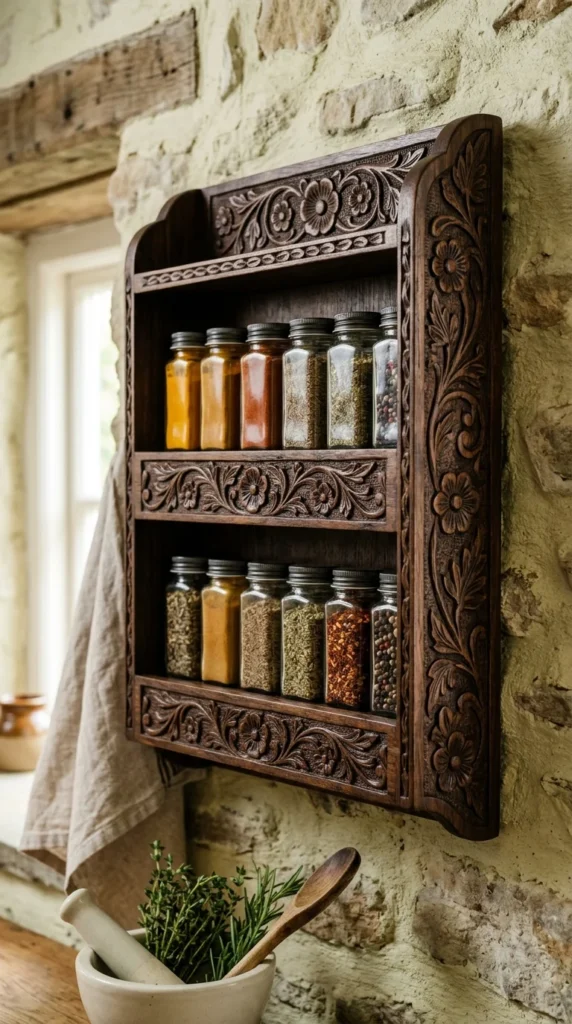
Artisanal craftsmanship shines in a carved rack. These pieces bring a sense of heritage and “slow living” to the kitchen. The intricate details catch the light and add texture to the room.
27. Burnt Wood (Shou Sugi Ban)
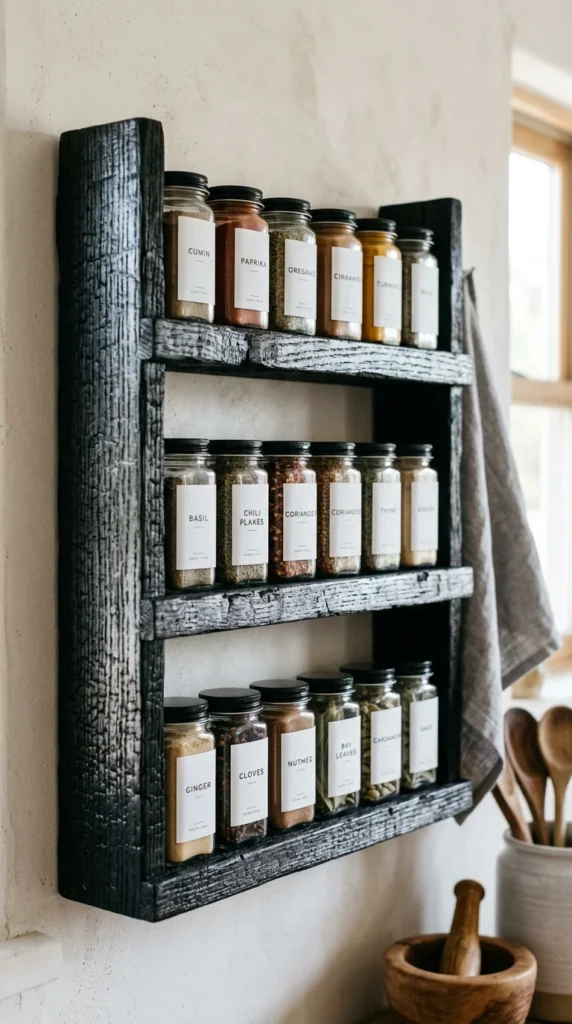
Using the Japanese technique of Shou Sugi Ban, the wood is charred to preserve it and create a striking black finish. This provides a dramatic, smoky aesthetic that contrasts beautifully with colorful spices like turmeric and paprika.
28. Modular Cubes
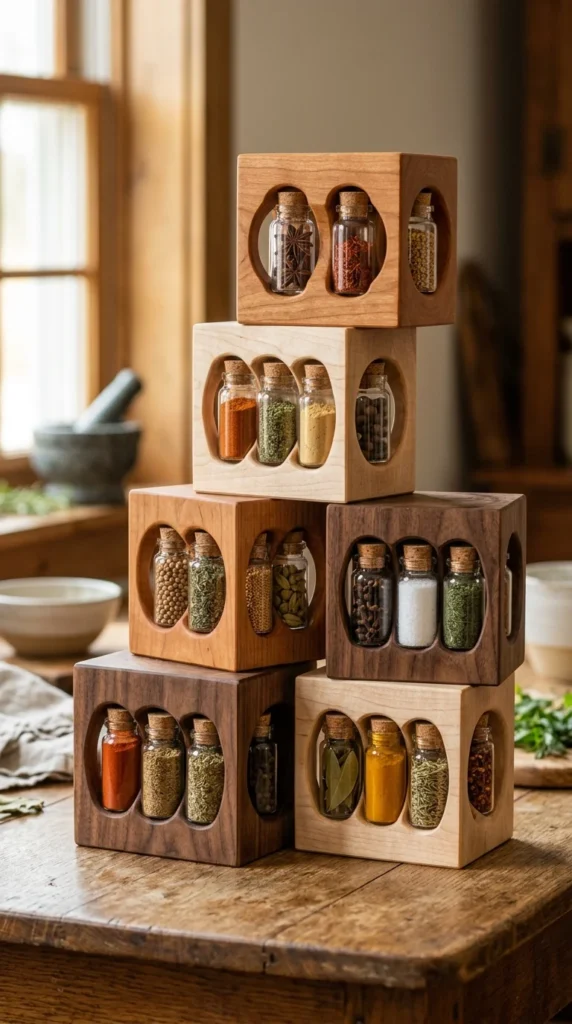
Modular cubes allow for total customization. You can stack them high, line them up, or scatter them. By using different types of wood for each cube, you can create a mosaic of timber tones that adds depth and personality to your stylish countertop.