
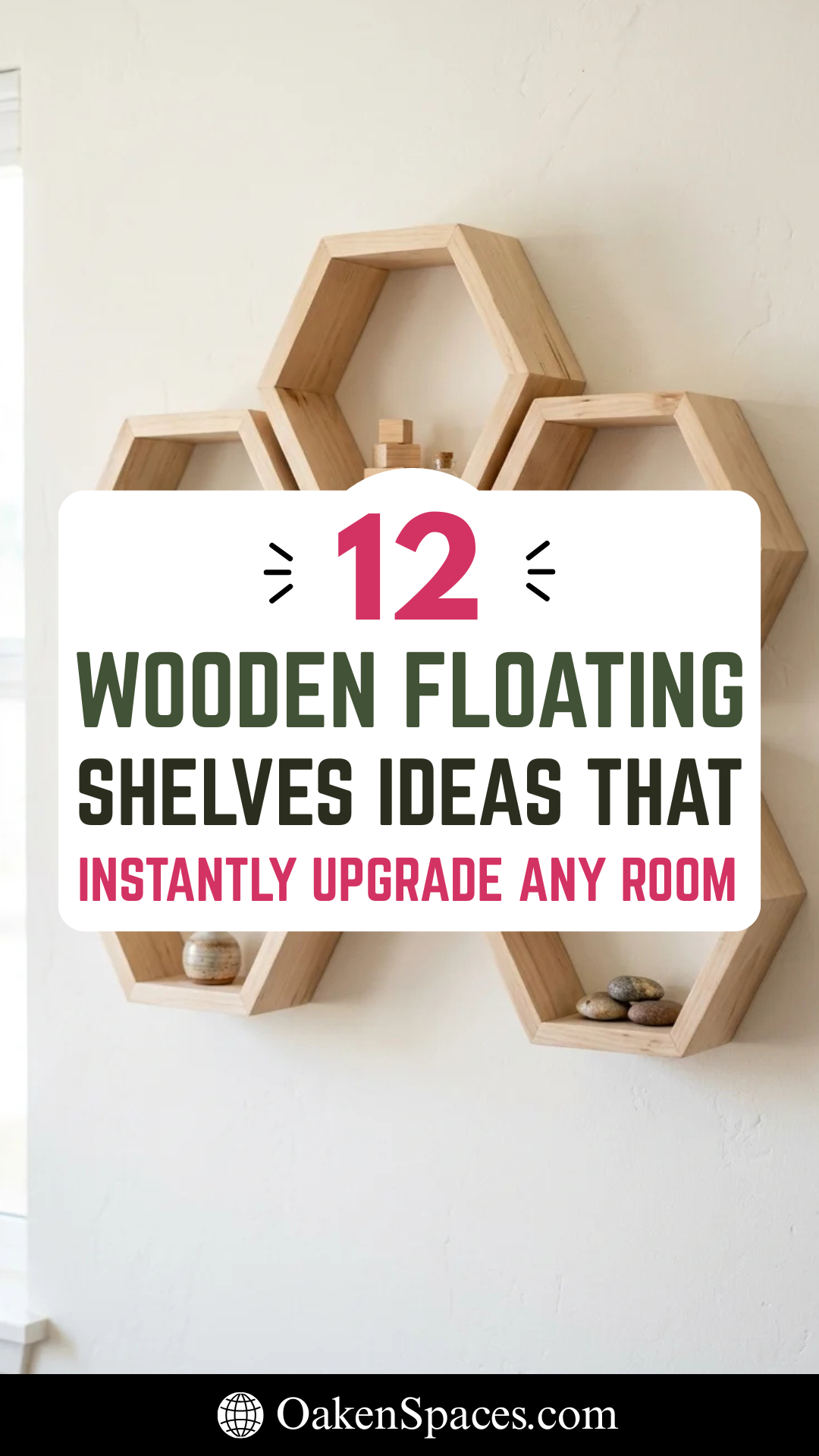
Floating shelves have become the darlings of the interior design world, and for good reason. They offer the perfect marriage of form and function, providing essential storage space while maintaining a clean, airy aesthetic that bulky bookcases simply can’t match. When you opt for wood, you add a layer of organic warmth and texture that grounds a room, making it feel both sophisticated and lived-in. Whether you are looking to display a curated collection of heirlooms or simply need a place to stash your coffee mugs, these twelve wooden floating shelf ideas will transform your blank walls into a design statement.
1. Reclaimed Barnwood
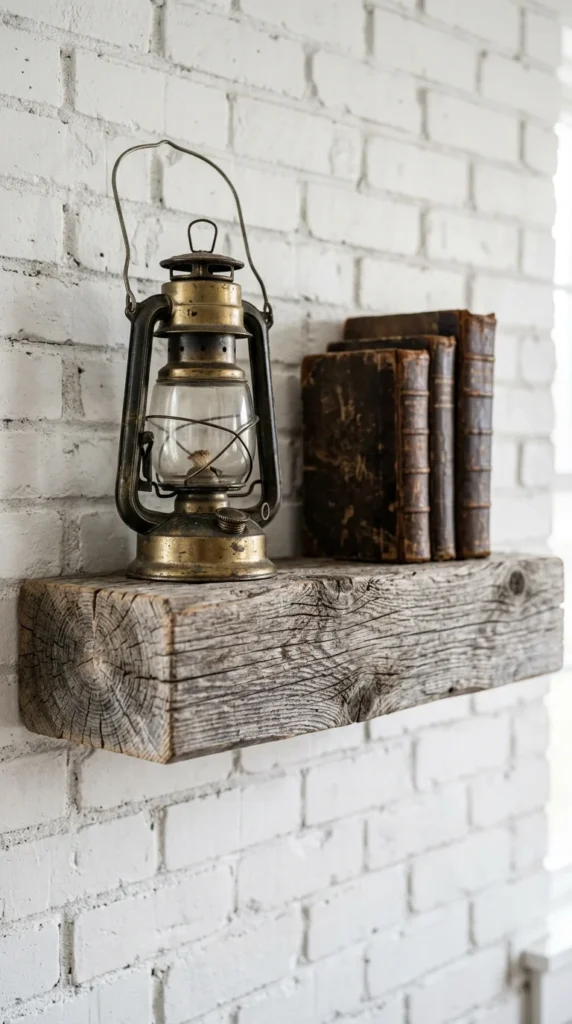
There is something undeniably soulful about reclaimed wood. These shelves carry a history, with every knot, nail hole, and weathered groove telling a story of a previous life. Reclaimed barnwood shelves are ideal for adding a rustic or industrial touch to a modern space. Because the wood is seasoned and aged, it possesses a structural integrity and a unique color palette—ranging from deep chocolate browns to silvery grays—that new timber simply cannot replicate.
- Best For: Farmhouse kitchens, industrial lofts, or rustic dens.
- Styling Tip: Keep the decor minimal to let the texture of the wood shine. Use vintage items like antique jars or blackened metal accents to complement the aged look.
2. Live Edge
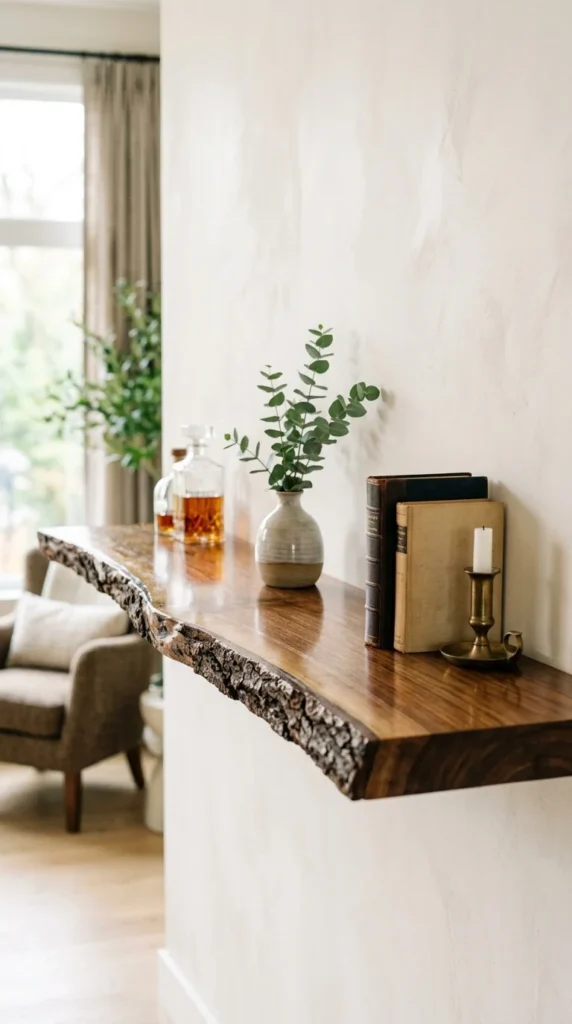
If you want to bring the “great outdoors” inside, live edge shelves are the way to go. These shelves retain the natural vertical cross-section of the tree, meaning no two pieces are ever exactly alike. The organic, flowing lines of a live edge shelf break up the harsh right angles often found in modern architecture, providing a visual “rest” for the eye.
- Best For: Living rooms or master bedrooms as a focal point.
- Styling Tip: Pair these with soft elements like trailing plants (Pothos or String of Pearls) to enhance the botanical, organic vibe.
3. Minimalist Walnut
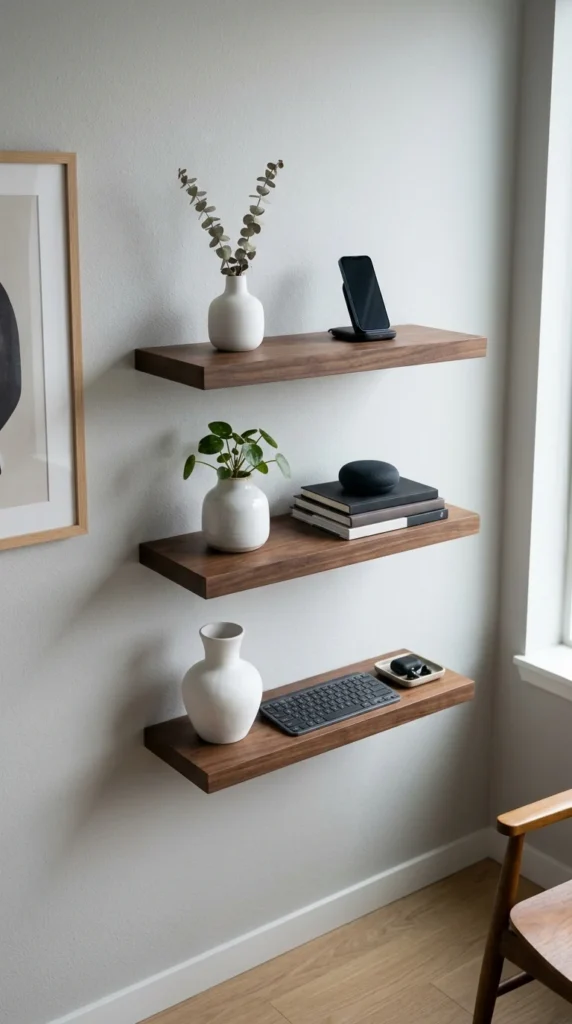
Walnut is the gold standard for mid-century modern and contemporary design. Its tight grain and rich, dark brown hue exude a sense of luxury and sophistication. Minimalist walnut shelves are usually thinner than their rustic counterparts, focusing on precision and a “weightless” appearance. They provide a high-contrast look when placed against white or light-colored walls.
- Best For: Home offices, modern hallways, or upscale living areas.
- Styling Tip: Use a monochromatic color palette for your decor—think whites, blacks, and metallics—to maintain a high-end, gallery-like feel.
4. White Oak
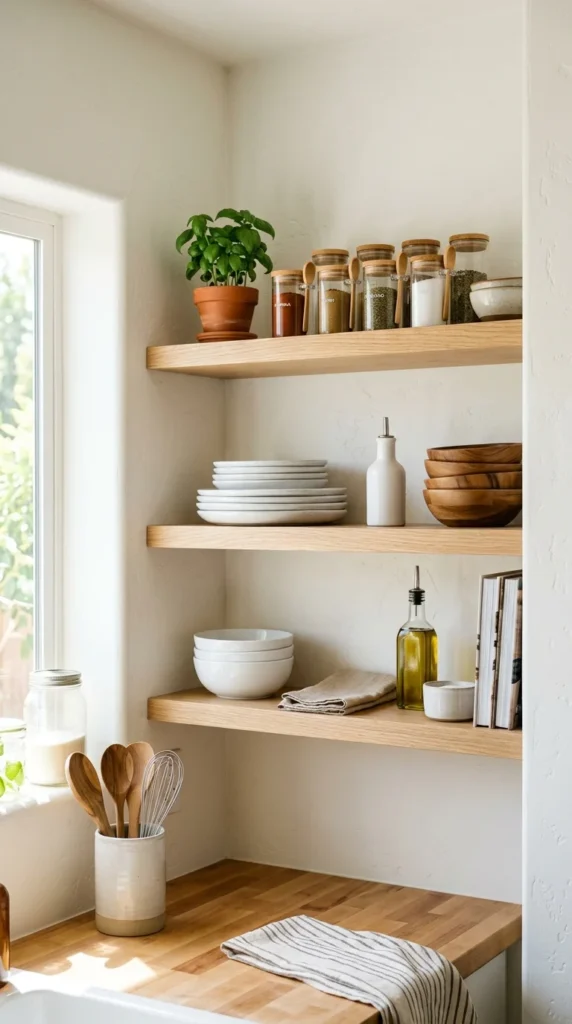
White oak is currently the trendiest wood choice for interior designers. It offers a Scandinavian or “Japandi” aesthetic that feels fresh, clean, and incredibly versatile. Unlike red oak, white oak has cooler undertones and a more subtle grain pattern, making it perfect for spaces where you want to maximize light and a sense of openness.
- Best For: Kitchens, nurseries, or any room with a “Coastal” or “Scandi” theme.
- Styling Tip: Lean into the light-and-bright look by styling with blonde wood accessories, white ceramics, and glass.
5. Corner L-Shapes
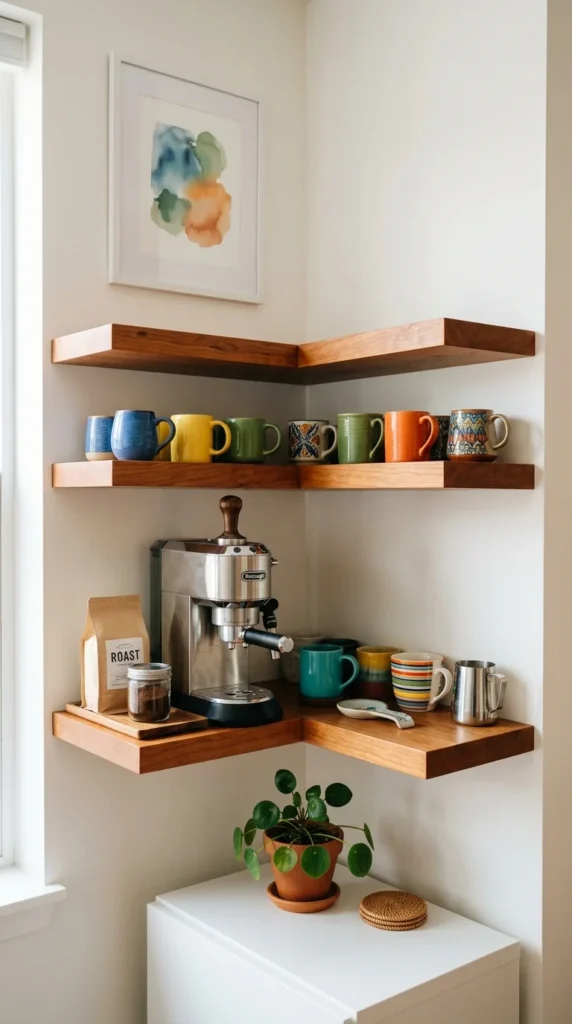
Don’t let awkward corners go to waste. Corner floating shelves are a genius way to reclaim “dead” space in a room. By wrapping the wood around the corner, you create a continuous line that draws the eye and makes the room feel larger. These are particularly effective in small kitchens or as a creative bedside table alternative in a cramped bedroom.
- Best For: Small apartments, kitchens, and reading nooks.
- Styling Tip: Use the “corner” of the shelf for a taller item, like a vase or a lamp, to anchor the transition between the two walls.
6. Chunky Pine
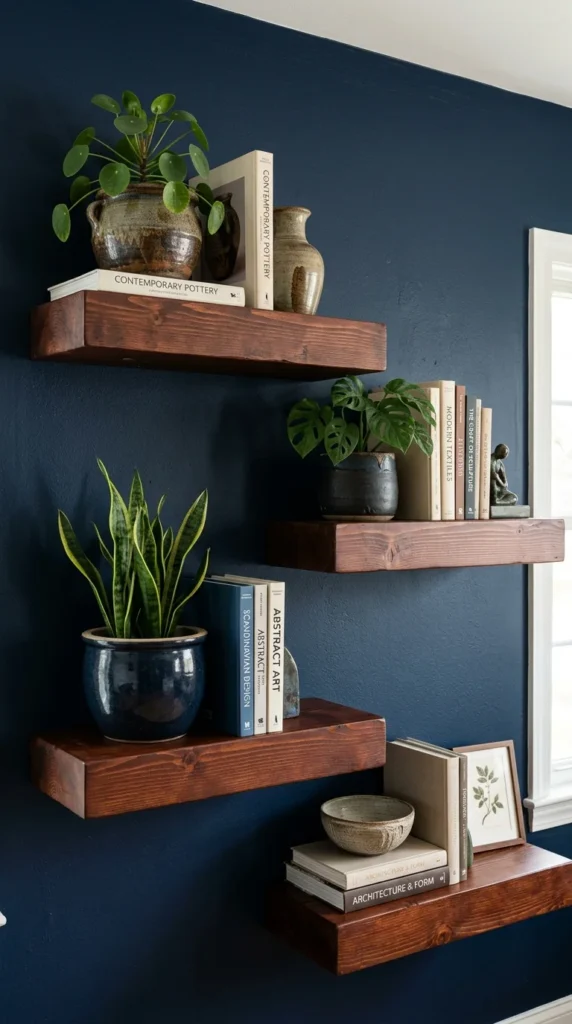
For those who love the “Chunky” look, pine is an excellent and affordable choice. Because pine is a softer wood, it is often cut into thicker slabs (3 to 4 inches thick) to provide visual weight. These shelves feel substantial and grounded, making them perfect for large walls that might swallow up thinner shelves.
- Best For: Large living room walls or above a fireplace mantel.
- Styling Tip: Balance the “heaviness” of the shelves with some larger decorative objects. Small trinkets might get lost on such a bold architectural feature.
7. Floating Cubes
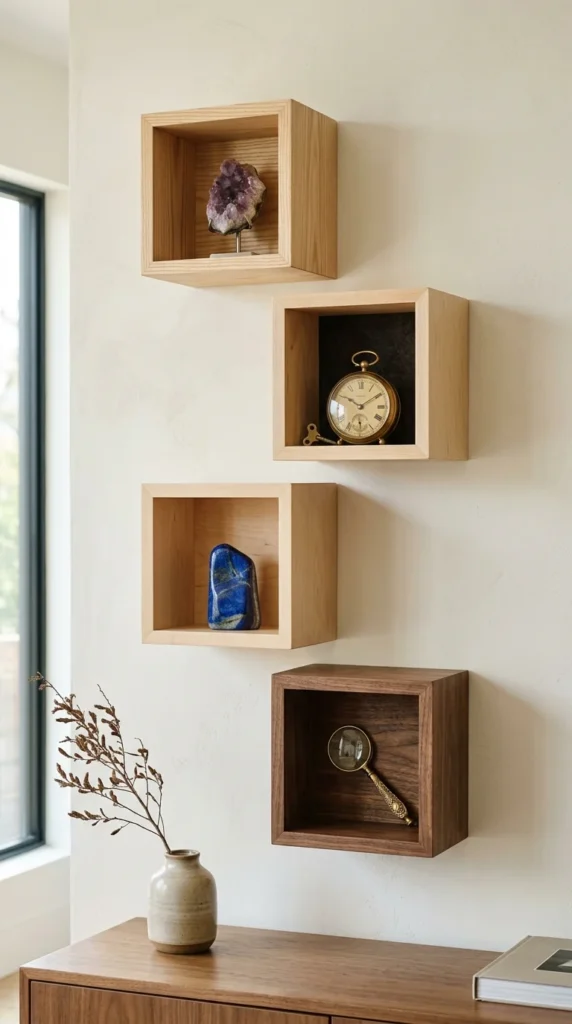
Technically a variation of the floating shelf, wooden cubes (or shadow boxes) provide a framed border for your items. This adds a geometric element to your wall and creates a “nested” feeling for your decor. Cubes are excellent for organizing specific collections or adding a playful, modular look to a kid’s room or a creative studio.
- Best For: Children’s rooms, craft rooms, or as a unique gallery wall.
- Styling Tip: Group them in clusters of three or five at varying heights to create a dynamic, rhythmic installation.
8. Hexagon Honeycombs
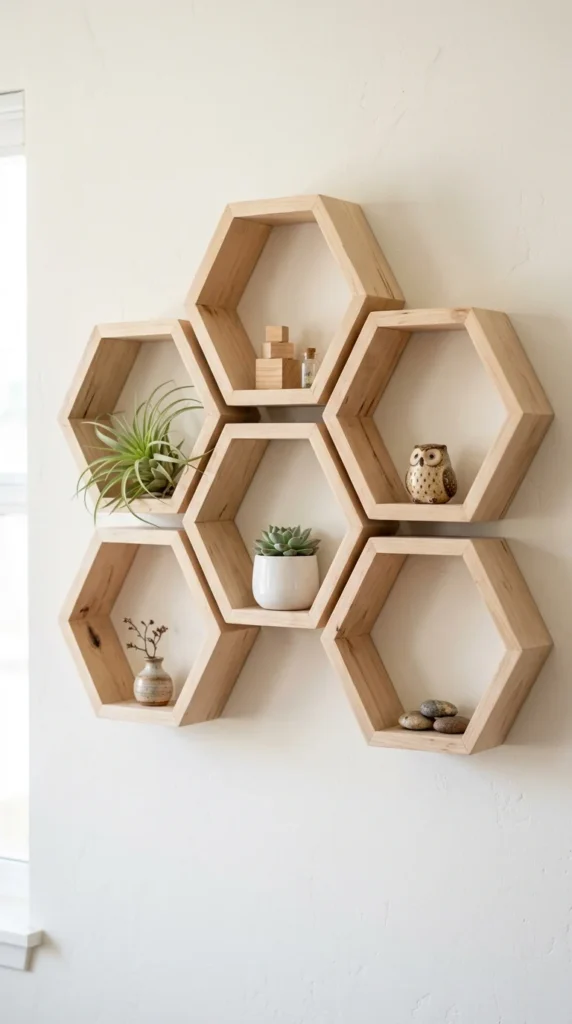
Hexagon shelves—often called honeycomb shelves—are as much wall art as they are storage. They bring a trendy, geometric vibe to a space. While they don’t offer as much flat surface area as a traditional long shelf, they are perfect for highlighting “micro-collections” or small succulents.
- Best For: Entryways, accent walls, or creative offices.
- Styling Tip: Alternate between placing items inside the hexagon and on the top exterior flat edge for a multi-layered look.
9. Herringbone Inlay
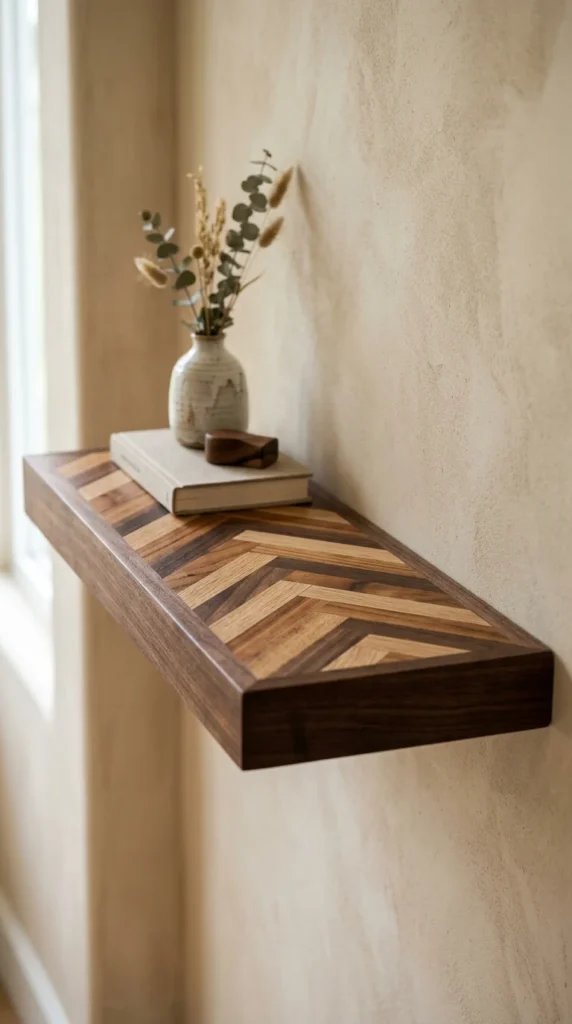
If you want your shelves to be the star of the show, look for pieces with intricate woodwork like herringbone or chevron inlays. These shelves use different wood species or stains to create a patterned surface. They add a level of craftsmanship and “custom furniture” feel to the room that standard planks cannot provide.
- Best For: Formal dining rooms or luxury entryways.
- Styling Tip: Use transparent glass decor or acrylic risers on these shelves so that the beautiful wood pattern remains visible from all angles.
10. Hidden Drawer Shelves
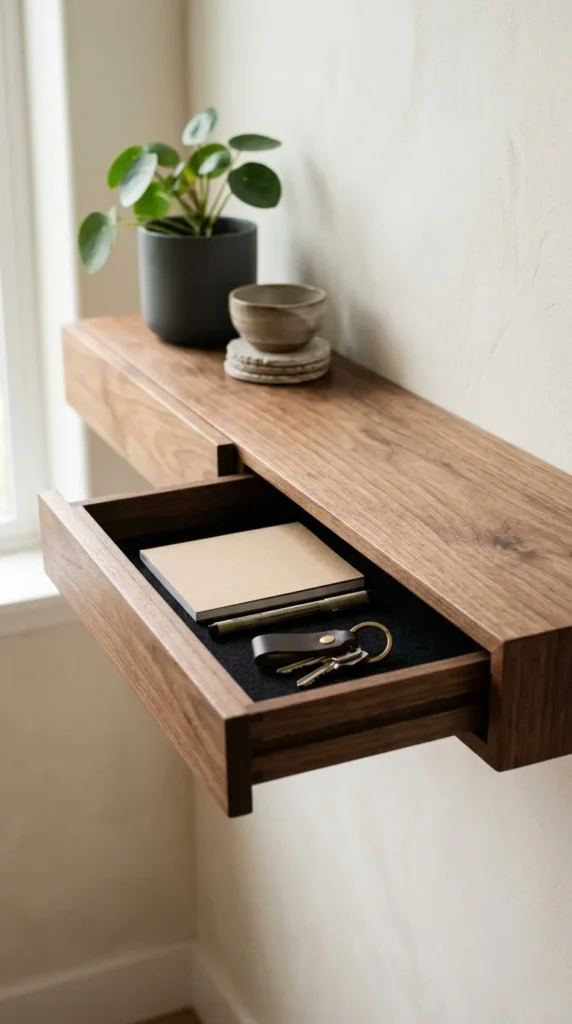
Functionality meets mystery with the hidden drawer shelf. To the casual observer, it looks like a standard, thick floating shelf. However, a slim drawer is integrated into the design, allowing you to hide away clutter like remote controls, keys, or mail. This is the ultimate “clean look” hack.
- Best For: Entryway “drop zones,” bedside tables, or under a wall-mounted TV.
- Styling Tip: Place a small tray on top to define the space, and use the hidden drawer for the “ugly” essentials you need daily.
11. Picture Ledges
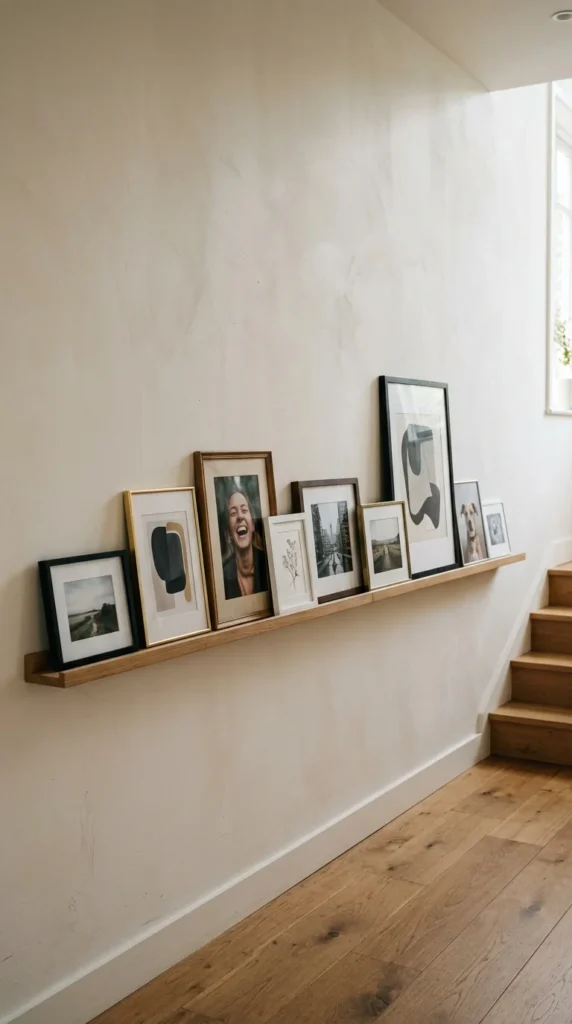
Unlike deep floating shelves meant for objects, picture ledges are shallow and feature a small lip on the front. These are designed specifically for leaning art, photos, or even children’s books. They allow you to swap out your art frequently without putting dozens of new holes in your wall.
- Best For: Long hallways, behind a sofa, or in a playroom.
- Styling Tip: Layer your frames! Put larger frames in the back and smaller ones in front, overlapping them slightly for a professional, curated gallery look.
12. Integrated LED Shelves
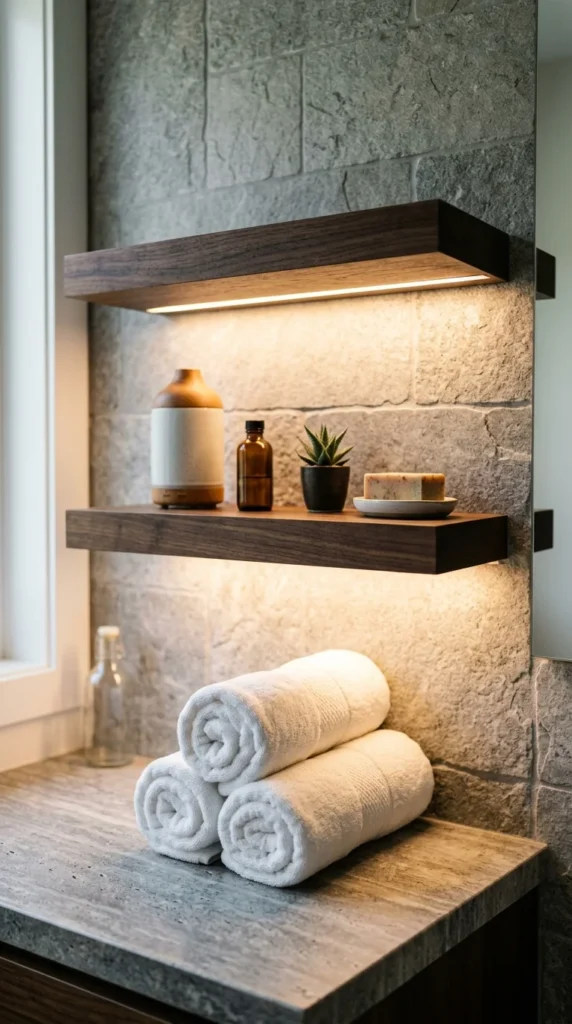
Lighting can change the entire mood of a room. By choosing wooden floating shelves with integrated LED strips, you add a layer of “ambient lighting” that makes the room feel expensive and cozy. You can choose to have the light shine downward (to highlight objects below) or upward (to wash the wall in light).
- Best For: Bathrooms, home bars, or kitchens as under-cabinet lighting alternatives.
- Styling Tip: Use these as a “night light” in a bathroom or hallway. The warm glow against the natural wood grain creates a stunning, high-end hotel atmosphere.
Final Thoughts on Installation and Style
When installing your wooden floating shelves, the most important factor is the mounting hardware. For a truly “floating” look, you need high-quality internal brackets that are screwed directly into your wall studs.
Pro-Styling Rule: Always follow the “Rule of Three.” Group items in odd numbers, vary the heights of your decor, and mix textures (e.g., something organic like a plant, something smooth like a ceramic, and something metallic). With these twelve ideas, you’re well on your way to a more organized, stylish, and character-filled home.