
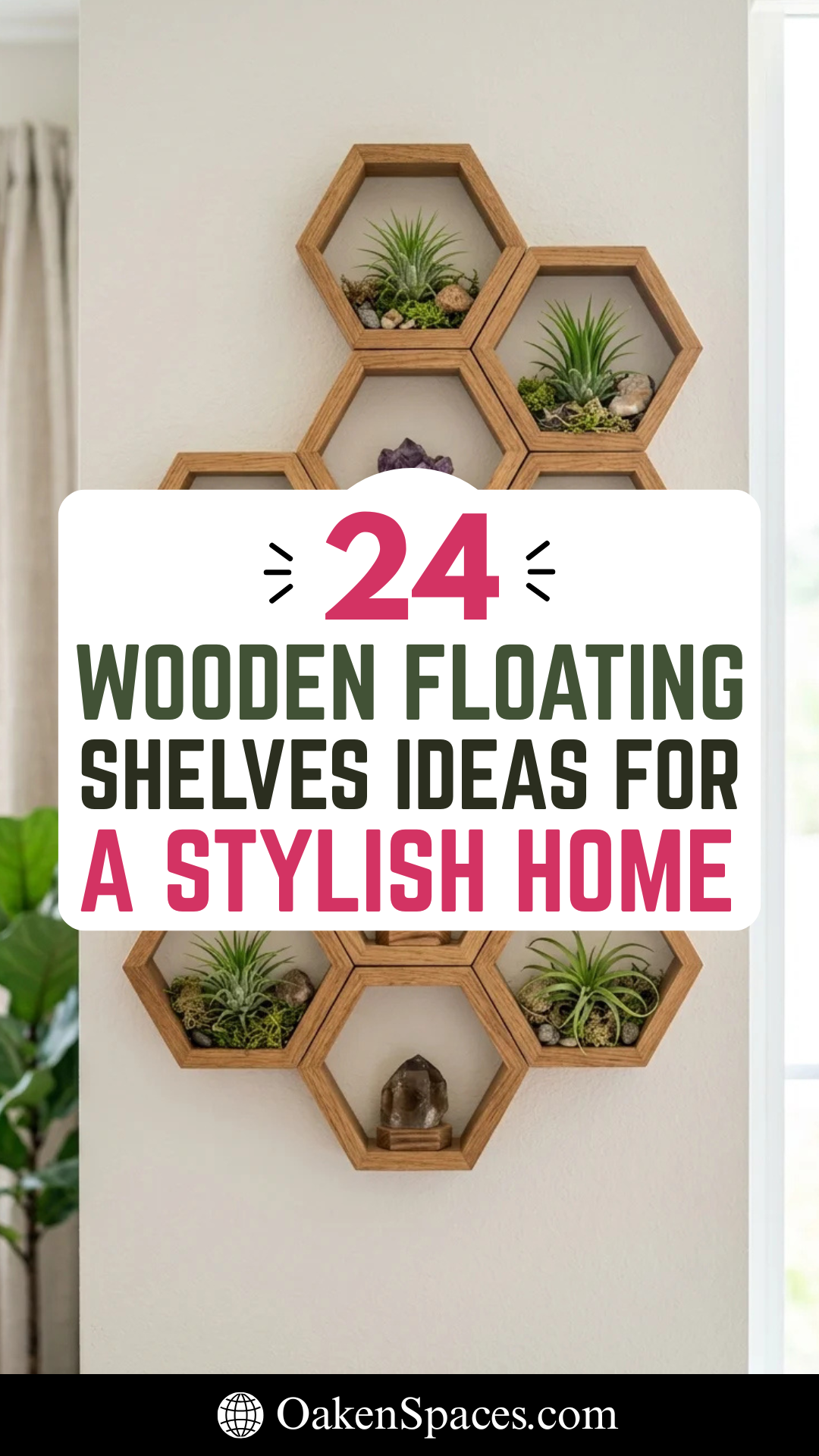
Floating shelves are the ultimate marriage of form and function. They defy gravity, eliminate bulky brackets, and provide a sleek, streamlined look that works in literally any room of the house. Whether you are aiming for a rugged farmhouse vibe or a crisp, Scandinavian aesthetic, wooden floating shelves offer a warmth that synthetic materials simply cannot replicate.
In this guide, we explore 24 creative and stylish ways to incorporate wooden floating shelves into your home, helping you transform blank walls into curated masterpieces.
1. Live Edge
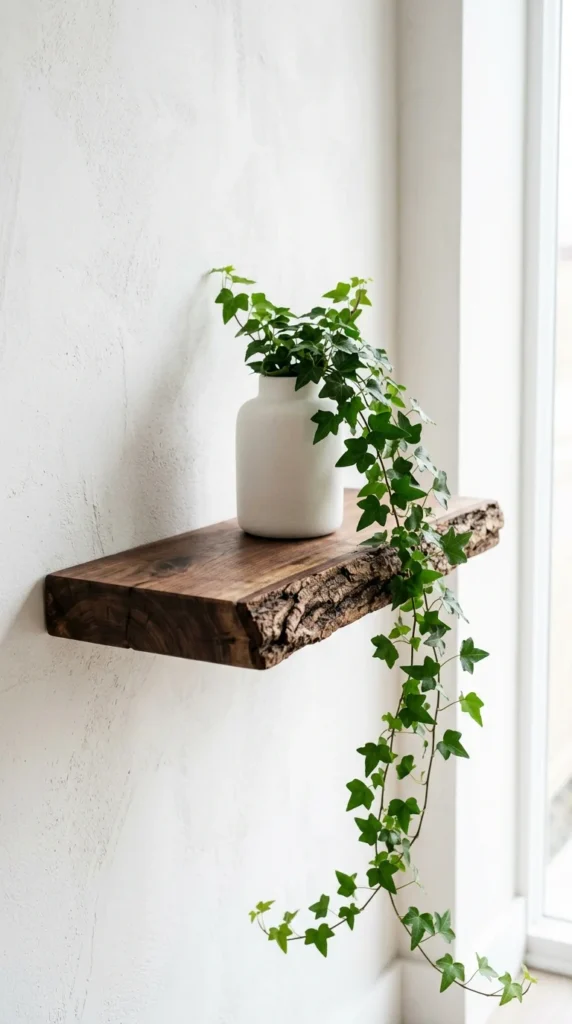
The live edge style celebrates the natural silhouette of the tree. Instead of perfectly straight lines, these shelves retain the organic curves and textures of the wood’s outer layer. They are perfect for adding a touch of the outdoors to a modern space, providing a grounding, earthy contrast to sharp architectural lines.
2. Recycled Barnwood
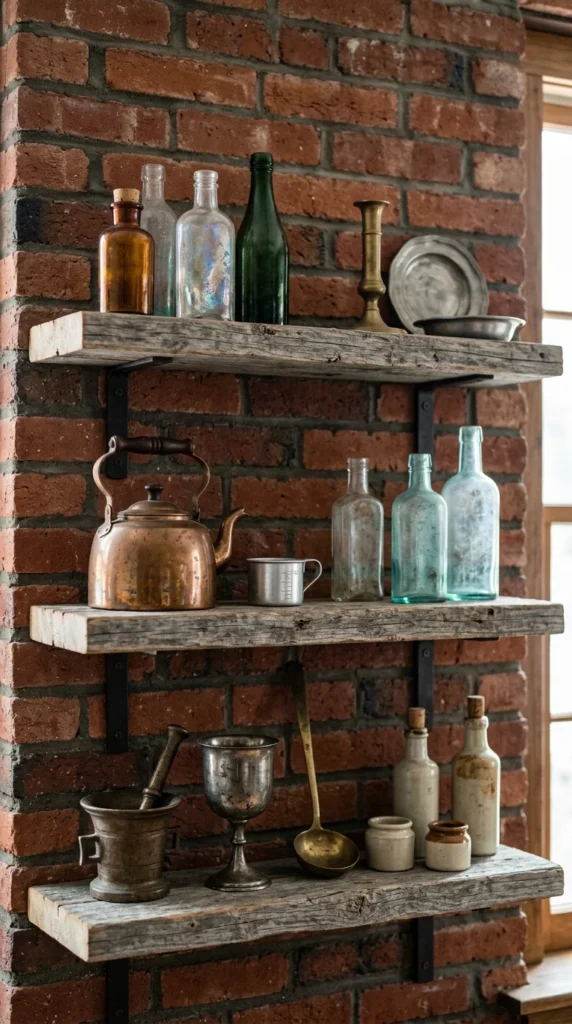
Sustainability meets style with reclaimed barnwood. These shelves carry a history, often featuring original nail holes, knots, and weather-beaten textures. They are an excellent choice for rustic or industrial interiors, adding instant character and a sense of “lived-in” comfort to your walls.
3. Industrial Pipe
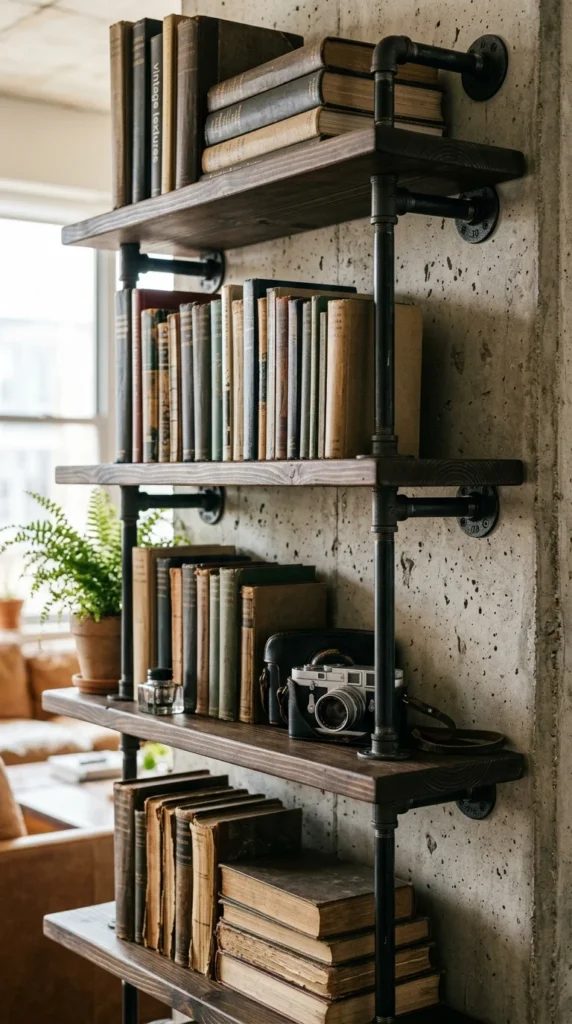
For those who love the urban loft look, combining thick wooden planks with black iron or copper piping is a must. While the shelf “floats,” the visible pipe supports add a heavy, mechanical aesthetic that pairs beautifully with leather furniture and metallic accents.
4. Thick Chunky
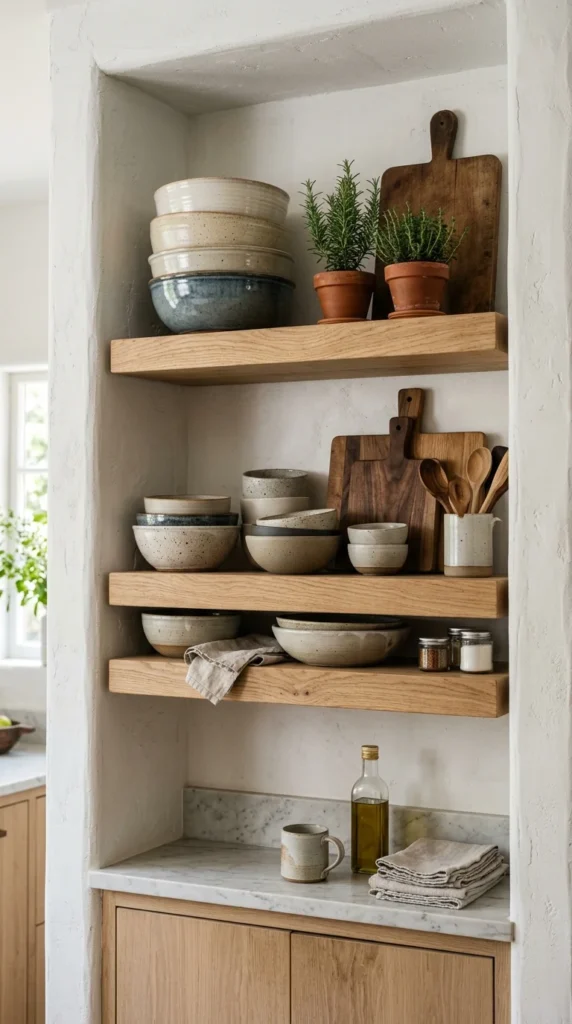
Sometimes, more is more. Over-sized, chunky wooden shelves create a bold architectural statement. They feel permanent and sturdy, making them ideal for heavy items like kitchenware or large art books. The thickness itself becomes a design element, emphasizing the quality of the timber.
5. Sleek Walnut
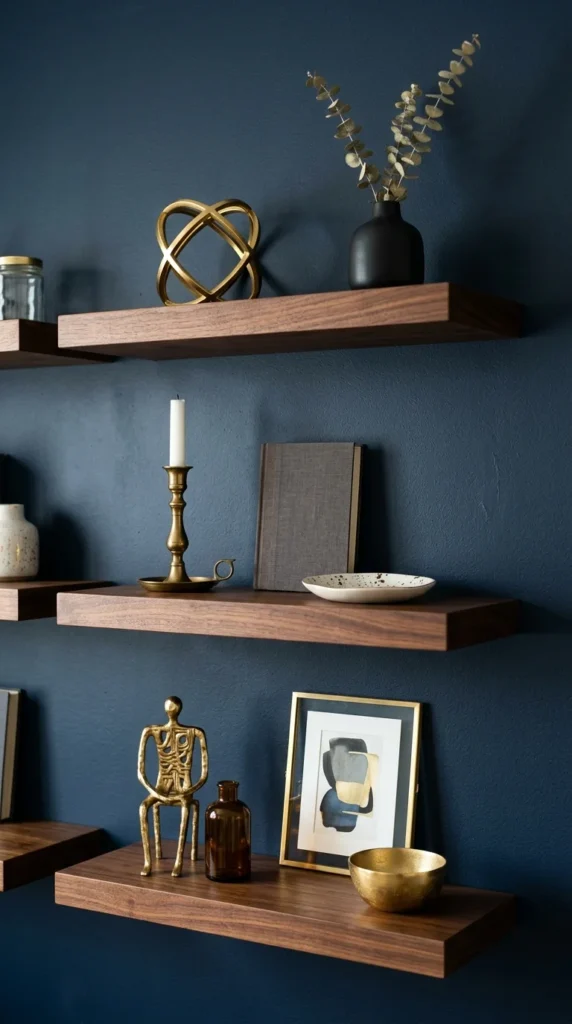
Walnut is the gold standard for mid-century modern design. Its rich, dark grain and smooth finish provide a sophisticated look that pairs exceptionally well with bold wall colors like navy, forest green, or charcoal. These shelves look best when kept minimalist and uncluttered.
6. White Oak
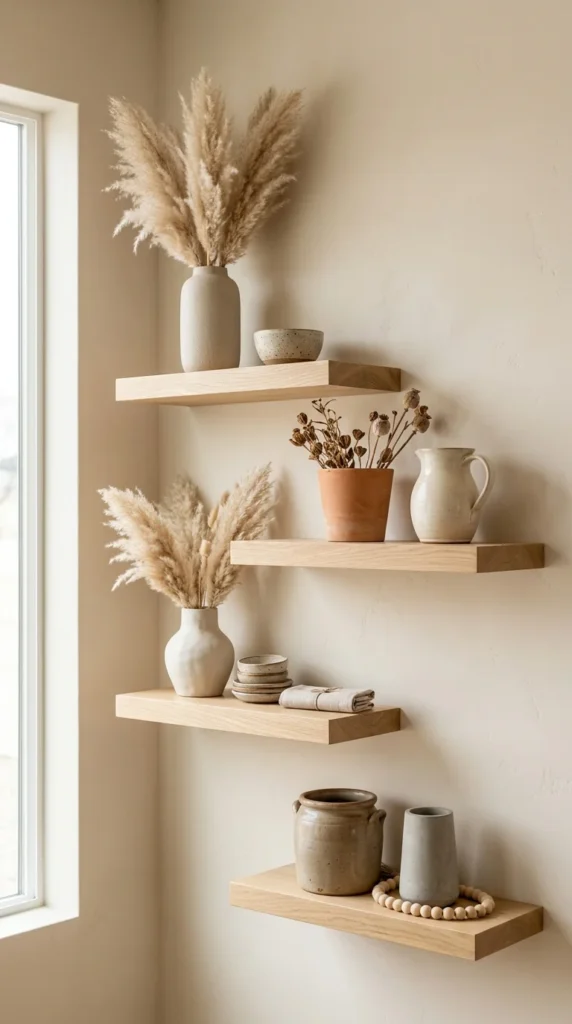
White oak is the darling of the “Scandi-Boho” trend. Its light, airy tone makes small rooms feel larger and brighter. It’s a versatile wood that blends seamlessly into minimalist environments, providing just enough warmth without overwhelming the space.
7. Corner Units
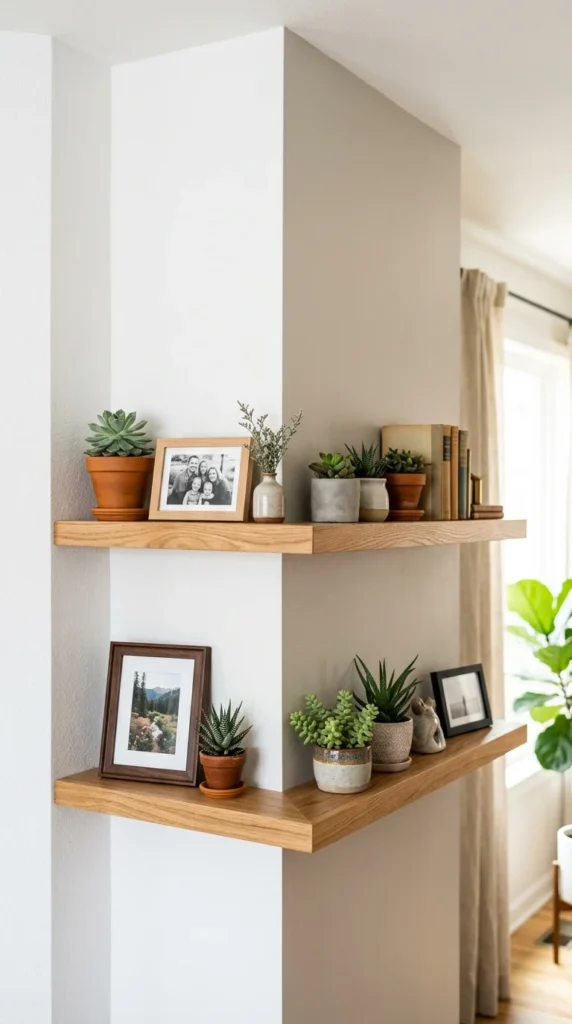
Don’t let corner space go to waste. L-shaped floating shelves wrap around corners to maximize storage in tight areas. This is a brilliant solution for small apartments or narrow entryways where traditional furniture would block the flow of traffic.
8. Hexagon Honeycomb
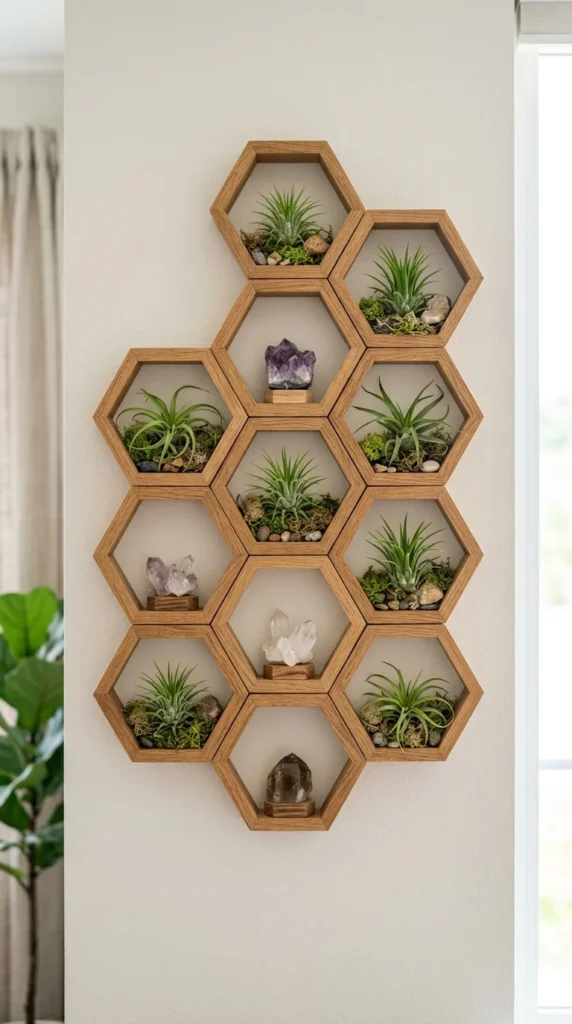
Moving away from the traditional plank, hexagon shelves offer a geometric focal point. When grouped together, they create a “honeycomb” effect that acts as both wall art and storage. Use different wood stains within the cluster for a more dynamic, textured look.
9. Plywood Layers
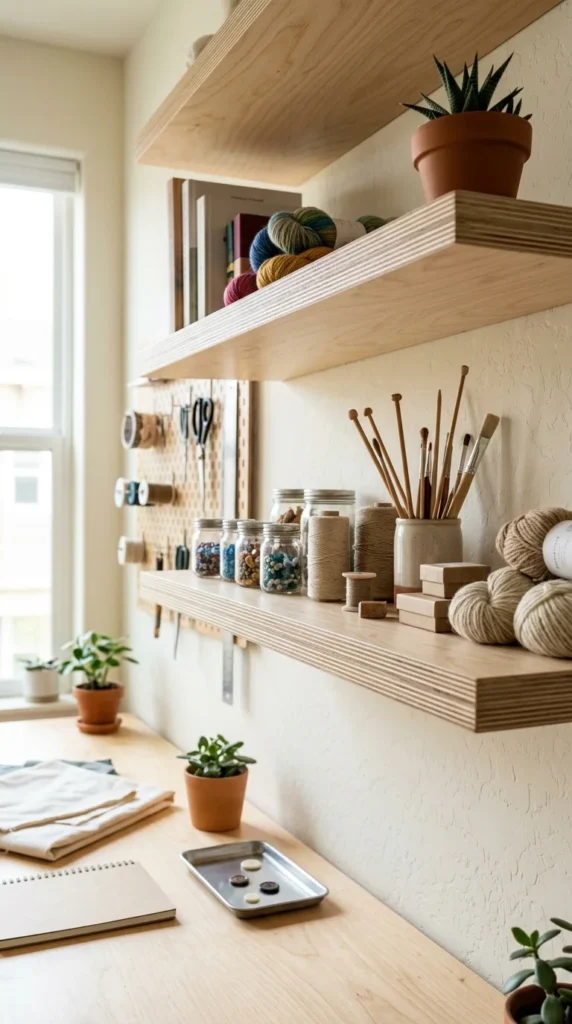
Plywood is no longer just a construction material; it’s a design choice. By exposing the layered edges of high-quality birch or maple plywood, you create a modern, linear aesthetic that feels fresh and architectural. It’s an affordable way to achieve a high-end custom look.
10. Dark Mahogany
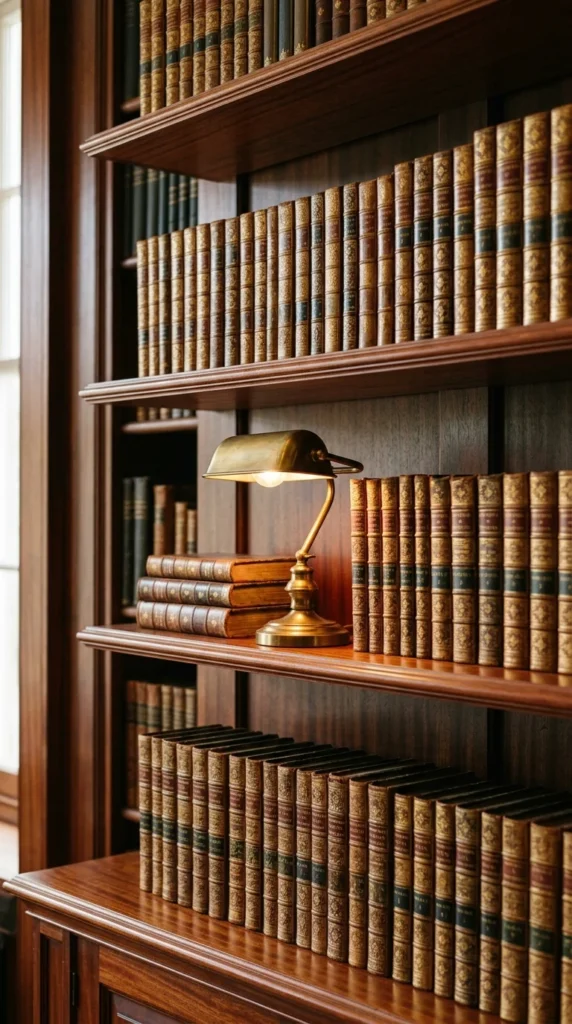
Mahogany exudes luxury and tradition. These shelves are perfect for home offices or formal living rooms where you want to create a sense of weight and importance. The deep red undertones of the wood pop beautifully against light-colored wallpaper or wainscoting.
11. Minimalist Slim
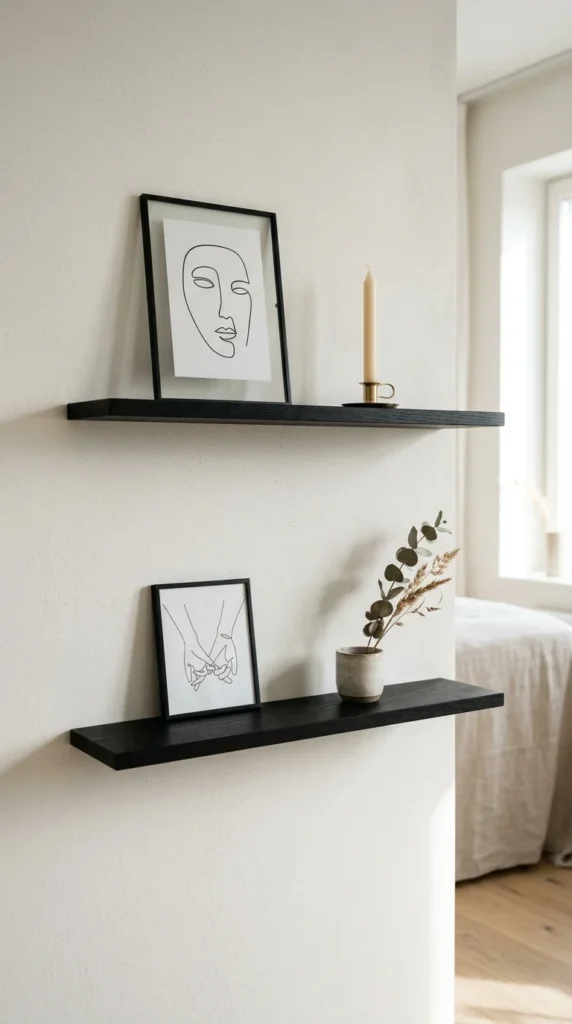
If you prefer a “barely there” look, go for ultra-slim wooden shelves. These are often made from hardwoods like maple to ensure strength despite their thin profile. They are perfect for displaying lightweight items like vinyl records or art prints without adding visual bulk to the room.
12. Rope Suspended
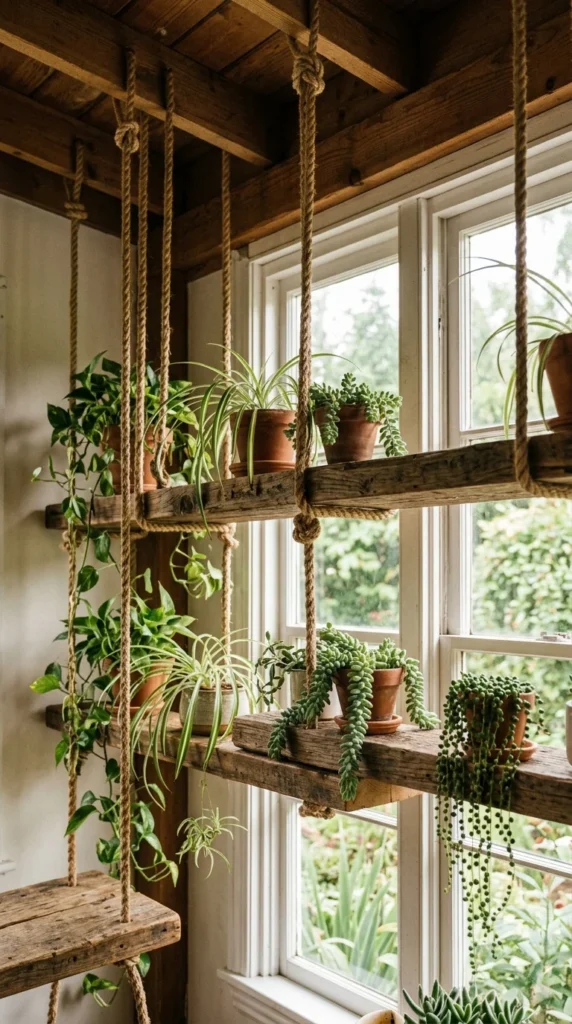
While technically “hanging,” these shelves provide the same floor-clearing benefits as floating ones. Using thick nautical rope or leather straps to support wooden tiers adds a whimsical, bohemian touch. This style is particularly effective in front of windows for a floating indoor garden.
13. Picture Ledge
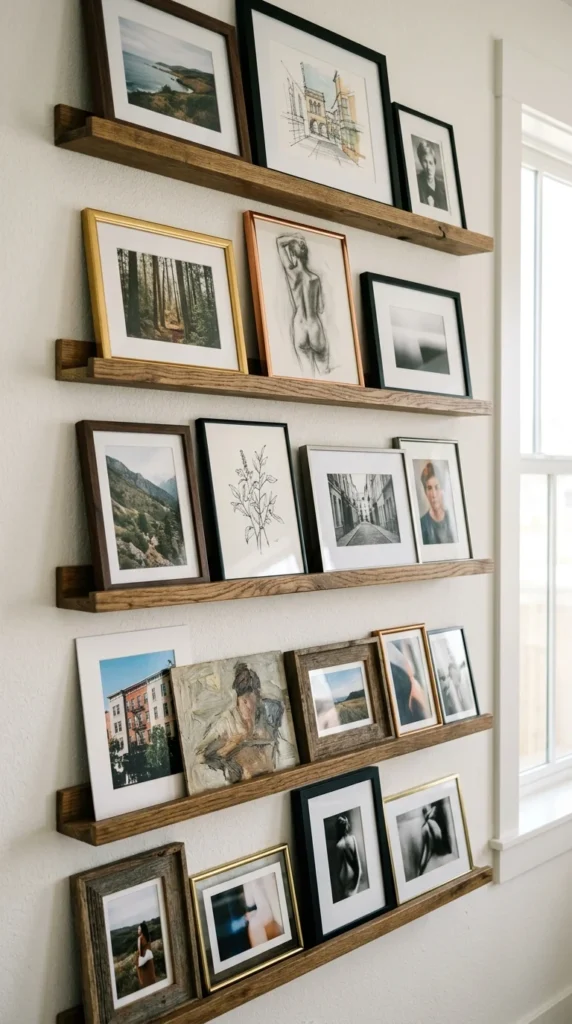
Picture ledges are shallow floating shelves designed specifically for art. The small lip at the front prevents frames from sliding off. This allows you to swap out your artwork and photos frequently without having to drill new holes in the wall every time you want to change the layout.
14. Backlit Glow
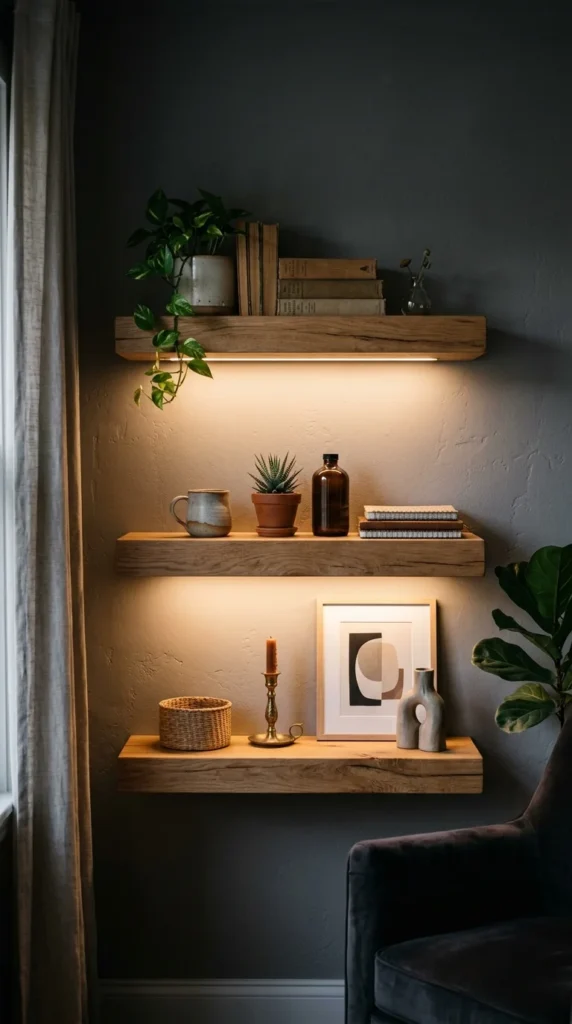
Incorporate technology into your design by installing recessed LED strips into the bottom of your wooden shelves. This creates a “wash” of light that highlights your decor and adds a sophisticated, ambient glow to the room at night. It’s a great trick for home bars or media rooms.
15. Geometric Triangles
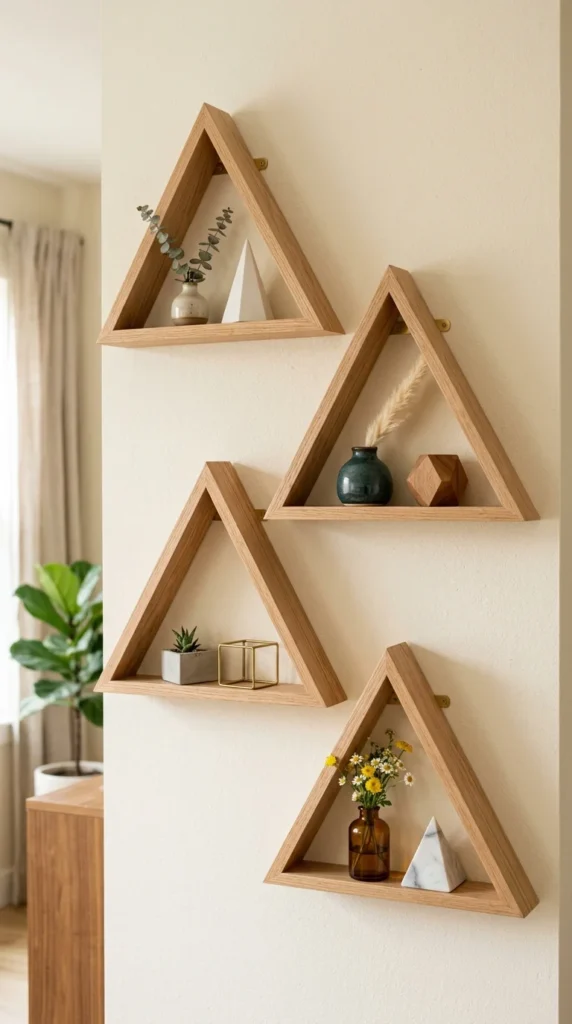
Triangle shelves add sharp angles to a room full of squares and rectangles. They work best as accent pieces rather than primary storage. Mounting them in opposing directions (some pointing up, some down) creates a mountain-like silhouette that is popular in nursery and bedroom decor.
16. Distressed Teal
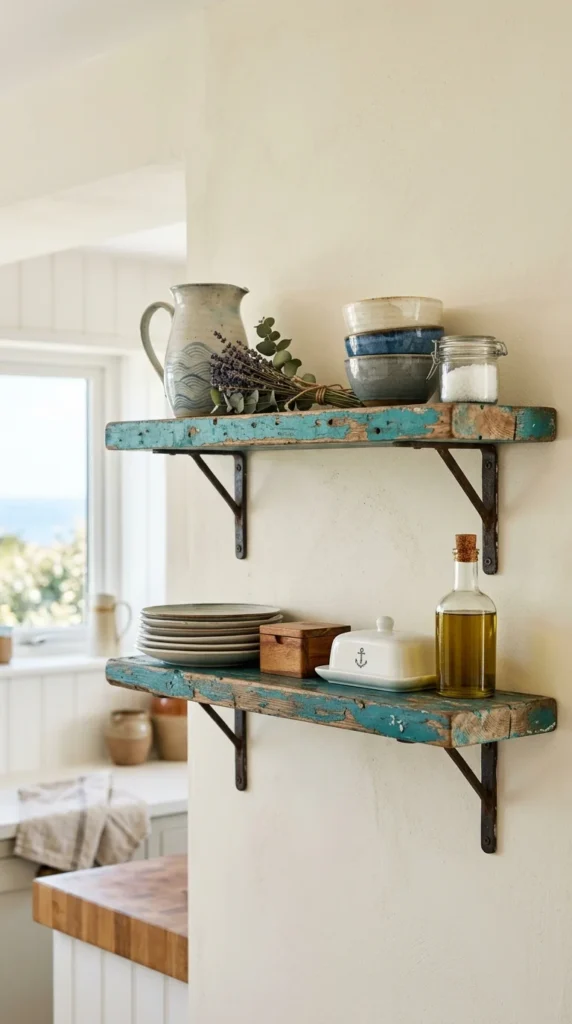
Wood doesn’t always have to be brown. Using a “shabby chic” or distressed paint technique on wooden shelves can introduce color while maintaining a rustic texture. A soft teal or seafoam green is perfect for a coastal cottage or a farmhouse kitchen looking for a pop of personality.
17. Floating Cubes
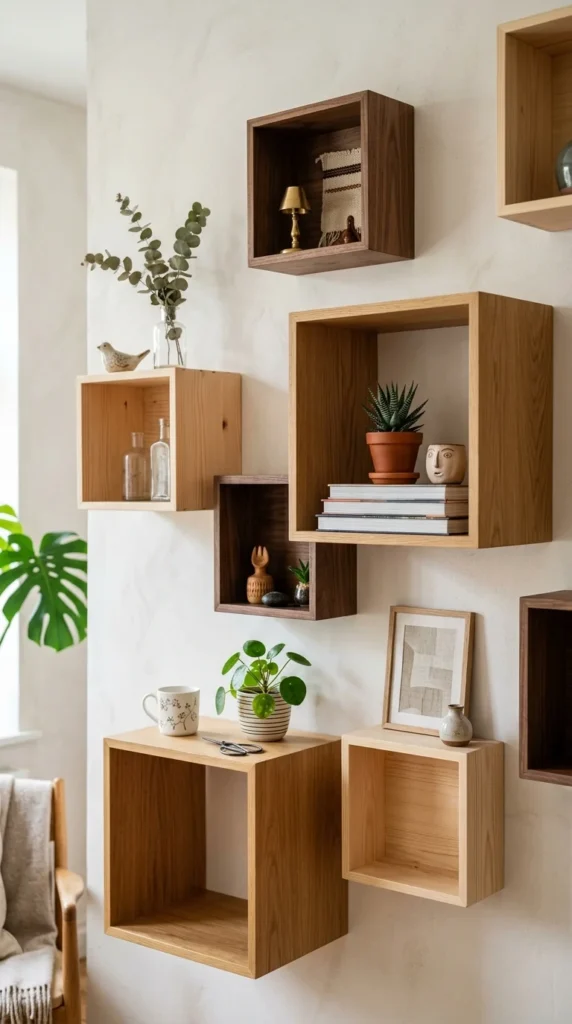
Box or cube shelves offer two surfaces for storage—the interior and the top. This “shadow box” effect frames your favorite objects, making them feel like museum exhibits. You can mix and match different wood species for each cube to create a patchwork effect.
18. Integrated Hooks
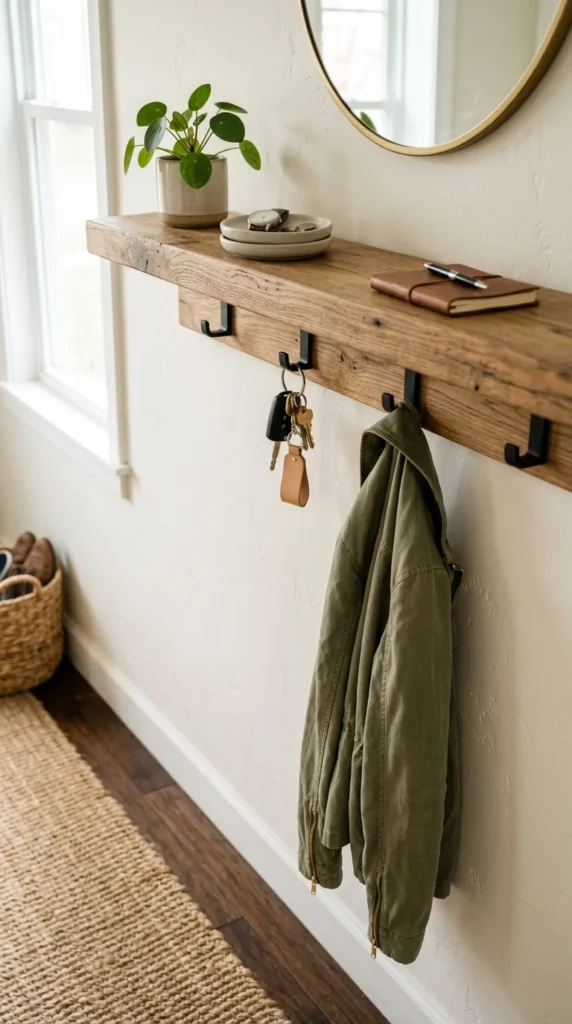
Functional and stylish, these shelves pull double duty. By adding sleek hooks to the underside of a floating shelf, you create a perfect entryway organizational hub. Use the top for mail and a decorative plant, and the bottom for keys, hats, or dog leashes.
19. Staggered Lengths
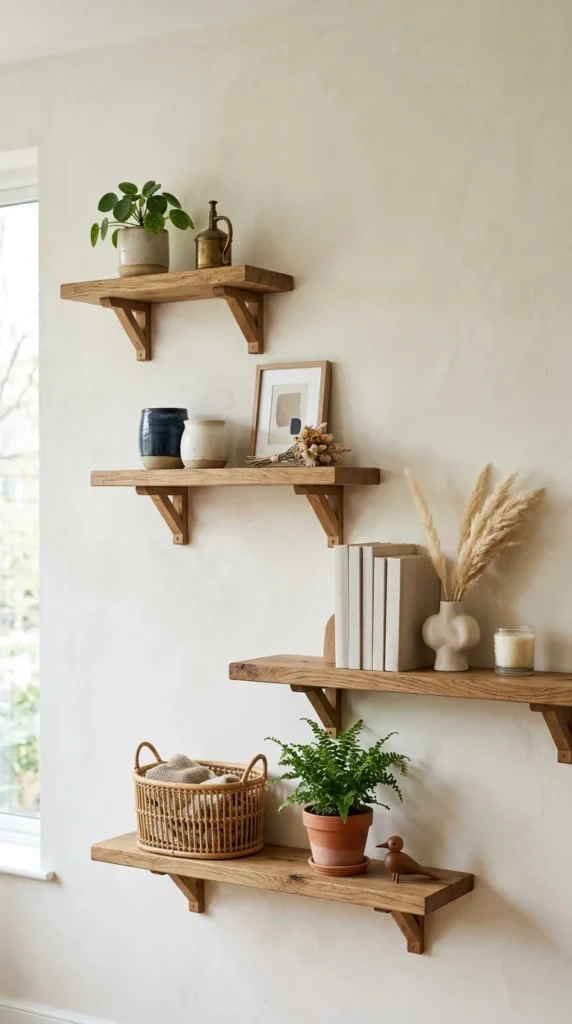
Instead of lining shelves up perfectly, try a staggered arrangement. Using different lengths of wood creates a sense of movement and visual interest. This layout is particularly effective on large, expansive walls where a single long shelf might look lonely or out of proportion.
20. Vertical Stack
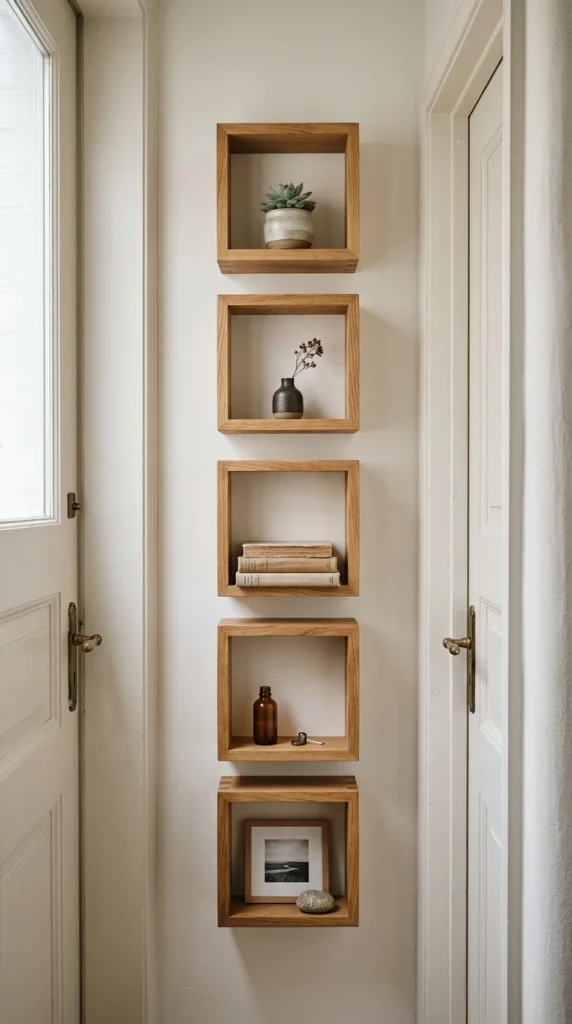
If you have a narrow vertical strip of wall, use it! Stacking several short floating shelves creates a column of storage. This is an excellent way to display a collection of similar items, such as a series of small sculptures or a vertical herb garden in the kitchen.
21. Kitchen Spice
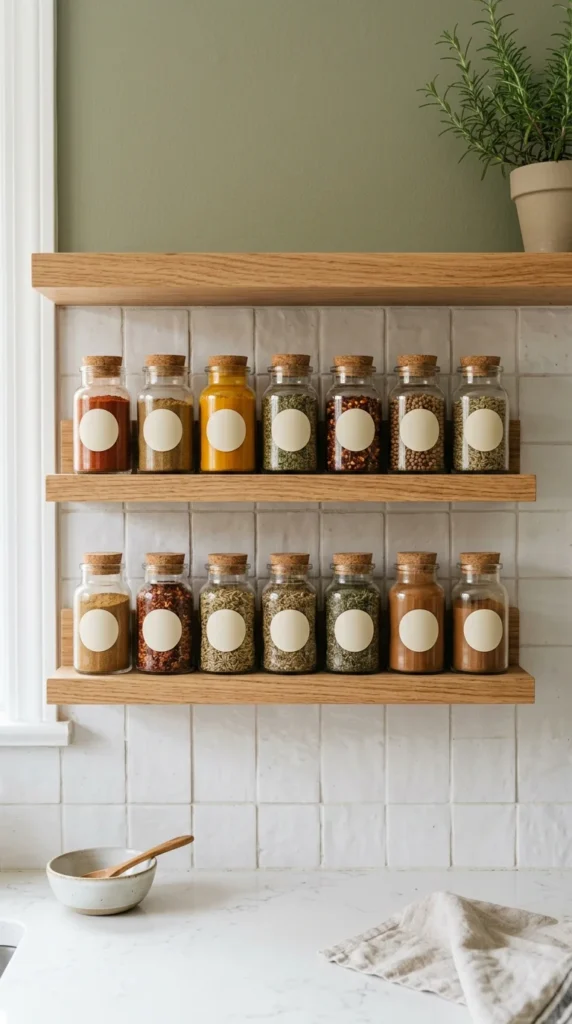
Floating shelves are a game-changer for kitchen organization. Use small, shallow wooden ledges to keep your spices within arm’s reach of the stove. It clears up counter space and turns your colorful spices into a decorative feature.
22. Bathroom Vanity
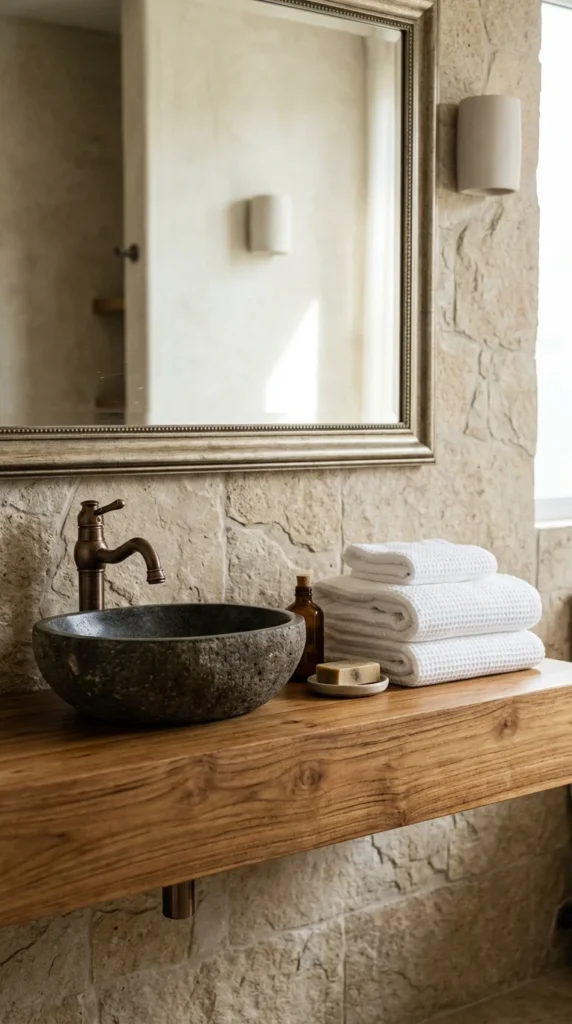
In the bathroom, a floating wooden shelf can serve as a minimalist vanity. Using water-resistant woods like teak or cedar ensures longevity. Placing a vessel sink on top of a thick wooden floating slab creates a spa-like, high-end hotel atmosphere.
23. Hidden Drawer
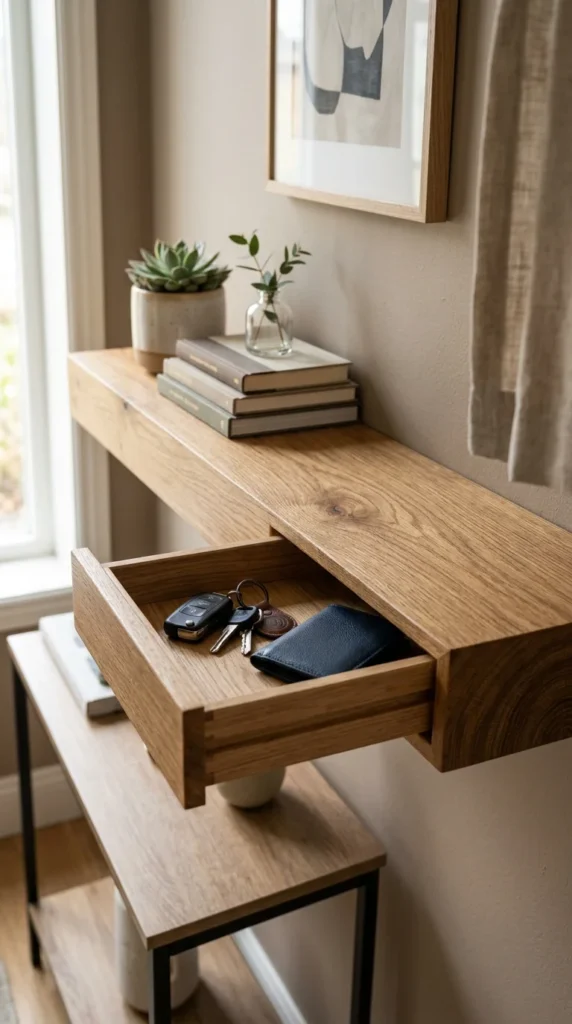
For the ultimate clean look, choose floating shelves with hidden drawers. These look like standard thick planks from the outside, but they provide a secret spot to tuck away clutter like remote controls, chargers, or keys, keeping your home looking pristine.
24. Nursery Book
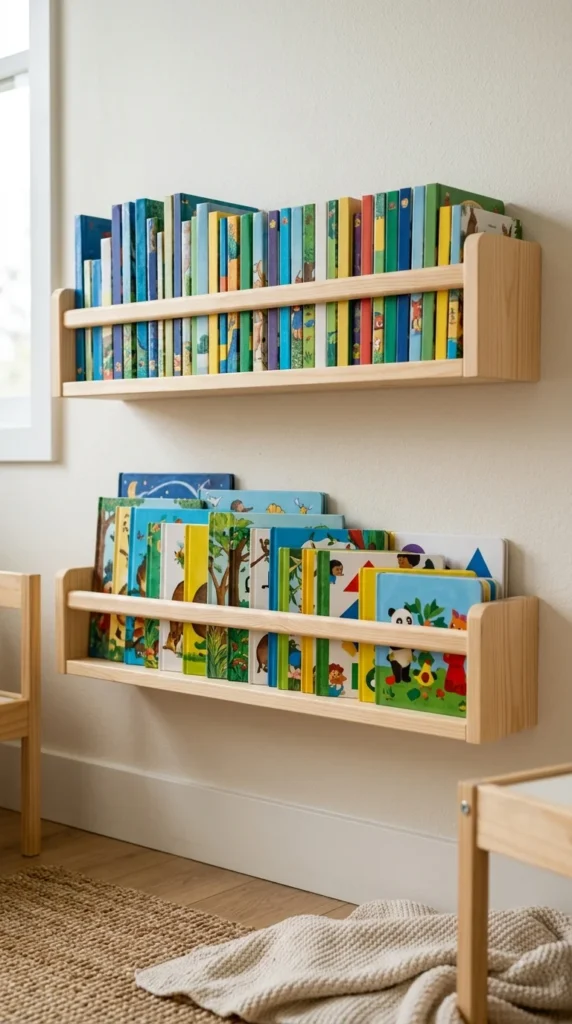
In a child’s room, floating shelves mounted at eye level allow kids to see the covers of their books rather than just the spines. This makes it easier for them to choose a story and adds a vibrant, playful splash of color to the room’s decor.