
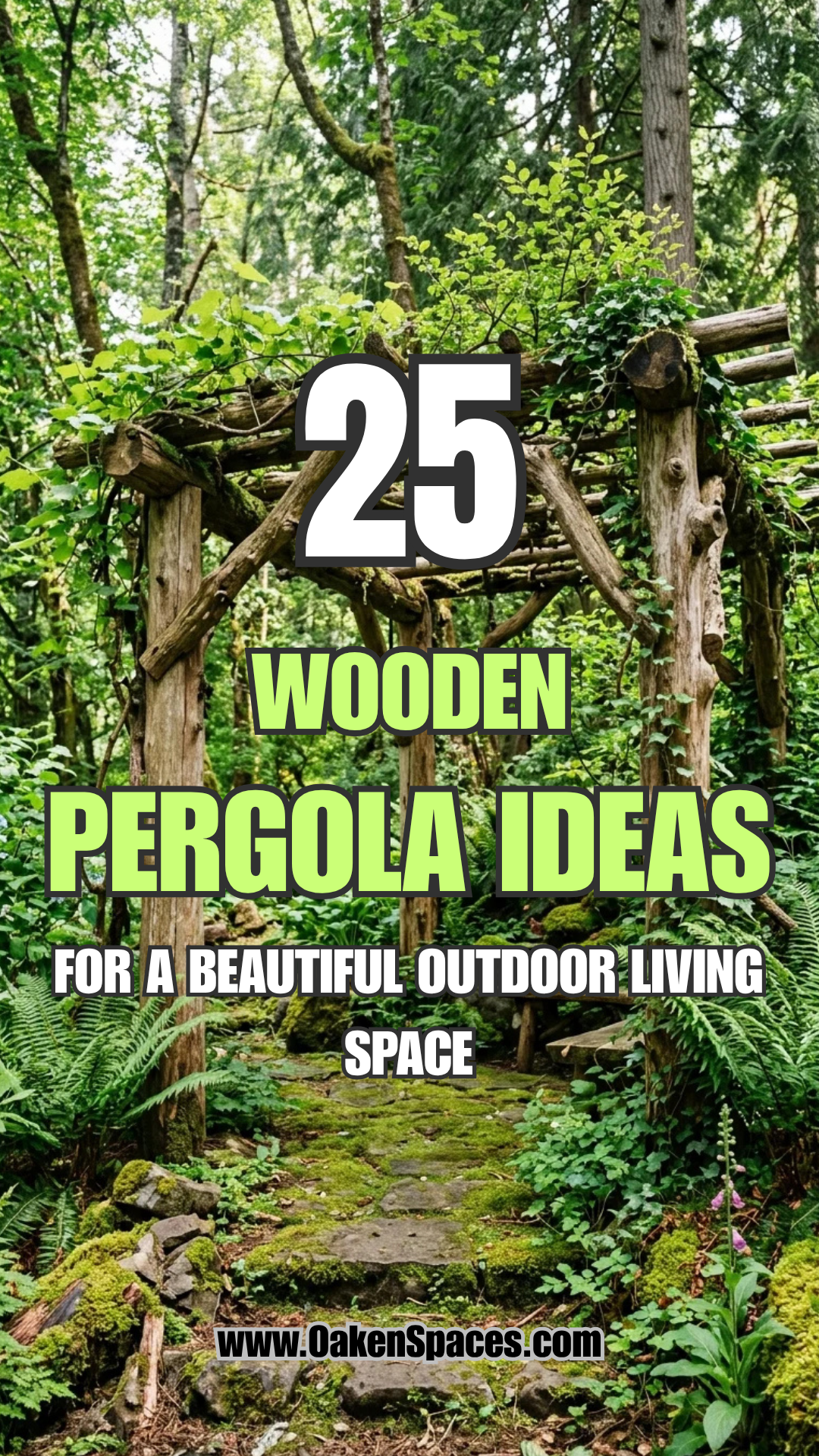
The wooden pergola is the ultimate architectural statement for any backyard. It serves as a bridge between the comfort of your indoor living room and the wild beauty of nature. Whether you are looking to create a shaded sanctuary for afternoon naps, a sophisticated hub for summer dinner parties, or a botanical frame for your favorite climbing roses, a pergola provides the structure and style to make it happen. Beyond its aesthetic appeal, a well-built wooden pergola adds significant value to your home and defines your outdoor space with timeless elegance.
From the rustic charm of rough-hewn logs to the sleek lines of modern minimalism, here are 25 wooden pergola ideas to inspire your next outdoor renovation.
1. Classic Cedar
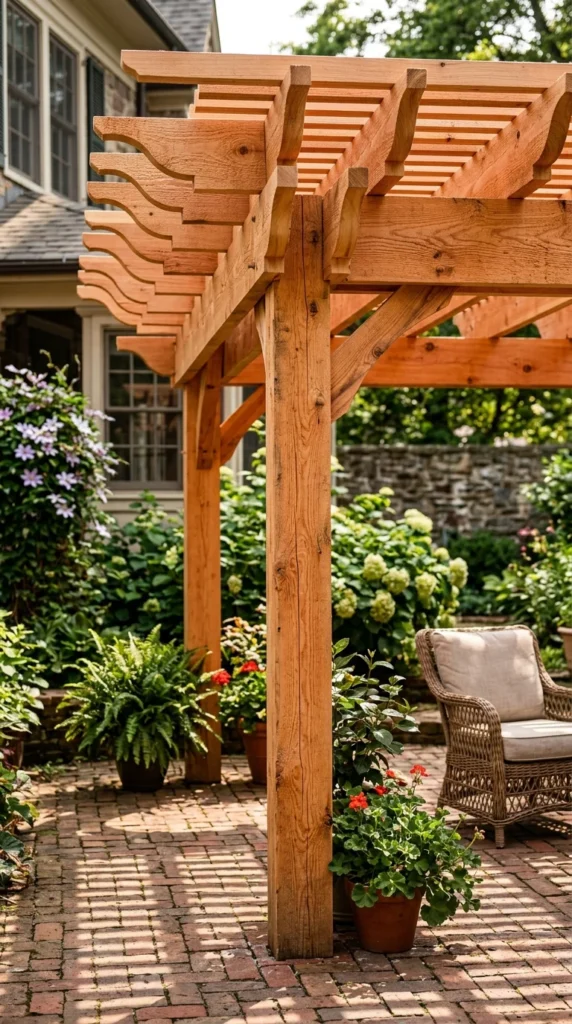
Cedar is the gold standard for wooden pergolas. Known for its natural resistance to rot, decay, and insect infestation, it is as durable as it is beautiful. A classic cedar design often features chunky 6×6 posts and elegant scalloped ends on the rafters. The natural aroma of the wood adds a sensory layer to your outdoor experience, and over time, it can either be stained to maintain its warm glow or allowed to weather into a sophisticated silvery-gray patina.
2. Modern Black
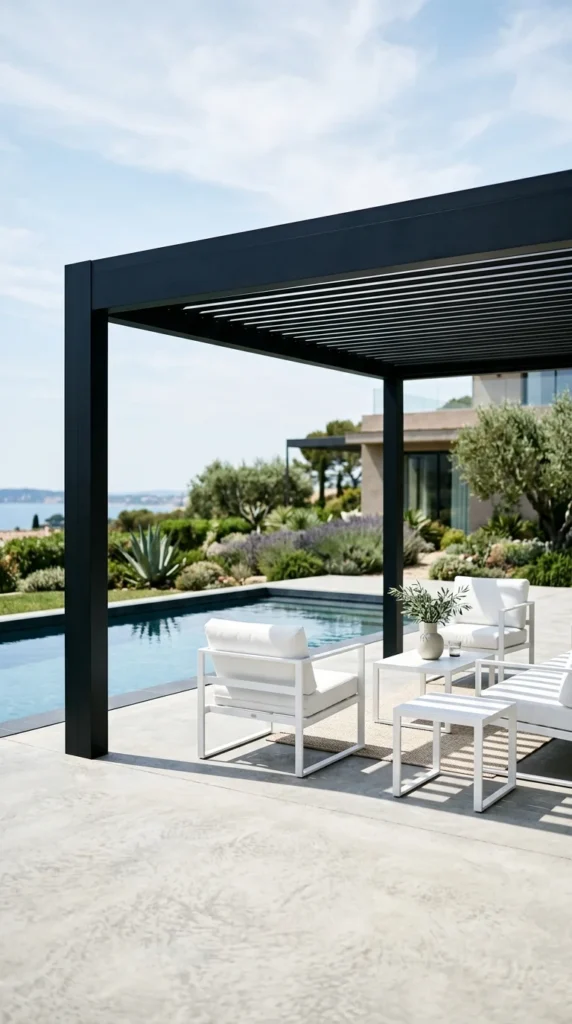
For a bold, architectural look, consider painting your wooden pergola matte black. This style works exceptionally well with contemporary homes and minimalist landscapes. The dark color makes the surrounding greenery pop, turning your garden into a living gallery. Using wood for this look allows you to achieve the high-end appearance of steel or aluminum while maintaining the warmth and easier workability of timber.
3. Climbing Vines
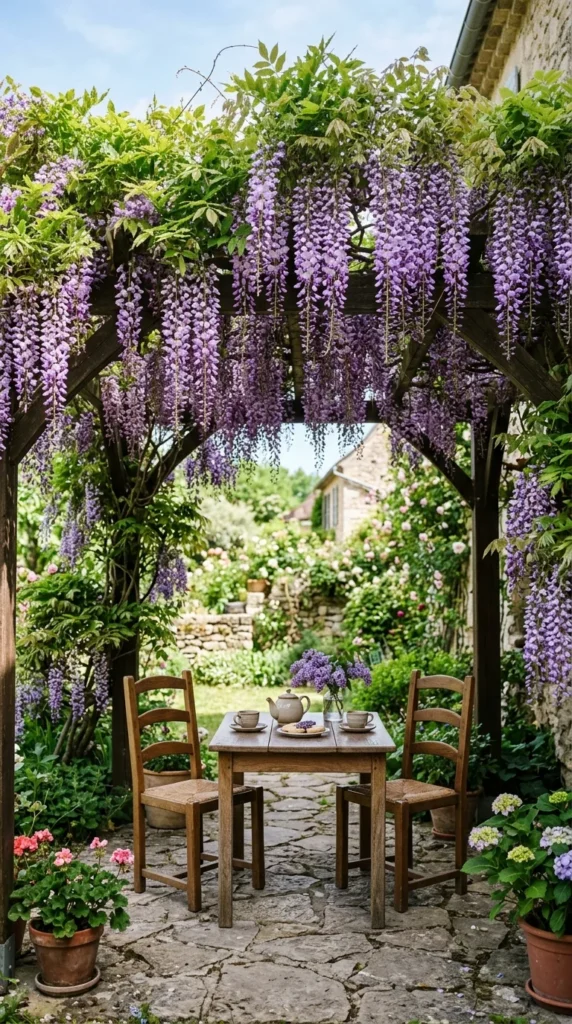
One of the most traditional uses for a pergola is to support climbing plants. By choosing species like wisteria, jasmine, or honeysuckle, you transform a wooden skeleton into a living, breathing ceiling. The plants provide natural shade and cooling through transpiration, making the area significantly more comfortable during the peak of summer. The contrast between the structural wood and the organic flow of the vines creates a romantic, fairytale atmosphere.
4. Retractable Canopy
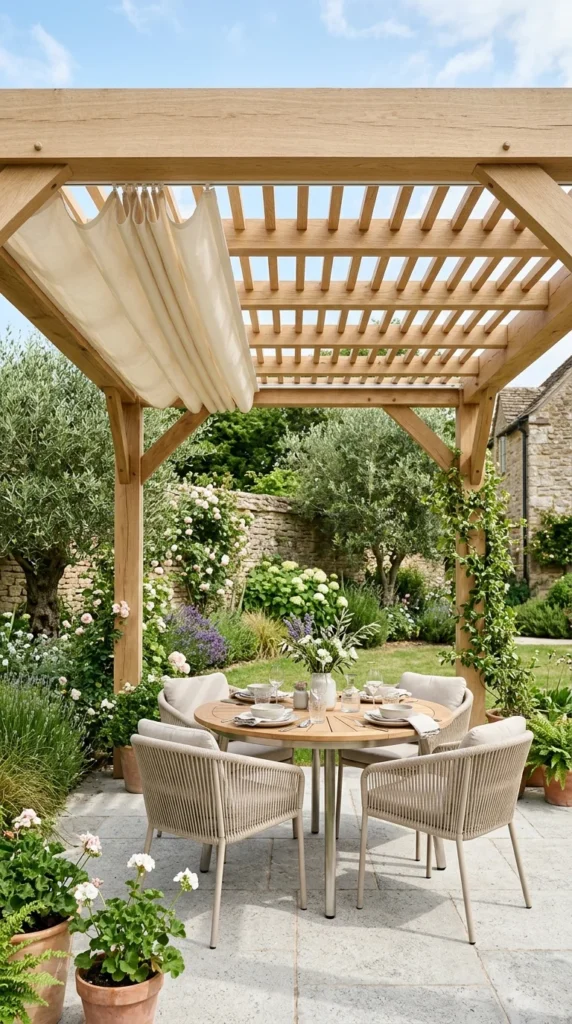
If you want the best of both worlds—dappled sunlight and full shade—a pergola with a retractable canopy is the answer. These systems involve weather-resistant fabric tracks installed between the rafters. You can pull the canopy closed during a light rain or the midday heat and retract it at night to gaze at the stars. This setup adds a resort-like feel to your backyard, combining the permanence of wood with the flexibility of textiles.
5. Attached Structure
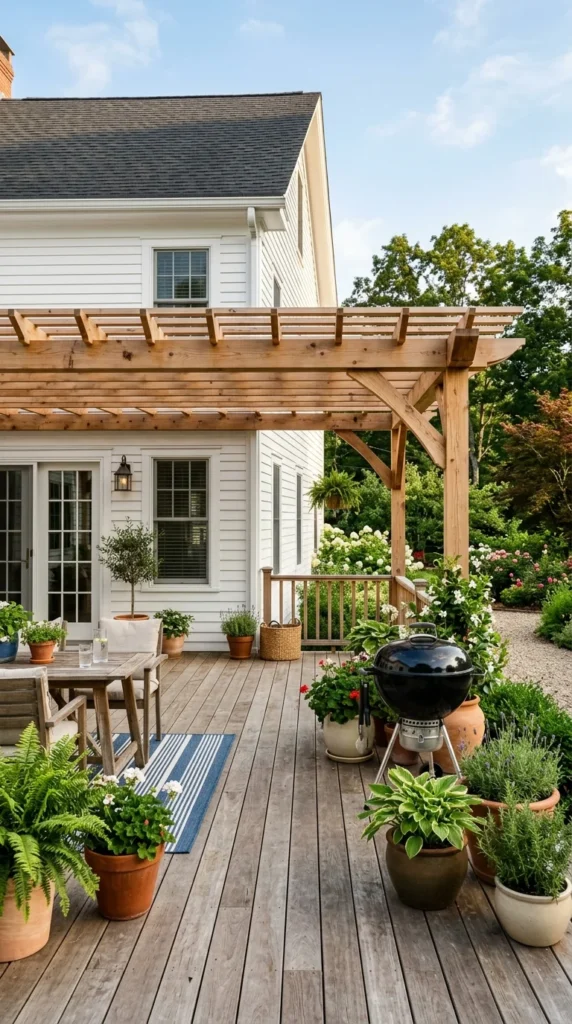
An attached pergola acts as a seamless extension of your indoor living space. By anchoring one side of the structure to your home’s exterior wall, you create a natural flow from the back door to the yard. This is an excellent solution for smaller properties where a freestanding structure might feel too bulky. It provides immediate shade for sliding glass doors, helping to keep your home’s interior cooler as well.
6. Freestanding Sanctuary
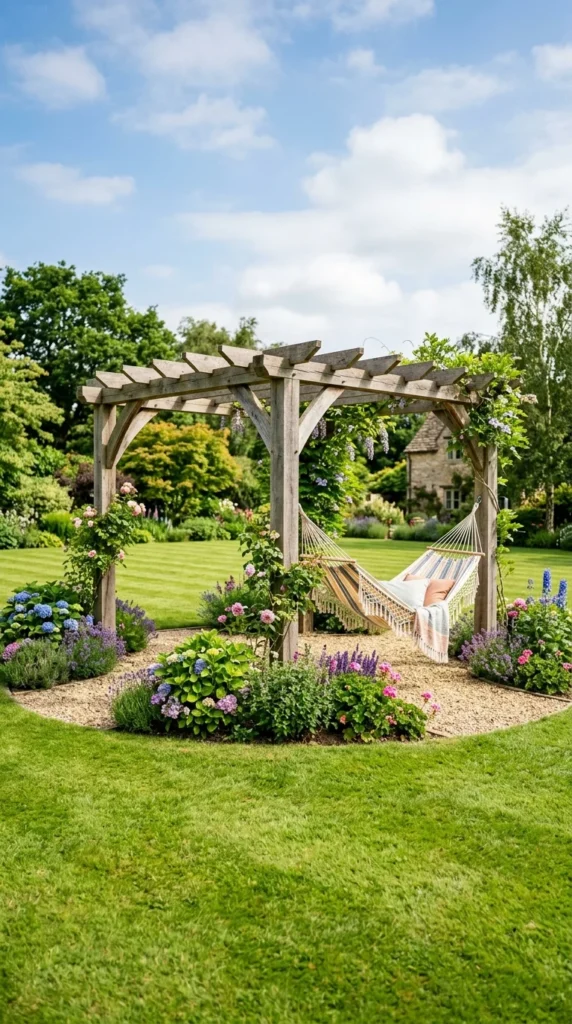
A freestanding pergola serves as a destination. Placing it away from the house encourages you to explore your garden and provides a sense of seclusion. Whether nestled in a quiet corner of the yard or placed prominently in the center of a lawn, a freestanding structure becomes a focal point that defines a specific “room” outdoors, such as a reading nook, a meditation space, or a dedicated yoga deck.
7. Swing Seating
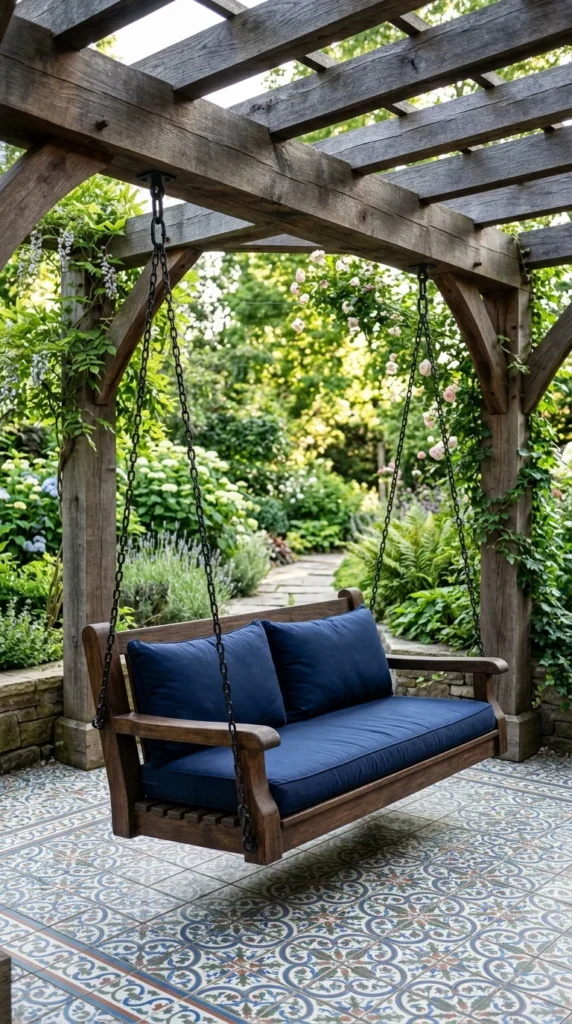
Why settle for standard chairs when you can hang a swing? Wooden pergolas are naturally strong, making them the perfect support for porch swings or hanging daybeds. This configuration turns your pergola into the ultimate relaxation zone. The gentle rocking motion combined with the overhead shade makes it a favorite spot for children and adults alike, perfect for long summer afternoons with a book.
8. Fire Pit Centerpiece
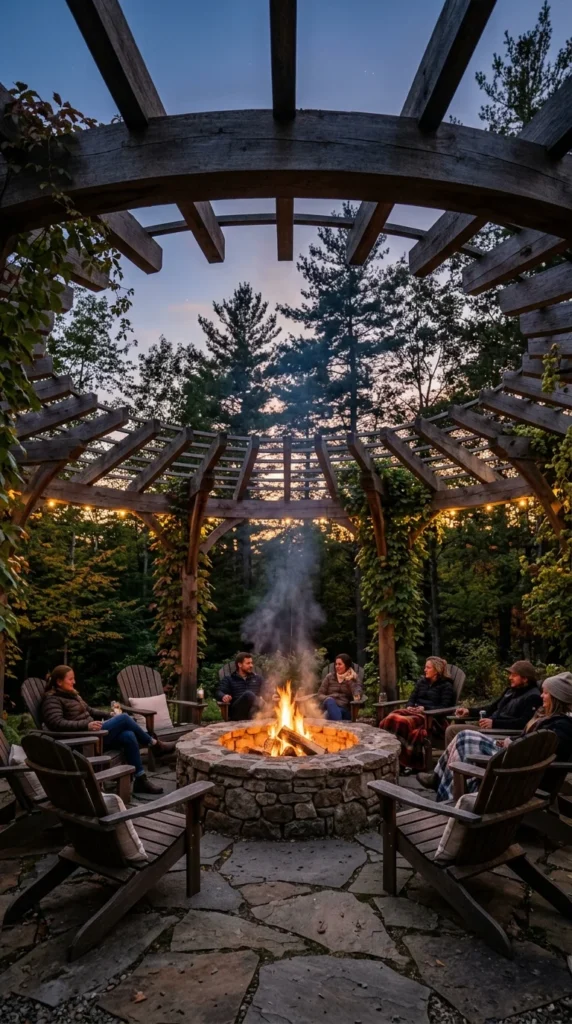
While we often think of pergolas for shade, they also provide excellent framing for evening activities. Positioning a pergola around a fire pit creates an intimate, cozy “campfire” vibe. The overhead beams provide a place to hang lanterns or string lights, ensuring the area is safely lit. This setup extends the usability of your outdoor space into the cooler autumn and winter months.
9. Outdoor Kitchen
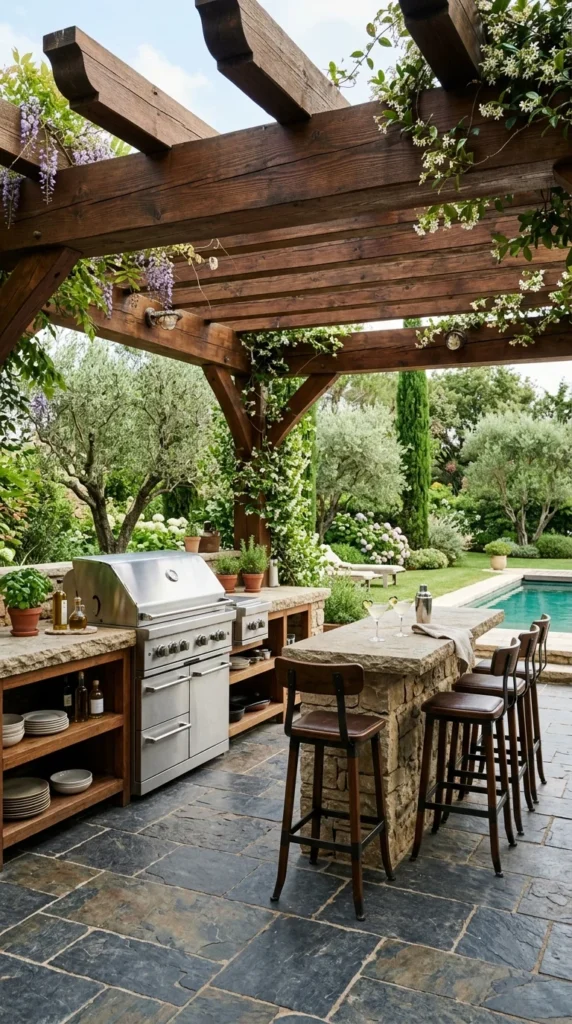
For the home chef, a pergola is the perfect roof for an outdoor kitchen. It defines the “cooking zone” and provides much-needed shade while you’re at the grill. You can even install a vent hood through the rafters if needed. The wooden structure allows for easy installation of task lighting and electrical outlets, making it a functional and stylish workspace for al fresco dining preparation.
10. Curtained Privacy
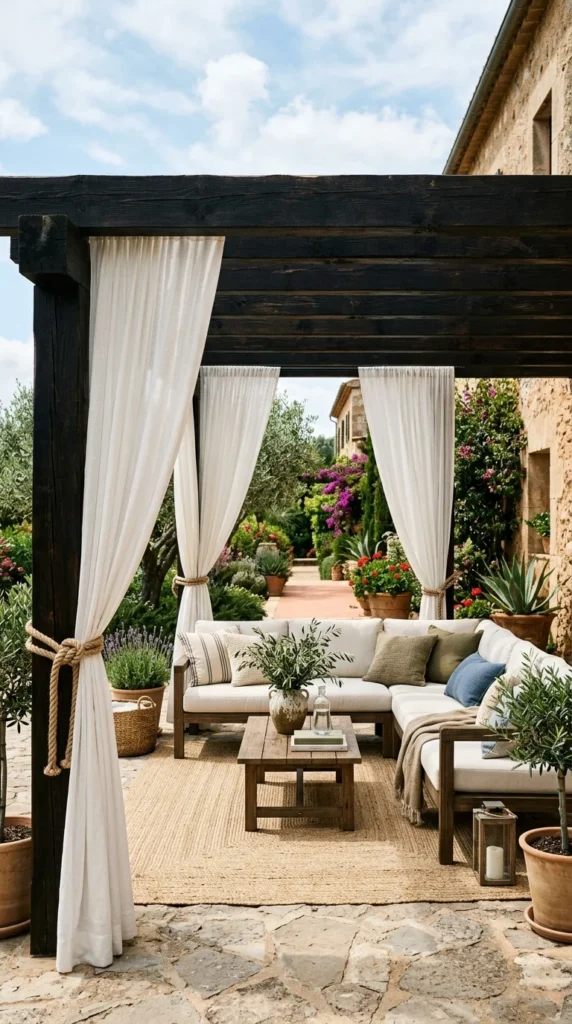
Adding outdoor curtains to your pergola instantly elevates the luxury factor. Not only do curtains provide a soft, breezy aesthetic, but they also offer functional privacy from neighbors and protection from the low-hanging evening sun. When drawn shut, the curtains transform the pergola into a private cabana, perfect for those who want a spa-like retreat in their own backyard.
11. Corner Pergola
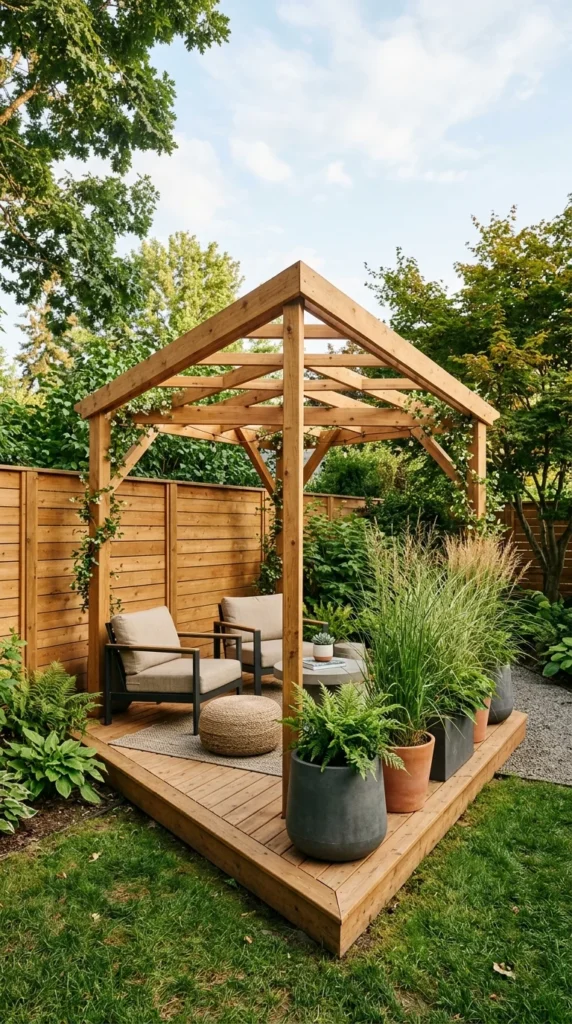
Not every pergola needs to be a massive square. A corner pergola is a brilliant space-saving solution for smaller yards or to fill an underutilized nook. By using a triangular or L-shaped design, you can create a cozy seating area without overwhelming the rest of the landscape. It’s an ideal way to frame a corner bench or a small bistro set.
12. Rooftop Escape
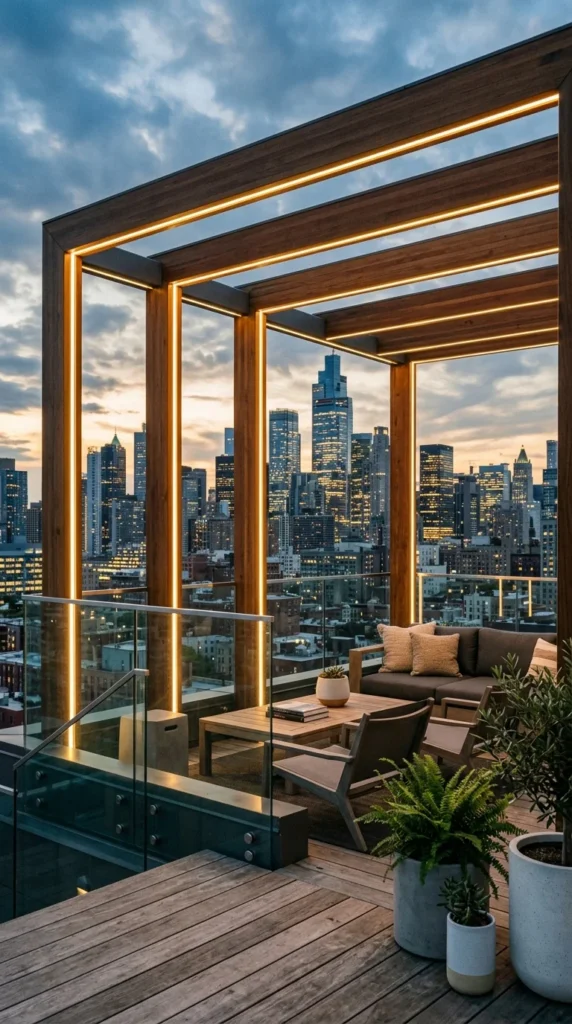
In urban environments where ground space is limited, the roof is the new frontier. A lightweight wooden pergola can transform a hot, barren rooftop into a chic lounge. It provides essential shade in an area that is usually exposed to the elements all day. When combined with container gardening and comfortable seating, a rooftop pergola becomes a private oasis in the heart of the city.
13. Rustic Logs
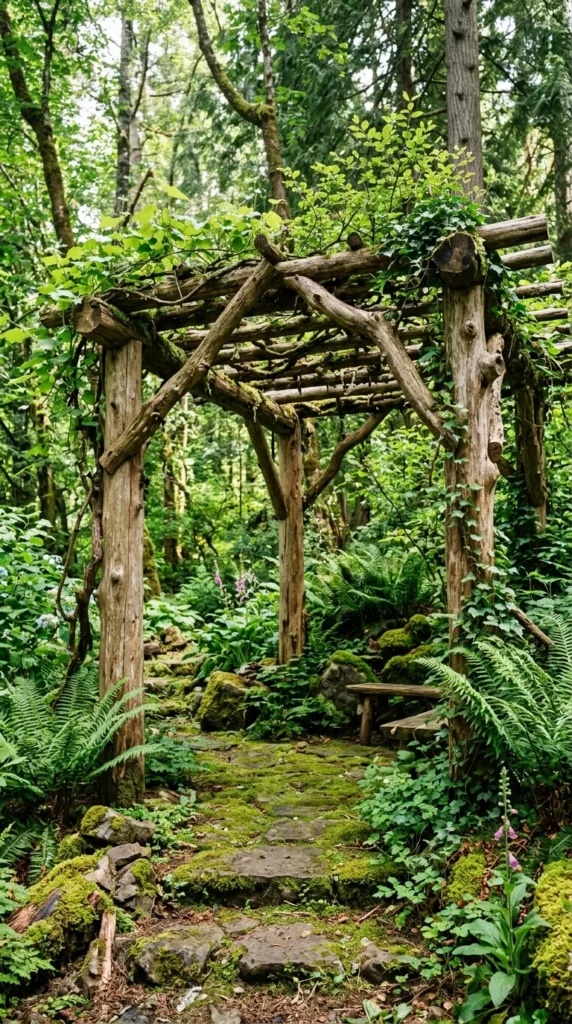
For a home with a lodge or cabin aesthetic, a rustic log pergola is the perfect match. Instead of milled lumber, this style uses raw timbers, often with the bark still attached or simply peeled. The crooked lines and natural knots of the wood blend seamlessly into a wooded or wild landscape, making the structure feel like a natural part of the environment rather than a man-made addition.
14. White Painted
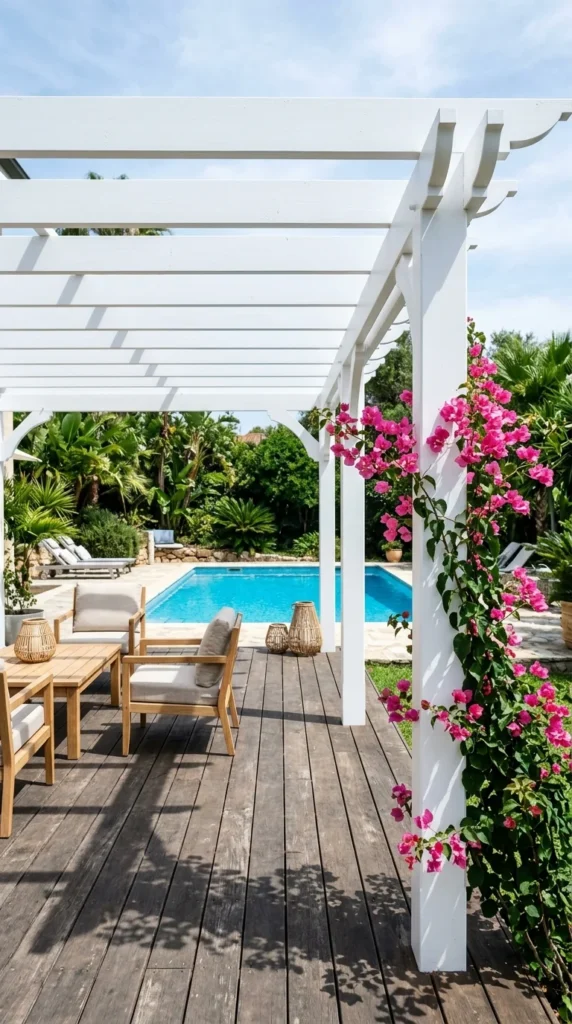
A white pergola offers a clean, coastal, or cottage-style look. It reflects sunlight, keeping the area feeling bright and airy even on overcast days. This is a popular choice for poolside installations or traditional colonial-style homes. When paired with colorful flowers and blue accents, a white pergola creates a timeless “Hamptons” aesthetic that feels fresh and inviting.
15. Arched Top
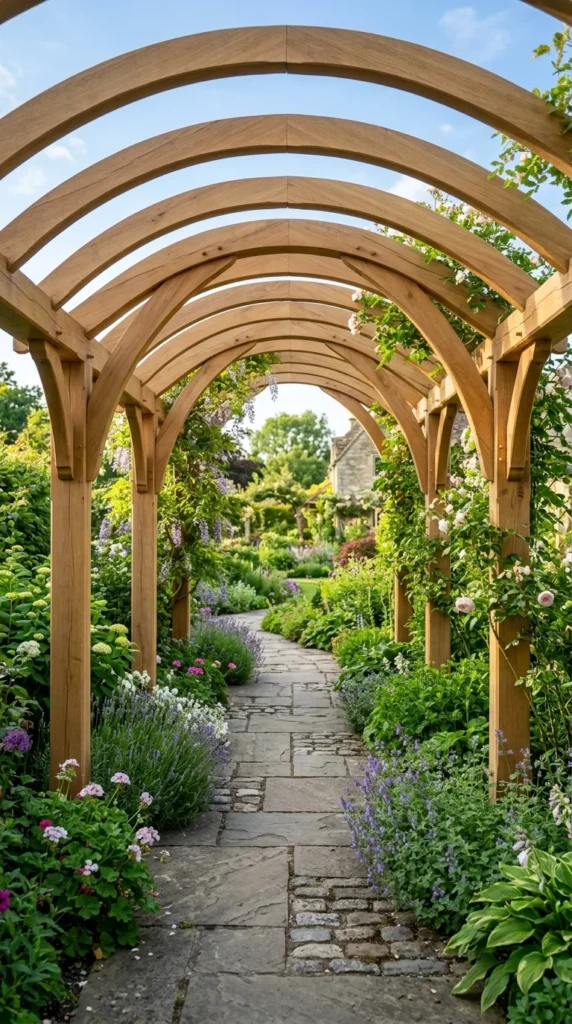
While most pergolas are flat-topped, an arched design adds a touch of architectural sophistication and height. The curve creates a softer silhouette that mimics the shapes found in nature. Arched pergolas are often used as grand entrances to garden paths or as “moon gates” that frame a specific view in the distance, providing a sense of passage and transition.
16. Multi-Level
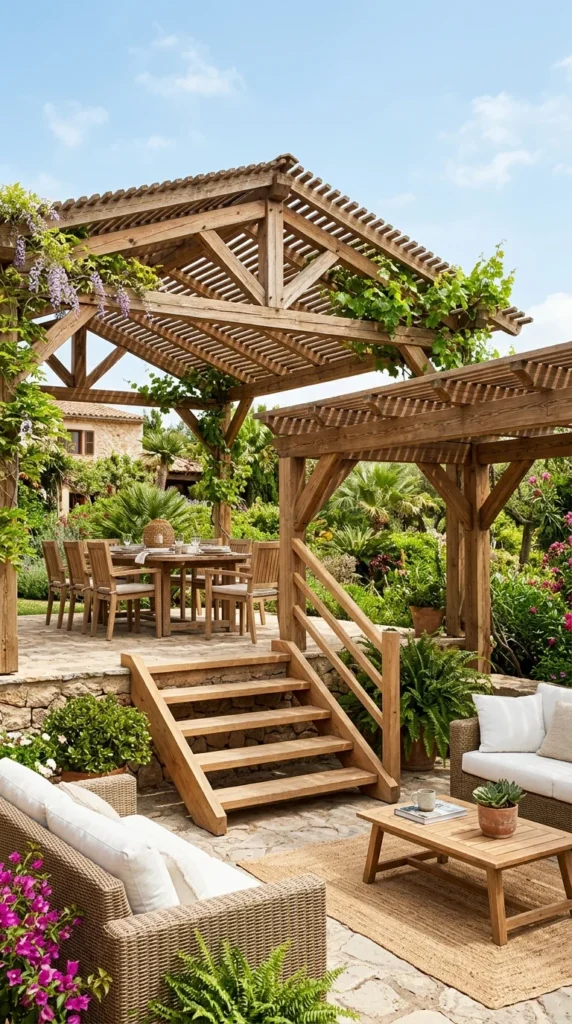
If your backyard has varied topography, a multi-level pergola can emphasize the different zones of your outdoor space. You might have a higher tier for dining and a lower tier for lounging around a pool. This architectural depth creates visual interest and allows you to customize the amount of shade and privacy for each specific area of your deck or patio.
17. Integrated Lighting
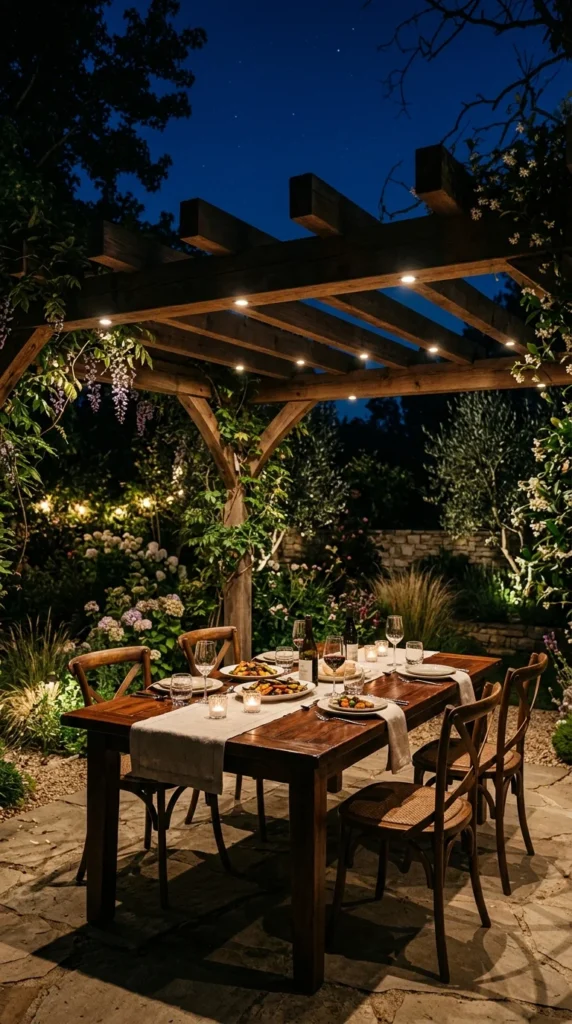
A pergola is the perfect framework for a professional lighting scheme. Beyond just hanging string lights, you can integrate recessed puck lights, spotlights, or even a central chandelier into the wooden rafters. This turns the pergola into a functional room after dark, allowing you to host dinner parties or enjoy a glass of wine long after the sun has set.
18. Poolside Shade
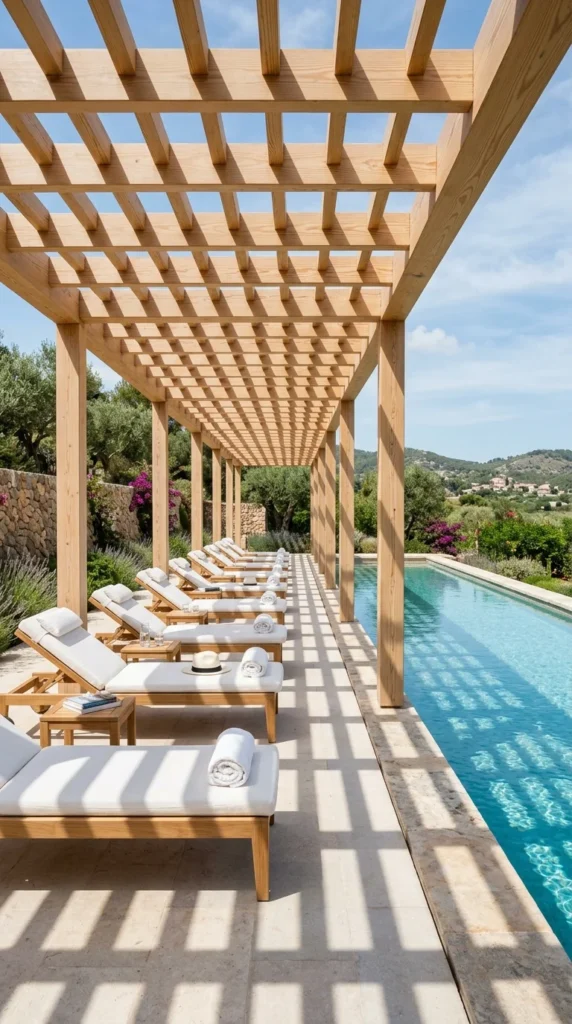
Every pool needs a place to escape the sun. A poolside pergola provides a permanent shaded area for loungers, preventing sunburn and keeping the deck surface cool to the touch. By using moisture-resistant wood like teak or ipe, you ensure the structure can handle the splashes and humidity associated with a swimming pool environment while adding a touch of high-end resort style.
19. Zen Garden
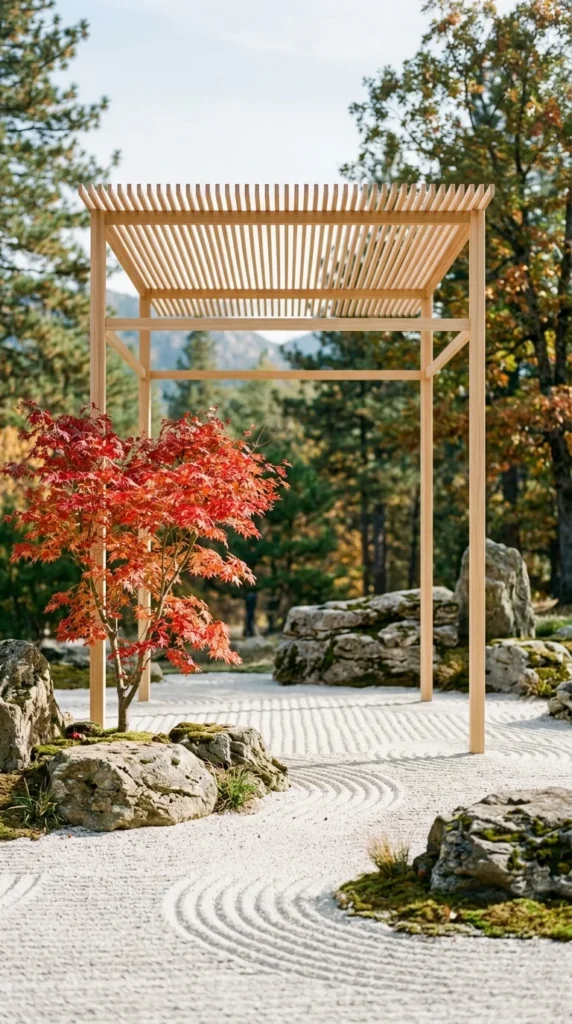
Inspired by Japanese architecture, a Zen-style pergola focuses on balance and simplicity. These structures often feature dark-stained wood and horizontal slats that create a very specific, rhythmic shadow pattern. Placed over a rock garden or near a water feature, this type of pergola encourages quiet reflection and brings a sense of peace to the outdoor living space.
20. Bar Counter
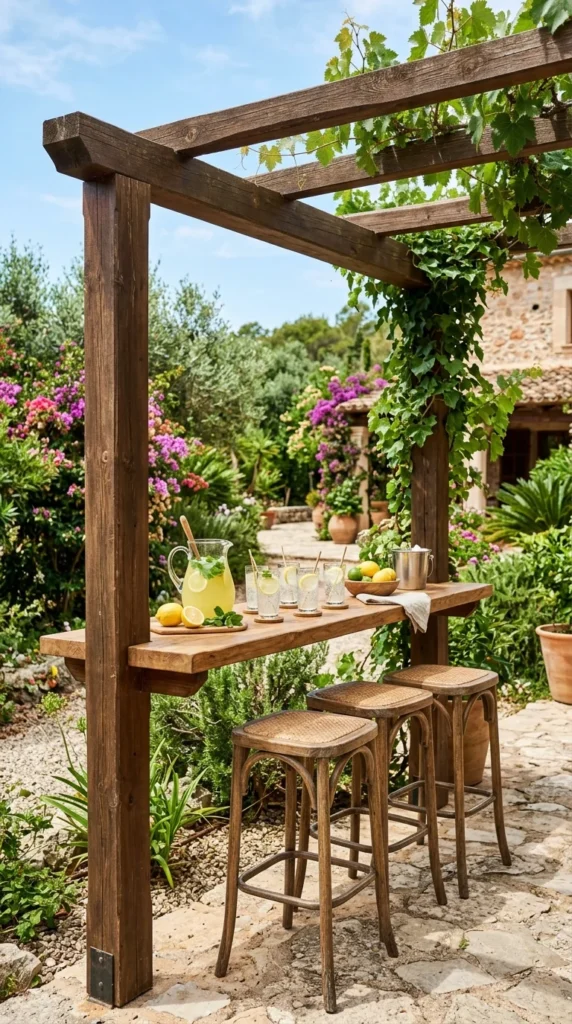
Maximize the utility of your pergola by integrating a bar counter into the design. One of the horizontal crossbeams can be lowered and widened to create a ledge for drinks and snacks. This makes the pergola a social magnet during parties, allowing the host to serve drinks while remaining in the shade and connected to the conversation.
21. Deck Extension
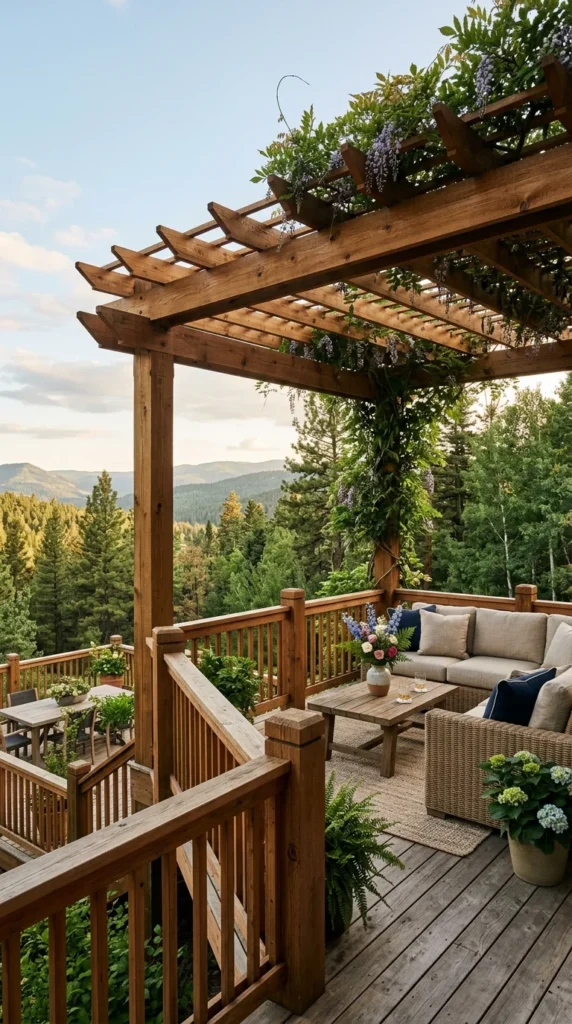
A pergola can be designed as part of the original deck construction, ensuring a perfectly matched look. By using the same wood species and stain for both the deck and the pergola, the structure feels intentional and unified. It helps break up a large, flat deck area, providing vertical interest and a sense of enclosure that makes a big deck feel more intimate.
22. Traditional Redwood
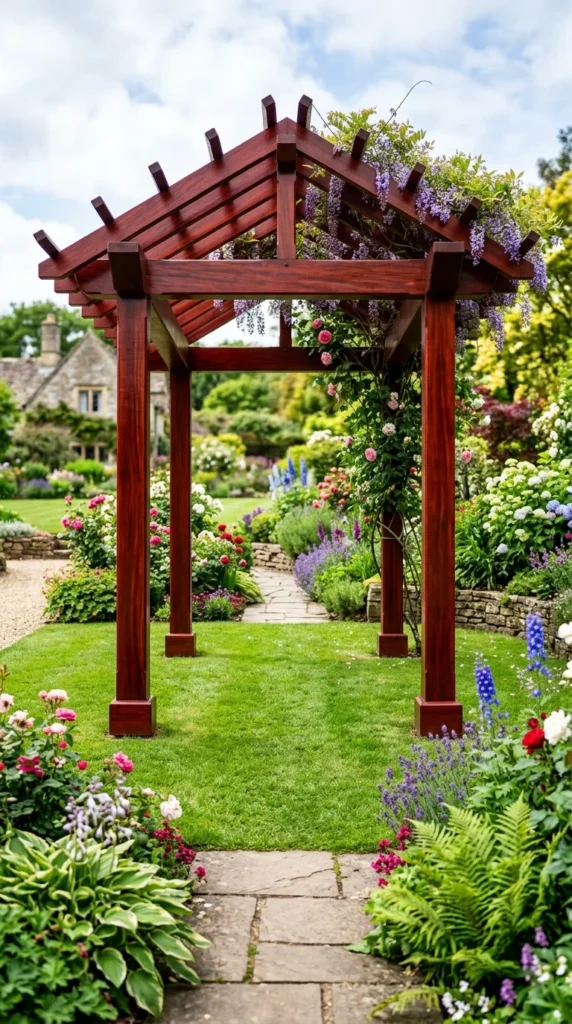
Redwood is a premium material that offers a stunning aesthetic and incredible longevity. Like cedar, it is naturally resistant to the elements. The deep, brownish-red tones of redwood provide a luxurious, high-end look that stands out against green foliage. It is a classic choice for homeowners who want a pergola that feels substantial, permanent, and inherently upscale.
23. Asian-Inspired
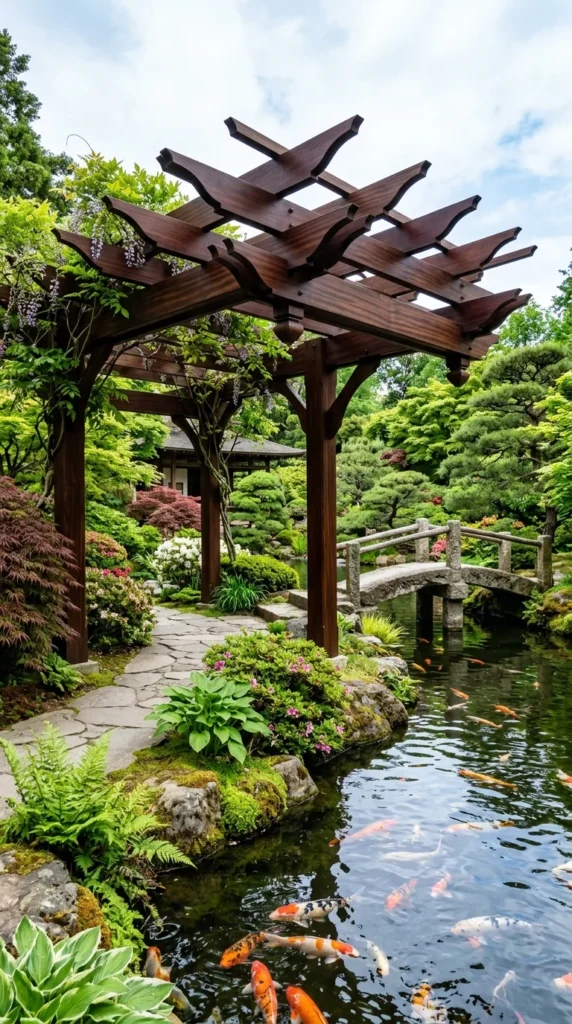
Taking cues from East Asian architecture, this pergola style uses upturned rafter ends to create a sense of elegance and movement. The design often incorporates more intricate joinery and thinner slats. This style works beautifully in gardens that feature water elements, bamboo, and stone lanterns, adding a touch of exotic sophistication to the backyard.
24. Small Space
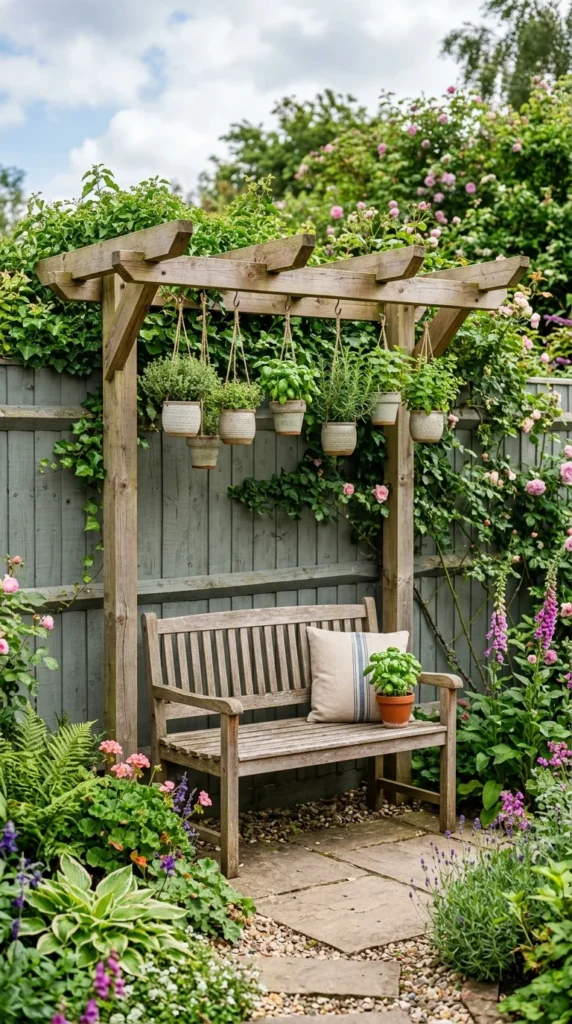
You don’t need a massive estate to enjoy a pergola. A “mini” pergola or an arbor-style structure can be used to define a small garden bench or a doorway. Even a two-post design anchored to a wall or fence can provide enough architectural interest to transform a small patio or narrow side yard into a charming destination.
25. Geometric Design
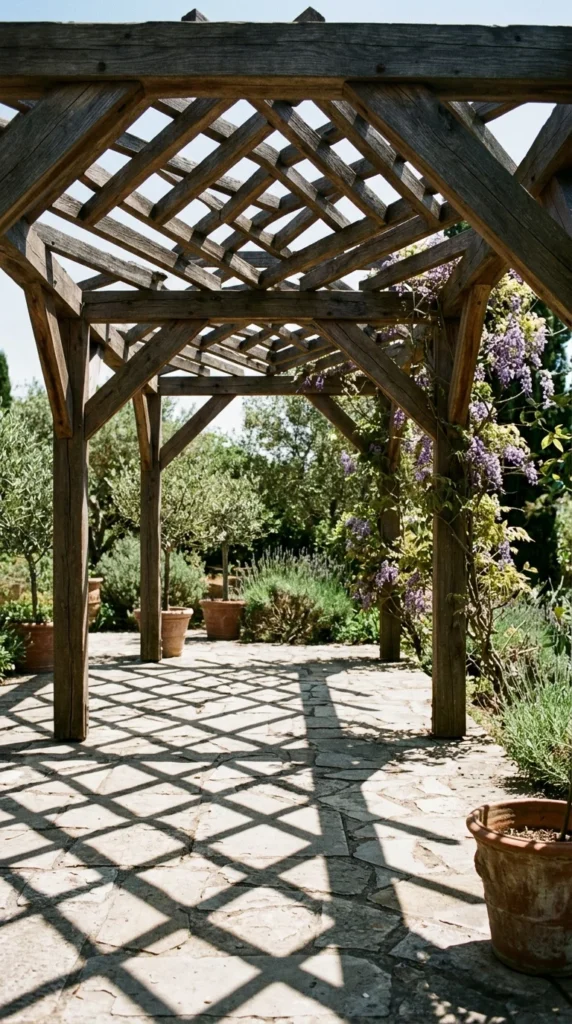
For those who want something truly unique, a geometric pergola moves away from the standard grid of rafters. By angling the beams or creating a honeycomb pattern, you turn the structure into a piece of modern art. The ever-changing shadows created by the sun’s movement throughout the day make this type of pergola a dynamic and engaging feature of the landscape.