
Wood has long been the backbone of interior design, but in recent years, it has moved from the floor to the walls in breathtaking new ways. A wood accent wall is more than just a design choice; it is an architectural statement that introduces warmth, texture, and a sense of organic luxury into a home. Whether you are aiming for the rugged charm of a mountain cabin or the sleek precision of a high-end penthouse, wood is the most versatile medium at your disposal.
The beauty of wood lies in its imperfections—the knots, the grain patterns, and the varied hues that no synthetic material can truly replicate. By choosing the right style, orientation, and finish, you can completely redefine the proportions of a room. Below, we explore nine transformative wood accent wall ideas that cater to every aesthetic, from the rustic traditionalist to the ultra-modern minimalist.
1. Slatted Panels
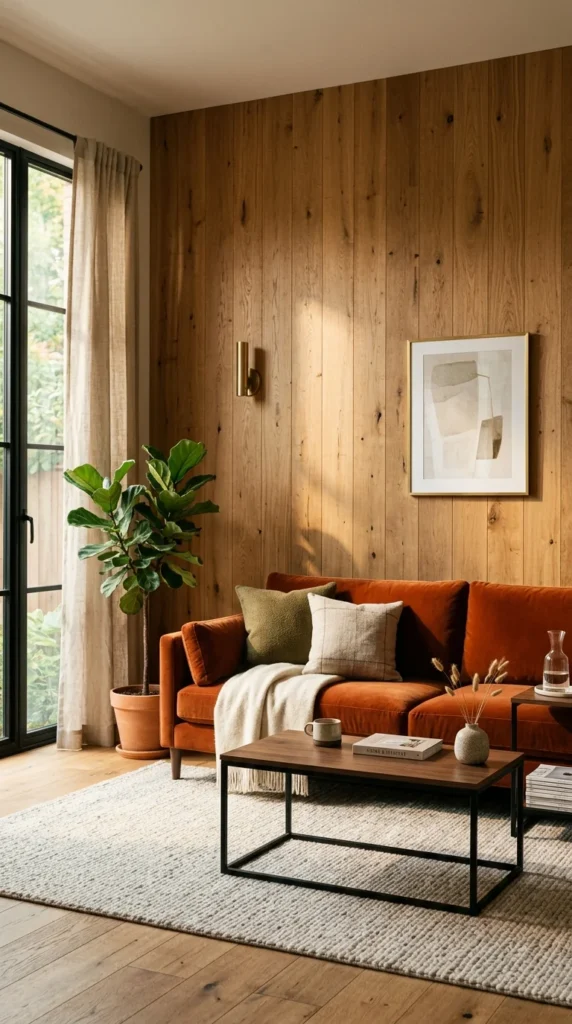
Vertical slatted panels, often referred to as “acoustic slat walls,” have taken the design world by storm. This style is characterized by thin, rhythmic strips of wood mounted onto a dark backing—usually felt or a painted black surface. The result is a striking linear pattern that creates a sense of height and order.
Slatted walls are particularly effective in modern and Scandinavian-inspired interiors. Beyond their visual appeal, they serve a functional purpose: the gaps between the slats help diffuse sound, making them an excellent choice for home theaters, bedrooms, or home offices where acoustics matter. To keep the look fresh, opt for light woods like white oak or ash, which provide a clean, airy feel that doesn’t overwhelm the space.
2. Reclaimed Barnwood
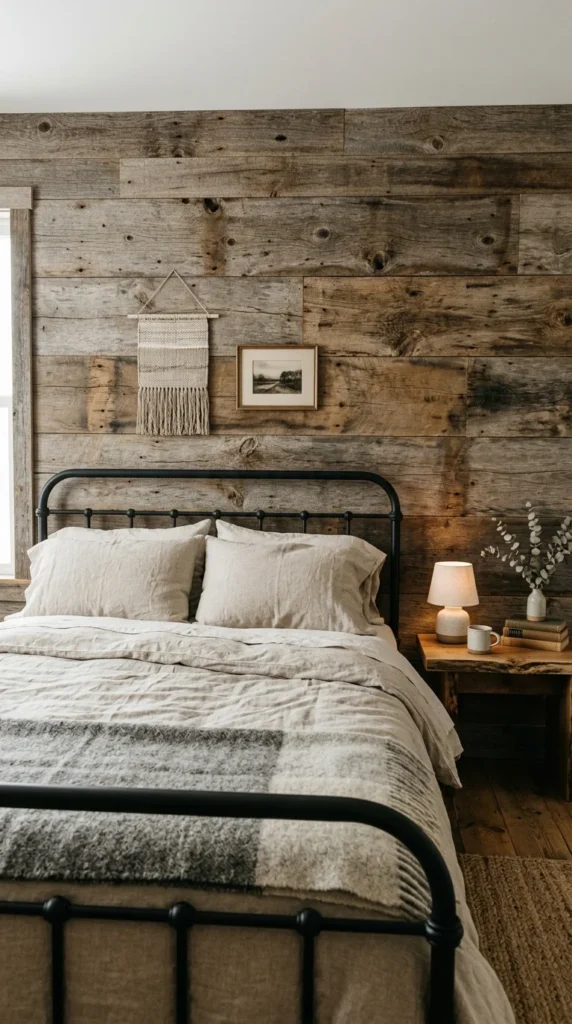
There is a story in every piece of reclaimed wood. Using salvaged barnwood for an accent wall brings an immediate sense of history and “soul” to a room. This style is the hallmark of the modern farmhouse aesthetic, but it also works beautifully in industrial settings where raw, unrefined materials are celebrated.
The key to a successful reclaimed wood wall is the variation. Because these boards have been exposed to the elements for decades, they feature a unique patina of greys, browns, and ochres. When installing, mix the planks randomly to avoid any repeating patterns. This creates a rich, tapestry-like effect that provides a grounded, earthy contrast to smooth drywall and polished floors.
3. Geometric Parquet
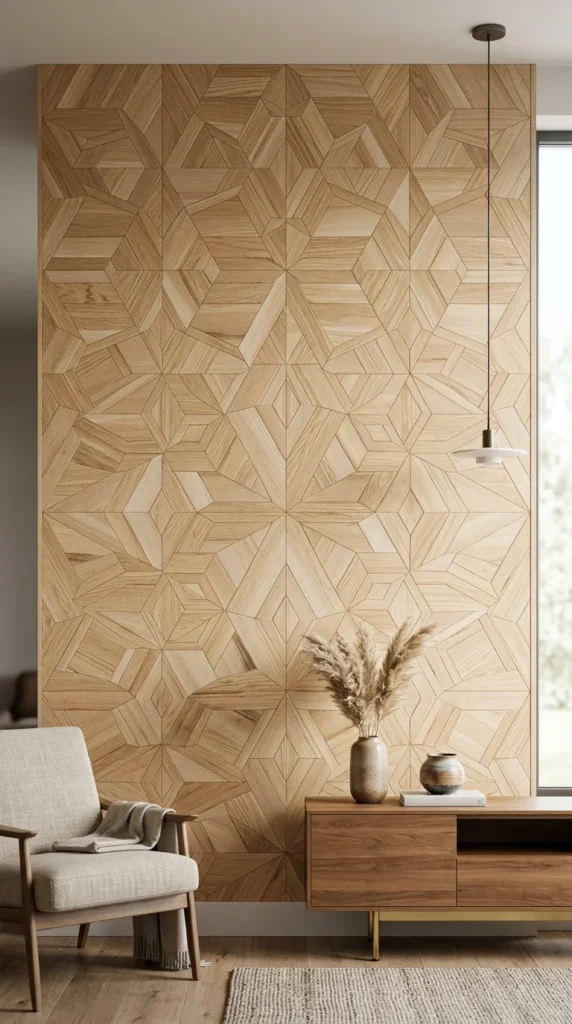
If you want your wall to double as a piece of art, geometric parquet is the way to go. Moving away from standard horizontal or vertical lines, this style uses precisely cut wood shapes—hexagons, diamonds, or triangles—to create a complex, repetitive pattern.
Geometric wood walls are a nod to mid-century modern design but feel entirely contemporary when executed with clean lines. Using a “tone-on-tone” approach—where different species of wood with similar values are used—can add subtle depth without making the room feel too busy. It’s a sophisticated choice for a dining room or a grand entryway where you want to make a lasting first impression.
4. Vertical Shiplap
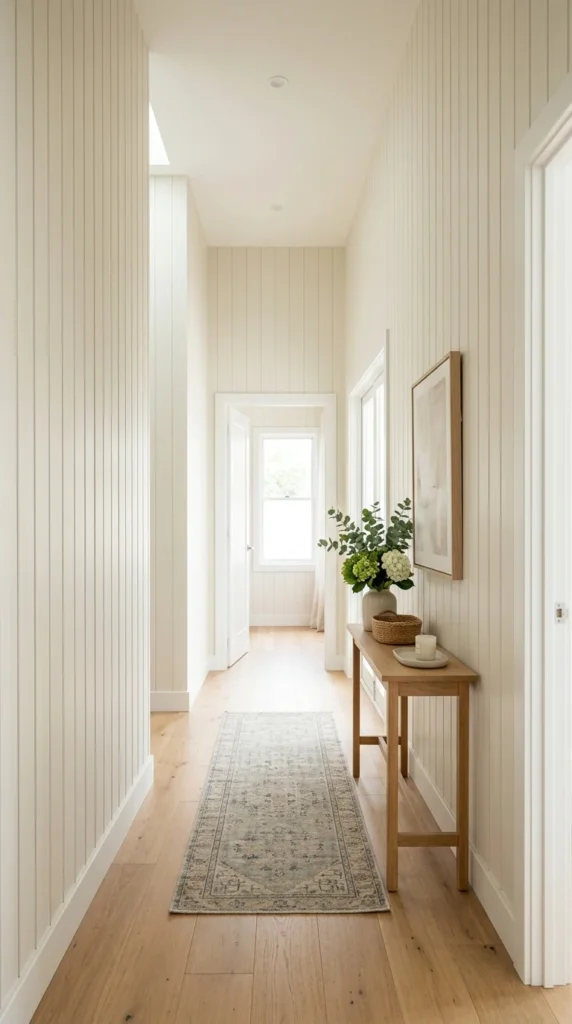
While traditional shiplap is installed horizontally to create a cozy, cabin-like vibe, rotating the planks vertically completely changes the energy of the room. Vertical shiplap draws the eye upward, making ceilings feel higher and rooms feel more expansive.
This approach is perfect for smaller spaces or rooms with lower ceilings. While natural wood finishes are beautiful, vertical shiplap is a prime candidate for paint. A “moody” color like charcoal or forest green can make the texture of the grooves pop, while a crisp white offers a refined, coastal cottage look. It is a subtle way to add architectural interest without the “heaviness” that sometimes comes with natural wood.
5. Herringbone Pattern
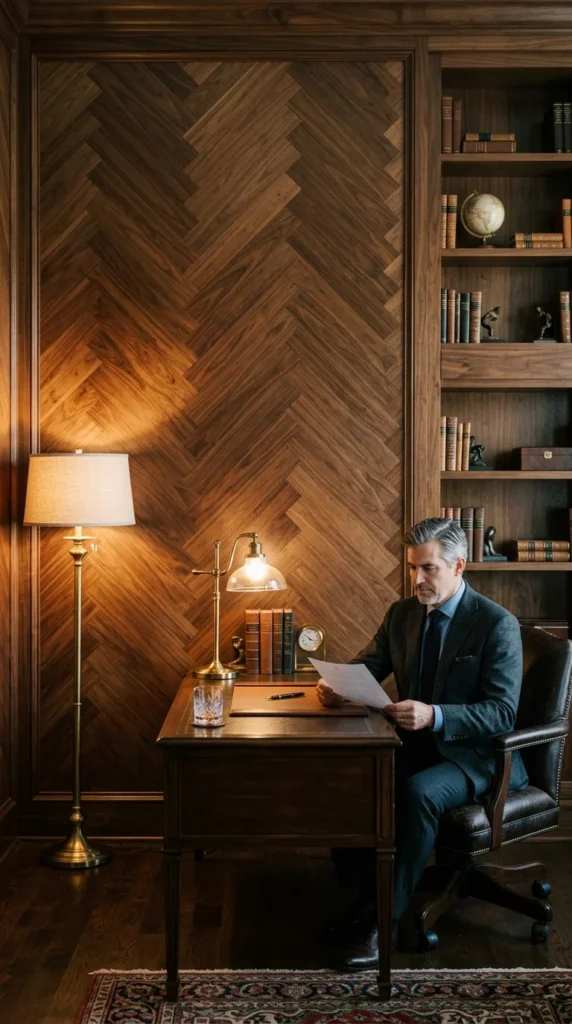
The herringbone pattern is a timeless classic often found in high-end European estates. By applying this “V” shape to a wall, you introduce a sense of movement and formal elegance. It is a highly “active” pattern, meaning it draws the eye and creates a focal point that requires very little additional decoration.
For a herringbone wall, the choice of wood is crucial. Darker woods like walnut or stained mahogany enhance the formal, traditional feel, while lighter woods like maple or birch make the pattern feel more modern and playful. This is an ideal choice for the wall behind a bed’s headboard or as a backdrop for a sophisticated home bar.
6. Live Edge
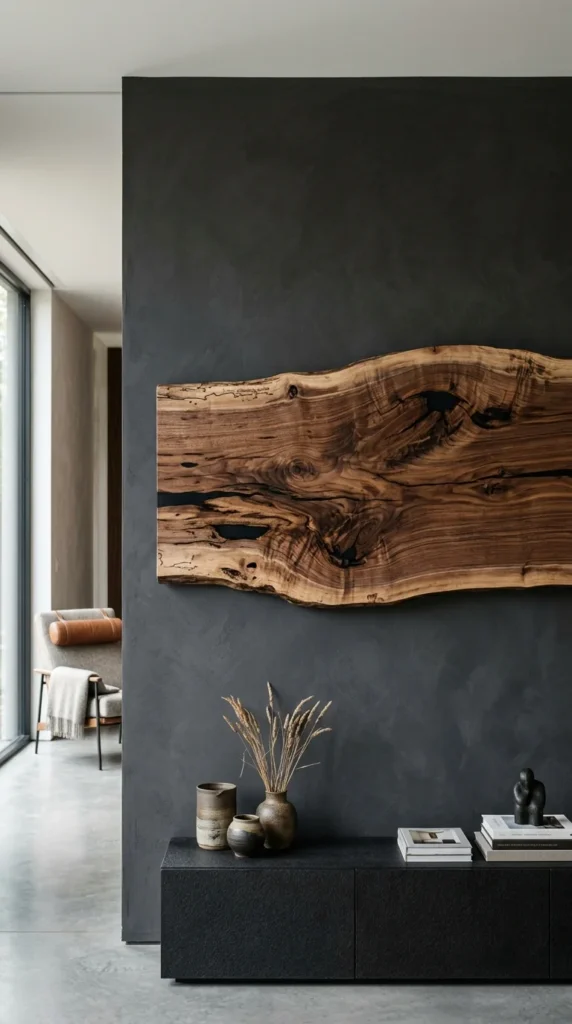
For the ultimate connection to nature, consider a live edge wood installation. Unlike traditional planks that are cut into perfect rectangles, live edge wood retains the natural, undulating shape of the tree’s outer bark. While often used for dining tables, mounting a large live-edge slab or a series of live-edge “cookies” (cross-sections of a trunk) onto a wall creates a breathtaking organic mural.
This style works best in rooms that embrace biophilic design—the practice of bringing the outdoors in. Because live edge pieces are heavy and visually dominant, they work best against a neutral, minimalist background where the natural contours of the wood can be the star of the show.
7. Shou Sugi Ban
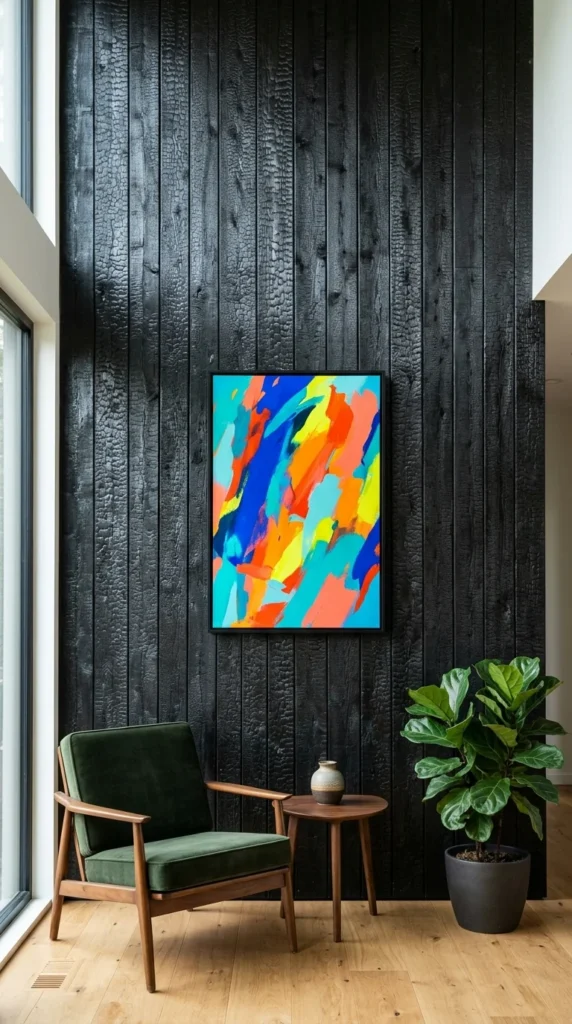
Shou Sugi Ban is an ancient Japanese technique of preserving wood by charring it with fire. The result is a blackened, carbonized surface that is resistant to fire, rot, and insects—and it looks absolutely stunning in a modern home. The process reveals a deep, sculptural texture in the wood grain that you simply cannot achieve with paint or stain.
A Shou Sugi Ban wall is the height of drama. It creates a dark, moody atmosphere that is perfect for a master suite or a sophisticated lounge. The charred surface reflects light in a unique way, appearing matte from one angle and slightly metallic from another. Pair it with metallic accents like brass or copper to create a high-contrast, luxurious look.
8. 3D Geometric Blocks
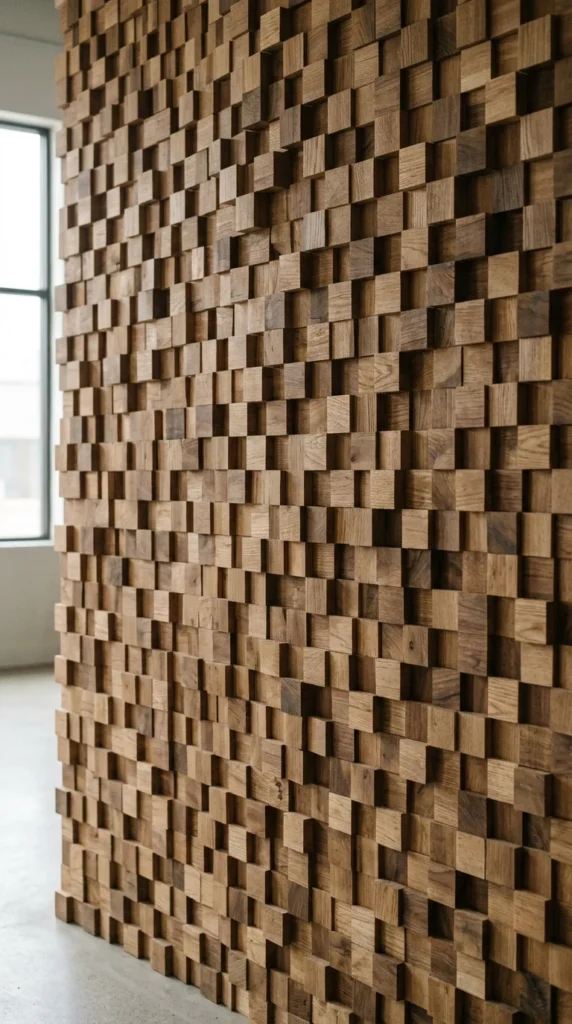
When you want to add literal depth to your space, 3D wood blocks are the answer. By using wood pieces of varying thicknesses, you create a tactile surface that changes throughout the day as shadows move across the wall. This is a highly contemporary look that adds a “sculptural” element to the room.
These walls are fantastic for absorbing sound and breaking up the “flatness” of a large open-concept living area. You can use blocks made from the same wood species for a monochromatic, textured look, or mix different stains to create a more vibrant, mosaic-style effect. It’s a bold choice that serves as a conversation starter in any home.
9. Painted Wood
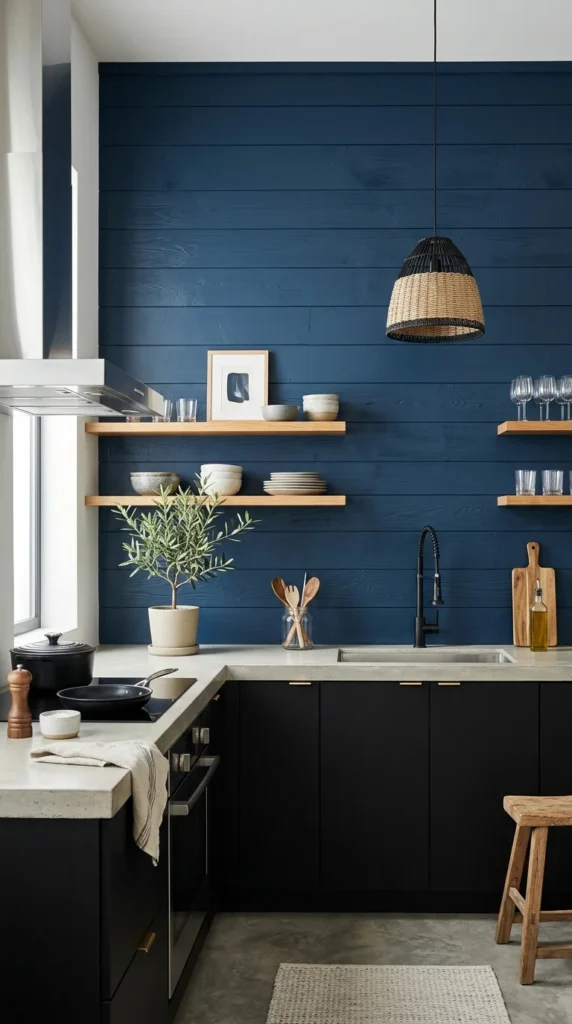
Sometimes, the goal isn’t the color of the wood, but the texture it provides. Painting a wood accent wall allows you to enjoy the organic feel of the grain while adhering to a specific color palette. This is a great way to update an existing wood wall that might feel dated or to add character to a new construction home.
Dark, saturated colors like navy, forest green, or even black are popular choices for painted wood walls, as they highlight the shadows in the grain and the gaps between planks. It offers a more tailored and “finished” look than raw wood, making it suitable for kitchens, bathrooms, and formal living rooms where you want a blend of traditional texture and modern color.